
The Water of Life: The Ultimate Guide to Irish Whiskey & Breweries
Irish whiskey is having a moment. Sales have doubled in a decade. New distilleries open monthly. Collectors pay thousands for rare bottles. And tourists — millions of them — arrive annually seeking the source of the spirit that once dominated world markets, then nearly vanished, and now stages an extraordinary comeback.
But here's what the marketing doesn't tell you: most visitors see Irish whiskey wrong. They tour the Jameson visitor centre in Dublin and assume they've experienced Irish distilling. They never learn that Jameson hasn't been made in Dublin since 1975. They miss the working craft distilleries producing innovative spirits. They overlook Bushmills' four centuries of continuous history. They never taste poitín, the outlawed moonshine that defined rural Ireland for generations.
This guide fixes that. Whether you're a serious whiskey enthusiast planning a dedicated pilgrimage or a curious traveler wanting to understand what you're drinking, this is the complete resource. We've visited every major distillery, tasted hundreds of expressions, and plotted routes that maximize experience while minimizing the logistical headaches that ruin so many trips.
From Dublin's new wave to Cork's production giants, from Northern Ireland's historic Bushmills to Galway's legal poitín, from gin schools to the etiquette of ordering your first proper pint — this is Irish whiskey and brewing culture, explained completely.
Understanding Irish Whiskey: The Basics
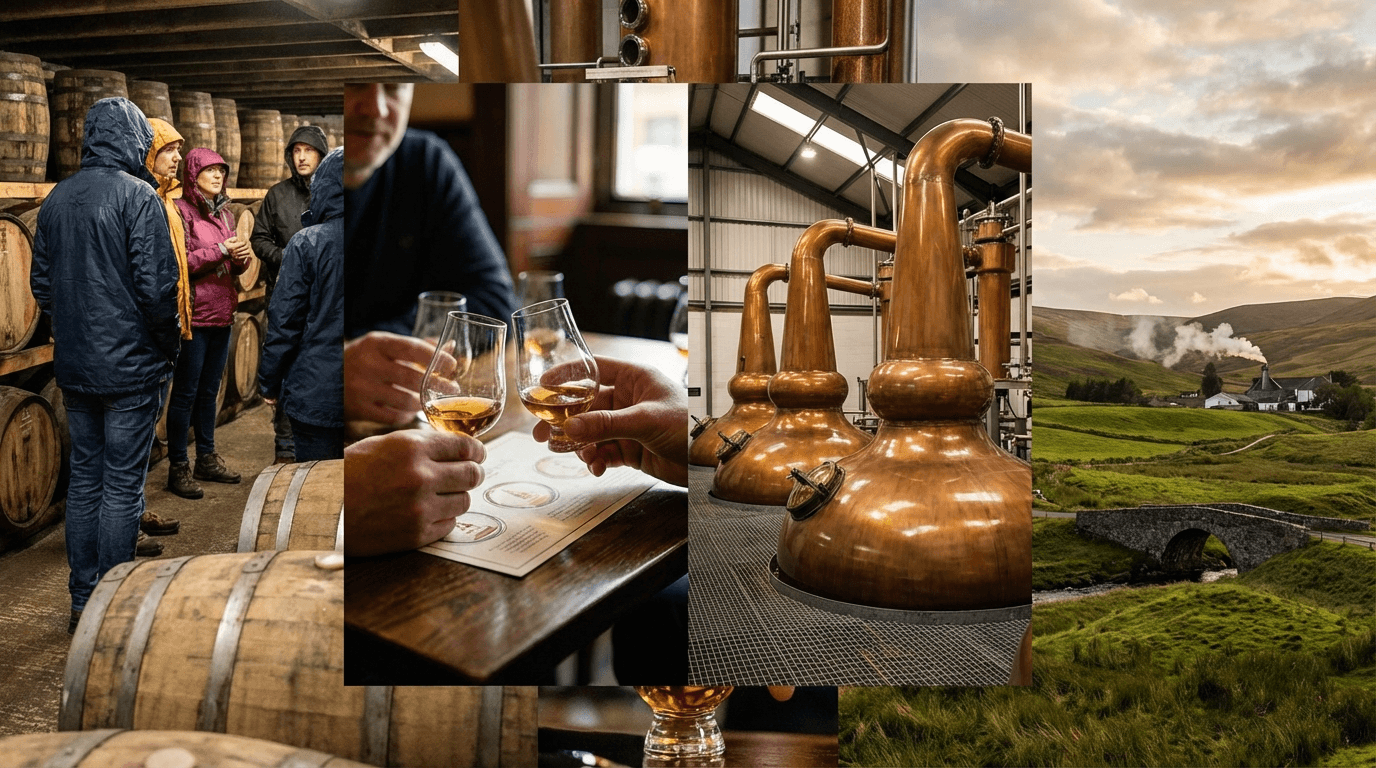
Before visiting distilleries, understand what makes Irish whiskey distinctive. The legal definition requires spirits distilled and aged in Ireland from cereal grains, but the craft involves crucial choices that create vastly different flavors.
Triple distillation is the Irish signature. Where Scotch typically distills twice and American bourbon once, Irish whiskey almost always goes through three distillations. Each pass through the still increases alcohol content while removing heavier, harsher compounds. The result is smoother, lighter spirit — "approachable" in industry terms.
The mash bill matters. Irish whiskey uses both malted barley (sprouted grain dried to stop germination) and unmalted barley. "Single malt" means 100% malted barley from one distillery. "Single pot still" — Ireland's unique contribution — mixes malted and unmalted barley. "Grain whiskey" uses corn or wheat for a lighter, neutral base.
Cask selection shapes flavor. Bourbon casks (vanilla, caramel, sweetness) dominate, but sherry casks (dried fruit, nuttiness), wine casks, and experimental finishes increasingly appear.
The categories:
- Blended: Mixed grain and pot still whiskeys (Jameson, Tullamore D.E.W.) — consistent, accessible
- Single malt: 100% malted barley (Bushmills, Teeling) — often more complex
- Single pot still: The Irish specialty (Redbreast, Green Spot, Powers) — spicy, creamy, distinctive
Understanding these basics transforms distillery visits from tourism into education. You'll ask better questions, taste more discerningly, and appreciate why specific whiskeys taste as they do.
The Dublin Experience: Giants and New Wave
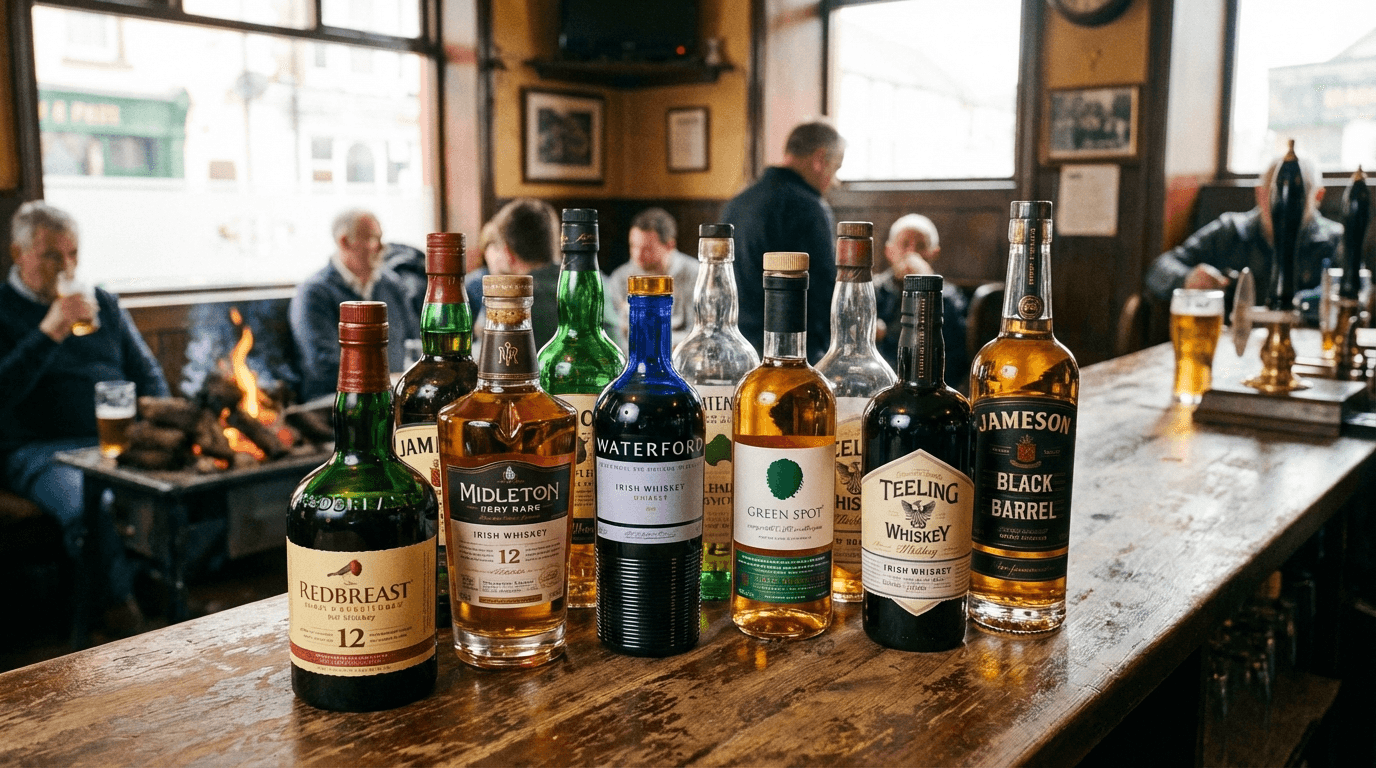
Most visitors start in Dublin, where two distinct experiences compete for attention: the polished visitor centres of global brands and the working craft distilleries of the Liberties renaissance.
Jameson Bow Street and the Guinness Storehouse dominate Dublin's drinks tourism. Located ten minutes apart in the historic Liberties neighbourhood, they attract millions annually. The Jameson tour explains whiskey production through museum exhibits and comparative tastings. The Guinness experience — Ireland's most popular tourist attraction — culminates in the Gravity Bar's panoramic Dublin views with your included pint.

Both are professionally executed, genuinely informative, and undeniably commercial. Neither produces actual beverages on-site anymore — Jameson whiskey is made in Cork, Guinness stout elsewhere in Dublin. They are visitor centres, not working facilities. This distinction matters for enthusiasts seeking authenticity over spectacle.
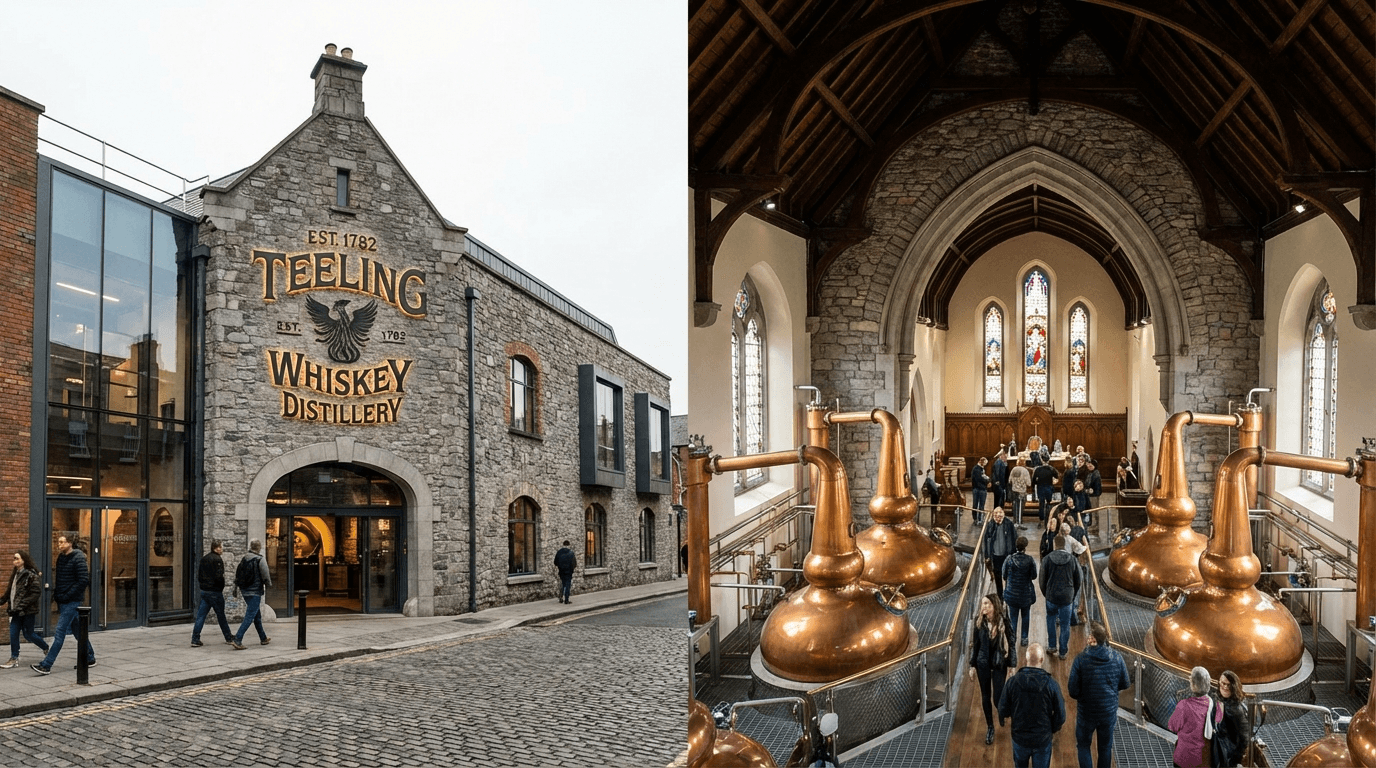
The real Dublin action happens at Teeling Whiskey, Roe & Co, and Pearse Lyons — working distilleries that reopened Dublin production after a forty-year gap. Teeling offers the most technical, innovative experience, experimenting with rum casks, wine finishes, and double-distilled single malts. Roe & Co occupies a stunning converted power station with rooftop bar views. Pearse Lyons distills in a deconsecrated church — visually unforgettable.
Read more:
- Jameson Bow St. vs. Guinness Storehouse: Which Dublin Giant is Better?
- Teeling, Roe & Co, and Pearse Lyons: The "New Wave" of Dublin Whiskey
Beyond Dublin: The Real Production
For working distilleries producing whiskey at scale, leave Dublin. Two destinations dominate: Midleton in County Cork and Bushmills in County Antrim.
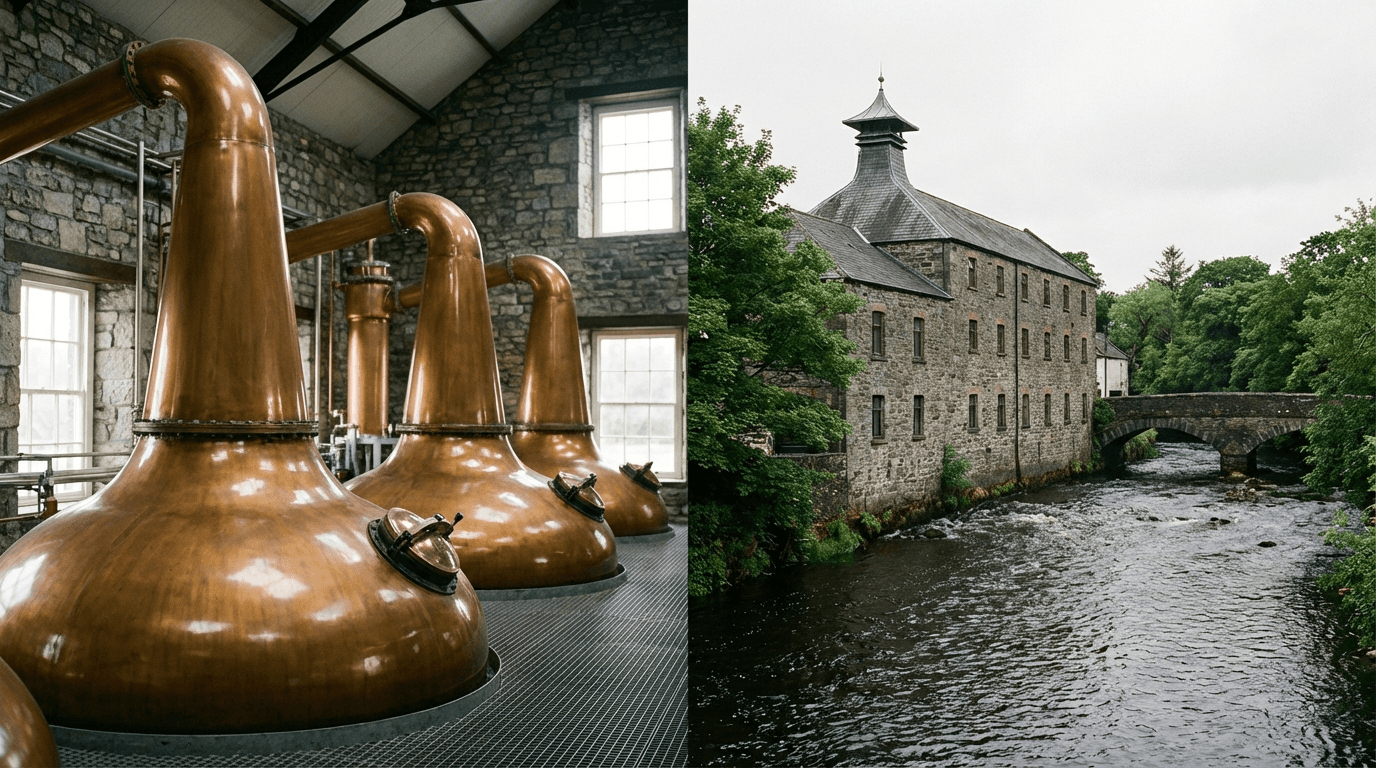
The Jameson Experience Midleton is where Jameson actually happens. Unlike Bow Street's visitor centre, Midleton is a massive working facility producing Jameson, Redbreast, Green Spot, and Midleton Very Rare — over 30 million litres annually. The standard tour provides technical depth impossible in Dublin. The premium "Whiskey Makers Experience" includes cask opening ceremonies where you watch coopers tap aging barrels and draw whiskey maturing for decades.
The scale staggers. Pot stills tower like industrial sculptures. Warehouses hold millions of maturing bottles. The comparative tasting — six expressions from standard Jameson to limited editions — educates palates properly. This is essential for anyone serious about understanding Irish whiskey production.
Bushmills Distillery occupies different territory entirely. Licensed since 1608, it's the world's oldest licensed whiskey distillery, operating continuously for over four centuries. Located on Northern Ireland's spectacular Causeway Coast, Bushmills offers history Midleton cannot match. The standard tour costs significantly less than southern competitors, the setting is spectacular, and the whiskey — particularly aged expressions like the 16 and 21 Year Old — competes with premium single malts globally.
Read more:
- The Jameson Experience Midleton: Visiting the "Real" Distillery
- Bushmills Distillery: Visiting the World's Oldest Licensed Distillery
The Practical Challenges: Getting There and Getting Home
The biggest mistake whiskey tourists make? Underestimating Irish drink driving laws. The second biggest? Attempting to self-drive a multi-day tasting itinerary.
Ireland's drink driving limit is 50mg blood alcohol per 100ml for experienced drivers — roughly one small drink. For novice drivers, it's effectively zero tolerance at 20mg. Penalties are automatic and severe: 12-month driving bans, substantial fines, criminal records. Gardaí conduct regular roadside breath tests, especially around tourist areas.
After a distillery tasting, you cannot legally drive. After two tastings, you're significantly over the limit. After a day visiting multiple distilleries followed by dinner and pub drinks, attempting to drive is dangerous, illegal, and potentially catastrophic.

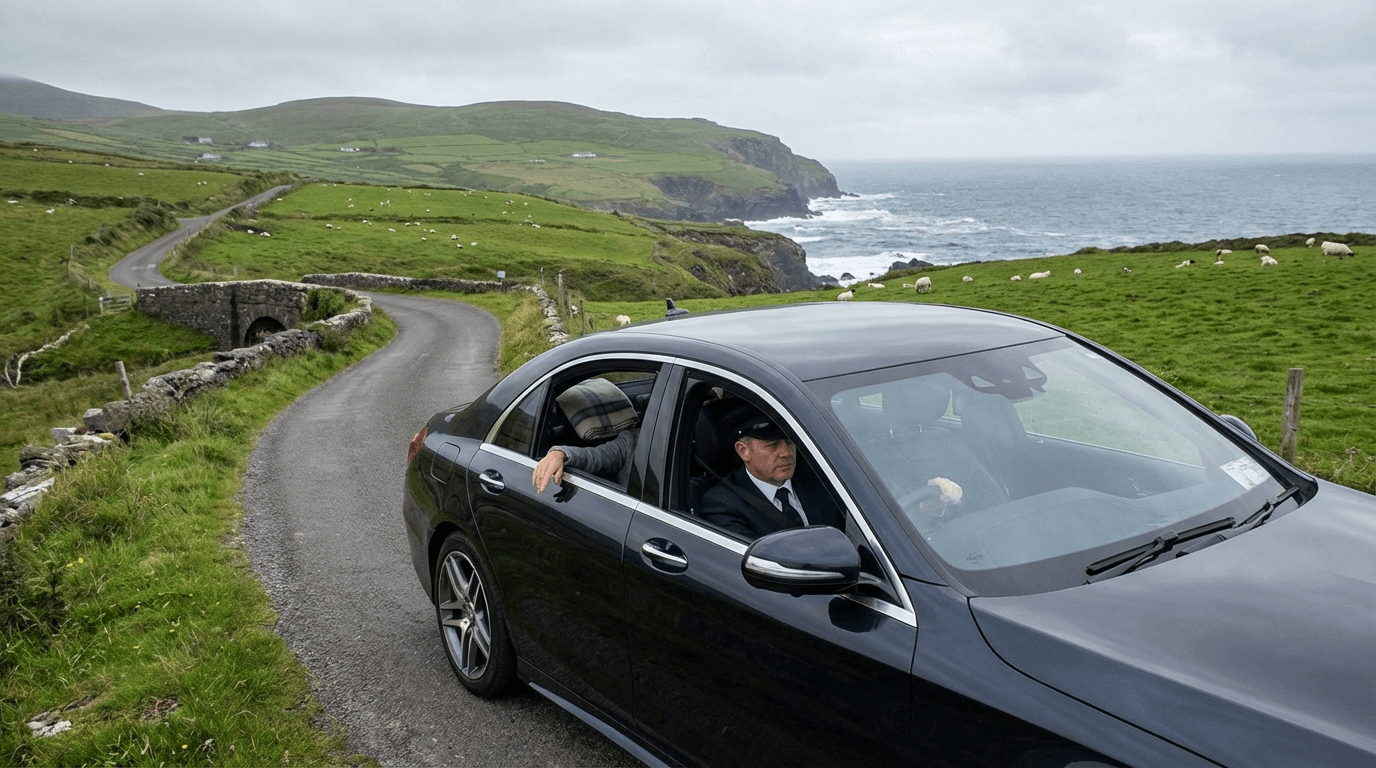
This reality shapes everything. The whiskey trail itinerary assumes you're not driving yourself. Public transport doesn't serve rural distilleries. Taxis become prohibitively expensive for multi-day trips. The solution that transforms the experience: a Private Driver.
A professional driver handles navigation, waits during visits, ensures you never face the "just one more" temptation before getting behind the wheel, and lets you actually enjoy the experience rather than white-knuckling unfamiliar roads. The cost, split across a group, is less than a single drink driving conviction — and the peace of mind is invaluable.
Read more:
The Social Context: Pubs, Etiquette, and Culture
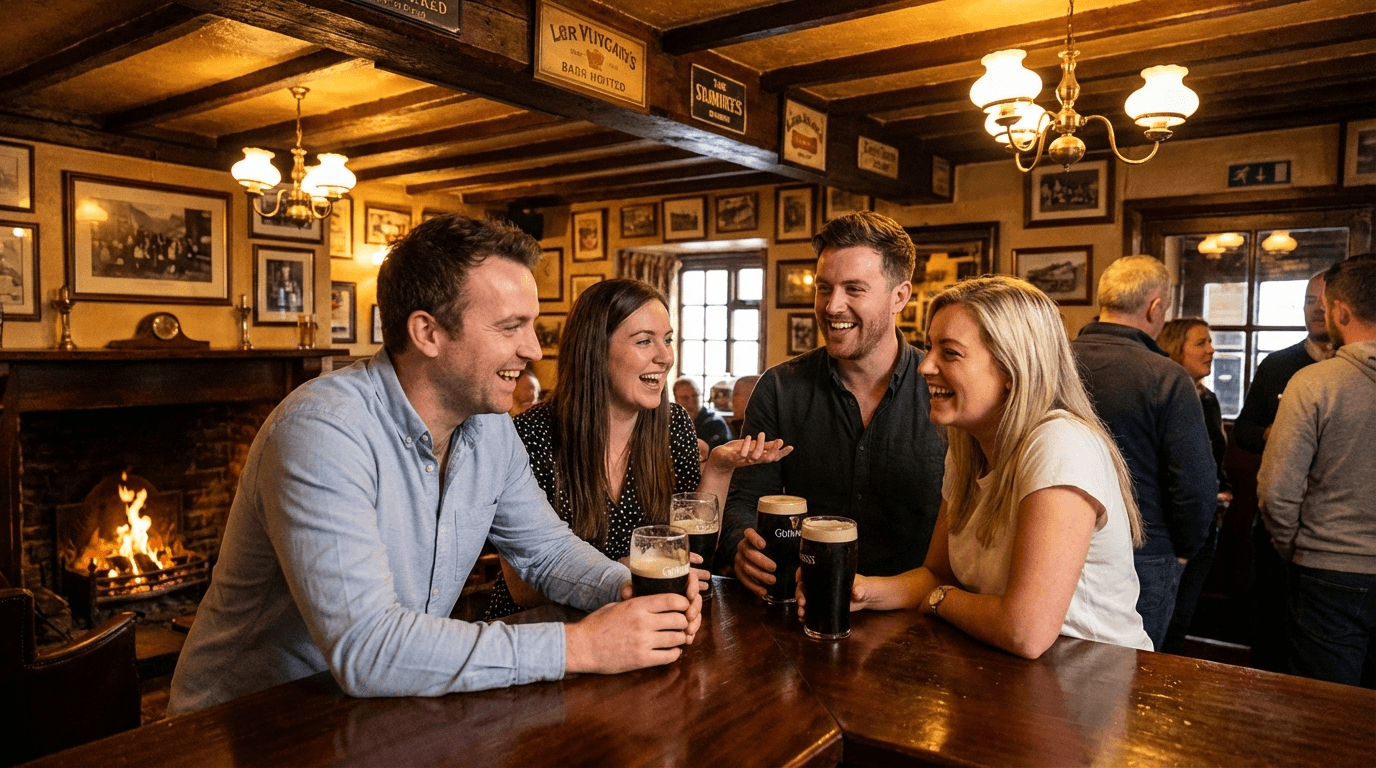
Irish whiskey doesn't exist in isolation. It's consumed in pubs — community institutions operating by unwritten rules that confuse visitors constantly.
Understanding the round system is essential. When someone buys you a drink, you owe a round. Groups take turns purchasing for everyone. Accepting drinks without reciprocating marks you as a freeloader — the worst social crime in Irish pub culture. Leaving before your round creates genuine offense. The system requires participation, even from non-drinkers (who buy rounds of soft drinks).
Guinness protocol matters too. A proper Guinness requires 119.5 seconds to pour. Don't rush the barman. Wait 30-60 seconds after receiving before drinking. The creamy head should be finger-width deep. Order Guinness first when buying multiple drinks — it needs settling time.
Other essentials: Catch the barman's eye without waving or shouting. Say "and one for yourself" to buy the barman a drink (they'll often take cash equivalent). Don't expect table service — order at the bar. Respect music sessions by listening quietly.
Master these basics, and you stop being a tourist and start being welcome.
Read more:
The Alternative Spirits: Poitín and Gin
Irish drinks culture extends beyond whiskey. Understanding poitín and gin provides context that deepens appreciation for everything else.
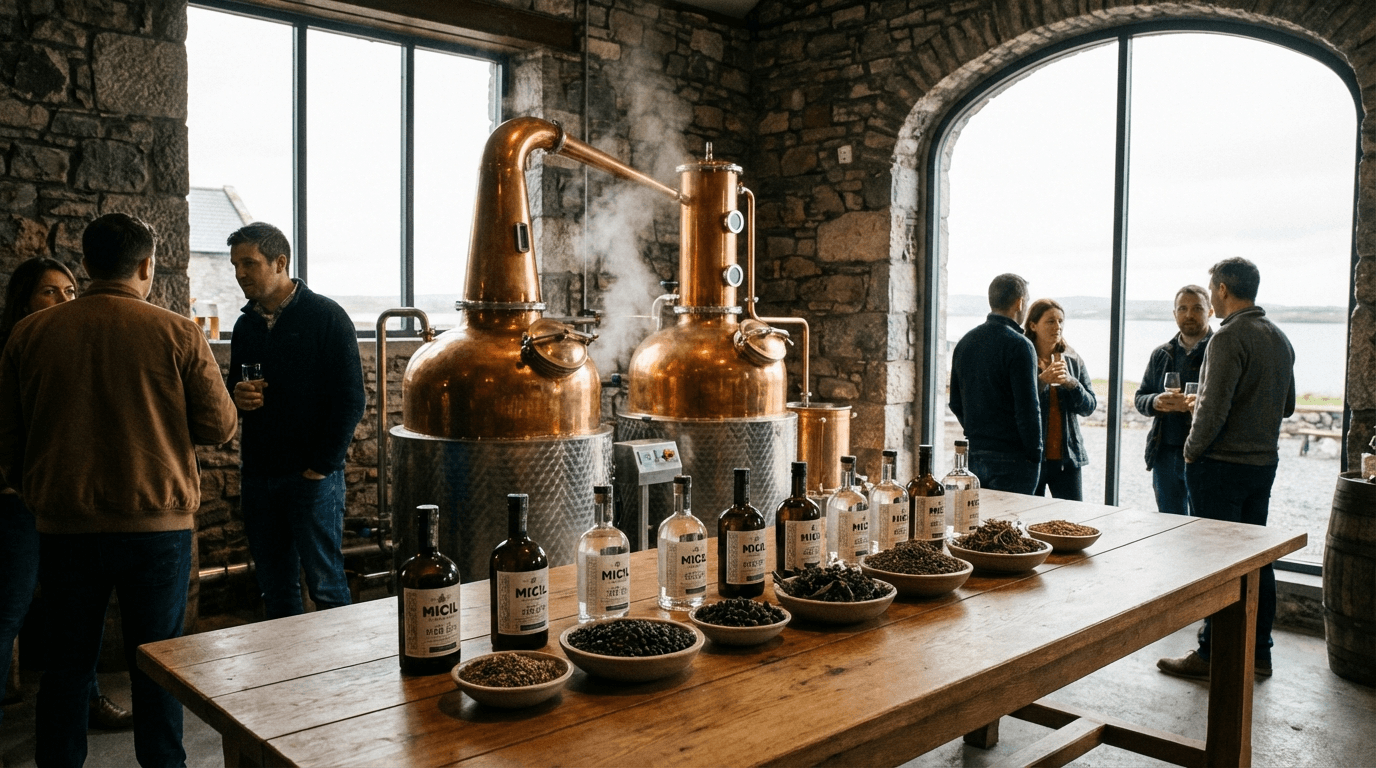
Poitín — pronounced "pot-cheen" — is Ireland's original moonshine, banned for 336 years until legalization in 1997. Traditionally 60-90% ABV, distilled from grain, potatoes, or sugar beet in illicit copper stills hidden from excise officers, poitín represented rural resistance, currency in cash-poor communities, and cultural identity.
Today, legal producers like Micil Distillery in Galway create regulated versions using historic family recipes. The experience differs fundamentally from whiskey tourism — you're tasting rebellion and resilience, not corporate tradition.
Irish gin has exploded since 2015, with dozens of craft producers creating distinctive spirits. Drumshanbo's Gunpowder Irish Gin leads internationally, but innovative producers nationwide experiment with local botanicals. Gin schools at Listoke and Drumshanbo let visitors distill personal bottles.
Read more:
- Poitín: How to Taste Ireland's "Illegal" Moonshine Safely
- Irish Gin Schools: Making Your Own Bottle at Listoke & Drumshanbo
The Complete Itinerary: Putting It All Together
Individual distilleries provide pieces. The complete picture requires connecting them — understanding how Dublin's new wave relates to Cork's production giants, how Bushmills' history contrasts with Teeling's innovation.
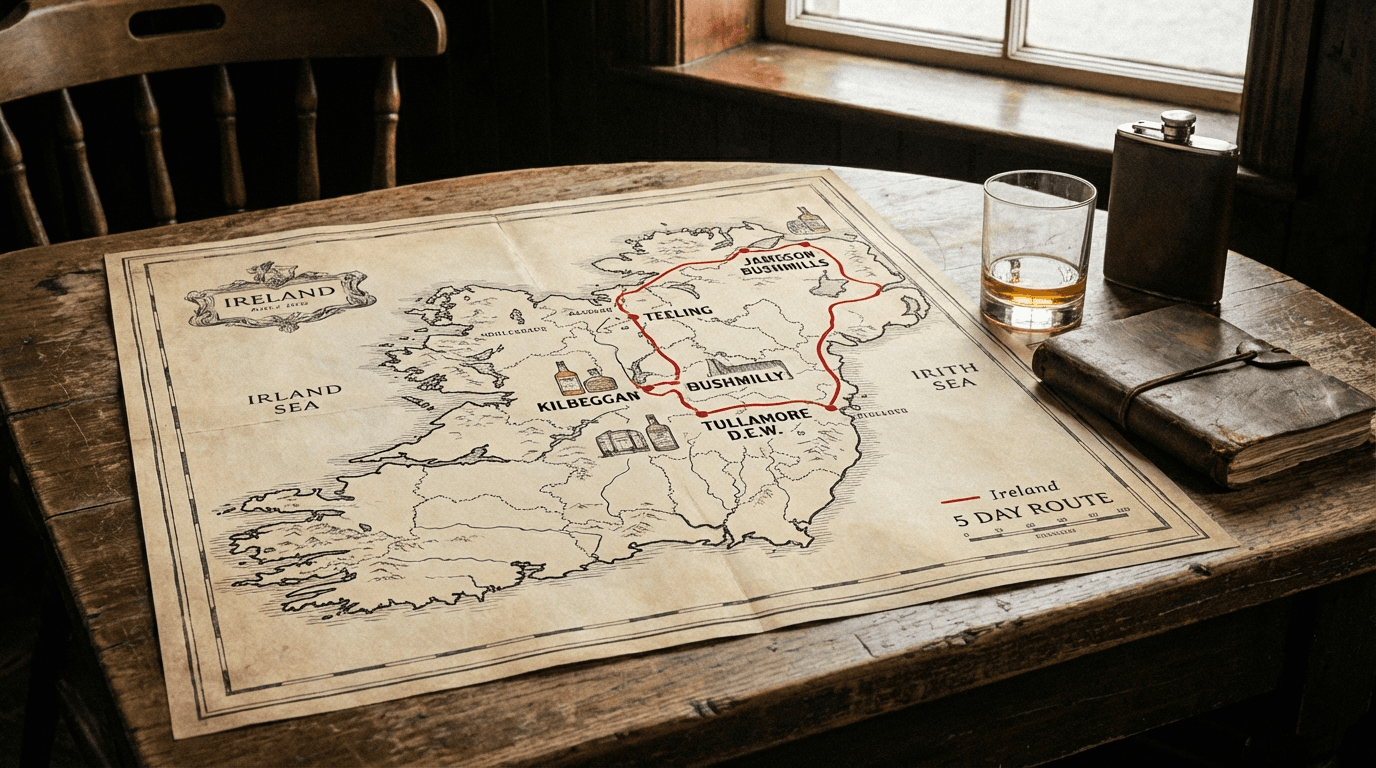
Our 5-Day Whiskey Trail Itinerary does exactly this. Starting in Dublin with the giants and new wave, proceeding through Kilkenny's medieval charm, diving deep at Midleton, experiencing Galway's poitín heritage, and concluding at Tullamore's Ultimate Snug for reflection — this route covers Ireland's whiskey landscape comprehensively.
The itinerary accounts for driving times, suggests accommodation, recommends restaurants, and — crucially — assumes you're using a Private Driver rather than attempting to self-drive between tastings.
Read more:
- The "Whiskey Trail" Itinerary: A 5-Day Tasting Road Trip
- Tullamore D.E.W.: The Visitor Centre vs. The Warehouse Snug
Final Advice: Do It Properly
The worst Irish whiskey experiences share common features: rushed schedules, self-driving after tastings, and treating distilleries as photo opportunities rather than learning experiences.
The best experiences share opposite qualities: time to appreciate each stop, professional drivers handling logistics, genuine curiosity, and willingness to engage with the culture.
Plan your trip. Book your driver. Taste everything. And arrive home understanding why Irish whiskey matters.
Sláinte.
---
Table of Contents
Share this post
More from the Blog

Cork to Blarney Castle Day Trip: The Stone, the Gardens and What Else to See
Plan a Cork to Blarney Castle day trip. Kiss the stone, explore the Poison Garden, and add Cork city, Fota or Kinsale for a full day out.

Cork to Cobh Day Trip: Titanic, Colourful Houses and Harbour History
Plan a Cork to Cobh day trip by train, car or private driver. Explore Titanic history, St Colman's Cathedral, Spike Island and the best harbour views.

Cork to Killarney Day Trip: Lakes, Mountains and Muckross in One Day
A Cork to Killarney day trip is a longer escape into Kerry. Here's how to plan the drive, what to see in Killarney National Park, and why a private driver helps.