
Irish Pub Etiquette: How to Order a Pint, The Round System & 'The Split'
You walk into an Irish pub for the first time and immediately sense something different. The barman catches your eye with a nod. Regulars occupy "their" seats. Someone mentions "the next round" and suddenly you're holding a pint you didn't order. Welcome to Ireland — where pub culture operates on unwritten rules locals absorb from childhood and visitors violate constantly.
Irish pubs aren't bars. They're community living rooms, debate chambers, and concert halls rolled into one. The etiquette isn't about formality — it's about fitting in, showing respect, and understanding that your behavior affects everyone. Get it right, and you'll experience genuine Irish hospitality.
This guide covers the essentials: how to order, why buying rounds matters, and how to handle yourself when the Guinness takes forever to pour.
How to Order: Counter Culture
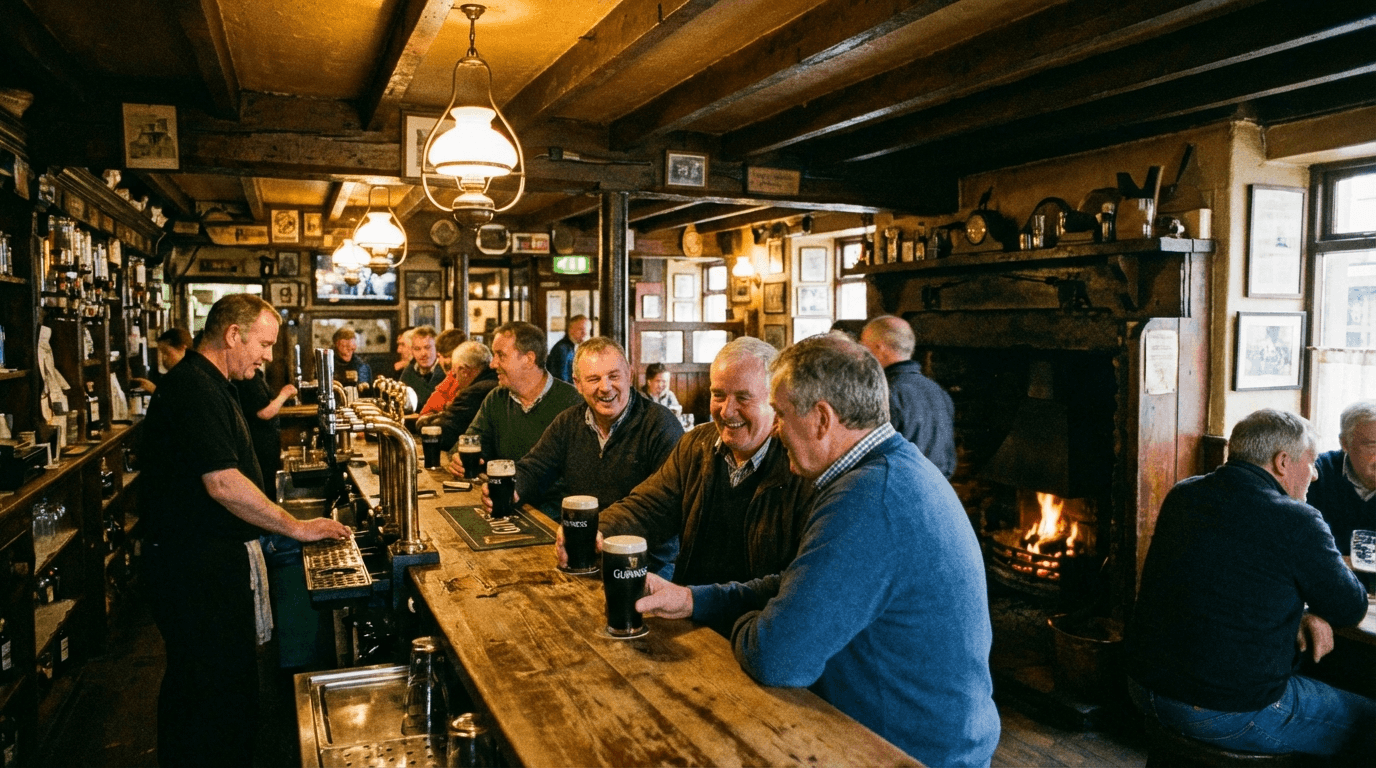
Irish pubs generally don't have table service. You order at the bar, and doing so efficiently marks you as competent.
Catch the barman's eye — but don't wave, shout, or snap fingers. A raised hand or subtle nod suffices. Good barmen monitor the room constantly; they'll see you.
Know your order when they reach you. Hesitating while the queue builds behind you earns silent disapproval. If you need a moment, step aside.
Say please and thanks. The barman isn't your servant; they're the host of a shared space.
Pay when served unless you're "starting a tab." Say "I'll settle up at the end" to run a bill. Don't walk away without clarification.
Tipping isn't traditional in Irish pubs. However, saying "and one for yourself" — offering to buy the barman a drink — is classic Irish etiquette. They'll often take the monetary equivalent.
The Round System: Social Architecture
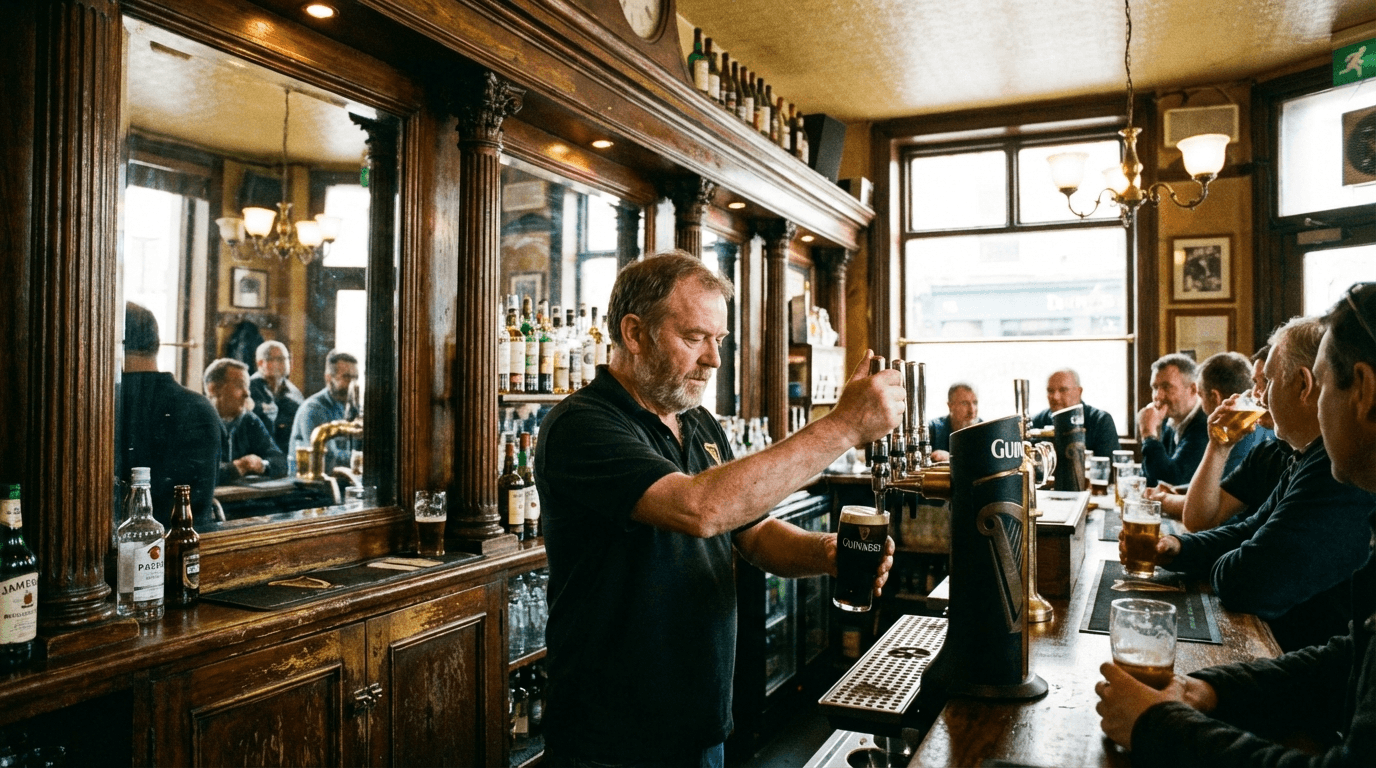
Nothing confuses visitors more than "the round" — where groups take turns buying drinks for everyone. It's a complex social contract with rules that, when broken, cause genuine offense.
When someone buys you a drink, you owe a round. If you're in a group of four and someone buys everyone a pint, you're committed to buying the next round. Accepting drinks without reciprocating marks you as a freeloader.
Leave before your round at your peril. If you've accepted two rounds then "just need to pop out," you've taken drinks without reciprocating. If you must leave early, buy your round before departing.
Pace matters. If you're nursing a half-pint while others have finished, you're holding up the system. Match your pace to the group.
Joining late: Ask "Where are we in the round?" Then join properly when the cycle reaches you.
Non-drinkers: Participate anyway. Buy rounds of soft drinks or contribute financially. The round system is about social participation, not alcohol consumption.
Meet a Local Guide
Hi Folks,
The Guinness Protocol
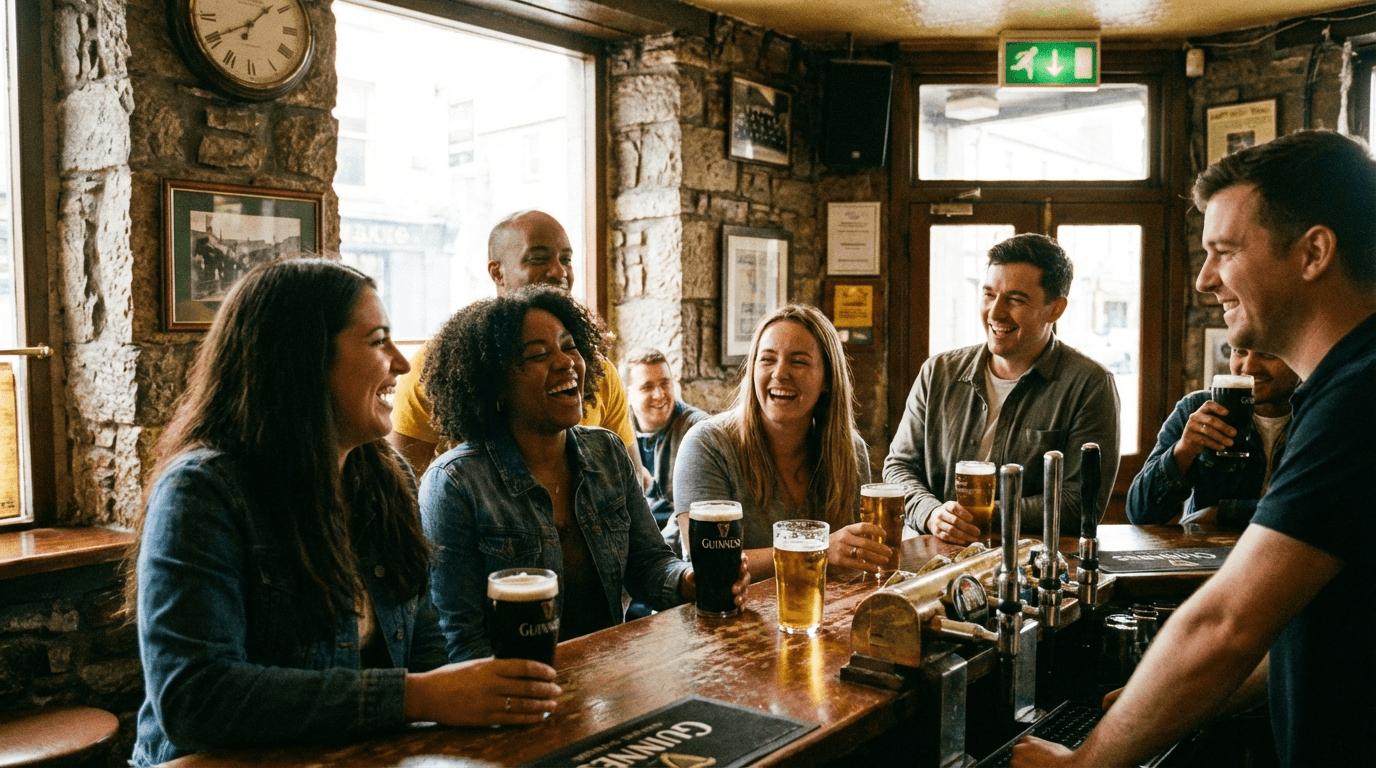
Guinness isn't just a drink; it's a ritual. Violating these norms marks you as a tourist.
It takes time. A proper Guinness requires 119.5 seconds to pour. Don't rush the barman. The pause is part of the experience.
Don't drink it immediately. Wait 30-60 seconds after receiving it. Let it settle.
The head matters. A proper Guinness has a finger-width of creamy white head. If something's wrong, mention it politely.
Don't order Guinness last. Order it first — it needs settling time while other drinks are prepared.
Half-pints are acceptable. Guinness halves are normal; ordering one marks you as sensible, not lightweight.
The "one more" signal: Slide your empty glass toward the barman while continuing conversation.
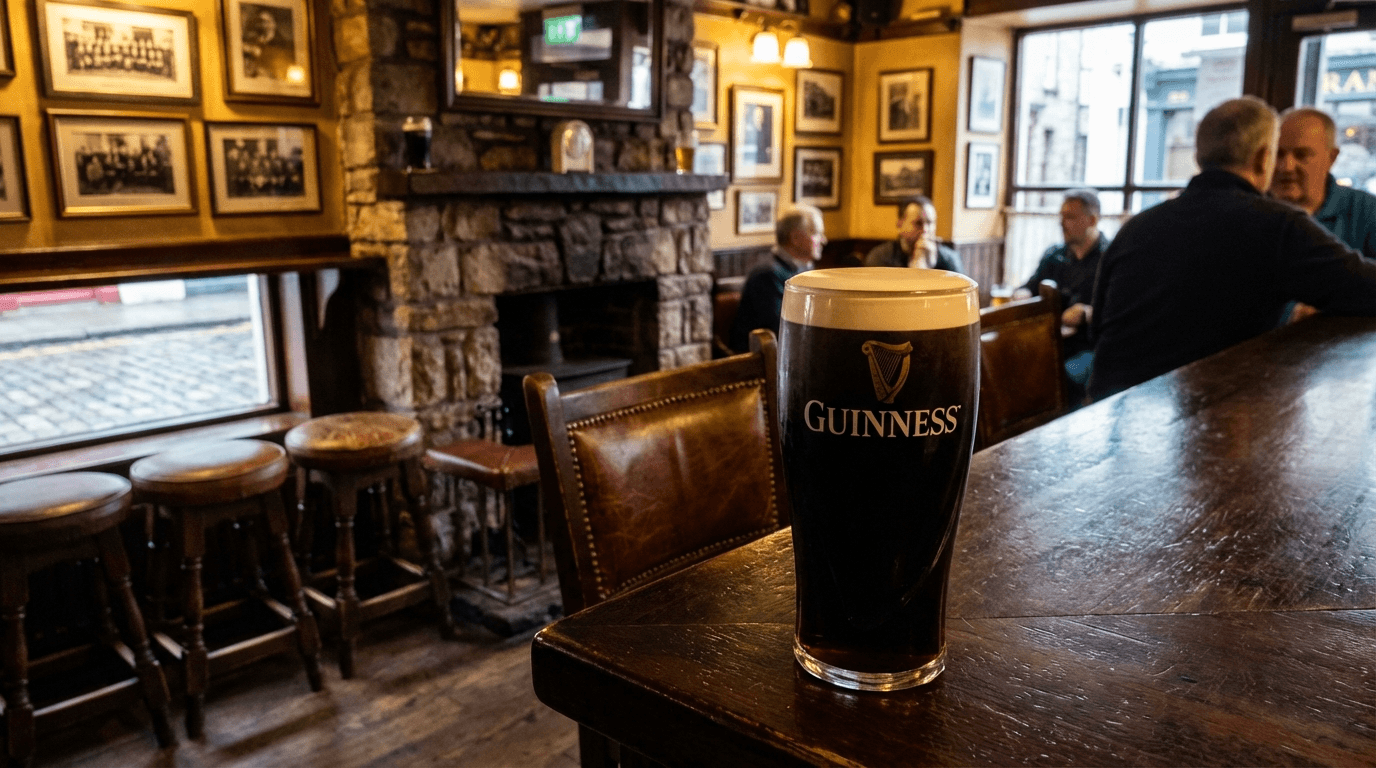
Seating: The Unclaimed Hierarchy
Irish pub seating operates on invisible rules that locals navigate unconsciously.
The bar stools are prime territory. Regulars occupy "their" stools. Don't sit in a stool that's clearly "someone's." Ask "Is this seat taken?" first.
Tables are communal during busy periods. Ask "Are these seats taken?" before sitting at a table with strangers.
The snug — the small enclosed booth — is special seating. If free, enjoy it, but know you're occupying premium real estate.
Children in pubs: Many pubs restrict children after 9pm. Look for signage or ask.
Standing at the bar is perfectly acceptable. Irish people frequently drink standing.
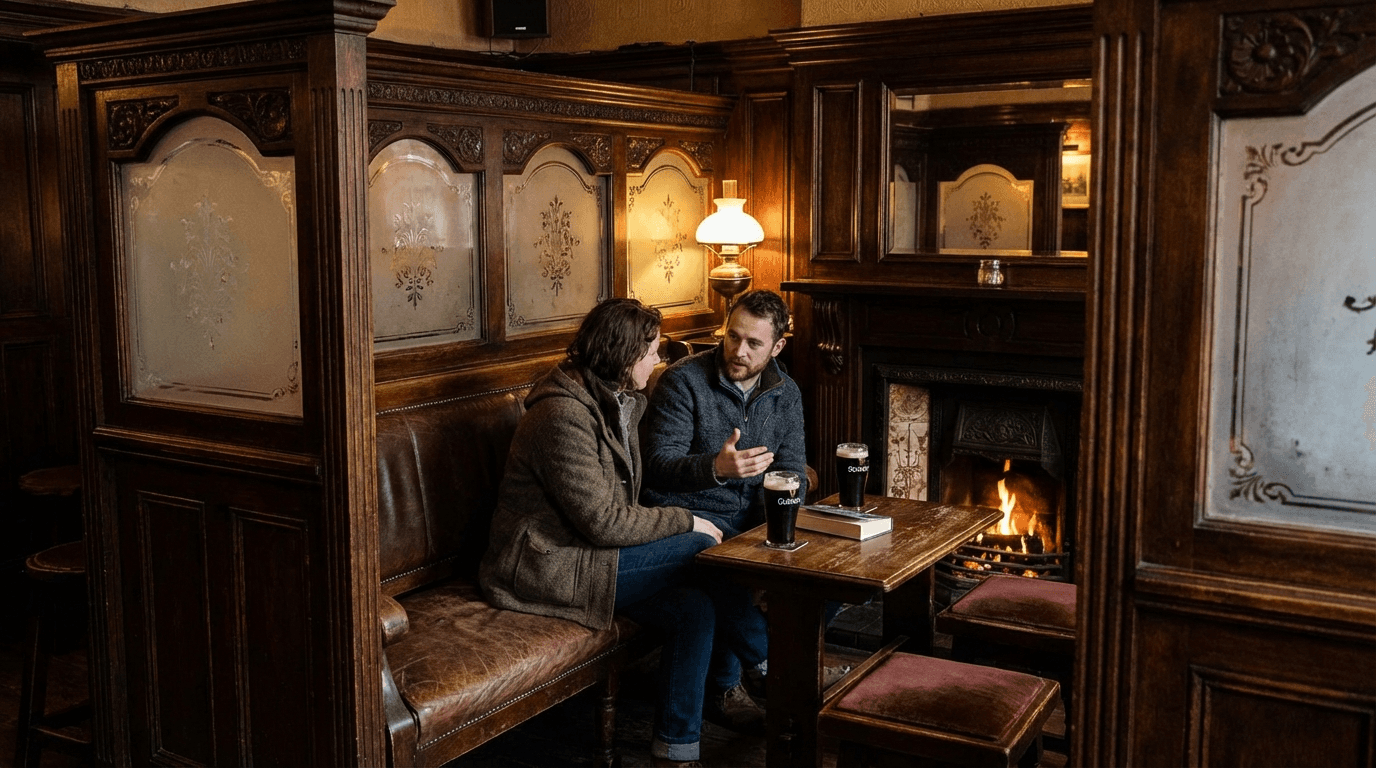
Conversation: Craic and Boundaries
"Craic" (pronounced "crack") is Irish for fun, conversation, banter, good times. The pub is where craic happens, and participating appropriately marks you as welcome.
Don't force Irishness. Avoid "Top o' the mornin'" or asking people to say "Thirty-three and a third."
Listen first. Irish pub conversation involves stories — long, winding, detailed stories. Don't interrupt or rush the narrative.
Politics and religion: Sensitive subjects require careful navigation. Let locals raise these topics.
Sports are safe: Gaelic football, hurling, soccer — Irish people love discussing sport. Just don't pretend expertise you don't have.
The weather: The ultimate safe topic. "Some weather we're having" opens endless conversation.
When to leave: Legal closing is typically 11:30pm weeknights, 12:30am weekends. Watch what others do. If the barman collects glasses, finish up and depart gracefully.
The Quiet Times: Music Sessions
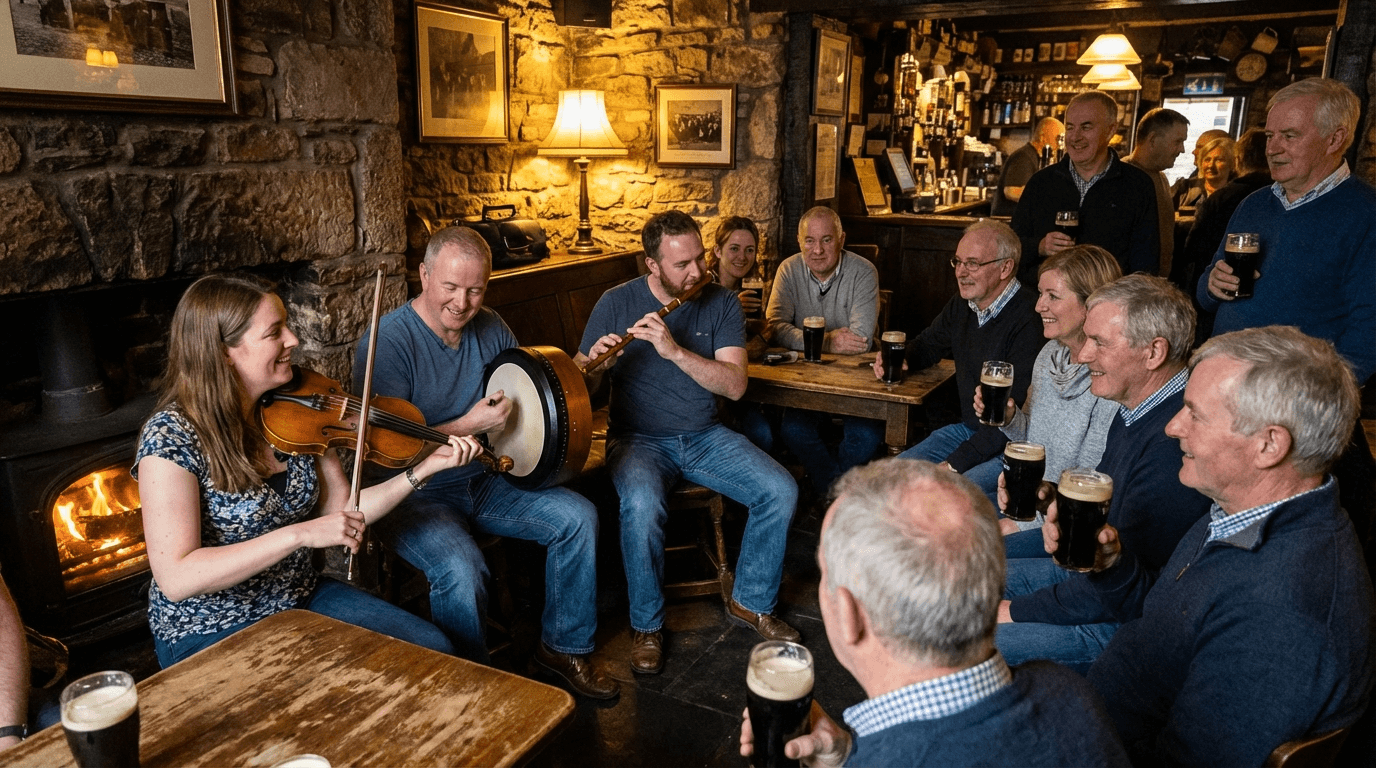
Many Irish pubs host traditional music sessions — informal gatherings where musicians play fiddle, flute, bodhrán (Irish drum), and other instruments. These have their own etiquette.
The music is the point. Conversation continues quietly. Shouting over the music is disrespectful.
Don't request songs unless you know the musicians personally.
Tipping musicians: Buy them a drink through the barman — "A pint for the fiddler" — rather than approaching while they're playing.
Photography: Ask before filming musicians.
Joining in: If you play traditional Irish music, arrive early and ask the lead musician if you can join.
Practical Pub Survival
Some practical considerations for pub navigation:
Toilets: Often called "the jacks" or "the gents"/"the ladies." If a pub has only one toilet, it's typically unisex — don't be confused. Some rural pubs have outside toilets; don't be shocked.
Mobile phones: Using phones at the bar is generally acceptable; taking loud calls is not. Step outside for extended conversations. Photographing your pint is fine; photographing strangers without permission is not.
Cash vs. card: Most Irish pubs accept cards now, but rural pubs and traditional establishments may prefer cash. Have both available. Tipping in cash (for the "one for yourself" gesture) is always appropriate.
Dress code: Almost none. Irish pubs welcome everyone from suited businesspeople to muddy hikers. The only real rule: remove wet outdoor clothing rather than dripping on the floor. Some pubs provide hooks or racks; ask if you don't see them.
Smoking: Banned indoors throughout Ireland since 2004. Don't attempt to light up inside. Outdoor smoking areas vary; ask the barman.
Food: Many pubs serve food, especially lunch. Kitchens typically close by 9pm. If you want dinner, arrive early. Traditional Irish pub food — stews, fish and chips, sandwiches — is generally hearty and satisfying rather than gourmet.
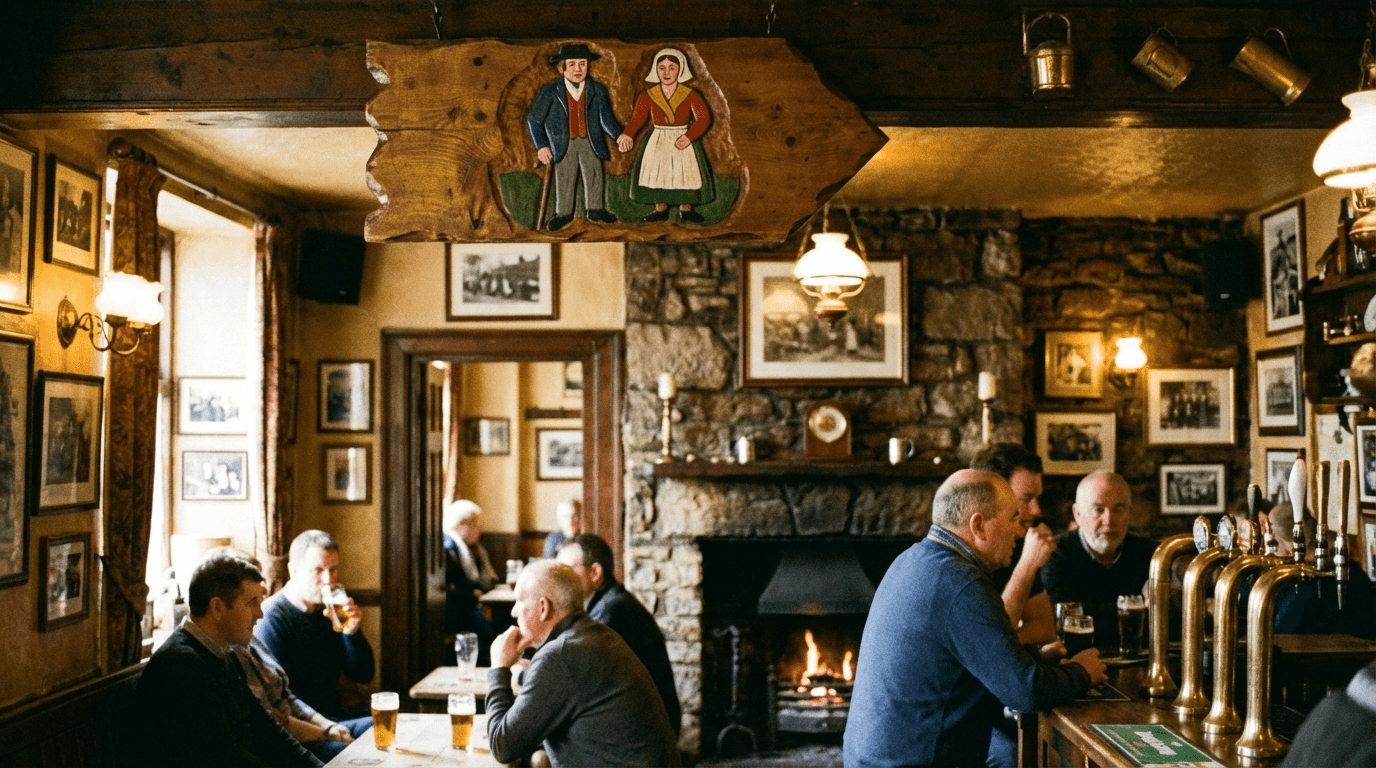
Common Tourist Mistakes (And How to Avoid Them)
Mistake 1: Ordering Irish Car Bombs. This drink — whiskey and Baileys dropped into Guinness — is American, not Irish. Ordering it marks you as someone who thinks Ireland is a theme park. Just don't.
Mistake 2: Asking for an "Irish Goodbye." Leaving without saying goodbye to your companions is considered rude, not quirky. Irish departures involve multiple rounds of farewells, promises to meet again, and actual physical extraction from the premises.
Mistake 3: Complaining about prices. Irish pubs aren't cheap, especially in tourist areas. Complaining loudly about cost marks you as ignorant of local economics and slightly insulting to the establishment.
Mistake 4: Expecting table service. As mentioned, most Irish pubs don't do this. Sitting at a table waiting for someone to take your order results in indefinite waiting.
Mistake 5: Being too loud. Irish pub conversation tends toward quiet intensity rather than American volume. Shouting, whooping, or generally making excessive noise marks you as disruptive.
Mistake 6: Closing time panic. When "last orders" is called, you have time to finish your drink. Rushing to order five more pints before throwing them back is unnecessary and marks you as someone who doesn't understand the culture.
The Verdict: Etiquette Is Hospitality
Irish pub etiquette isn't about rules for rules' sake. It's about maintaining spaces where everyone feels welcome, where conversation flows, where strangers become friends, where the pressures of daily life recede for a few hours.
Understanding these customs — the round system, the Guinness protocol, the conversation rhythms — allows you to participate fully rather than observe from outside. You're not performing Irishness; you're engaging genuinely with a living culture.
The irony: once you stop trying to be Irish and simply behave respectfully, you'll be treated more Irish than any performance could achieve. The barman will remember you. Locals will include you in conversation. You'll leave with genuine connections rather than tourist snapshots.
The Water of Life: The Ultimate Guide to Irish Whiskey & Breweries — the master hub — covers Ireland's drinking landscape from distilleries to poitín and beyond. Understanding pub etiquette transforms those experiences from observation to participation.
And of course, once you've mastered the etiquette, remember the other crucial rule: don't drive afterward. The Drink Driving Laws in Ireland are unforgiving, and even a few pints put you over the limit. A Private Driver lets you enjoy every round, every conversation, every song — without worrying about the road home.
Sláinte.
---
Table of Contents
Share this post
More from the Blog

Cork to Blarney Castle Day Trip: The Stone, the Gardens and What Else to See
Plan a Cork to Blarney Castle day trip. Kiss the stone, explore the Poison Garden, and add Cork city, Fota or Kinsale for a full day out.

Cork to Cobh Day Trip: Titanic, Colourful Houses and Harbour History
Plan a Cork to Cobh day trip by train, car or private driver. Explore Titanic history, St Colman's Cathedral, Spike Island and the best harbour views.

Cork to Killarney Day Trip: Lakes, Mountains and Muckross in One Day
A Cork to Killarney day trip is a longer escape into Kerry. Here's how to plan the drive, what to see in Killarney National Park, and why a private driver helps.