
Drink Driving Laws in Ireland: Why You Need a Designated Driver
The pint tastes excellent. The pub is warm, the conversation flowing, and that second round arrived without you really deciding to order it. You're on holiday, after all. The rental car sits outside, just a ten-minute drive to your hotel on roads you barely know. One pint can't hurt, right?
Wrong. In Ireland, one pint absolutely can hurt — your license, your wallet, your freedom, and potentially your life. Irish drink driving laws are among the strictest in Europe, with blood alcohol limits so low that a single standard drink puts most adults over the legal threshold. Get caught, and you're facing an automatic driving ban, substantial fines, and a criminal record that follows you home.
This isn't scaremongering. It's the reality that every visitor renting a car in Ireland must understand. The Gardaí conduct regular roadside breath tests, especially around tourist areas and at night. They don't care that you're on holiday, that you didn't know the limits, or that "the rental company never warned you." The law applies equally to everyone on Irish roads.
Understanding these laws — and planning accordingly — is essential for any Ireland road trip that involves pubs, distilleries, or restaurants. The good news: avoiding drink driving doesn't mean avoiding Irish drinking culture. It just means planning transportation that keeps you legal, safe, and free to enjoy every experience without anxiety.
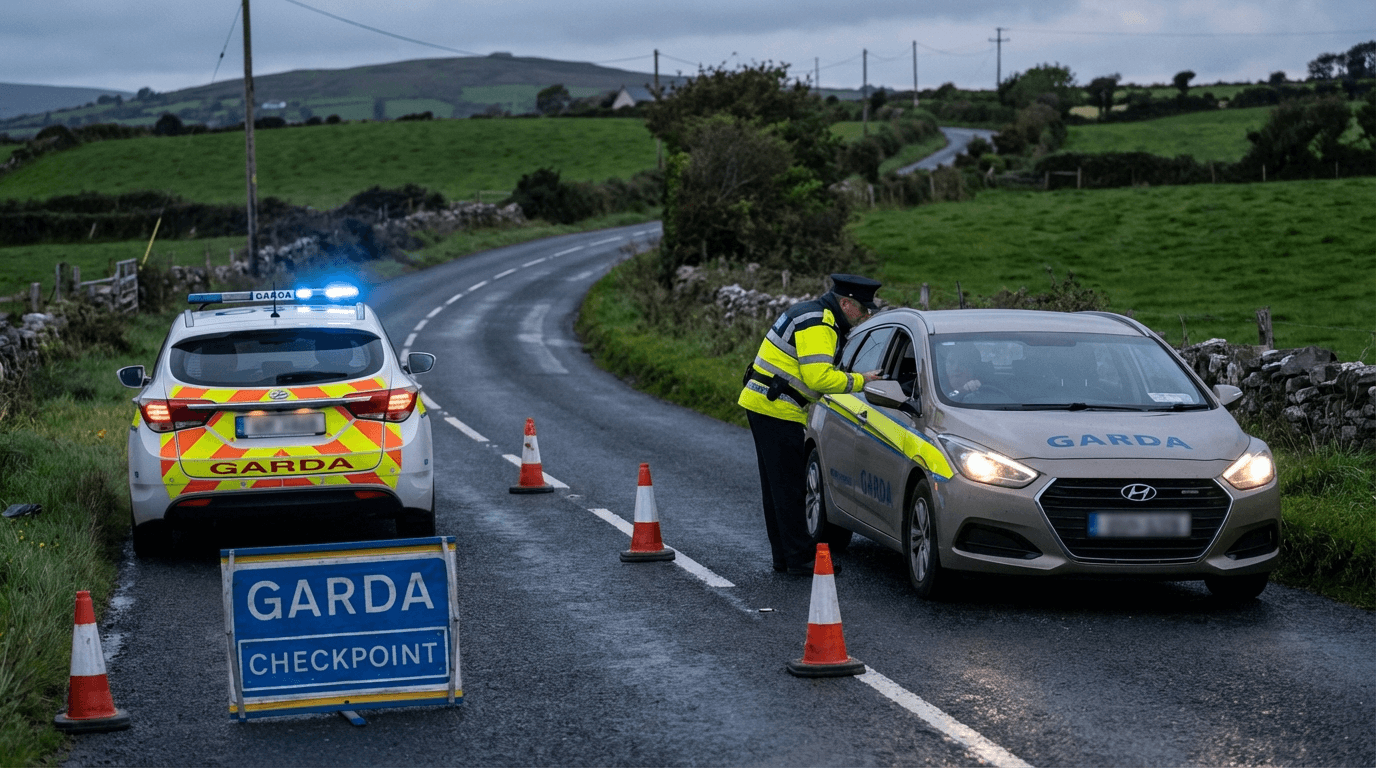
The Legal Limits: Lower Than You Think
Ireland's drink driving laws operate on two tiers, with different limits for different driver categories:
Experienced drivers: Blood alcohol limit of 50mg per 100ml of blood (0.05%). Lower than the UK (80mg) and significantly lower than the United States (80mg). For most adults, this equates to roughly one small drink.
Learner and novice drivers: Blood alcohol limit of 20mg per 100ml (0.02%). Effectively zero tolerance — approximately one-quarter of a standard drink puts you over. Includes anyone who passed their test less than two years ago.
Professional drivers: Also 20mg limit, covering commercial vehicles and taxis.
These numbers matter because Irish "standard drinks" are measured differently than American pours. An Irish pint is 20 ounces (568ml), larger than a US pint. A "measure" of spirits is 35.5ml, generous by international standards. What looks like "just one drink" may legally constitute two or more standard units.
Your actual blood alcohol depends on weight, metabolism, food, and individual biology. Two people drinking identical amounts can produce different readings. The only safe approach is zero alcohol if you're driving.
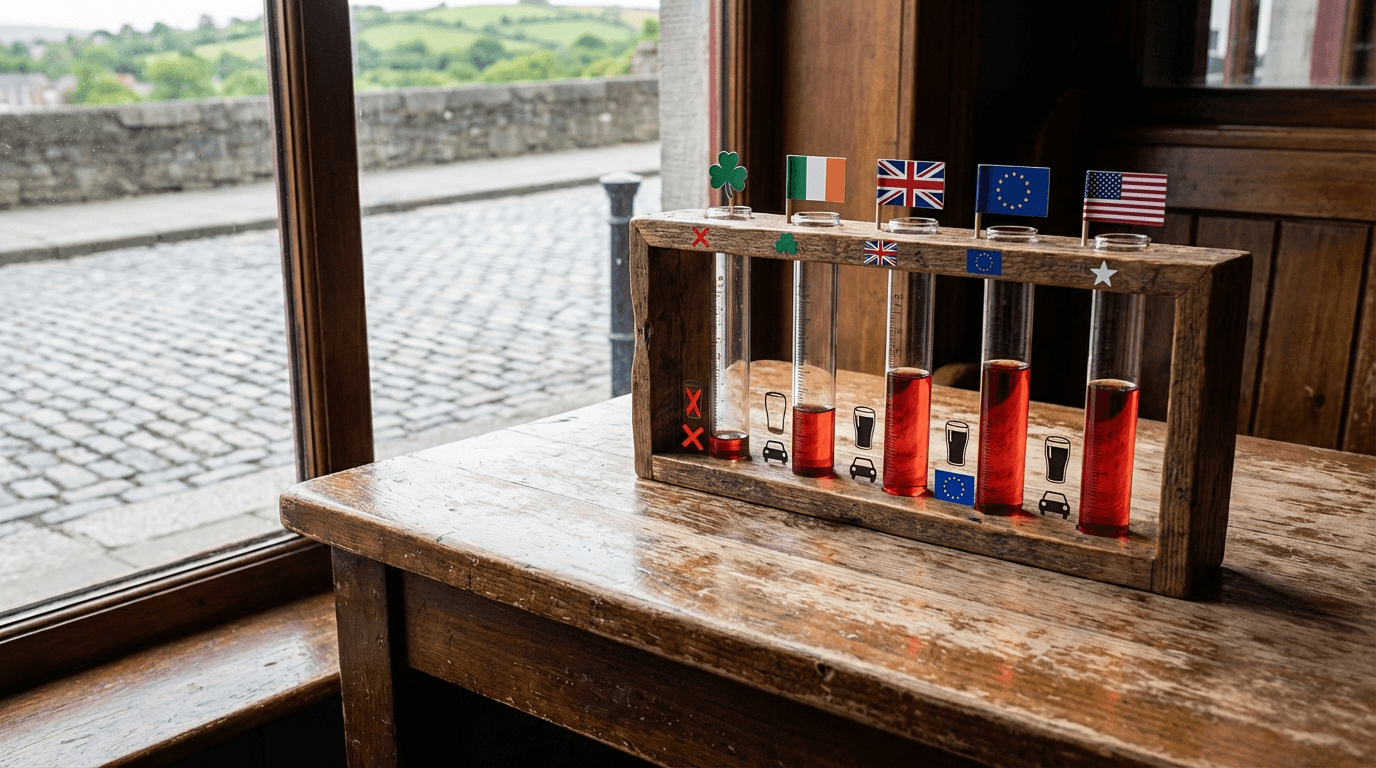
The Penalties: Automatic and Severe
Ireland treats drink driving seriously, with mandatory minimum penalties that judges cannot reduce:
First offence (50-80mg): Automatic 12-month driving ban, €400 fine, criminal record.
First offence (80-100mg): 24-month ban, €500 fine, potential imprisonment up to 6 months.
Above 100mg: Ban of 36+ months, fines up to €5,000, imprisonment up to 6 months.
Refusing to provide a sample: Automatic 48-month ban, €1,000 fine.

These are minimums. Aggravating factors increase penalties substantially. Causing death while drink driving carries up to 14 years imprisonment.
A drink driving conviction in Ireland is recorded internationally through police databases. For Americans, this can affect Global Entry status and employment background checks.
Gardaí can impound your rental car immediately. Rental companies often void insurance for drink driving incidents — meaning you're personally liable for damage.
How Gardaí Catch Drink Drivers
The Garda Síochána (Irish police) use several methods to detect drink driving:
Mandatory alcohol testing checkpoints: Gardaí can establish checkpoints where every driver must provide a breath sample. These appear regularly on major roads, especially Friday and Saturday nights, holiday weekends, and during festive seasons. You cannot refuse — failure to provide a sample carries penalties equivalent to the highest alcohol reading.
Random testing: Outside checkpoints, Gardaí can stop any vehicle and request a breath test if they suspect alcohol consumption. Erratic driving, speeding, or minor traffic violations provide justification. Once stopped, the smell of alcohol on breath is sufficient grounds for testing.
Intelligence-led operations: Areas around tourist destinations, airports, and ferry terminals see increased testing, particularly during summer months when visitors peak.
The testing process is straightforward. Gardaí use handheld breathalysers for roadside screening. Fail this, and you're arrested and taken to a Garda station for an evidential breath test on calibrated equipment. Refuse the evidential test, and you're charged with refusal — treated more severely than a positive reading.
Results are immediate. There's no "call your lawyer" delay, no option to request blood tests, no administrative review. Fail the evidential test, and you're processed, charged, and banned within hours.
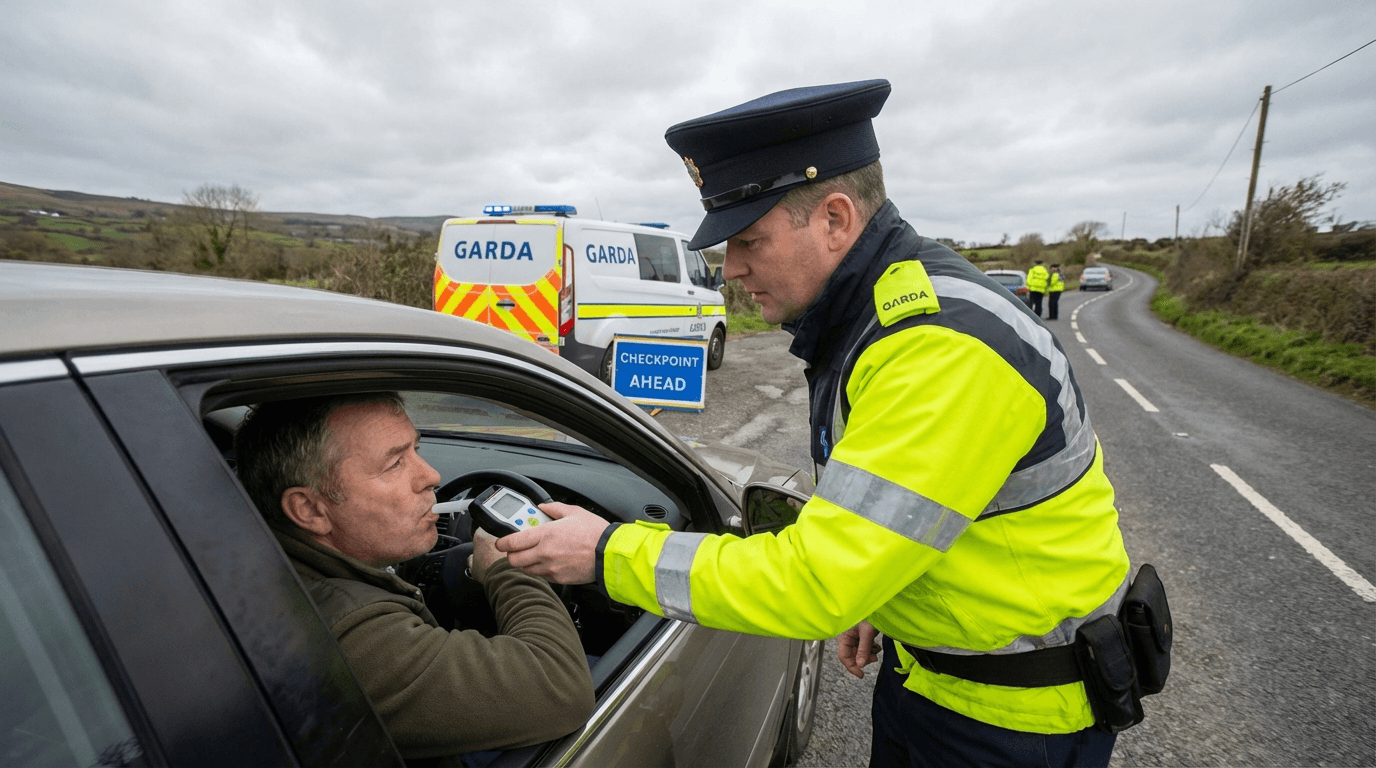
The Myths That Get Tourists in Trouble
Several dangerous misconceptions lead visitors into drink driving charges:
"One pint is fine": For most adults, one Irish pint consumed within an hour produces readings near or over the 50mg limit. Food, fatigue, and individual metabolism affect this, but "one pint is fine" is terrible advice.
"Coffee sobers you up": Caffeine masks impairment but doesn't reduce blood alcohol. You feel more alert while remaining legally over the limit.
"Sleeping it off works quickly": Alcohol metabolizes at roughly one standard drink per hour, but this varies enormously. Eight hours after heavy drinking, you may still be over the limit.
"I'm a good driver when tipsy": Impairment begins below legal limits. Reaction times, judgment, and coordination deteriorate measurably after even small amounts of alcohol.
"They won't stop tourists": Gardaí absolutely do stop tourists. Rental car plates (marked with specific registration formats) actually attract attention, as visitors are known to underestimate Irish limits and driving conditions.
"I can talk my way out of it": No, you cannot. Gardaí follow strict procedures. Politeness and cooperation are advisable; attempts to negotiate or evade are not.
The Private Driver Solution
Given these realities, how do visitors experience Irish pubs, distilleries, and restaurants without risking their licenses?
Public transport: Excellent in Dublin; limited elsewhere. Buses and trains serve major towns but rarely reach rural pubs or distillery locations. Last services typically run before pub closing times.
Taxis: Available in towns and cities but scarce in rural areas. Apps like Uber and Free Now work in major centres. Costs add up quickly for multi-stop days.
Walking: Feasible in town centres but dangerous on unlit rural roads without pavements. Irish weather is unpredictable; walking distances in rain is unpleasant.
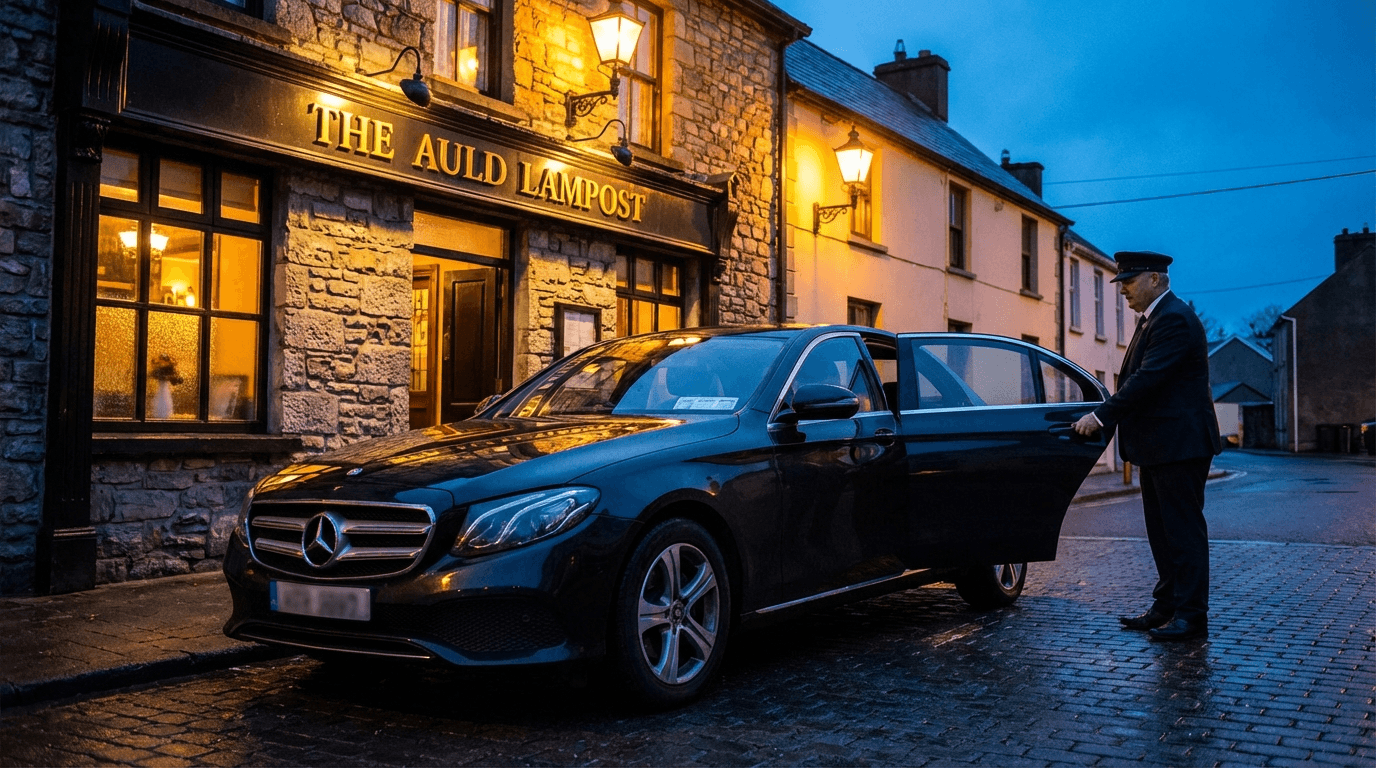
The Private Driver: This is where the equation changes. A professional driver handles the roads while you enjoy every experience fully. They know the routes, the parking, the shortcuts. They wait during your distillery tour, your pub lunch, your restaurant dinner. They ensure you return to your accommodation safely, legally, and without the white-knuckle stress of navigating unfamiliar roads after even moderate drinking.
Think about the economics. A drink driving conviction costs thousands in fines, legal fees, lost deposits, and increased insurance premiums for years. A Private Driver for a day costs a fraction of that, split across your group. The maths is obvious; the peace of mind is priceless.
Planning Your Ireland Trip: Practical Strategies
Smart trip planning eliminates drink driving risk entirely:
Designate non-drinking days: Schedule your distillery tours, pub visits, and wine-paired dinners for days when you're not driving between destinations. Use public transport or drivers for these experiences.
Stay walking distance: Choose accommodation within walking distance of dinner venues and pubs. Many Irish towns have excellent restaurants and traditional pubs clustered centrally.
Cluster experiences: Rather than driving to a distillery, then a restaurant, then a pub, use a driver for the full day. This lets you visit multiple venues without multiple "just one drink" calculations.
Morning activities: Schedule driving for mornings, before any alcohol consumption. Plan afternoon/evening experiences for locations where you can walk or use alternative transport afterward.
The designated driver rotation: In groups, rotate who abstains each day. Everyone experiences Irish drinking culture; everyone stays legal.
Book drivers in advance: Private drivers get busy during summer months and festival weekends. Advance booking ensures availability and lets you plan confidently.
What If You're Already Over the Limit?
If you suspect you've consumed alcohol and must drive, the only safe choice is not driving. Options include:
Leaving the car: Many pubs and restaurants allow overnight parking. Return the following morning (after adequate sleep and food) to collect your vehicle.
Calling a taxi: Even expensive rural taxis cost less than a drink driving conviction. Most restaurants will call taxis for patrons.
Asking accommodation for help: Hotels and B&Bs regularly assist guests who've misjudged their drinking. They can arrange transport or advise on local options.
Emergency services: If you feel unwell or unsafe, call 999 or 112. Gardaí would rather help you find safe transport than arrest you later.
The crucial point: making the right choice when you've misjudged is embarrassing but harmless. Making the wrong choice is catastrophic.
The Bigger Picture: Irish Drinking Culture
Understanding drink driving laws requires understanding Irish drinking culture, which is more nuanced than stereotypes suggest:
Pace matters: Traditional Irish drinking emphasizes conversation over consumption. Multiple rounds spread across hours, with food, is standard. This culture actually supports the designated driver model — the driver enjoys the craic, the company, the music, while abstaining from alcohol.
Quality over quantity: Ireland's craft drinks renaissance — whiskey, gin, craft beer — emphasizes tasting and appreciation over volume. A distillery tour with small samples is different from a session drinking pints.
Respect for the road: Rural Ireland has seen too many tragedies from drink driving. There's genuine social stigma attached to driving after drinking, even below legal limits. Locals take this seriously; visitors should too.
The Garda presence: Unlike some countries where traffic laws are selectively enforced, Ireland's approach is consistent. The checkpoints, the testing, the penalties — they're real, regular, and non-negotiable.
Irish drinking culture is genuinely welcoming and convivial. It doesn't require alcohol consumption to participate fully. With proper planning — a Private Driver, public transport, or walking routes — you can experience everything Irish hospitality offers while remaining completely legal and safe.
Final Verdict: Don't Risk It
The mathematics are simple: a drink driving conviction costs thousands, ruins your holiday, creates legal complications lasting years, and risks lives including your own. A Private Driver costs a fraction of that and transforms your trip from stressful logistics into relaxed enjoyment.
Ireland's roads are challenging enough sober — narrow, winding, often unlit, with left-hand driving for those accustomed to the right. Adding alcohol creates unacceptable risk.
Every other article in The Water of Life: The Ultimate Guide to Irish Whiskey & Breweries — from Jameson to Bushmills to poitín — mentions distilleries, tastings, and pub experiences. Each assumes you're not driving afterward. The assumption is safety, legality, and responsibility.
Plan accordingly. Book your driver. Enjoy every drop. And arrive home with memories, not convictions.
Sláinte — responsibly.
---
Table of Contents
Share this post
More from the Blog

Cork to Blarney Castle Day Trip: The Stone, the Gardens and What Else to See
Plan a Cork to Blarney Castle day trip. Kiss the stone, explore the Poison Garden, and add Cork city, Fota or Kinsale for a full day out.

Cork to Cobh Day Trip: Titanic, Colourful Houses and Harbour History
Plan a Cork to Cobh day trip by train, car or private driver. Explore Titanic history, St Colman's Cathedral, Spike Island and the best harbour views.

Cork to Killarney Day Trip: Lakes, Mountains and Muckross in One Day
A Cork to Killarney day trip is a longer escape into Kerry. Here's how to plan the drive, what to see in Killarney National Park, and why a private driver helps.