
Best Dublin Whiskey Tours: Teeling, Roe & Co, and Pearse Lyons
Walk through Dublin's Liberties neighbourhood today and you'll smell it before you see it — that sweet, malty vapor drifting from copper pot stills, weaving between modern apartment blocks and Victorian streetscapes. This is the new whiskey Dublin, where a renaissance is happening in real-time, and visitors can watch working distilleries create spirits that won't be ready for years.
For decades, Dublin was a whiskey desert. The last distillery closed in 1976. Tourists visited the Jameson visitor centre on Bow Street and assumed they were seeing production, not realizing the actual whiskey was made 260km away in Cork. The tradition that had defined Dublin for centuries — think of the Whiskey Island, the warehouses along the Grand Canal, the 37 distilleries operating in 1900 — was gone.
Then, in 2015, Teeling Whiskey opened on Newmarket Square. Two years later, Roe & Co launched in the old Guinness power station on James's Street. Pearse Lyons followed, establishing itself in a former church on James's Street. Dublin whiskey was back, and this time it was different: smaller scale, experimental methods, and an emphasis on craft over volume.
These aren't museums or visitor centres. They're working distilleries where you can smell the mash, hear the stills bubble, and taste whiskey drawn straight from casks. The experience is more intimate, more educational, and significantly more authentic than the polished operations at Bow Street or the Storehouse.
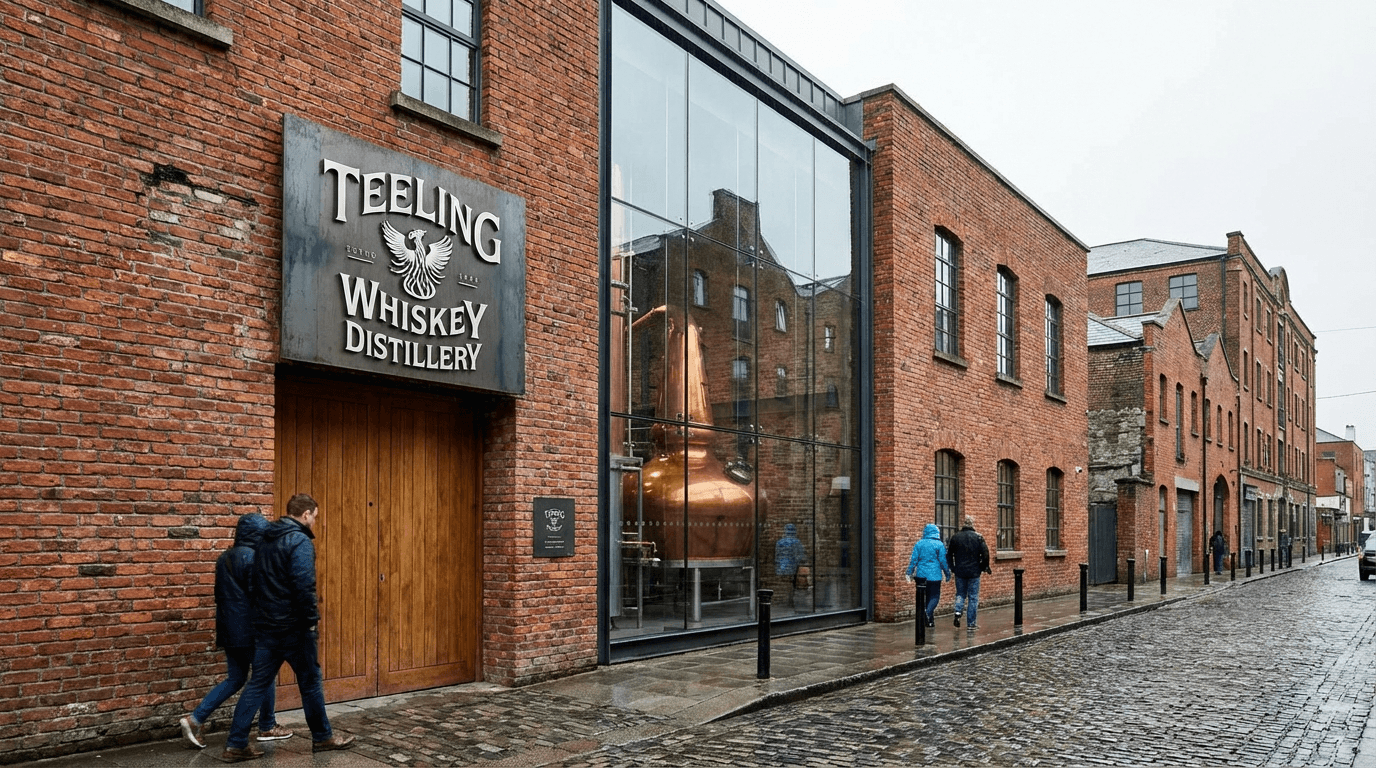
Teeling Whiskey: The First Movers
Teeling didn't just reopen Dublin distilling — they reimagined it. Brothers Jack and Stephen Teeling are whiskey royalty (their father founded Cooley Distillery), but they chose to start small, experimental, and urban. The Newmarket Square facility produces just 500,000 litres annually — roughly 1% of Midleton's output — but every drop is crafted with obsessive attention.
The tour (£20) begins with a fundamental difference: you're entering an active production facility, not a visitor centre grafted onto history. The stills run Monday through Friday. Depending on timing, you'll see grain being milled, mash being stirred, or spirit dripping from the condensers. The scale is intimate enough that you can ask questions and get detailed answers from distillers who aren't reciting scripts.
Teeling's signature is innovation. While Irish whiskey tradition emphasizes triple distillation for smoothness, Teeling experiments with different grain bills, yeast strains, and cask finishes. Their Revival series ages whiskey in rum casks, wine casks, and even calvados barrels. The result is a portfolio that challenges the "smooth but boring" stereotype of Irish whiskey.
The tasting includes four expressions: the Small Batch (rum cask finished), Single Grain (wine cask matured), Single Malt (double-distilled, unusually for Irish whiskey), and either the Revival or a distillery-exclusive bottling. Your guide explains the production choices behind each — why rum casks add tropical fruit notes, why wine casks contribute tannins and structure, why double distillation creates a heavier, more textured spirit.
What you won't find at Teeling: the multimedia presentations, the scripted tours, the gift-shop overload of bigger operations. This is whiskey nerdery for people who want to understand why their drink tastes the way it does. It's not for everyone — casual visitors might prefer Bow Street's spectacle — but for enthusiasts, it's revelatory.
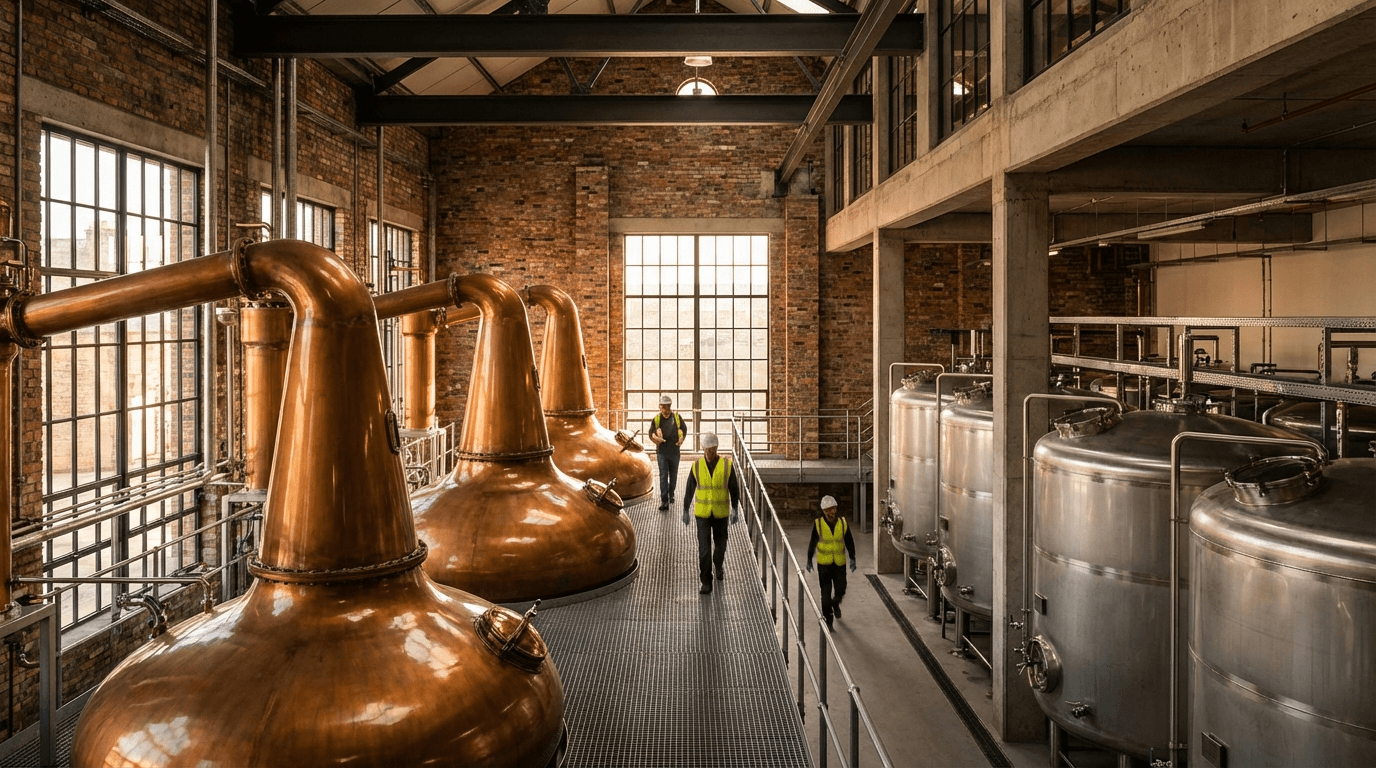
Roe & Co: Guinness's Whiskey Gambit
Roe & Co occupies the most dramatic location of the three: the former Guinness power station on James's Street, a cathedral of brick and steel that once generated electricity for the brewery. The conversion is stunning — soaring ceilings, industrial-chic tasting rooms, and views across Dublin from the rooftop bar.

The history here runs deep. George Roe founded his distillery on Thomas Street in 1757. By 1887, it was the largest whiskey distillery in Europe, producing two million gallons annually. The brand dominated Dublin whiskey until Prohibition and industry consolidation killed it in the 1920s. Diageo (Guinness's parent company) revived the name in 2017, building a new distillery in the power station and positioning it as a premium Irish whiskey.
The experience (£25) emphasizes cocktails and blending over straight production tours. You begin with a Roe & Co cocktail in the main bar, then move to a blending session where you create your own whiskey by mixing different cask samples. It's less technical than Teeling, more social and experiential. The rooftop bar — with views across Dublin toward the Wicklow Mountains — is the selling point.
The production tour, if you request it, shows you the working stills and explains Roe & Co's philosophy: double-distilled whiskey (heavier, more flavorful than triple-distilled), aged in bourbon casks with no finishing. It's a deliberate contrast to Teeling's experimental approach — Roe & Co aims for consistency and accessibility, not boundary-pushing.
Critics call it "Guinness whiskey" with justified cynicism — this is corporate whiskey, backed by Diageo's marketing billions, trading on a historic name without genuine continuity. Defenders argue that Dublin needed a major brand to anchor the revival, and Roe & Co's quality justifies the hype. The truth sits somewhere between: it's polished, drinkable, and lacks the character of Teeling's wilder experiments, but it's bringing money and attention to Dublin whiskey that benefits everyone.
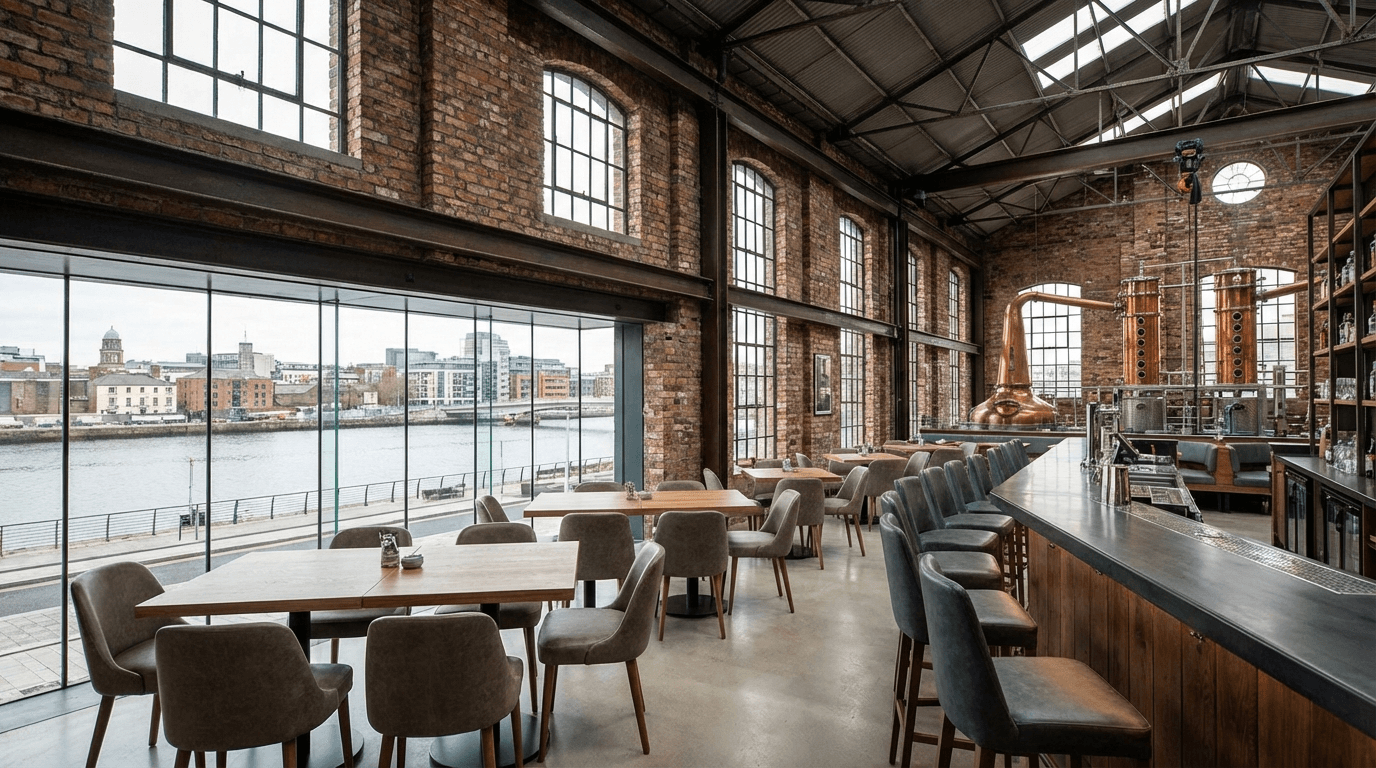
Pearse Lyons: Whiskey in a Church
The most visually striking of the three distilleries, Pearse Lyons occupies St. James's Church — a deconsecrated 19th-century church on James's Street that sat derelict for decades. The conversion preserves the exterior while transforming the interior into a working distillery, with copper stills installed where the altar once stood and fermentation tanks occupying the nave.
Founder Pearse Lyons was a Dublin-born scientist who built Alltech — a multi-billion dollar animal nutrition company — before returning to his roots to establish the distillery in 2017. He died in 2018, but the operation continues under family ownership, producing both whiskey and gin in the unique space.
The tour (£18) leans heavily on the building's history. You learn about the church's 1859 construction, its deconsecration in the 1960s, and the ambitious renovation that converted a ruined ecclesiastical space into a working distillery. The stills — named after Lyons and his wife — gleam under the church's original stained glass windows, creating a genuinely surreal visual.
The whiskey itself is straightforward: triple-distilled, bourbon cask matured, designed for accessibility rather than complexity. The gin, distilled in smaller batches with local botanicals, often receives more attention from visitors. The tour includes tastings of both, with the guide explaining the production differences between whiskey (aged, grain-based, complex regulations) and gin (unaged, botanical-focused, more experimental freedom).
Pearse Lyons occupies an awkward middle ground. It lacks Teeling's craft credibility and Roe & Co's corporate polish. But the building is unforgettable, the tours are intimate (groups rarely exceed ten people), and the location — directly across from the Guinness Storehouse — makes it easy to combine with Dublin's biggest tourist draw.
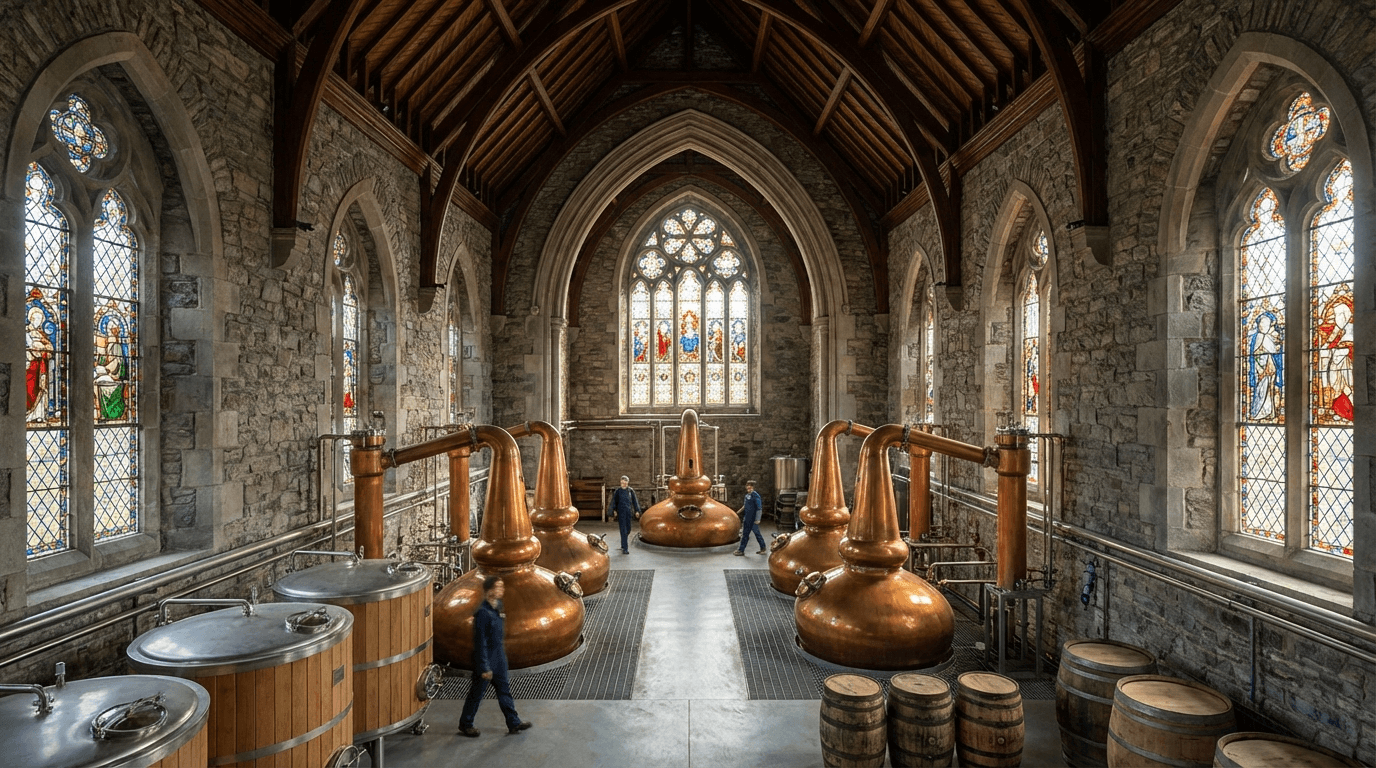
Comparing the Three: Which Should You Visit?
Each distillery serves different interests and expectations:

Choose Teeling if: you want technical depth, production innovation, and whiskey that challenges conventions. The experimental finishes, the double-distilled single malt, the knowledgeable guides — this is where whiskey enthusiasts find their people.
Choose Roe & Co if: you want atmosphere, cocktails, and spectacular views. The power station conversion is stunning, the rooftop bar is worth the visit alone, and the blending session offers hands-on engagement without requiring deep whiskey knowledge.
Choose Pearse Lyons if: you value uniqueness and intimacy. The church conversion is genuinely unforgettable, the small groups allow real conversation with guides, and the location makes it easy to combine with Guinness or other Liberties attractions.
The insider move: Visit all three. They're within a ten-minute walk of each other in the Liberties. Start at Teeling for the technical education, move to Roe & Co for the atmosphere and views, finish at Pearse Lyons for the ecclesiastical oddity. Budget two to three hours total.
The practical warning: Three distillery tastings in one afternoon is a lot of alcohol. Irish drink driving laws are strict — 50mg limit, roughly one small drink. Even moderate portions across three venues puts you over. The Liberties is walkable, but if you're heading out of the city, you need a plan that doesn't involve you behind the wheel.
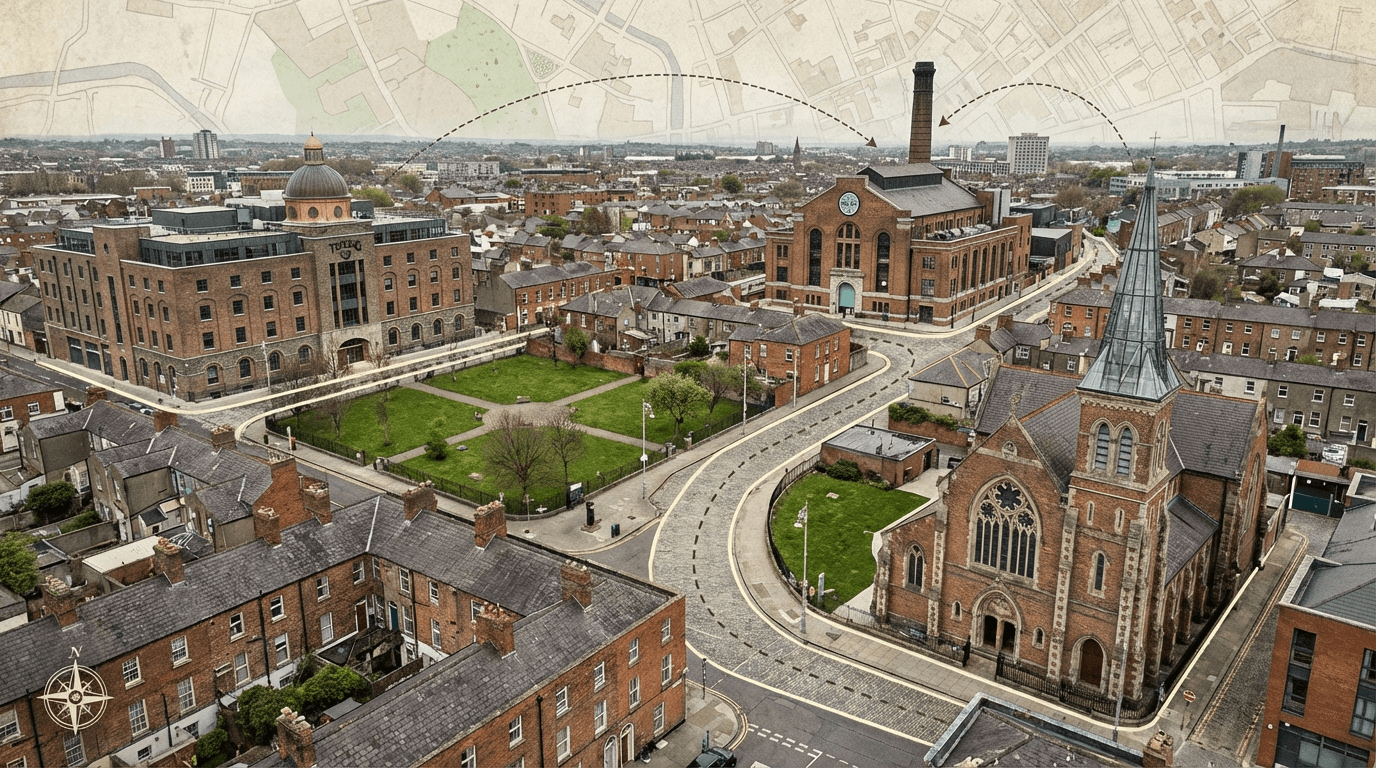
The Bigger Picture: Dublin's Whiskey Renaissance
These three distilleries represent just the beginning. The Dublin Whiskey Company is building a massive facility on the site of the old John's Lane distillery. Within a decade, Dublin could have a dozen working distilleries, recreating something like the density that existed in 1900.
What's driving this revival? Whiskey is booming globally, and Irish whiskey is the fastest-growing category. Visitors want authentic experiences, and "watching whiskey being made" beats "walking through a museum about whiskey that used to be made here." Dubliners wanted their distilling heritage back.
There's genuine craft happening too. Teeling's experiments with cask finishes push Irish whiskey into new flavor territories. Roe & Co's focus on double distillation challenges the triple-distillation orthodoxy. New distilleries are planting their own barley and aging whiskey in Irish oak rather than imported wood.
When visitors ask about "real" Dublin whiskey experiences, the answer is no longer "take the train to Cork." It's "walk ten minutes from Temple Bar to the Liberties and smell the future being distilled."
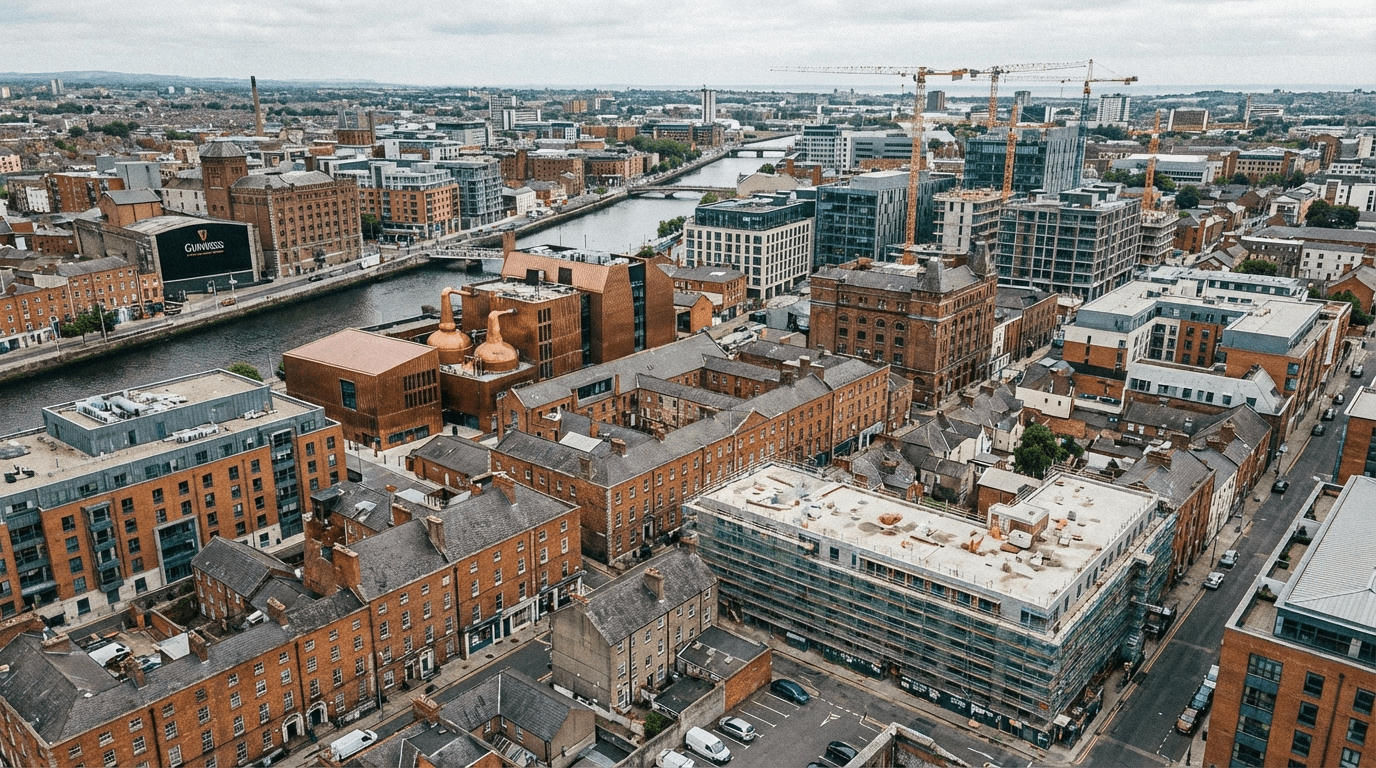
How to Visit: Logistics and Tips
All three distilleries require advance booking, especially on weekends. Teeling and Roe & Co sell out regularly; Pearse Lyons is smaller and fills even faster.

Teeling: Newmarket Square, Dublin 8. Tours run hourly 10:30am-5:30pm Wednesday-Sunday. Closed Monday-Tuesday. €20 standard, €45 for the "Teeling Tasting" with five expressions.
Roe & Co: 92 James's Street, Dublin 8. Tours run every 30 minutes 10am-6pm daily. €25 standard, includes cocktail and blending session. Rooftop bar open to tour guests and reservations.
Pearse Lyons: 121-122 James's Street, Dublin 8. Tours run at 1pm, 3pm, and 5pm Thursday-Sunday. €18 standard. Groups strictly limited to 10 people.
Getting there: All three are walkable from Temple Bar (20-25 minutes) or reachable via the Luas red line to James's Street or Fatima stations. The area is also well-served by Dublin Bus routes 13, 40, and 123.
Eating nearby: The Liberties food scene has exploded alongside the distilleries. The Fumbally serves excellent brunch and coffee. Two Pups Coffee is a local favorite for caffeine between tastings. The Square Ball offers gastropub fare and more whiskey than any reasonable person needs.
The driver question: If you're visiting multiple distilleries and plan to taste at each, don't drive. Dublin's public transport handles the Liberties well, taxis are plentiful, and a Private Driver lets you combine distillery hopping with other Dublin attractions without worrying about blood alcohol limits. The Drink Driving Laws in Ireland don't care that you're on holiday — one pint puts you over, and the Gardaí patrol tourist areas regularly.
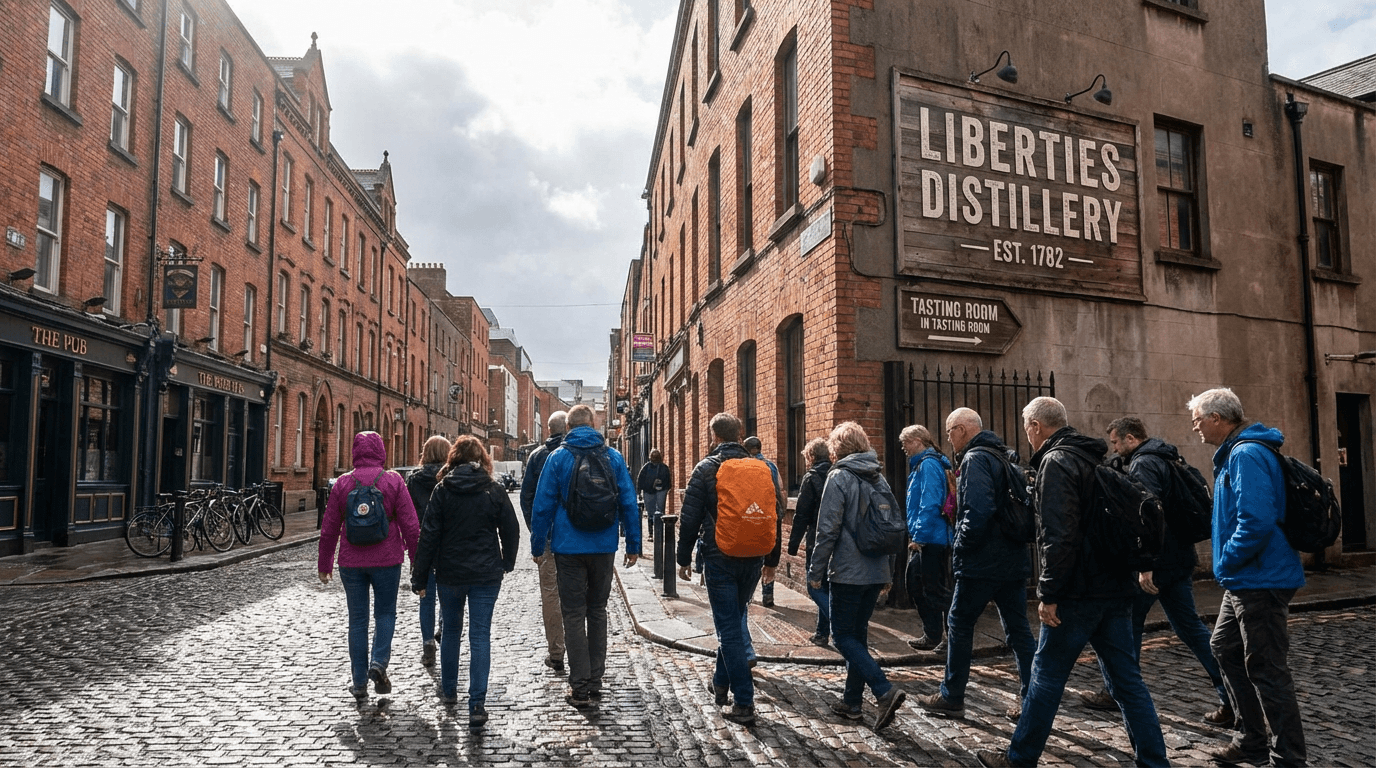
Final Verdict: The New Wave Is the Real Dublin
For years, Dublin's whiskey reputation rested on history and marketing rather than actual production. Visitors toured Bow Street, assumed they were seeing whiskey being made, and left with a distorted understanding of Irish distilling.
The new wave changes everything. Teeling, Roe & Co, and Pearse Lyons are producing whiskey in Dublin, right now, using methods both traditional and innovative. You can watch it happen, smell the results, and taste spirits that represent the full spectrum of what Irish whiskey can be — from Teeling's experimental wildness to Roe & Co's polished accessibility to Pearse Lyons's ecclesiastical oddity.
These aren't replacements for Jameson or Bushmills or Midleton. They're additions — proof that Irish whiskey is entering a new golden age, and that Dublin is reclaiming its place at the center of it.
The Water of Life: The Ultimate Guide to Irish Whiskey & Breweries — the master hub — covers Ireland's full whiskey landscape, from the historic giants to these new craft heroes. Whether you're a serious enthusiast or a curious tourist, Dublin's whiskey renaissance offers something worth discovering. Just arrange your transport before the tastings begin.
Sláinte.
---
Table of Contents
Share this post
More from the Blog

Cork to Blarney Castle Day Trip: The Stone, the Gardens and What Else to See
Plan a Cork to Blarney Castle day trip. Kiss the stone, explore the Poison Garden, and add Cork city, Fota or Kinsale for a full day out.

Cork to Cobh Day Trip: Titanic, Colourful Houses and Harbour History
Plan a Cork to Cobh day trip by train, car or private driver. Explore Titanic history, St Colman's Cathedral, Spike Island and the best harbour views.

Cork to Killarney Day Trip: Lakes, Mountains and Muckross in One Day
A Cork to Killarney day trip is a longer escape into Kerry. Here's how to plan the drive, what to see in Killarney National Park, and why a private driver helps.