
Newgrange & Knowth: How to Access the Boyne Valley Tombs (Winter Solstice)
There is a moment, just before dawn on the winter solstice, when a single beam of sunlight pierces the darkness of a passage tomb older than Stonehenge and the Egyptian pyramids. For seventeen minutes, golden light creeps along the stone floor of Newgrange, illuminating a chamber that has witnessed 5,000 winters. This is the Newgrange winter solstice phenomenon, and securing a spot inside that chamber on 21 December requires winning a lottery that receives over 30,000 entries each year.
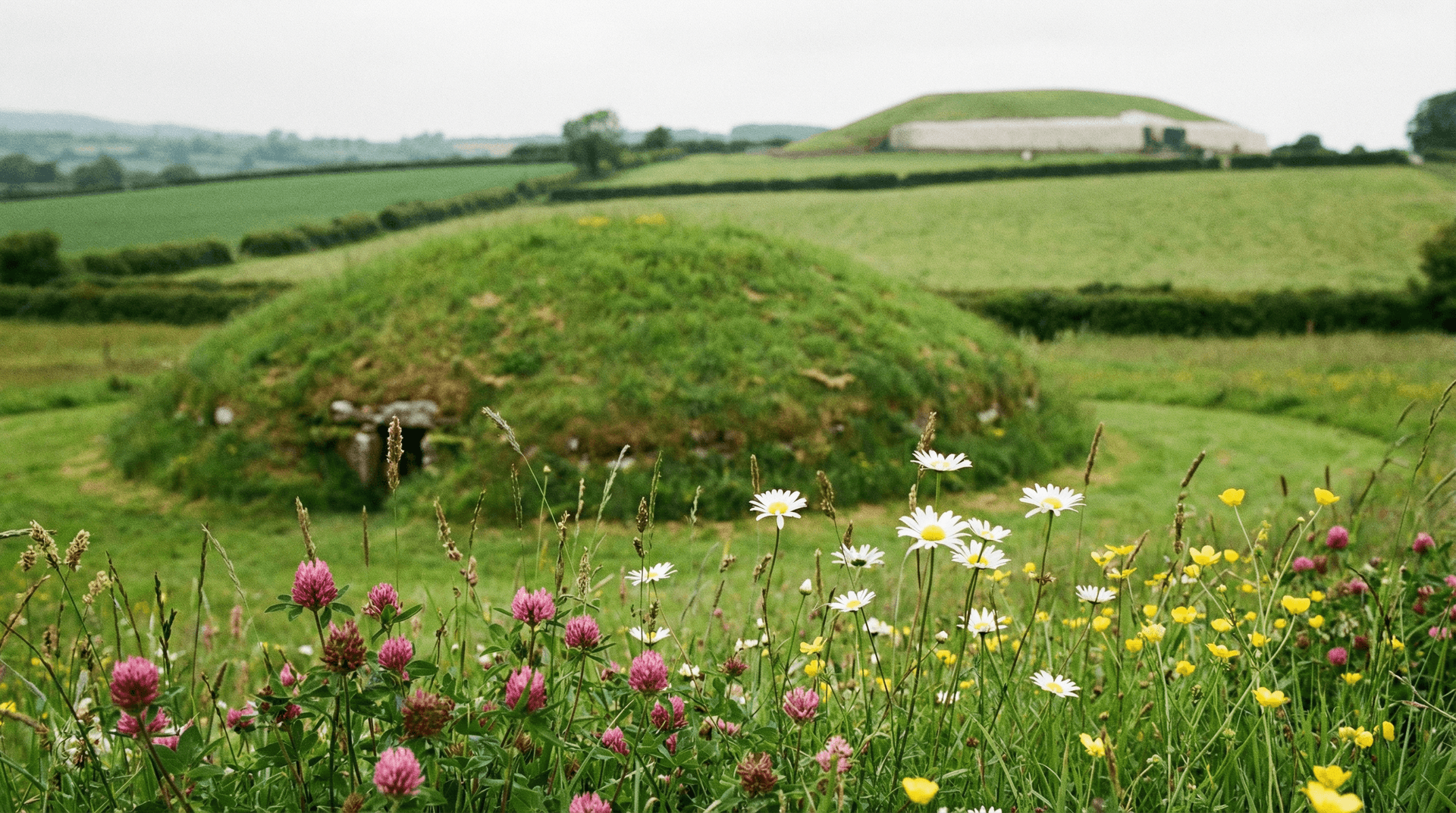
But here is what most visitors do not realise: the Boyne Valley tombs are extraordinary on any day of the year, not just the solstice. Newgrange and its sister sites Knowth and Dowth form the heart of a UNESCO World Heritage landscape that holds more than ninety recorded monuments within a few square kilometres. The passage tombs here represent the pinnacle of Neolithic engineering and spiritual expression in Western Europe. Yet the average visitor sees only the main mound, misses the satellite tombs entirely, and leaves without understanding what they have witnessed.
This guide explains exactly how to access Newgrange, Knowth, and the wider Boyne Valley tomb complex. We will cover the lottery system for solstice sunrise, standard tour bookings, what each site offers, and why travelling with a Historical Expert rather than relying on the standard visitor centre presentation will transform your experience from a brief stop into a genuine encounter with Ireland's deepest past.
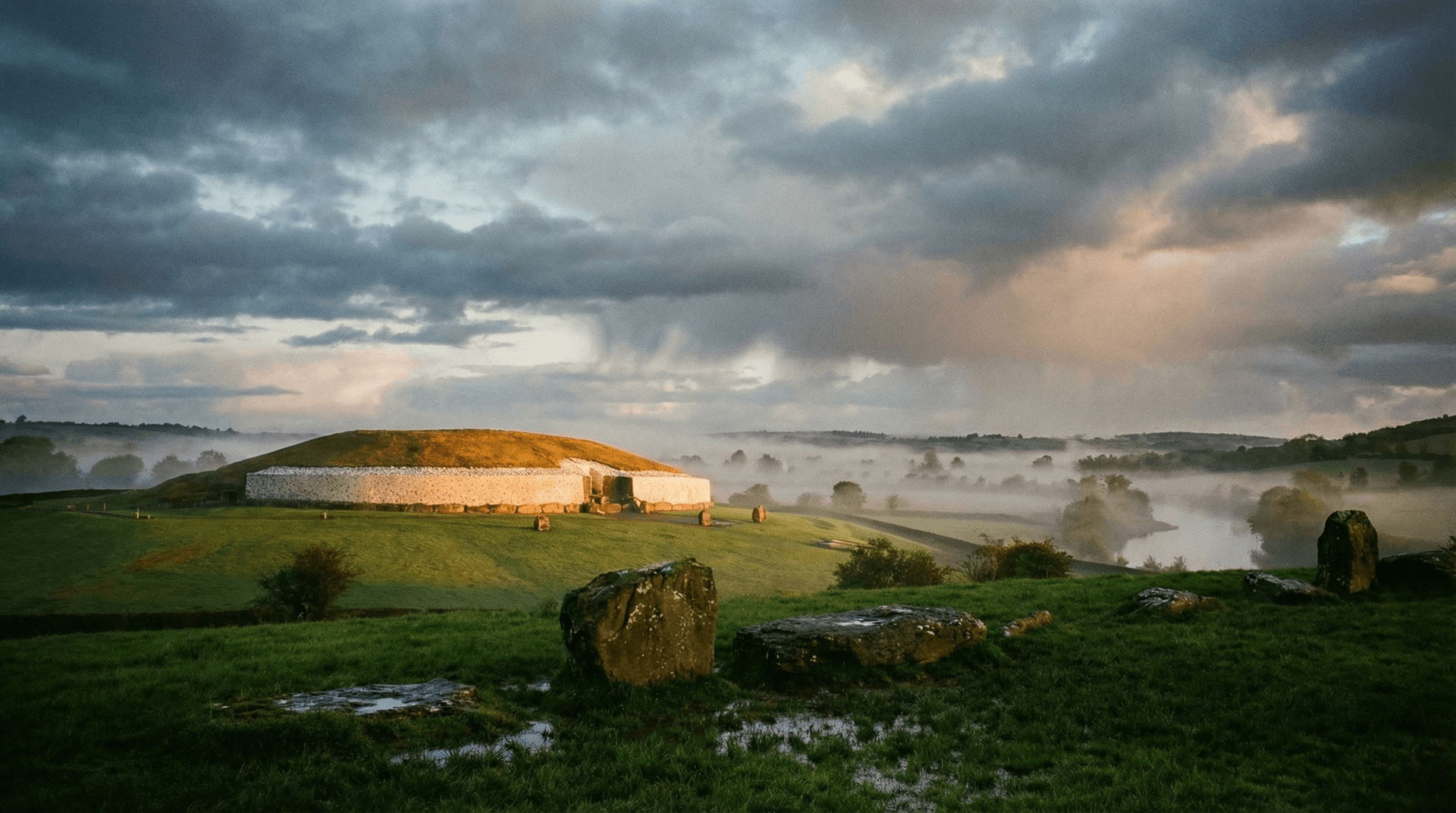
Understanding the Boyne Valley Tomb Complex
The passage tombs of the Boyne Valley were constructed approximately 5,200 years ago by communities who had established farming settlements in this fertile river valley. These were not primitive people struggling to survive. They were sophisticated agriculturalists with sufficient surplus to dedicate enormous labour to projects that served no practical purpose—only spiritual significance.
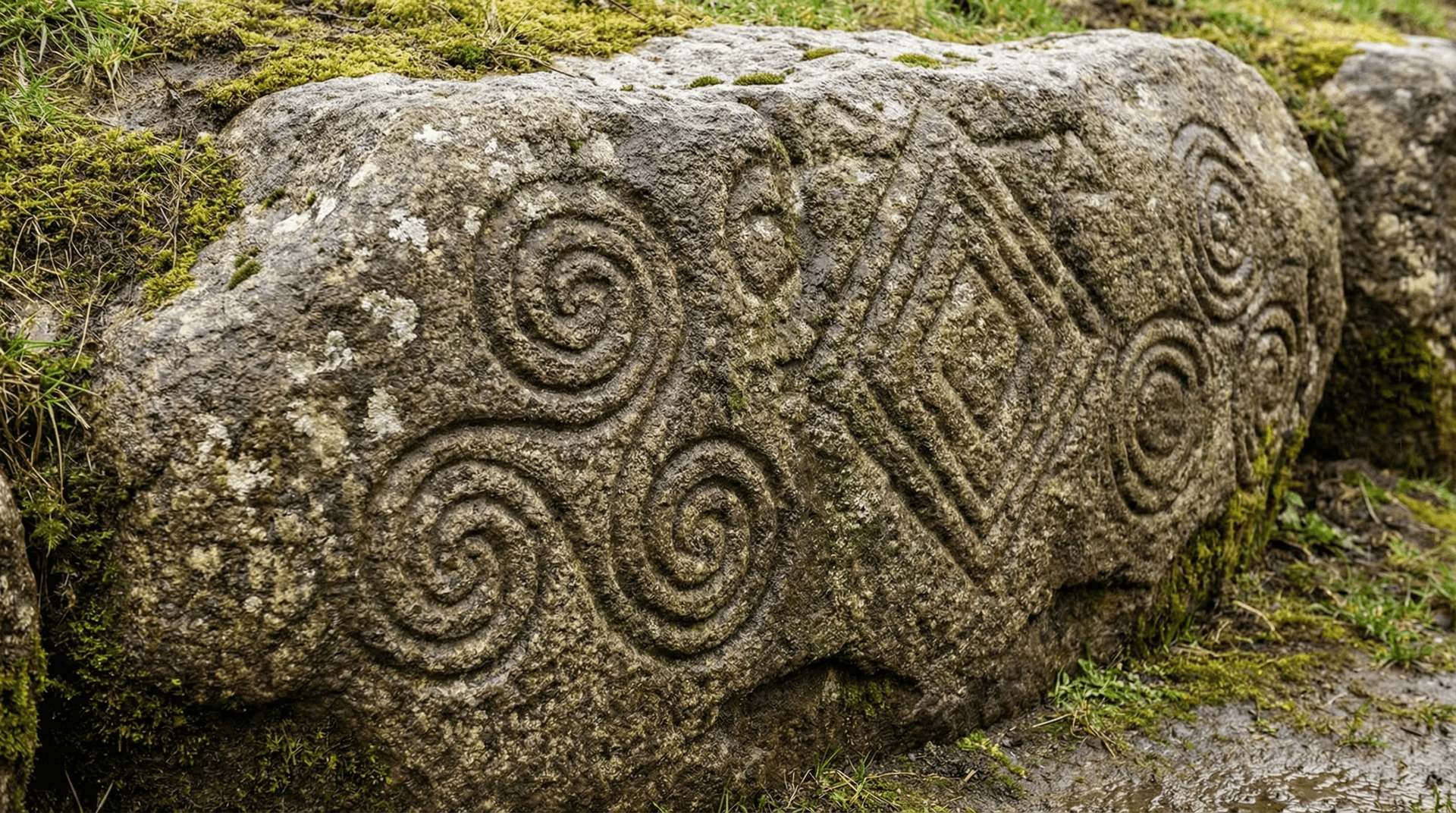
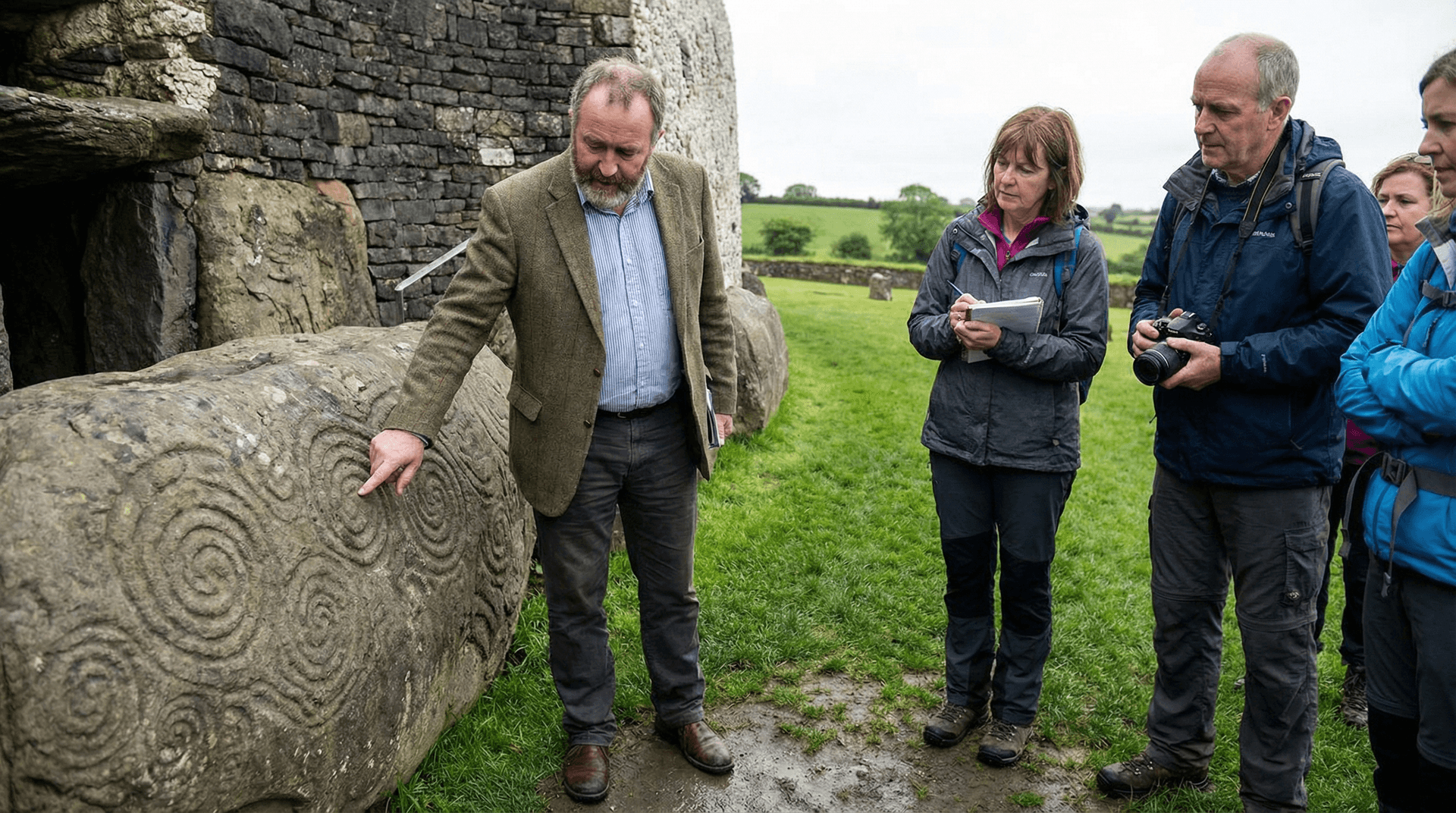
Newgrange is the most famous of the three principal tombs, but it is not necessarily the most impressive. The mound measures 85 metres in diameter and stands 13 metres high. Its passage extends 19 metres into the heart of the structure, leading to a cruciform chamber with three alcoves. The corbelled roof—constructed without mortar—has remained watertight for five millennia. The famous kerbstones surrounding the base display megalithic art, with the entrance stone bearing the most celebrated spirals in Irish archaeology.
Knowth, just a few minutes' walk away, actually contains two independent passage tombs within its larger mound, plus seventeen smaller satellite tombs encircling it. The western tomb aligns with the setting sun at the equinoxes, while the eastern tomb may have had a solar alignment now blocked by the mound's growth. Knowth holds the greatest concentration of megalithic art in Europe—over 200 decorated stones bearing geometric patterns whose meanings remain debated.
Dowth, the third great tomb, has never been fully excavated or restored. Visitors can approach its massive mound but cannot enter the passages, which remain closed to the public. This makes Dowth the quietest of the three sites and, for some, the most atmospheric. The name derives from the Irish 'Dubhadh,' meaning 'darkness,' and local tradition connects it with the winter solstice sunset—complementing Newgrange's dawn alignment.
How to Book Standard Tours: The Brú na Bóinne System
All visits to Newgrange and Knowth begin at the Brú na Bóinne Visitor Centre, located on the south bank of the River Boyne. You cannot drive directly to the monuments—access is via shuttle bus from the centre only. This system serves two purposes: it protects the archaeological landscape from traffic, and it allows guided interpretation during the short journey.
Booking in advance is absolutely essential from April through September, and strongly recommended year-round. The official heritage website (heritageireland.ie) releases tickets approximately three months ahead. Tours frequently sell out, particularly for the Newgrange chamber visit.
Two tour options exist. The combined Newgrange and Knowth tour lasts approximately three hours including transport time. You will visit both monuments, entering Newgrange's chamber but viewing Knowth's passages from the entrance only (the eastern passage is too narrow for public access). The Newgrange-only tour focuses entirely on the famous mound and includes the full chamber experience with the electric light demonstration that simulates the solstice sunrise effect.

The visitor centre itself merits attention. The exhibition explains the construction techniques, the cultural context of the Neolithic period, and the subsequent history of the monuments—including the Victorian-era 'restoration' of Newgrange that remains controversial among archaeologists. Allow forty-five minutes before your tour to absorb this context.
Tour Logistics
The visitor centre operates from 9:00 AM, with final tours departing approximately ninety minutes before closing. Closing times vary seasonally—5:00 PM in winter, 6:30 PM in summer. The combined tour costs roughly €18 per adult, with the Newgrange-only option slightly cheaper. Parking at the centre is free but limited; arriving thirty minutes before your scheduled tour allows time to collect tickets and use the facilities.
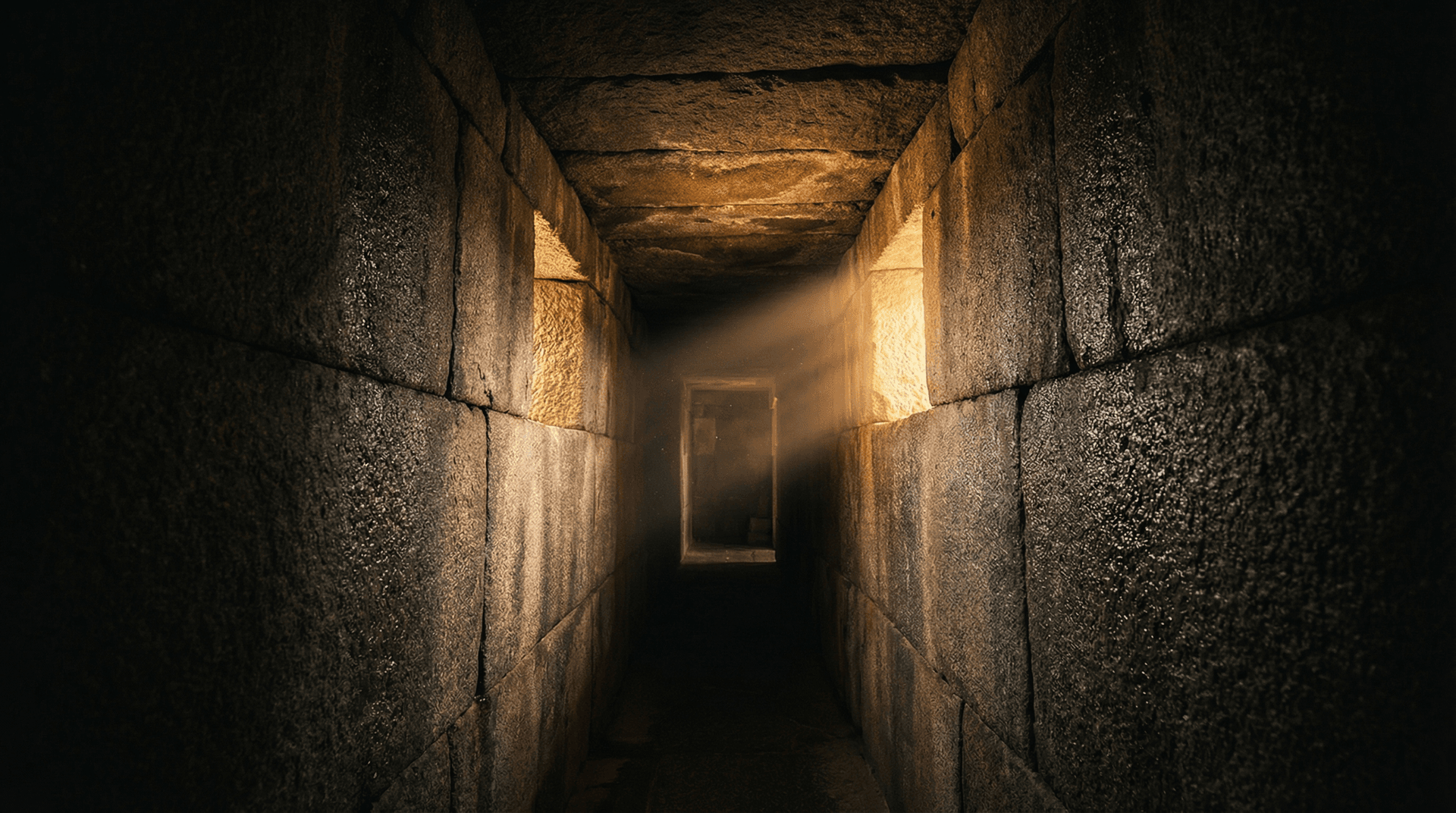
Accessibility is limited. The passage into Newgrange requires visitors to duck significantly and navigate uneven stone floors. Those with mobility issues, claustrophobia, or back problems may prefer to view the chamber via the exhibition's video simulation rather than attempting the actual passage. Knowth presents fewer physical challenges as the passages are not entered.
The Winter Solstice Lottery: How to Witness the Real Sunrise
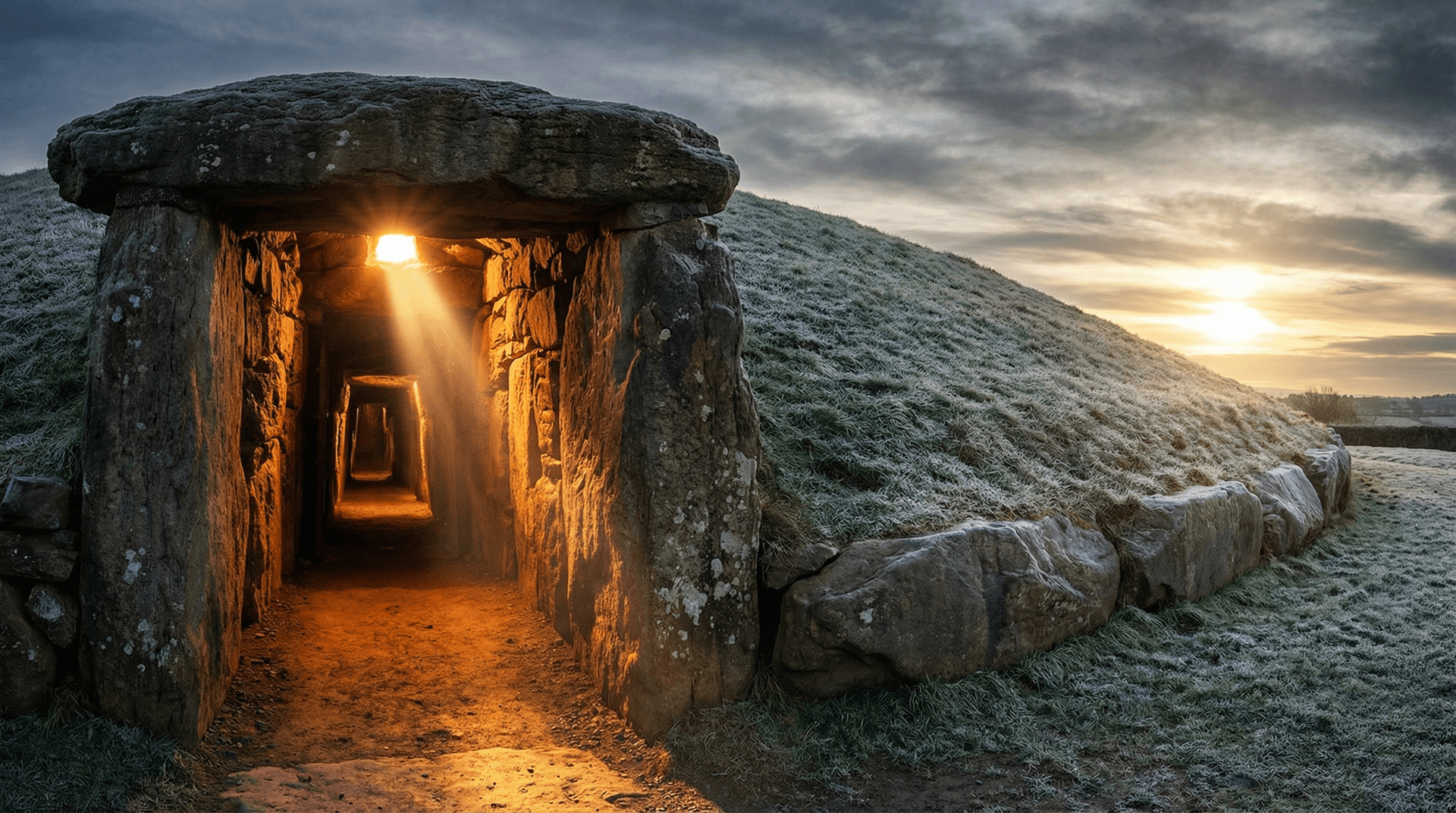
The roof box above Newgrange's entrance was designed with precision engineering that admits sunlight only at dawn during a few days surrounding the winter solstice. When conditions are clear, the beam illuminates the passage and chamber with an intensity that electric simulation cannot replicate. Standing in that chamber as the darkness dissolves is an experience that transcends tourism—it becomes pilgrimage.
Each year, the Office of Public Works accepts applications for the Winter Solstice Lottery. Approximately thirty thousand people apply for roughly sixty places across the five mornings when illumination is possible (the days bracketing the solstice). The odds are approximately 1 in 500, comparable to securing tickets for major sporting events.
Applications typically open in late September and close in late October. You apply through the heritage website, selecting which mornings you could attend (fewer date options increase your chances). Winners are drawn randomly in early November. If selected, you receive two places—you may bring one guest. There is no charge for solstice admission beyond the standard lottery application.
The morning itself requires preparation. You must arrive at the visitor centre by approximately 8:00 AM. Staff transport winners to the mound in darkness. You wait outside as the sky lightens, then enter the passage and chamber to await the sunrise. The experience lasts roughly one hour. December mornings in Meath are cold, often wet, and always dark—bring warm, waterproof clothing and a torch.
Cloud cover cancels everything. If the morning is overcast, you will wait in darkness and experience nothing but a gradual greying of the roof box. The lottery does not offer refunds or transfers for weather. Many solstice veterans apply multiple years before winning and encountering clear skies.
Alternatives to the Lottery
If lottery odds seem discouraging, several alternatives exist. The visitor centre offers a live stream of the solstice sunrise inside the chamber, broadcast from cameras installed within the tomb. This guarantees a view regardless of weather or lottery luck.
Additionally, the chamber demonstration during standard tours uses electric lighting to replicate the solstice effect. While not identical to natural sunlight, it allows visitors to understand the architectural achievement and experience the atmosphere of the inner chamber. For most visitors, this simulation combined with visiting at equinox or solstice sunrise from outside the mound provides sufficient connection to the astronomical alignments.
Beyond the Main Monuments: Satellite Tombs and Lesser Sites
The standard visitor experience focuses entirely on Newgrange and Knowth, but the Brú na Bóinne complex contains dozens of additional monuments that few tourists ever see. These include smaller passage tombs, standing stones, henges, and prehistoric enclosures scattered across the ridge and floodplain.
The satellite tombs surrounding Knowth remain particularly evocative. While the main mound attracts crowds, these smaller structures sit quietly in the surrounding fields. Some contain passages that were partially excavated; others remain untouched mounds covered in grass. The concentration of monuments in this small area suggests it served as a major ritual and ceremonial centre for Neolithic Ireland—perhaps the equivalent of a cathedral complex or pilgrimage destination.
The nearby Fourknocks passage tomb offers an alternative experience. Unlike the managed Brú na Bóinne sites, Fourknocks remains unstaffed. You collect a key from a local farmhouse (leave a €20 deposit) and let yourself into the chamber. The experience of standing alone in a 5,000-year-old tomb, with no other visitors, no guides, and only the sound of your own breathing, offers an intimacy that the main sites cannot match. The art inside Fourknocks—including a remarkable carved face—ranks among the finest in Ireland.
Further afield, the Loughcrew Cairns in County Meath present another cluster of passage tombs atop a windswept hill. These receive far fewer visitors than Brú na Bóinne and offer exceptional views across the midlands. The climb is steep, but the reward is experiencing these ancient sites without crowds.
Why a Historical Expert Changes Everything
The visitor centre tour provides competent, standardised interpretation. You will learn basic facts about construction dates, excavation history, and astronomical alignment. What you will not receive is context—how these monuments connect to the broader sacred landscape of Ireland, how their builders understood the cosmos, and how these places remained spiritually significant for thousands of years after their construction.
A Historical Expert who specialises in Irish prehistory can transform your visit. They will explain the relationship between Newgrange and other passage tomb clusters at Loughcrew and Carrowmore. They can identify which carvings represent the oldest written language in Europe and which are purely decorative. They will connect the Boyne Valley tombs to the broader Sacred Ireland landscape that includes Skellig Michael, Glendalough, Croagh Patrick, the Rock of Cashel, the Hill of Tara, and Clonmacnoise—showing how spiritual geography has shaped the island for millennia.
More practically, a Historical Expert can structure your day to avoid the worst crowds, identify which satellite tombs merit exploration, and narrate the drive between sites with stories that bridge the five millennia between the tomb builders and ourselves. They know which farm tracks lead to viewpoints of Dowth that most visitors miss. They understand the agricultural calendar that governed these people's lives and can explain why the winter solstice mattered so profoundly to communities dependent on returning sunlight.
For visitors considering multiple sacred sites, the connections become crucial. The passage tomb tradition originated in Ireland and spread to Wales, Scotland, and Brittany. Understanding this cultural diffusion helps contextualise what you see at Newgrange against similar monuments elsewhere. Your Historical Expert can plan an itinerary connecting the Boyne Valley with the monastic sites at Glendalough and Clonmacnoise, showing the continuity and transformation of Irish spirituality across five thousand years.
Practical Planning Tips
The Boyne Valley sits approximately fifty minutes north of Dublin by car. Public transport is limited—a bus runs from Drogheda to the visitor centre, but services are infrequent. Most visitors drive or hire a Private Driver to handle navigation and parking. The rural roads surrounding the monuments are narrow, winding, and poorly signposted—precisely the conditions where a local driver's experience proves invaluable.
Combine your tomb visit with other Boyne Valley attractions. The Battle of the Boyne site, Oldbridge House, and the 17th-century gardens make worthwhile additions. The town of Drogheda offers excellent lunch options and the remarkable severed head of Saint Oliver Plunkett in Saint Peter's Church—a curiosity that connects medieval and modern Irish history.
Morning tours offer the best experience—crowds build from late morning onward. If you must visit in summer, the 9:00 AM opening slot provides the most atmospheric chamber experience before the day's heat and foot traffic accumulate. Photography is prohibited inside the chambers to protect the ancient stones from flash damage and congestion.
What to Bring
The Boyne Valley is exposed and often windy. Waterproof outer layers serve you better than umbrellas. Sturdy walking shoes handle the uneven ground around the monuments. In winter, a torch proves useful for the path from the shuttle drop-off point to the tombs. The visitor centre has a cafe, but it closes earlier than the final tours—bring water and snacks if visiting late in the day.
Children under six may find the chamber experience unsettling—the darkness, confined space, and solemn atmosphere prove challenging for young visitors. The exhibition centre offers more appropriate engagement for families with small children, with interactive displays and outdoor space to run between the shuttle buses.
Conclusion: The Journey Inward
Newgrange and Knowth offer something increasingly rare in modern travel: genuine encounter with deep time. These structures were ancient when Rome was founded, when the pyramids were still new, when written history had not yet begun. To stand in those chambers is to touch the lives of people who lived, loved, buried their dead, and watched the same winter sun you will watch.
Whether you witness the actual solstice sunrise or experience the simulation on an ordinary Tuesday, the Boyne Valley tombs reward those who approach them with preparation and respect. Book your tickets in advance, consider engaging a Historical Expert to unlock their deeper meanings, and take time to absorb what five millennia of human presence feels like. The Sacred Ireland hub contains comprehensive guides to Ireland's spiritual landscape, from remote island hermitages to mountain pilgrimage sites. Newgrange belongs at the beginning of that journey—literally and figuratively—the oldest chapter in a story that continues to unfold.
For a complete overview of Ireland’s most important ancient and spiritual locations, see our master guide to Sacred Ireland.
Related Sacred Sites
The Boyne Valley is a landscape rich in prehistoric sites, with the nearby Hill of Tara serving as the political and spiritual centre.
These megalithic structures are contemporary with ancient stone forts like Dun Aonghasa on the Aran Islands.
Table of Contents
Share this post
More from the Blog

Cork to Blarney Castle Day Trip: The Stone, the Gardens and What Else to See
Plan a Cork to Blarney Castle day trip. Kiss the stone, explore the Poison Garden, and add Cork city, Fota or Kinsale for a full day out.

Cork to Cobh Day Trip: Titanic, Colourful Houses and Harbour History
Plan a Cork to Cobh day trip by train, car or private driver. Explore Titanic history, St Colman's Cathedral, Spike Island and the best harbour views.

Cork to Killarney Day Trip: Lakes, Mountains and Muckross in One Day
A Cork to Killarney day trip is a longer escape into Kerry. Here's how to plan the drive, what to see in Killarney National Park, and why a private driver helps.