
Glendalough Visitor Guide: St. Kevin's Monastic City & The Two Lakes
The morning mist rises from the two dark lakes as you walk the ancient path where monks once prayed. Around you, stone beehive huts huddle against the wind, a cathedral without a roof stands open to the sky, and Celtic crosses lean gently into the earth. This is Glendalough—a sixth-century monastic city hidden in a glacier-carved valley in Ireland's Wicklow Mountains, where the spiritual weight of fifteen centuries presses against your chest with unexpected force.
For travelers seeking something deeper than tourist checkpoints, Glendalough offers a rare opportunity: the chance to walk where saints walked, to breathe air that has carried prayers for a millennium and a half, and to understand why this remote valley became one of the most important pilgrimage sites in medieval Europe. This guide, part of our comprehensive Sacred Ireland: A Guide to Monastic Sites, Holy Wells & Ancient Pilgrimages — the master hub, covers everything you need to know about visiting Glendalough. See also our guides to Skellig Michael, Clonmacnoise, and the Rock of Cashel for more extraordinary Irish monastic sites.
Understanding Glendalough: A Monastic City in the Wilderness
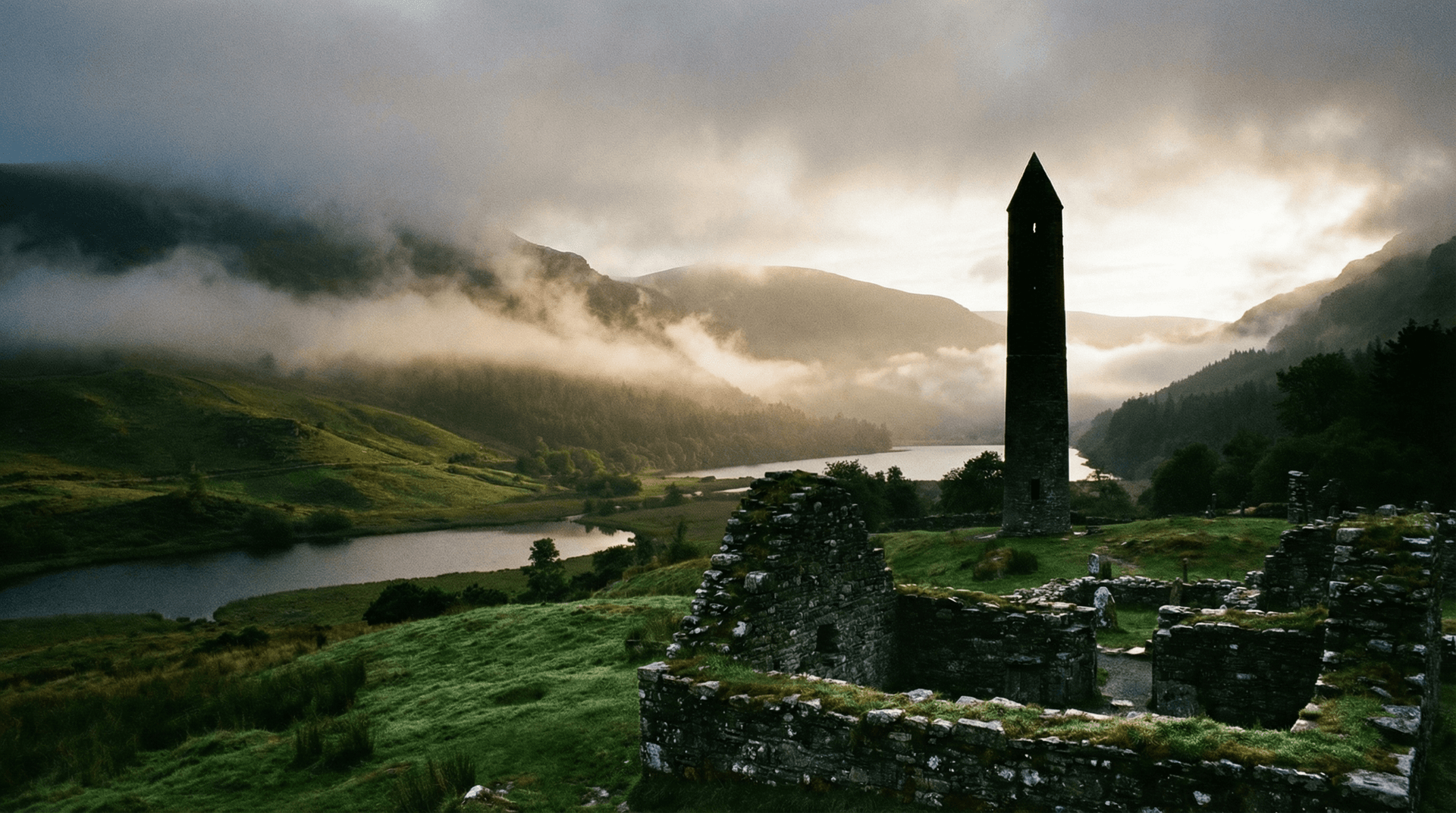
Glendalough—meaning Valley of the Two Lakes in Irish—was founded in the sixth century by Saint Kevin, a monk who sought solitude in this remote valley but instead attracted followers. What began as one man's hermitage grew into a thriving monastic city that survived Viking raids, medieval decline, and nearly a thousand years of abandonment to become one of Ireland's most evocative sacred sites.
At its peak in the tenth and eleventh centuries, Glendalough was a bustling settlement with thousands of residents—monks, students, craftspeople, and pilgrims. The stone structures you see today represent only the most permanent buildings; wooden houses, workshops, and outbuildings once filled the valley floor. The community supported itself through farming, metalworking, and manuscript production, creating illuminated texts that were traded across Europe.
For those interested in Ireland's broader monastic heritage, our guide to Clonmacnoise: The Crossroads of Ireland explores another crucial site that, like Glendalough, shaped medieval Irish spirituality.
Planning Your Visit: Timing, Access & Preparation
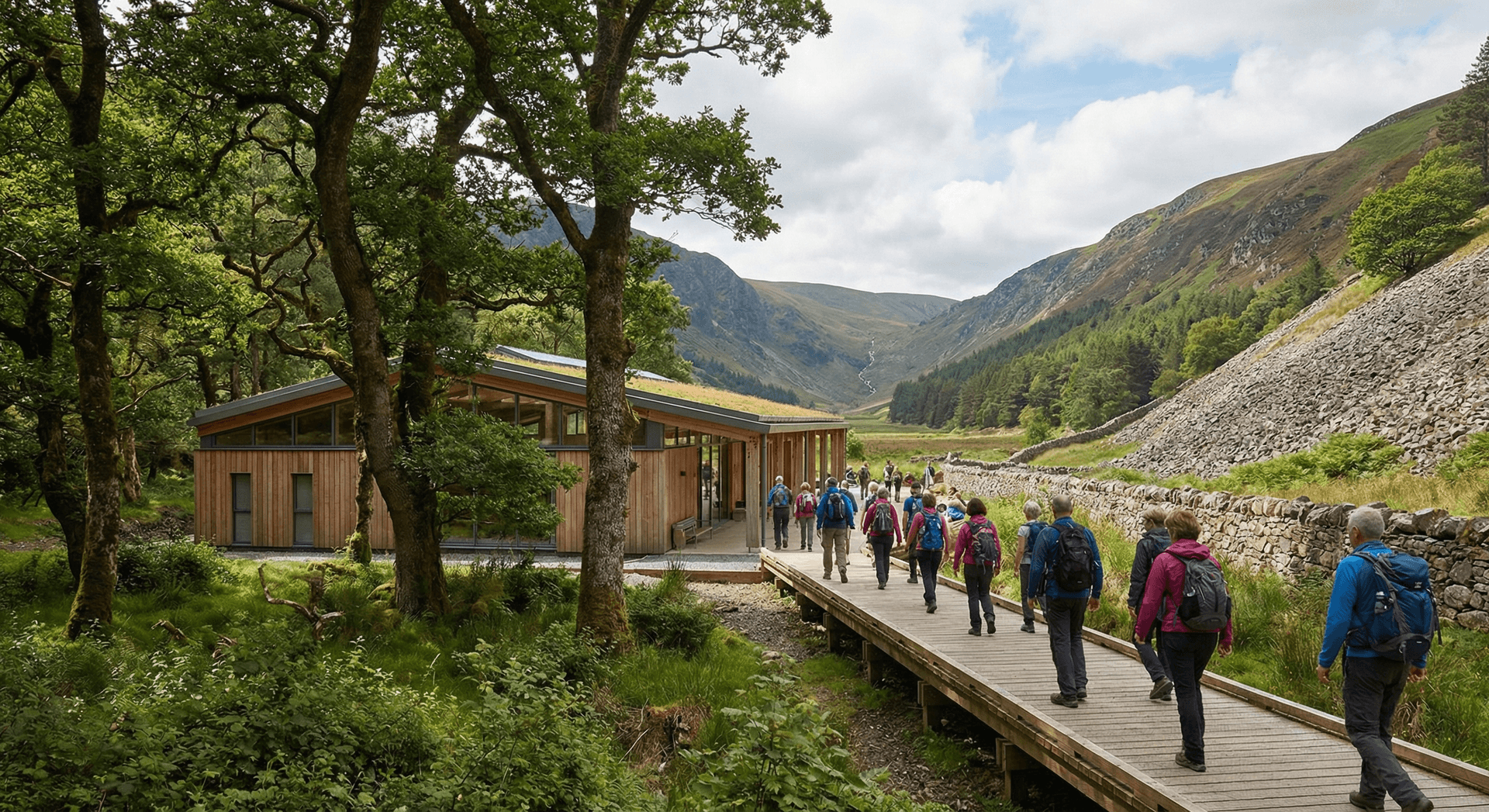
Glendalough rewards preparation. The valley's weather changes rapidly, its terrain varies from gentle paths to challenging mountain trails, and its popularity means strategic timing makes the difference between a contemplative experience and a frustrating battle with crowds.
Best Times to Visit
The pilgrimage season traditionally runs from June to August, and these months offer the most reliable weather. However, July and August bring peak tourist crowds. For the best balance of decent weather and manageable visitor numbers, target late May, early June, or September. Saint Kevin's Day on June 3rd draws thousands of pilgrims for special Masses and walking pilgrimages.
Getting There
Glendalough sits in the Wicklow Mountains National Park, roughly 50 kilometers south of Dublin. Without a car, your options are limited but manageable: St. Kevin's Bus operates daily service from Dublin city center during summer months. Organized tours from Dublin visit Glendalough as part of Wicklow Mountains day trips. With your own vehicle, take the R757 from Laragh.

The Monastic City: Walking Among the Ruins
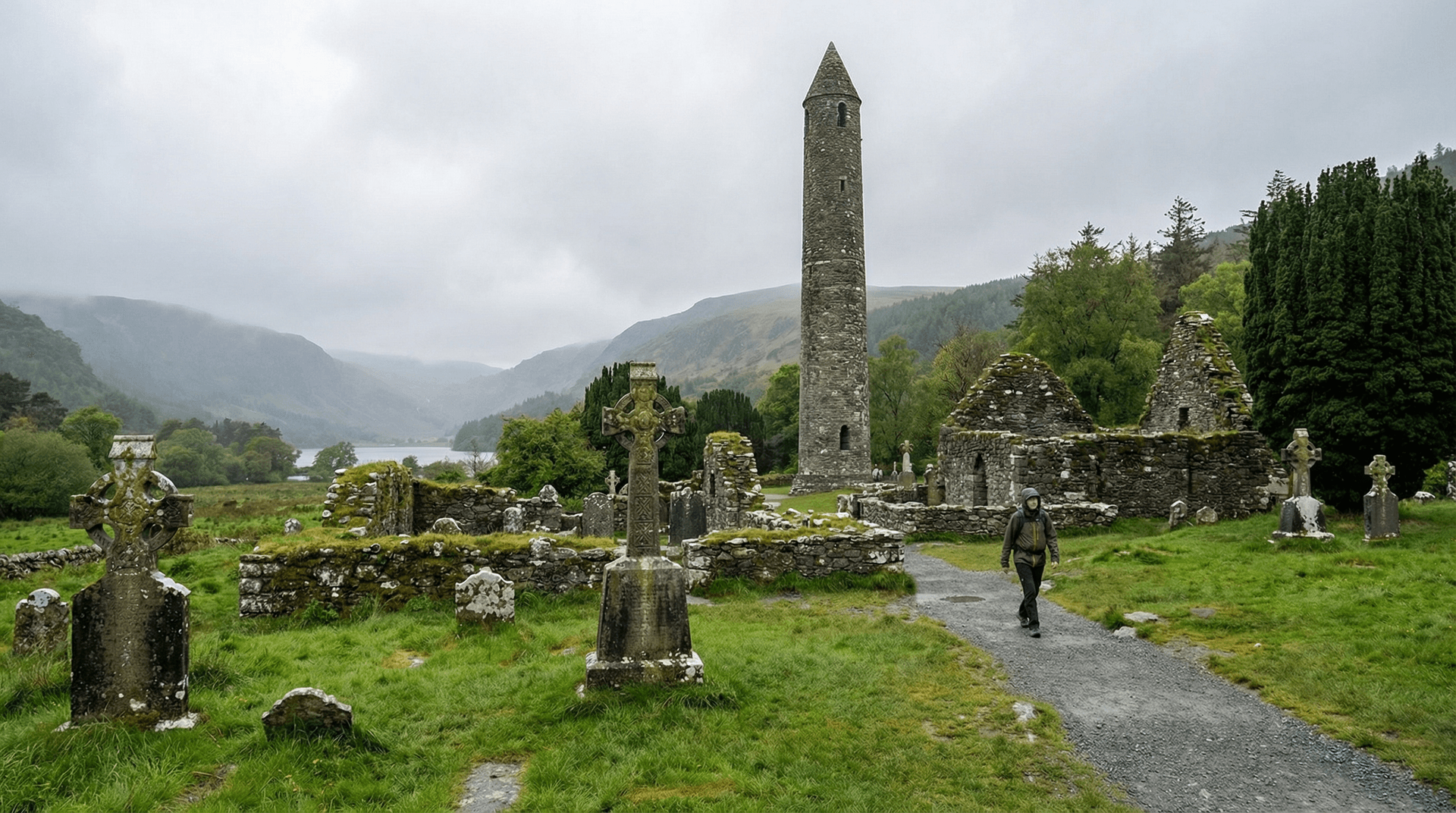
The monastic city occupies the valley floor near the lower lake, and this is where most visitors spend their time. The concentration of medieval structures here is remarkable—a cathedral, round tower, stone churches, Celtic crosses, and the tiny cell where Saint Kevin supposedly lived, all within a few hundred meters of each other.
Start at the Cathedral: Despite its name, this was never a cathedral in the administrative sense but rather the main church of the monastic community. Built in the tenth and eleventh centuries, it represents multiple construction phases. The Round Tower demands particular attention—rising 33 meters with walls 1.3 meters thick at the base, this is one of Ireland's most complete round towers.
The Two Lakes: The Heart of the Valley
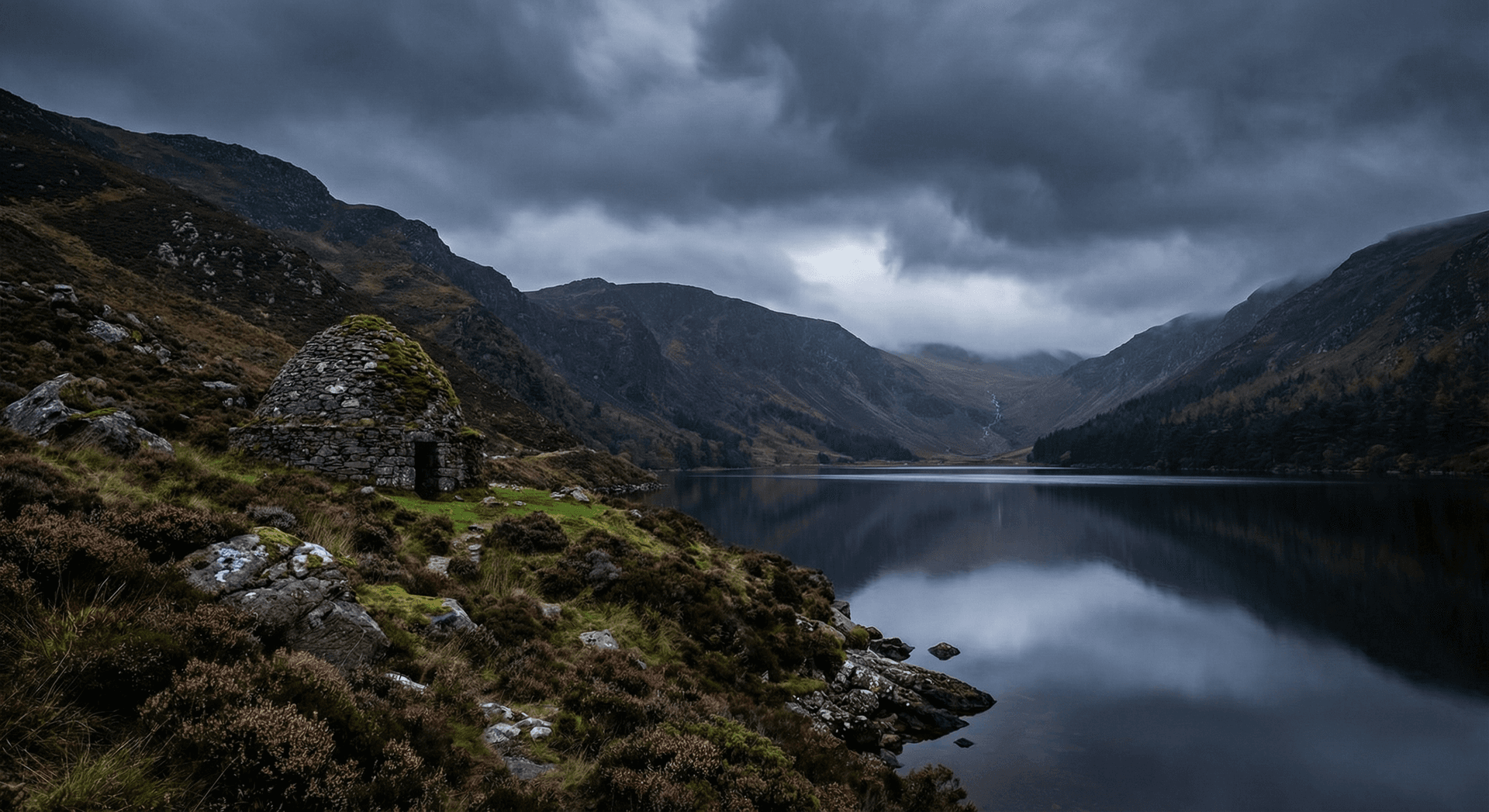
The lakes give the valley its name and its character. The lower lake—near the monastic city—is smaller, more accessible, and surrounded by the main archaeological remains. The upper lake, a kilometer's walk up the valley, offers the more profound experience.
The walk between lakes follows the ancient pilgrim path. The upper lake appears suddenly, the valley walls closing around a dark body of water that seems to absorb light rather than reflect it. This was Saint Kevin's preferred location, the place of his most intense ascetic practices. If you're physically able, make the climb to Saint Kevin's Bed—a dry-stone hut barely large enough to sit in, perched above the lake.
Why a Historical Expert Makes the Difference
You can explore Glendalough independently—the visitor center provides basic information, and the trails are well marked. But a Historical Expert who specializes in early medieval Ireland transforms the experience. They can read the carved stones, identify architectural phases, explain how the monastery functioned as both spiritual community and economic enterprise.
More importantly, they connect Glendalough to the broader landscape of Sacred Ireland. The valley wasn't isolated—it maintained connections with Clonmacnoise, Skellig Michael, and monastic centers across Europe. Understanding this network transforms Glendalough from a beautiful ruin into a living piece of medieval history.
Conclusion: The Valley's Gift
Glendalough isn't a place you conquer or complete. It's a place you encounter, briefly, before it releases you back into the modern world—changed, if you allowed it to work on you. Walk slowly. Look closely. And carry something of the valley's quiet with you when you leave.
For more on Ireland's sacred monastic sites, explore our complete Sacred Ireland hub, with detailed guides to Skellig Michael, Clonmacnoise, the Rock of Cashel, and many more extraordinary destinations.
Table of Contents
Share this post
More from the Blog

Cork to Blarney Castle Day Trip: The Stone, the Gardens and What Else to See
Plan a Cork to Blarney Castle day trip. Kiss the stone, explore the Poison Garden, and add Cork city, Fota or Kinsale for a full day out.

Cork to Cobh Day Trip: Titanic, Colourful Houses and Harbour History
Plan a Cork to Cobh day trip by train, car or private driver. Explore Titanic history, St Colman's Cathedral, Spike Island and the best harbour views.

Cork to Killarney Day Trip: Lakes, Mountains and Muckross in One Day
A Cork to Killarney day trip is a longer escape into Kerry. Here's how to plan the drive, what to see in Killarney National Park, and why a private driver helps.