
Climbing Croagh Patrick: A Guide to Ireland's Holiest Mountain Pilgrimage
The mountain dominates the Mayo landscape long before you reach its base—a perfect cone rising 764 meters from the Atlantic coast, bare and bold against the western sky. For more than 1,500 years, pilgrims have climbed this path, their boots wearing grooves into the stone that survive today. This is Croagh Patrick, Ireland's Holy Mountain, where Saint Patrick supposedly fasted for forty days and where, on the last Sunday of July, thousands make an arduous pilgrimage to the summit chapel.
Reaching the top requires genuine effort. The path is steep, unrelenting, and in places treacherous—loose scree on the upper slopes sends stones skittering with every step. But those who make the climb describe something transformative: the physical struggle giving way to mental clarity, the views opening across Clew Bay's drowned drumlin islands, and the profound sense of standing where countless others have stood before.
This guide, part of our comprehensive Sacred Ireland: A Guide to Monastic Sites, Holy Wells & Ancient Pilgrimages — the master hub, covers everything you need to know about climbing Croagh Patrick. For those seeking other challenging Irish pilgrimages, see our guide to Lough Derg, the toughest Christian pilgrimage in the world, and Glendalough, the serene monastic valley that offers a gentler spiritual experience.
The Mountain's Sacred History: Why Croagh Patrick Matters
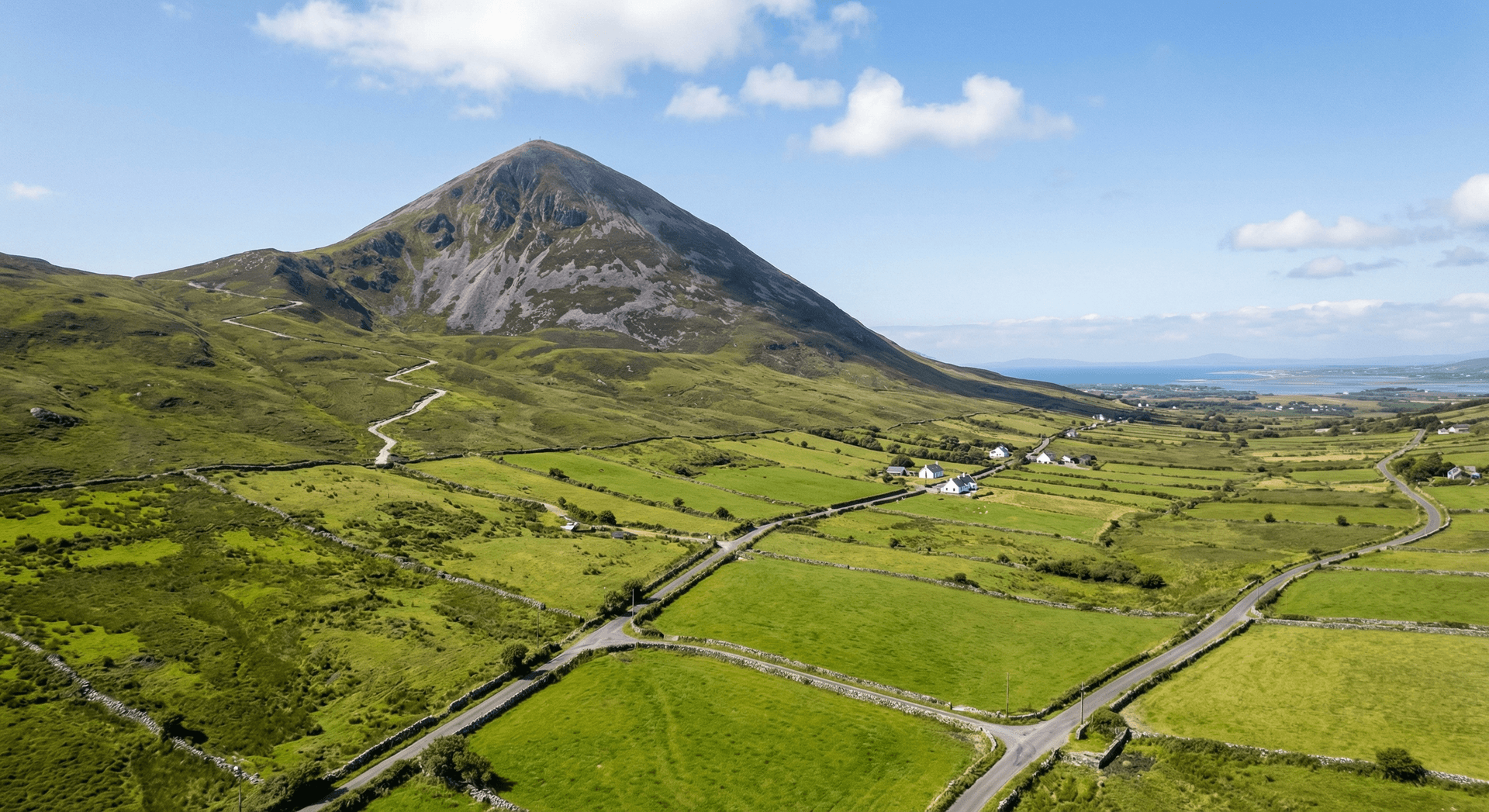
Long before Christianity reached Ireland, Croagh Patrick held spiritual significance. The mountain was known as Cruachán Aigle—the Eagle's Stack—and marked the traditional beginning of harvest season. Ancient peoples likely used it as a site for Lughnasadh celebrations, gathering on the slopes to mark the turning year.
The Patrick connection transformed the mountain's meaning. According to tradition, Ireland's patron saint spent forty days and nights fasting in a cave on the summit in 441 AD, following the example of Christ in the wilderness. During this retreat, Patrick supposedly battled demons, bargained with God, and secured favorable terms for the Irish on Judgment Day—legends that elevated the site to supreme importance in Irish Catholic identity.
For fifteen centuries, pilgrims have climbed Croagh Patrick in Patrick's footsteps, believing the effort expunges sins and brings blessings. The medieval church recognized this devotion by offering indulgences to those who completed the climb. Unlike many sacred sites disrupted by the Reformation, Croagh Patrick has maintained its pilgrimage function continuously since medieval times.

Planning Your Climb: When to Go & What to Expect
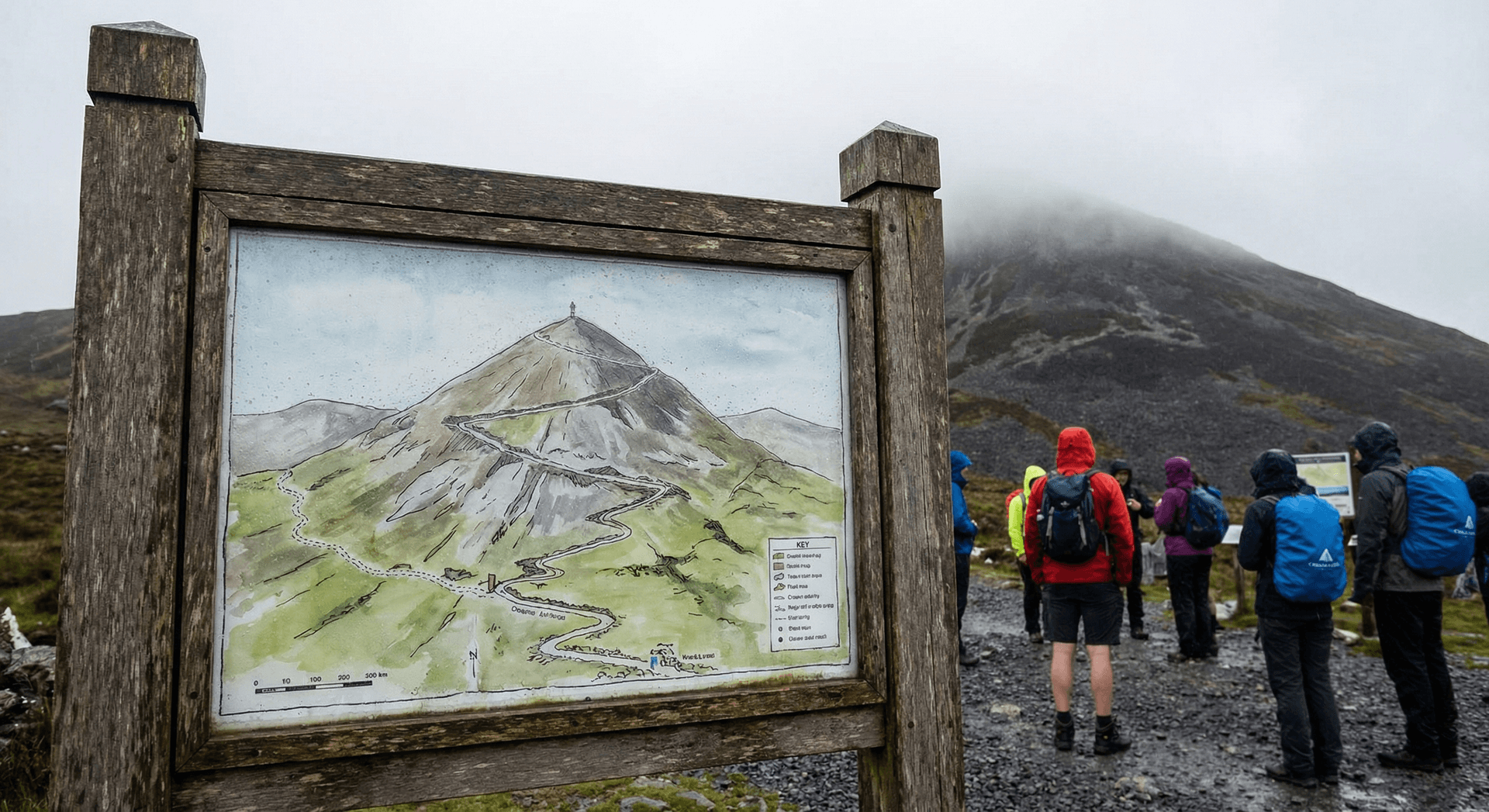
Croagh Patrick isn't a mountain to underestimate. Weather changes rapidly, the path is genuinely dangerous in poor conditions, and every year sees rescue operations for ill-prepared climbers. Proper planning separates a meaningful pilgrimage from a traumatic ordeal.
Best Times to Climb
Reek Sunday (the last Sunday in July) represents the traditional pilgrimage date, when thousands climb together in communal religious observance. The atmosphere is electric—Mass on the summit, rosaries murmured on the path, the shared effort creating bonds between strangers. But the crowds are intense. For a quieter spiritual encounter, avoid it.
Shoulder season (May, June, September) offers the best balance of decent weather and manageable crowds. July and August can be busy with tourists, while October through April brings genuine risks—ice, snow, and winds that can knock a person off their feet.
The Route: What You'll Encounter
The lower slopes follow a well-maintained track through farmland. Stone walls mark ancient field boundaries, and the views back toward Clew Bay open progressively. This section allows you to find your rhythm.
The middle section steepens considerably, the path becoming rockier and more eroded. Here you encounter the stations of the cross—modern metal crosses placed at intervals for prayer and rest. Medieval pilgrims performed penitential exercises at similar stations.
The final ascent is the killer—a slope of loose scree where every step up slides half a step back. Walking poles help enormously here. The temptation is to look down at your feet, but the views demand attention: Clew Bay's drowned drumlin islands spreading below like scattered gemstones.
Safety: Respecting the Mountain
Every year, dozens of climbers require rescue from Croagh Patrick. Most are simply exhausted or have twisted ankles, but serious injuries and occasional deaths occur. The mountain demands respect.
Essential safety rules: Never climb alone. Tell someone your planned route and return time. Check the weather forecast obsessively—if rain or wind is predicted, postpone. Bring waterproofs even on sunny mornings. Carry a fully charged phone. Know your limits and turn back if necessary. There's no shame in retreat—the mountain will still be there.
Why a Hiking Leader Makes the Difference
You can climb Croagh Patrick independently—thousands do every Reek Sunday. But for those unfamiliar with mountain terrain or seeking deeper understanding of the pilgrimage tradition, a Hiking Leader transforms the experience from physical challenge into meaningful journey.
A qualified leader knows the mountain's moods, reading weather signs that precede sudden changes. They set appropriate pace, ensuring you reach the summit without exhausting yourself. They explain the stations of the cross, the pilgrimage traditions, the stories of saints and ordinary people who have climbed before you. They carry emergency equipment and know rescue procedures.
More importantly, they connect Croagh Patrick to the broader landscape of Sacred Ireland. This mountain is one node in a network that includes Lough Derg—another extreme Irish pilgrimage—and gentler sites like Glendalough. Understanding these connections transforms a hard hike into genuine pilgrimage.
Conclusion: The Summit's Gift
Standing on Croagh Patrick's summit—whether on crowded Reek Sunday or a quiet Tuesday in May—you join a lineage stretching back fifteen centuries. The physical effort, the exposure to elements, the simple fact of having reached this place: these create transformation that can't be achieved by easier means.
Descend carefully. The mountain extracts tolls from tired legs—most injuries occur on the way down. But carry something of the summit with you: clarity, accomplishment, connection with countless pilgrims who have made this climb before.
For more on Ireland's sacred mountains and pilgrimage sites, explore our complete Sacred Ireland hub, with guides to Lough Derg, Glendalough, Skellig Michael, and many more extraordinary destinations.
For a complete overview of Ireland’s most important ancient and spiritual locations, see our master guide to Sacred Ireland.
Related Sacred Sites
For an even more intense spiritual journey, many consider the three-day pilgrimage to Lough Derg.
The stunning coastal views are reminiscent of the dramatic seascapes surrounding Skellig Michael.
Table of Contents
Share this post
More from the Blog

Cork to Blarney Castle Day Trip: The Stone, the Gardens and What Else to See
Plan a Cork to Blarney Castle day trip. Kiss the stone, explore the Poison Garden, and add Cork city, Fota or Kinsale for a full day out.

Cork to Cobh Day Trip: Titanic, Colourful Houses and Harbour History
Plan a Cork to Cobh day trip by train, car or private driver. Explore Titanic history, St Colman's Cathedral, Spike Island and the best harbour views.

Cork to Killarney Day Trip: Lakes, Mountains and Muckross in One Day
A Cork to Killarney day trip is a longer escape into Kerry. Here's how to plan the drive, what to see in Killarney National Park, and why a private driver helps.