
Lough Derg (Station Island): The Toughest Pilgrimage in the Christian World
There is a small island in a lake in County Donegal where pilgrims have been coming for fifteen hundred years to suffer. Not to sightsee. Not to photograph. To suffer. Lough Derg — also known as Station Island or Saint Patrick's Purgatory — is the site of the most demanding Christian pilgrimage in the world, a three-day ritual of fasting, sleep deprivation, and barefoot walking that has remained essentially unchanged since the Middle Ages.
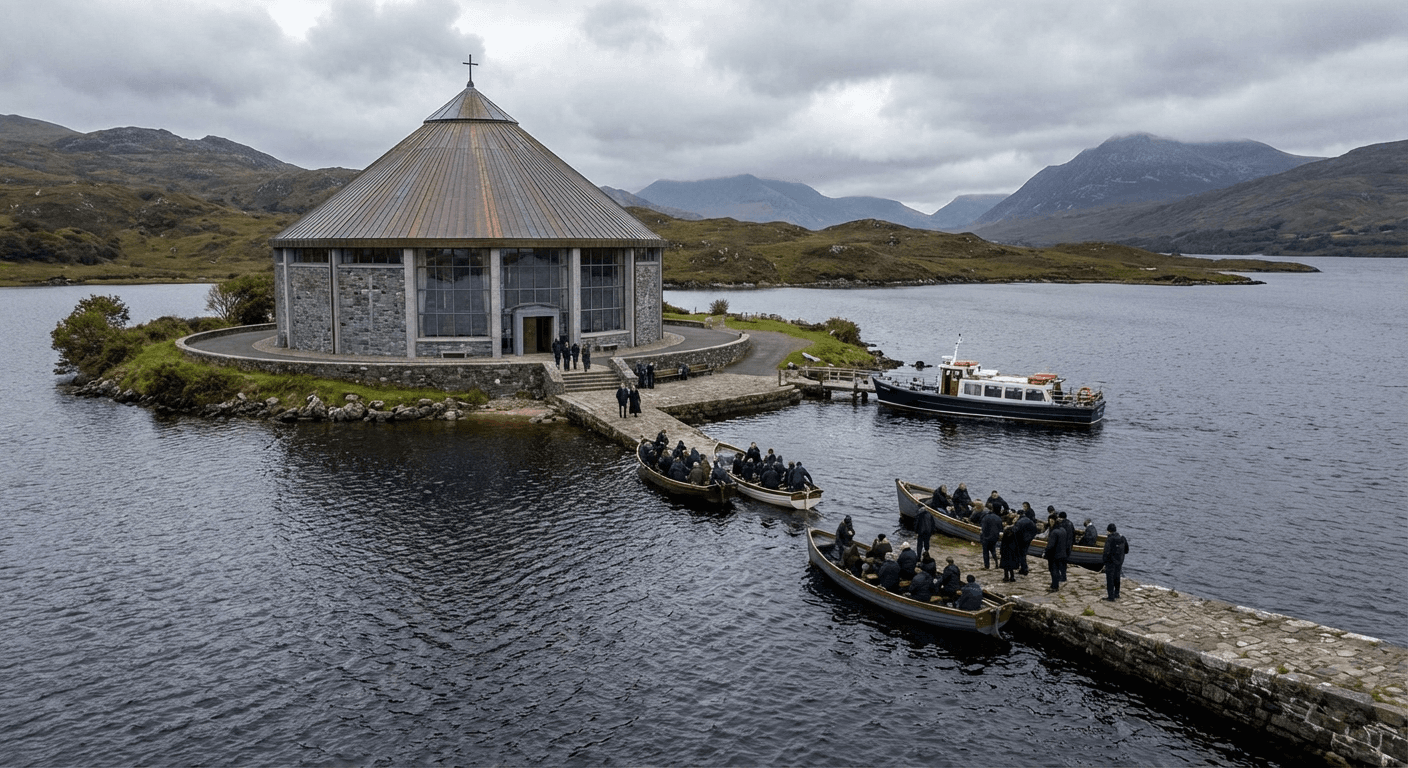
The statistics are stark: over 10,000 pilgrims complete the Lough Derg retreat each summer. They arrive by boat from the mainland, leaving behind their phones, their watches, and their comforts. For three days, they eat one simple meal per day — dry toast and black tea. They sleep on dormitory bunks for a maximum of four hours per night. They walk barefoot around stone beds that represent the crucifixion, repeating prayers until their knees blister and their voices grow hoarse. They keep vigil through the night in an unheated basilica, singing psalms while the Donegal rain lashes the windows.
Why would anyone do this? The answer depends on who you ask. For some, it is penance — atonement for sins that weigh heavy on the conscience. For others, it is petition — prayers for sick children, for troubled marriages, for the souls of the dead. For many, it is simply tradition — something their parents and grandparents did, a connection to a faith that runs deeper than rational explanation. And for a growing number, it is curiosity — the desire to test themselves against a practice that has broken stronger people than them.
This guide explains what Lough Derg is, what the pilgrimage involves, and how to approach it — whether as a participant or an observer. This is not a typical travel article. Lough Derg is not a typical destination. This is part of our comprehensive guide to Sacred Ireland: Monastic Sites, Holy Wells & Ancient Pilgrimages — the master hub.
The Legend of Saint Patrick's Purgatory
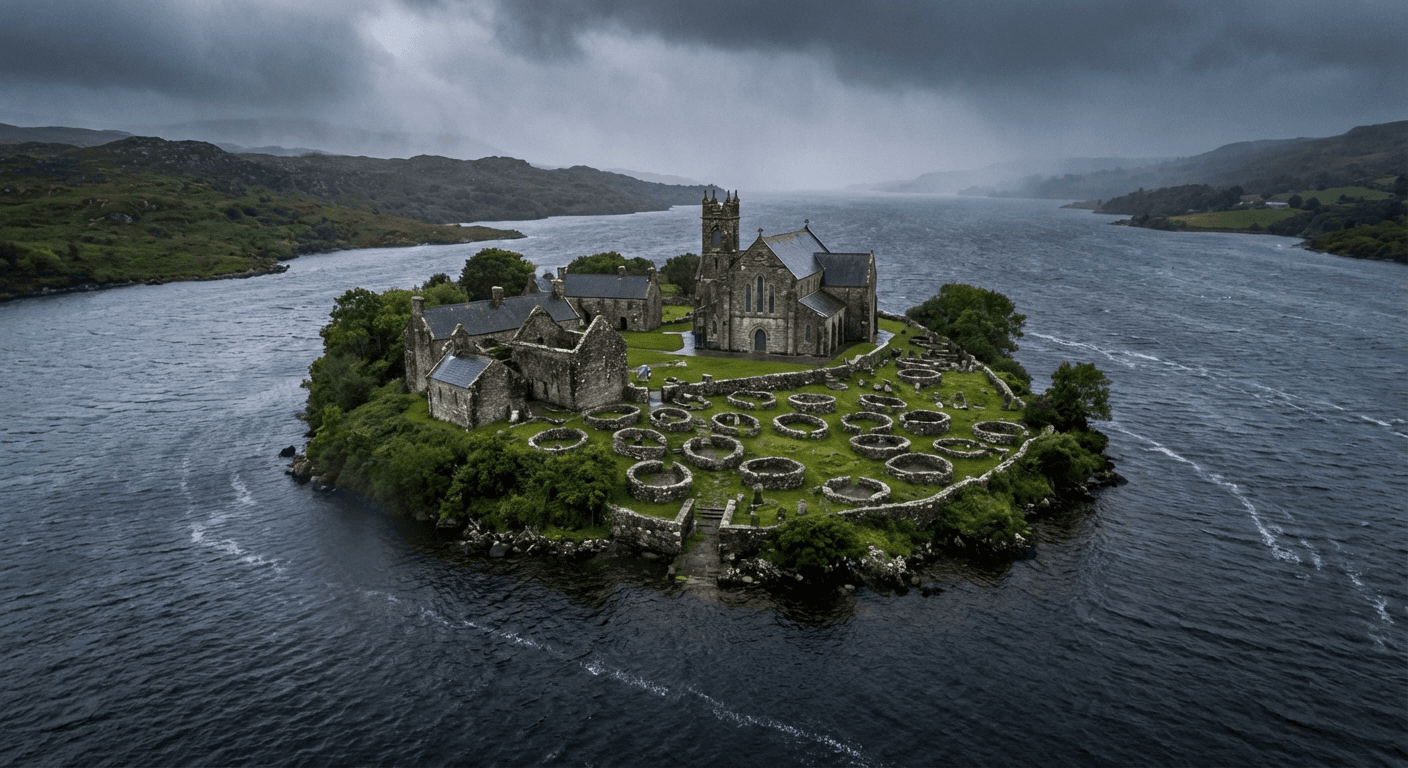
According to tradition, Saint Patrick came to Lough Derg in the fifth century, seeking a place of solitude and prayer. The island — barely fifty metres across — was deserted, home only to wild animals and the wind. Patrick spent forty days and forty nights there, fasting and praying, until Christ appeared to him in a vision and showed him a cave.
This cave, Christ revealed, was an entrance to Purgatory — the place where souls are purified before entering Heaven. Those who entered would experience the torments of the damned, but only for a limited time, and emerge cleansed of their sins. Patrick established the island as a place of pilgrimage, and for centuries, pilgrims came to enter the cave and face their own purgatory on earth.
The historical truth is more complex. There may have been a pagan sacred site on the island before Patrick arrived — the pattern of the pilgrimage has pre-Christian echoes. The cave itself was destroyed by the Church in the fifteenth century, ostensibly to suppress superstition, though the pilgrimage continued without it. The modern basilica, built in the twentieth century, stands on the site of medieval churches that served generations of pilgrims.
What matters is not the literal truth of the legend but its power. For fifteen centuries, Lough Derg has been a place where the boundary between the earthly and the spiritual grows thin. The suffering endured here is not pointless masochism. It is a participation in the Passion of Christ — a way of uniting human pain with divine redemption. That theology may not resonate with everyone, but it has sustained the pilgrimage through wars, famines, Reformation, and secularisation.
The Three-Day Retreat: What to Expect
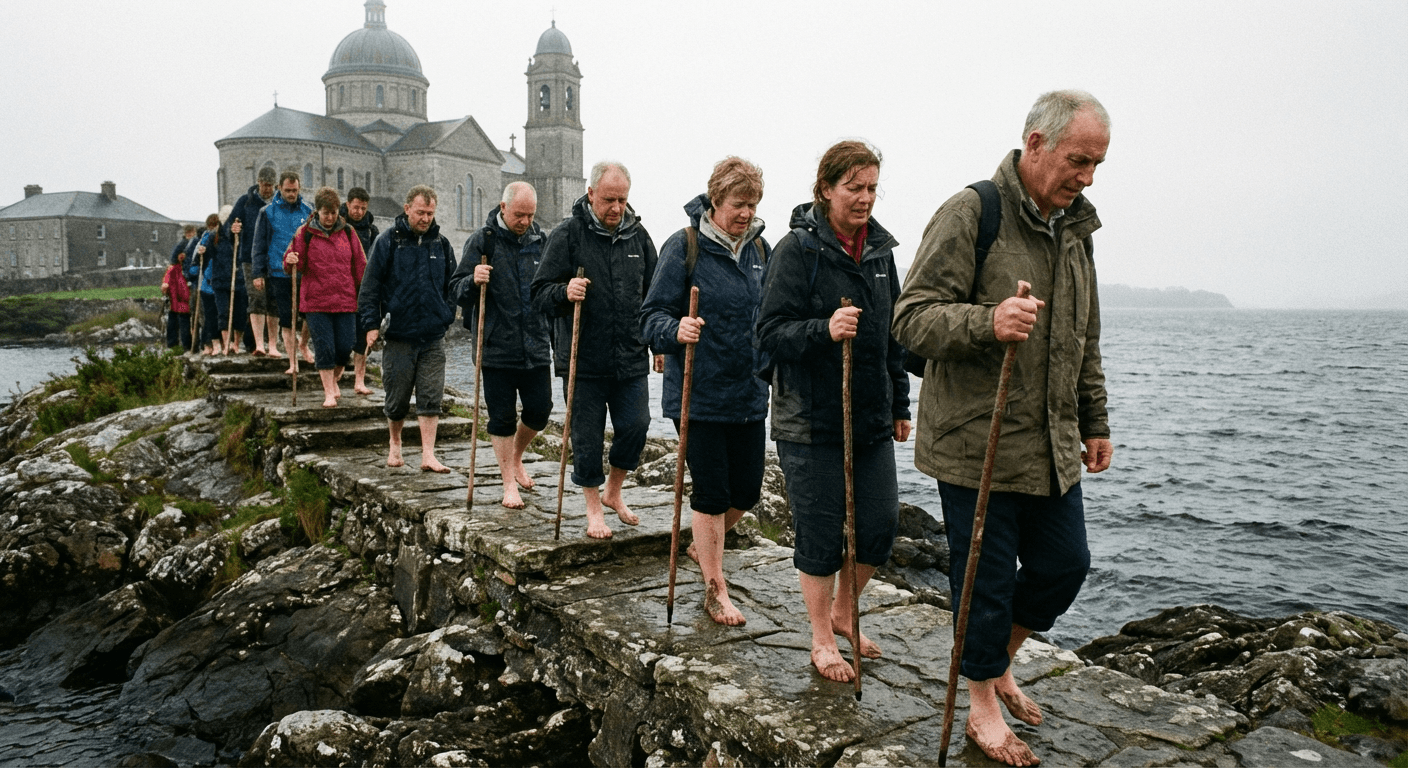
The Lough Derg retreat follows a strict schedule that has remained largely unchanged for centuries. Understanding what to expect is essential — this is not something you can improvise or approach casually.
Day One — Arrival and First Station
Pilgrims arrive by boat from the mainland between 10:00 AM and 3:00 PM. After checking in and receiving instructions, they begin the first station — a sequence of prayers and movements that forms the core of the pilgrimage. This involves walking barefoot around the stone beds (low stone structures that represent the stations of the cross), kneeling in prayer, and reciting prescribed prayers.
The first day is the easiest, though that is relative. Pilgrims sleep in dormitory accommodation — basic but clean — for a maximum of four hours. The night vigil begins at 10:00 PM and continues until 6:00 AM, spent in the basilica singing psalms, listening to readings, and maintaining silence.
Day Two — The Long Day
This is the heart of the pilgrimage. The day begins with the 6:00 AM service and continues with stations throughout the day. Between stations, pilgrims rest, pray, or walk the island's limited paths. The one meal — dry toast and tea — is served at midday.

The second night vigil is harder than the first. Fatigue accumulates. The cold of the Donegal night seeps into bones already aching from hours of kneeling on stone. The psalms become hypnotic, repetitive, a drone that blurs the boundary between waking and sleeping. Some pilgrims weep. Others experience moments of profound peace. Most simply endure.
Day Three — Completion
The final day begins with the 6:00 AM service and continues with the remaining stations. By midday, the pilgrimage is complete. Pilgrims receive a certificate, board the boat, and return to the mainland — exhausted, blistered, and (according to belief) spiritually renewed.
The Rules
No food except the one meal of dry toast and tea. No sleep except the maximum four hours per night. Silence must be maintained except during communal prayers. No phones, watches, or electronic devices. No alcohol, tobacco, or drugs. Barefoot walking on the stone paths (socks are permitted for medical reasons).
The Stones: Walking the Beds of the Saints
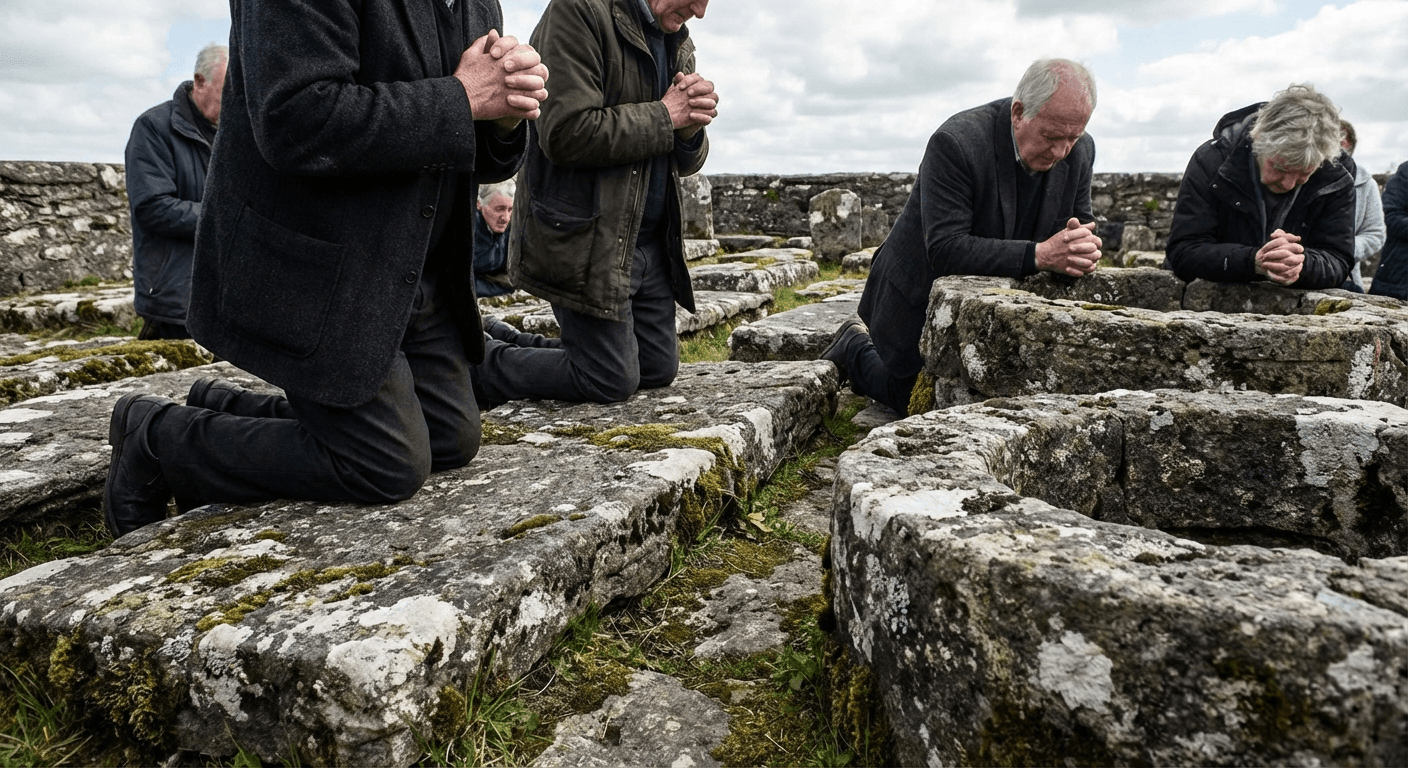
The beds are the physical heart of the Lough Derg pilgrimage. These are not comfortable resting places. They are low stone structures, barely knee-high, that represent the stations of the cross and other elements of the Passion. Pilgrims walk around them barefoot, kneeling at specific points to pray.
There are six main beds, each associated with a different aspect of the Passion: the first bed represents the Agony in the Garden; the second represents the Scourging at the Pillar; the third represents the Crowning with Thorns; the fourth represents the Carrying of the Cross; the fifth represents the Crucifixion; the sixth represents the Resurrection.
Walking the beds takes about an hour per circuit. You walk barefoot on rough stone paths, kneeling at designated spots to recite the prescribed prayers. After three days, your feet will be blistered and your knees raw. This is not accidental. The physical suffering is understood as a participation in Christ's Passion — a way of uniting your pain with his sacrifice.
Practical Advice
Bring loose, comfortable clothing that you do not mind getting dirty. Bring a waterproof jacket — Donegal weather is unpredictable. Bring a small notebook for private prayers and reflections. Do not bring expensive items — there are no lockers, only shared dormitories. If you have medical conditions that might affect your ability to complete the pilgrimage, discuss them with the staff before beginning.
Who Goes to Lough Derg? The Pilgrims' Stories
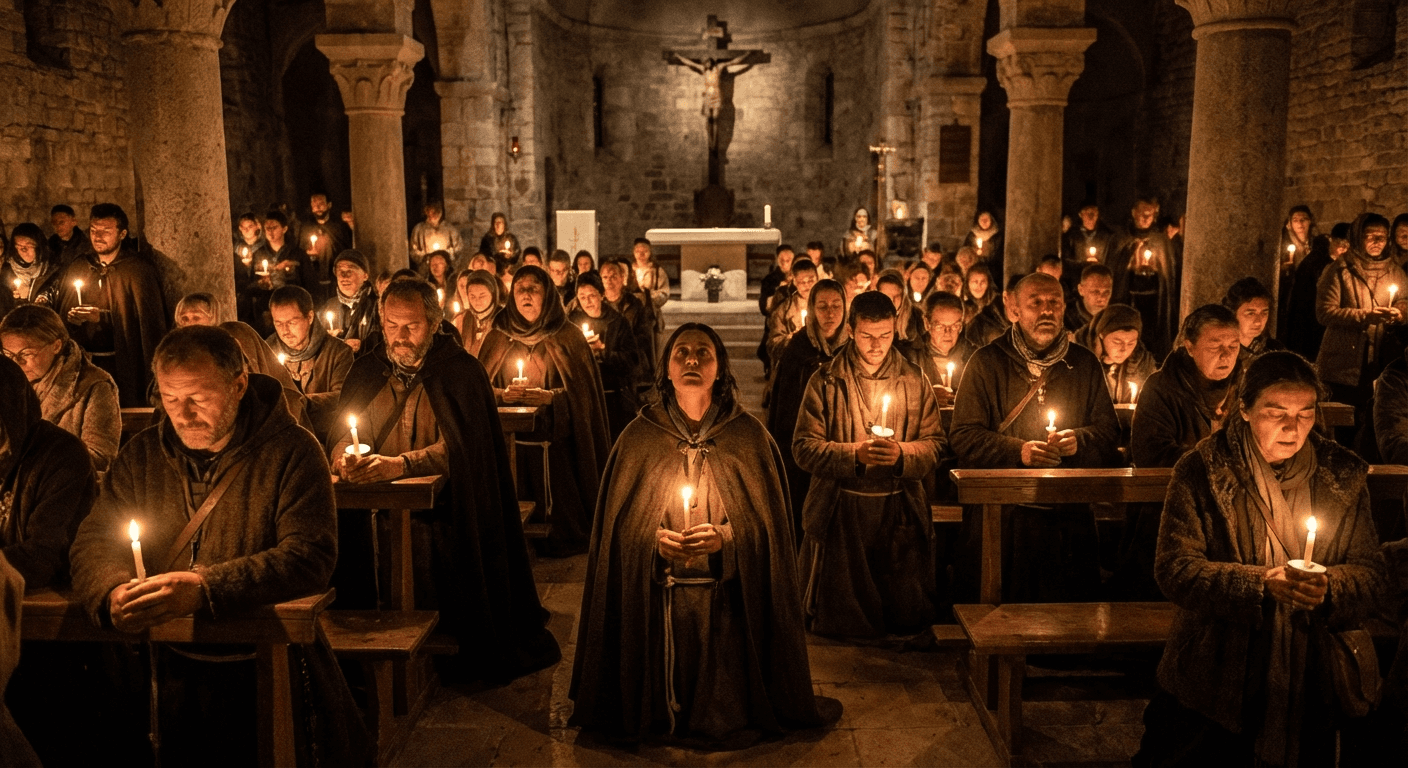
The pilgrims who come to Lough Derg defy easy categorisation. They are young and old, Irish and international, devout Catholics and curious agnostics. What unites them is a willingness to endure discomfort for the sake of something beyond themselves.
The traditionalists come because their parents and grandparents came. For families from Donegal, Cavan, and Fermanagh, the Lough Derg pilgrimage is an inherited obligation, a way of maintaining connection to ancestors and community. They know the rituals by heart, having learned them at their grandparents' knees.
The penitents come seeking forgiveness. Some carry guilt for specific sins — infidelity, addiction, crimes committed. Others carry a more general sense of having failed to live up to their own standards. The physical suffering of the pilgrimage is understood as a kind of atonement, a way of balancing the scales.
The petitioners come seeking miracles. Parents with sick children. Spouses in broken marriages. The unemployed and despairing. They endure the three days in hope that their suffering will move God to intervene in their circumstances. Some receive the miracles they seek. Others do not. The pilgrimage does not guarantee results — only the opportunity to ask.

The curious come to test themselves. Some are lapsed Catholics seeking reconnection with their faith. Some are spiritual seekers from other traditions, drawn by the intensity of the practice. Some are simply hikers and adventurers who see Lough Derg as an extreme endurance challenge. The staff welcome them all, though they warn that the pilgrimage is not a tourist experience.
Practical Information for the Lough Derg Pilgrimage
When to Go
The pilgrimage season runs from May to September. The main season (June-August) sees the most pilgrims and the best weather, though that is relative in Donegal. May and September offer cooler temperatures and fewer crowds. The pilgrimage is not offered outside these months due to weather conditions on the lake.
Booking and Cost
Reservations are essential and should be made well in advance, especially for summer weekends. Book through the official Lough Derg website or by phone. The cost is modest — around €100 for the three days, including accommodation and the one meal per day.
Getting There
Lough Derg is in County Donegal, near the village of Pettigo. The nearest town is Donegal Town, about 30 minutes away by car. From Dublin, it is a three-hour drive. Public transport is limited — a car is almost essential unless you are coming as part of an organised group.
What to Bring and Health Considerations
Bring: waterproof clothing and sturdy shoes for the boat crossing; comfortable, loose clothing for the pilgrimage itself; a small bag for personal items — there is limited storage space; toiletries and any necessary medications; a journal or notebook; an open mind and willingness to endure discomfort.
What not to bring: phones, tablets, or electronic devices (these must be surrendered on arrival); watches (time is announced by bell); food or snacks (only the provided meal is permitted); alcohol or tobacco; valuables.
The Lough Derg pilgrimage is physically demanding. If you have heart conditions, mobility issues, diabetes, or other health concerns, consult the staff before booking. They can advise on whether the pilgrimage is suitable for you and what accommodations might be possible.
Why a Spiritual Guide Matters
You can do the Lough Derg pilgrimage on your own. Thousands do. But many pilgrims find that having a Spiritual Guide — someone who knows the traditions, understands the theology, and can offer support when the retreat becomes overwhelming — transforms the experience from endurance into genuine spiritual growth.
The staff at Lough Derg include priests and lay ministers who are available for guidance, but their time is limited. A private spiritual guide, arranged through Irish Getaways, can provide more intensive support — helping you prepare before you arrive, processing the experience during the retreat, and integrating the insights afterward.
This is particularly valuable for: first-time pilgrims who are uncertain what to expect; those coming with specific intentions (grief, guilt, major life decisions); people from non-Catholic backgrounds who need help with the prayers and rituals; anyone seeking to understand the deeper theological significance of the practices.
Even if you do not want full-time guidance, consider arranging a session with a spiritual director before and after your pilgrimage. The insights that emerge from three days of fasting, prayer, and sleep deprivation can be profound — but they need interpretation and integration to become lasting transformation.
Lough Derg in the Context of Sacred Ireland
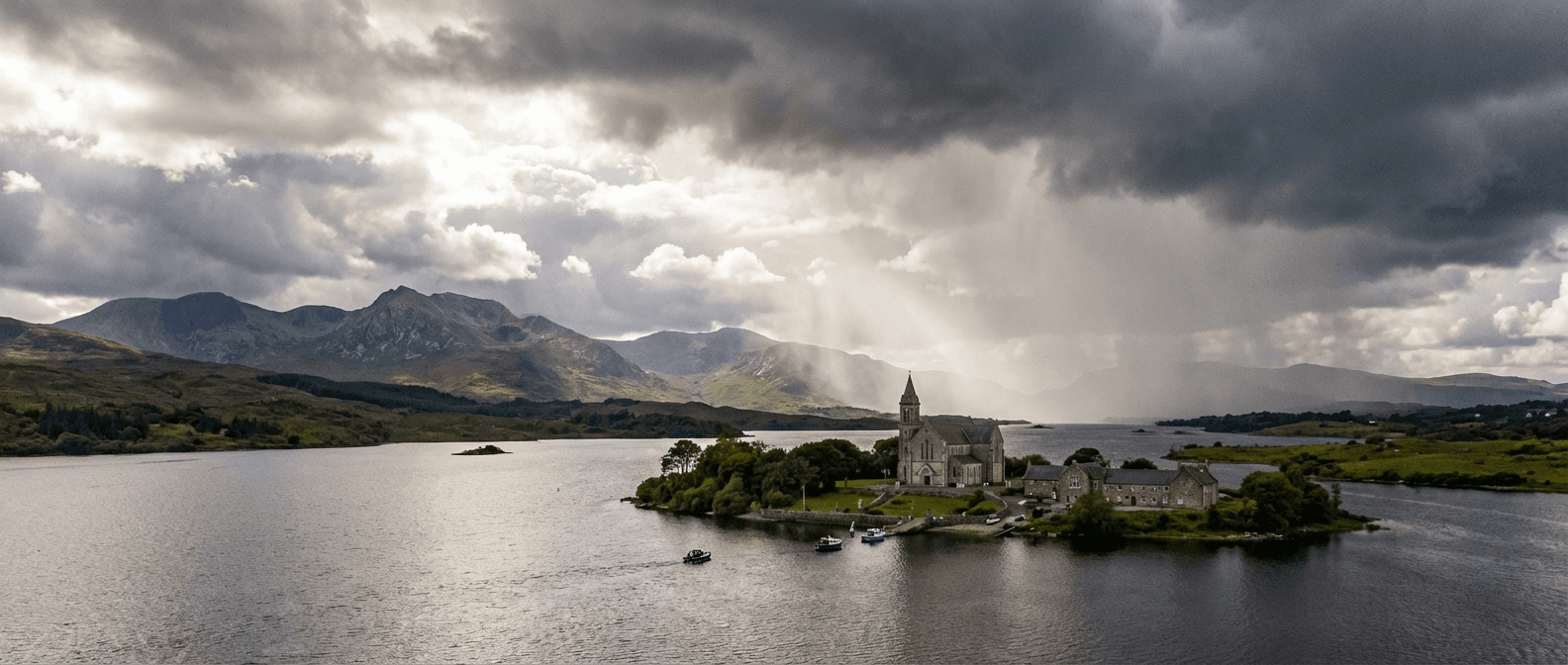
Lough Derg is unique in the landscape of Sacred Ireland. Unlike Glendalough or the Rock of Cashel, it is not primarily a historical site. Unlike the Holy Wells, it is not a living folk tradition. It is something rarer: a medieval practice that has survived into the modern world, still functioning exactly as it did a thousand years ago.
That continuity matters. In an age of instant gratification and disposable experiences, Lough Derg demands commitment. You cannot photograph it and move on. You cannot reduce it to a social media post. You have to give yourself to it — your time, your comfort, your pride — and receive whatever transformation it offers.
For those exploring Sacred Ireland more broadly, Lough Derg offers a counterpoint to the gentler sites. After visiting Skellig Michael or Clonmacnoise, where the history is visible but the practice is past, Lough Derg shows you what medieval pilgrimage actually felt like. The cold, the hunger, the exhaustion, the moments of inexplicable peace — this is what drew millions of medieval Christians to Santiago de Compostela, to Rome, to Jerusalem.
Lough Derg is also part of a network of Donegal sacred sites that includes the Grianán of Aileach (an ancient hillfort), Doe Castle, and numerous early Christian remains. A Private Driver can create an itinerary that combines Lough Derg with these other sites, giving you a complete picture of Donegal's spiritual landscape.
Conclusion
Lough Derg is not for everyone. It is hard, uncomfortable, and demanding. It offers no guarantees — not of healing, not of enlightenment, not even of a pleasant experience. What it offers is the opportunity to step outside ordinary life, to strip away the comforts and distractions that usually separate us from ourselves, and to face whatever emerges.
Some pilgrims describe their Lough Derg experience as the most meaningful three days of their lives. Others describe it as simply the hardest thing they have ever done. A few leave before the end, unable to endure the physical and psychological demands. There is no shame in that — the pilgrimage is not a competition.
If you are considering Lough Derg, be honest with yourself about your motivations. Are you seeking genuine spiritual growth, or just a extreme experience to post about? Are you prepared to suffer without guaranteed results? Can you set aside your ego long enough to be changed by something outside yourself?
For those who can answer yes to these questions, Lough Derg awaits — as it has awaited pilgrims for fifteen centuries, offering nothing but the opportunity to pray, to suffer, and to hope.
For more on Ireland's sacred sites, from Skellig Michael to Clonmacnoise, from Croagh Patrick to the Holy Wells, see our complete guide to Sacred Ireland: Monastic Sites, Holy Wells & Ancient Pilgrimages — the master hub.
For a complete overview of Ireland’s most important ancient and spiritual locations, see our master guide to Sacred Ireland.
Related Sacred Sites
While Lough Derg is a pilgrimage of endurance, the climb up Croagh Patrick is a pilgrimage of physical exertion.
The sense of being cut off from the mainland is similar to what pilgrims feel when travelling to Skellig Michael.
Table of Contents
Share this post
More from the Blog

Cork to Blarney Castle Day Trip: The Stone, the Gardens and What Else to See
Plan a Cork to Blarney Castle day trip. Kiss the stone, explore the Poison Garden, and add Cork city, Fota or Kinsale for a full day out.

Cork to Cobh Day Trip: Titanic, Colourful Houses and Harbour History
Plan a Cork to Cobh day trip by train, car or private driver. Explore Titanic history, St Colman's Cathedral, Spike Island and the best harbour views.

Cork to Killarney Day Trip: Lakes, Mountains and Muckross in One Day
A Cork to Killarney day trip is a longer escape into Kerry. Here's how to plan the drive, what to see in Killarney National Park, and why a private driver helps.