
Wild Swimming in Ireland: Sea Coves, Tidal Pools & Saunas
To truly understand the modern cultural landscape of Ireland, you cannot simply look at the green fields, the ancient castles, or the lively interiors of traditional pubs. You must look directly at the water. Over the past several years, a profound and unstoppable movement has swept across the island's coastline and interior waterways. Wild swimming has evolved from a niche, eccentric pursuit practiced by a hardy few into a defining national pastime. Today, the Atlantic Ocean and the deep inland loughs are not just geographic boundaries; they are vibrant, daily gathering spaces for thousands of people seeking connection, resilience, and the ultimate, unfiltered rush of nature.
This is not the gentle, sun-baked beach culture of the Mediterranean. Wild swimming in Ireland is an intense, visceral engagement with the elements. It is an exercise in contrast—the biting, agonizing shock of the 8°C (46°F) winter sea followed immediately by the restorative, 90°C (194°F) embrace of a wood-fired beach sauna. It is about standing on a windswept concrete pier in Dublin at dawn, sharing a thermos of scalding hot tea with strangers who have just survived the same freezing plunge. It is about discovering a silent, hidden cove in West Cork where the water is so clear you can count the pebbles on the seabed, or perfectly timing your arrival at a natural tidal pool in Clare just as the ocean pulls back to reveal its secrets.
However, the romanticized imagery of this booming wellness trend often masks a stark and uncompromising reality: the waters surrounding Ireland are immensely powerful, permanently cold, and deeply unpredictable. The ocean does not yield to enthusiasm. Navigating the treacherous coastal boreens, understanding the massive shifts of the Atlantic tide, and managing the profound physiological effects of cold-water immersion requires meticulous preparation and profound respect for the environment. You cannot simply pull over your rental car and dive into the first wave you see.
"The sea around Ireland is a brilliant, unforgiving teacher. It demands that you leave your ego on the shore. When you plunge into the freezing Atlantic, you are instantly stripped of your daily anxieties because your brain is entirely occupied with the present moment. But that euphoria must be earned through preparation. The water only welcomes those who respect its power and understand its rhythms." — Liam, Coastal Rescue Volunteer and Lifelong Swimmer
This master guide is your definitive roadmap to the wild swimming and outdoor sauna culture of Ireland. Whether you are a seasoned cold-water veteran looking to tackle the Pollock Holes, or a curious beginner wanting a safe, guided dip in Galway Bay, we have mapped every aspect of the journey. Below, we will navigate through the critical safety protocols, the essential thermal gear, the distinct regional swimming cultures, and the logistical realities of the coastal roads.
1. The Golden Rule: Safety and the Atlantic Swell
Before you even consider which picturesque beach to visit, you must establish a baseline understanding of aquatic safety. The Irish Sea and the Atlantic Ocean are dynamic, restless environments governed by complex meteorological and lunar forces. The single greatest threat to any wild swimmer—even highly experienced pool swimmers—is cold water shock. When the human body is suddenly submerged in water below 15°C (59°F), it triggers an involuntary gasp reflex and a massive spike in heart rate. If your head is underwater during this gasp, the results can be instantly fatal.
Beyond the temperature, the mechanical movement of the ocean requires constant vigilance. The coastline is heavily indented and subject to massive tidal ranges. A serene, sandy beach at low tide can transform into a treacherous, wave-battered rock face in a matter of hours. Furthermore, the invisible threat of rip currents—narrow, fast-moving channels of water pulling away from the shore—accounts for the vast majority of coastal rescues in Ireland. Attempting to swim against a rip current will lead to total exhaustion within minutes.
To ensure your survival and enjoyment, you must learn how to read the water, identify safe entry and exit points, and master the "Float to Live" technique. We have compiled an exhaustive breakdown of these essential protocols, including how to read local tide tables and marine weather forecasts, in our foundational safety spoke: Wild Swimming Safety in Ireland: How to Read Tides, Rip Currents & Weather.
2. The Thermal Armor: Gear and the Dryrobe Culture
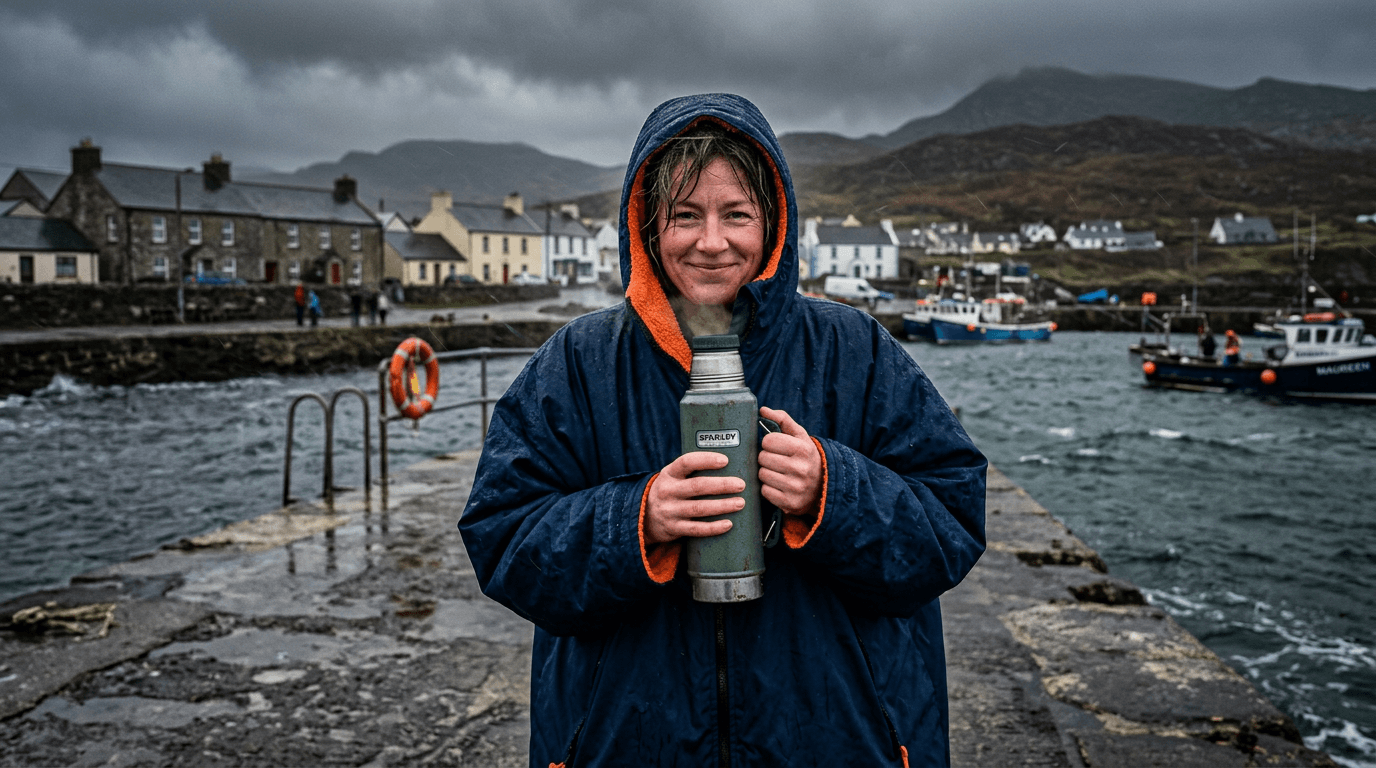
If you attempt to swim the Irish coast armed with nothing but a thin swimsuit and a hotel towel, your experience will be brutally short and physically miserable. Because of the extreme environmental factors, a unique, highly specialized culture of swimming gear has evolved across the island. The beaches here are dominated by heavy, fleece-lined changing robes, thick neoprene accessories, and brightly colored safety floats.
The most hotly debated topic among swimmers is whether to wear a wetsuit or to swim in "skins" (just a bathing suit). While swimming in skins provides the maximum rush of cold water shock, a well-fitted winter wetsuit is highly recommended for visitors unaccustomed to the North Atlantic, allowing you to stay in the water long enough to actually enjoy the scenery. Regardless of your choice, protecting your extremities is non-negotiable. Neoprene swimming booties protect your feet from razor-sharp barnacles and venomous weaver fish, while neoprene gloves prevent your hands from forming a frozen "claw."
Equally critical is your visibility. A bright neon silicone cap and an inflatable orange tow float are mandatory safety beacons, ensuring you are visible to boats and rescue services in the dark, rolling swell. Finally, the cultural phenomenon of the oversized, waterproof changing robe (often referred to as a "Dryrobe") allows you to strip off wet gear and preserve your core temperature while standing on a freezing, wind-whipped pier. For a complete packing list and a guide to managing the dreaded "After Drop," consult our comprehensive gear breakdown: What to Wear Wild Swimming in Ireland: Dryrobes & Gear.
Meet a Local Guide

Hello!!
3. The East Coast: Dublin’s Historic Bathing Culture
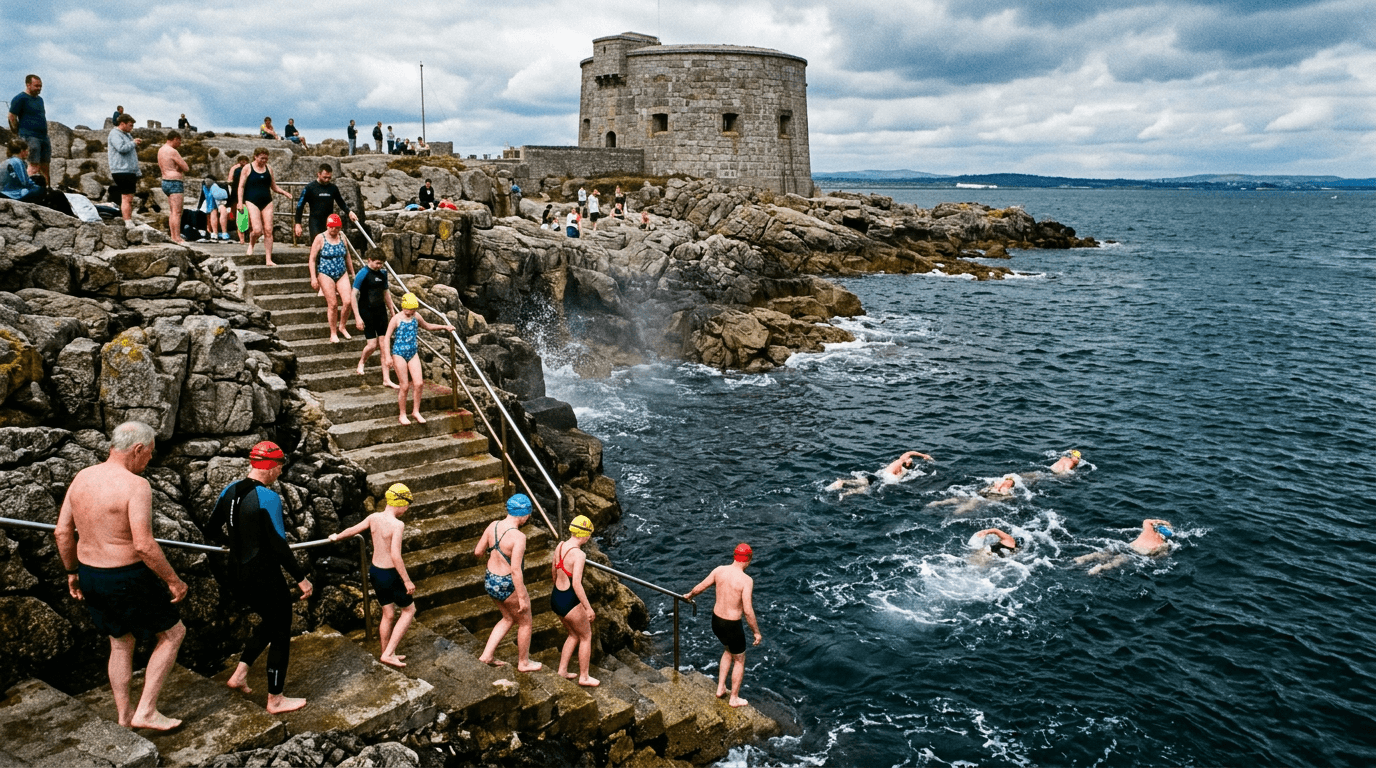
The wild swimming culture of Ireland’s capital city is legendary, deeply woven into the literary and social fabric of Dublin. Long before the modern wellness boom, hardy locals were throwing themselves into the Irish Sea from the rocky outcrops of the southern suburbs.
The undisputed heavyweight of Dublin swimming is the Forty Foot in Sandycove. Immortalized in the opening pages of James Joyce’s Ulysses, this deep-water promontory was historically a "gentlemen only" bathing area but is now a gloriously inclusive, bustling hub of daily activity. Just a short journey away along the affluent Vico Road lies the visually stunning Vico Baths in Killiney, offering sheer concrete terraces, stainless-steel ladders, and breathtaking views of Sorrento Bay that feel more akin to the Amalfi Coast than the Irish Sea.
For those seeking a gentler introduction to the water, the sandy, sloping shores of Seapoint—guarded by its iconic Martello tower—provide a calmer, shallower environment that is heavily dictated by the tides. Navigating the intense social etiquette, the deep-water jumps, and the notorious parking nightmares of these affluent coastal suburbs requires specific local knowledge, all of which we detail in our dedicated city guide: Best Dublin Sea Swimming Spots: Forty Foot, Vico & Seapoint.
4. The West Coast: Galway’s Bohemian Energy
As you cross the country to the West Coast, the energy shifts dramatically. Galway City is the bohemian heartbeat of the Wild Atlantic Way, and its swimming culture is relentlessly social, vibrant, and exposed to the full force of the ocean swell. The Salthill Promenade, a two-mile stretch of coastal walkway, is the epicenter of this activity.
At the very end of the Prom stands the iconic Blackrock Diving Tower. This multi-tiered concrete structure is the ultimate proving ground for locals and visitors alike. When the high tide rolls in, swimmers line up to plunge from the high boards into the freezing, dark green water of Galway Bay. It is a theater of adrenaline and a quintessential Irish rite of passage.
If you venture just slightly outside the city limits to the village of Barna, you will find the sheltered, sandy expanse of Silverstrand, offering a quieter, more reflective swim with stunning views looking out toward the rugged peaks of Connemara. To understand the jumping culture of Blackrock and the post-swim culinary rewards of the region, dive into our regional spoke: Galway & Clare Sea Swimming: Salthill, Blackrock & Pollock Holes.
5. The Geological Marvels: Natural Tidal Pools
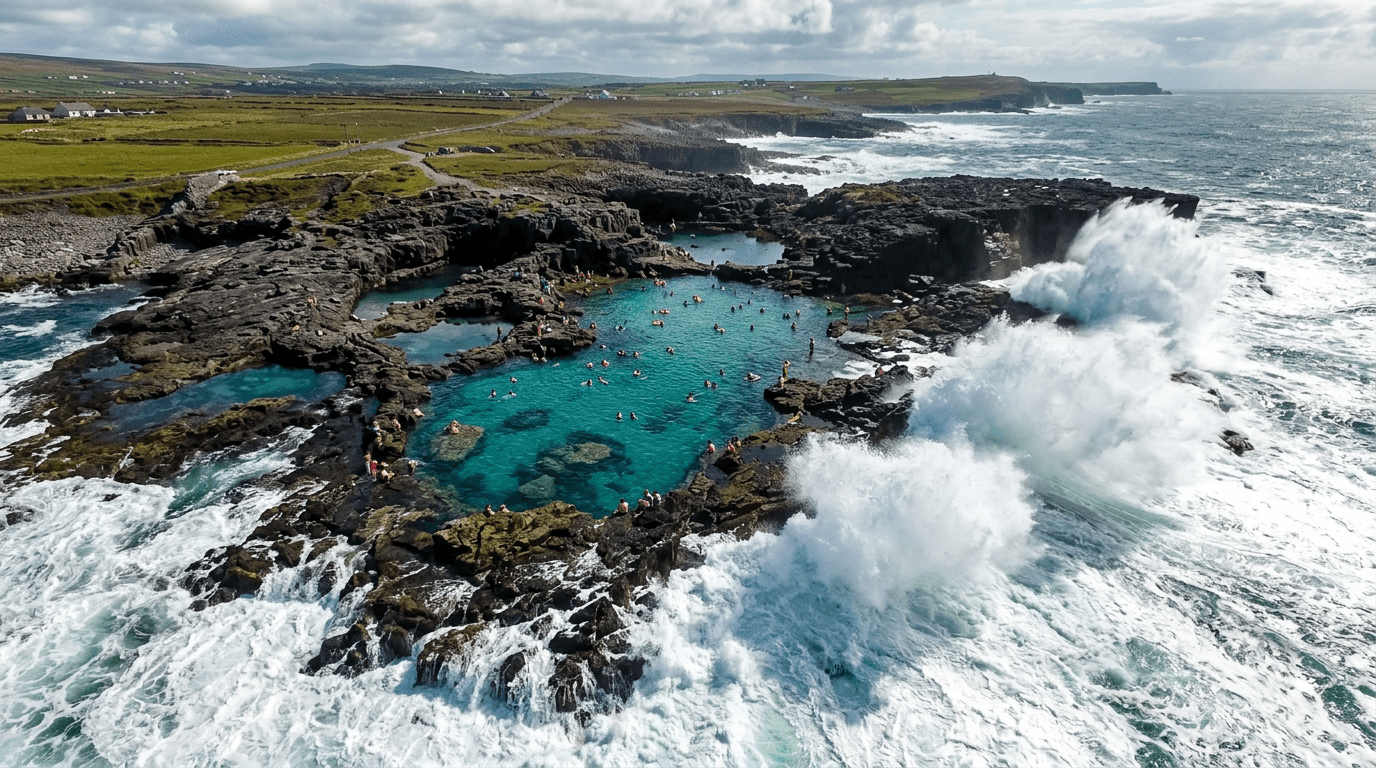
Perhaps the most magical and elusive form of wild swimming in Ireland involves hunting for natural tidal pools. These are not open beaches; they are nature’s infinity pools—massive, clear basins carved into the coastal bedrock by thousands of years of oceanic battering. They are completely flushed out and replenished with fresh seawater twice a day by the incoming high tide.
Swimming in a tidal pool offers an entirely different sensory experience. Because they are temporarily protected from the violent crashing waves of the open ocean by jagged outer reefs, the water is often perfectly still, exceptionally clear, and sometimes slightly warmed by the sun. The Pollock Holes in Kilkee, County Clare, are the undisputed crown jewels of this geological phenomenon, offering massive, deep-water basins where you can swim alongside vibrant kelp forests and darting marine life.
However, experiencing these pools requires absolute precision. They are strictly governed by the lunar cycle and are typically only accessible for a narrow, two-hour window before and after low tide. Arrive too late, and your serene infinity pool will be entirely buried beneath ten feet of aggressive, white-capped Atlantic waves. To master the strict science of timing these natural wonders, read our specialized geological guide: Natural Tidal Pools in Ireland: Swimming in Nature's Infinity Pools.

6. The Deep Southwest: Finding the Hidden Coves
For the traveler seeking absolute, uninterrupted silence, the deeply indented, jagged peninsulas of West Cork and County Kerry hold the ultimate prize. This region of the Wild Atlantic Way is a geographic labyrinth, fractured by ancient glaciers into thousands of tiny, secluded inlets, highly sheltered coves, and hidden crescent beaches.
These spots are actively hidden from the main tourist highways. Places like Ballyrisode Beach on the Mizen Peninsula, or the tiny, crystal-clear inlets of the Skellig Ring, are not signposted. They are tucked at the bottom of steep, terrifyingly narrow dirt tracks (boreens) where the grass grows in the middle of the road and the cliff edges offer no protective barriers.
Reaching these pristine, white-sand coves requires nerves of steel behind the wheel and a willingness to venture far off the algorithms of standard GPS navigation. The reward, however, is plunging into water so clear it looks like liquid glass, surrounded by sheer mountain walls, without a single tour bus in sight. We explore the geographic isolation and the severe driving challenges of this region in our deep-dive: Secret Swimming Spots in West Cork & Kerry: Hidden Coves.
7. The Inland Serenity: Freshwater Lakes and Rivers
While the ocean undeniably dominates the narrative, the interior of Ireland offers a spectacularly different aquatic experience. Freshwater swimming in the island's thousands of lakes (loughs) and slow-moving rivers trades the violent salt spray of the coast for the profound, ancient silence of deep glens and pine forests.
Swimming in places like the Upper Lake at Glendalough—a massive, glacial ribbon lake flanked by towering valley walls in the Wicklow Mountains—feels like swimming through history. The water in the Irish interior is heavily filtered through ancient peat bogs, giving it a distinct, dark amber color and an incredibly soft, silky texture against the skin.
However, freshwater carries its own unique, deceptive risks. The lack of salt means you are significantly less buoyant, making treading water much more exhausting. Furthermore, deep lakes experience severe "thermal stratification," where the surface may feel warm, but a sharp drop-off just a few feet below hides freezing, winter-like temperatures that can trigger immediate cold water shock. We map the best inland waterways and decode their specific hazards in our freshwater guide: Freshwater Swimming in Ireland: Best Lakes, Rivers & Loughs.
8. The Extreme Edge: The Thrill of Winter Swimming
The most radical shift in Irish coastal culture has been the explosion of winter swimming. The beaches are no longer abandoned in November. Instead, a massive community of dedicated "dippers" braves water temperatures that plummet to 7°C (44°F) and air temperatures that hover near freezing.
Winter swimming is an extreme, intense confrontation with the elements. The physiological response—a massive surge of adrenaline, noradrenaline, and endorphins—provides a chemical high and a sense of mental clarity that acts as a powerful antidote to the dark, long Irish winters. However, the margins for error in winter are virtually non-existent. You must aggressively upgrade your neoprene gear, strictly limit your time in the water, and master the rapid, highly orchestrated recovery process to combat the dangerous "After Drop," where your core temperature continues to fall long after you have exited the sea. To learn how to safely join the ice-water warriors, consult our survival guide: Winter Swimming in Ireland: How to Brave the Cold Water Safely.
9. Contrast Therapy: The Wood-Fired Beach Saunas
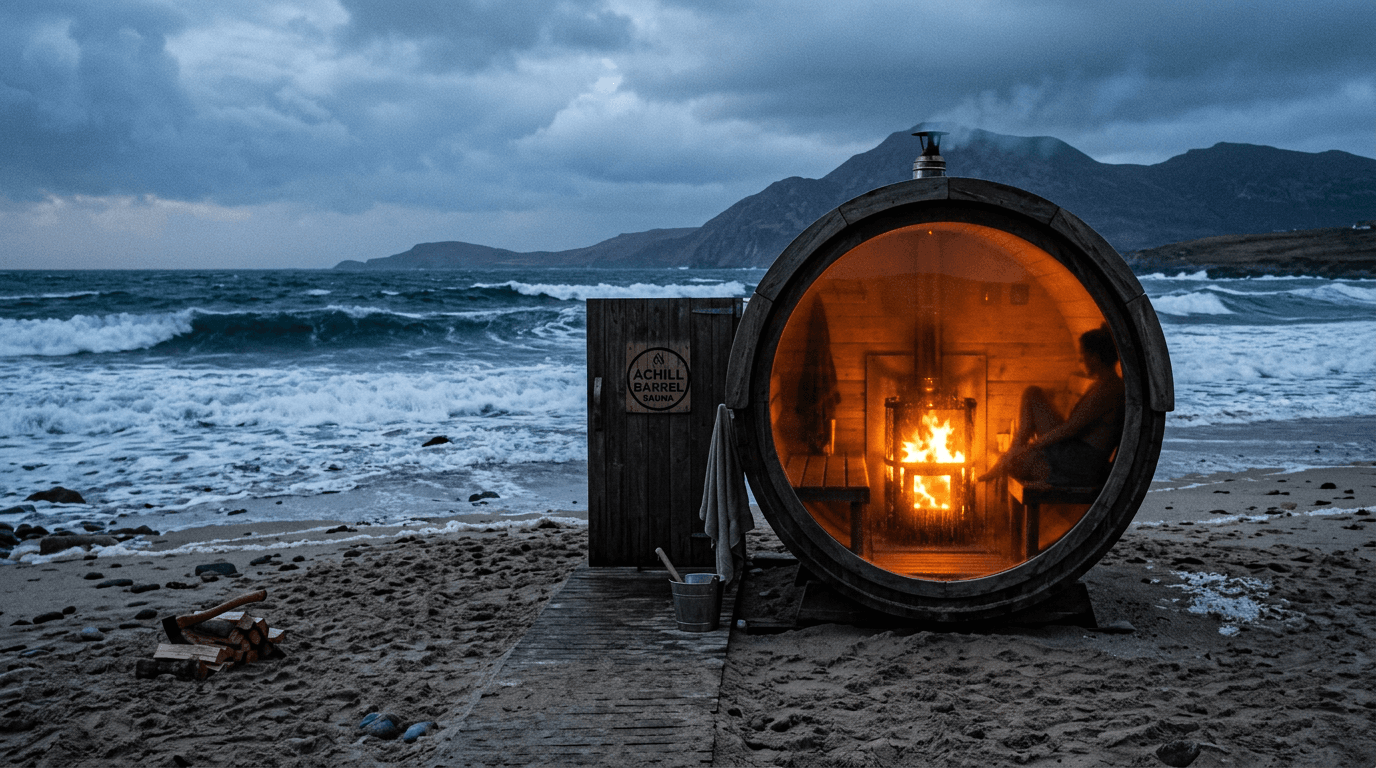
The ultimate companion to the freezing Irish ocean is the booming coastal sauna movement. Taking inspiration from Nordic traditions, local entrepreneurs have converted vintage horseboxes, shipping containers, and custom wooden barrels into high-end, wood-fired saunas, parking them directly on the edge of the beaches and piers.

This is the pinnacle of contrast therapy. You sit in a blistering 90°C (194°F) cedar room, pouring water over hot rocks to create billowing steam, all while looking out through a panoramic glass window at the crashing Atlantic waves. When you can bear the heat no longer, you sprint across the sand and plunge into the freezing ocean, repeating the cycle until you achieve a state of profound, heavy physical relaxation—a phenomenon locals affectionately refer to as being "sauna stoned." From the bustling promenades of the East Coast to the remote, dark-sky reserves of Kerry, we have cataloged the finest wood-fired heat experiences in our guide: Best Outdoor Saunas in Ireland: Coastal Wood-Fired Warmth.
10. The Ultimate Coastal Route
To seamlessly stitch all of these experiences together, we have designed a specialized, 7-day coastal road trip. Unlike standard tourist itineraries that rush from one crowded monument to the next, this route is entirely dictated by the tides, the saunas, and the pursuit of the perfect plunge.
We utilize a unique anti-clockwise route (Dublin → Galway → Clare → Kerry → Cork). This deliberate direction allows you to start in the highly social, energetic swimming hubs of the cities and progressively move toward the deeply isolated, secretive coves of the southwest as the week goes on. You will jump from the Blackrock tower, time the tidal pools of Kilkee, and sweat in the dark-sky saunas of the Kerry coast. You can view the full, day-by-day breakdown of this journey in our itinerary spoke: 7-Day Wild Swimming Ireland Itinerary: Coastal Road Trip.
The Logistical Reality: Why You Need Local Experts
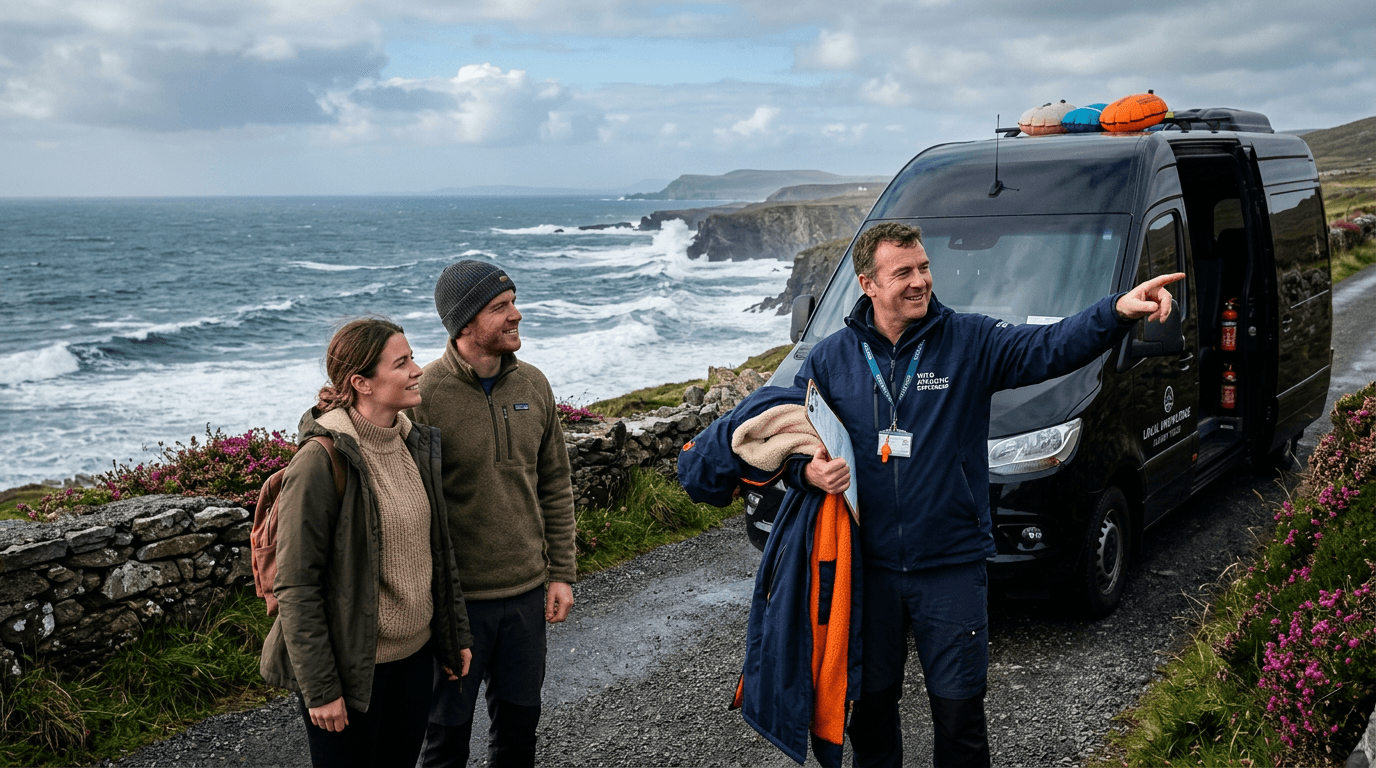
Reading about the wild swimming culture is deeply inspiring, but attempting to execute this trip independently in a standard manual rental car is a recipe for immense logistical stress. The infrastructure of the Irish coastline was simply not built to accommodate the modern surge in aquatic tourism.
The Parking and Navigational Crisis: The best swimming spots are fiercely protected by their geography. In the affluent suburbs of Dublin, parking is heavily restricted, and illegal parking near the bathing spots will result in an immediate clamp. In the deep southwest, accessing the hidden coves requires driving down terrifyingly narrow, unlit boreens with zero GPS signal, reversing your vehicle for half a mile when you meet a tractor on a blind bend.
The Wet Gear and Fatigue Reality: Furthermore, the physical toll of wild swimming is massive. When you emerge from a freezing ocean or step out of an intense 90°C sauna, your body is in recovery mode. You are shivering, your fine motor skills are compromised, and a deep, heavy lethargy sets in. The absolute last thing you should do is climb into the driver’s seat of a rental car and attempt to navigate a 30-degree gravel cliff edge. Additionally, throwing soaking wet, sandy, heavy neoprene wetsuits into the trunk of a rental sedan will ruin the upholstery and leave the car smelling of stale seawater, resulting in hefty cleaning fines.
The Solution: Building Your Local Team To truly unlock the magic of the Irish coast, you must lean on the expertise of the people who live and breathe it every day. The smartest investment you can make is to utilize the directory to build a support system of local professionals.
- Local Coastal and Inland Guides: These experts are your ultimate safety net. A local swimming or walking guide knows the exact hour the tidal pools become safe, they know which hidden coves are sheltered from today’s specific wind direction, and they often provide the bulky safety gear (tow floats, heavy changing robes) so you do not have to pack them in your luggage. They monitor the water quality of the inland lakes and keep you away from hidden drop-offs.
- Local Food Experts: The post-swim warm-up is crucial. A local culinary guide knows exactly which unassuming, brightly painted pub in a small Clare village serves the best, piping-hot seafood chowder, or which seaside café has the turf fire lit and the artisan coffee brewing.
- Private Drivers: A local driver transforms your trip from an endurance test into a seamless luxury retreat. They handle the terrifying cliffside navigation and the parking nightmares while you relax. Most importantly, they operate vehicles with specialized, waterproof trunks for your wet gear, and they have the cabin pre-heated and waiting for you the second you step out of the freezing wind.
You came to Ireland to immerse yourself in the wild, untamed beauty of the ocean, not to stress over tide charts, parking meters, and foggy rental car windows. Respect the water, pack your thermal layers, and let the local experts guide you safely to the edge of the Atlantic.
Table of Contents
Share this post
More from the Blog

Cork to Blarney Castle Day Trip: The Stone, the Gardens and What Else to See
Plan a Cork to Blarney Castle day trip. Kiss the stone, explore the Poison Garden, and add Cork city, Fota or Kinsale for a full day out.

Cork to Cobh Day Trip: Titanic, Colourful Houses and Harbour History
Plan a Cork to Cobh day trip by train, car or private driver. Explore Titanic history, St Colman's Cathedral, Spike Island and the best harbour views.

Cork to Killarney Day Trip: Lakes, Mountains and Muckross in One Day
A Cork to Killarney day trip is a longer escape into Kerry. Here's how to plan the drive, what to see in Killarney National Park, and why a private driver helps.