
What to Wear Wild Swimming in Ireland: Dryrobes & Gear
If you are packing for a beach vacation in the Mediterranean, your checklist is blissfully simple: a lightweight swimsuit, a thin cotton towel, a pair of flip-flops, and a bottle of sunscreen. If you bring that exact same packing list to the western seaboard of Ireland in the middle of October, you are going to have a very short, very miserable, and potentially dangerous experience. The Atlantic Ocean does not care about your tropical vacation habits. It requires preparation, respect, and a highly specific wardrobe.
Wild swimming in Ireland is an endurance sport disguised as a leisure activity. The water temperatures fluctuate between a bracing 15°C (59°F) in late summer and a bone-chilling 7°C (44°F) in the depths of winter. Furthermore, the act of swimming is only a fraction of the challenge. The real test of your fortitude happens before you get in the water, when you are stripping down on a wind-whipped concrete pier, and after you get out, when you are desperately trying to drag dry clothes over numb, wet skin before the "After Drop" sets in.
Because of these extreme environmental factors, a unique, highly specialized culture of swimming gear has evolved across the island. The beaches here are not lined with bikinis and beach towels; they are dominated by heavy, fleece-lined changing robes, thick neoprene accessories, and brightly colored safety floats. Understanding this equipment is not just about looking like a local—it is fundamentally about preserving your core body temperature and ensuring your survival in unpredictable waters.
"The biggest mistake tourists make is underestimating the wind. You can survive the cold water for ten minutes, but if you step out of the sea and only have a tiny hotel towel to wrap around yourself in a twenty-knot Atlantic gale, your core temperature is going to plummet instantly. Your gear is your life support on the beach." — Aoife, Open Water Swimming Coach
In this comprehensive guide, we are going to unpack the essential gear required for a successful and safe Irish sea swim. We will settle the debate between wetsuits and "skins," explore the necessity of protecting your extremities, explain the cultural phenomenon of the changing robe, and discuss the logistical nightmare of transporting soaking wet, sandy gear back to your accommodation.
(This packing guide is an essential component of our master resource: Wild Swimming in Ireland: Sea Coves, Tidal Pools, Saunas & Everything You Need to Know. Before purchasing any gear, please ensure you understand the environmental risks by reading our Wild Swimming Safety in Ireland: How to Read Tides, Rip Currents & Weather guide).
1. The Core Decision: Wetsuits vs. "Skins"
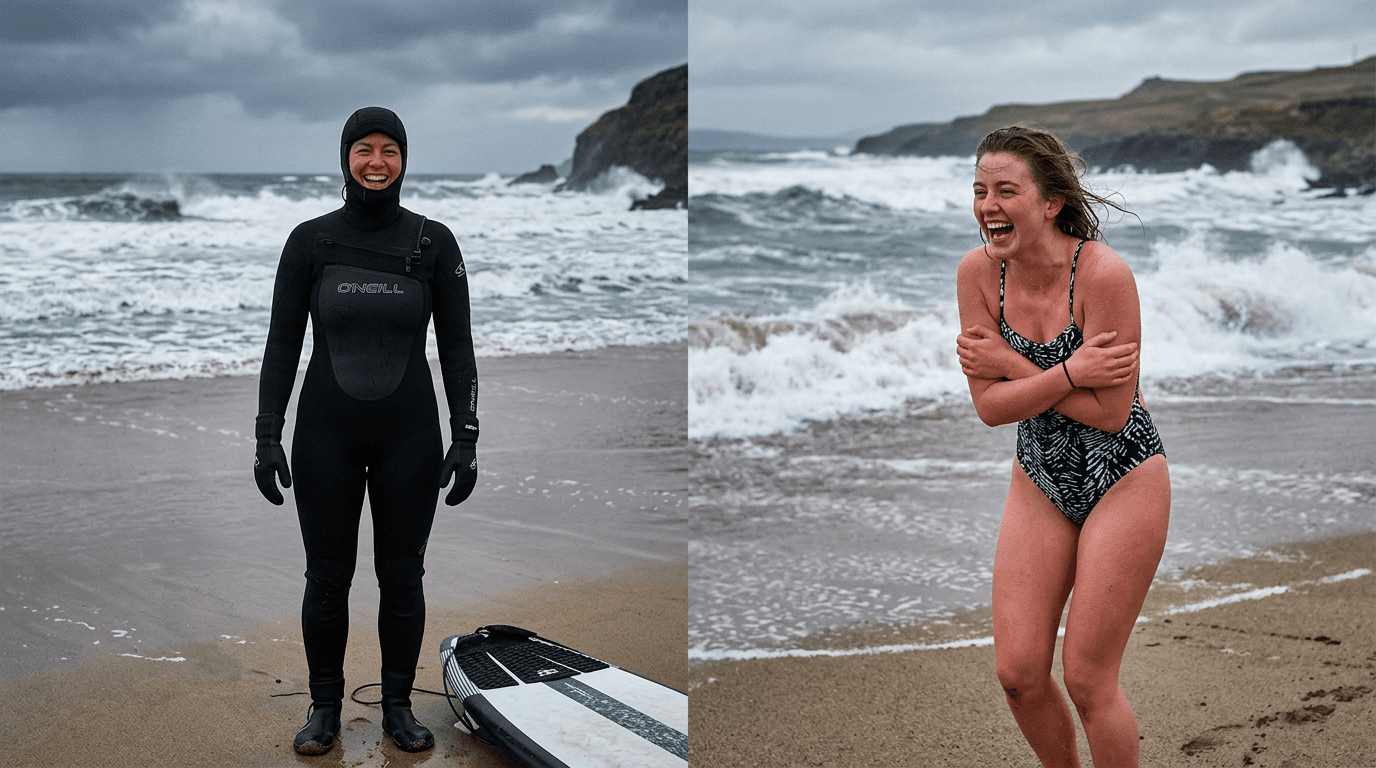
The first and most hotly debated decision you must make when preparing for an Irish sea swim is whether to wear a wetsuit or to swim in "skins." In the local parlance, swimming in skins simply means wearing a standard bathing suit or swimming trunks, relying entirely on your body’s natural response to handle the cold water.
There is an undeniable, deeply entrenched culture of bravado surrounding swimming in skins in Ireland. For the dedicated daily dippers who frequent historic spots—like those we detailed in our Swimming in Dublin: A Guide to the Forty Foot, Vico Baths & Seapoint article—wearing a wetsuit is often playfully mocked. Swimming in just a bathing suit provides the maximum, unadulterated rush of cold water shock. It triggers the highest release of endorphins and adrenaline, and it requires zero time spent wrestling with tight, restrictive rubber on a sandy beach.
However, if you are a visitor unaccustomed to the North Atlantic, or if you plan to stay in the water for longer than five to ten minutes, a wetsuit is a highly intelligent, practical choice. Wetsuits work by trapping a thin layer of water between your skin and the neoprene. Your body heat warms this trapped water, creating a thermal barrier against the freezing ocean.
- Thickness Matters: Wetsuits are categorized by the thickness of the neoprene, measured in millimeters. For the Irish summer (June to September), a 3/2mm wetsuit (3mm on the torso, 2mm on the limbs for flexibility) is usually perfectly adequate for a prolonged swim or a surfing lesson.
- Winter Armor: If you are braving the water between November and April, you must upgrade to a 4/3mm or even a 5/4mm winter wetsuit. These are significantly heavier and harder to put on, but they will allow you to stay in the freezing water for thirty minutes or more without risking severe hypothermia.
- The Swimming Specifics: If you intend to swim long distances (like front crawl training) rather than just dipping and floating, you should look for a specifically designed "open water swimming wetsuit." Unlike surfing wetsuits, which are rugged and heavily reinforced at the knees, swimming wetsuits have incredibly thin, flexible neoprene around the shoulders to allow for a full, uninhibited range of motion, and thicker neoprene on the legs to promote horizontal buoyancy.

2. Protecting the Extremities: Neoprene Accessories
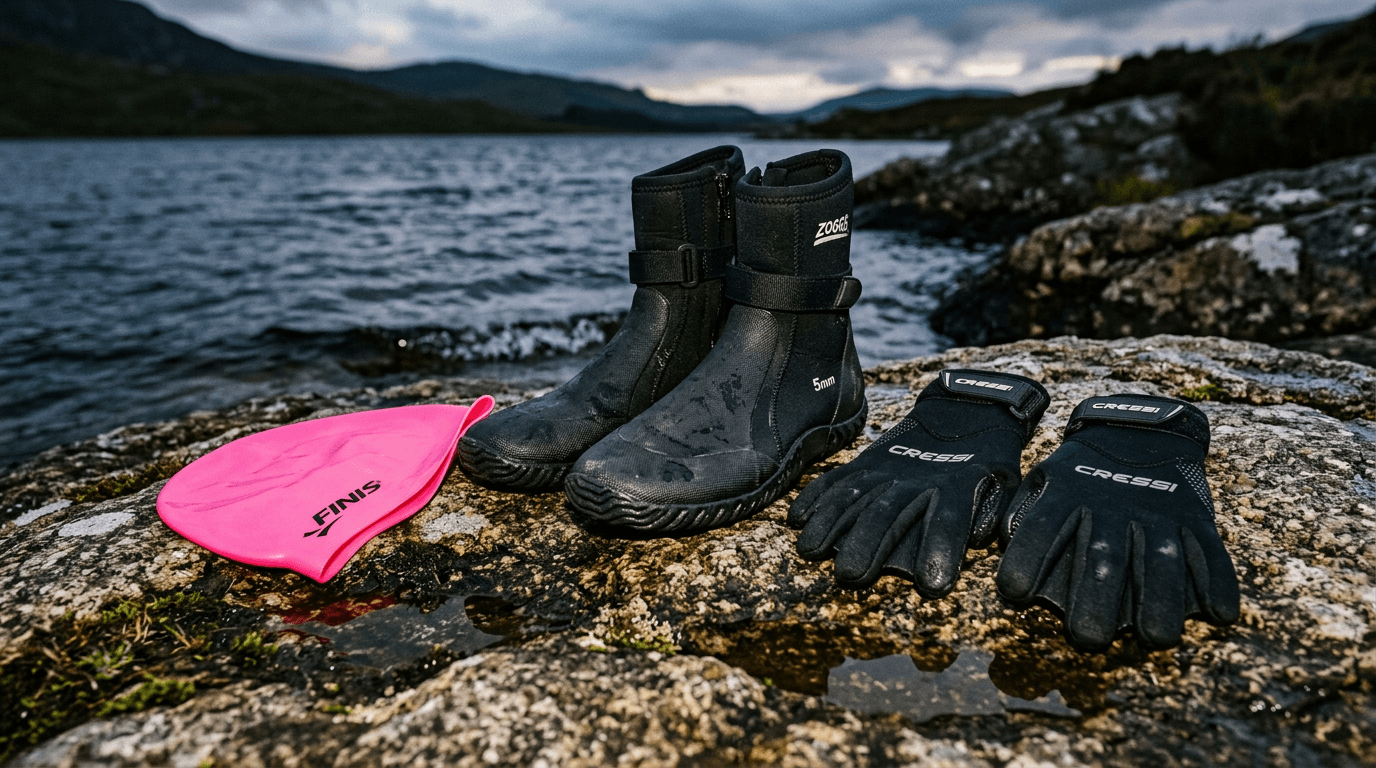
Regardless of whether you choose to swim in a full winter wetsuit or brave the ocean in skins, there is one universal truth about cold water: your body will ruthlessly sacrifice blood flow to your extremities in order to keep your vital organs warm. Your hands, feet, and head will feel the agony of the cold long before your chest does. Therefore, protecting your extremities with specialized neoprene accessories is absolutely vital.
Neoprene Booties: If you only buy one piece of specialized gear for your Irish swimming trip, make it a pair of neoprene swimming booties (usually 3mm thick). Irish beaches are rarely composed of soft, powdery sand. To access the best water, you will often have to walk across jagged limestone shelves, clamber over rocks covered in razor-sharp barnacles, or wade through pebble beaches that are agonizing on bare, freezing feet. Booties provide essential thermal protection and crucial grip, preventing lacerations and slips. They also protect you from the weaver fish, a small, sand-dwelling creature common in Irish shallows that possesses a highly venomous dorsal fin.
Neoprene Gloves: When your hands hit water below 10°C, the blood vessels constrict so rapidly that your fingers can quickly form the dreaded "claw." You lose all dexterity, making it difficult to pull yourself up the stainless-steel ladders at deep-water diving spots, and nearly impossible to undo the zipper on your wet bag later. A pair of 2mm or 3mm neoprene swimming gloves (often with webbed fingers for extra propulsion) will keep your hands functional and significantly extend the duration of your swim.
The Headgear (Caps and Hoods): You lose a massive amount of body heat through your head. Furthermore, submerging your bare forehead into freezing water causes a severe vascular constriction known as the "ice cream headache"—a blinding, intense pain that can cause immense panic.
- For standard summer swimming, a thick, brightly colored silicone swimming cap is mandatory. Not only does it retain some heat, but the bright neon color (orange, pink, or green) is critical for your visibility to passing boats and rescue services.
- For winter swimming, serious dippers wear a full 3mm neoprene "balaclava" or hood that tucks into the neckline of their wetsuit, covering their ears, neck, and chin, leaving only their face exposed to the stinging salt water.
3. The Tow Float: The Non-Negotiable Safety Beacon
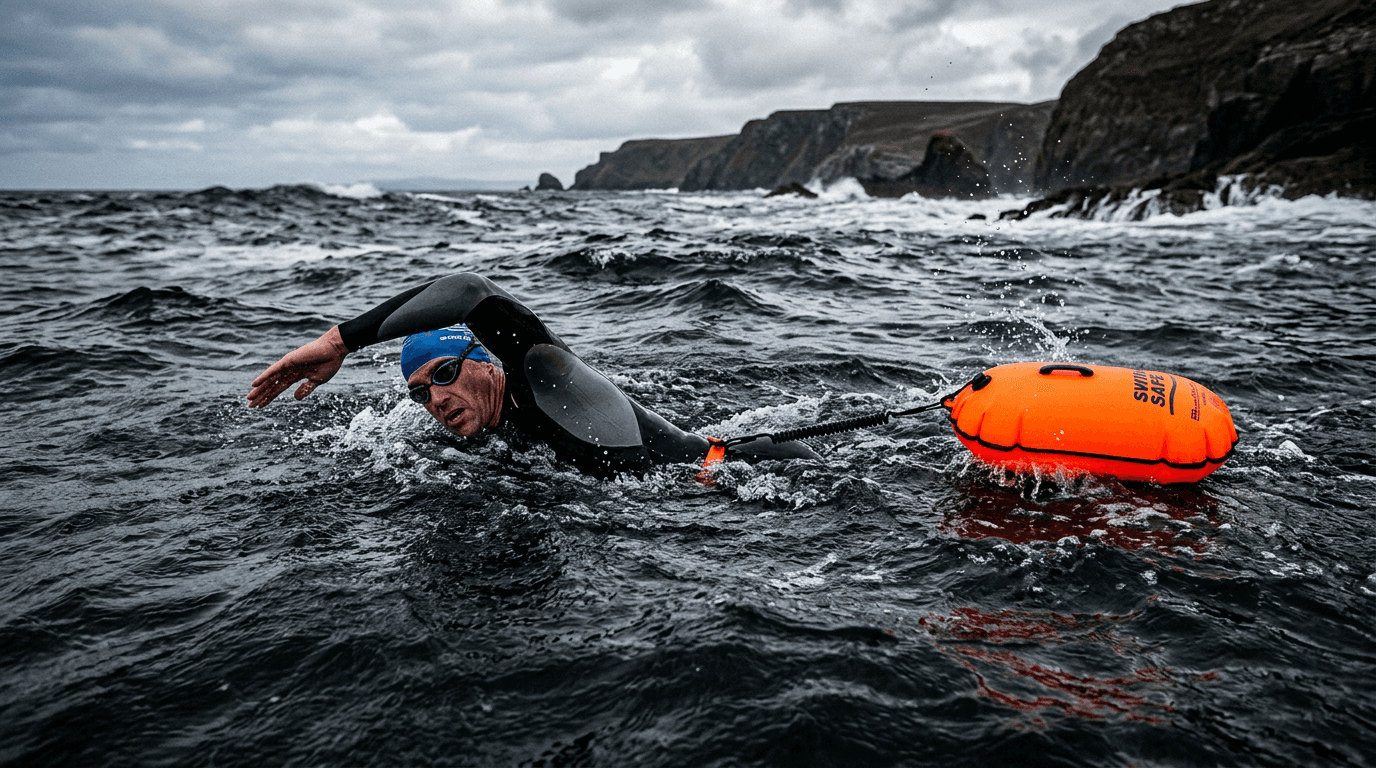
As you look out across any popular swimming bay in Galway, Cork, or Dublin, you will see a scattering of bright orange, pink, and yellow bubbles bobbing on the surface behind the swimmers. These are tow floats, and they have revolutionized the safety of open water swimming in Ireland.
A tow float is an inflatable, brightly colored bag attached to a short leash that clips around your waist. As you swim, it drags effortlessly behind you, creating virtually zero drag or resistance. It serves several absolutely vital functions that make it a non-negotiable piece of equipment for any visiting swimmer.
- Ultimate Visibility: In the dark, often grey, rolling swell of the Irish Sea, a swimmer's head is almost impossible to spot from more than fifty yards away. A bright orange tow float makes you instantly visible to jet skis, fishing trawlers, speedboats, and, crucially, the coast guard if you ever require assistance.
- The Rest Buoy: While tow floats are explicitly not certified life-saving devices (they are not life jackets), they provide a highly buoyant object to hold onto. If you swallow a mouthful of seawater, suffer a sudden calf cramp, or simply feel overwhelmed by the distance to the shore, you can pull the float toward your chest, wrap your arms around it, and comfortably tread water while you catch your breath and calm your heart rate.
- The Dry Bag Function: Many premium tow floats double as waterproof dry bags. This is incredibly useful if you are swimming at a remote location and do not want to leave your expensive rental car keys or your smartphone sitting unattended on the beach while you are out in the bay.
4. The Cultural Phenomenon: The Changing Robe
If you want to blend in with the locals on an Irish coastline, you need to understand the cultural dominance of the changing robe. Often referred to colloquially by the most famous brand name, the "Dryrobe," these massive, oversized coats have become the unofficial uniform of the modern Irish outdoor enthusiast.
Changing out of a wet swimsuit on a highly exposed, public beach in Ireland is a miserable, degrading experience. The wind whips the towel out of your hands, the rain lashes against your back, and your hands are often too numb to operate buttons or zippers. The heavy changing robe was invented to solve this exact problem.
These robes feature a fully waterproof and windproof exterior shell, lined on the inside with thick, moisture-wicking synthetic fleece. The magic lies in the oversized fit and the massive, wide sleeves. You put the robe on over your wet gear, pull your arms entirely inside the cavernous interior, and you have a private, wind-proof, heated tent in which you can strip off your wet bathing suit and pull on your dry clothes without ever exposing your skin to the elements or the public gaze.
- The Investment: If you are visiting Ireland in the autumn or winter, investing in a high-quality changing robe (brands like Dryrobe, Robie, or Irish-owned companies like Fad Saoil) will change your entire vacation. It turns the agonizing fifteen minutes of post-swim shivering into a cozy, deeply comfortable recovery period. They are also incredibly popular for throwing on after a blazing hot session in one of the coastal pop-ups we reviewed in our Best Outdoor Saunas in Ireland: Coastal Wood-Fired Warmth guide.
5. The Post-Swim Warm-Up Kit (The Bag of Tricks)
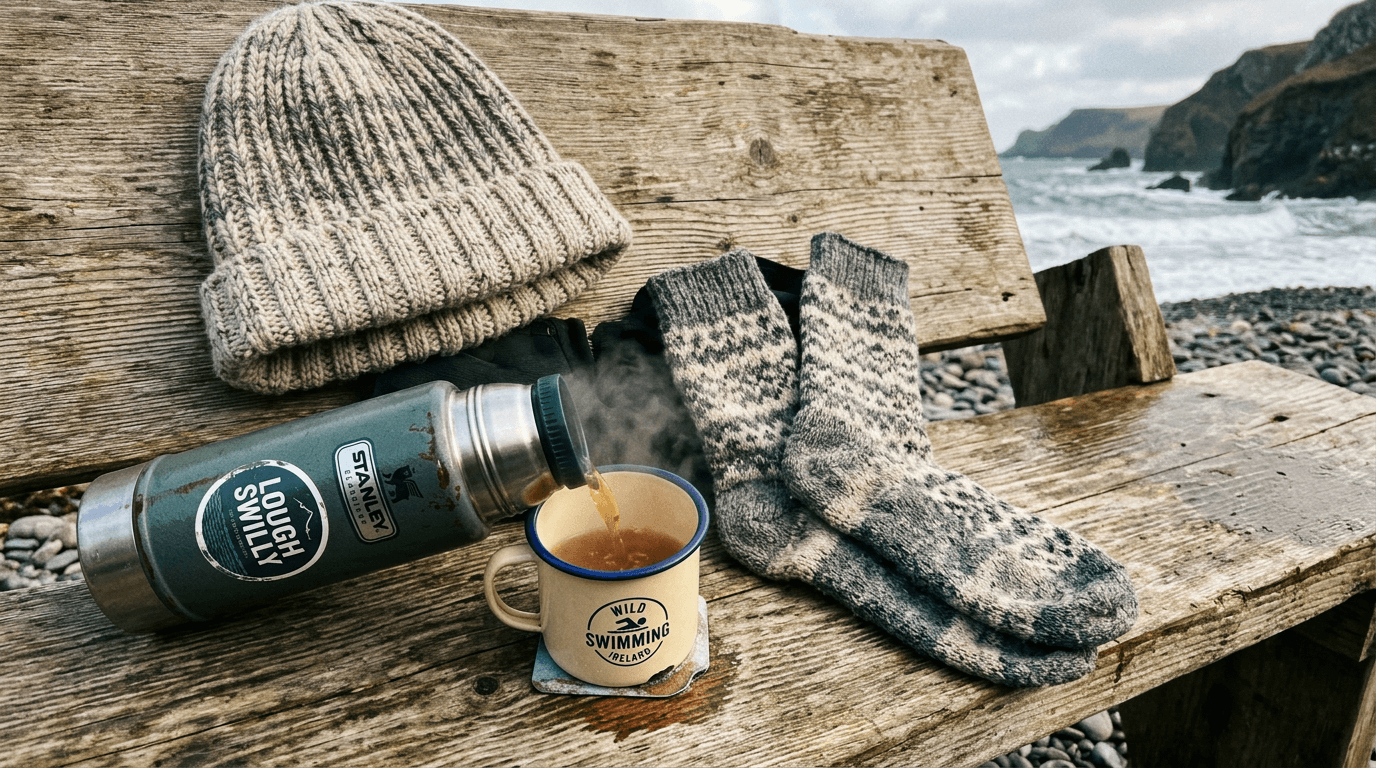
The gear you bring to the beach is just as important for your recovery as it is for your time in the water. Surviving the "After Drop"—the sudden plummet in core body temperature that hits ten minutes after you exit the sea—requires a highly specific packing strategy. You cannot simply throw on a pair of tight jeans and a thin t-shirt.
When packing your dry bag for the shore, you must curate a dedicated "warm-up kit."
- Loose, Baggy Layers: When your skin is damp, sticky with salt, and freezing cold, attempting to pull on tight, restrictive clothing like yoga leggings, skinny jeans, or fitted sports bras is an exercise in futility and frustration. You need oversized, loose-fitting layers. Think baggy sweatpants, oversized fleece hoodies, and thick woolen socks that you can slide into effortlessly.
- The Immediate Hat: You lose an immense amount of body heat from your head. The very first thing you should do upon exiting the water—even before you take off your wet swimsuit—is pull a thick, dry woolen beanie or bobble hat firmly down over your wet hair and ears.
- The Thermal Flask: A thermos flask filled with a scalding hot, sugary drink is mandatory. Hot, sweet tea or hot chocolate provides immediate internal warmth and a rapid spike in blood sugar to combat the massive caloric burn of the shivering response. Do not drink alcohol immediately after a cold swim, as it dilates blood vessels and can actually cause you to lose heat faster.
- The Hot Water Bottle Trick: A veteran local trick is to fill a rubber hot water bottle before you leave your accommodation, wrap your dry clothes around it, and place it in your bag. When you emerge from the freezing sea, your dry clothes will be toasty warm, and you can hug the bottle under your changing robe to rapidly heat your core.
6. The Logistics of Wet Gear: Why You Need a Pro
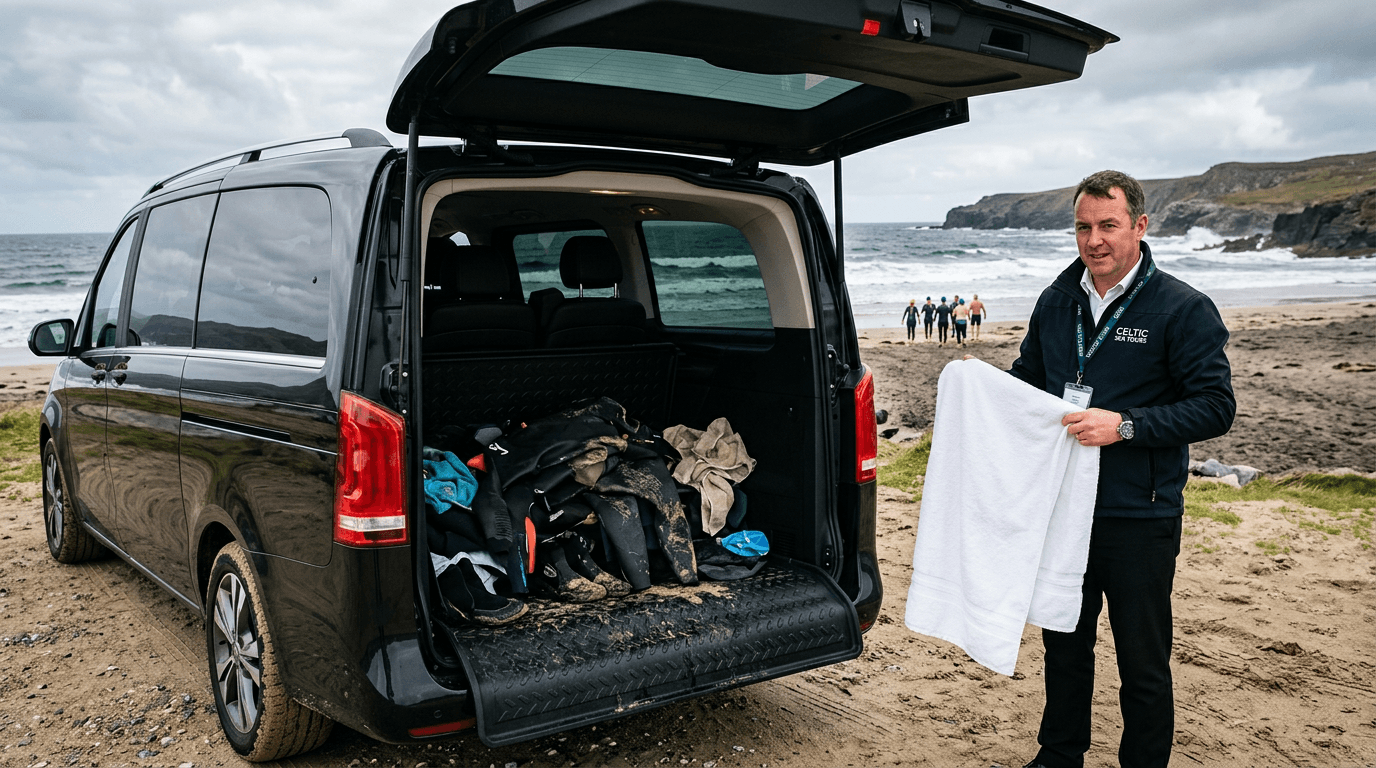
There is a glaring, messy reality to wild swimming that is rarely discussed in the glamorous social media posts: the aftermath. When the glorious, euphoric swim is over, you are left holding a massive pile of soaking wet, freezing cold, sand-covered, heavy neoprene gear.
If you are traveling the Wild Atlantic Way in a standard rental car, managing this wet gear is an absolute nightmare. Throwing a soaking wet wetsuit, dripping booties, and a damp, sandy towel into the trunk of a rented sedan will immediately ruin the upholstery. It creates a massive condensation problem, fogging up the windows, and within twenty-four hours, the entire car will smell distinctly of damp seaweed and stale ocean water—a smell that is almost impossible to eradicate and will likely result in a hefty cleaning fee from the rental agency.
Furthermore, if you are flying into Ireland with only carry-on luggage, packing a massive, heavy winter changing robe and a thick wetsuit will consume your entire baggage allowance, leaving no room for your regular clothing.
The Ultimate Solution: Drivers and Guides This is where the immense value of booking a Local Coastal Guide or a Private Transport Driver becomes apparent. When you hire a professional to manage your coastal excursions, you eliminate the logistical headache entirely.
- The Gear Provision: Many dedicated local swimming guides will actually provide the bulky, high-quality gear for you. They will supply the pristine tow floats, the correct thickness of wetsuits, and the heavy changing robes, meaning you do not have to stuff them into your suitcase or spend hundreds of euros buying gear for a one-off trip.
- The Transport Reality: A private driver operates a vehicle explicitly prepared for the Irish landscape. They have heavy-duty, waterproof rubber mats in the trunk specifically designed for wet gear. They have heated leather seats to thaw you out on the drive home. You simply strip off your wet, sandy gear, throw it into their designated waterproof tub, and sink into a pre-heated, luxurious cabin without a single worry about ruining the upholstery or smelling like the ocean.
Conclusion: Pack for the Worst, Enjoy the Best
Wild swimming in Ireland is one of the most raw, authentic, and exhilarating experiences you can have on the island. But the Atlantic ocean demands respect, and that respect begins with your packing list.
Do not attempt to fight the Irish elements in a thin cotton towel. Embrace the local culture of the heavy changing robe, invest in the protective neoprene that will keep your hands and feet functioning, and never enter the dark waters without the bright beacon of a tow float behind you. By packing intelligently, you ensure that your focus remains entirely on the breathtaking beauty of the swim, rather than the agonizing bite of the cold.
Don't Ruin Your Luggage or Your Rental Car
Avoid the nightmare of traveling with soaking wet, sandy, heavy neoprene gear. Connect with a local professional who can provide the equipment, the waterproof transport, and the heated seats you deserve after a freezing dip.
Table of Contents
Share this post
More from the Blog

Cork to Blarney Castle Day Trip: The Stone, the Gardens and What Else to See
Plan a Cork to Blarney Castle day trip. Kiss the stone, explore the Poison Garden, and add Cork city, Fota or Kinsale for a full day out.

Cork to Cobh Day Trip: Titanic, Colourful Houses and Harbour History
Plan a Cork to Cobh day trip by train, car or private driver. Explore Titanic history, St Colman's Cathedral, Spike Island and the best harbour views.

Cork to Killarney Day Trip: Lakes, Mountains and Muckross in One Day
A Cork to Killarney day trip is a longer escape into Kerry. Here's how to plan the drive, what to see in Killarney National Park, and why a private driver helps.