
Secret Swimming Spots in West Cork & Kerry: Hidden Coves
The Wild Atlantic Way is undeniably one of the most spectacular coastal touring routes on the planet. Millions of visitors flock to the western seaboard of Ireland every year to witness the sheer drop of the Cliffs of Moher and the sweeping grandeur of the Ring of Kerry. But there is an inherent paradox to this fame: the very spots that grace the covers of international travel magazines are rarely the places where you can experience true, silent communion with the ocean. If a beach has a massive paved parking lot and a fleet of luxury tour buses idling nearby, the magic of the wild swim is inevitably diluted.
For the dedicated wild swimmer, or the traveler seeking absolute tranquility, the true essence of the Irish southwest lies hidden just out of sight. The deeply indented, jagged peninsulas of West Cork and County Kerry—specifically the Mizen, Sheep’s Head, Beara, Iveragh, and Dingle peninsulas—form a labyrinth of geographical secrets. Carved out by ancient glaciers and relentlessly battered by the Atlantic Ocean, this coastline is fractured into thousands of tiny, secluded inlets, sheltered coves, and hidden crescent beaches.
These spots are not signposted. You will not find them on standard tourist maps, and the algorithms of modern GPS systems often actively route drivers away from them, viewing the necessary access roads as "unsuitable for motor vehicles." Finding them requires local knowledge, a willingness to venture down unmarked dirt tracks, and an acceptance that the journey will be just as rugged as the destination.
"You know you’ve found a proper West Cork swimming cove when the road simply runs out of tarmac, turns to grass, and ends abruptly at a cliff edge. When you look down and see water so clear it looks like liquid glass, with not a single footprint on the sand—that is the moment you realize why we keep these places off the internet." — Fiona, Coastal Walking Guide in Castletownbere
In this guide, we are venturing off the beaten path. We will explore the geographical allure of the deep southwest, highlight the types of hidden coves that await you in Cork and Kerry, and—crucially—explain the immense logistical and driving challenges of actually reaching them.
(This article is part of our master guide: Wild Swimming in Ireland: Sea Coves, Tidal Pools, Saunas & Everything You Need to Know. Remember, remote swimming carries inherent risks. Always consult our Wild Swimming Safety in Ireland: How to Read Tides, Rip Currents & Weather guide before entering uncharted waters).
1. The Geography of Secrecy: Why the Southwest Hides its Best
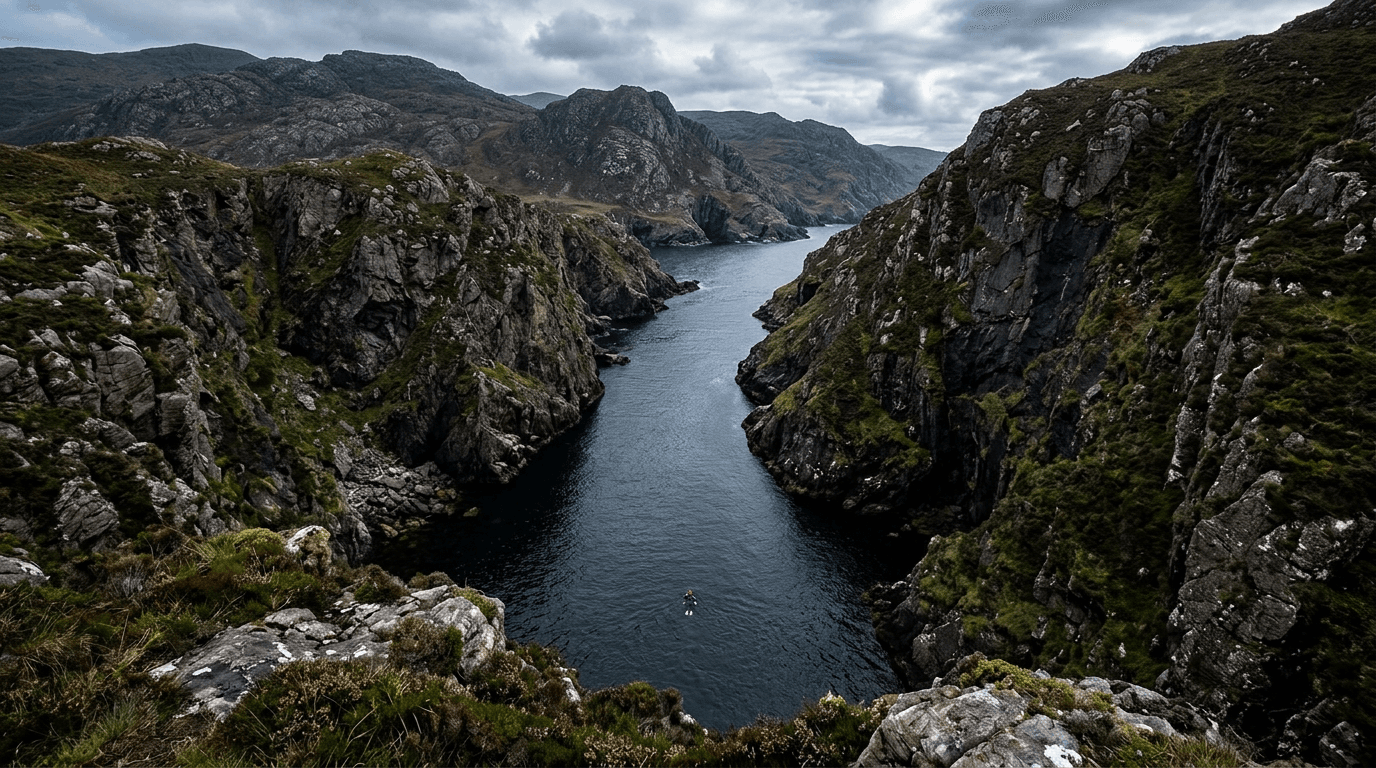
To understand why West Cork and Kerry are so adept at hiding their most beautiful swimming spots, you have to look at the topography. Unlike the long, flat, unbroken sandy stretches of the east coast (which we detailed in our Swimming in Dublin: A Guide to the Forty Foot, Vico Baths & Seapoint ), the southwest is defined by its dramatic "rias." These are drowned river valleys, formed at the end of the last Ice Age when rising sea levels flooded the deep grooves carved between the towering mountain ridges.
The result is a coastline that looks like a shattered pane of glass from above. The peninsulas stretch far out into the roaring Atlantic, acting as massive geological shields. While the tips of these peninsulas (like Mizen Head or Slea Head) take the brutal, full-force impact of the ocean storms, the deep grooves between the peninsulas are highly sheltered.
It is within these deep, protected folds that the magic happens. Here, the ferocious Atlantic swell is broken down and neutralized by the surrounding landmasses. The water that finally laps against the shore in these hidden coves is often remarkably calm, surprisingly clear, and beautifully protected from the prevailing southwesterly winds.
Furthermore, because these coves are flanked by sheer, imposing cliffs or dense, ancient oak woodlands, they are physically invisible from the main regional roads. You can drive the famous Ring of Kerry or the N71 through West Cork and be entirely oblivious to the fact that a pristine, white-sand cove is resting silently just three hundred feet below your tires.

2. Hidden Gems of West Cork: Beyond the Famous Sands
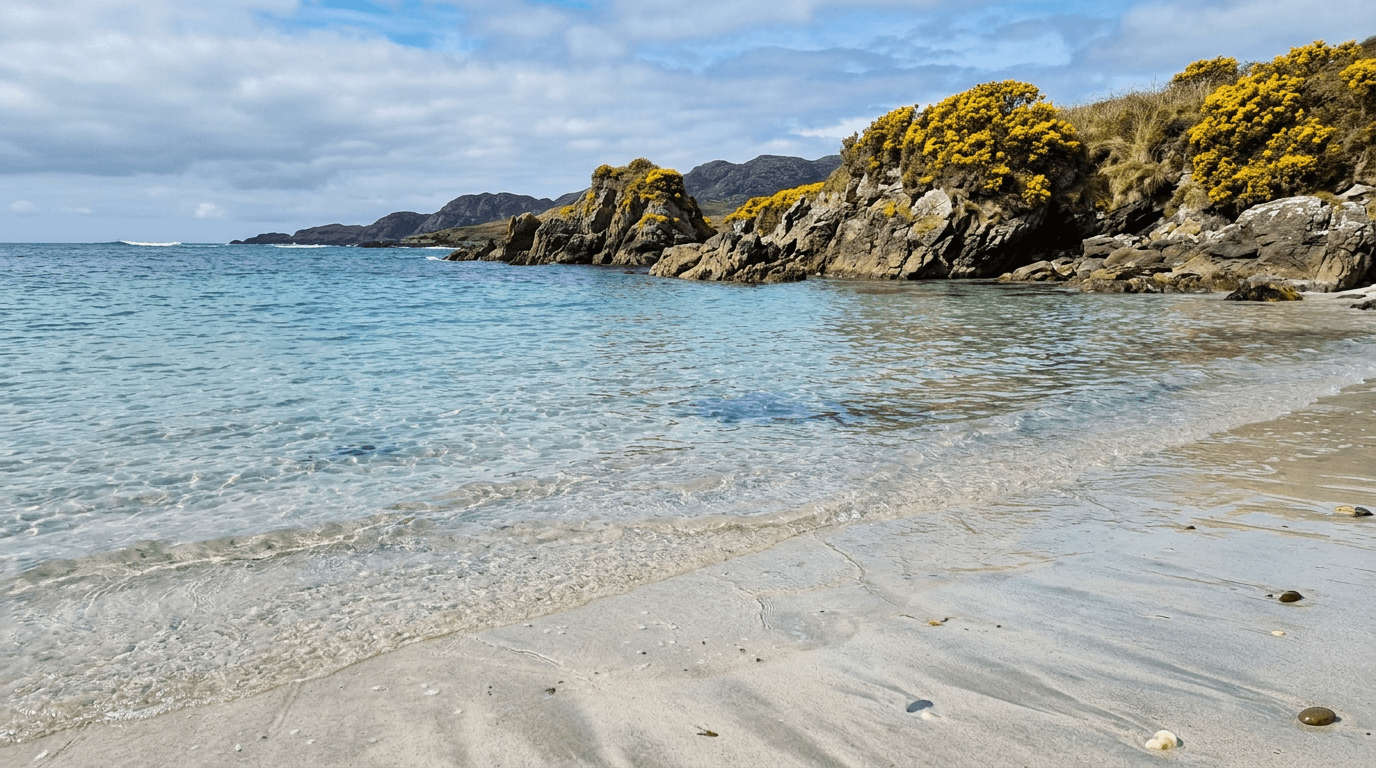
West Cork is culturally distinct from the rest of Ireland. It has long been a haven for artists, writers, and those seeking an alternative, slower pace of life. Its coastline reflects this quiet, independent spirit. While beaches like Inchydoney are spectacular, they are hardly a secret. To find the true hidden coves, you have to push further west, beyond Skibbereen and Ballydehob.
- Ballyrisode Beach (Near Toormore): Located deep on the Mizen Peninsula, Ballyrisode is a masterclass in natural concealment. Accessed via an incredibly narrow, winding lane that eventually gives way to a small, unpaved clearing, this spot features two distinct, sandy coves separated by a rocky outcrop. Because it faces south into Roaringwater Bay, the water is phenomenally clear and shallow for a long distance, making it a dream for relaxed, buoyant swimming. The surrounding rocks are covered in vibrant yellow gorse in the spring, contrasting brilliantly with the turquoise water.
- Trá Lathan / Tragumna's Secret Neighbors: While Tragumna itself has a small, popular beach, the real joy of this area is walking the rugged coastline just a mile in either direction. Here, you will find tiny, unnamed pebble beaches tucked tightly between sheer slate cliffs. These are not beaches for sunbathing; they are deep, sudden drops into crisp, clear water, favored by local spear-fishermen and dedicated solitary swimmers.
- The Beara Peninsula Inlets: The Beara Peninsula, shared between Cork and Kerry, is the most rugged and least visited of the major southwestern peninsulas. It is a forbidding, rocky landscape. However, near the vibrant, colorful village of Allihies, hidden down steep, unmarked farm tracks, are tiny inlets where the water glows with an otherworldly blue tint, colored by the copper deposits in the surrounding mountains. Swimming here feels like swimming at the very edge of the earth.
3. Kerry’s Secret Shores: Escaping the Ring
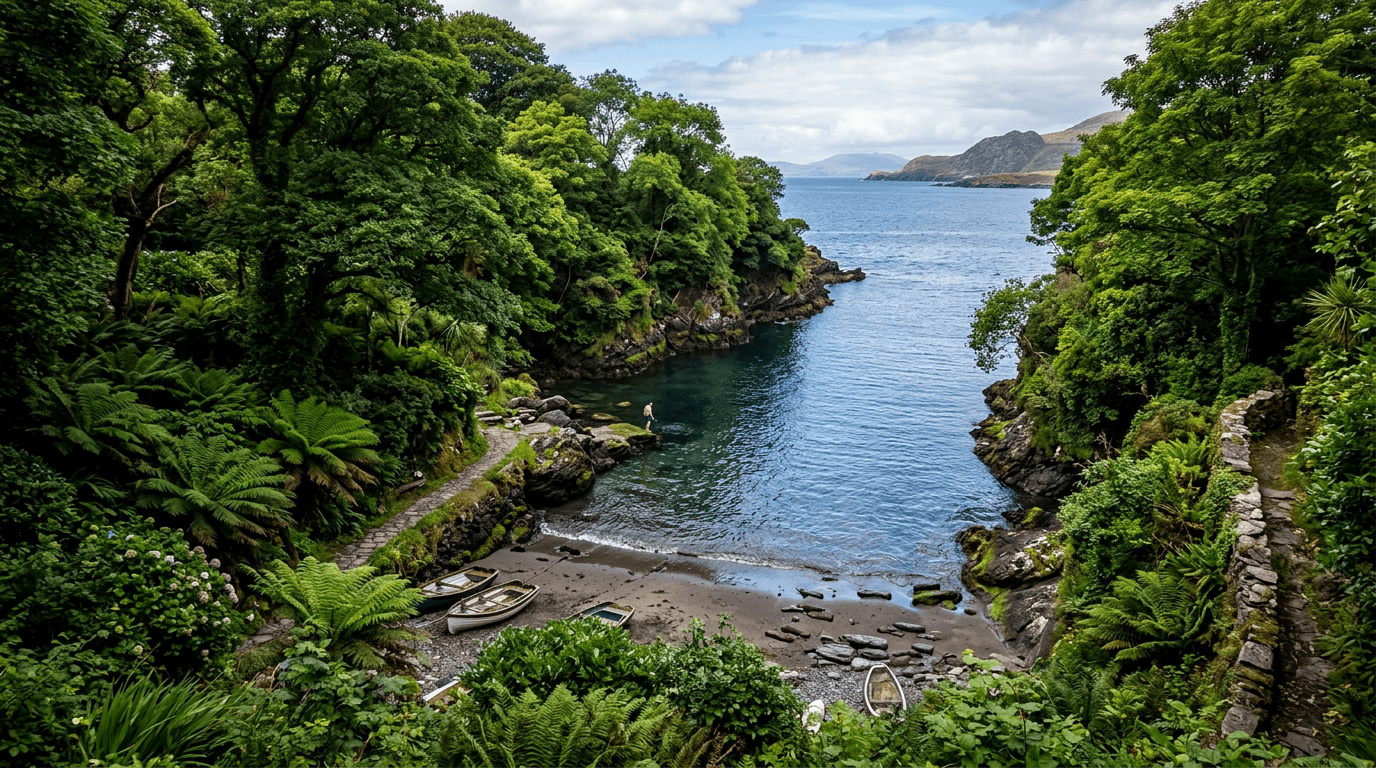
County Kerry is the crown jewel of Irish tourism, dominated by the famous Ring of Kerry and the Dingle Peninsula. The challenge in Kerry is not finding beautiful scenery; the challenge is finding it without a coach tour parked next to you. Escaping the crowds requires deliberately deviating from the main circulatory routes.
- Glanleam Beach (Valentia Island): Valentia Island is accessible via a bridge from Portmagee or a small car ferry. While most tourists rush to the island to see the Tetrapod footprints or the viewing points for Skellig Michael, they miss Glanleam. Due to its unique position on the edge of the Gulf Stream and its sheltered harbor, Glanleam boasts a genuine sub-tropical microclimate. The beach is hidden at the bottom of a lush, densely wooded estate. Swimming here, surrounded by ferns and exotic plants that shouldn't legally exist at this latitude, is a surreal and deeply peaceful experience.
- Cuas Crom (Near Cahersiveen): Tucked away off the main Ring of Kerry road, Cuas Crom is a harbor rather than a traditional beach, but it is beloved by local sea swimmers. High, protective cliffs encircle the small inlet, creating a natural amphitheater that blocks out the wind. The water here is deep, dark, and exceptionally clean. It is common to see local swimming groups launching themselves off the small pier here at high tide. (It is also a popular spot for the mobile saunas we discussed in our Best Outdoor Saunas in Ireland guide).
- The Coves of the Skellig Ring: The Skellig Ring is a smaller, steeper, and more treacherous loop off the main Ring of Kerry (so steep that tour buses are physically banned from driving it). Along this route, particularly near St. Finian's Bay, are tiny, rocky crevices that offer challenging but breathtaking wild swims. The currents here can be powerful, so they are strictly for experienced swimmers, but the backdrop of the jagged Skellig Islands on the horizon makes it a legendary location.
4. The Anatomy of an "Unmarked Road"

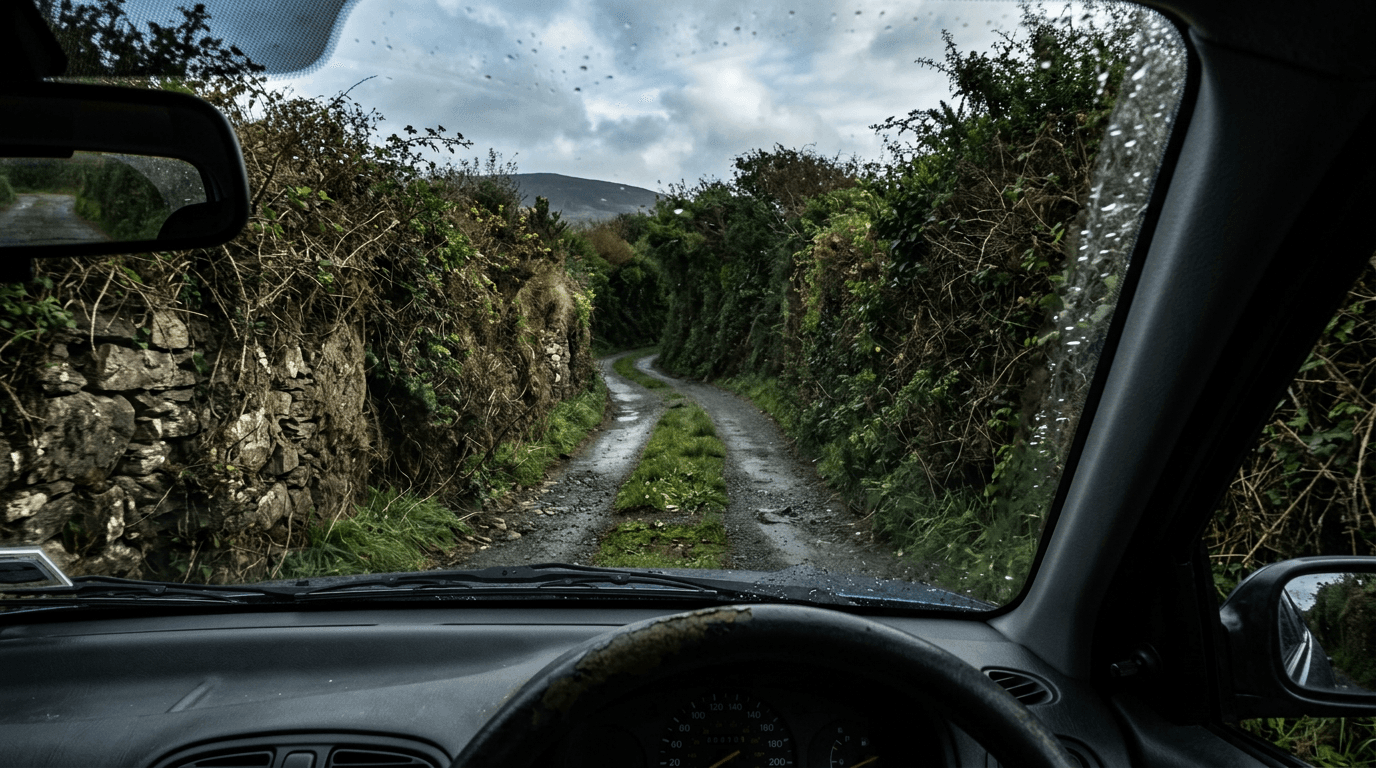
Finding these secluded coves on a satellite map is only ten percent of the challenge. The remaining ninety percent is actually navigating the physical terrain to get there. In West Cork and Kerry, the phrase "unmarked road" or "boreen" (from the Irish bóithrín, meaning "little cow road") is not an exaggeration.
These access routes were not built for modern motor vehicles. They were forged centuries ago by farmers leading livestock to coastal pastures, or by fishermen hauling small curraghs (traditional wooden boats) down to the water.
The Reality of the Boreen: When you turn off the regional highway (the R-roads) to find a hidden beach, the asphalt will quickly degrade. The white line down the center of the road will disappear, indicating that it is now a single-lane track meant for two-way traffic. Soon, a thick strip of grass will emerge in the very center of the lane. The road will twist violently around blind corners, flanked on both sides by "ditches"—which in Ireland are not trenches, but solid, six-foot-high walls of earth, stone, and thorny briars.
There are no streetlights, no crash barriers, and absolutely no margin for error. If you meet another vehicle coming in the opposite direction on a blind bend, one of you will have to put the car in reverse and blindly navigate backward until you find a designated "passing place" (a slight widening in the dirt) or a farmer's gate.
5. The Descent: Driving the Cliff Edges
The final approach to a hidden cove in the southwest is rarely a gentle, rolling hill. Because the geography is defined by sheer drops into the ocean, the access tracks often descend at terrifying gradients.
You will find yourself driving down tracks that feel closer to a 30-degree vertical drop. The surface is often composed of loose gravel, mud, and jagged slate, meaning your tires will struggle for traction even on a dry day. To your left, the stone wall scrapes against your side mirrors. To your right, there is a sheer, unprotected drop of a hundred feet straight into the churning Atlantic Ocean.
The Parking Nightmare: Even if you possess the nerves of steel required to successfully navigate a rental car down a treacherous coastal boreen, your problems do not end when you see the water. By their very definition, hidden coves do not have parking lots.
At best, you might find a tiny, muddy lay-by with enough space for exactly two small cars. If those spaces are taken by local fishermen, you are faced with an impossible choice: abandon your vehicle in a ditch, blocking the access of emergency vehicles or local farmers' tractors, or reverse the entire agonizing way back up the cliff face. Illegally parking on these tiny access roads is deeply frowned upon by the local communities and can result in your car being towed, or worse, intentionally blocked in by an irate farmer with a tractor.
6. The Essential Pivot: Why You Need a Private Driver
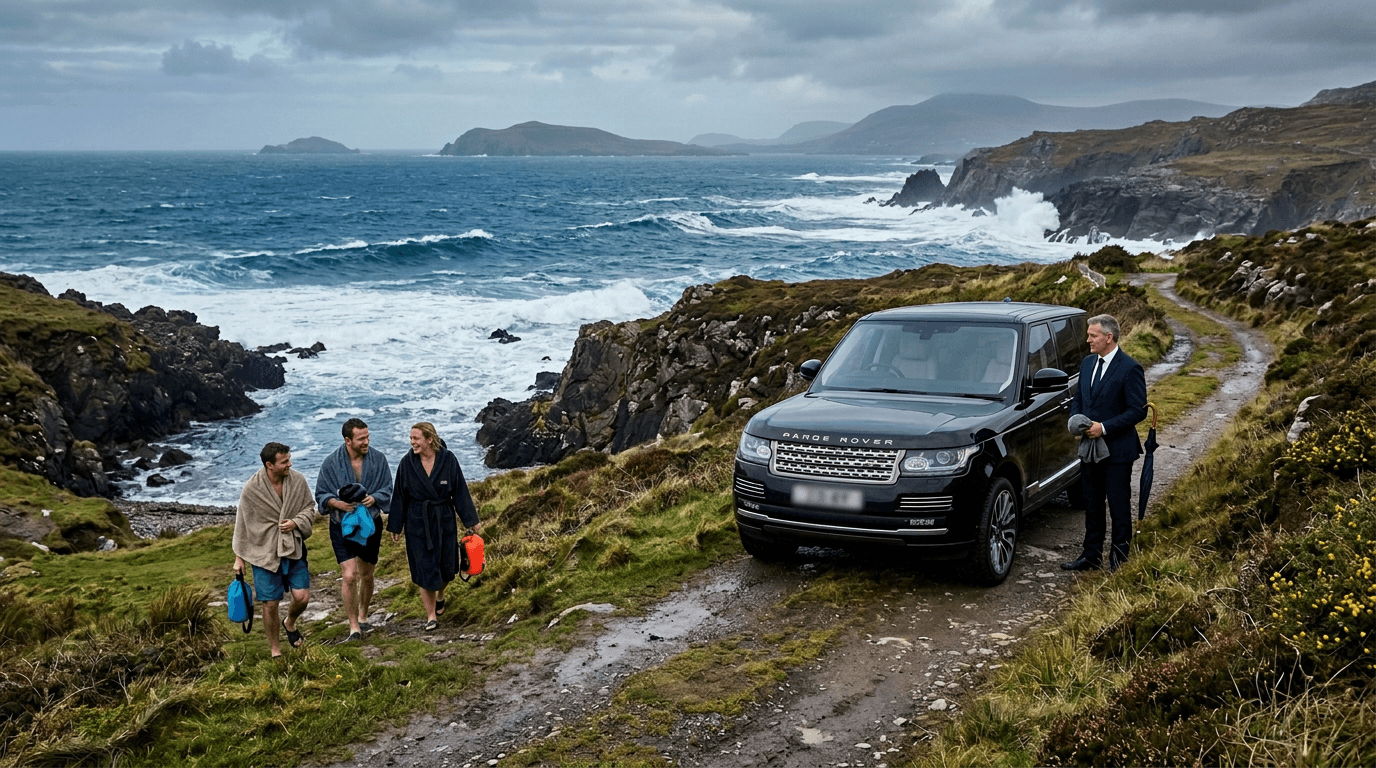

The allure of the hidden cove is undeniable. The silence, the pristine water, and the profound sense of isolation are the exact reasons travelers come to the Wild Atlantic Way. But attempting to access these locations in a standard rental car is the fastest way to turn a relaxing vacation into an anxiety-inducing nightmare.
After a freezing, exhilarating wild swim in West Cork, your body goes into recovery mode. As we discussed in our safety guides, the "After Drop" causes your core temperature to plummet, leading to heavy limbs, violent shivering, and deep mental lethargy. The absolute last thing you should be doing while shivering and exhausted is climbing into the driver’s seat of a manual rental car, attempting to ride the clutch, and reversing up a 30-degree gravel cliff face while avoiding a reversing farm truck.
The Luxury of Local Knowledge: To truly unlock the secret coastline of the southwest without the stress, you must utilize a Private Driver or a specialized Local Coastal Guide.
A professional driver fundamentally changes the dynamic of your day.
- The Navigation: They already know where the coves are. They do not rely on a failing 4G GPS signal. They know exactly which unmarked dirt track leads to the pristine sand, and which one ends in a muddy bog.
- The Vehicle and Skill: They drive premium, perfectly maintained vehicles (often luxury vans or SUVs equipped to handle the terrain) and possess the highly specific spatial awareness required to navigate a six-foot-wide vehicle down a seven-foot-wide lane. They reverse with absolute confidence.
- The Logistics: They know the local farmers. They know where it is safe and legal to park without blocking access. Most importantly, they drop you off right at the water's edge, wait patiently while you swim, and have the heater blasting when you emerge shivering from the ocean.
Conclusion: Leave Only Footprints, Take Only Memories
West Cork and Kerry hold some of the last truly wild, uncommercialized coastal enclaves in Western Europe. Swimming in a secluded inlet, surrounded by soaring cliffs and absolute silence, connects you to the ancient rhythm of the island in a way that standing at a crowded tourist viewpoint never could.
These coves are precious, fragile ecosystems. Their beauty is inherently tied to their inaccessibility. By respecting the landscape, refraining from blocking local access roads, and entrusting your journey to a local professional, you can experience the ultimate wild swimming adventure while ensuring these hidden shores remain perfectly, beautifully secret.
Access the Inaccessible
Do not risk your rental car—or your nerves—on the cliff edges of the Wild Atlantic Way. Hire a local private driver who knows the secret routes and the hidden bays.
Table of Contents
Share this post
More from the Blog

Cork to Blarney Castle Day Trip: The Stone, the Gardens and What Else to See
Plan a Cork to Blarney Castle day trip. Kiss the stone, explore the Poison Garden, and add Cork city, Fota or Kinsale for a full day out.

Cork to Cobh Day Trip: Titanic, Colourful Houses and Harbour History
Plan a Cork to Cobh day trip by train, car or private driver. Explore Titanic history, St Colman's Cathedral, Spike Island and the best harbour views.

Cork to Killarney Day Trip: Lakes, Mountains and Muckross in One Day
A Cork to Killarney day trip is a longer escape into Kerry. Here's how to plan the drive, what to see in Killarney National Park, and why a private driver helps.