
Winter Swimming in Ireland: How to Brave the Cold Water Safely
To the uninitiated observer, standing on an Irish beach in the dead of January, wrapped in three layers of wool and a waterproof jacket, the sight is completely incomprehensible. As the freezing rain blows sideways off the Atlantic Ocean and the air temperature hovers barely above freezing, a group of locals cheerfully strips down to their bathing suits, wades through the frost-covered sand, and plunges headfirst into the dark, churning water.
For decades, sea swimming in Ireland was widely considered a summer-only pursuit, strictly confined to the brief, slightly warmer window between June and September. But over the last several years, a radical cultural shift has occurred. The beaches are no longer abandoned in November. Instead, a massive, dedicated community of "winter dippers" has emerged, claiming that the colder the water gets, the better the experience becomes.
Winter swimming in Ireland is not a gentle, relaxing paddle. It is an extreme, intense confrontation with the elements. The water temperature drops to a bone-chilling 7°C to 9°C (44°F to 48°F). The wind chill can make the air feel sub-zero. The daylight hours are brutally short, often meaning you are swimming in the dusky twilight of a freezing morning or the rapid onset of a pitch-black evening. Yet, for those who brave it, the psychological and physical rewards are profound, offering a rush of endorphins and mental clarity that simply cannot be replicated in a heated indoor pool.
"The summer swims are lovely, but the winter swims are the ones that change you. When the water is eight degrees and your skin feels like it's burning with the cold, you cannot think about your inbox, or your mortgage, or your stress. Your brain is entirely focused on the present second. It is the ultimate, forced meditation. You get out of the water feeling completely reborn." — Siobhan, December Daily Swimmer at Seapoint
However, the transition from a casual summer splasher to a dedicated winter swimmer requires immense respect for the ocean's raw power. The margins for error are drastically reduced in the winter. Hypothermia and severe cold water shock are ever-present threats. In this comprehensive guide, we will explore the extreme physiology of the winter plunge, detail the strict safety protocols you must adopt, outline the mandatory gear upgrades, and explain why handing your car keys to a local professional is the smartest survival tactic you can deploy.
(This guide is a specialized chapter of our master resource: Wild Swimming in Ireland: Sea Coves, Tidal Pools, Saunas & Everything You Need to Know. If you have never swam in the ocean before, you must first read our foundational Wild Swimming Safety in Ireland: How to Read Tides, Rip Currents & Weather guide).
1. The Physiology of the Freeze: What Happens to Your Body
When you enter the Irish Sea or the Atlantic Ocean in February, your body registers the event not as a leisure activity, but as a critical threat to your survival. The water is significantly colder than your internal body temperature (37°C / 98.6°F), and because water conducts heat away from the body roughly twenty-five times faster than air, your core temperature is under immediate attack.
As we detailed in earlier safety guides, the initial immersion triggers the "gasp reflex" and a massive spike in heart rate. But in winter, this shock is magnified. The blood vessels in your skin and extremities vasoconstrict (narrow) violently, desperately shunting the warm blood away from your arms and legs and directing it straight to your vital organs—your heart, lungs, and brain.
This physiological triage is why your hands and feet will often feel like blocks of wood within minutes of entering the winter sea. You will rapidly lose fine motor skills; your fingers will struggle to form a fist, and your toes will go completely numb.
- The Illusion of Warmth: A strange, deceptive phenomenon often occurs after the first two minutes of a winter swim. The intense, burning pain on your skin begins to fade, replaced by a bizarre feeling of numbness or even a warm, glowing sensation. Do not be fooled. The water has not warmed up; your nerve endings have simply become numbed by the cold. This is a critical warning sign.
- Time Limits: Winter swimming is measured in minutes, not hours. For most people swimming in "skins" (just a swimsuit), a safe winter dip lasts anywhere from three to ten minutes. Staying in the water until you start shivering uncontrollably is a massive mistake. You must exit the water before you feel deeply cold, because your body temperature will continue to drop long after you are back on dry land.
2. The Mental Game: Why People Seek the Ice
Given the physical pain and the extreme environment, it is natural to ask why thousands of people willingly subject themselves to the freezing Irish waters every winter morning. The answer lies in the incredible chemical cocktail the body releases to cope with the shock.

When you plunge into 8°C water, your sympathetic nervous system kicks into overdrive. Your brain releases a massive surge of adrenaline and noradrenaline, the "fight or flight" hormones, which make you feel incredibly alert, awake, and electrified. Simultaneously, the body releases a flood of endorphins and dopamine—the "feel-good" neurotransmitters—to act as natural painkillers against the stinging cold.
This resulting chemical high is legendary. Swimmers emerge from the winter ocean with bright red skin (the "post-swim glow"), wide smiles, and a sense of euphoria that can last for the entire day. Many regular winter swimmers cite this daily shock as an essential tool for managing anxiety, depression, and seasonal affective disorder (SAD) during the long, dark, and notoriously wet Irish winters.
Furthermore, the winter swimming community is incredibly tight-knit. Standing on a freezing, rain-lashed pier at 7:30 AM strips away all societal barriers. You are bonding over a shared, intense adversity, creating a camaraderie that is difficult to find anywhere else.
3. Gearing Up: The Winter Armor
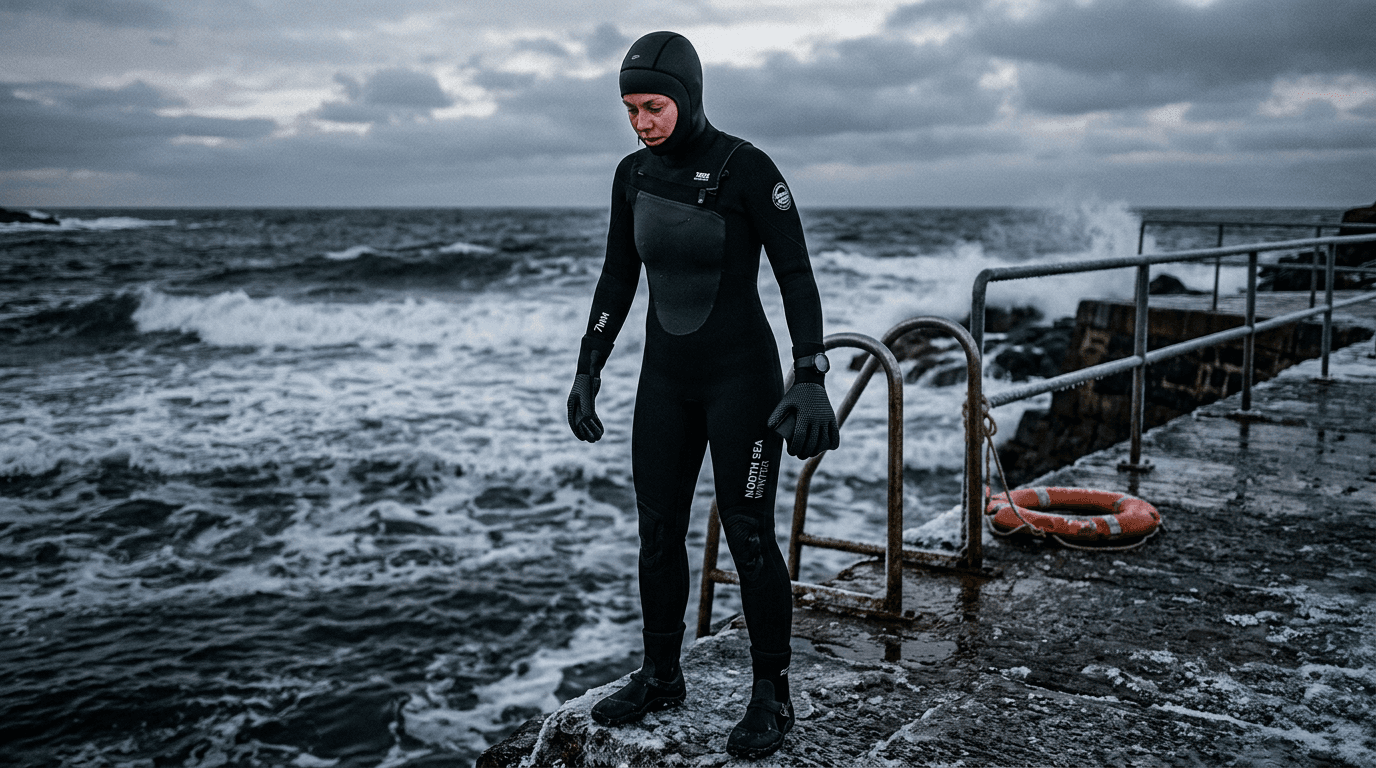
If you read our previous guide, What to Wear Wild Swimming in Ireland: Dryrobes & Gear, you know that neoprene is essential for the Irish coast. But in the winter, that gear must be aggressively upgraded. You cannot rely on a thin summer wetsuit when the frost is settling on the beach.
The Winter Wetsuit: If you choose to wear a wetsuit (and for visitors unaccustomed to the cold, we highly recommend it), you must use a dedicated winter suit. This means looking for a thickness of 5/4mm or even 6/5mm, complete with sealed, taped seams to prevent the freezing water from constantly flushing through the zipper and the neck.
The Extremity Crisis: In winter, swimming without protecting your extremities is an invitation to misery.
- Gloves and Booties: You must wear 3mm or 5mm neoprene gloves and booties. Without them, your hands will become so numb that you will be physically incapable of gripping the zipper of your changing robe or turning the key in your car ignition when you get out.
- The Neoprene Hood: Your head houses your brain, and submerging a bare head in 7°C water causes a massive, immediate loss of core heat. A thick, bright silicone cap is no longer enough. You must wear a dedicated 3mm neoprene swimming hood or balaclava that covers your ears, neck, and chin, tucked securely into the collar of your wetsuit.
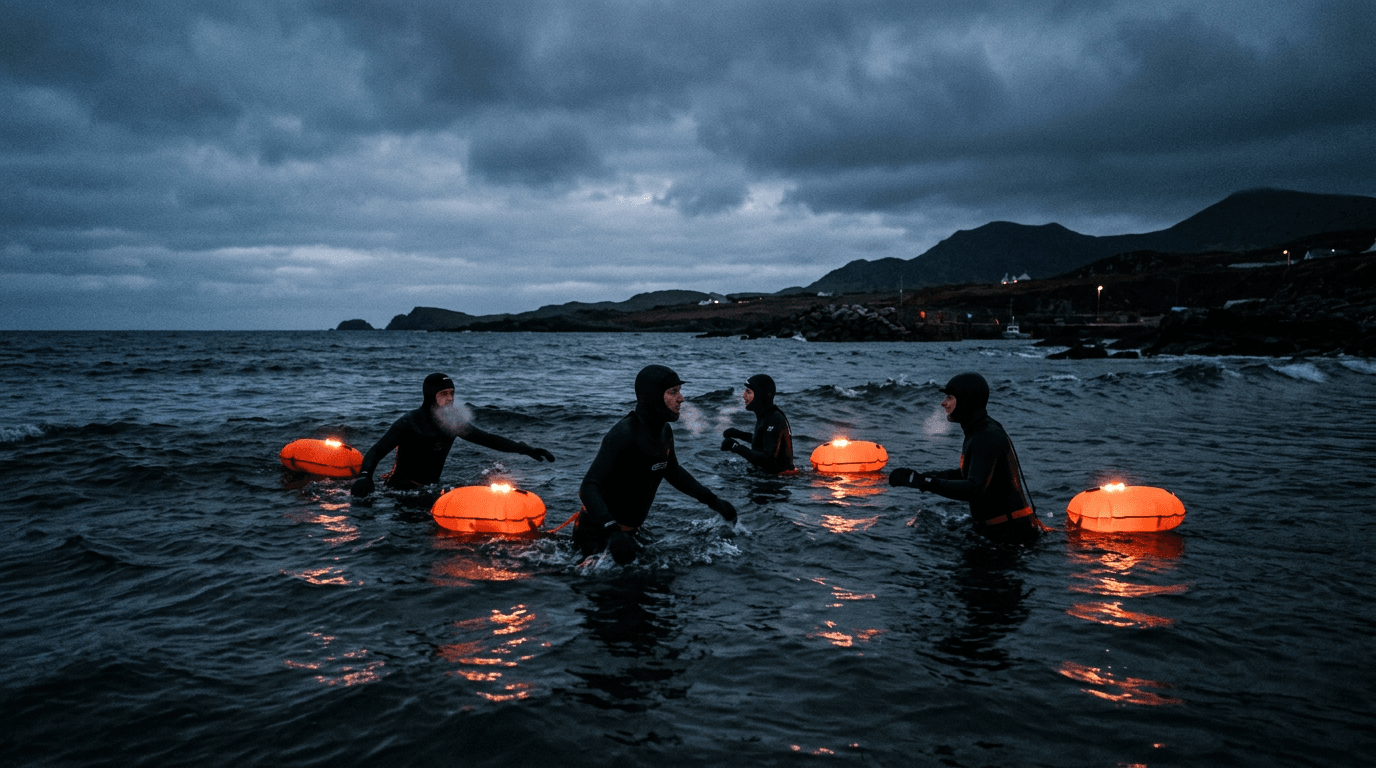
The Visibility Imperative: Winter in Ireland means short days. The sun often doesn't fully rise until 8:30 AM, and it begins to set by 4:00 PM. If you are swimming before work or after a day of touring, you will likely be in the water during twilight or near-darkness. Your neon orange tow float is absolutely mandatory, and many winter swimmers affix small, waterproof LED strobe lights to the inside of their floats to ensure they are visible to passing boats and fellow swimmers in the gloom.
4. Surviving the Winter "After Drop"
The most dangerous part of a winter swim is not the water; it is the ten minutes after you get out. The "After Drop" is the physiological phenomenon where your core body temperature continues to plummet rapidly even though you are standing on dry land.
As you dry off and begin to warm up, your constricted blood vessels open back up. The freezing cold blood that was trapped in your numb arms and legs rushes back into your core, hitting your heart and lungs. This causes violent, uncontrollable shivering, chattering teeth, and a profound, deep-bone chill that can take hours to shake. Managing the winter After Drop is a highly orchestrated, rapid-response operation.
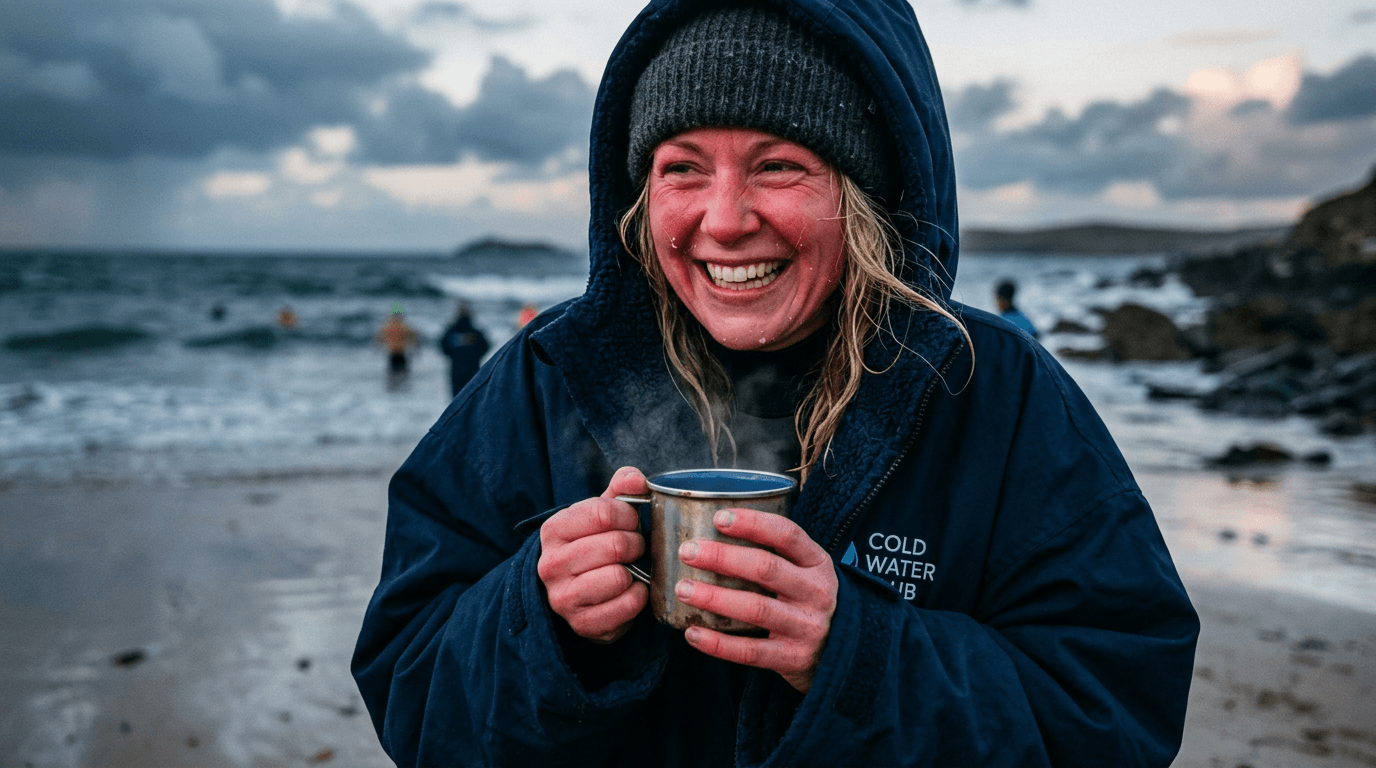
- Speed is Everything: The moment your feet touch the sand, the clock starts. Do not stand around chatting in your wet swimsuit. You must get your wet gear off immediately. This is where the heavy, fleece-lined changing robe (the Dryrobe) transitions from a luxury item to a critical piece of survival equipment. It acts as a windproof tent, allowing you to strip off the freezing, wet neoprene while protected from the biting winter wind.
- Layering Like a Local: Forget fashion. Winter recovery is all about oversized thermal layers. You want thick merino wool base layers, oversized fleece tracksuits, and down jackets that you can pull on without struggling with tight buttons or zippers. Put your thick woolen hat on before you even take your swimsuit off.
- The Internal Heater: You cannot warm up a deeply chilled body by simply standing next to a car heater. You must generate heat from the inside out. Drinking a scalding hot flask of sweet tea or hot chocolate is mandatory. The hot liquid warms your core, and the sugar provides the immediate fuel your muscles need to shiver effectively.
- The Hot Water Bottle Trick: A beloved trick among the Irish winter swimming community is filling a rubber hot water bottle before leaving the house and burying it inside your pile of dry clothes. When you exit the water, your clothes are pre-heated, and you can shove the hot water bottle up inside your sweater to instantly warm your chest.
5. The Ultimate Winter Pairing: The Beach Sauna
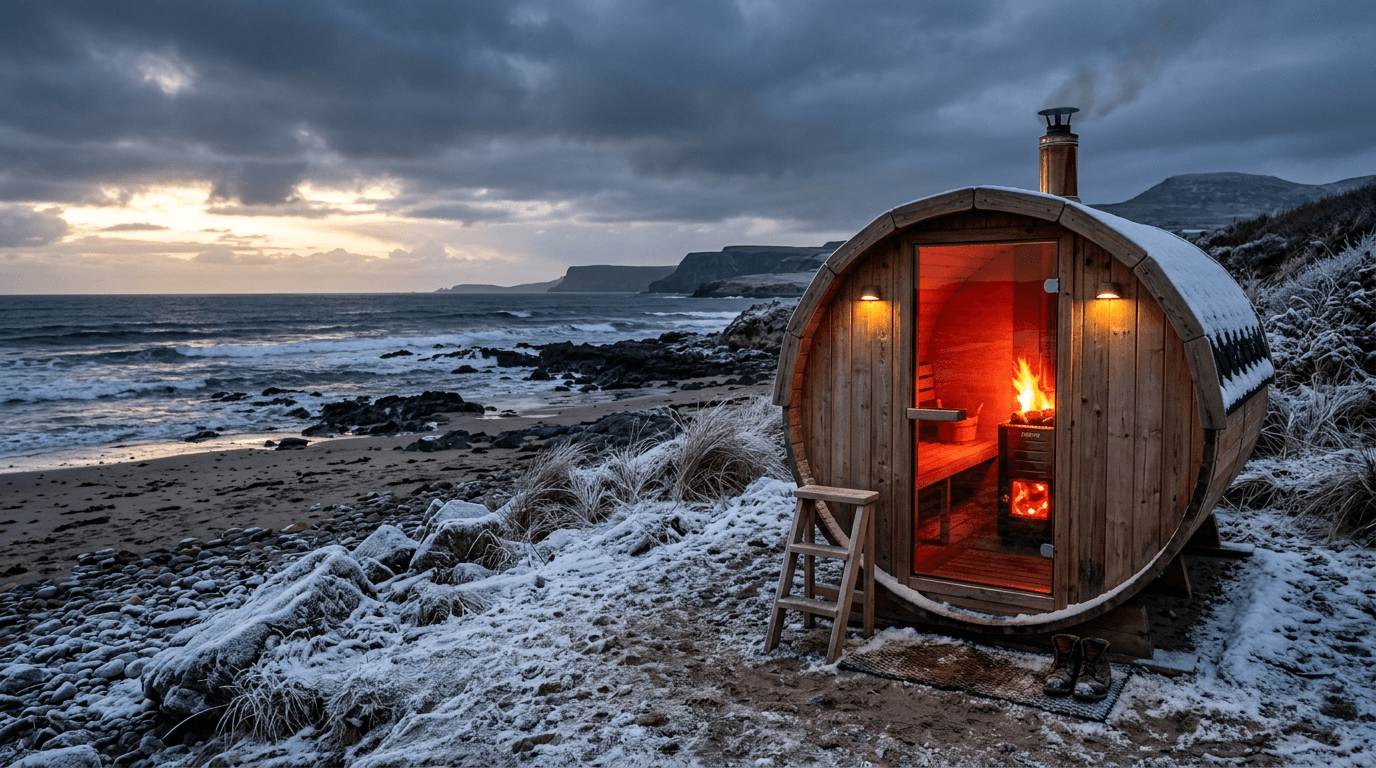
If you want to experience the absolute pinnacle of winter coastal culture, you must pair your freezing ocean dip with a roaring wood fire. As the winter weather closes in, the popularity of the mobile beach saunas skyrockets.
Going from a 7°C ocean directly into a 90°C cedar barrel is an extreme form of contrast therapy that forces your cardiovascular system to work incredibly hard, resulting in a state of unparalleled physical relaxation. The saunas provide a vital, safe haven for winter swimmers, completely neutralizing the risk of the After Drop and allowing you to watch the wild winter storms roll in across the Atlantic from behind a panoramic glass window.
These facilities are highly sought after in the colder months. If you are planning a winter trip, you must read our dedicated guide on Best Outdoor Saunas in Ireland: Coastal Wood-Fired Warmth and book your slot weeks in advance.
6. The Logistics of Winter Coastlines: The Dark and the Ice
The romance of winter swimming abruptly collides with reality when you realize you actually have to navigate the Irish coastline in the dark. The infrastructure of the Wild Atlantic Way and the coastal suburbs of Dublin are not designed for easy winter access.
The Icy Boreens: The access roads to the best swimming spots—whether it is the winding Vico Road in Dublin or the steep cliff tracks of West Cork—are treacherous in the winter. Black ice frequently coats the narrow, unlit coastal lanes in the early morning. Driving a manual rental car down a 30-degree gravel track that is covered in frost is an incredibly dangerous proposition for an inexperienced driver.
The Loss of Dexterity: After a winter swim, your hands will be functionally useless for a period of time. It is common for swimmers to struggle to tie their own shoelaces or fasten a seatbelt. Attempting to grip a freezing steering wheel, operate a manual gear stick, and navigate a winding coastal road while you are shivering violently and your core temperature is dropping is a massive safety hazard. You are essentially driving while physically impaired.
7. The Essential Pivot: Why You Need a Private Driver in Winter
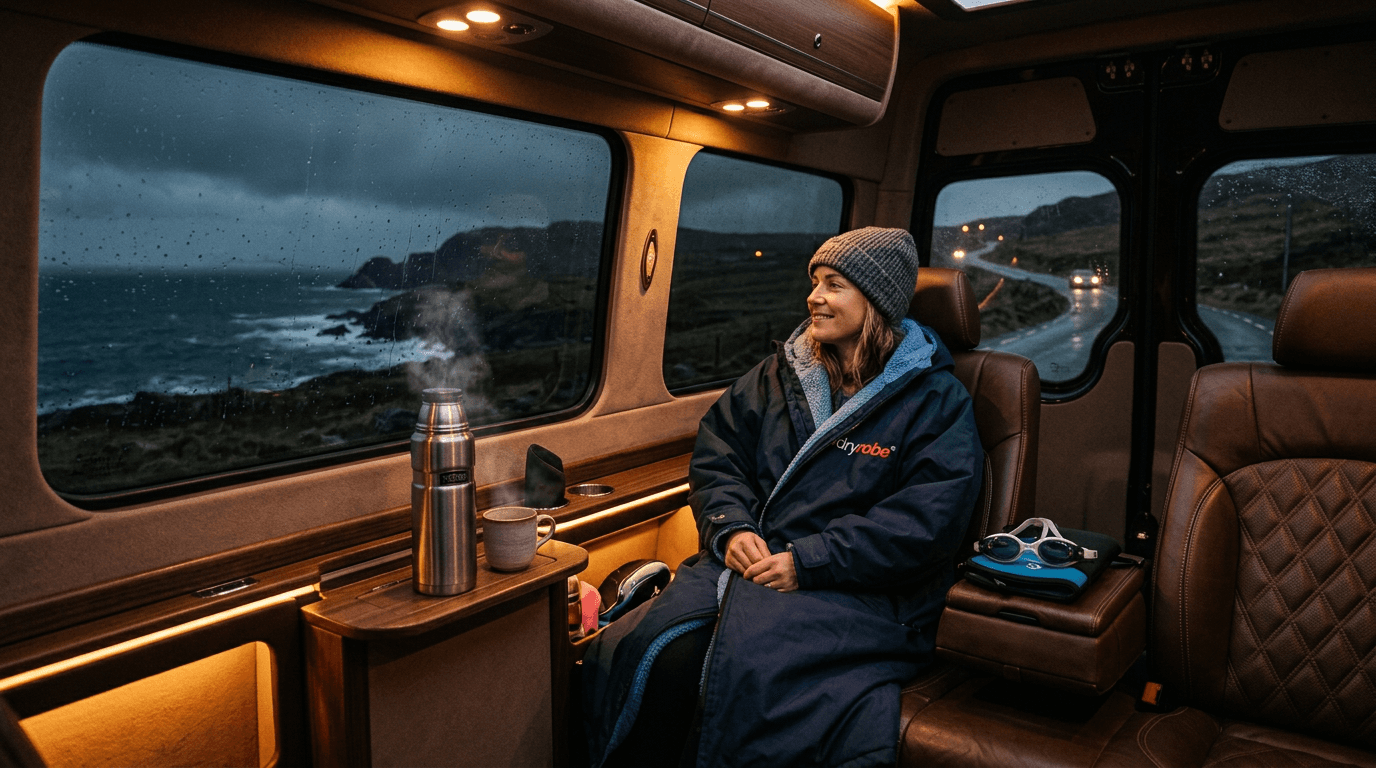
If you are visiting Ireland between November and April and want to experience the legendary thrill of the winter wild swim, the single most important decision you can make is to hire a Private Driver or a specialized Local Coastal Guide.
Attempting to manage the extreme cold, the dark mornings, and the treacherous roads in a rental car will quickly turn an exhilarating experience into an ordeal. A professional driver transforms a rugged survival exercise into a seamless, luxurious adventure.
- Immediate Heated Recovery: This is the most crucial benefit. When you emerge from the freezing water, shivering and exhausted, your private driver is waiting mere feet away. The luxury van is already running, the heavy-duty heater is blasting, and the heated leather seats are ready. You step straight out of the wind and into a mobile recovery room.
- Zero Driving Impairment: You do not have to worry about operating a clutch with numb feet or steering with stiff, freezing fingers. You can sit in the back seat, wrap your hands around your hot flask of tea, and focus entirely on the massive rush of endorphins pulsing through your body.
- Navigating the Ice: A local professional driver knows the coastal roads intimately. They know which shadowy bends hold black ice, they know how to handle the steep, frosty inclines of the West Coast, and they ensure that you get to the water—and back to your hotel—with absolute safety and peace of mind.
Conclusion: Embrace the Ice
Winter swimming in Ireland is not for the faint of heart, but for those who dare, it offers a visceral, life-affirming connection to the raw power of the Atlantic. It strips away the superficial layers of modern life, leaving you with nothing but the stinging cold, your own breath, and the roaring ocean.
Respect the severe drop in temperature, upgrade your neoprene armor, strictly manage your post-swim recovery, and never underestimate the logistical challenges of the winter roads. By entrusting your journey to a local professional, you remove the stress and the danger, allowing you to fully surrender to the icy, euphoric magic of the Irish winter coast.
Don't Drive with Numb Hands
Protect your safety and maximize your recovery after a freezing winter plunge. Hire a local private driver who knows the icy coastal roads and will have the heater blasting the moment you step out of the sea.
Table of Contents
Share this post
More from the Blog

Cork to Blarney Castle Day Trip: The Stone, the Gardens and What Else to See
Plan a Cork to Blarney Castle day trip. Kiss the stone, explore the Poison Garden, and add Cork city, Fota or Kinsale for a full day out.

Cork to Cobh Day Trip: Titanic, Colourful Houses and Harbour History
Plan a Cork to Cobh day trip by train, car or private driver. Explore Titanic history, St Colman's Cathedral, Spike Island and the best harbour views.

Cork to Killarney Day Trip: Lakes, Mountains and Muckross in One Day
A Cork to Killarney day trip is a longer escape into Kerry. Here's how to plan the drive, what to see in Killarney National Park, and why a private driver helps.