
Saving Private Ryan: Why Curracloe Beach is Better Than Normandy
The opening scene of Saving Private Ryan — the twenty-four minute Omaha Beach sequence that redefined war cinema — wasn't filmed in France. It was filmed in Ireland, on Curracloe Beach in County Wexford. When Steven Spielberg's crew departed after three weeks in July 1997, they left the beach exactly as they found it.
Curracloe offered what Normandy couldn't: consistent weather, isolation, and local cooperation. The Irish Defence Forces provided 250 soldiers as extras. The beach was closed for three weeks. The weather delivered twenty-one usable shooting days out of twenty-three — a success rate that would have been impossible in Normandy, where conditions are notoriously unpredictable.
This guide explains how to visit the Saving Private Ryan filming location. Curracloe is accessible and historically significant, but different from what you see on screen — the cliffs are lower, key locations have changed, and certain modifications are gone. We'll tell you what's real, what's changed since 1997, and how to make the most of a visit to this unique slice of cinema history.
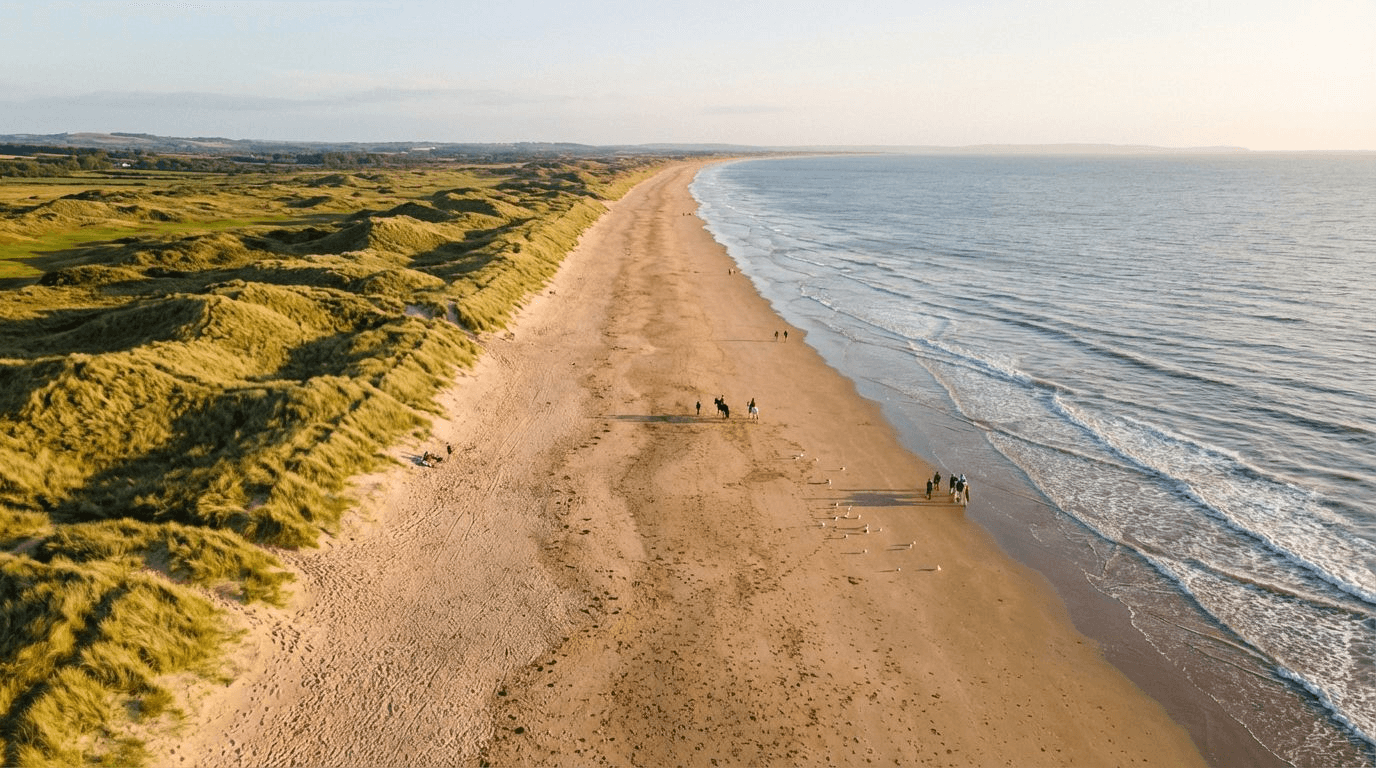
Why Spielberg Chose Curracloe Over Normandy
The Practical Realities
When pre-production began in 1996, filming on actual Omaha Beach seemed obvious. But the real beach is surrounded by towns, memorials, and development. Closing it for three weeks of violent filming would have been politically impossible. French authorities wouldn't permit breakwaters, explosives, or vintage vehicles on the historic site.
Curracloe offered an alternative. Located on Wexford's east coast, the beach stretches seven uninterrupted kilometres. Behind it lies the Raven Nature Reserve — protected dunes providing natural buffer from the nearest town. No permanent structures, no tourism infrastructure, and a council willing to negotiate.
The deal: Build what they needed, blow it up, pay for restoration. In exchange: twenty-three days exclusive access and Irish Defence Forces cooperation.
What Made It Cinematic
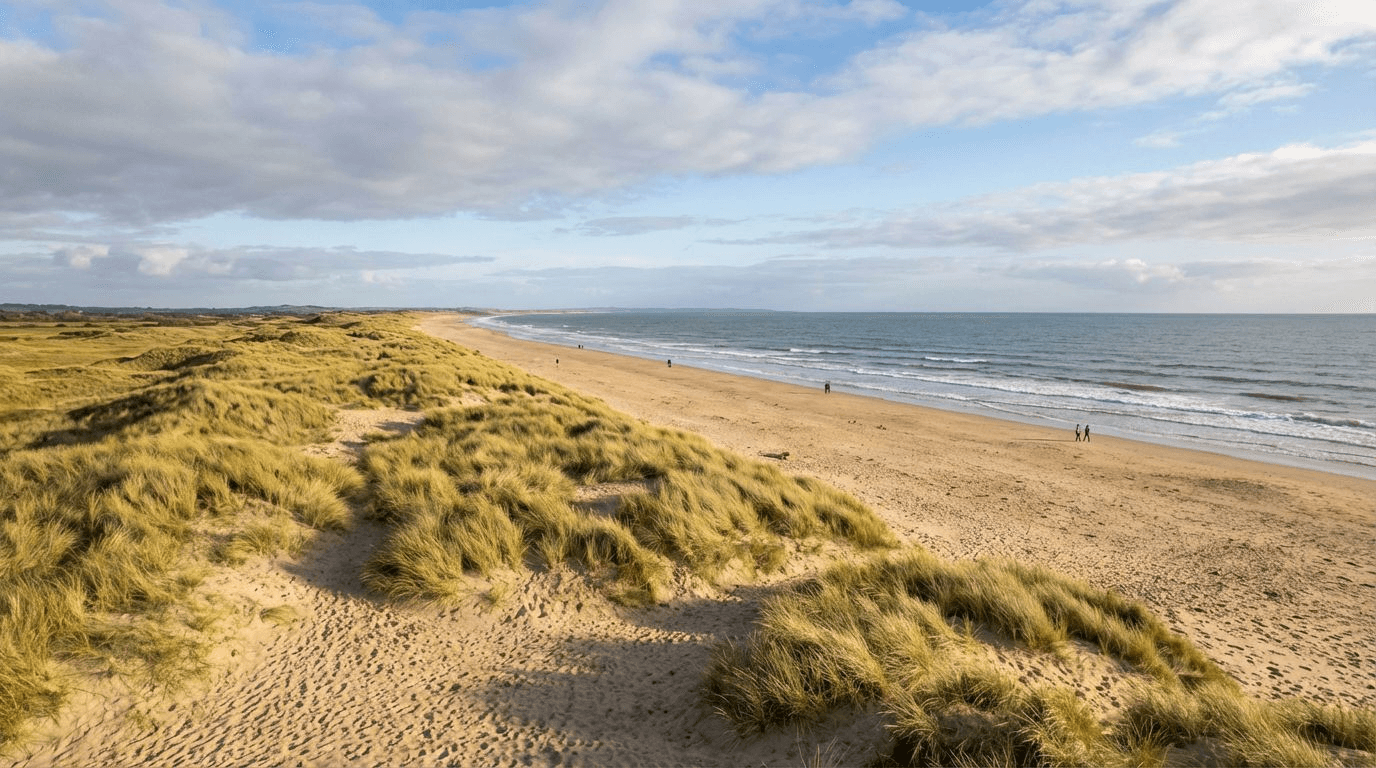
Curracloe matched Omaha Beach surprisingly well. Both face east-northeast with flat, grey morning light. Both have shallow gradients allowing soldiers to wade through surf. Both are backed by low dunes providing natural cover.
The key difference is scale — Curracloe's dunes are lower than Omaha's bluffs. Cinematographer Janusz Kamiński used this to advantage; the lower horizon made the sky more prominent, contributing to the overcast atmosphere. The production added temporary breakwaters and obstacles.
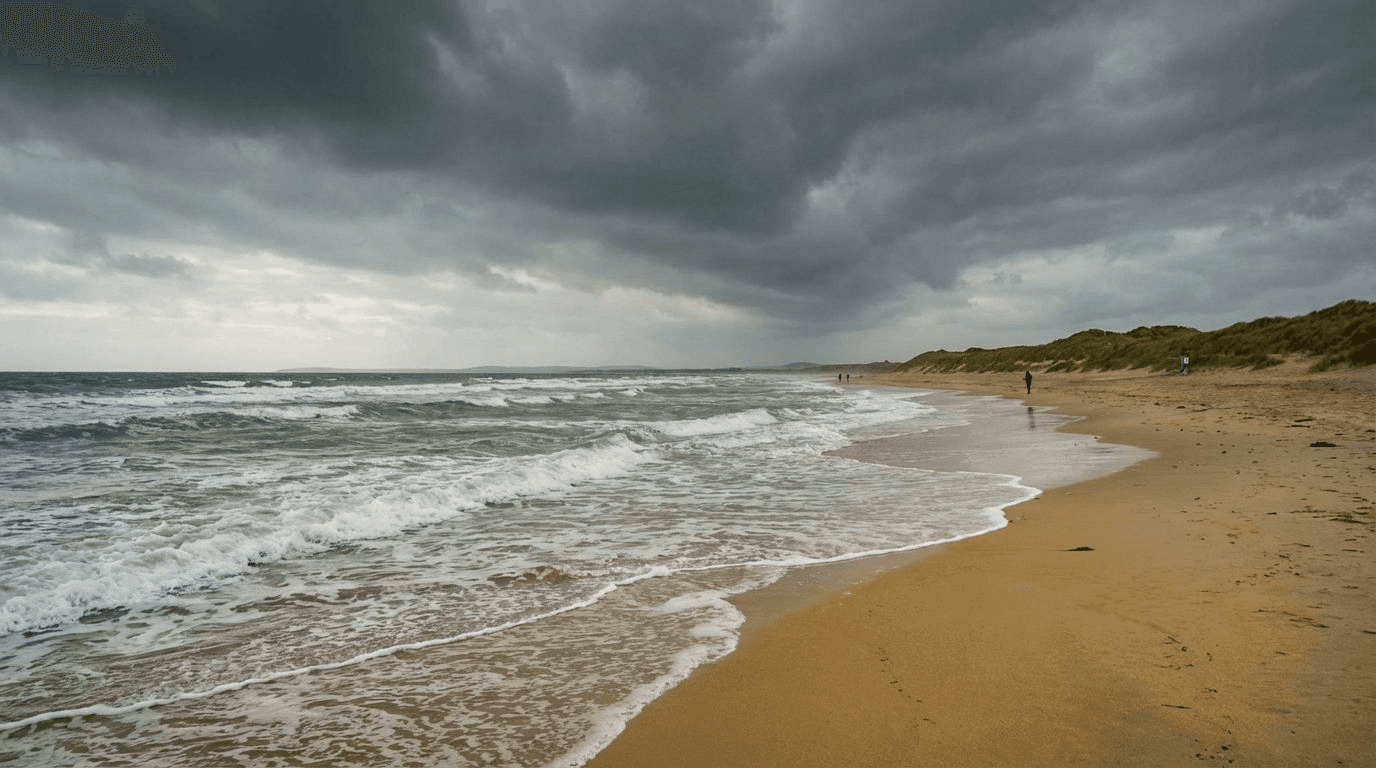
Weather decided it. July 1997 delivered overcast skies and occasional rain — exactly what was needed.
Visiting Curracloe Beach Today
Finding the Locations
The beach is 15 kilometres northeast of Wexford Town on the R742. From Dublin, it's a two-hour drive via M11 and N25. The final approach is through flat farmland that suddenly gives way to dunes — you don't see the sea until you're practically there.
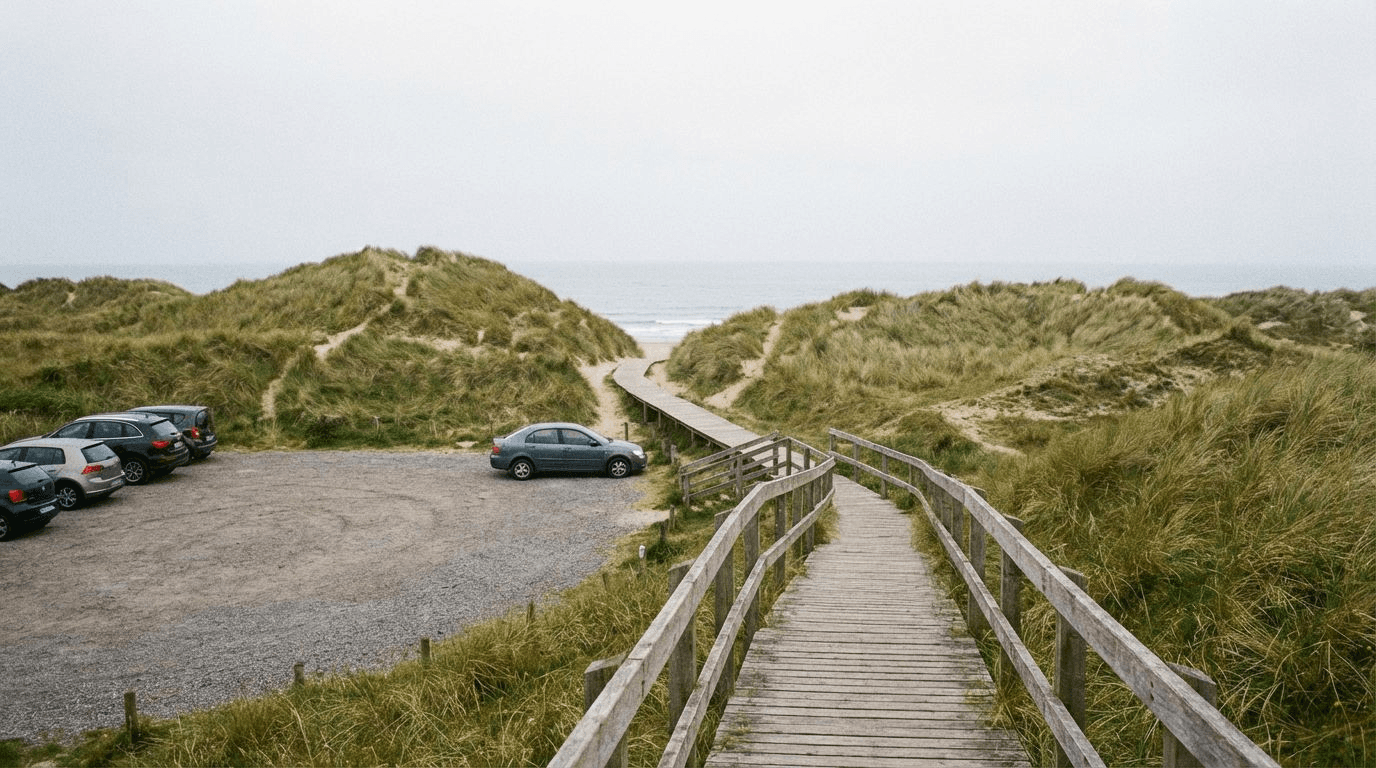
The main car park is at the southern end, operated by Wexford County Council. During summer, there's a parking fee and a seasonal lifeguard service. In winter, the car park is open and free, though facilities are limited. The car park has toilets and a small seasonal café serving coffee, snacks, and basic hot food during peak months.
The filming zone covered three kilometres centred on the main access point. Spielberg's crew built breakwaters and obstacles here, then removed everything during restoration. Today there's no visible evidence — no plaques, no markers.

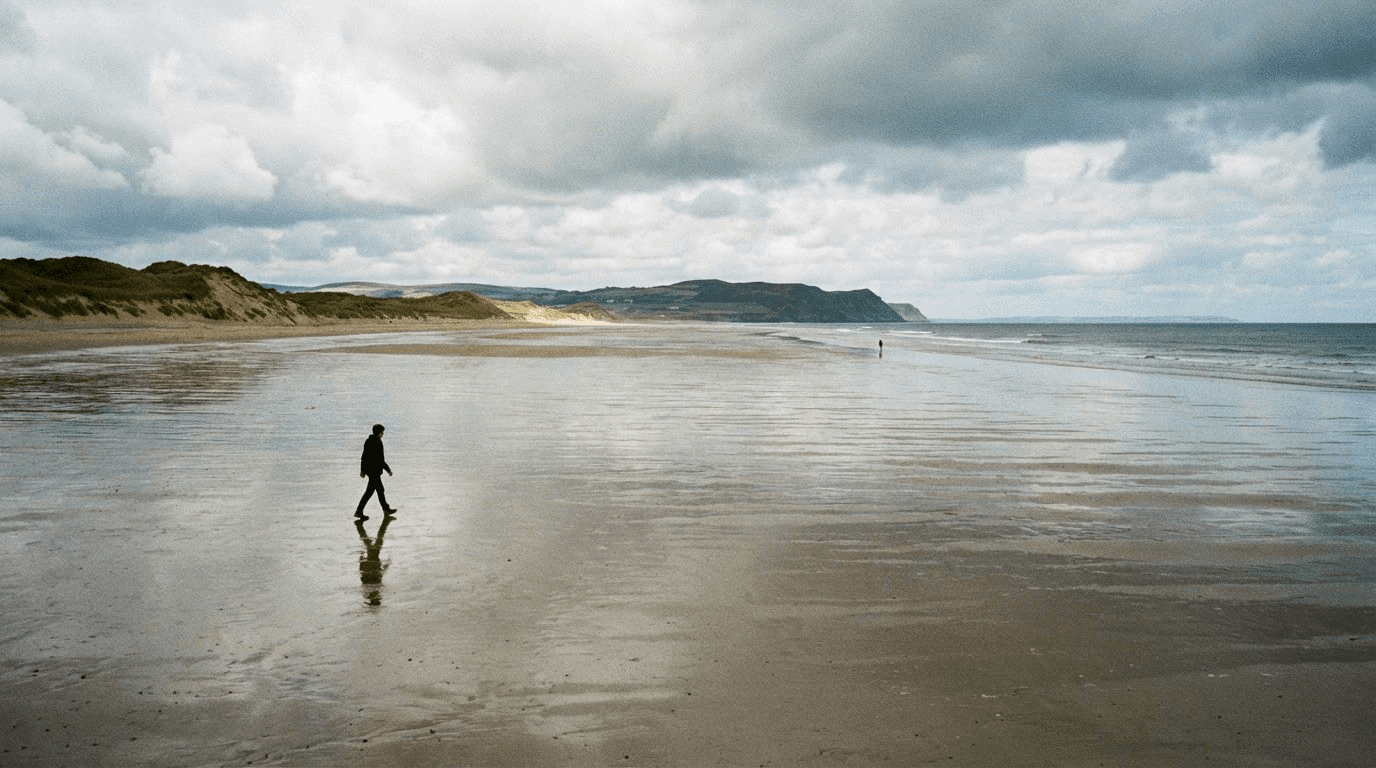
What you'll see: Exceptionally clean, wide beach with firm sand and gentle dunes. The slope is gradual — you can walk fifty metres into the sea and still touch bottom. The water is clearer than Normandy's, with less sediment. On summer weekends, it's popular with Dublin families escaping the city. On weekdays outside peak season, you might have kilometres of sand to yourself. The beach's curvature means you can walk for an hour and still see nothing but sand, sea, and sky.
Film vs. Reality
Several modifications no longer exist:
- Breakwaters: Wooden obstacles matching Normandy's defences were completely removed
- Cliffs: Background shots of high cliffs were filmed at Ballinesker Beach or enhanced digitally
- Fortifications: Temporary structures and debris were removed or redistributed
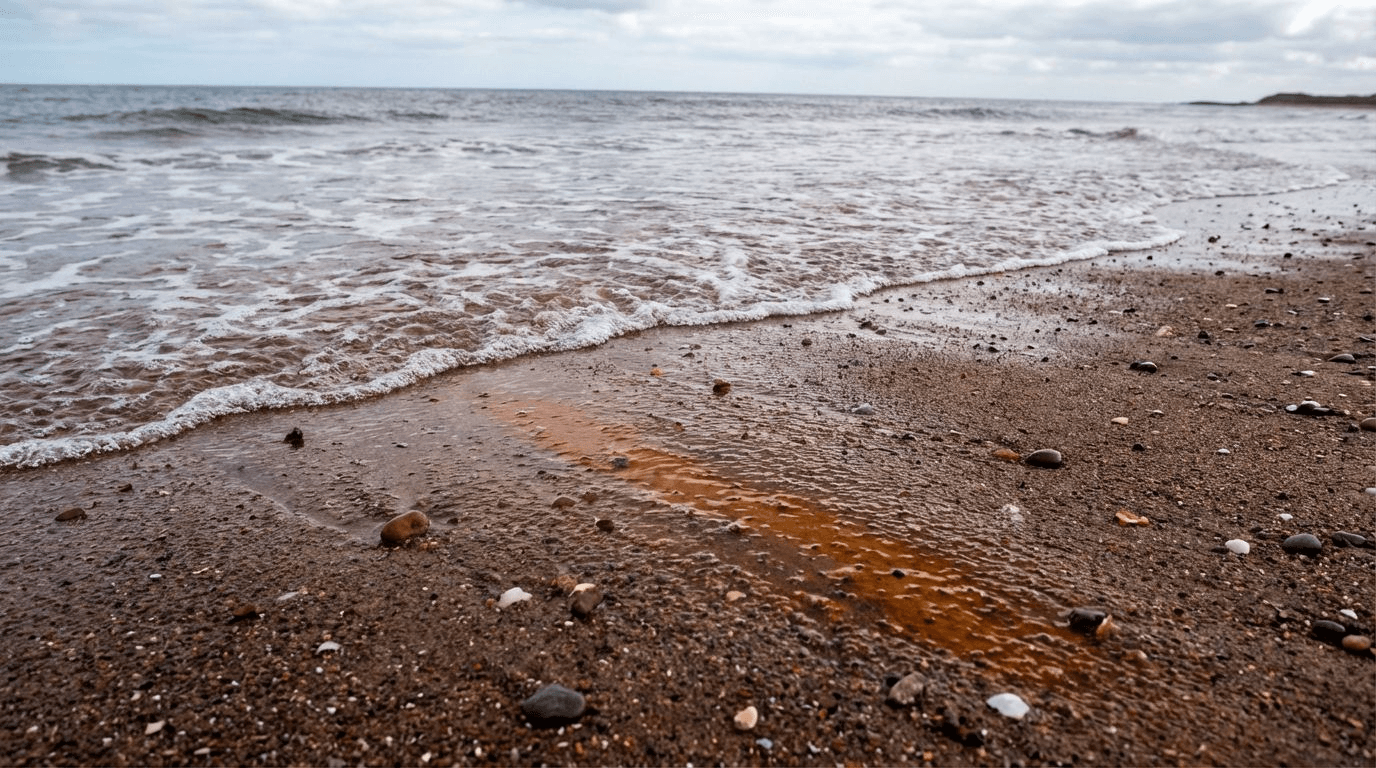
What remains: The light, the gradient, the sand texture, and the cold Irish Sea. The geography that made Curracloe suitable for filming makes it pleasant for visiting — though water temperature rarely exceeds 18°C even at the height of summer. The iron-rich sand darkens when wet, creating the reddish tone seen in the film's water sequences. This is natural, not added by the production.
The Raven Nature Reserve
Protected Ecosystem
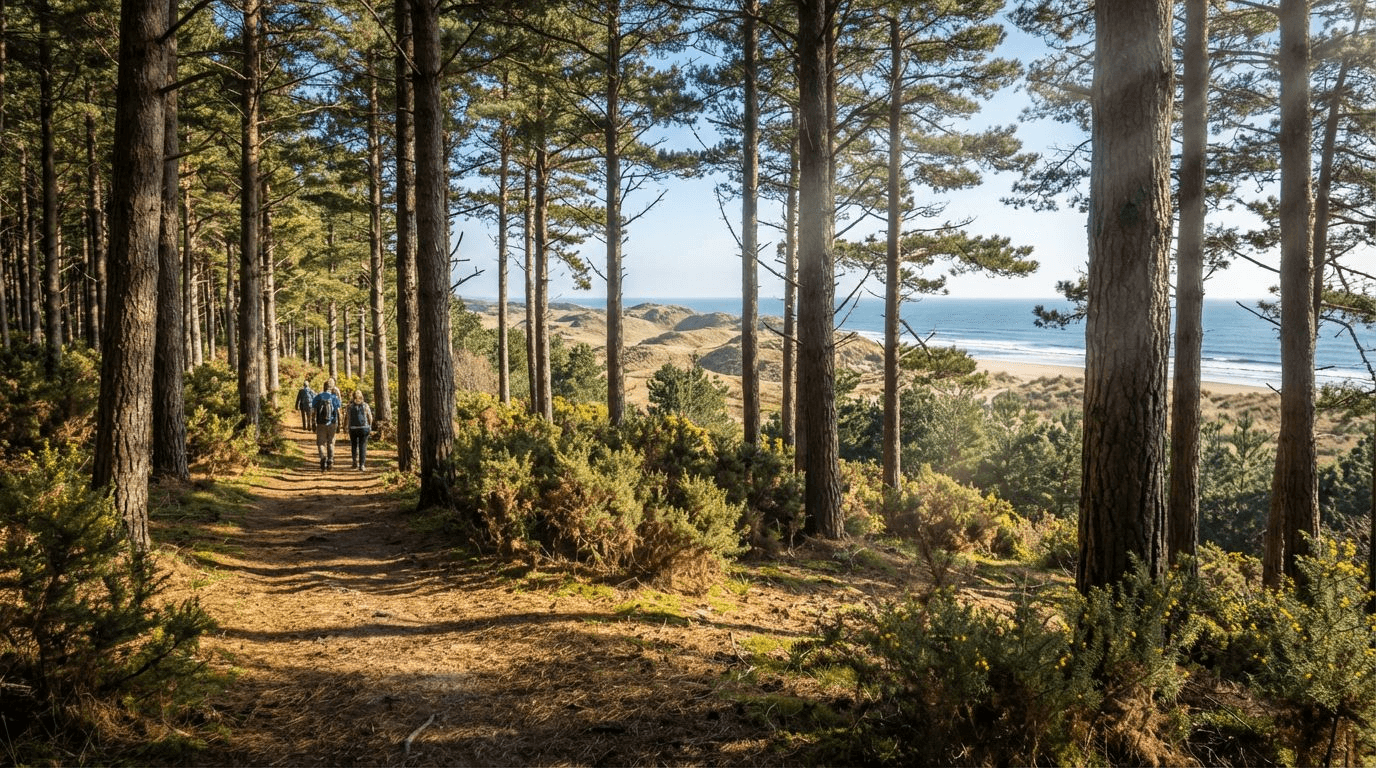
Curracloe sits within the Raven Nature Reserve, 600 hectares managed by National Parks and Wildlife Service. The reserve includes dunes, mature woodland, and tidal estuary — one of Ireland's most significant coastal ecosystems.
The dunes shift with storms and seasons. Vegetation includes marram grass, sea holly, and orchid species. The woodland behind is primarily Scots pine from the early 20th century, now home to red squirrels and badgers.
Walking trails extend from the car park through woodland and around the estuary. The Pilgrim's Path is a 7-kilometre loop taking approximately two hours — flat, well-marked, with dune-top views.
Historical Context
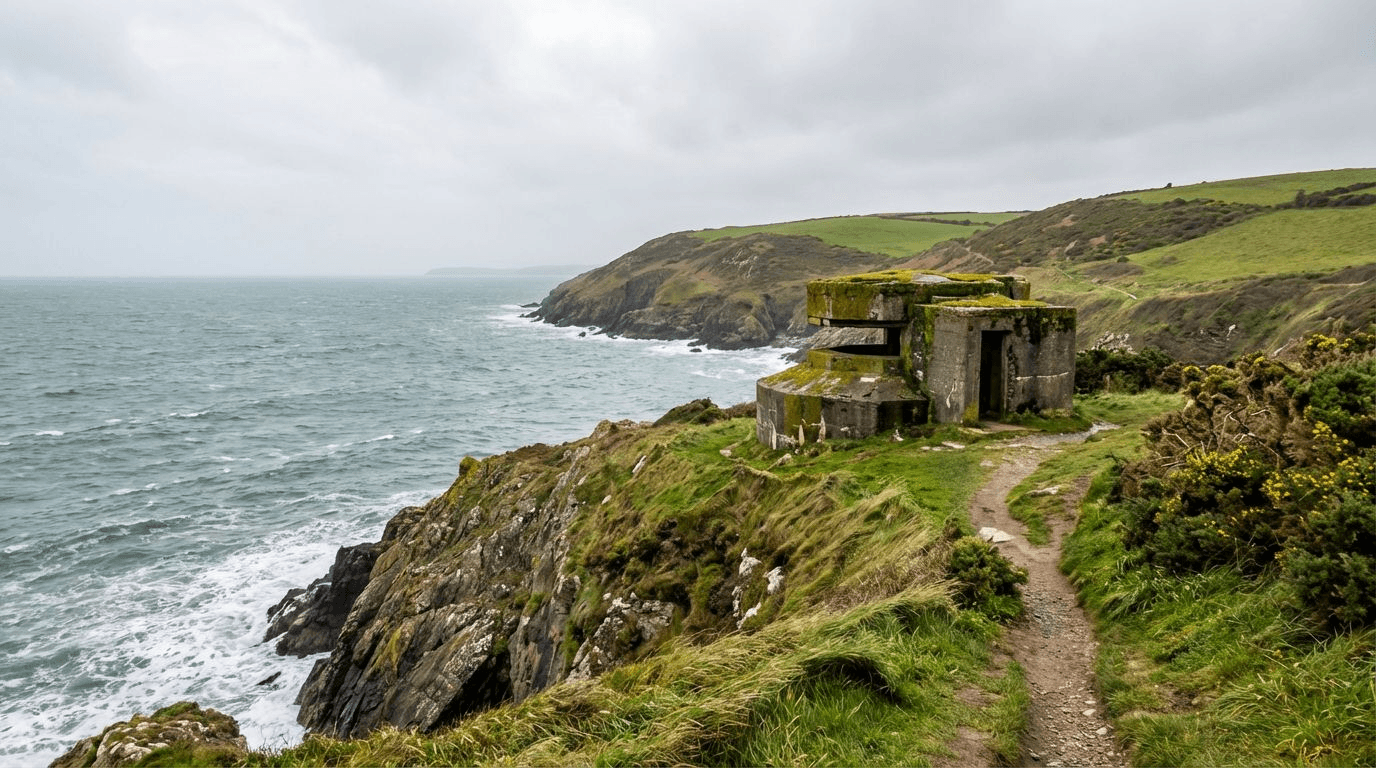
Curracloe's military history predates the film. During WWII, the beach was part of Ireland's coastal defence network. Observation posts were built along the coast, though Irish neutrality meant they were never tested.
The Irish Defence Forces used the area for training into the 1990s. This existing relationship made military cooperation straightforward — the army already knew the terrain.
The Cooper Family: The land behind the beach is Ballinesker Estate, owned by the Cooper family for generations. They negotiated the filming agreement and oversaw restoration. Their cooperation was essential — without private landowners willing to accommodate a major Hollywood production, Curracloe simply wouldn't have been an option for Spielberg's team.

Practical Information
Getting There
From Dublin: Take M11 south to Wexford, then R741/R742 northeast through Castlebridge. The car park is well-signposted. Journey time: approximately two hours.
By public transport: Bus Éireann from Dublin to Wexford Town, then taxi for the final 15 kilometres.
Best times:
- May-June: Long evenings, mild weather, fewer crowds than July-August
- September: Warmest sea temperatures (relatively speaking), quiet beaches, best photography light
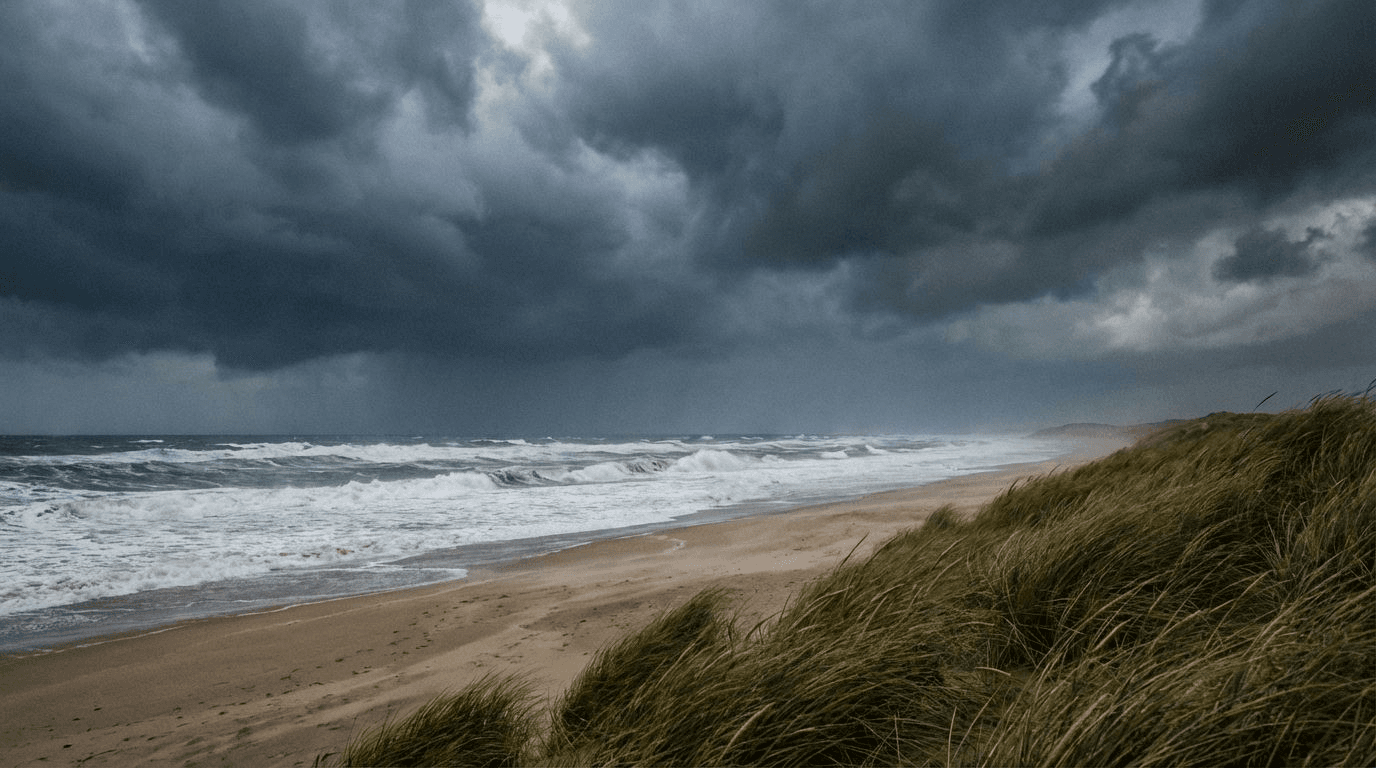
- October-March: Wild weather, empty beaches, genuinely atmospheric conditions
- July-August: Peak season, busy with families, warmest air temperatures
Water temperature reality: Even in late August, the Irish Sea rarely exceeds 18°C. Most visitors don't swim for more than a few minutes. Better for walking and photography than traditional beach activities.
What to Bring
Essentials:
- Windproof jacket (the wind is constant)
- Sand-appropriate footwear
- Sunscreen (sand reflects UV)
- Water and snacks (limited facilities off-season)
Facilities:
- Seasonal toilets and café at car park
- No shops on the beach itself

- Nearest services in Curracloe village, 3 kilometres inland
The walking experience: Firm sand near the waterline makes for easy walking. You can cover the seven-kilometre beach end to end. At low tide, sand extends hundreds of metres seaward. The dunes provide shelter from the wind and offer elevated viewpoints across the coastline.
Curracloe vs. Normandy
For visitors not making a dedicated D-Day pilgrimage, Curracloe offers advantages over actual Omaha Beach:
Accessibility: No ferries, no passport checks. Dublin to Curracloe is easier than Dublin to Normandy.
Isolation: Omaha is surrounded by development. Curracloe remains genuinely wild — walk for an hour without seeing anyone outside summer weekends.
Cost: Free parking in winter, minimal facilities, no tourist markup.
The authenticity question: Both beaches changed since 1944. Omaha has memorials and museums. Curracloe has shifting dunes that clean themselves with every tide. Neither is "authentic" — both are real places that evolved differently.
Final Thoughts
Curracloe has no plaque commemorating the filming of Saving Private Ryan. There's no interpretive centre, no guided tours, no merchandise. The only evidence that one of cinema's most significant sequences was created here is in the film itself — and in the memories of the locals who witnessed it.
That absence of commemoration is, in its way, appropriate. The film was always about elsewhere — about Normandy, about June 6th 1944, about men who didn't survive to see beaches again. Curracloe was a stage. The performance is what mattered.
For visitors today, the beach offers something the film couldn't: peace. The same geography that made it suitable for depicting violence now makes it suitable for experiencing calm. The cold water, the wind, the vast sky — these elements remain. What humans did with them, temporarily, is gone.
The sand doesn't remember, but it doesn't forget either — it simply waits for the next tide, the next visitor, the next story to be told. In that sense, Curracloe is like all great filming locations: it served its purpose, then returned to being what it always was — a beautiful stretch of Irish coastline, waiting for whoever comes next.
For Cinematic Ireland: The Ultimate Guide to Film & TV Locations — the master hub
For more film locations:
Table of Contents
Share this post
More from the Blog

Cork to Blarney Castle Day Trip: The Stone, the Gardens and What Else to See
Plan a Cork to Blarney Castle day trip. Kiss the stone, explore the Poison Garden, and add Cork city, Fota or Kinsale for a full day out.

Cork to Cobh Day Trip: Titanic, Colourful Houses and Harbour History
Plan a Cork to Cobh day trip by train, car or private driver. Explore Titanic history, St Colman's Cathedral, Spike Island and the best harbour views.

Cork to Killarney Day Trip: Lakes, Mountains and Muckross in One Day
A Cork to Killarney day trip is a longer escape into Kerry. Here's how to plan the drive, what to see in Killarney National Park, and why a private driver helps.