
Hollywood in Ireland: The Ultimate Guide to Film & TV Locations
Ireland's landscape has played supporting roles in some of cinema's most iconic scenes. The island that Luke Skywalker fled to for answers. The beach where Tom Hanks stormed Omaha. The village where Maureen O'Hara fell in love with John Wayne. The lake where Vikings built their settlement.
This isn't accidental. Irish locations offer what filmmakers need: dramatic scenery within manageable distances, English-speaking crews, established production infrastructure, and crucially, landscapes that can stand in for almost anywhere. Norwegian fjords? Try Wicklow. Ancient Scotland? Try Meath. A galaxy far, far away? The Skelligs rise from the Atlantic like they've been waiting for their close-up.
For visitors, this creates something rare: the ability to walk through cinematic history. Not on a studio backlot, but in real places that remain fundamentally unchanged. The bridge from P.S. I Love You still spans the same river. The castle from Braveheart still dominates the same town. The beach from Saving Private Ryan still receives the same Atlantic waves.
This guide covers all ten major film locations in Ireland, explaining what was filmed where, what you can actually see, and how to plan a visit that connects multiple locations into a coherent trip. It's designed for film enthusiasts, location hunters, and anyone who's watched a movie and thought: I want to stand there.
The Geography of Irish Filmmaking
Why Ireland Works for Productions
Ireland offers filmmakers a combination that's hard to replicate elsewhere. The island is compact — you can drive from east coast to west in three hours, north to south in five. This means a production can base in Dublin, access coastal cliffs, mountain valleys, ancient woodlands, and medieval ruins without changing hotels.
The light is distinctive. The combination of northern latitude and maritime climate creates soft, diffused illumination that flatters both landscapes and faces. Cinematographers talk about "Irish light" as a specific quality that reads on camera.
Then there's the practical infrastructure. Ireland has trained crews, experienced location managers, and established relationships with international productions. The Section 481 tax credit provides significant financial incentives. English is the primary language. Dublin Airport offers direct connections to major US cities and European hubs.
Most importantly for visitors: these locations are real places, not sets. When filming finishes, the locations remain. The Skelligs were monastic settlements a thousand years before Star Wars. Trim Castle guarded the Boyne Valley for centuries before Mel Gibson arrived. The locations have depth beyond their cinematic moments.

The Locations Map
The ten locations in this guide are distributed across the island:
East Coast: Curracloe Beach (Saving Private Ryan), Lough Tay (Vikings), Wicklow Mountains (P.S. I Love You)
East/Midlands: Trim Castle (Braveheart)
West Coast: Achill Island (The Banshees of Inisherin), Inis Mór (The Banshees of Inisherin), Cong Village (The Quiet Man)
Southwest: Skellig Michael (Star Wars), Cliffs of Moher (Harry Potter)
North: The Dark Hedges and Castle Ward (Game of Thrones)
This distribution creates natural routes. A clockwise circuit from Dublin hits Wicklow, Wexford, Meath, then west to Mayo, Galway, Clare, and Kerry before returning. A counter-clockwise route does the reverse. Both work. Both involve significant driving on narrow roads.
What You'll Actually See
The Reality of Film Locations

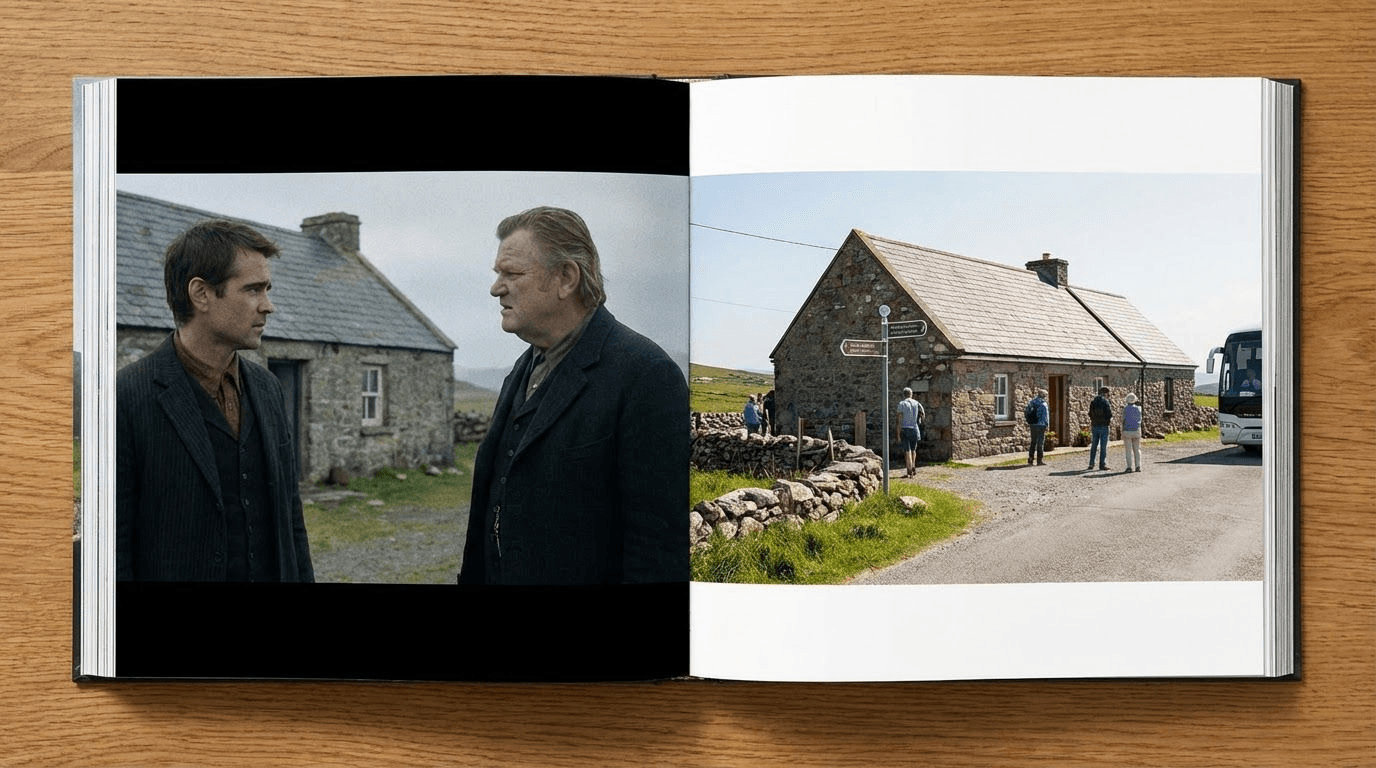
Film locations differ from other tourist attractions in one crucial way: they weren't designed for visitors. These are real places that temporarily hosted productions. The infrastructure you find at purpose-built attractions — interpretive centres, guided tours, gift shops — often doesn't exist.
Skellig Michael has no pier, no harbour, no facilities. Landing requires a licensed boat, good weather, and physical ability to climb 600 stone steps. Visitor numbers are strictly limited — only 180 people per day during the short season from May to October.
Lough Tay is private property. You can view it from the road above, but you cannot access the shore where Vikings built Kattegat. The estate employs security to enforce this.
Curracloe Beach is public and accessible, but there's no museum or memorial marking the filming. The beach is simply a beach — beautiful, historically significant, but visually unchanged.
This creates a particular kind of visiting experience. You need research beforehand. You need realistic expectations. You need to understand that what you're seeking is often subtle — a specific angle, a particular light, a view that matches a frame from a film.
Access Levels by Location
Full Access: Trim Castle, Cong Village, the Cliffs of Moher, Curracloe Beach — these are public sites with visitor infrastructure.
Viewpoint Only: Lough Tay, Skellig Michael (without landing) — you can see these locations but not access the specific filming areas.
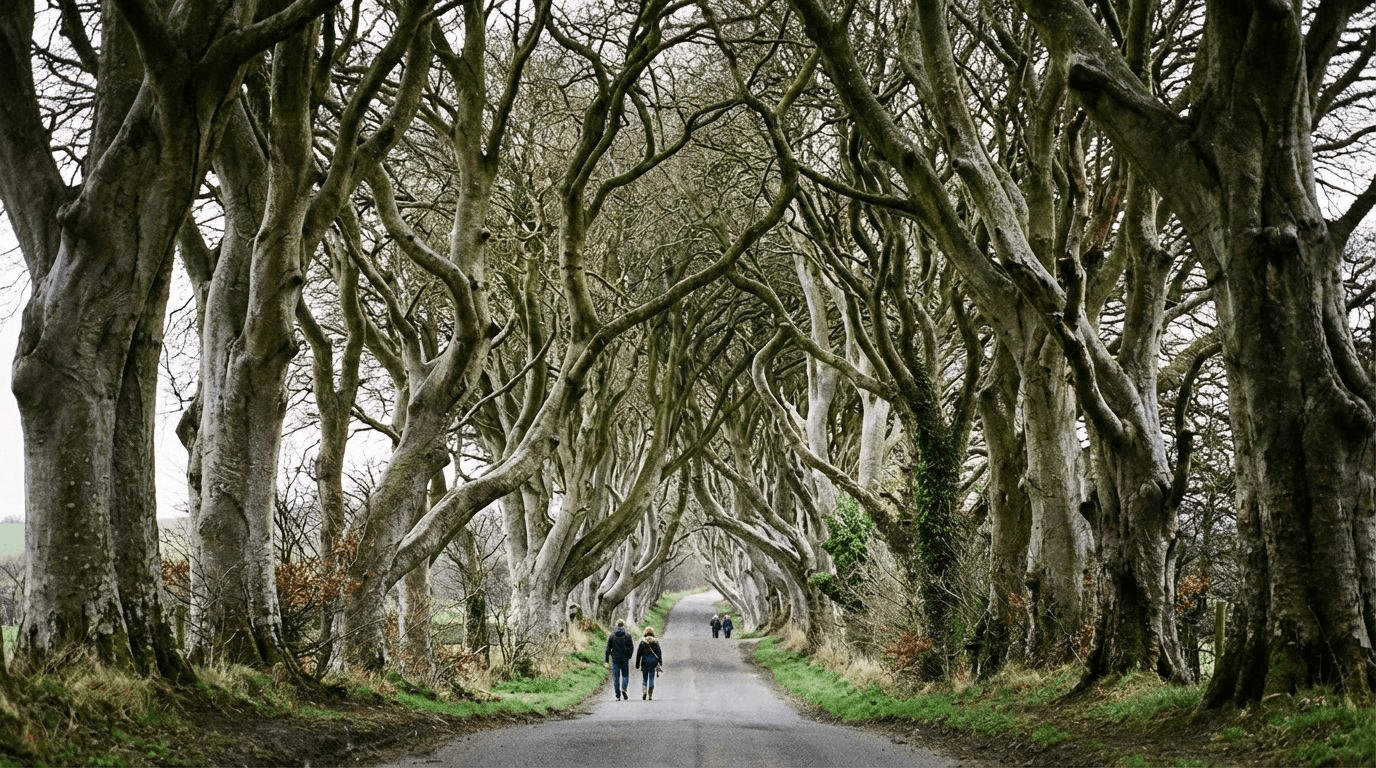
Guided/Restricted: The Dark Hedges, Castle Ward — these are on private land or managed estates with specific visiting arrangements.
Seasonal/Conditional: Skellig Michael landing — possible only with advance booking, good weather, and physical fitness.
Understanding these categories helps plan realistic itineraries. You cannot treat all locations equally. Some require full days with specific timing. Others are stops along a route.
Planning Your Visit
The One-Week Route
If you have seven days and want to hit multiple locations, this route works:
Day 1: Dublin to Wicklow — Vikings at Lough Tay, P.S. I Love You bridge
Day 2: Wicklow to Wexford — Saving Private Ryan at Curracloe Beach
Day 3: Wexford to Meath — Braveheart at Trim Castle
Day 4: Meath to Mayo — The Quiet Man at Cong
Day 5: Mayo to Galway — The Banshees of Inisherin at Achill Island
Day 6: Galway to Clare — Harry Potter at the Cliffs of Moher
Day 7: Clare to Kerry — Star Wars boat tour to Skellig Michael
This covers nine locations. Adding the tenth — Game of Thrones in Northern Ireland — requires extending north or substituting for another day.
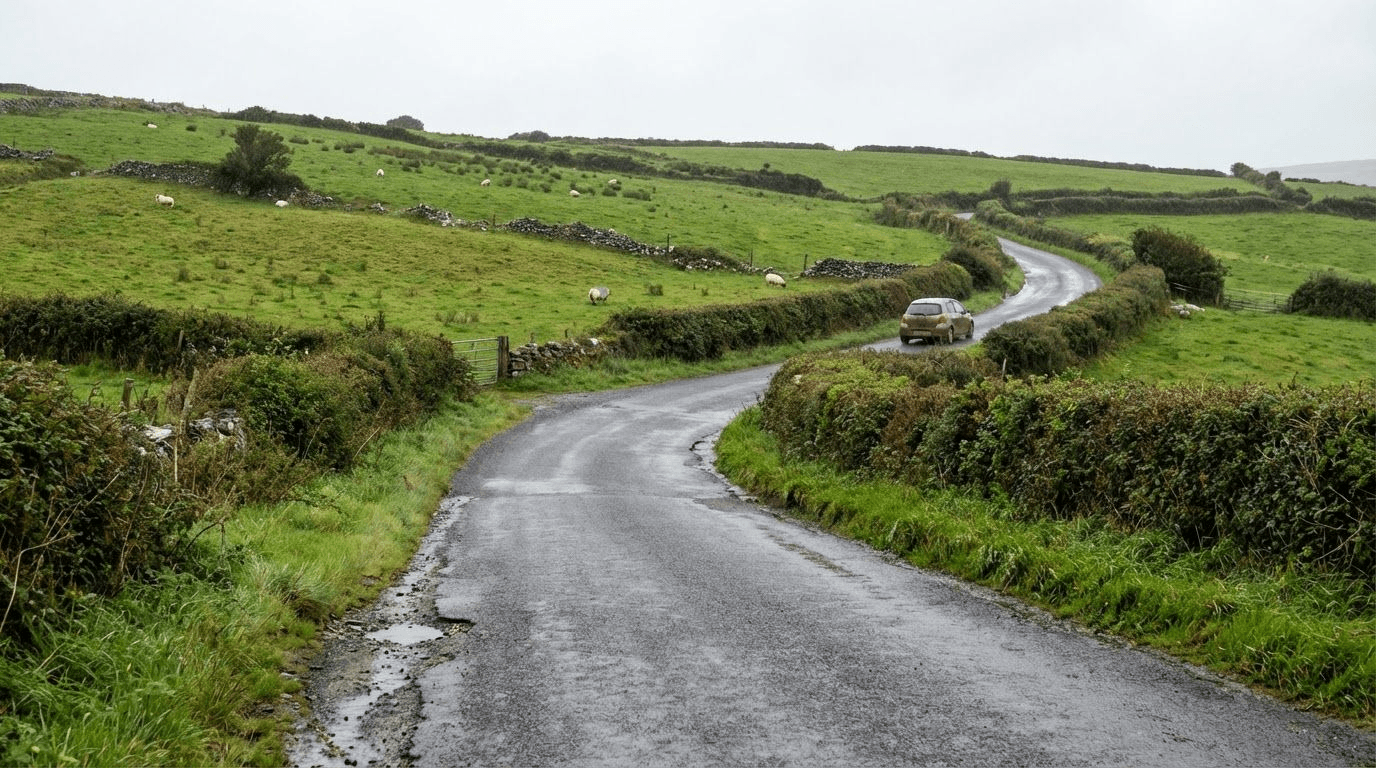
The total driving distance is approximately 1,200 kilometres. Road conditions vary from motorway to single-track mountain passes. Average speeds are 50-70 km/h on rural roads. Plan accordingly.
The Accommodation Strategy
You cannot reasonably base in one location and day-trip to all sites. The distances are too great, the roads too slow. Options include:
Multiple bases: Two or three nights each in Dublin, Galway, and Kerry, with day trips from each. This minimises daily packing and allows deeper exploration of each region.
Continuous movement: Different accommodation each night, following the route. This maximises location time but requires daily packing. Book accommodations with flexible cancellation policies — Irish weather can disrupt plans.
Selective focus: Choose three or four locations that cluster geographically. Quality over quantity. Rather than rushing through all ten, spend full days at fewer locations.
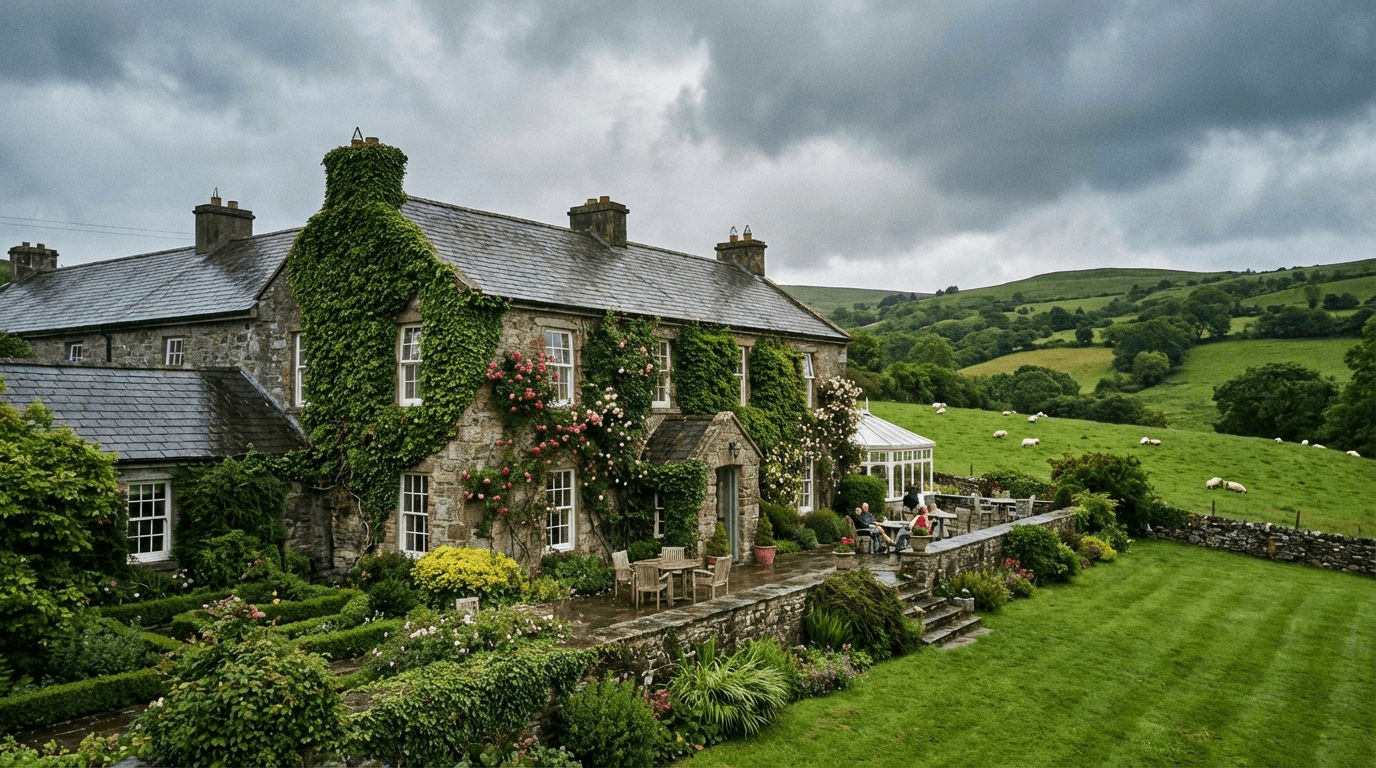
The accommodation market in rural Ireland ranges from historic hotels to modern Airbnb properties. Book in advance for summer months. Many rural areas have limited options.
Beyond the Locations
The Context That Matters
Visiting film locations works best when you understand what you're seeing. The Cliffs of Moher aren't just a Harry Potter location — they're 320 million years old, formed during the Carboniferous period, home to seabird colonies and rare flora. Knowing this depth makes the visit richer.
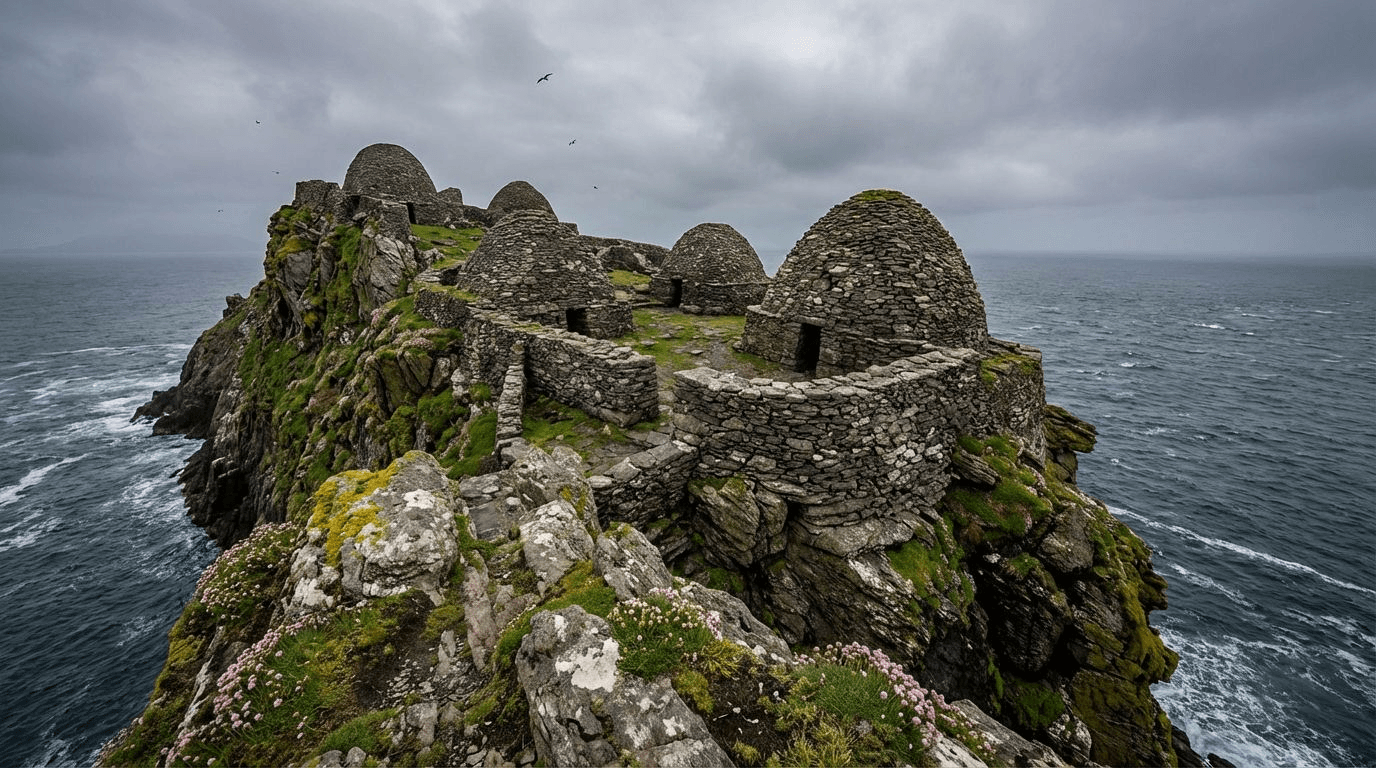
Skellig Michael was a monastic settlement from the 6th to 12th centuries. Monks lived in beehive huts, surviving on fish, birds, and whatever they could grow on the rock. When Luke Skywalker climbed those steps in The Last Jedi, he was following a path carved by monks 1,500 years ago.
Trim Castle was built by the Normans in the 12th century. It withstood sieges, changed hands multiple times, and operated as a military stronghold for 400 years. The castle's keep is the largest in Ireland.
Cong Village hosted The Quiet Man in 1951, but the village itself dates to the 7th century. The ruins of Cong Abbey, the medieval cross, the monk's fishing house — these existed centuries before John Wayne arrived.
This context doesn't diminish the film locations. It deepens them. You're visiting places with multiple layers of significance.
The Private Driver Advantage
Every location in this guide is reachable by car. None are easily accessible by public transport. This creates a specific challenge: driving in Ireland requires navigating narrow roads, reversing for oncoming traffic, and finding unmarked locations while trying to appreciate scenery.
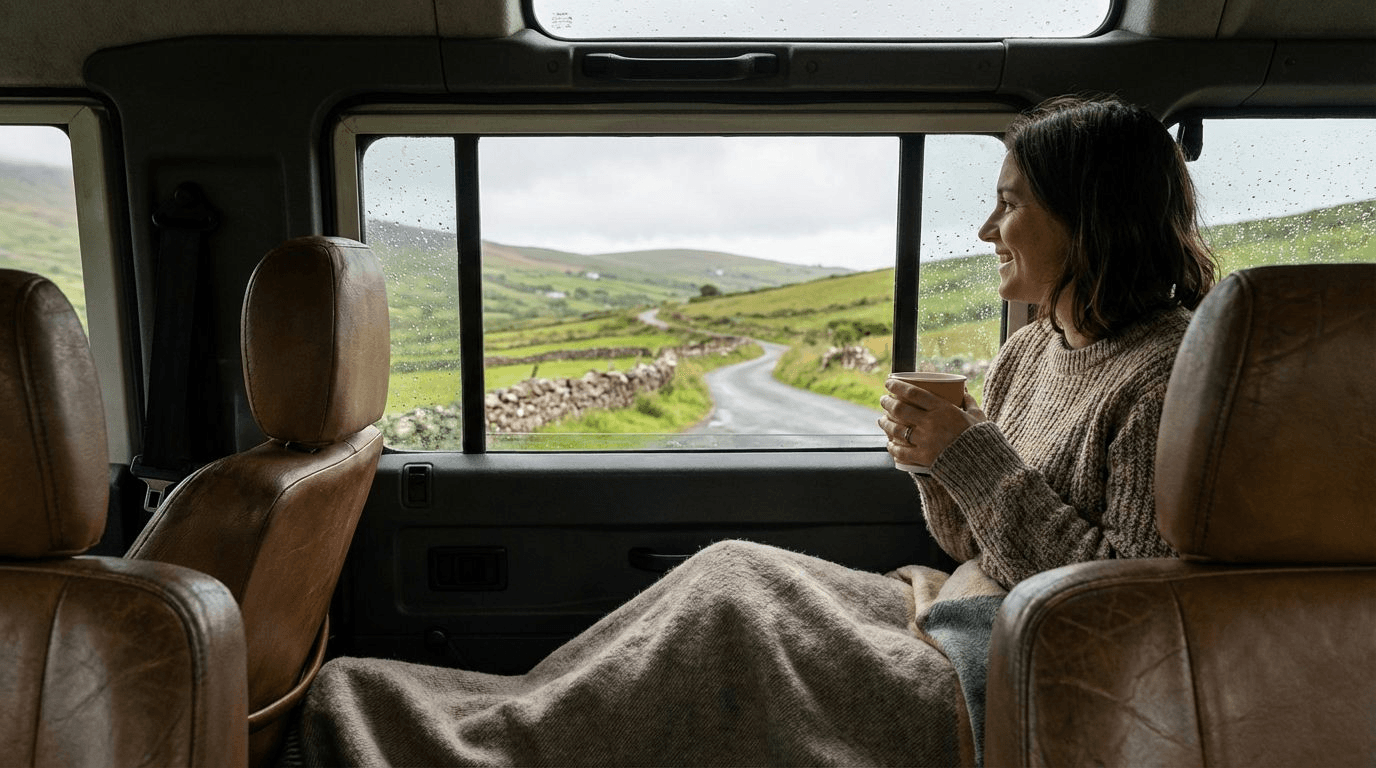
Hiring a Private Driver transforms the experience. The driver handles navigation, knows the viewpoints, adjusts timing based on weather, and allows you to focus on the locations rather than the logistics. For a multi-day film location tour, the cost difference is justified by the quality of experience.
Drivers also provide context — local knowledge about locations, timing recommendations, alternatives if weather closes a site. They turn transportation time into part of the tour rather than dead time between destinations.
The Complete List
All ten film locations covered in this guide:
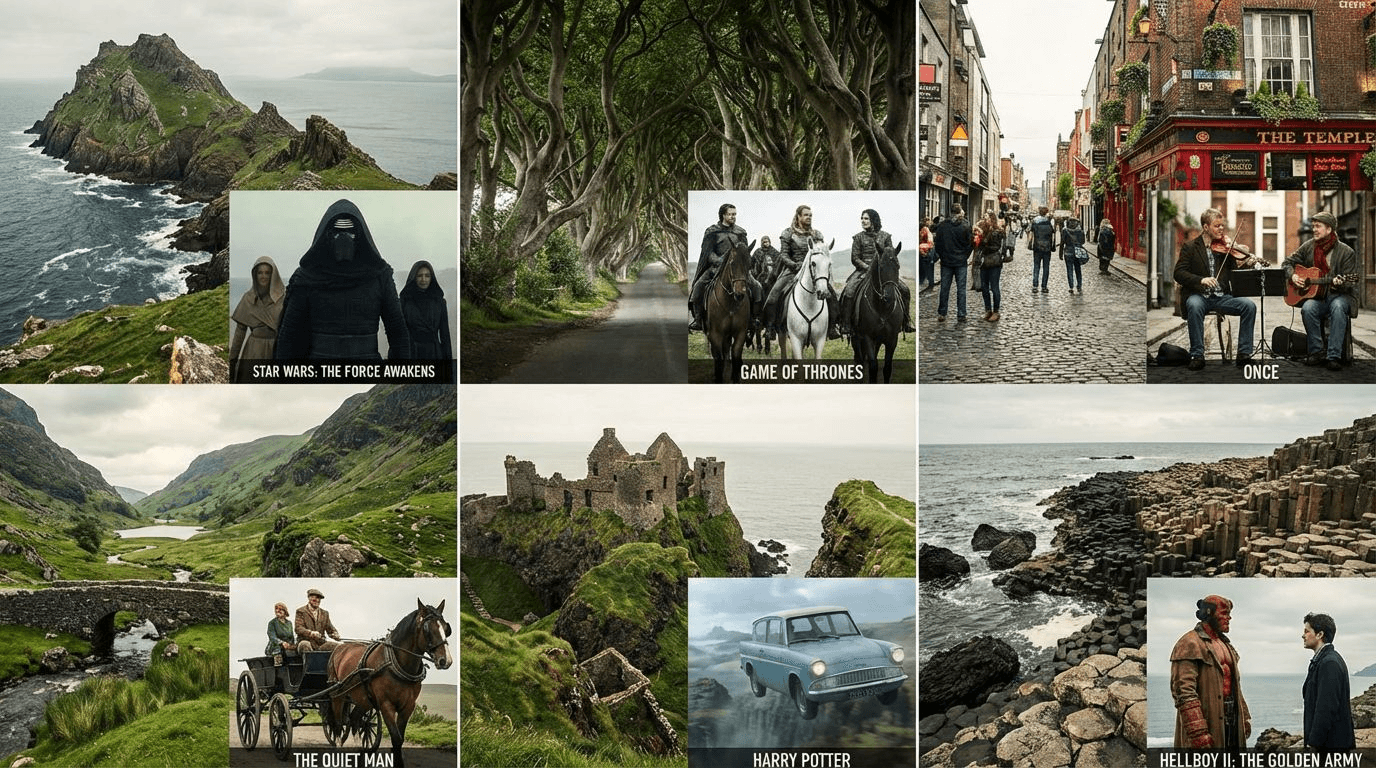
- Star Wars: Skellig Michael & Malin Head — the galaxy far, far away was filmed in Kerry and Donegal
- Game of Thrones Territory: Dark Hedges & Winterfell — explore the real Westeros in Northern Ireland
- Harry Potter & The Cliffs of Moher — the Horcrux cave and dramatic Atlantic coastline
- The Banshees of Inisherin: Achill Island & Inis Mór — Oscar-winning film locations on the west coast
- The Quiet Man in Cong — classic Hollywood romance in County Mayo
- Braveheart in Meath — why Trim Castle is the real 'York'
- P.S. I Love You: A Romantic Guide to the Wicklow Mountains — follow Gerry and Holly's journey
- Saving Private Ryan: Why Curracloe Beach is Better Than Normandy — the Omaha Beach landing filmed in Wexford
- Vikings & Valhalla: Exploring 'Kattegat' at Lough Tay — the Viking settlement in the Wicklow Mountains
- The Set-Jetting Road Trip: 7 Days of Movie Magic in Ireland — the ultimate itinerary connecting all locations
Each location has its own detailed guide covering access, timing, practical information, and what you'll actually see. Use this hub as your starting point, then dive deeper into specific locations that interest you.
Final Thoughts
Ireland's film locations offer something unusual: the chance to step into cinematic moments while remaining in real, functioning places. These aren't theme parks or backlots. They're villages, beaches, mountains, and castles that existed before the cameras arrived and continue after they leave.
The experience requires preparation. You need to know what's accessible and what isn't. You need realistic expectations about driving times and road conditions. You need to understand that what you see on screen involved camera angles, lighting, and post-production enhancement.
But with that preparation comes reward. Standing where your favourite scenes were filmed, recognising the landscape, understanding how filmmakers transformed real Ireland into fictional worlds — this is the appeal of film location tourism.
Film locations also offer a different way of experiencing Ireland. Most visitors follow standard tourist routes. Film locations take you to different places, often less visited, sometimes more challenging to reach.
Start with one location. Add others as time and interest allow. Build your own route through cinematic Ireland. The locations are waiting.
Table of Contents
Share this post
More from the Blog

Cork to Blarney Castle Day Trip: The Stone, the Gardens and What Else to See
Plan a Cork to Blarney Castle day trip. Kiss the stone, explore the Poison Garden, and add Cork city, Fota or Kinsale for a full day out.

Cork to Cobh Day Trip: Titanic, Colourful Houses and Harbour History
Plan a Cork to Cobh day trip by train, car or private driver. Explore Titanic history, St Colman's Cathedral, Spike Island and the best harbour views.

Cork to Killarney Day Trip: Lakes, Mountains and Muckross in One Day
A Cork to Killarney day trip is a longer escape into Kerry. Here's how to plan the drive, what to see in Killarney National Park, and why a private driver helps.