
The Banshees of Inisherin: Visiting Achill Island & Inis Mór
The Banshees of Inisherin did something no film had managed before: it made the general public care about Irish islands. Not the accessible ones with gift shops and car parks. The real ones—the wind-scoured rocks where seals outnumber people and the Atlantic feels like it's trying to reclaim the land.
Martin McDonagh's 2022 film, nominated for nine Academy Awards, created a fictional island called Inisherin. But "Inisherin" doesn't exist. The movie was shot across two real islands—Achill in County Mayo and Inis Mór, the largest of the Aran Islands in Galway Bay. The pub, the cottage, the beach where Colm and Pádraic have their final conversation? They're real places, separated by 80 kilometres of open water.
This presents a logistical challenge no other film location cluster quite matches. To see the full Banshees experience, you need to visit two different islands, each requiring its own ferry, its own weather window, and its own approach. The film's power comes from its sense of isolation—that's not production design, it's geography.
The Two Real Islands Behind "Inisherin"
Achill Island is the larger and more accessible of the two. Connected to the mainland by a bridge (Michael Davitt Bridge, built 1887), it's Ireland's largest island at 148 square kilometres. Around 2,700 people live here year-round, though that number triples in summer.
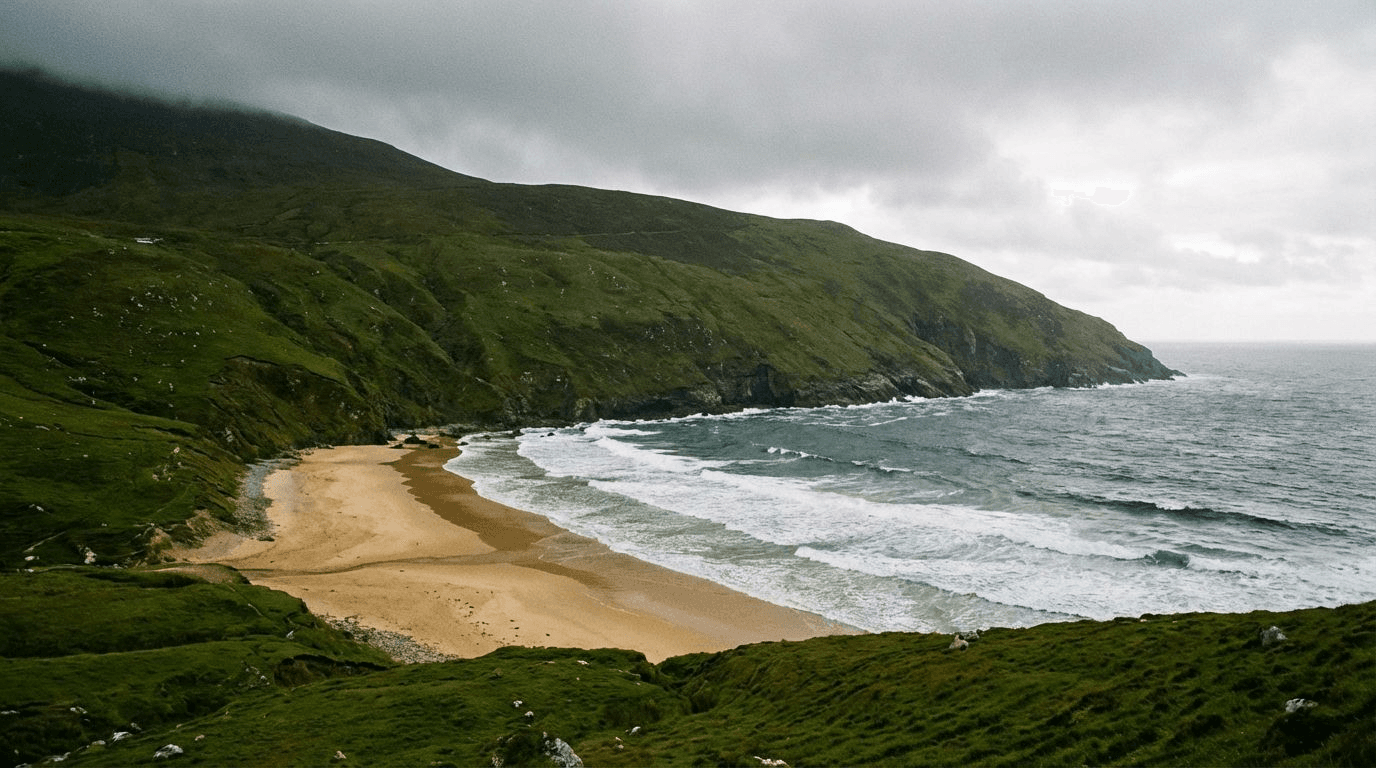
The island's western coast is raw Atlantic exposure—cliffs, sea stacks, and beaches that look tropical until you feel the wind. Keem Bay, where the film's beach scenes were shot, sits at the end of a narrow road that descends through mountainous terrain. The beach itself is a crescent of golden sand backed by steep green hills, completely exposed to the ocean.
The pub from the film—JJ Devine's—was built specifically for production at Cloughmore, near Achill's southern tip. It wasn't a functioning pub before filming, and it isn't one now. After production wrapped, the structure remained as a curious landmark, though it's on private land and not officially open to visitors. You can see it from the road, photograph the exterior, but don't expect to walk in and order a pint.
Inis Mór (Inishmore) is entirely different. No bridge connects it to the mainland. The only access is by ferry from Rossaveal (40 minutes) or Doolin (1 hour), or by small plane from Connemara Airport. It's the largest of the three Aran Islands, with a population around 800 that has been declining for decades.
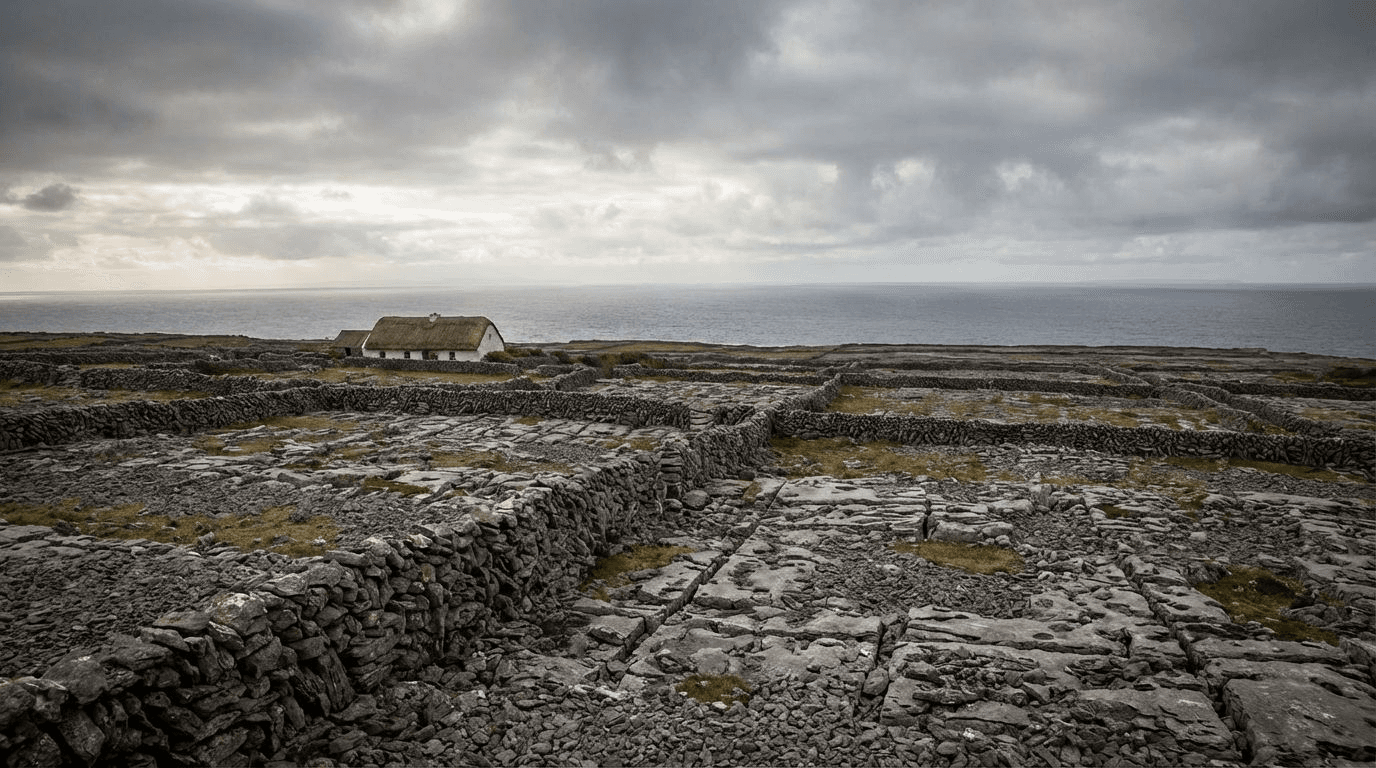
The island is essentially a limestone plateau that rises to 123 metres at its highest point. The landscape looks lunar—bare rock, stone walls, no trees. The Burren, which stretches across County Clare, continues here, creating terrain that feels ancient and slightly alien.
Several key Banshees locations are here: the cottage where Pádraic lives, the church, the lane where Mrs. McCormick appears. Unlike Achill, where locations are spread across a large island, Inis Mór's filming sites cluster around the village of Cill Rónáin (Kilronan), where the ferries dock.
Getting to Both Islands: The Logistics Problem
Here's the challenge that most location guides gloss over: Achill and Inis Mór are not near each other. Getting from one to the other requires either:
1. Returning to the mainland (Westport area for Achill, Galway for Inis Mór), driving 80 kilometres, then taking a separate ferry 2. Private boat charter (expensive, weather-dependent, rare) 3. An organised tour that handles both (limited availability, fixed schedules)
Most visitors choose one island or the other. Achill wins for accessibility—you drive there, you have your car, you control your schedule. Inis Mór wins for atmosphere—no cars (for visitors), no bridge, the genuine island experience the film captured.
But the film's emotional arc depends on both landscapes. Achill provides the wild beauty—the beach, the pub, the sense of open space. Inis Mór provides the isolation, the stone walls, the feeling that civilisation is hanging on at the edge of something vast and indifferent.
Star Wars in Ireland and Game of Thrones Territory both involve remote locations, but at least those are on the mainland. The Banshees locations demand island-hopping, ferry timetables, and acceptance that weather can strand you.

Achill Island: What to See and When
The drive to Achill from Westport takes about an hour on the N59, then across the bridge. Once on the island, the Atlantic Drive (R319) circles the western and northern coasts, providing access to the key locations.
Keem Bay is the headline location. The road descends through a mountain pass, emerging suddenly above the beach. Parking is limited—perhaps 30 spaces—and fills by mid-morning in summer. The beach itself is spectacular: fine golden sand, clear water (by Irish standards), steep green amphitheatre of hills.
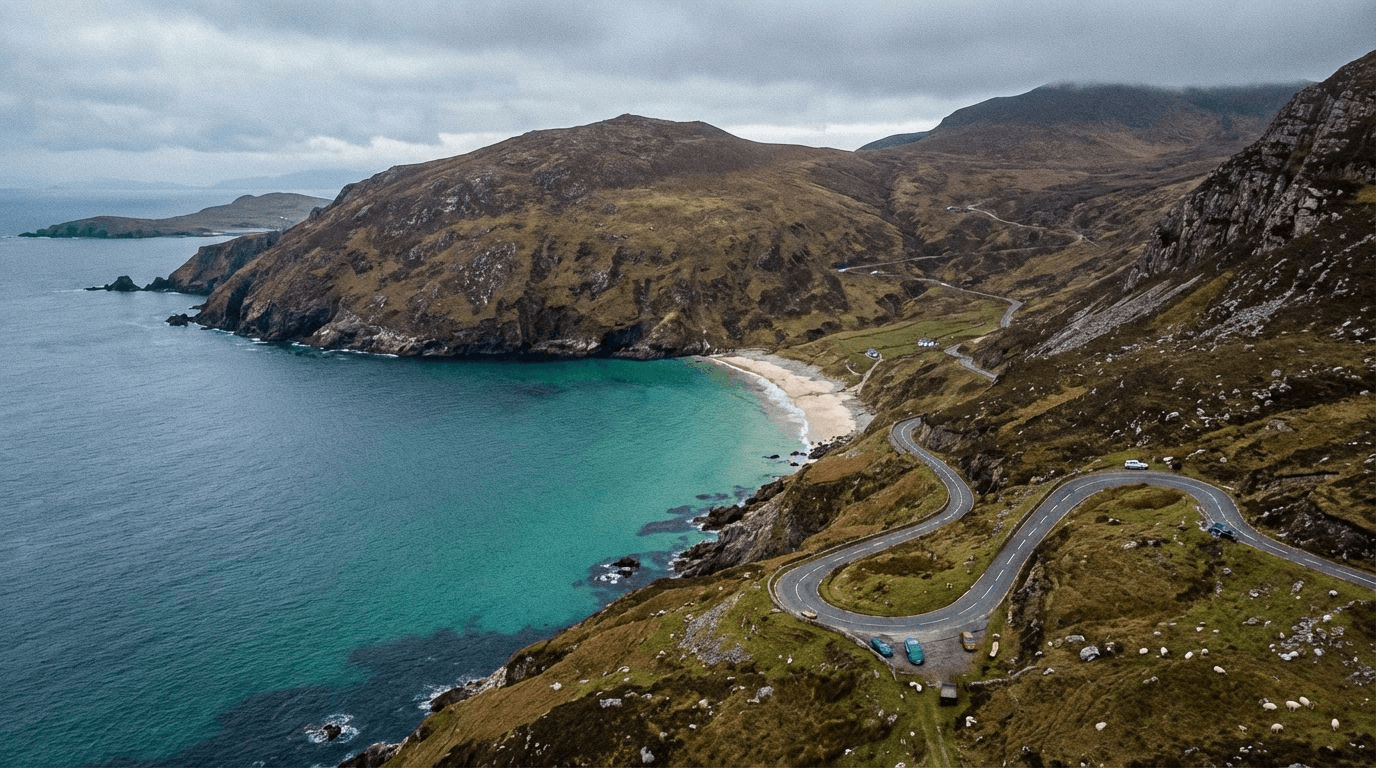
But Keem is exposed. When the Atlantic swell is running, swimming is dangerous. Lifeguards patrol in summer, but they're not there year-round. The wind can be ferocious—this is the same Atlantic that pounds the cliffs further north.
Cloughmore and the JJ Devine pub location are further south. The structure sits on a hillside above the coast, visible from the road but on private farmland. Respect the boundaries—farmers here are understandably tired of tourists trampling their land for selfies.
Other Achill locations: The film used multiple spots across the island—the cliffs at Ashleam, the village of Dooagh, the roads themselves. Part of the film's power is that it captures real island life, not just pretty landscapes. You'll see that in the bungalows, the small shops, the sense that people live here year-round, dealing with the same isolation the characters experience.
Best time to visit: May through September for ferry reliability and longer days. October can be stunning—autumn light, fewer tourists—but services start closing. Winter is harsh—many businesses shut, accommodation limited, weather unpredictable.
Inis Mór: The Real Island Experience
If Achill is accessible wilderness, Inis Mór is genuine isolation. No cars for visitors (unless you're a resident). The only transport is bicycle, horse-drawn trap, or the island's minibus service. Most visitors rent bikes at the pier in Cill Rónáin.
The film locations here are concentrated in the island's central and eastern areas:
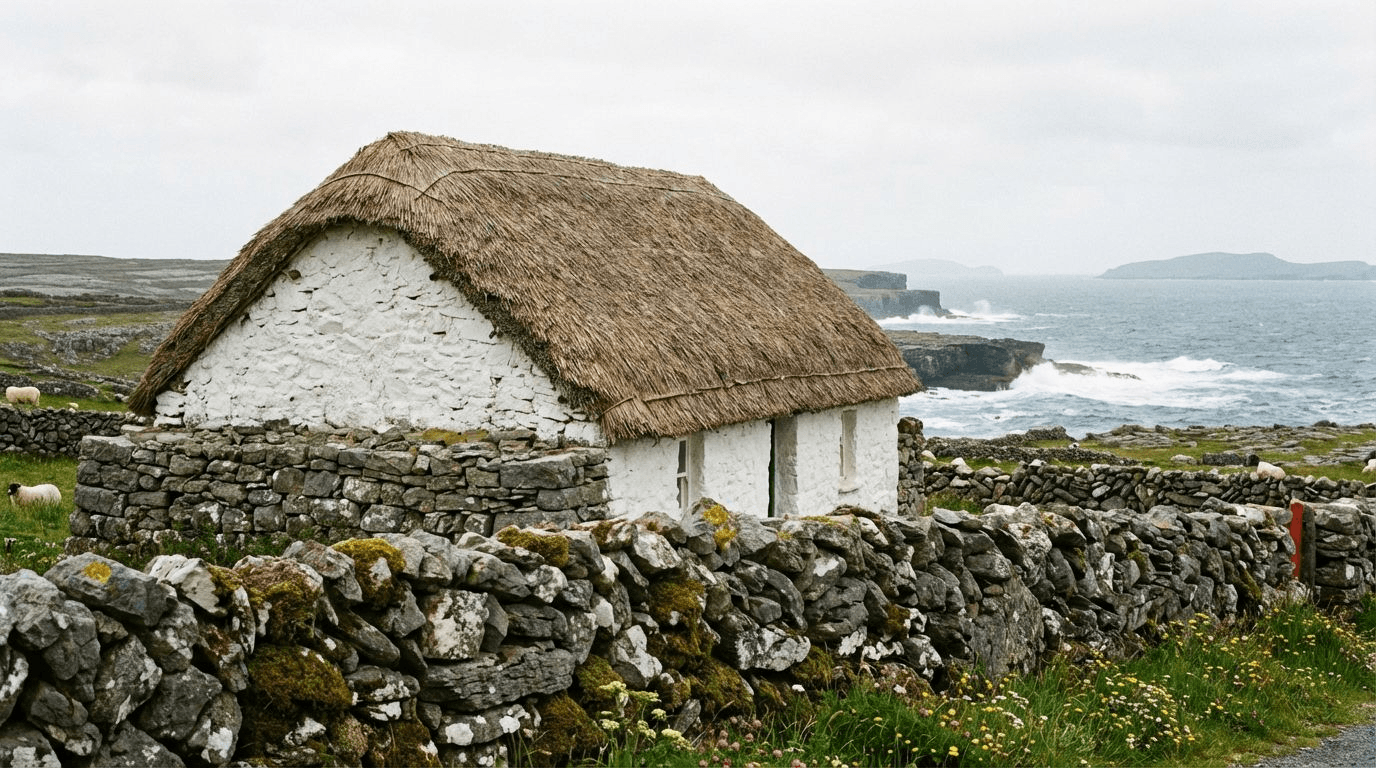
Pádraic's cottage sits near the village of Cill Rónáin, visible from the main road. It's a traditional cottage, whitewashed with a thatched roof, one of many on the island that preserve traditional architecture. The interior was filmed on a set—don't expect to see the actual rooms from the movie.
The church and lane locations are nearby. Mrs. McCormick's house, the well, the various stone walls where conversations happen—these are real island features, not sets. The stone walls crisscrossing the island (over 1,600 kilometres of them, built over centuries to clear fields) create the labyrinthine quality the film exploits.
The cliffs at Dún Aonghasa (Dun Aengus), while not featured prominently in the film, provide the same sense of precipice and exposure that defines the movie's visual language. This prehistoric fort sits on 100-metre cliffs facing the Atlantic. On clear days you can see the Cliffs of Moher across the bay. On rough days, the waves crash against the cliff base with genuine violence.
Getting to these locations means cycling or walking. The island's main road is 12 kilometres from the pier to the western end. The landscape is harsh—no shade, limestone that reflects heat (when there is sun), and wind that never stops. Bring water, sunscreen, layers. The Irish weather stereotype exists for a reason.
Ferries to Inis Mór run year-round but reduce frequency in winter. The crossing from Rossaveal is shorter (40 minutes) but requires driving to the harbour, 40 kilometres west of Galway. The Doolin crossing is longer but more scenic, passing closer to the Cliffs of Moher.
The Weather Factor
Islands are weather-dependent by nature. Achill, being bridged, at least offers escape—you can always drive back to the mainland. Inis Mór is committed—once you're there, you're there until the next ferry.

The film was shot across several months, capturing various weathers. McDonagh wanted that sense of changing skies, of beauty that coexists with harshness. Visitors should expect the same. A day that starts clear can end in Atlantic rain. Fog can obscure the very views you came to see. Wind can make cycling impossible.
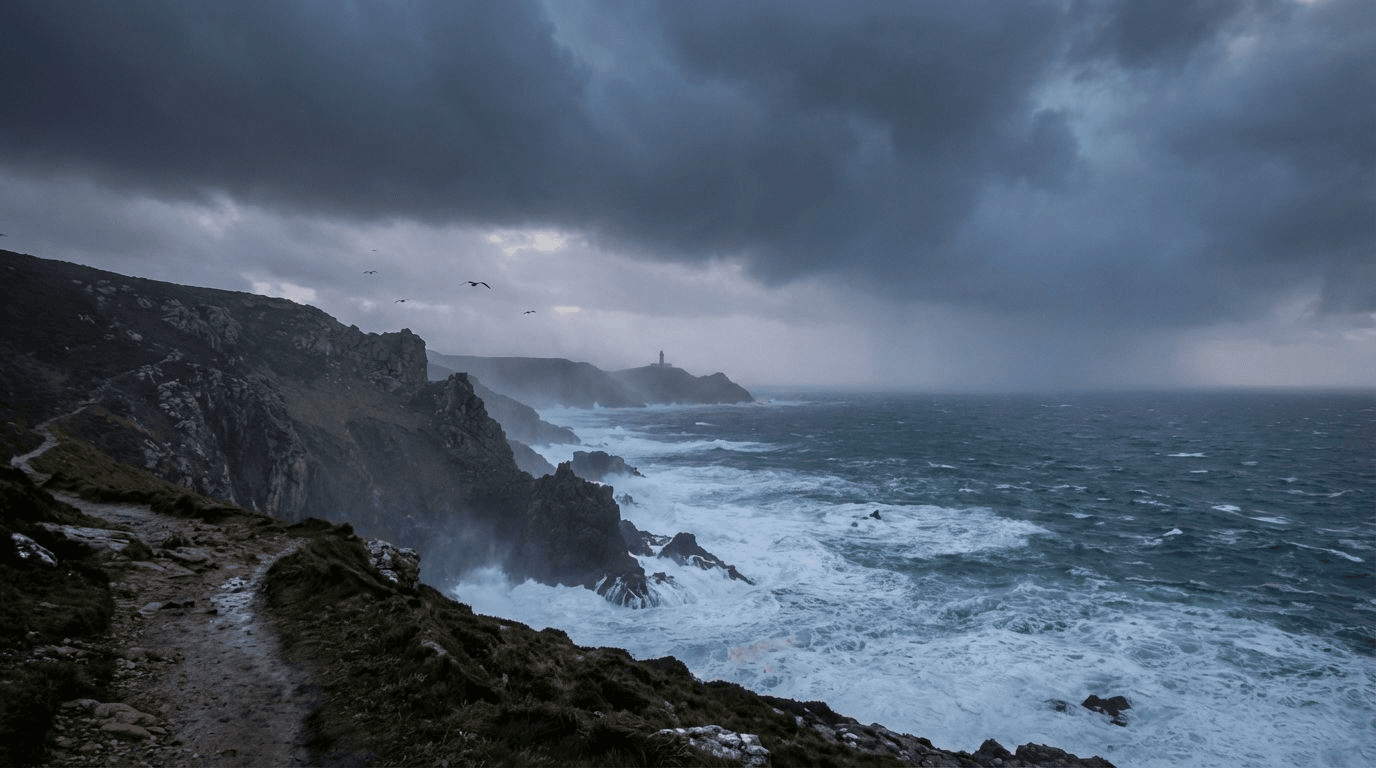
This is where the private driver advantage becomes clear. Not for Inis Mór itself—you can't take a car there—but for the mainland logistics. A driver can drop you at Rossaveal pier, wait (or return), handle the Galway accommodation, adjust plans if ferries cancel. They remove the mainland complications so you can focus on the islands.
For Achill, a driver is more directly useful. The island's roads are narrow, the scenic drives demand attention rather than appreciation. Having someone else navigate means you actually see the landscapes, not the white lines.
Combining Banshees with Other Film Locations
The Banshees locations sit in interesting geographic relation to other major filming sites. From Galway (the jumping-off point for Inis Mór), you're close to The Quiet Man locations in Cong—only 40 kilometres north. From Achill, you're on the same coast as Star Wars locations in Kerry, though that's a significant drive south.
Game of Thrones fans will find a different energy here. Where GoT locations are about spectacle—castles, cliffs, dramatic scale—Banshees locations are intimate. A cottage. A pub. A beach. A stone wall. The drama is human-scale, which makes the locations more moving but less obviously "cinematic."
If you're building a comprehensive cinematic tour of Ireland, the Banshees locations provide the contemporary counterpoint to historical epics. This is 2022 filmmaking, Academy Award-nominated, capturing Ireland as it exists now—traditional but modern, isolated but connected, beautiful but harsh.
What to Bring and Expect
For Achill:
- Car or driver (essential for island access)
- Walking boots for cliff paths
- Swimming gear (if brave—the water is cold)
- Camera with weather protection
- Layers—even sunny days turn windy
For Inis Mór:
- Ferry booking (essential in summer)
- Bicycle rental booked ahead (or arrange trap/minibus)
- Water and snacks (limited shops outside Cill Rónáin)
- Sun protection (no shade on the limestone)
- Time—don't try to rush this island
For both:
- Flexibility—weather cancels plans
- Respect for private property—much of the filming was on working farms
- Context—watch the film again before visiting; the locations gain power when you recognise specific scenes
When to Visit
May-June: Long days, manageable weather, fewer crowds than peak summer. Ferries reliable. Accommodation available but book ahead.
July-August: Peak season. Achill's roads busy. Inis Mór ferries crowded. Book everything weeks ahead. Best weather (statistically) but most competition for space.
September: Ideal balance. Warm water (relatively), autumn light, reduced crowds. Some services start closing late in the month.
October-April: Serious weather. Reduced ferry schedules. Many accommodations closed. Only for experienced travellers comfortable with Irish winter conditions.
For Cinematic Ireland: The Ultimate Guide to Film & TV Locations — the master hub
Final Thoughts
The Banshees of Inisherin works as a film because the locations are real. McDonagh didn't build sets—he found places that already contained the loneliness, beauty, and hard-won community he wanted to portray. Visiting these locations means accepting that same reality.
You won't find gift shops at most filming locations. No costumed reenactors. Just the islands, the Atlantic, and the sense that you're standing where something genuine was captured.
That authenticity extends to the challenges. These islands are not theme parks. They're working communities where tourism is welcome but not the primary concern. The weather is indifferent to your schedule. The ferries don't run for your convenience.
But that's the point. The film's power comes from that reality—the sense that human stories unfold against a backdrop that doesn't care about them, yet remains beautiful regardless. Visiting the locations means engaging with that same dynamic.
Table of Contents
Share this post
More from the Blog

Cork to Blarney Castle Day Trip: The Stone, the Gardens and What Else to See
Plan a Cork to Blarney Castle day trip. Kiss the stone, explore the Poison Garden, and add Cork city, Fota or Kinsale for a full day out.

Cork to Cobh Day Trip: Titanic, Colourful Houses and Harbour History
Plan a Cork to Cobh day trip by train, car or private driver. Explore Titanic history, St Colman's Cathedral, Spike Island and the best harbour views.

Cork to Killarney Day Trip: Lakes, Mountains and Muckross in One Day
A Cork to Killarney day trip is a longer escape into Kerry. Here's how to plan the drive, what to see in Killarney National Park, and why a private driver helps.