
The Quiet Man in Cong: Visiting the Cottage & The Pat Cohan Bar
John Ford's The Quiet Man (1952) did for rural Ireland what Star Wars later did for Skellig Michael—it put a specific place on the global map. But where Star Wars offered alien landscapes, Ford offered something more emotionally potent: home.
For generations of Irish-Americans, The Quiet Man represented the Ireland their grandparents left. The thatched cottage. The white-walled pub. The green fields bordered by dry stone walls. The community that knew everyone's business but forgave everyone's flaws. It was sentimental, certainly, but it was also authentic—Ford shot on location in County Mayo and Galway, capturing real places that remain remarkably unchanged seventy years later.
The village of Cong, straddling the border between Mayo and Galway, became the film's spiritual centre. With a population hovering around 150, it shouldn't have infrastructure for tourism. Yet it does, entirely because of a film shot when Eisenhower was in the White House.
Why The Quiet Man Still Matters
Most film locations fade as the movie ages. The Quiet Man locations have done the opposite—they've become more significant as the years pass. The film itself is canon, preserved by the United States National Film Registry as "culturally, historically, or aesthetically significant." But more importantly, it captured an Ireland that was disappearing even as Ford filmed it.
The 1950s were a period of mass emigration from rural Ireland. The thatched cottages, the small farms, the traditional village life—this was already becoming memory when Ford pointed his cameras at it. The Quiet Man inadvertently created a permanent record of a way of life that vanished within decades.
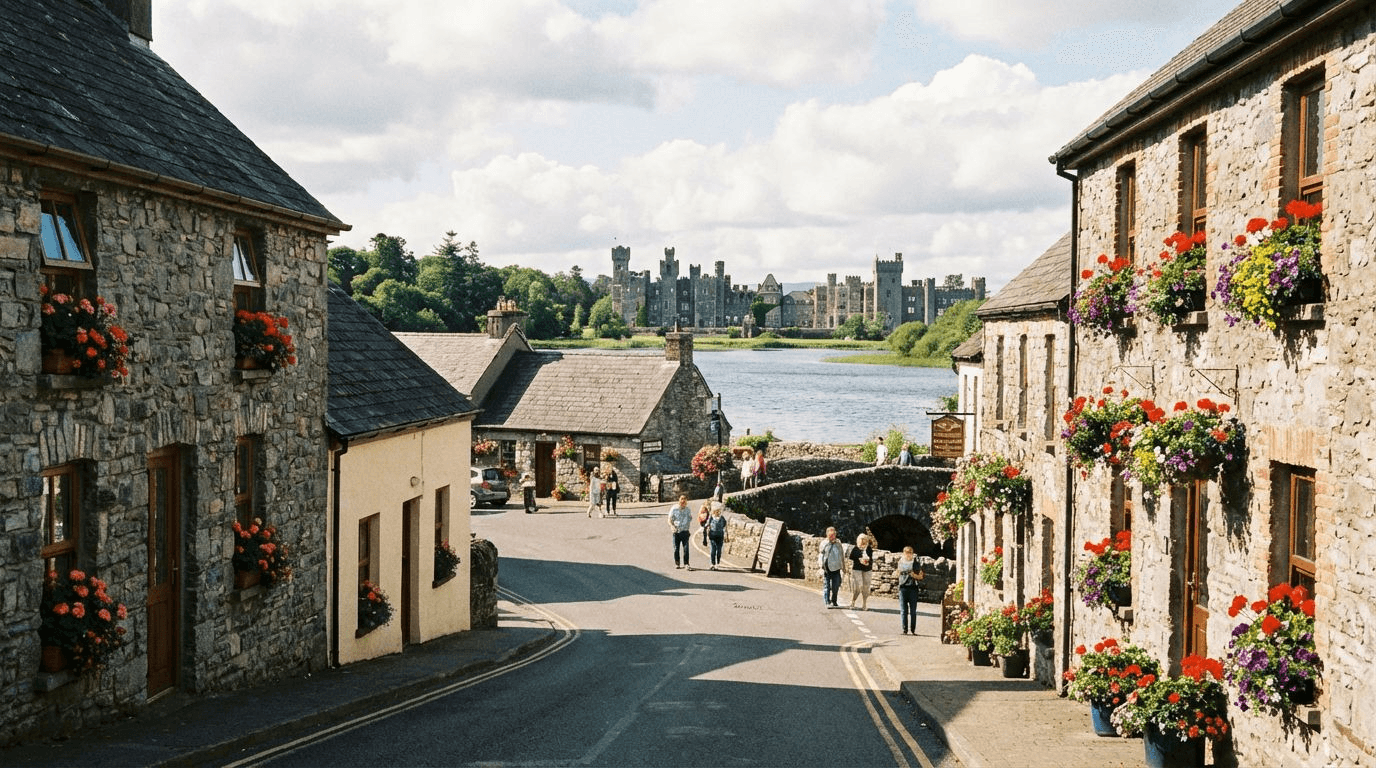
For modern visitors, the film locations offer something different from fantasy blockbusters. These aren't imaginary worlds. They're real communities where people still live, work, and tolerate the annual influx of tourists searching for a seventy-year-old movie.
Cong: The Village That Became Famous
Cong sits on an isthmus between Lough Corrib and Lough Mask, two of Ireland's largest lakes. The village itself is tiny—a church, a pub, a museum, perhaps a dozen houses. The 1951 census recorded 122 residents. Today's population is similar.
What makes Cong exceptional is its setting. To the east, the grounds of Ashford Castle extend for 350 acres of formal gardens, forest, and shoreline. To the west, the Connemara wilderness begins—bog, mountain, and scattered lakes. The village sits at the meeting point of manicured privilege and raw wilderness.
The Pat Cohan Pub (called Cohan's Bar in the film) remains the emotional centre of any Quiet Man pilgrimage. The exterior was used extensively—Sean Thornton's arrival, the fight scene preparation, multiple establishing shots. The current building isn't the original film structure (that was damaged by fire), but a faithful reconstruction stands on the same site, operated as a functioning pub and restaurant.
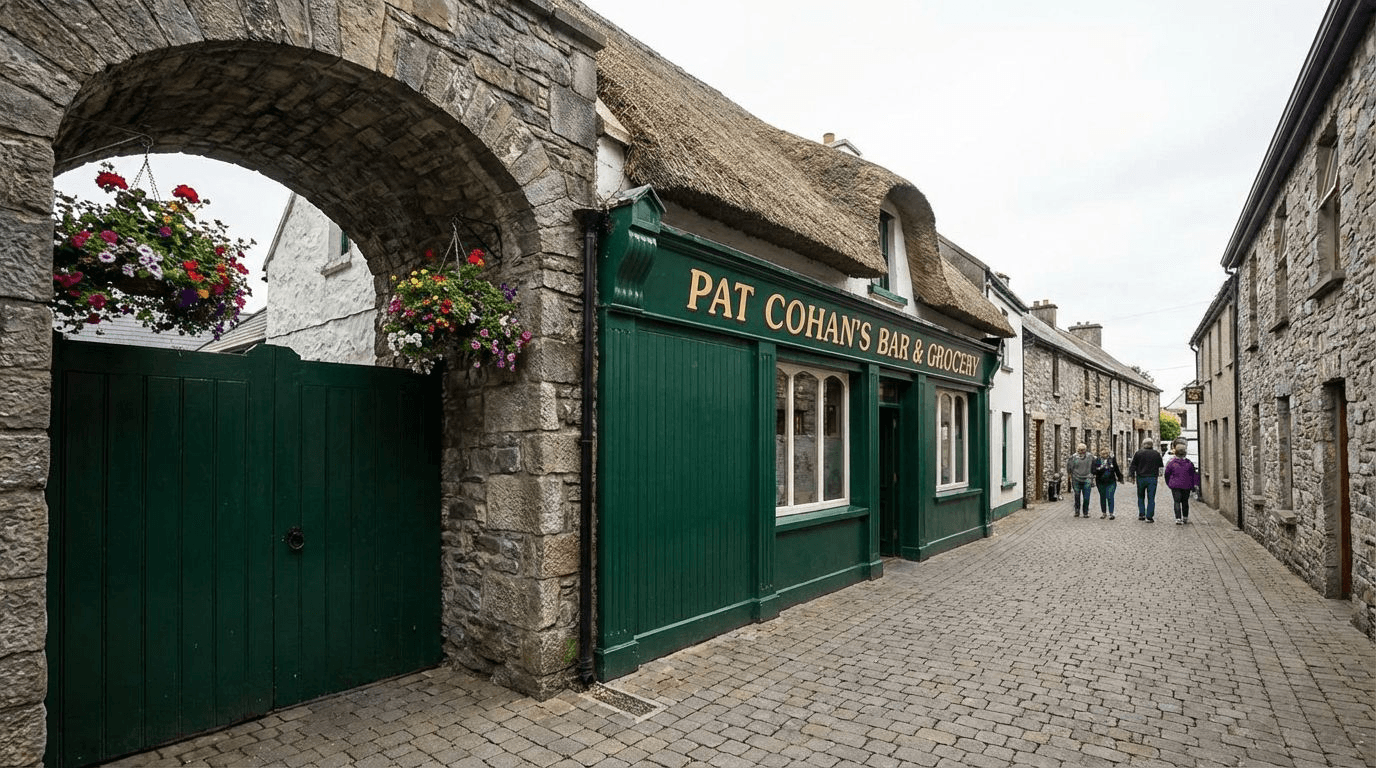
Inside, the walls are covered with memorabilia—photographs of John Wayne and Maureen O'Hara, posters from the film's various releases, newspaper clippings documenting the production. It's commercial, certainly, but it's also genuine. The pints are pulled correctly. The food is solid Irish pub fare. And on summer evenings, someone inevitably starts singing "The Isle of Innisfree."
The White O'Morn Cottage
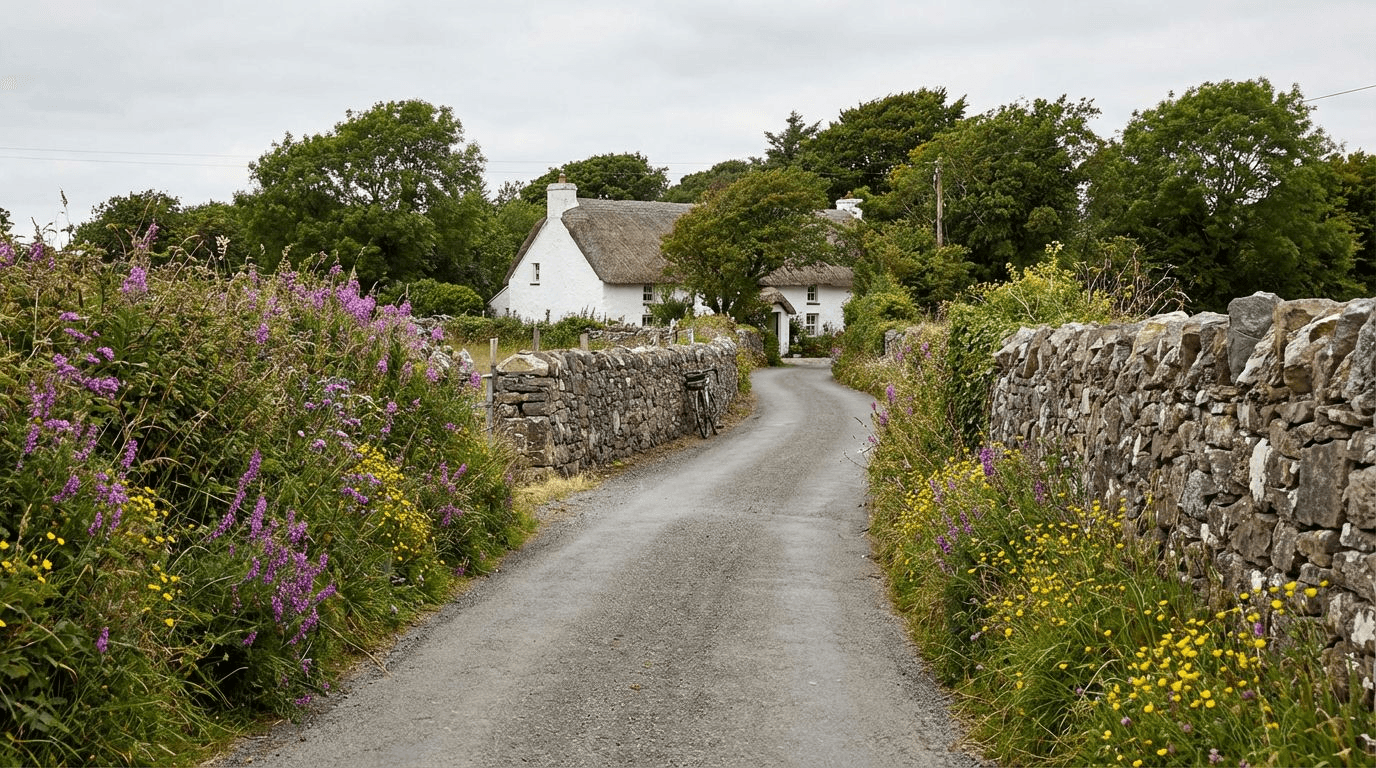
The film's most iconic location isn't actually in Cong. The cottage where Sean and Mary Kate live—the "White O'Morn"—sits several kilometres outside the village, in the townland of Maam, County Galway.
This presents the first challenge for visitors: the cottage is on private land, down a narrow lane, with no official parking and no signage from the main road. Finding it requires either local knowledge or determination.

The structure itself is a ruin. The thatched roof collapsed decades ago. The whitewashed walls have weathered to grey. What stands is essentially a stone shell, overgrown with vegetation, surrounded by modern farming infrastructure. It's not the romantic image from the film.
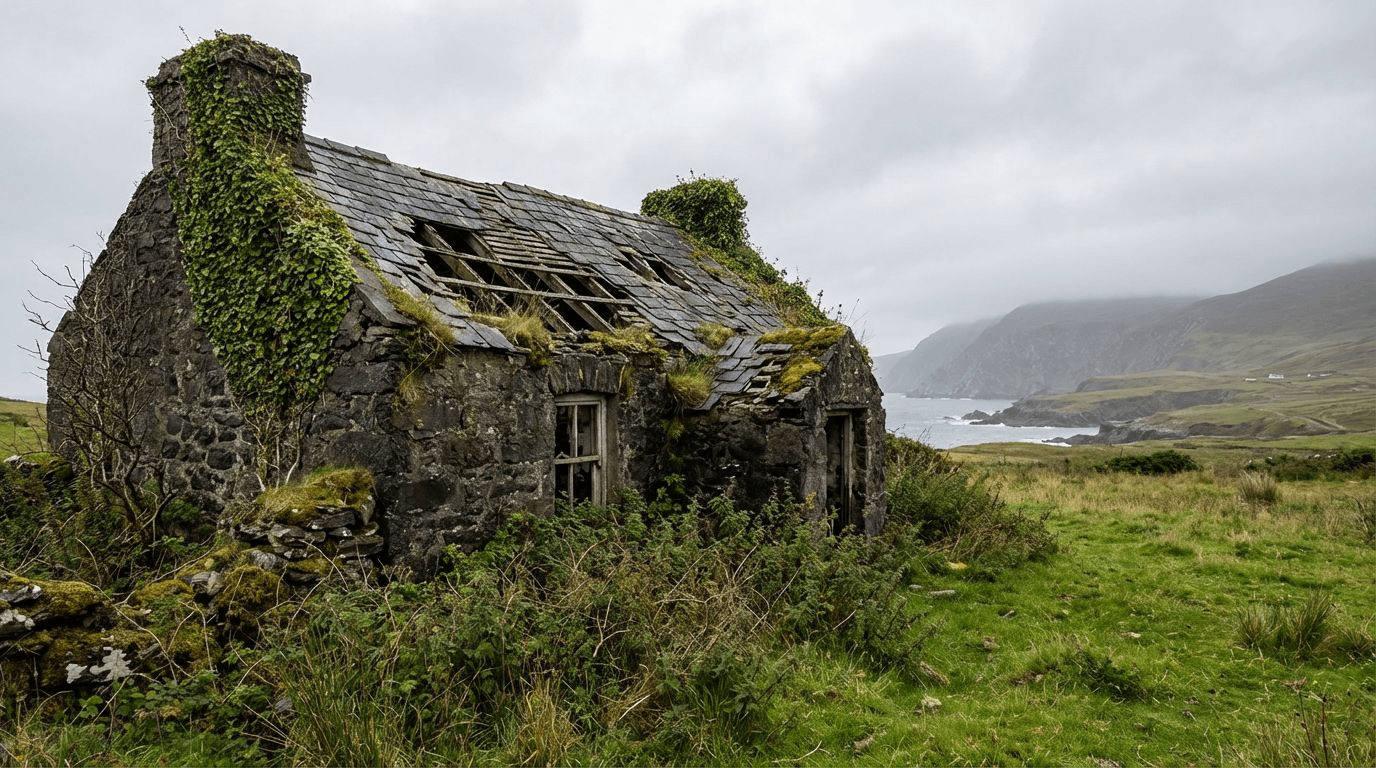
And yet, for many visitors, this is more moving than a preserved museum piece would be. The ruin testifies to time passing, to the reality of rural Irish life that continued after Ford's cameras left. The cottage wasn't preserved as a monument. It was used, lived in, eventually abandoned—the same fate as thousands of similar structures across the west of Ireland.
Respect the boundaries. The land is private working farmland. Park considerately. Don't climb on walls or enter the structure. Photograph from the lane.
The Quiet Man Museum
Cong's other major film location is the Quiet Man Museum, housed in a reconstructed cottage that replicates the White O'Morn interior. This isn't the original filming location, but it contains authentic memorabilia—furniture, costumes, production documents, and the original "For Sale" sign from the cottage scene.
The museum succeeds because it doesn't pretend to be something it's not. The guides are knowledgeable about the production, the local history, and the gap between film fantasy and rural reality. They'll tell you which scenes were shot where, which locals appeared as extras, and how the village adapted to Hollywood's presence in 1951.
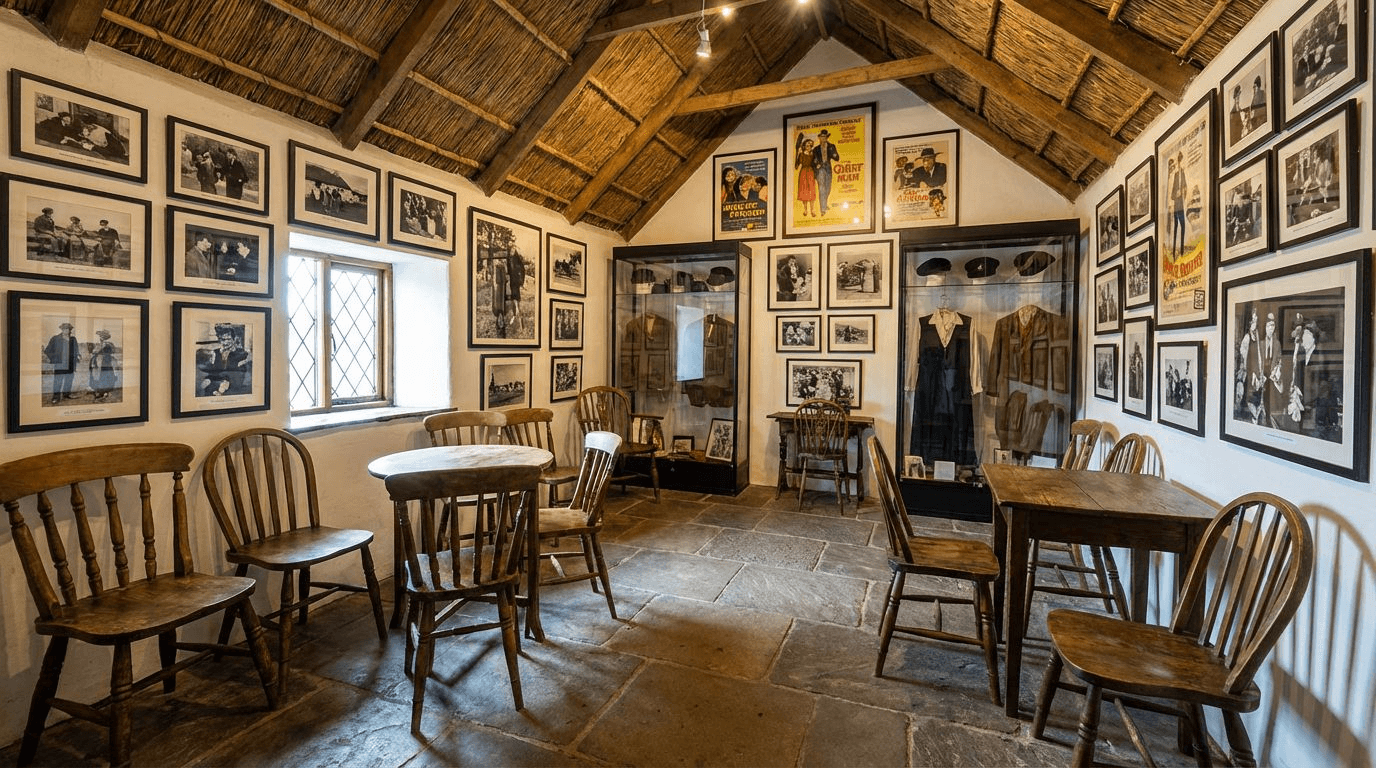
More interesting than the props is the social history. The museum documents how Cong changed during filming—how the villagers became extras, how John Wayne interacted with locals, how the massive production (by 1950s standards) transformed daily life for several months. It's a case study in what happens when global cinema descends on a tiny Irish village.
Ashford Castle and the "Big House"
While The Quiet Man focuses on cottage life, the film also captures Ireland's other architectural tradition: the Anglo-Irish country house. Ashford Castle, visible in multiple scenes, represents the privileged world that existed parallel to the rural poverty the film otherwise depicts.
The castle (actually a Victorian mansion built onto medieval foundations) is now one of Ireland's most exclusive hotels. Day visitors can access the grounds, but the interior is reserved for guests paying €500+ per night. The contrast between the cottage ruin and the preserved castle says something about Irish history that the film only hints at.
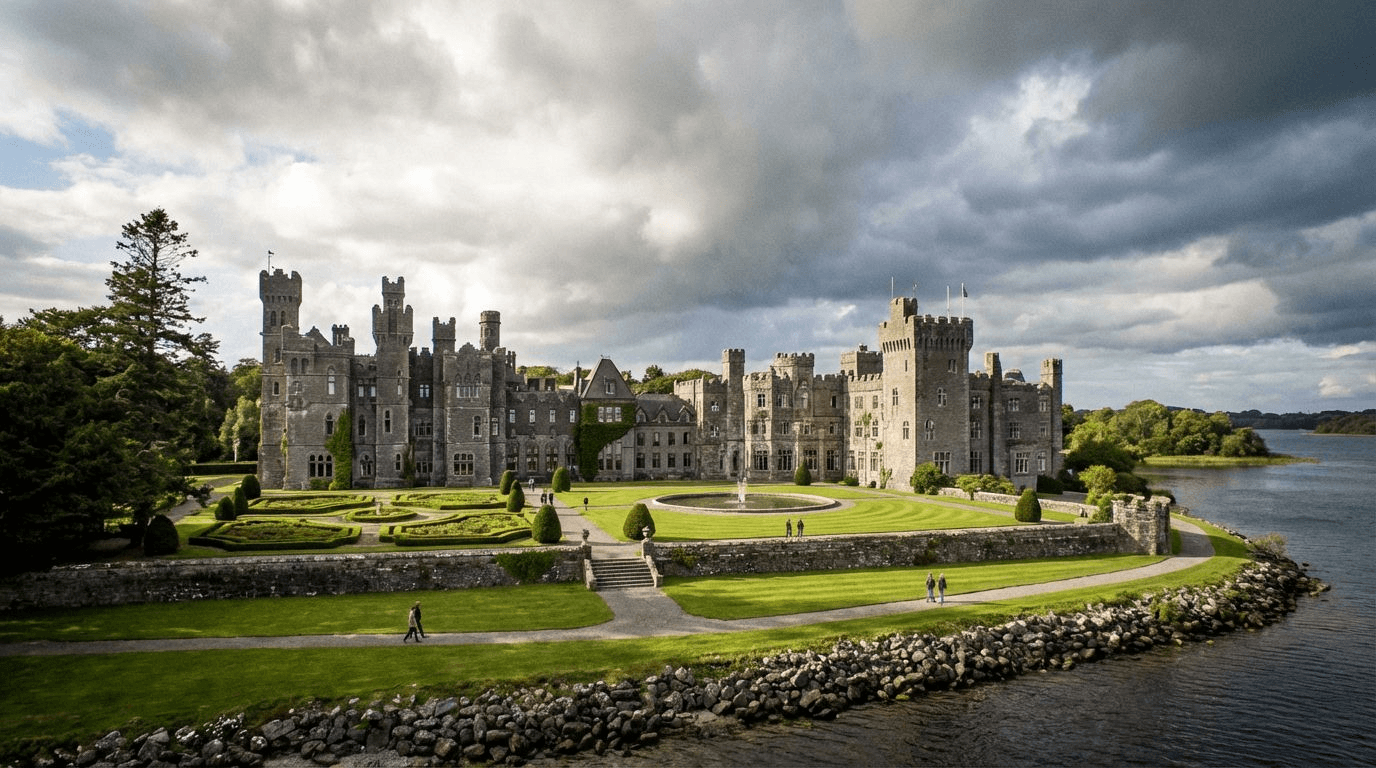
For Quiet Man fans, the castle grounds contain additional filming locations—the river where the courting scenes occurred, the woodland paths, the formal gardens. The contrast between wild Connemara and manicured estate is part of the area's appeal.
Getting There and Around
Cong is 40 kilometres north of Galway City, 30 kilometres west of Ballinrobe. The drive from Galway takes approximately 45 minutes on the N84 and R334, through increasingly rural Mayo countryside.
Public transport is essentially non-existent. There is no train station. Bus Éireann runs limited services to nearby villages but not directly to Cong. Without a car, you're looking at expensive taxi fares from Galway or Ballinrobe.
The village itself is walkable—everything is within five minutes on foot. But the White O'Morn cottage requires driving or cycling several kilometres on narrow roads with no footpaths. The lack of official parking means visitors frequently block farm access lanes, creating friction with local residents.

This is where a private driver becomes essential—not for luxury, but for basic access. They know where to park without obstructing working farms. They know the cottage's exact location without GPS confusion. They can adjust the itinerary if weather closes the mountain roads that lead to the more remote locations.
The Quiet Man vs. Modern Ireland
What makes visiting these locations slightly surreal is the time gap. The film presents a version of Ireland that existed, briefly, in the early 1950s. Today's Ireland is unrecognisably different—urban, diverse, digitally connected, part of the European Union.
Yet Cong remains recognisably the village Ford filmed. The stone buildings haven't changed. The fields are still bounded by the same dry stone walls. The lakes still dominate the landscape. The physical environment is remarkably stable, even as Irish society transformed around it.
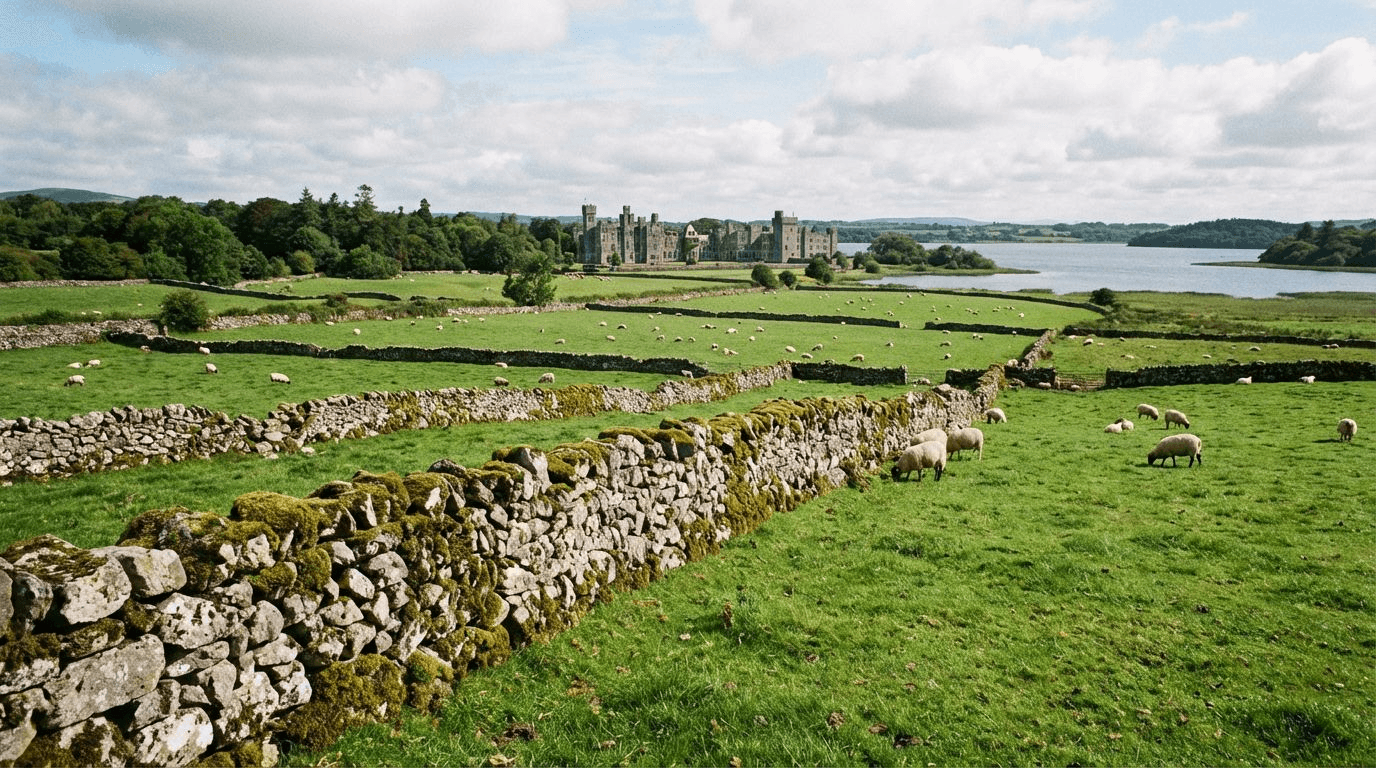
This preservation is partly accidental—rural Mayo didn't experience the development pressures of Dublin or Cork. It's partly deliberate—tourism incentives have protected the village's appearance. And it's partly economic—the same forces that kept the region poor (isolation, poor soil, limited industry) also prevented overdevelopment.
What to Expect
Pat Cohan's Pub:
- Entry: Free (restaurant and bar)
- Best for: Atmosphere, memorabilia, singing sessions
- Time needed: 1-2 hours for food/drink
- Reality check: It's a working pub, not a museum. Expect normal pub service, not film-themed performance.
- Entry: €8-10 per adult
- Time needed: 45-60 minutes
- Best for: Production history, context, understanding what was real vs. studio recreation
The White O'Morn Cottage:
- Entry: Free (exterior only, private land)

- Time needed: 15-30 minutes
- Reality check: It's a ruin. Manage expectations. The emotional weight comes from what it represents, not what it currently is.
Ashford Castle Grounds:
- Entry: Day passes available (€20-30) or book afternoon tea
- Time needed: 2-3 hours for grounds exploration
- Best for: Understanding the "big house" context, photography, contrast with cottage locations
When to Visit
May through September: The village is fully operational, all facilities open, weather generally manageable. Summer evenings are particularly atmospheric—long light, warm enough to sit outside Cohan's with a pint.
October: Autumn colours in the castle grounds, reduced crowds, some facilities reduce hours. Still viable but check opening times.
November through March: Many businesses close or reduce hours. Weather challenging—Atlantic rain, short days, mountain roads potentially hazardous. Only for dedicated enthusiasts.
The Quiet Man locations work best as part of a broader western Ireland itinerary. Combined with Harry Potter & The Cliffs of Moher locations (90 minutes south) or The Banshees of Inisherin sites in Galway (60 minutes west), Cong provides historical context for Ireland's relationship with global cinema.
For Cinematic Ireland: The Ultimate Guide to Film & TV Locations — the master hub
Final Thoughts
Visiting The Quiet Man locations means accepting sentimentality. Ford's film wasn't documentary—it was myth-making, creating an Ireland that satisfied diaspora nostalgia more than observed reality. But the locations themselves are real, and their persistence across seventy years says something about the place that transcends the film.
Cong isn't a theme park. It's a village where people live, work, and occasionally tire of tourists asking about a movie from before they were born. The courtesy visitors show—the respect for private land, the patience with limited facilities, the understanding that this isn't Disney—determines whether the relationship between place and film remains viable.
The White O'Morn cottage will eventually collapse entirely. The thatch on Cohan's Pub will need periodic renewal. Ashford Castle will continue hosting guests at prices that would have shocked John Ford. But the landscape—the lakes, the stone walls, the green fields disappearing into mountain—will remain. That's the real Ireland The Quiet Man captured, whether it meant to or not.
Table of Contents
Share this post
More from the Blog

Cork to Blarney Castle Day Trip: The Stone, the Gardens and What Else to See
Plan a Cork to Blarney Castle day trip. Kiss the stone, explore the Poison Garden, and add Cork city, Fota or Kinsale for a full day out.

Cork to Cobh Day Trip: Titanic, Colourful Houses and Harbour History
Plan a Cork to Cobh day trip by train, car or private driver. Explore Titanic history, St Colman's Cathedral, Spike Island and the best harbour views.

Cork to Killarney Day Trip: Lakes, Mountains and Muckross in One Day
A Cork to Killarney day trip is a longer escape into Kerry. Here's how to plan the drive, what to see in Killarney National Park, and why a private driver helps.