
Harry Potter & The Cliffs of Moher: Finding the Horcrux Cave
The Cliffs of Moher need no introduction. They've been Ireland's most photographed natural attraction since cameras became portable, drawing over a million visitors annually to their 214-metre drop into the Atlantic. But for a generation of film fans, these cliffs represent something more specific: the entrance to Voldemort's cave.
In Harry Potter and the Half-Blood Prince (2009), director David Yates needed a location that felt ancient, threatening, and fundamentally isolated. The sixth film's darker tone required landscapes that whispered of death and hidden horrors. The Cliffs of Moher, particularly a specific cave system at their base, provided exactly that atmosphere.
What most visitors don't realise is that the cave scene they remember—the one where Dumbledore and Harry approach the island containing Voldemort's Horcrux—doesn't actually show the Cliffs of Moher's famous viewing platforms. The film used a different section entirely, accessible only by water, invisible from the main tourist areas.
What the Film Actually Showed
The Half-Blood Prince production team spent several days filming along the Clare coast in October 2008. They captured aerial shots of the cliffs for the approach sequence, then moved to a specific cave system for the closer action.
The cave itself is real—a sea cave worn into the base of the cliffs by millennia of Atlantic erosion. At low tide, boats can enter the cavern. The roof has partially collapsed in places, creating the natural skylight that illuminates the cave floor in the film. At high tide, the entrance is completely submerged.
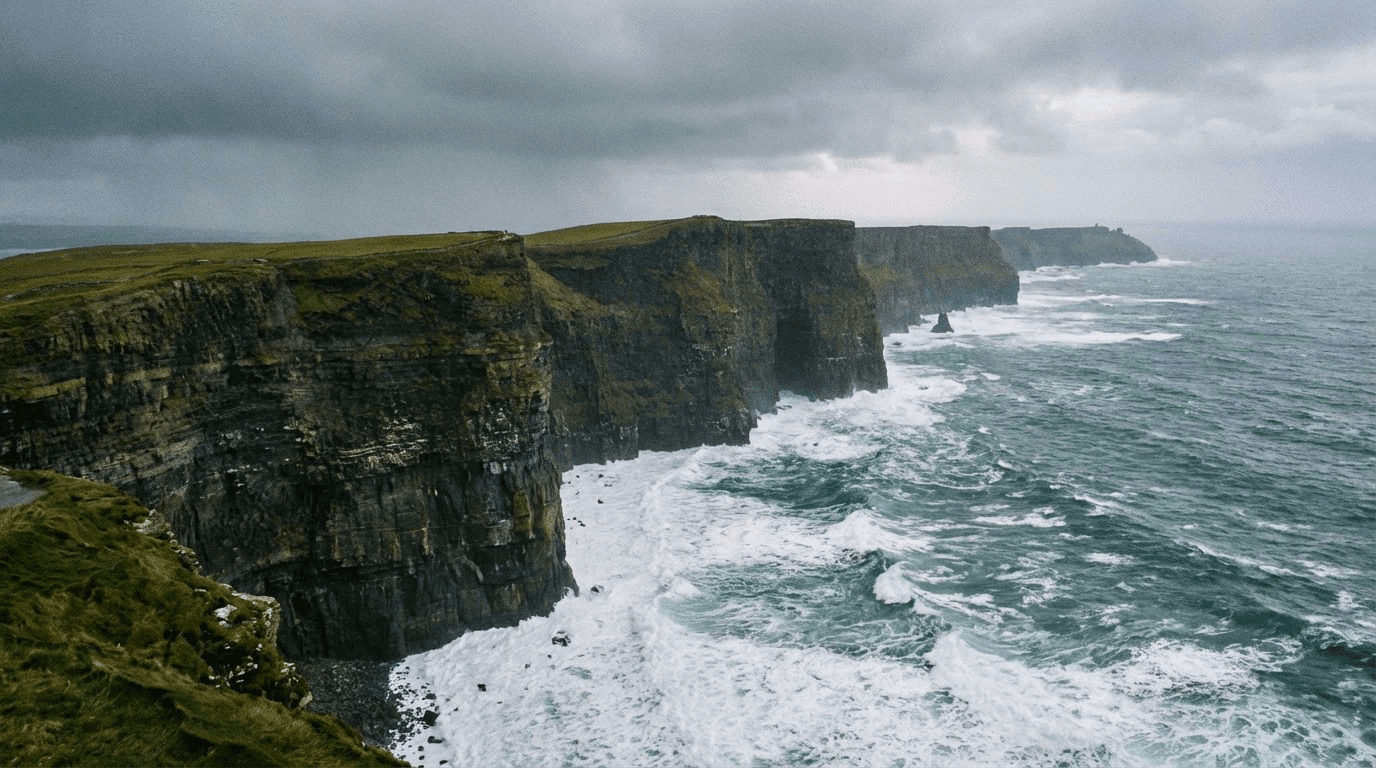
What the film didn't show—and what visitors need to understand—is that this cave is not accessible to casual tourists. There's no path down to it from the cliff top. No staircase. No viewing platform. The only way to reach the actual filming location is by boat, and even then, conditions must be perfect.
The production had the resources to wait for ideal weather, to helicopter equipment in, to manage the complex logistics of filming at the base of Ireland's most famous cliffs. Tourists don't have those advantages.
The Main Visitor Experience vs. The Film Location
The Cliffs of Moher Visitor Centre sits on the highest point of the cliffs, offering dramatic views south toward Hag's Head and north toward Doolin. On clear days, you can see the Aran Islands. The Atlantic appears endless.
This is spectacular. It's also not where the Harry Potter scenes were filmed.
The main viewing areas face southwest. The film location faces northwest, toward the Atlantic proper. The cave sits several kilometres north of the visitor centre, in a section of cliff that receives far fewer visitors because there's no infrastructure—no car park, no paths, no safety barriers.
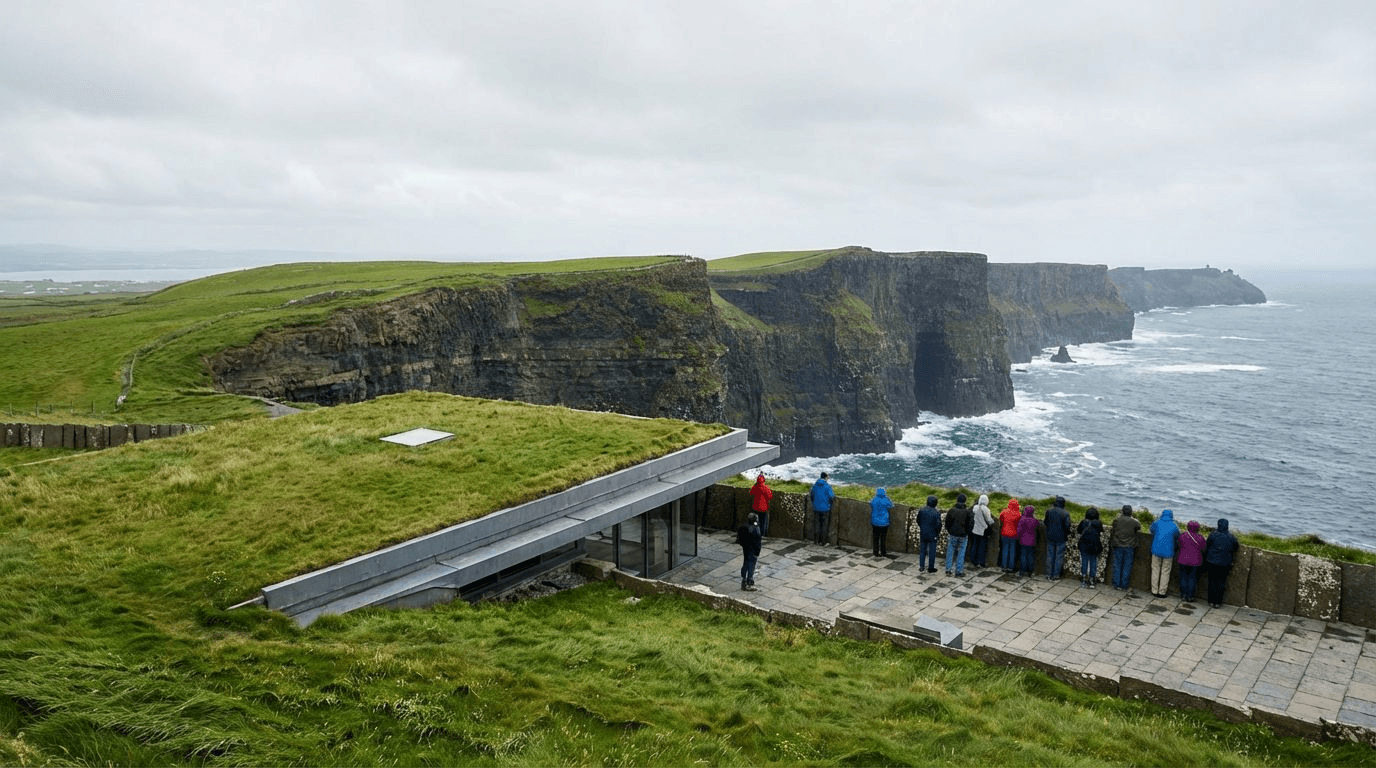
What visitors can see are the cliffs themselves—the same geological formations that created the dramatic backdrop for the film. The layered shale and sandstone, the seabird colonies, the sheer verticality that made the location so compelling for the production.
For film fans, the main value is understanding the scale. The Cliffs of Moher aren't a green-screen creation. They're real, they're massive, and they genuinely feel like the edge of something significant. Standing at the viewing platform, looking down at waves that seem impossibly far below, you understand why the filmmakers chose this location.
The Boat Tour Alternative

Several operators in Doolin and Liscannor offer boat tours that pass the base of the cliffs. These don't enter the actual Harry Potter cave—the entrance is too dangerous for regular tourist traffic—but they provide a perspective impossible from the cliff top.
From the water, the scale becomes visceral. The cliffs rise 200 metres straight up. The rock layers are visible in cross-section—340 million years of geological history exposed by Atlantic erosion. Seabirds—guillemots, razorbills, puffins in season—nest on ledges inaccessible from above.
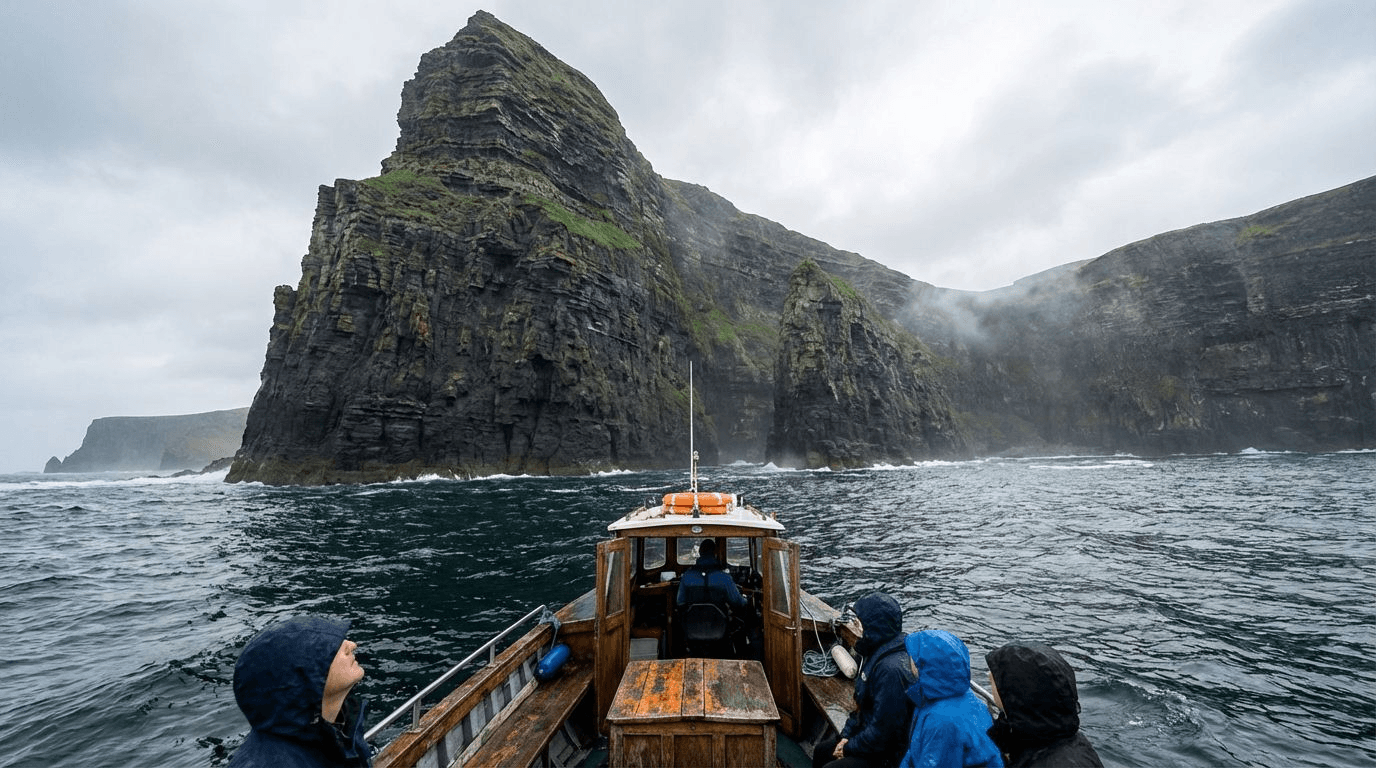
The boat tours run from Doolin Pier, weather permitting. The crossing takes 45-60 minutes, depending on conditions. The Atlantic here is often rough—this is open ocean, not a sheltered bay. Operators cancel when swells exceed safe levels, which happens frequently in winter and sporadically year-round.
For the true Harry Potter location—the specific cave where Dumbledore and Harry landed—the only option is private charter with a skipper who knows the local geography and is willing to risk the approach. This is expensive (€300-500 for a small boat), weather-dependent, and genuinely hazardous. The cave entrance is narrow, the tides are unpredictable, and the Atlantic doesn't accommodate mistakes.
The Private Driver Advantage
Here's where the logistics get interesting. The Cliffs of Moher sit in County Clare, roughly midway between several other major film locations. From here, you're:
- 40 minutes from The Banshees of Inisherin locations on Inis Mór (via ferry from Doolin)
- 90 minutes from The Quiet Man locations in Cong
- 2 hours from Star Wars locations in Kerry (via the Tarbert ferry)
This geography makes the Cliffs of Moher a natural hub for a cinematic road trip. But Clare's roads are narrow, winding, and frequently congested with tour buses in summer. The R478 along the coast is particularly challenging—single lanes in places, agricultural traffic, cyclists, and the constant distraction of genuinely spectacular views.
A private driver solves multiple problems simultaneously. They handle the narrow roads while you watch the scenery. They know which viewpoints offer the best angles without the crowds. They understand the tide tables that determine whether boat tours run. They can adjust the itinerary if fog closes the cliffs (common) or if the Atlantic is too rough for water approaches.
More practically, they solve the parking nightmare. The Cliffs of Moher Visitor Centre car park holds perhaps 300 vehicles. On summer days, it fills by 11am. Overflow parking exists but requires shuttle buses. A driver can drop you, find alternative parking, or adjust timing to avoid peak congestion entirely.
What to Expect at the Cliffs
From the cliff top:
- Entry: €12 per adult (includes visitor centre and parking)
- Time needed: 2-3 hours for full experience

- Best weather: Clear mornings, when views extend to the Aran Islands and beyond
- Worst weather: Fog (frequent), high winds (common), rain (always possible)
The visitor centre is genuinely well-designed—underground architecture that doesn't compete with the landscape. Exhibits explain the geology, the seabirds, the history. But most visitors come for the views, and the views depend entirely on weather.
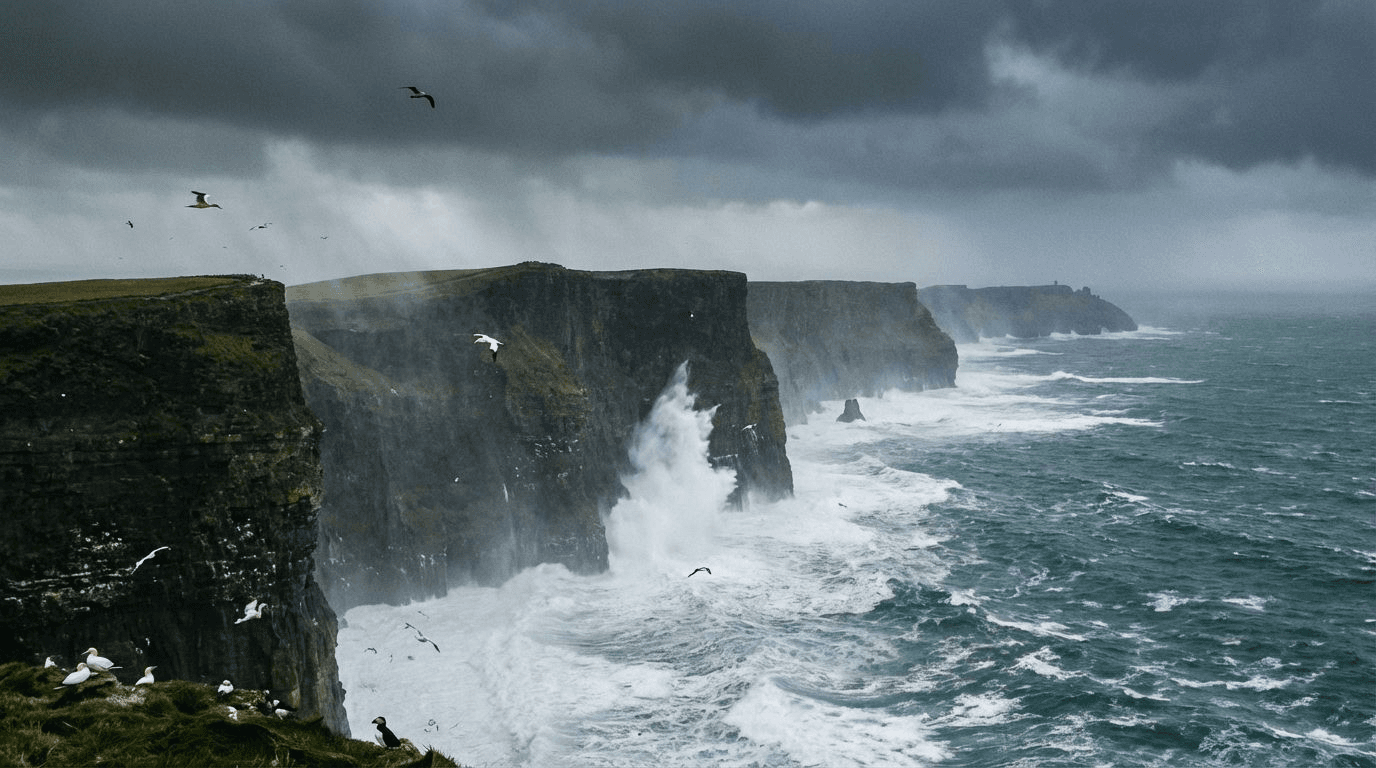
The cliffs face southwest, meaning afternoon light illuminates the rock face. Morning visits mean you're looking into the sun, which can be challenging for photography but creates dramatic atmospheric effects when mist rises from the water.
From the water (boat tour):
- Cost: €20-35 per person
- Duration: 45-60 minutes
- Departure: Doolin Pier (parking limited, arrive early)
- Conditions: Weather-dependent; cancellations common
The boat perspective is different—looking up rather than down, understanding the vertical scale, seeing seabirds at eye level. But it's not comfortable. The Atlantic swell means constant motion. If you're prone to seasickness, take medication or skip this option.
Combining with Other Locations
The Cliffs of Moher sit at the heart of Ireland's "film belt"—a concentration of major production locations within easy driving distance. The Banshees of Inisherin connection is particularly strong: the Aran Islands are visible from the cliffs on clear days, and the Doolin ferry to Inis Mór departs from the same harbour as the cliff boat tours.
Star Wars fans heading to Skellig Michael can use the Tarbert Ferry (Killimer to Tarbert) to cross the Shannon Estuary, cutting significant driving time. A driver handles this routing seamlessly, adjusting for ferry schedules and tides.
The Game of Thrones locations in Northern Ireland are further—3-4 hours driving—but manageable as part of a multi-day cinematic tour. The logical route runs: Galway/Cliffs → Cong (Quiet Man) → Belfast (GoT) → Donegal (Star Wars Malin Head) → Kerry (Star Wars Skellig Michael).
Safety and Reality
The Cliffs of Moher have no safety barriers for most of their length. The official viewing platform has fences, but the cliff path extends for kilometres in either direction—raw edge, unprotected. Every year, people fall. Some die.

The signs warning of danger are not exaggerating. The ground near the edge is often undercut by erosion. The wind can gust unpredictably. The desire for the perfect photograph leads people to take risks that seem reasonable until they're not.
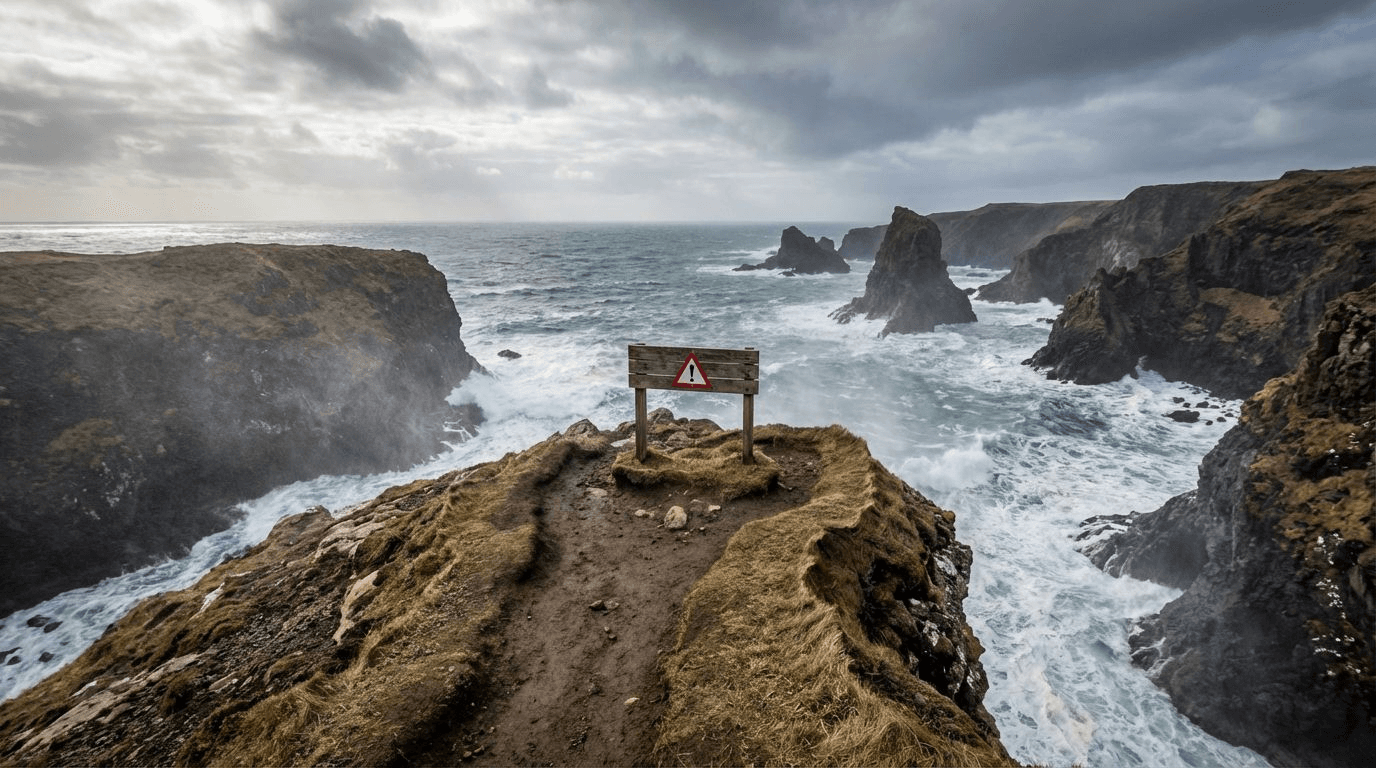
This is part of the location's power—the sense that nature here is genuinely indifferent to human concerns. The film captured that. Dumbledore's death in the cave, the dark water, the isolation—all of it resonates because the location itself carries that emotional weight.
But visitors need to respect it. Stay back from the edge. Follow the marked paths. Don't be the person who becomes a statistic for the sake of an Instagram photo.
When to Visit
Peak season (June-August): Longest days, warmest weather, maximum crowds. The car park fills by 11am. Boat tours sell out. Book everything ahead.
Shoulder season (April-May, September-October): Ideal balance. Seabirds are nesting (puffins visible April-July). Daylight still extends to evening. Crowds manageable. Weather unpredictable but usually tolerable.
Winter (November-March): Storm watching is spectacular—waves breaking over the cliff tops, genuine Atlantic violence. But facilities reduce hours, boat tours don't run, and weather can close the roads. Only for experienced visitors.
For Harry Potter fans specifically, September offers the best combination of manageable crowds, active seabird colonies, and atmospheric light. The film's autumnal palette—dark water, grey skies, muted colours—matches this season perfectly.
For Cinematic Ireland: The Ultimate Guide to Film & TV Locations — the master hub
Final Thoughts
The Cliffs of Moher work as a Harry Potter location because they don't need CGI enhancement. The verticality, the isolation, the sense of standing at the edge of something vast and indifferent—all of this is real. The filmmakers recognised that authenticity and built their scene around it.
For visitors, the cliffs offer multiple experiences. The standard tourist view from the visitor centre. The boat perspective from below. The intrepid (and dangerous) approach to the actual filming location by private charter. Each provides different understanding of why this place mattered to the film.
But the fundamental truth remains: the cave where Dumbledore met his fate is not accessible to casual tourism. You can see the cliffs. You can appreciate the landscape. You can understand why the filmmakers chose this location. But the specific place—the cave entrance, the island, the dark water—is reserved for those with resources, local knowledge, and acceptable risk tolerance.
Perhaps that's fitting. The scene it appears in is about sacrifice, about journeying to dangerous places to face dark truths. The inaccessibility mirrors the film's themes.
What visitors can access is still extraordinary—one of Europe's most dramatic coastlines, visible to anyone willing to make the journey. The Harry Potter connection is a bonus, a lens through which to view something already worth seeing.
Table of Contents
Share this post
More from the Blog

Cork to Blarney Castle Day Trip: The Stone, the Gardens and What Else to See
Plan a Cork to Blarney Castle day trip. Kiss the stone, explore the Poison Garden, and add Cork city, Fota or Kinsale for a full day out.

Cork to Cobh Day Trip: Titanic, Colourful Houses and Harbour History
Plan a Cork to Cobh day trip by train, car or private driver. Explore Titanic history, St Colman's Cathedral, Spike Island and the best harbour views.

Cork to Killarney Day Trip: Lakes, Mountains and Muckross in One Day
A Cork to Killarney day trip is a longer escape into Kerry. Here's how to plan the drive, what to see in Killarney National Park, and why a private driver helps.