
Star Wars in Ireland: How to Visit Skellig Michael & Malin Head
Ireland's rugged coastline has stood in for alien worlds, ancient Jedi temples, and distant galaxies. When Lucasfilm needed a location that felt truly otherworldly for Ahch-To—the hidden island where Luke Skywalker exiled himself—they didn't build a set. They came to Kerry.
Skellig Michael, a jagged rock thrusting 218 metres out of the Atlantic, became instantly iconic in The Force Awakens and The Last Jedi. Those stone steps winding up to the beehive huts? Real. Those vertiginous cliffs? No CGI. And the journey to reach them? About as close to a space expedition as you'll get on Earth.
But Skellig Michael isn't Ireland's only Star Wars claim. Travel 500 kilometres north to Malin Head in County Donegal, and you'll find where the Millennium Falcon touched down, where Rey first ignited Luke's lightsaber, and where the Resistance staged their desperate escape.
Both locations present the same problem for DIY travellers: they're remote, weather-dependent, and genuinely difficult to reach. This isn't a case of "hire a car and follow the signs." This is the kind of trip where local knowledge separates those who see the locations from those who sit in car parks watching the rain.
What Skellig Michael Actually Is (And Why It's So Hard to Reach)
Skellig Michael isn't a tourist attraction in the conventional sense. It's a UNESCO World Heritage Site, a former monastic settlement dating to the 6th century, and a protected seabird sanctuary. The Irish government limits visitor numbers to 180 people per day. One hundred and eighty. For context, that's fewer people than fit in a single cinema screen.
The island lies 12 kilometres off the coast of Portmagee, a tiny fishing village on the Ring of Kerry. No ferries run there. No regular boat service exists. The only way across is via licensed operators who run from mid-May to early October, weather permitting. And "weather permitting" is doing heavy lifting here—the Atlantic doesn't care about your holiday schedule.
Boat operators depart from three main locations: Portmagee (closest, 45 minutes), Ballinskelligs (90 minutes), and Caherdaniel (75 minutes). Crossing times vary wildly depending on sea conditions. On a calm day, it's a scenic cruise. When the swell picks up, it's a proper ocean passage that has turned many a strong stomach.
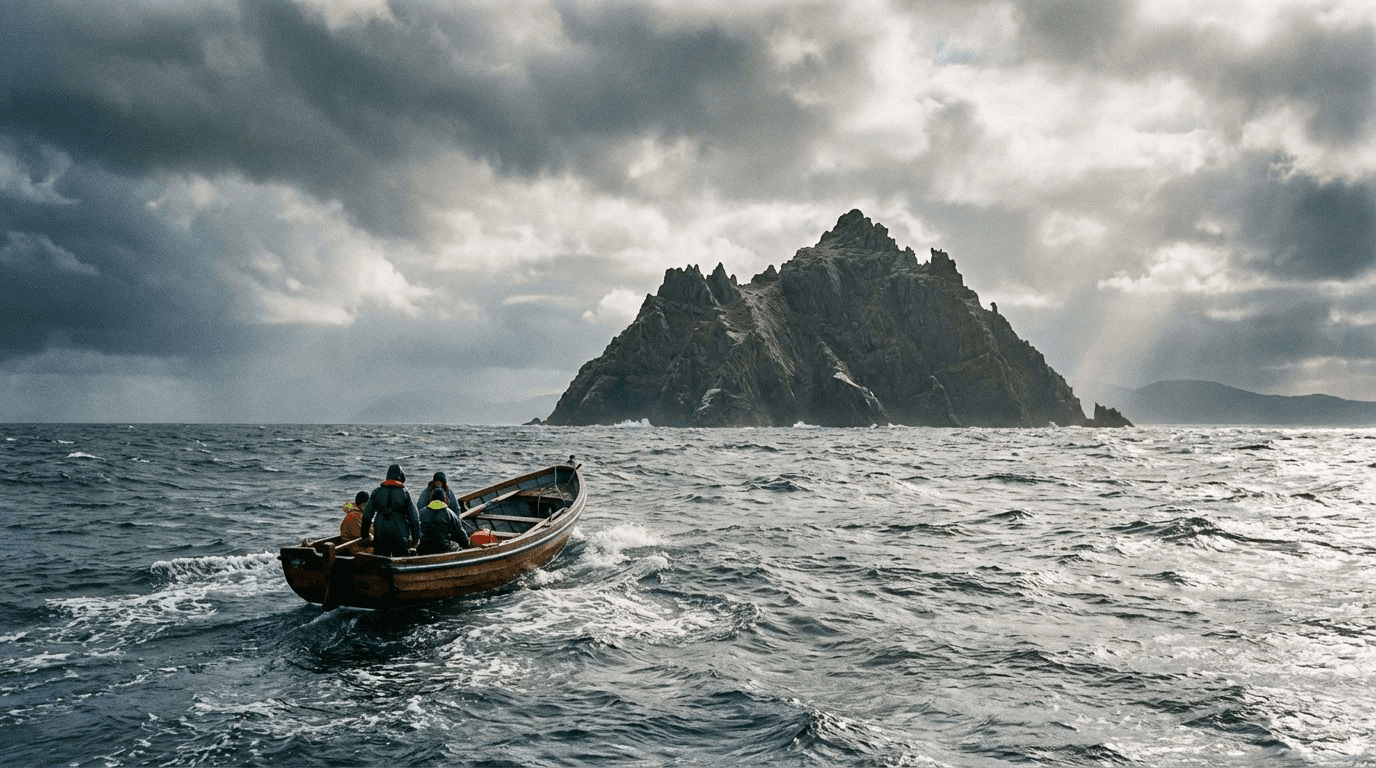
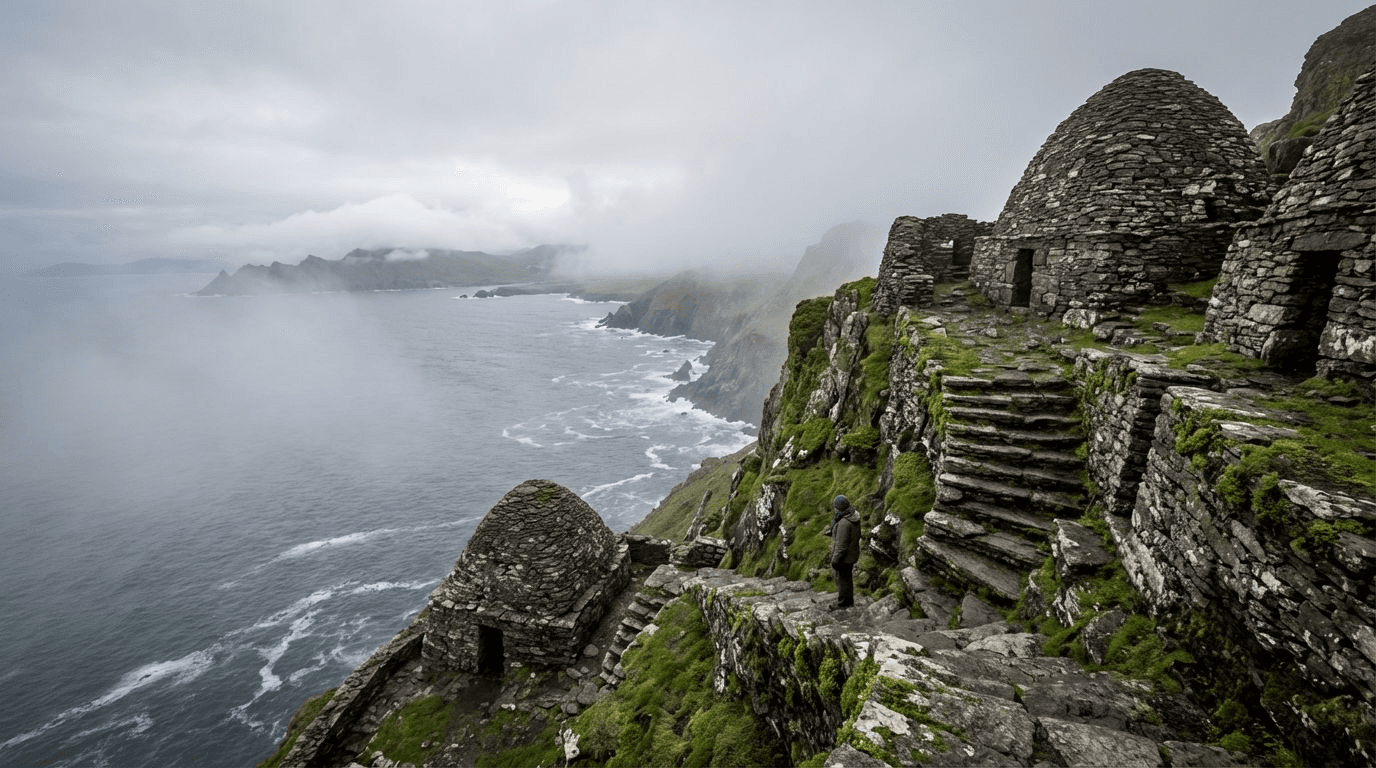
The landing itself is the easy part. Once on the island, you face 600-plus stone steps carved by monks 1,500 years ago. There are no handrails. No safety barriers. No gift shop halfway up. Just ancient steps, precipitous drops, and the knowledge that rescue helicopters have been called here more than once.
This isn't fear-mongering—it's reality. The Office of Public Works closes the island entirely when conditions deteriorate. In 2023, nearly 30% of booked crossings were cancelled due to weather. You can book months ahead and still see nothing but harbour walls.
Malin Head: Ireland's Other Star Wars Location
While Skellig Michael gets the headlines, Malin Head in County Donegal played a crucial role in The Last Jedi. This is where the Millennium Falcon landed. Where Rey trained with Luke. Where those sweeping coastal shots of Ahch-To were filmed.
Malin Head is Ireland's northernmost point, a windswept peninsula where the Atlantic crashes against 50-metre cliffs. The landscape here feels prehistoric—layered rock formations, sea stacks, and a lighthouse that has warned ships since 1817.
The specific filming locations are scattered across the headland. Ballyhillin Beach became the backdrop for the Falcon's landing. Banba's Crown, the actual northern tip, hosted scenes of Rey following Luke up cliff paths. The military watchtower built during WWII became a Resistance lookout.
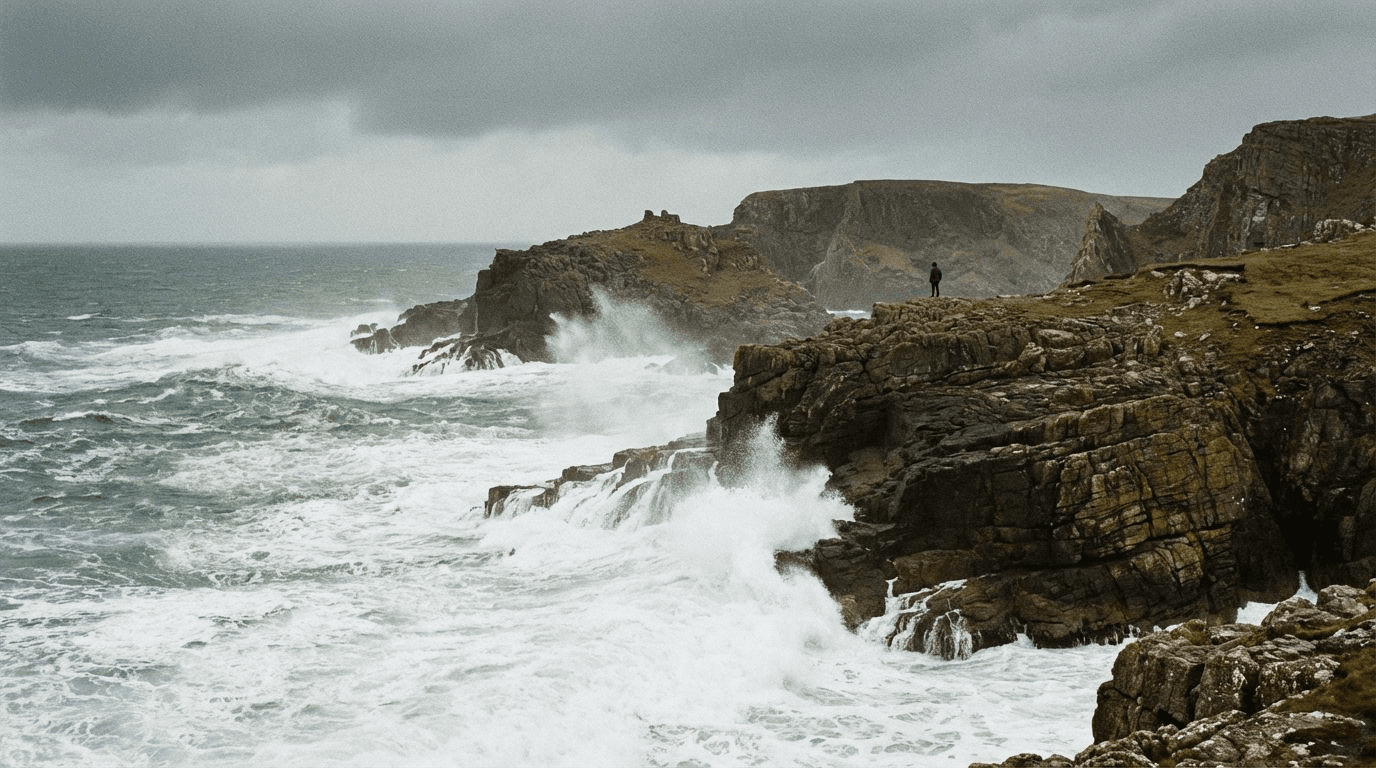

Getting to Malin Head requires driving some of Ireland's narrowest roads. From Letterkenny, it's a 90-minute journey on single-track lanes with passing places every few hundred metres. Sheep wander freely. Tourist coaches don't come here—the roads won't allow it.
The nearest town, Malin, has a population under 200. There's no train station, limited bus service, and precisely zero taxis waiting at the headland. If you drive yourself and the weather closes in—as it does frequently—you're either waiting it out or navigating those narrow lanes in conditions that range from challenging to dangerous.
The Boat Problem: Why Skellig Michael Bookings Fail
Most online guides will tell you to "book a boat tour in advance." This is technically true but practically useless. Here's what they don't explain:
Licensed operators release tickets in batches, often selling out within hours of release. The most popular operators—those with larger, more stable boats—are booked solid months ahead. Last-minute availability rarely exists during peak season (July-August).
More critically, your ticket guarantees nothing. If the harbour master closes the crossing due to conditions, you don't go. No refunds from the boat operator—their terms are clear. Weather cancellations are your problem, not theirs.
Some operators offer "standby" lists for cancelled spots. This means hanging around Portmagee harbour from dawn, hoping someone else can't make it. It's possible. It's also a poor use of a holiday day when you could be exploring the Ring of Kerry.
Then there's the landing itself. Even if your boat reaches the island, skippers reserve the right to refuse disembarkation if conditions at the landing stage are too rough. You might pay €100 for a crossing, endure a choppy 90-minute boat ride, and still not set foot on the island.
Why a Private Driver Changes Everything
This is where most travel blogs abandon you. They'll describe how magical Skellig Michael is, show you photos of puffins and ancient stone huts, then leave you to figure out the logistics yourself.
Here's the reality: the best way to see both Star Wars locations isn't booking boats and hire cars separately. It's hiring someone who knows the skippers, monitors the weather patterns, and can pivot your itinerary when the Atlantic decides to misbehave.
A private driver based in Kerry doesn't just transport you to Portmagee. They know which boat operators have the best safety records. They know which skippers will push for a landing when conditions are marginal, and which ones cancel at the first grey cloud. They know the local marine forecast better than any app.
More practically, they solve the accommodation problem. Portmagee has maybe 50 beds in total. A driver can collect you from Killarney, Tralee, or even Cork, eliminating the need to stay in the limited local accommodation. If your crossing cancels, they can immediately pivot to Plan B—maybe the Skellig Experience Centre on Valentia Island, maybe another Ring of Kerry highlight—without you sitting in a car park wondering what to do.
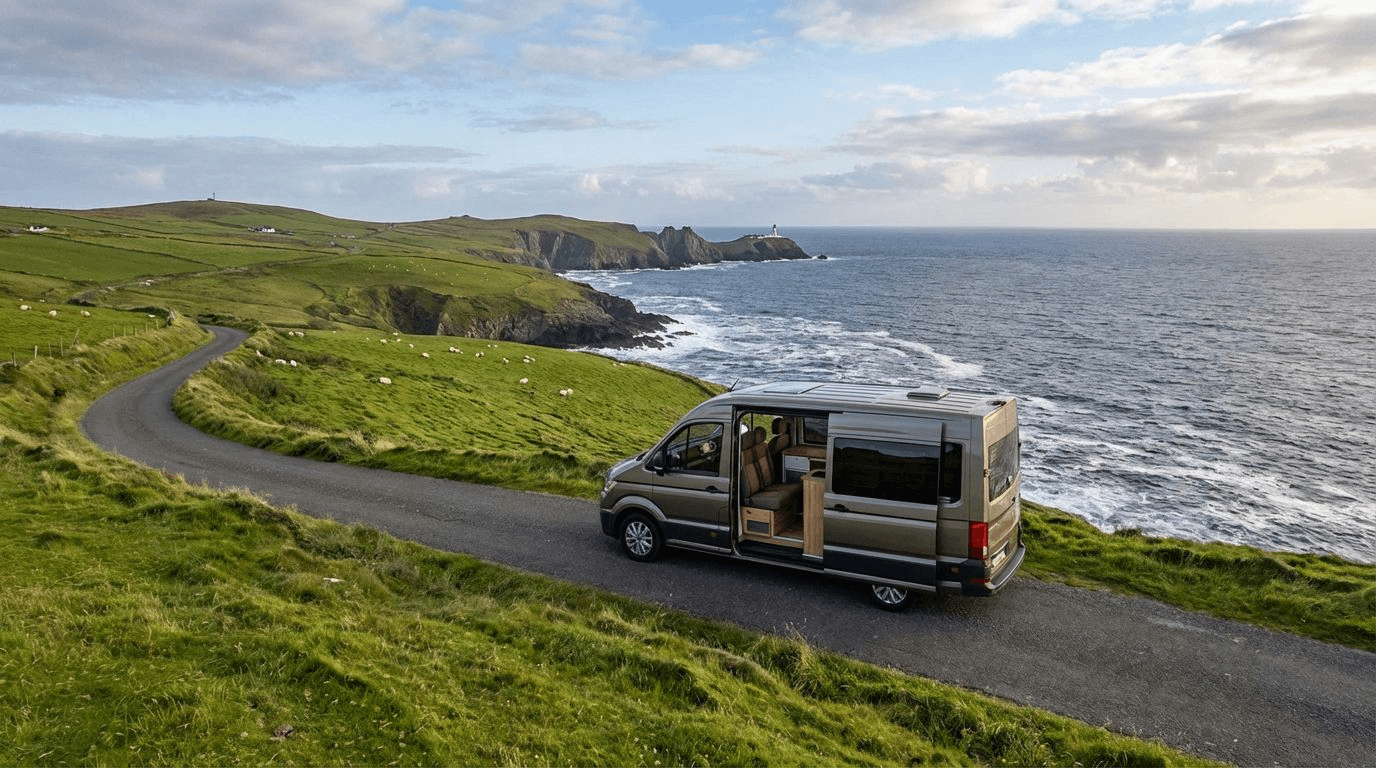
For Malin Head, the advantage is even clearer. The drive from Kerry takes 4-5 hours through some of Ireland's most spectacular but demanding roads. Doing this as a DIY trip means either a brutally long day (10+ hours driving) or an overnight stay in Donegal, adding complexity and cost.
A private driver handles the navigation, the narrow lanes, the sheep on the road, and the weather watching. They know the viewpoints at Malin Head that match the film shots—angles you won't find on Google Maps. They know how long to wait for light to break through cloud, when the tide positions rocks correctly, and which local pubs serve decent food after a windswept afternoon.
What to Expect at Each Location
Skellig Michael:
- Boat crossing: 45-90 minutes each way depending on departure point
- Time on island: 2.5 hours maximum (strictly enforced)
- Physical demand: High. The 600+ steps are steep, uneven, and exposed
- What to bring: Waterproofs (even on sunny days), sturdy boots, packed lunch, sea sickness tablets
- What not to bring: Large bags (they won't fit in boat lockers), drones (illegal), selfie sticks (banned on narrow paths)
The monastic settlement itself is remarkably small—six beehive huts, two oratories, and a cemetery. But the location is everything. Standing 160 metres above the Atlantic, watching gannets dive and puffins wheel past, you understand why monks chose this place and why filmmakers did too.
Malin Head:
- Walking distance: 2-3 kilometres of coastal path
- Physical demand: Moderate. Paths are uneven and exposed to wind
- What to bring: Windproof jacket (essential), layers, camera with zoom lens for seabirds
- Best time: Late afternoon for golden light on the cliffs
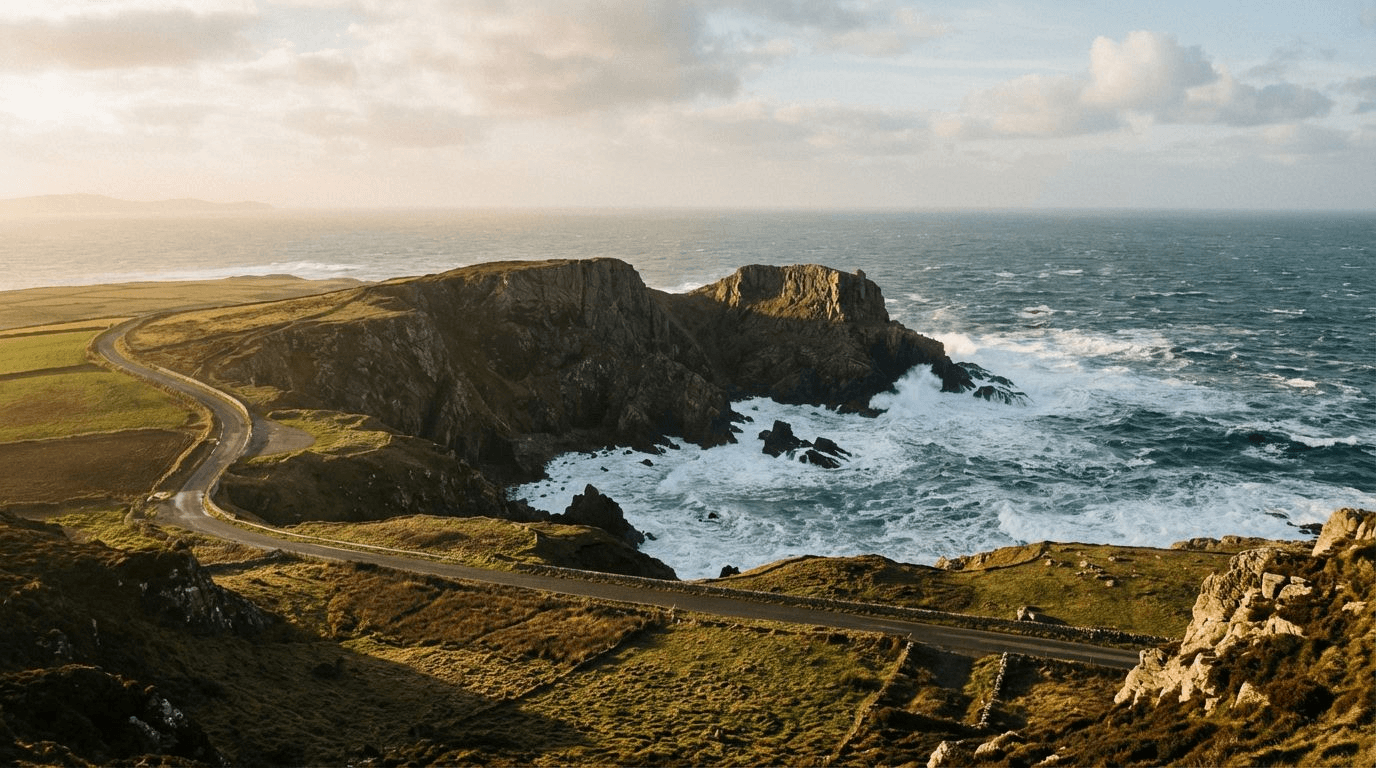
Unlike Skellig Michael, Malin Head has no time limits or entry restrictions. You can wander the headland for hours, finding the exact rocks where Rey and Luke stood, matching film stills to real geography. The WWII watchtower is open to explore, offering shelter from Atlantic winds and genuinely spectacular views.
When to Visit
Skellig Michael: Mid-May to early October only. Outside this window, no boats run and landing is prohibited (the island is a protected seabird sanctuary during breeding season).
Within season, May and September offer the best odds—fewer crowds, more stable weather than peak summer, and the crossing is less likely to sell out. June through August is peak season: highest demand, highest cancellation risk, but also the longest days and warmest weather when it cooperates.
Malin Head: Accessible year-round. Winter visits are dramatic—storm watching here rivals anything in Ireland—but daylight hours are short (under 8 hours in December). Summer offers the best photography light, with sunsets after 10pm in June.
For dedicated Star Wars fans wanting both locations, September is optimal. The seabirds have largely departed Skellig Michael (making the landing smell considerably more pleasant), but boats still run. Donegal's heather is in bloom, and the Atlantic retains enough summer warmth to be bearable.
Other film locations in Ireland:
Star Wars shares the island with other major productions. If you are building a cinematic tour, consider adding Game of Thrones Territory: A Guide to the Dark Hedges & Winterfell — the Causeway Coast locations are roughly midway between Malin Head and Belfast, making them a natural addition to a northern loop.
Practical Planning
Accommodation: If you're determined to self-drive, book Portmagee accommodation the moment you secure boat tickets—sometimes months ahead. The Moorings and Portmagee Hostel are the main options. Valentia Island, connected by bridge, offers more choice but adds 30 minutes to your morning departure.
Alternative if Skellig cancels: The Skellig Experience Centre on Valentia Island provides context, history, and excellent photography without the boat crossing. It's genuinely worth visiting even if you do reach the island—it adds layers of understanding to what you're seeing.
Combining both locations: Doing Skellig Michael and Malin Head in one trip requires either two long days from a central base (Killarney or Galway) or an overnight relocation. The driving distance between them is approximately 5 hours on Ireland's narrowest roads. This is not a relaxing day's motoring.
For Cinematic Ireland: The Ultimate Guide to Film & TV Locations — the master hub
Final Thoughts
Seeing where Star Wars was filmed in Ireland isn't like visiting a theme park. There are no gift shops, no costumed characters, no "Luke Skywalker stood here" plaques. Just raw Atlantic coastline, 1,500-year-old stone huts, and the weather that made those films look so authentically rugged.
That authenticity is the point. The reason those locations look so compelling on screen is that they're real, difficult, and genuinely awe-inspiring. The journey to reach them—whether by small boat across open ocean or by winding road through empty Donegal—becomes part of the experience.
But let's be clear about the logistics. Doing both locations properly, in comfort, with contingency plans for Irish weather, requires either considerable travel experience or local expertise. The alternative—sitting in a Portmagee café watching rain streak the windows while your boat sits idle in the harbour—isn't what you travelled to Ireland for.
Table of Contents
Share this post
More from the Blog

Cork to Blarney Castle Day Trip: The Stone, the Gardens and What Else to See
Plan a Cork to Blarney Castle day trip. Kiss the stone, explore the Poison Garden, and add Cork city, Fota or Kinsale for a full day out.

Cork to Cobh Day Trip: Titanic, Colourful Houses and Harbour History
Plan a Cork to Cobh day trip by train, car or private driver. Explore Titanic history, St Colman's Cathedral, Spike Island and the best harbour views.

Cork to Killarney Day Trip: Lakes, Mountains and Muckross in One Day
A Cork to Killarney day trip is a longer escape into Kerry. Here's how to plan the drive, what to see in Killarney National Park, and why a private driver helps.