
Braveheart in Meath: Why Trim Castle is the Real 'York'
Every year, thousands of visitors stand on the walls of Trim Castle and feel slightly confused. The signage says this is where Braveheart was filmed. But Braveheart is about Scotland, right? William Wallace, Stirling Bridge, Scottish independence? What's an Irish castle doing as the star of Scotland's most famous historical epic?
The answer is simple: Trim Castle isn't Scottish. It's Irish. Always has been. And it wasn't standing in for anywhere else—it played itself, or rather, it played "York," the English city where the film's climactic scenes occur. Mel Gibson's production team transformed this Norman fortress into medieval England, proving that Ireland's historical architecture could convincingly represent anywhere in the British Isles.
For visitors, this creates a fascinating dual experience. You're standing in Ireland's largest Anglo-Norman castle, a structure that defined medieval power in the region for 400 years. But you're also standing where cinematic history was made—where armies clashed, where sieges were dramatised, where Hollywood recreated 13th-century warfare with 20th-century technology.
Why Trim Castle Became "York"
Braveheart needed a location for the siege of York—a massive medieval assault that historically never actually happened (the real Wallace never got that far south). The production required intact castle walls, open spaces for battle scenes, and enough surrounding area to accommodate hundreds of extras with weapons and horses.
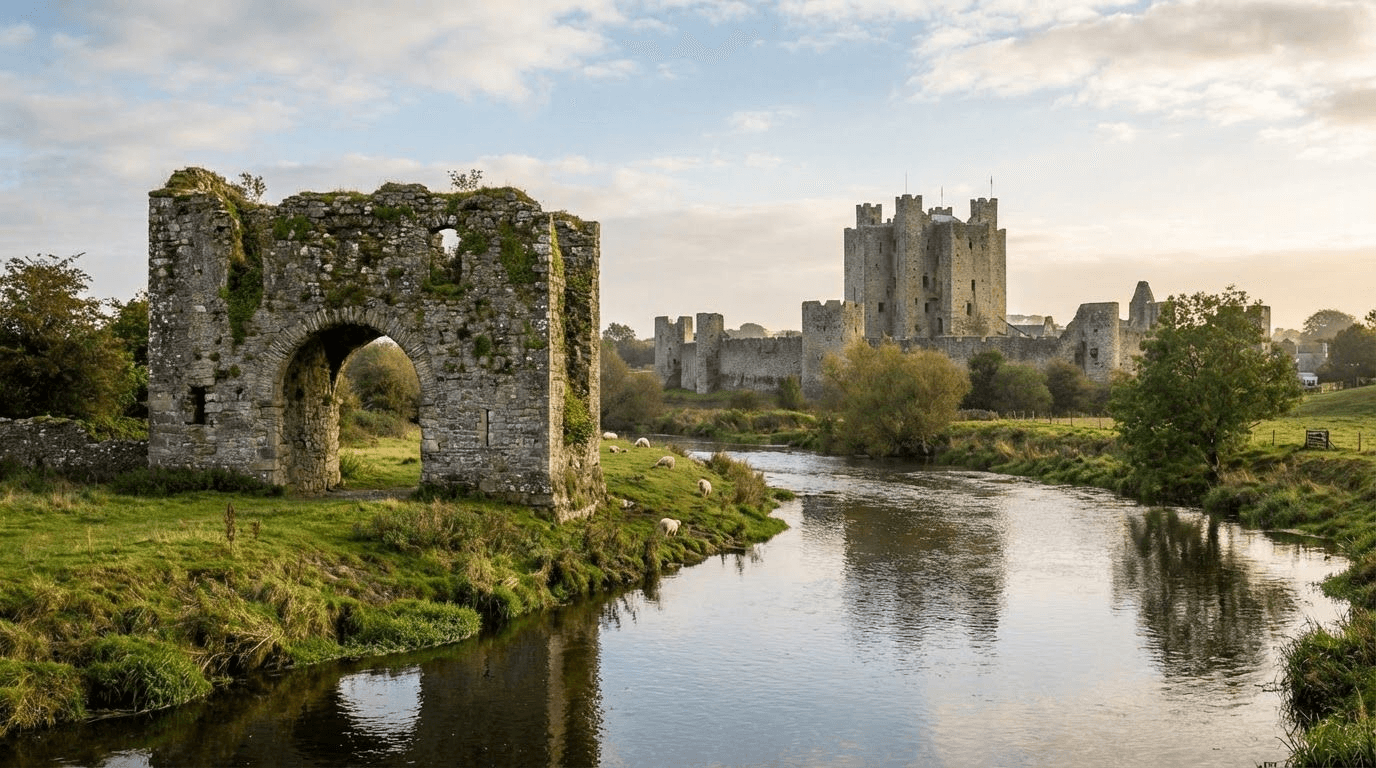
Trim Castle provided all of this. Built by Hugh de Lacy in the 1170s, the castle had undergone extensive conservation in the 1990s, making it both historically authentic and structurally safe for film crews. The curtain walls remained largely intact. The keep—Trim's massive twenty-sided tower—dominated the site just as York's walls would have dominated that city.
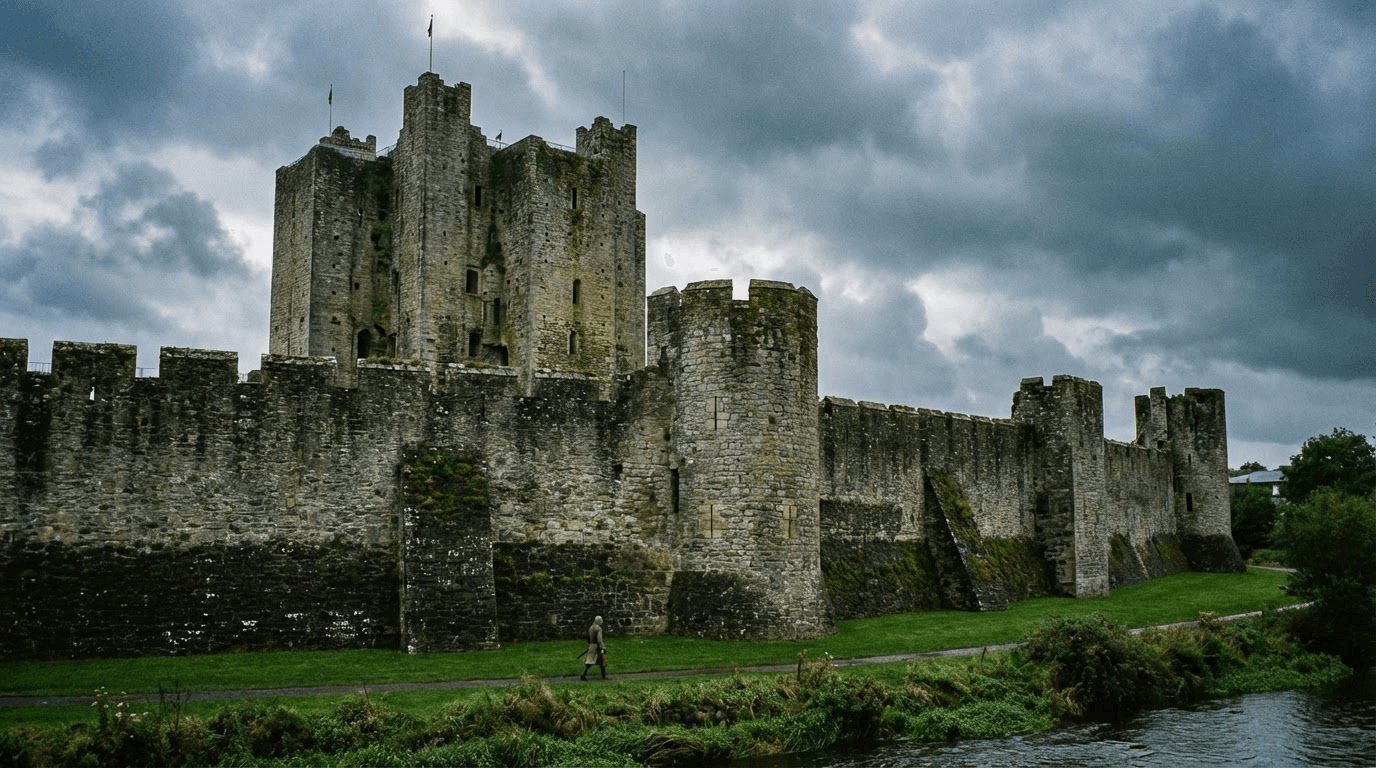
More practically, Ireland offered something Scotland couldn't in 1994: cooperation. The Irish government, through the Irish Film Board (now Screen Ireland), actively courted international productions with tax incentives, location support, and streamlined permitting. The Scottish film infrastructure wasn't as developed. Braveheart chose Ireland for the same reason many productions still do—access, support, and cost-effectiveness.
The transformation was extensive but temporary. Production designers added wooden structures, siege towers, and defensive works that made Trim look like a beleaguered English city. For six weeks in the summer of 1994, the castle became a film set. Then it reverted to being a heritage site, the Hollywood infrastructure packed onto trucks and shipped out.
What the Film Actually Showed
The Braveheart scenes at Trim fall into two categories: the siege itself and the aftermath. The siege sequence required wide shots showing the castle walls overwhelmed by Scottish forces, practical explosions, and hundreds of extras in period costume.
For visitors trying to match film locations to real geography, this is challenging. The wide shots used camera angles that don't correspond to any actual viewpoint—the magic of cinema compressing space, adding digital armies, and making Trim's modest size (by medieval standards) appear as a major English city.
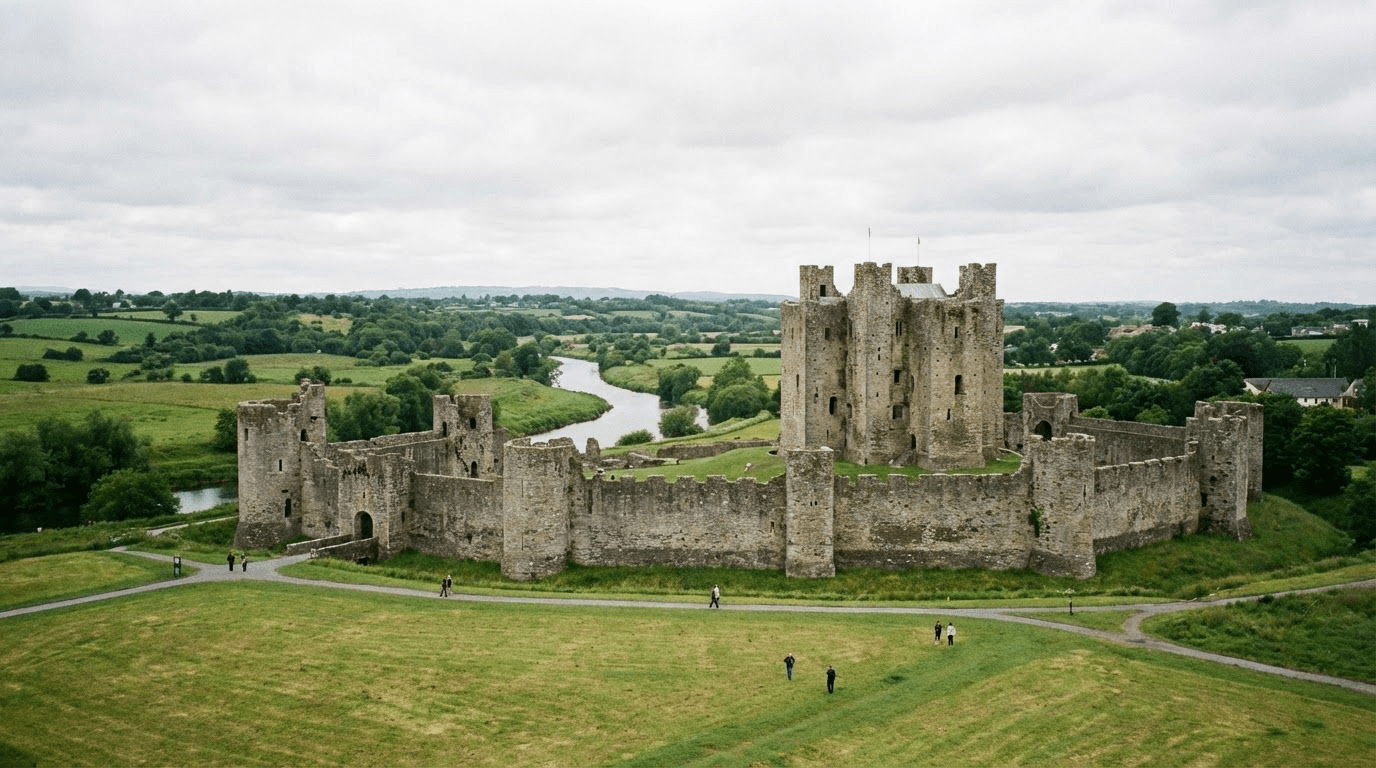
More recognisable are the wall-top scenes. Characters move along the castle's walkways, looking down on approaching forces. These locations are identifiable today—the same views, the same stonework, minus the wooden additions and the medieval armies.
The film's final York sequence, where Wallace is betrayed and captured, also used Trim exteriors. Again, the castle provided authentic medieval architecture that could represent English or Scottish locations interchangeably.
Visiting Trim Castle Today
The castle operates as a heritage site managed by the Office of Public Works. Unlike many Irish heritage locations, Trim requires guided access to the keep itself—visitors can't simply wander up to the tower unaccompanied.
Entry and access:
- Admission: €5 per adult (castle grounds), additional fee for keep tour

- Keep tours: Guided only, limited numbers, book ahead in summer
- Time needed: 2-3 hours for full experience
- Best weather: Dry days—the exposed walls offer no shelter
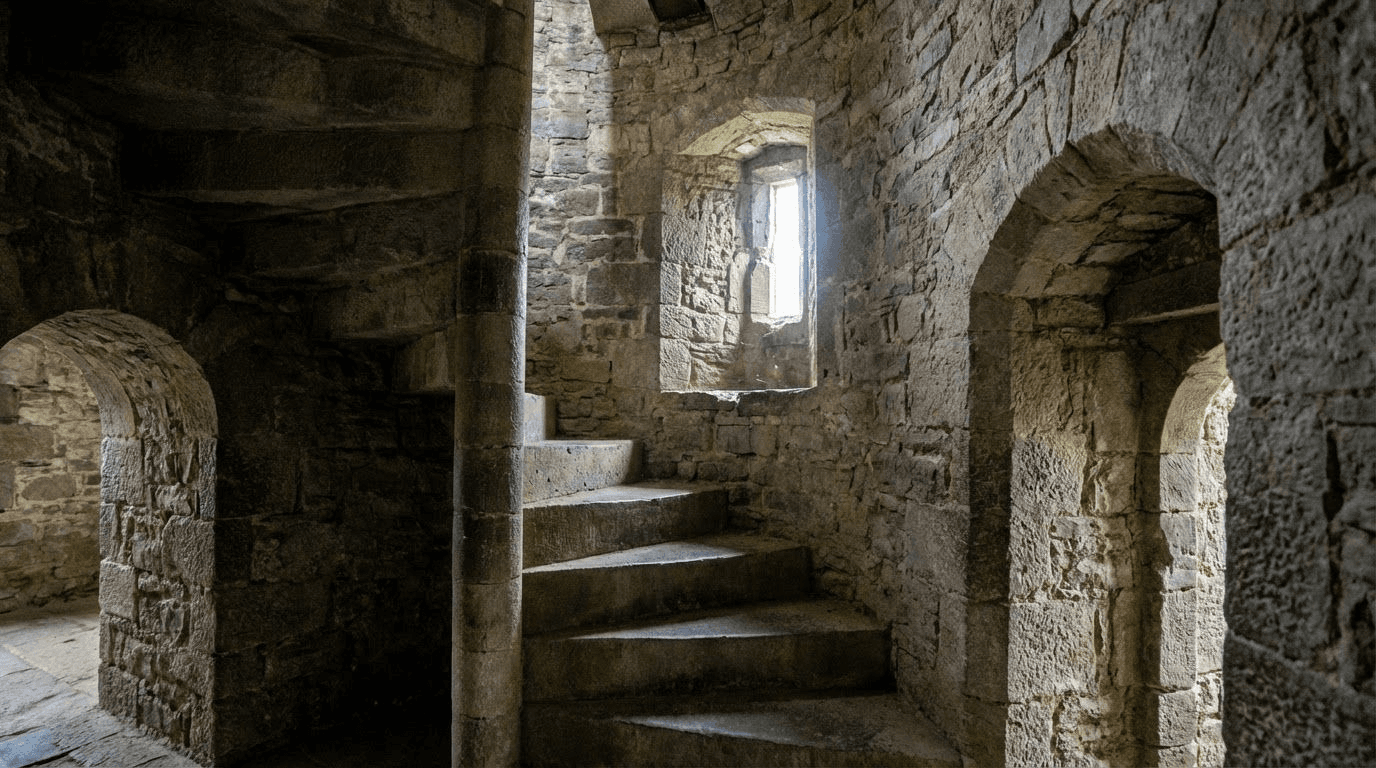
The keep tour is essential for Braveheart fans. This is where interior scenes were shot, where the tower's dramatic height becomes visceral. The climb is steep, the staircases narrow, and the views from the top encompass the entire Boyne Valley.
What visitors won't find: any permanent Braveheart exhibition. The castle doesn't capitalise on its cinematic fame. There's a small mention in the visitor centre, perhaps a poster, but no gift shop selling Wallace-themed merchandise, no costumed reenactors, no "stand here where Mel Gibson stood" markers.
This is either refreshing or disappointing, depending on your expectations. The castle presents itself as a medieval fortress first, a film location second. The Braveheart connection is acknowledged but not exploited.
The Boyne Valley Context
Trim sits in one of Ireland's most historically dense regions. Within a 20-kilometre radius, you find:
- The Hill of Tara: Ancient seat of Irish high kings, 15 minutes north
- Newgrange and Knowth: 5,000-year-old passage tombs, 30 minutes east
- The Battle of the Boyne site: 1690 battlefield, 25 minutes east
- Slane Castle: Historic estate and concert venue, 15 minutes south
This concentration makes Trim a logical base for exploring Ireland's ancient and medieval heritage. But it also complicates the logistics. Public transport connects Trim to Dublin (hourly buses, 90-minute journey) but doesn't serve the surrounding heritage sites effectively.
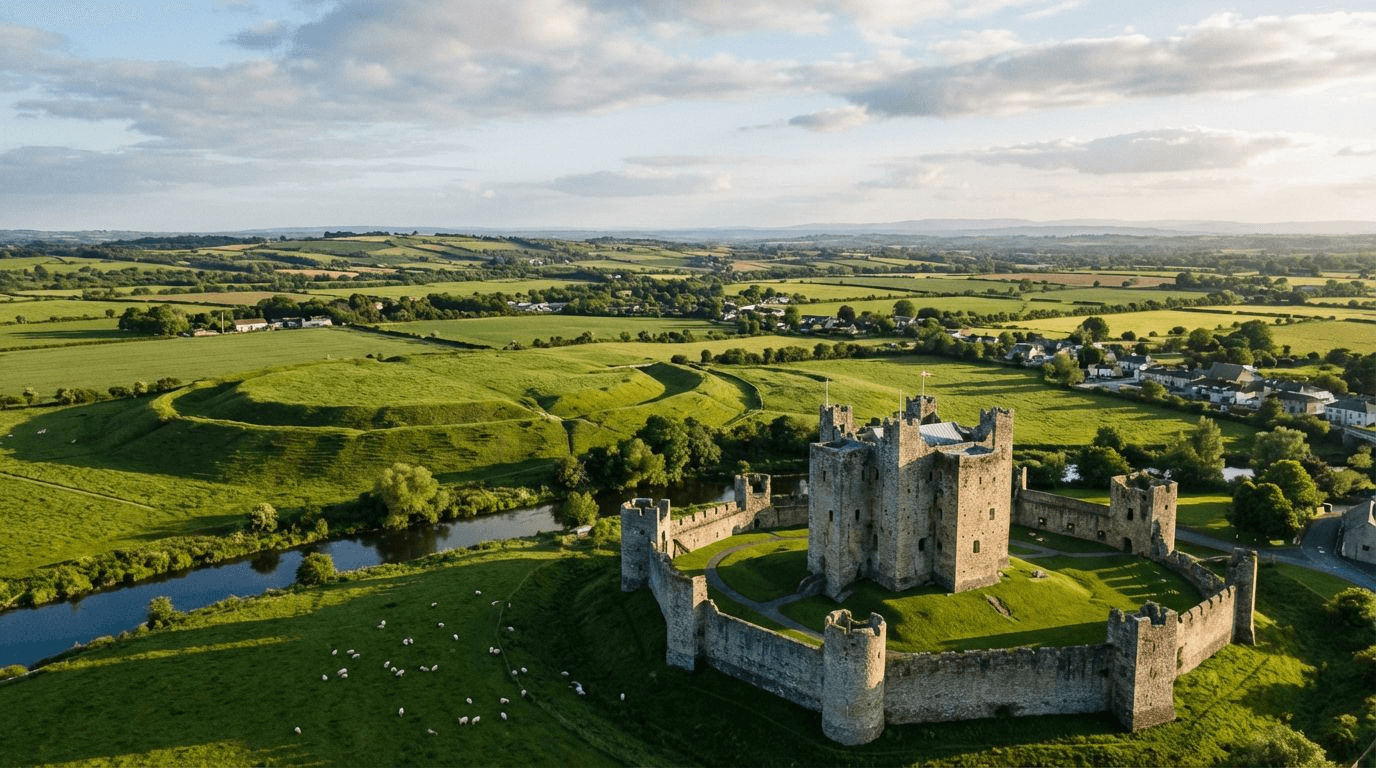
The Boyne Valley deserves more time than most visitors allocate. Each site—Tara, Newgrange, Trim, the Boyne battlefield—represents different eras of Irish history, different power structures, different stories. Seeing them properly requires either multiple day trips from Dublin or an overnight stay in the region.
The Private Driver Advantage
Here's where the logistics become clear. To see Trim Castle plus the surrounding Boyne Valley sites in a single day from Dublin requires:
- Early departure (before 8am)

- Trim Castle (2-3 hours)
- Newgrange (2 hours including transport time and tour)
- Hill of Tara (1 hour)
- Return to Dublin
That's an 8-10 hour day with precise timing. Miss the Newgrange tour slot (they're limited and book out) and the itinerary collapses. Rely on public transport and you're looking at bus schedules that don't connect conveniently, taxis from Trim that are expensive and scarce, or tours that only hit the highlights without depth.
A private driver solves this by controlling the variables. They handle the navigation while you look at the scenery. They know which Newgrange tour times have availability. They understand that Tara is best at sunset, Newgrange in morning light, Trim in afternoon when the keep's shadow falls dramatically across the courtyard.
More specifically for Braveheart fans: they can provide context that the castle itself doesn't. Where exactly did the siege scenes shoot? (Various wall sections, depending on lighting.) Where was the main gate? (The actual gate, but with constructed additions.) What's visible today versus what was added for the film? (Most wooden structures were removed; the stone remains.)
Star Wars in Ireland and Game of Thrones Territory both involve locations that are destinations in themselves—people travel specifically to see them. Trim Castle is different. It's worth visiting for its own medieval significance, but most visitors combine it with the broader Boyne Valley. A driver facilitates that combination without the logistical stress.
What to Expect at Trim
The Castle:
- Keep tour: 45 minutes, guided, includes the full height climb
- Wall walks: Self-guided, weather dependent (closed in high winds)
- Grounds: Extensive, including the "sheep gate" (where livestock entered, now a picturesque ruin)
The Town:
- Trim is small—perhaps 2,000 residents. It has restaurants, pubs, basic services
- The castle dominates the town physically and economically
- Parking is available but fills on summer weekends and school holidays
The Experience:

- History enthusiasts come for the Norman architecture, the de Lacy history, the medieval significance
- Film fans come for Braveheart, sometimes disappointed by the lack of movie memorabilia
- Most visitors are pleasantly surprised by the castle's scale and preservation
When to Visit
Peak season (June-August): Long days, dry weather (statistically), but the castle can be crowded. Book keep tours well ahead. The exposed walls are brutal in full sun—bring water and hats.
Shoulder season (April-May, September-October): Ideal balance. Reduced crowds, mild weather, the surrounding countryside at its greenest. September's harvest light is particularly photogenic.
Winter (November-March): The castle operates reduced hours. Keep tours may not run in bad weather (safety—those stairs are slippery when wet). But if you catch a clear winter day, the low sun creates dramatic shadows across the stonework that summer light can't match.
For dedicated Braveheart fans, the 30th anniversary in 2025 brought renewed interest. Special screenings, academic conferences, and increased visitor numbers marked the occasion. The castle's film connection will likely remain relevant as long as people watch the movie—which, given its enduring popularity, means decades more.
Beyond the Film: Why Trim Matters
Strip away the Bravehead association and Trim Castle remains significant. It's the largest Anglo-Norman castle in Ireland, built during the initial Norman invasion when Hugh de Lacy was establishing English control over the region. The twenty-sided keep is unique—no other Irish castle uses this design. The curtain walls demonstrate the evolution of medieval siege warfare, with additions and modifications across four centuries of occupation.
The castle also represents the complexity of Irish history. Built by Norman invaders, expanded by English lords, partially destroyed by Cromwellian forces in the 1650s, preserved by Victorian antiquarians, conserved by the modern Irish state. It contains multitudes.
Harry Potter & The Cliffs of Moher and The Quiet Man in Cong both use locations that existed before cinema and will exist after. Trim is the same—a medieval structure that happened to host a famous film, not a film set that happens to be old.
That distinction matters for how visitors approach the site. Come for Braveheart if you must, but stay for the medieval history. The film was a six-week interruption in an 800-year story. The castle's real significance predates and postdates Hollywood.
For Cinematic Ireland: The Ultimate Guide to Film & TV Locations — the master hub
Final Thoughts
Trim Castle's role in Braveheart is a footnote in both the castle's history and the film's production. But it's a revealing footnote. It shows how Ireland's historical architecture serves global cinema, how tax incentives and infrastructure support shape creative decisions, and how a castle in County Meath can briefly become medieval England.
For visitors, the Bravehead connection provides entry point. Many people standing on those walls first heard of Trim through the film. But what they find—authentic medieval architecture, genuine historical weight, the atmosphere of genuine antiquity—transcends the cinematic reference.
The siege of York, as depicted in Braveheart, never happened. But the castle where they filmed it did, does, and will. That persistence—stone outlasting script—is ultimately more impressive than any film.
Table of Contents
Share this post
More from the Blog

Cork to Blarney Castle Day Trip: The Stone, the Gardens and What Else to See
Plan a Cork to Blarney Castle day trip. Kiss the stone, explore the Poison Garden, and add Cork city, Fota or Kinsale for a full day out.

Cork to Cobh Day Trip: Titanic, Colourful Houses and Harbour History
Plan a Cork to Cobh day trip by train, car or private driver. Explore Titanic history, St Colman's Cathedral, Spike Island and the best harbour views.

Cork to Killarney Day Trip: Lakes, Mountains and Muckross in One Day
A Cork to Killarney day trip is a longer escape into Kerry. Here's how to plan the drive, what to see in Killarney National Park, and why a private driver helps.