
Packing List for Solo Female Travelers to Ireland
Packing for Ireland as a solo female traveler requires a strategic approach. The Emerald Isle's reputation for unpredictable weather isn't exaggerated—you can experience four seasons in a single day. Add the unique considerations of traveling alone, and your packing list becomes your toolkit for confidence, safety, and comfort.
Whether you're exploring the literary pubs of Dublin, hiking the cliffs of County Clare, or driving the roads of County Kerry, what you pack significantly impacts your experience.
For a complete overview of solo female travel in Ireland, don't miss Solo Female Travel Ireland: The Ultimate Guide — the master hub for your adventure. If you're concerned about safety, read Is Ireland Safe for Solo Female Travelers? for peace of mind.
Understanding Ireland's Unpredictable Weather
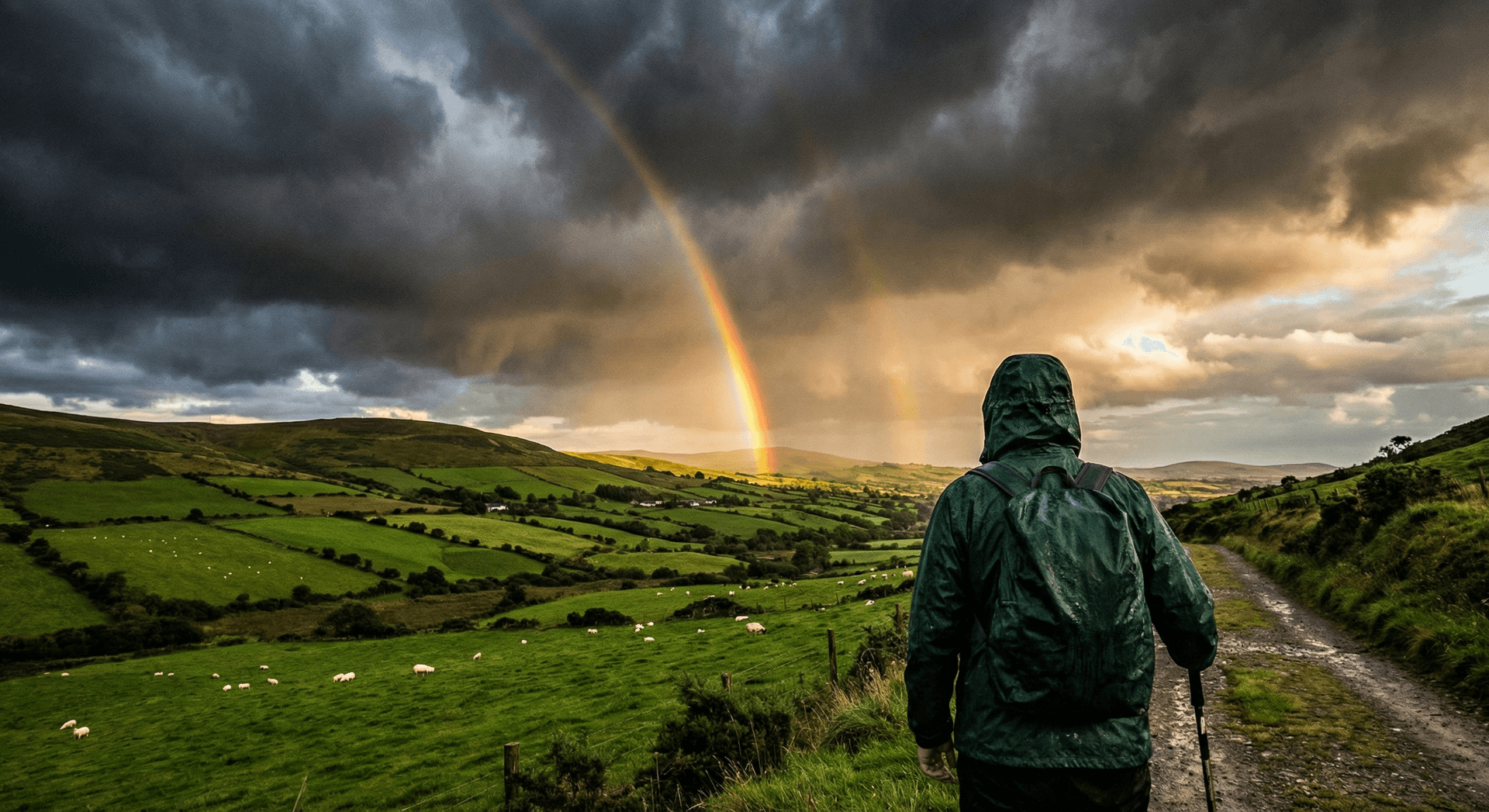
Ireland's maritime climate means conditions shift rapidly. The island receives 150-225 rainy days per year, with mild temperatures rarely dropping below freezing or rising above 25°C (77°F). The west coast (Galway, Clare, Kerry) is wetter and windier than the east.
"There's no such thing as bad weather in Ireland, only inappropriate clothing." — Irish Proverb
The key to comfort is layering. A typical summer day might start with fog and drizzle, clear to sunshine by lunch, and end with chilly wind. Waterproof gear isn't optional—it's essential. Check out Best Places for Solo Female Travelers in Ireland for specific conditions in your destinations.
Clothing Essentials: Layering for All Conditions
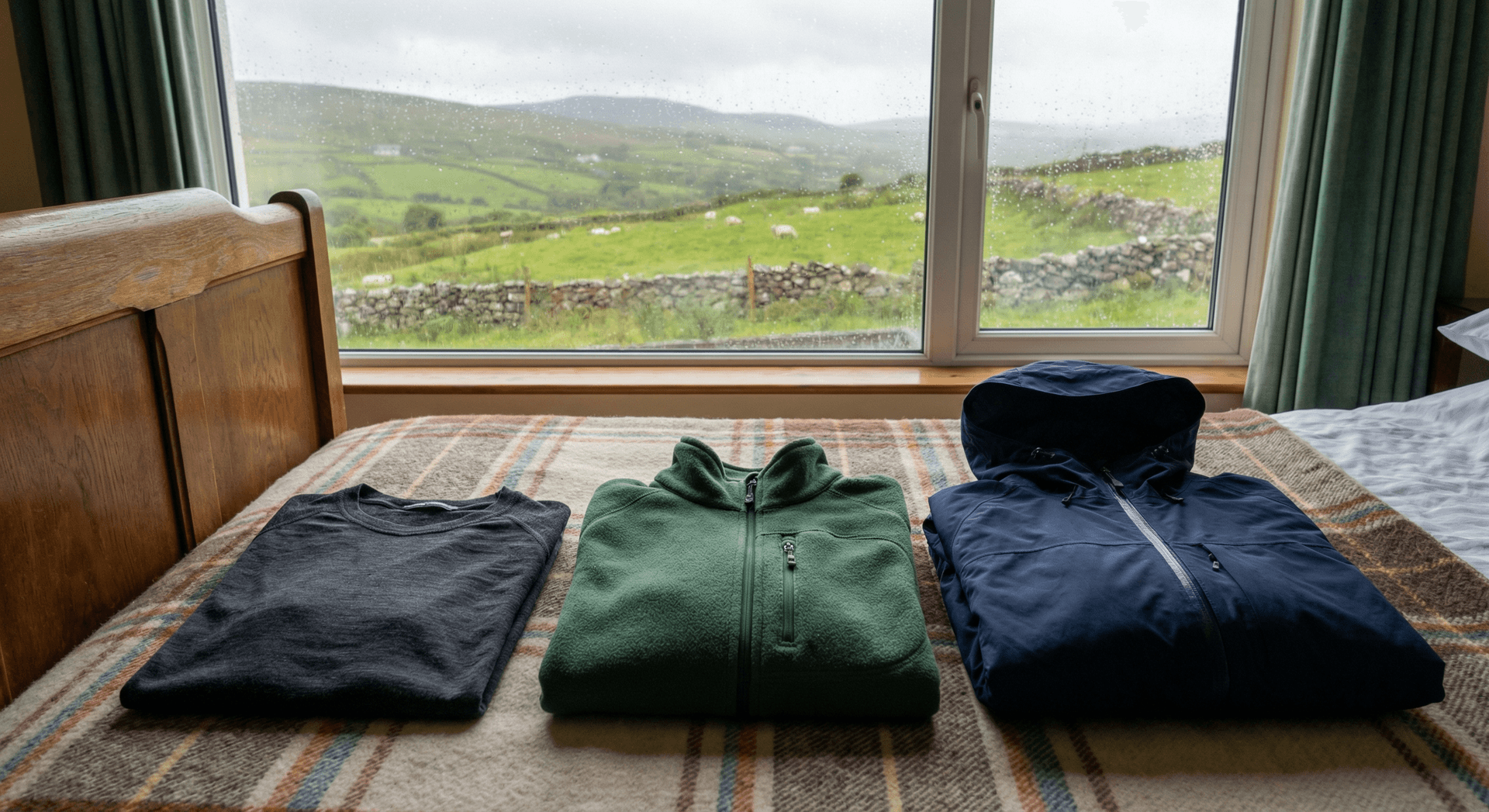
Build a versatile wardrobe using the layering system:
Base Layers:
- 2-3 merino wool or synthetic tops — avoid cotton
- Quick-dry underwear (5-7 pairs) and sports bras (2-3)
Mid Layers:
- Fleece or packable down jacket
- Wool sweater — buy Irish wool locally
- 2-3 long-sleeve shirts and travel pants
Outer Layers:
- Waterproof/breathable jacket with hood — essential
- Waterproof pants for hiking
Everyday:
- One pair dark jeans for cities and pubs
- 3-4 t-shirts/tank tops
- Comfortable loungewear
Irish fashion is casual—leave high heels and formal wear at home. Darker colors hide dirt and fit anywhere from rural pubs to upscale Dublin restaurants.
Footwear: Comfort Meets Practicality
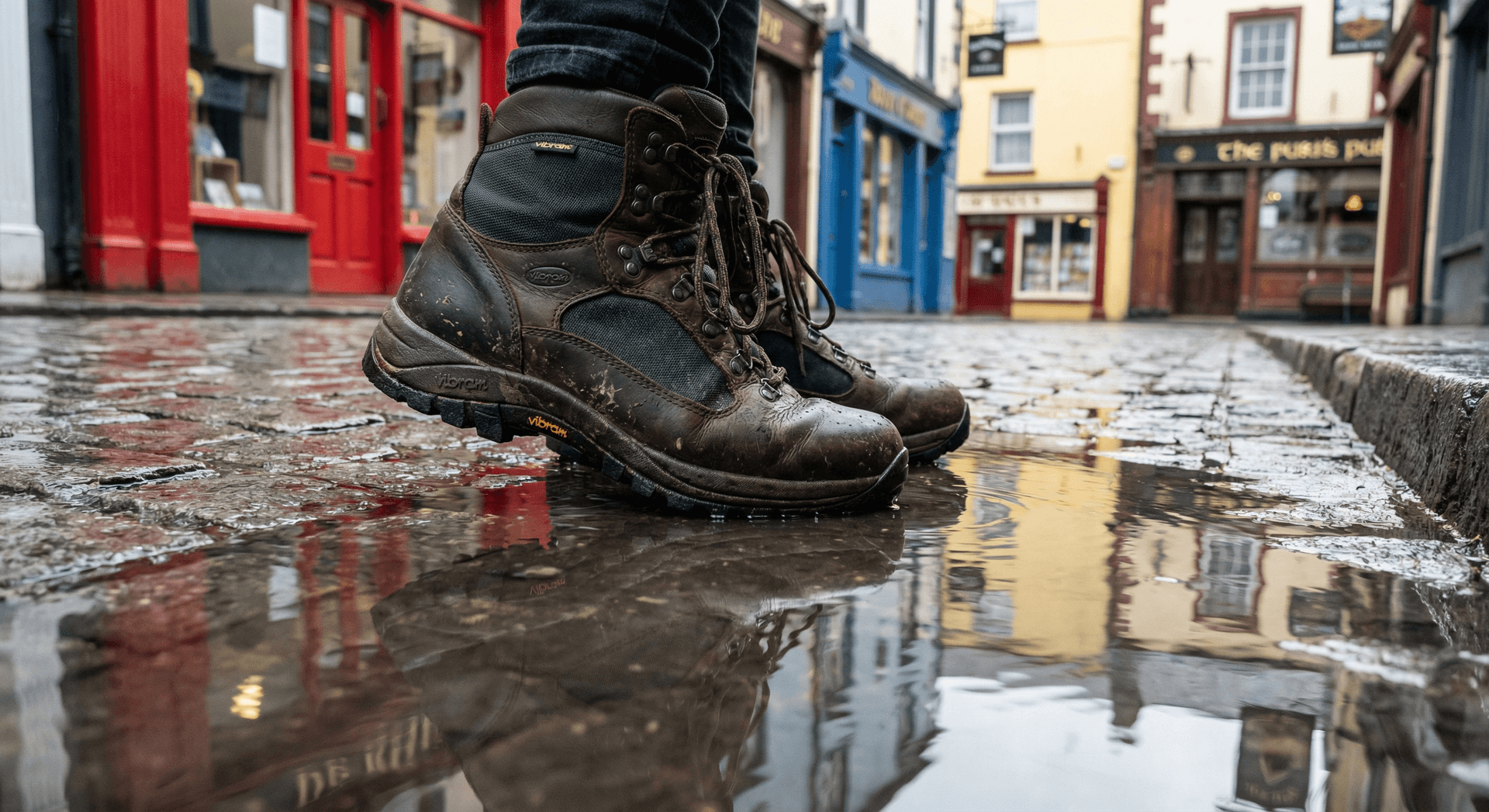
Your footwear choice can make or break your Ireland experience.
Essential Footwear:
- Waterproof hiking boots — mid-ankle for trail support
- Waterproof walking shoes — for cities and everyday wear
- Comfortable flats — for evenings out
- Cozy slippers — many B&Bs have no-shoe policies
Invest in quality boots with good ankle support and grippy soles. Irish trails range from boardwalks to boggy paths; coastal rocks can be slick with algae. Break boots in before your trip—blisters are the last thing you need when solo. Wear your bulkiest shoes on travel days to save luggage space.
Safety and Security Items for Solo Women
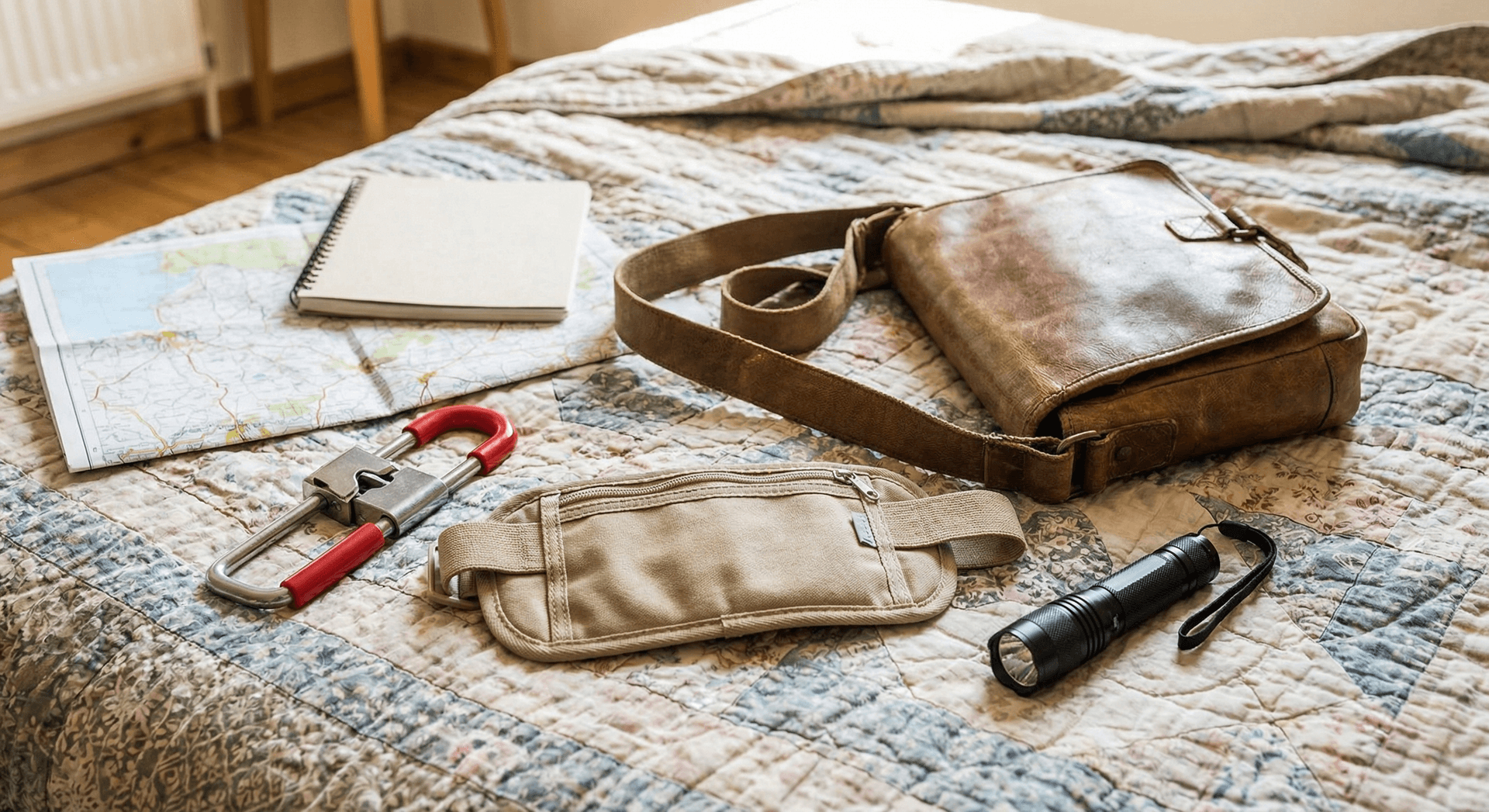

While Ireland is remarkably safe, being prepared helps you feel confident:
Personal Safety:
- Portable door lock — extra security in accommodations
- Personal safety alarm — small, loud device
- Money belt — for passport and emergency cash
- Anti-theft crossbody bag with locking zippers
Documentation:
- Passport copies — digital and physical, stored separately
- Emergency contact card
- Travel insurance documents
Health:
- Basic first aid kit — bandaids, pain relievers, blister care
- Prescription medications in original containers
- Flashlight and emergency whistle
Digital:
- VPN for public WiFi protection
- Phone tracking app to share location
Always let someone know your daily plans. The Where to Stay: Solo Female Traveler Accommodation Guide has safety tips for choosing secure lodgings.
Tech Gear and Connectivity Essentials
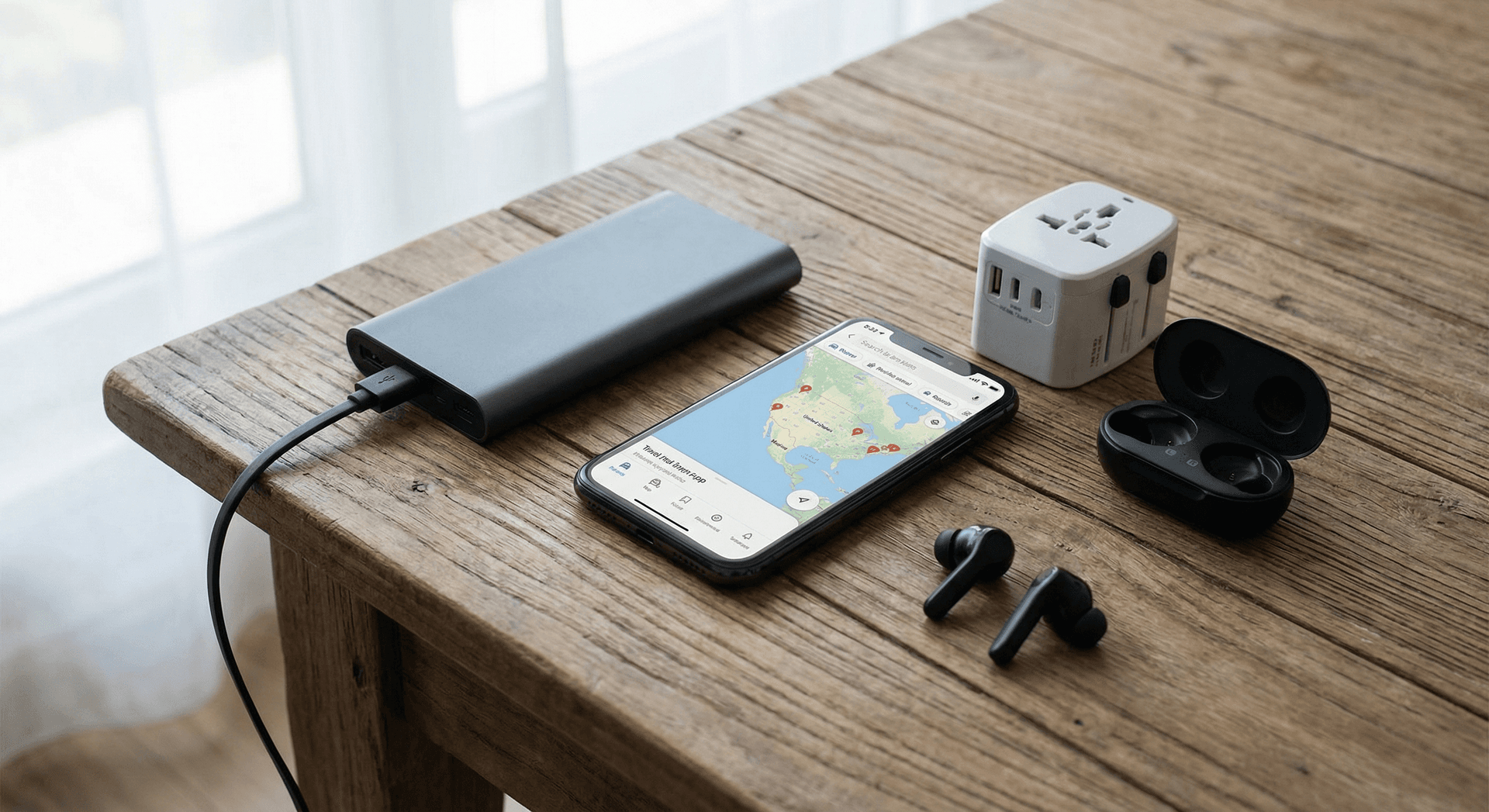
Your phone is your navigation, emergency contact, and entertainment source.
Essentials:
- Smartphone with offline maps — download before arrival
- Portable power bank (10,000mAh minimum)
- Universal adapter — Ireland uses Type G plugs, 230V
- Waterproof phone case
Navigation:
- What3Words app — Irish emergency services use this
- WhatsApp — essential for accommodations
- Physical backup map
Photography:
- Camera or smartphone with good camera
- Microfiber cloth for raindrops
- Small tripod for solo self-portraits
Entertainment:
- E-reader for cozy pub afternoons
- Noise-canceling headphones
- Downloaded podcasts for long journeys
Irish voltage is 230V—most modern electronics handle both, but check labels. WiFi is widely available, but rural coverage can be spotty. See Getting Around Ireland as a Solo Female Traveler for more on staying connected.
Toiletries and Health Essentials
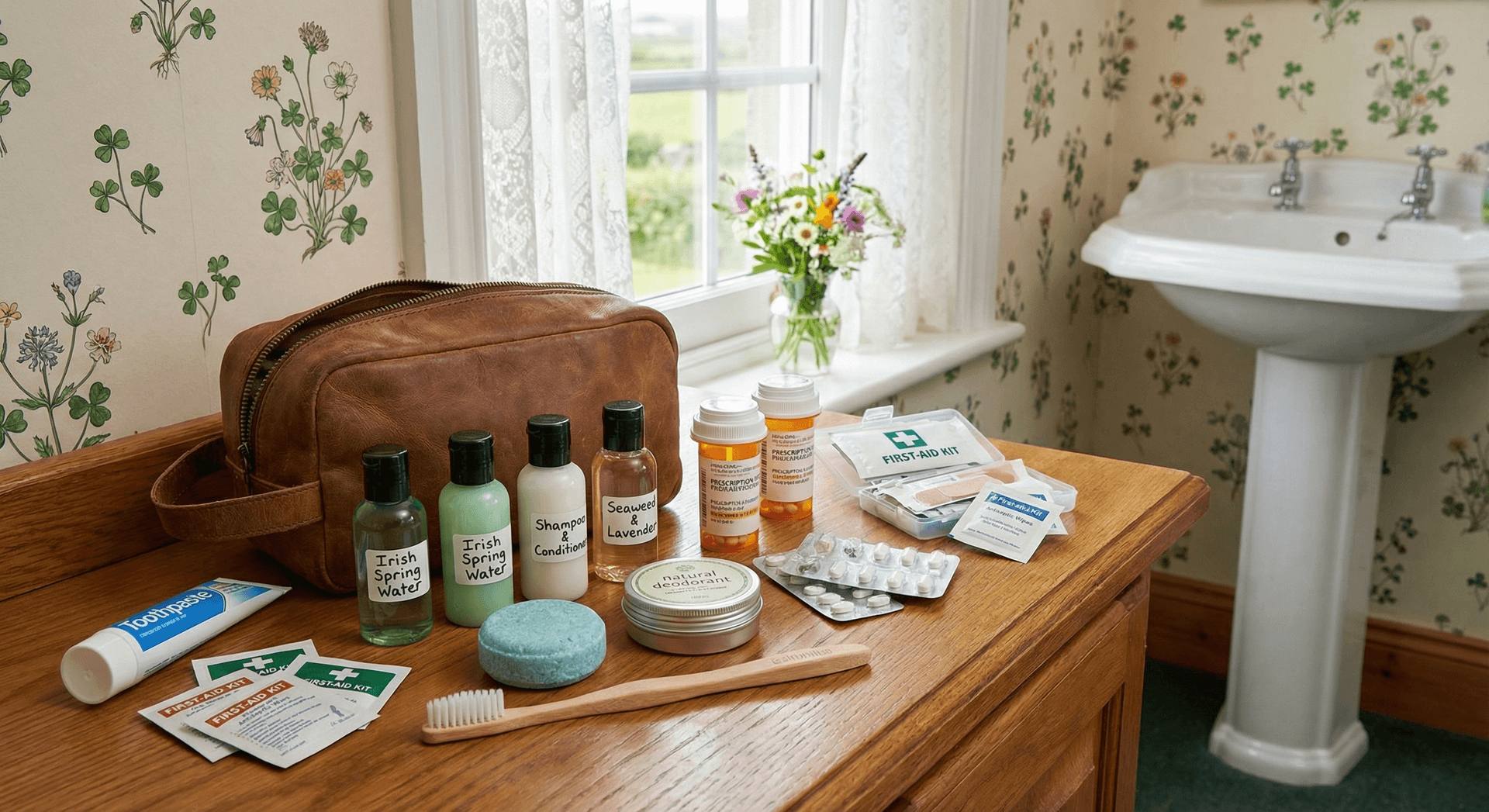
Pack smart and light:
Essentials:
- Prescription medications — bring extra; keep in carry-on
- Sunscreen SPF 30+ and lip balm with SPF
- Insect repellent — midges are brutal in summer
- Basic first aid supplies
Smart Strategies:
- Solid toiletries — shampoo bars save space
- Travel sizes in 100ml containers
- Minimal makeup — Irish weather doesn't cooperate
- Quick-dry microfiber towel
Buy shampoo and body wash locally at Boots or Superdrug. The Irish healthcare system is excellent, but bring basics to prevent small issues from becoming problems.
Daypack and Luggage Recommendations
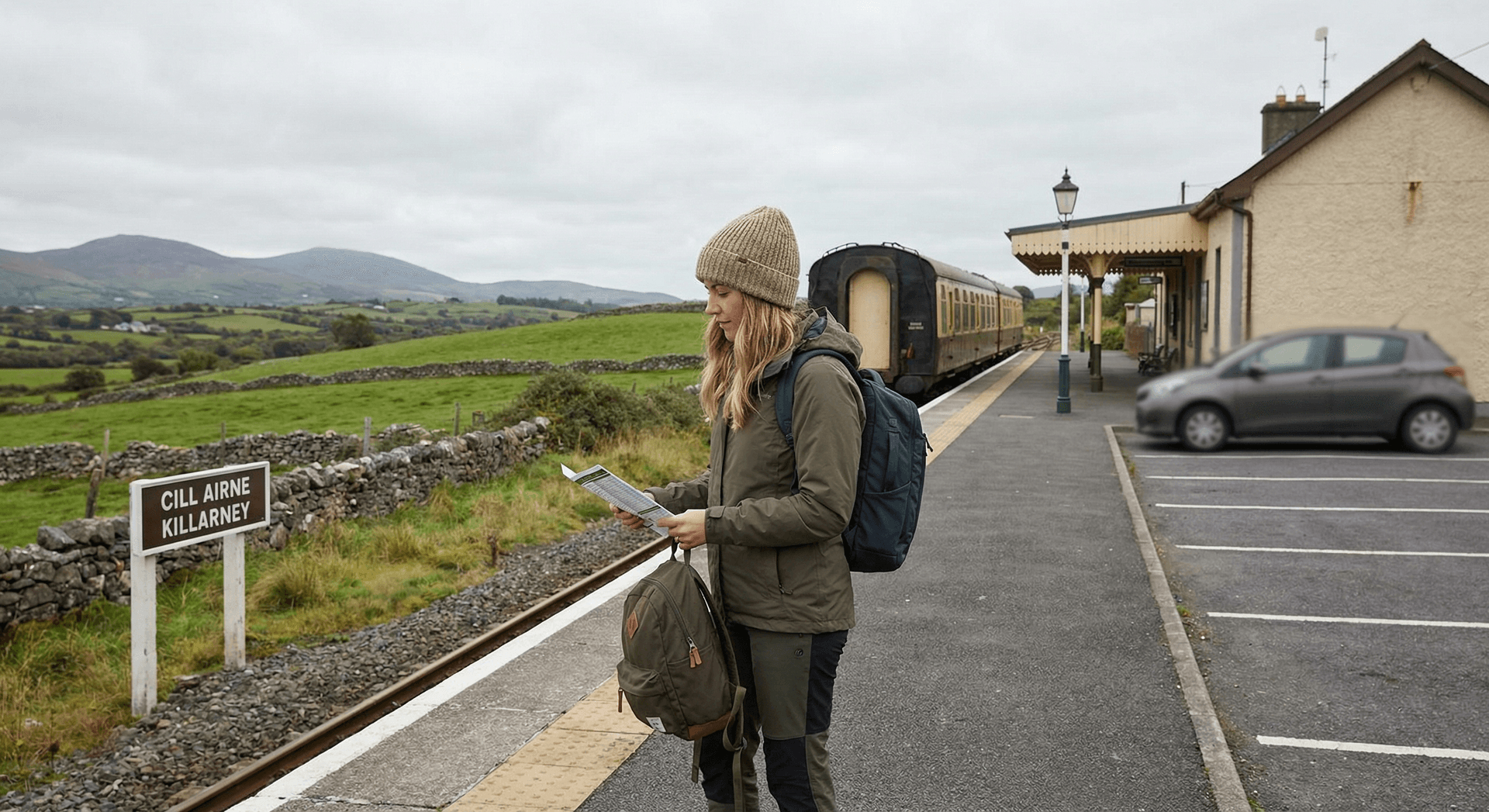
You'll handle bags alone through cobblestones, buses, and narrow staircases.
Main Luggage:
- 40-45L travel backpack — ideal for mobility, fits carry-on limits
- Or rolling carry-on for city-focused trips
Why Carry-On Only:
- Independence — no waiting at baggage claim
- Safety — bag never leaves your sight
- Flexibility — easy on buses and trains
- Mobility — narrow streets challenge large bags
Daypack (20-25L):
- Waterproof cover, comfortable straps, theft-deterrent features
- Daily contents: rain jacket, water, snacks, phone, charger, camera, light layer
Packing Cubes: Invest in cubes—they compress clothing and make repacking quick. As a solo traveler, efficiency matters. See Budget Tips for Solo Female Travel in Ireland for budget-friendly options.
What NOT to Bring: Leave These at Home
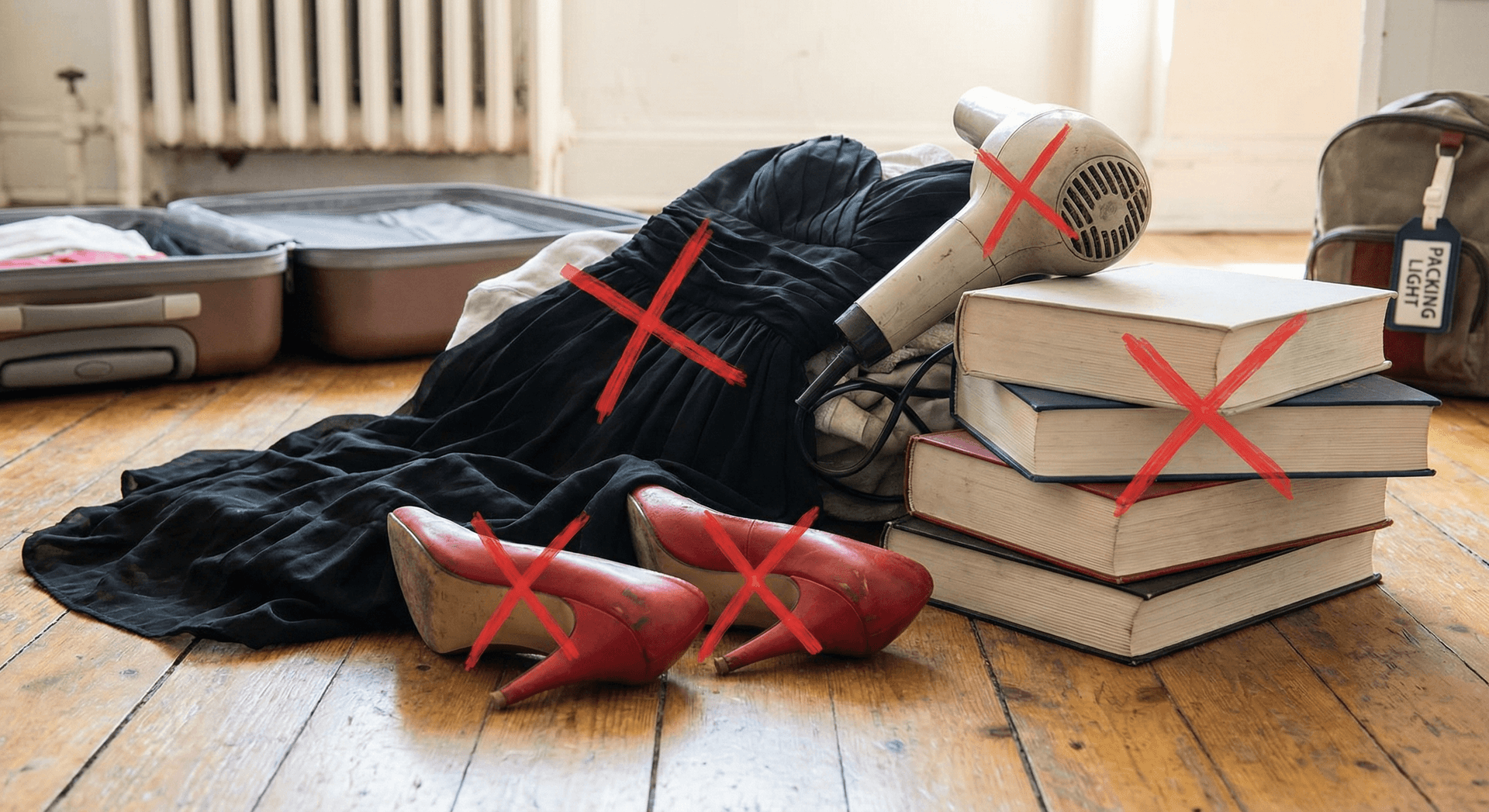
Overpacking is the most common mistake. When solo, every extra item is a burden.
Leave Home:
- Hair dryer — accommodations have them; voltage issues make yours problematic
- High heels — useless on cobblestones
- Formal clothing — Ireland is casual everywhere
- Heavy books — use an e-reader
- Multiple handbags — one crossbody suffices
- More than one pair of jeans — heavy, slow to dry
- Umbrella — wind destroys them
- Excessive jewelry
Skip These Electronics: Laptop (unless working), multiple cameras, voltage converters for modern devices
The "just in case" trap hits solo travelers hard. Ireland has excellent shopping—if you need something, you can buy it. Pack half what you think you need.
Packing Strategies for Solo Travelers
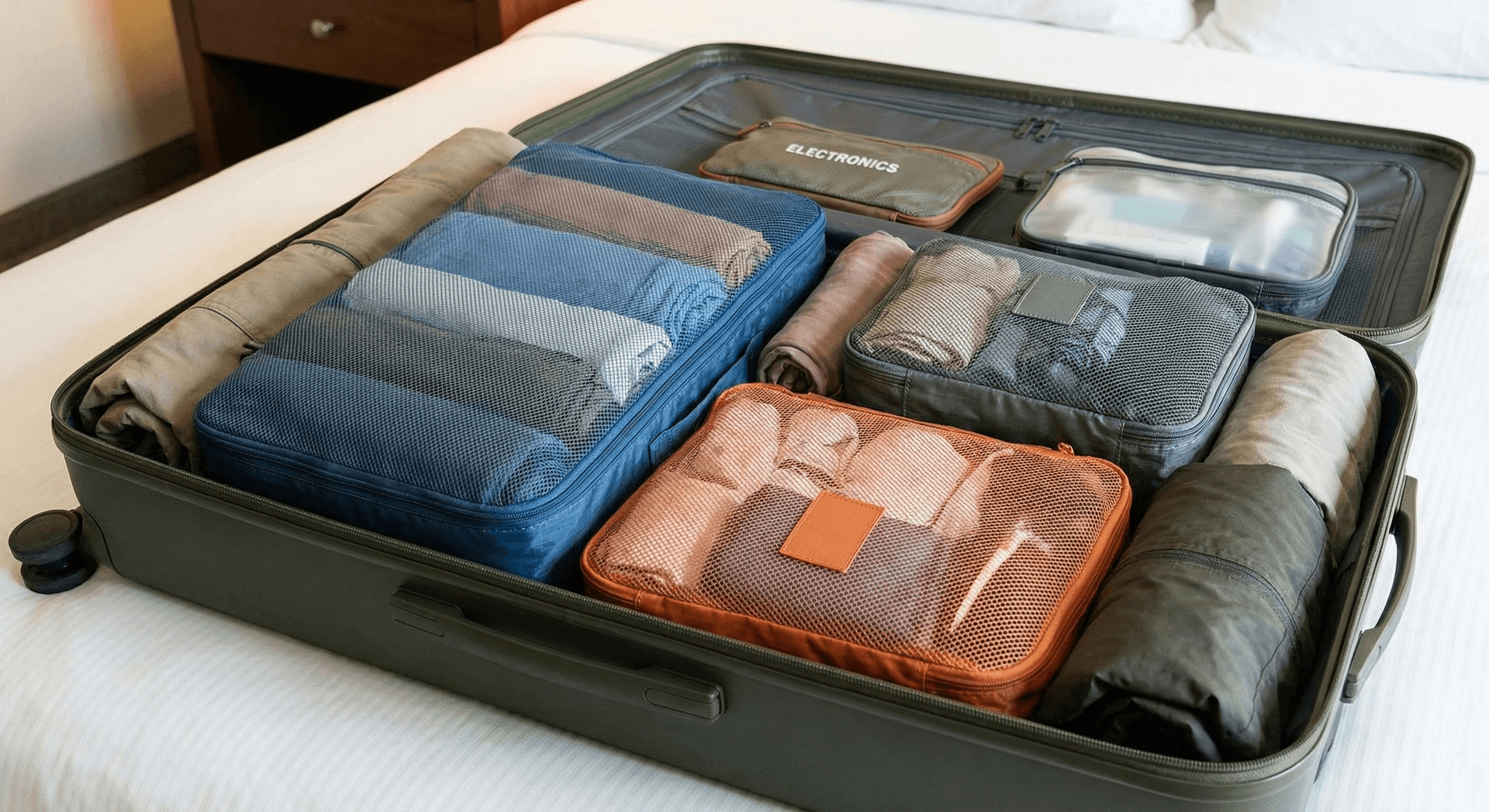
You're the only one carrying, organizing, and tracking everything.
Layering Practice: Build outfits around cohesive colors (blacks, grays, navy, olive). Every top should match every bottom.
Techniques:
- Roll casual clothes; fold structured items
- Use compression cubes
- Stuff shoes with small items
- Wear bulkiest items on travel days
Accessibility: Keep essentials accessible—rain jacket, water, snacks. Pack by activity: one cube for hiking, one for city. Keep valuables with you; never check electronics.
Solo Tips:
- One-bag philosophy — no one watches your bags
- Quick repacking — you'll move between accommodations frequently
- Laundry planning — pack for 5-7 days and wash
Keep your daypack under 10 pounds. Heavy items go against your back; use hip belts on your main bag.
Seasonal Packing Adjustments
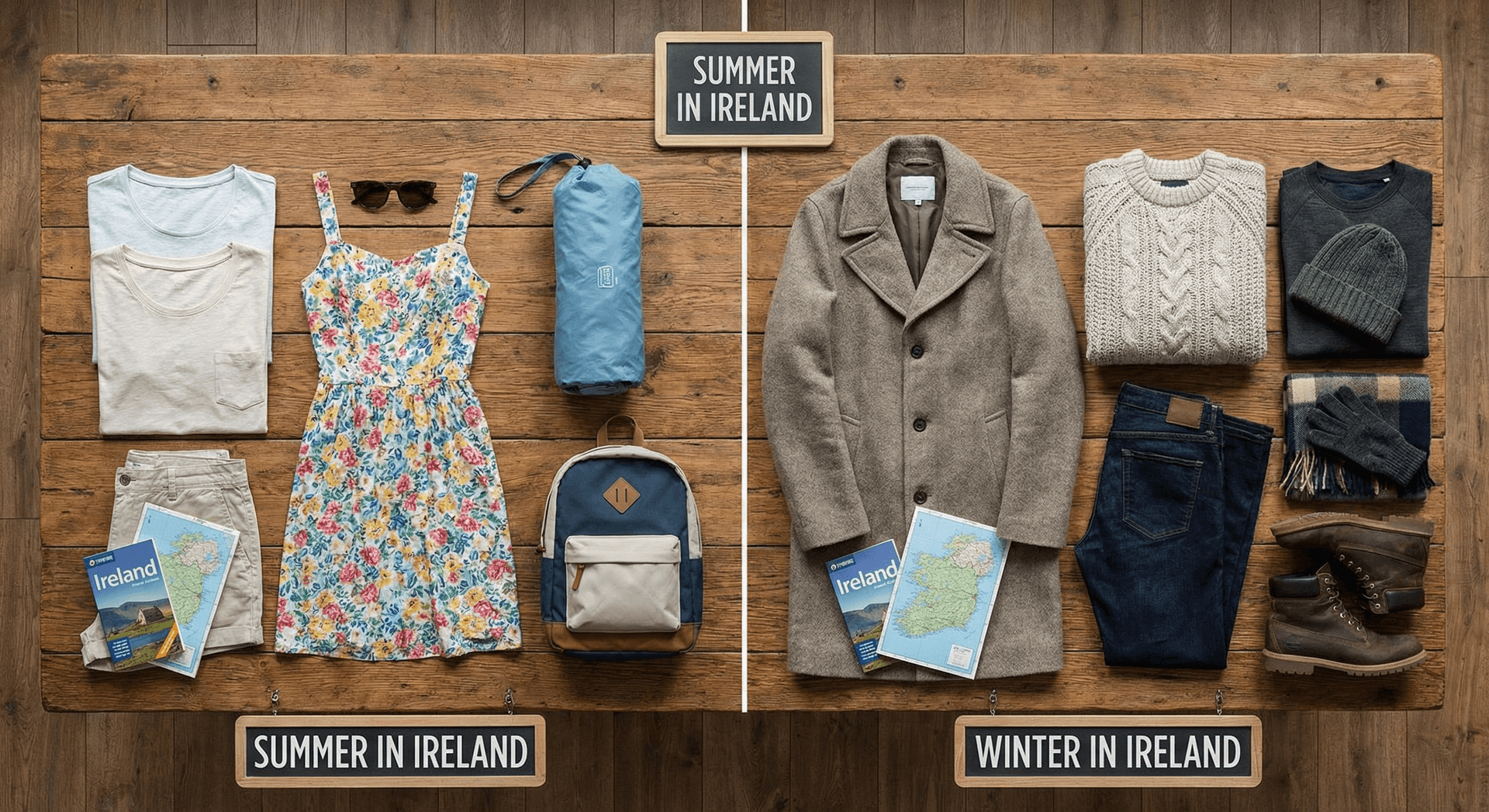
Spring (March-May): Cool and unpredictable. Pack medium-weight layers, full waterproofs, light gloves, and warm hat.
Summer (June-August): Warmest but still rainy. Bring lighter base layers, sunscreen, sunglasses, insect repellent for midges. Book accommodations early.
Autumn (September-November): Cooling down, stormy. Pack warmer mid-layers, heavier waterproofs, hat and gloves by October.
Winter (December-February): Cold, wet, short days. Bring heavy insulation, full waterproofs, thermal underwear, insulated boots, headlamp.
Regional Notes: West Coast (Galway, Clare, Kerry, Donegal) is wetter year-round. Mountains are always colder. Even in summer, Irish beaches aren't for swimming—water rarely exceeds 15°C.
Daylight: Summer offers daylight until 10 PM; winter gets dark by 4:30 PM. Pack a headlamp for winter early evenings.
Final Thoughts: Pack Light, Travel Far
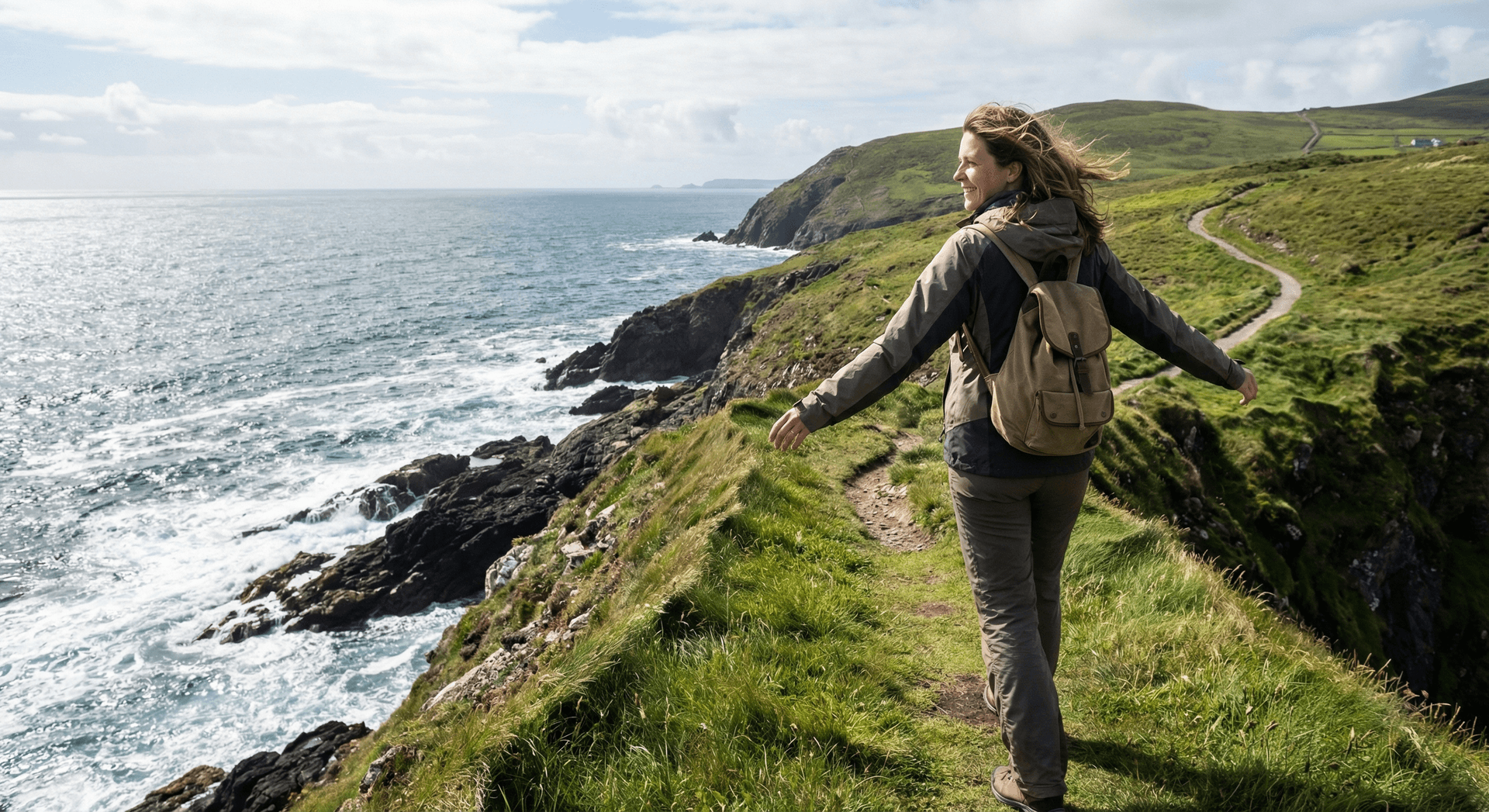
The ultimate goal: bring what you need to be safe, comfortable, and prepared—but no more. Every item you leave behind is a burden you won't carry up cobblestone streets or onto buses.
Ireland rewards the prepared traveler. With the right waterproof jacket, embrace the rain that creates forty shades of green. With proper boots, explore dramatic coastlines. With a well-chosen daypack, navigate cities with everything at hand.
But Ireland also rewards the light traveler. The less you carry, the more mobile you are. Solo travel is about freedom and independence—and a heavy bag is the enemy of both.
Ireland has excellent shopping. If you forget something, you can find it. Challenge yourself to travel lighter than you think possible. You'll move more freely and focus your energy on what matters—exploring Ireland on your own terms.
For comprehensive planning, return to Solo Female Travel Ireland: The Ultimate Guide — the master hub for your Irish adventure.
Safe travels, and may the road rise up to meet you!
Table of Contents
Share this post
More from the Blog

Cork to Blarney Castle Day Trip: The Stone, the Gardens and What Else to See
Plan a Cork to Blarney Castle day trip. Kiss the stone, explore the Poison Garden, and add Cork city, Fota or Kinsale for a full day out.

Cork to Cobh Day Trip: Titanic, Colourful Houses and Harbour History
Plan a Cork to Cobh day trip by train, car or private driver. Explore Titanic history, St Colman's Cathedral, Spike Island and the best harbour views.

Cork to Killarney Day Trip: Lakes, Mountains and Muckross in One Day
A Cork to Killarney day trip is a longer escape into Kerry. Here's how to plan the drive, what to see in Killarney National Park, and why a private driver helps.