
Getting Around Ireland as a Solo Female Traveler
Ireland's compact size and well-developed transport network make it surprisingly easy to navigate as a solo female traveler. Whether you're hopping between charming villages on the west coast, exploring the bustling streets of Dublin, or venturing into the remote corners of Donegal, you'll find a range of transport options suited to every budget and comfort level. This guide covers everything you need to know about getting around Ireland safely and confidently on your own.
For a complete overview of solo female travel in Ireland, be sure to check out Solo Female Travel Ireland: The Ultimate Guide — the master hub for all your planning needs. And if you're wondering about general safety, read Is Ireland Safe for Solo Female Travelers? for peace of mind before you go.
Getting Around Ireland: An Overview for Solo Travelers
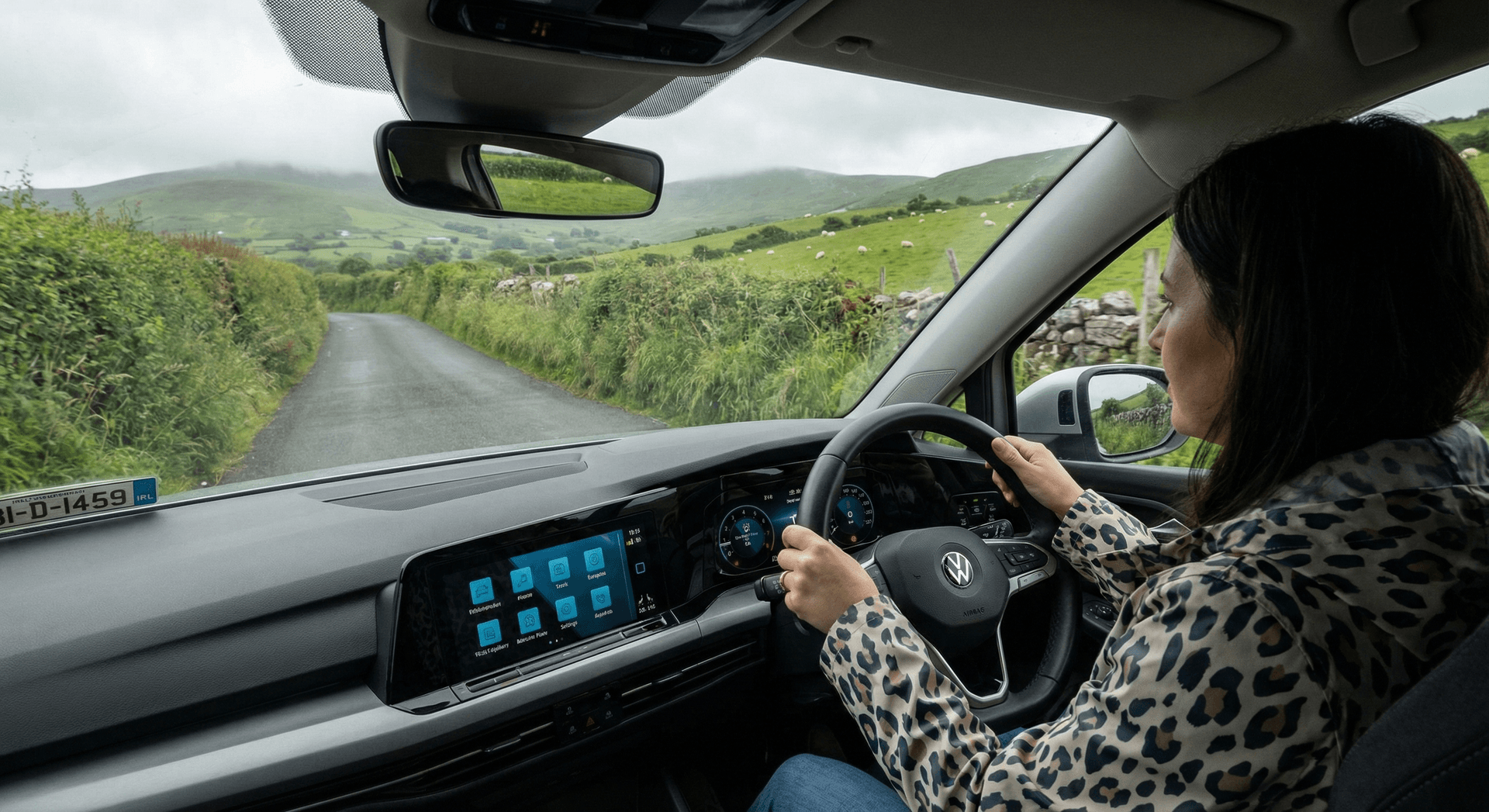
Ireland may be small—roughly the size of Indiana—but its transport landscape varies dramatically between urban centers and rural regions. The key to successful solo travel here is understanding which transport modes work best for your itinerary and comfort level.
Main Transport Options at a Glance:
- Public Transport (Bus & Train): Excellent for Dublin, Cork, Galway, and major routes; limited in rural areas
- Rental Car: Ideal for exploring the Wild Atlantic Way and remote regions at your own pace
- Private Driver/Guide: Premium option for safety, convenience, and local knowledge
- Taxis & Ride-Sharing: Widely available in cities; reliable for late-night transport
- Cycling: Growing network of greenways and bike-friendly routes
- Walking: Perfect for city exploration and designated walking trails
"The best way to see Ireland is slowly—whether that's by bus through the countryside or on foot through cobblestone streets. Solo travelers have the freedom to set their own pace." — CIE Tours Travel Guide
Your choice of transport will largely depend on where you're going. Dublin and Galway have excellent public transport, while County Kerry and County Donegal practically demand a car if you want to see the hidden gems. Check out Best Places for Solo Female Travelers in Ireland to help plan your route.
Public Transport: Buses and Trains
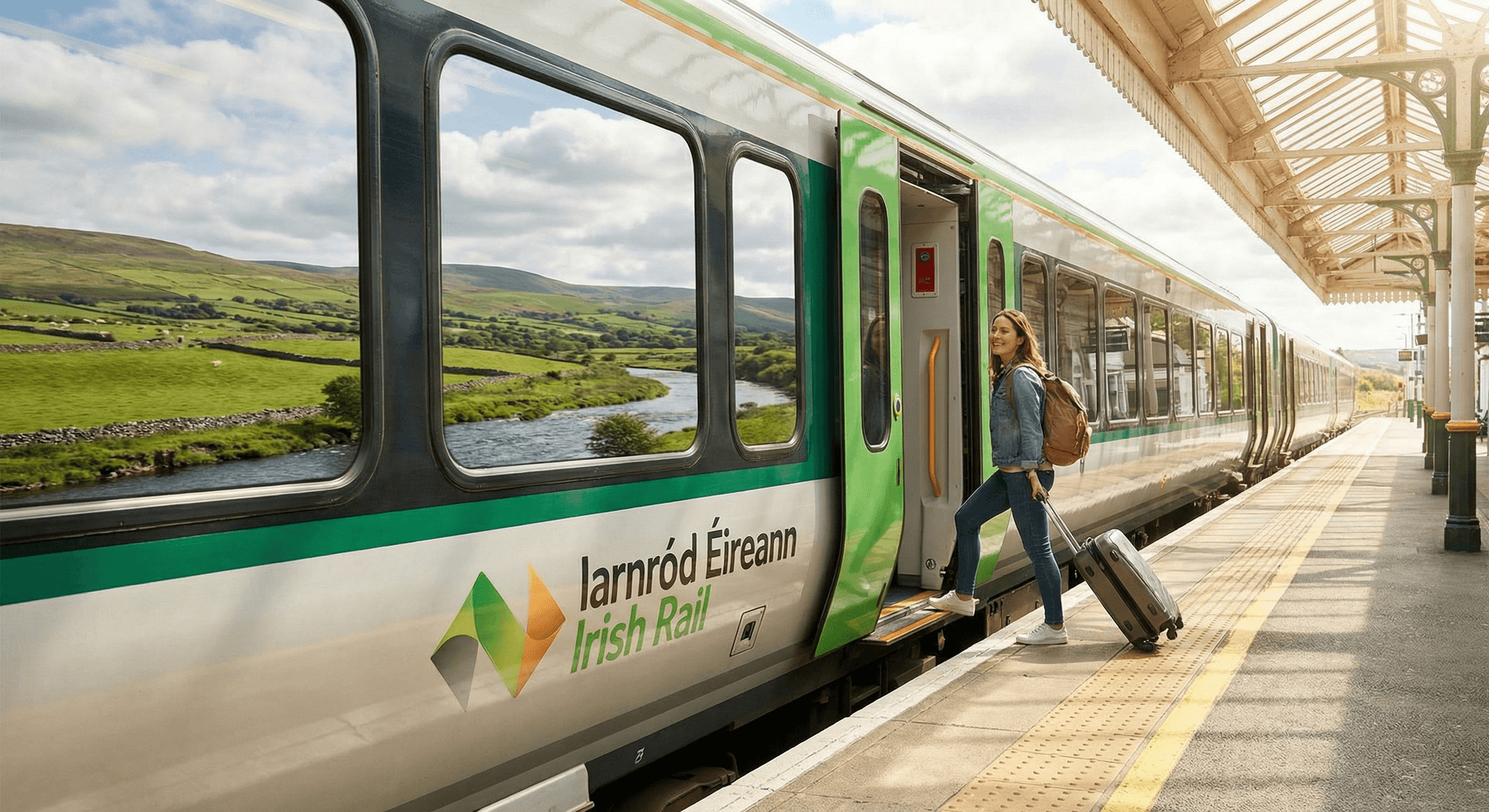
Ireland's public transport network is operated primarily by Irish Rail (Iarnród Éireann) for trains and Bus Éireann for intercity services, with additional private operators like Aircoach and Citylink covering popular routes.
Pros of Public Transport for Solo Female Travelers:
- Safety in numbers — trains and buses are well-populated during daylight hours
- No navigation stress — sit back and enjoy the scenery instead of worrying about directions
- Cost-effective — especially with Leap Card discounts in Dublin and surrounding areas
- Eco-friendly — reduce your carbon footprint while traveling
- Social opportunities — easy to chat with locals and fellow travelers
Cons to Consider:
- Limited rural coverage — many scenic areas have infrequent or no service
- Reduced schedules on Sundays — plan accordingly, especially in remote areas
- Can be time-consuming — what takes 2 hours by car might take 4 by bus
- Less flexibility — you're bound to timetables
Booking Tips:
- Book train tickets 3-7 days in advance for best prices on Irish Rail
- Download the Transport for Ireland (TFI) app for real-time journey planning
- Consider a Leap Visitor Card for unlimited travel in Dublin (1, 3, or 7 days)
- Private operators like Citylink often offer cheaper fares than Bus Éireann on popular routes
For accommodation near transport hubs, see Where to Stay: Solo Female Traveler Accommodation Guide.
Driving in Ireland as a Solo Woman
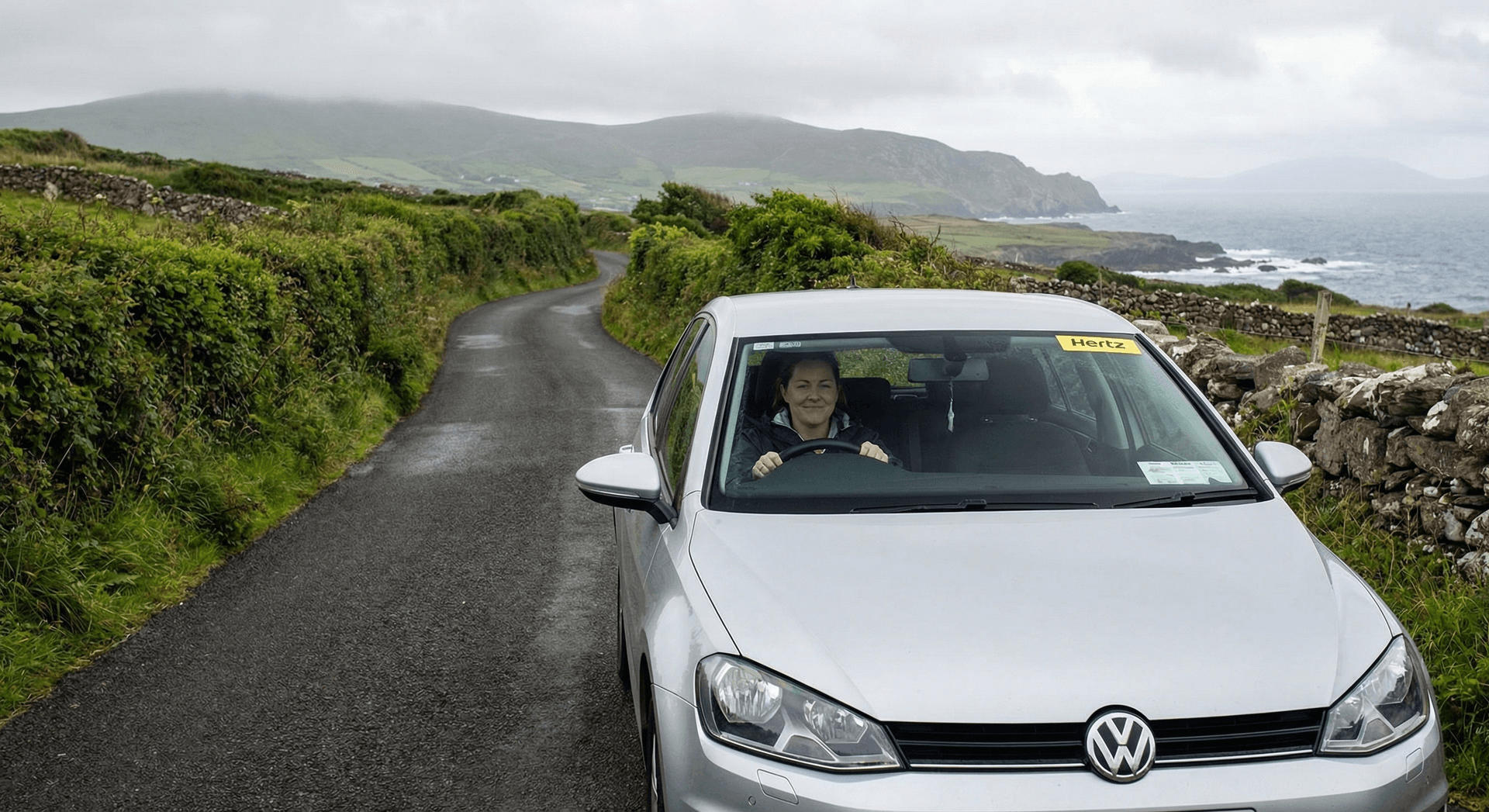
Renting a car gives you unparalleled freedom to explore Ireland's hidden corners, but it comes with unique challenges—especially for solo female travelers.
What You Need to Know:
- Drive on the left — this takes concentration, especially at roundabouts and when pulling out of parking spaces
- Manual transmission is standard — automatics cost significantly more and book up quickly
- Narrow rural roads — expect to navigate single-track lanes with grass growing down the middle
- Sheep have right of way — especially in County Mayo and County Kerry
Safety Considerations for Solo Women Drivers:
- Share your location — use WhatsApp live location sharing with someone back home
- Download offline maps — mobile coverage can be spotty in remote areas
- Fill up when you can — petrol stations are scarce in rural regions
- Avoid driving at night — narrow roads with no street lighting can be treacherous

- Park in well-lit areas — especially when visiting remote trailheads or coastal viewpoints
Rental Tips:
- Book well in advance, especially automatic transmissions
- Take photos of the car before driving off
- Understand the insurance coverage—Irish rental companies often have high excess/deductibles
- Consider excess insurance from a third party before you travel
- Check if your accommodation has parking—city center hotels in Dublin and Cork often don't
If you're planning to hike remote areas like the Wild Atlantic Way, read Hiking the Wild Atlantic Way Solo: Why You Need a Guide for important safety considerations.
Private Driver and Guide Services
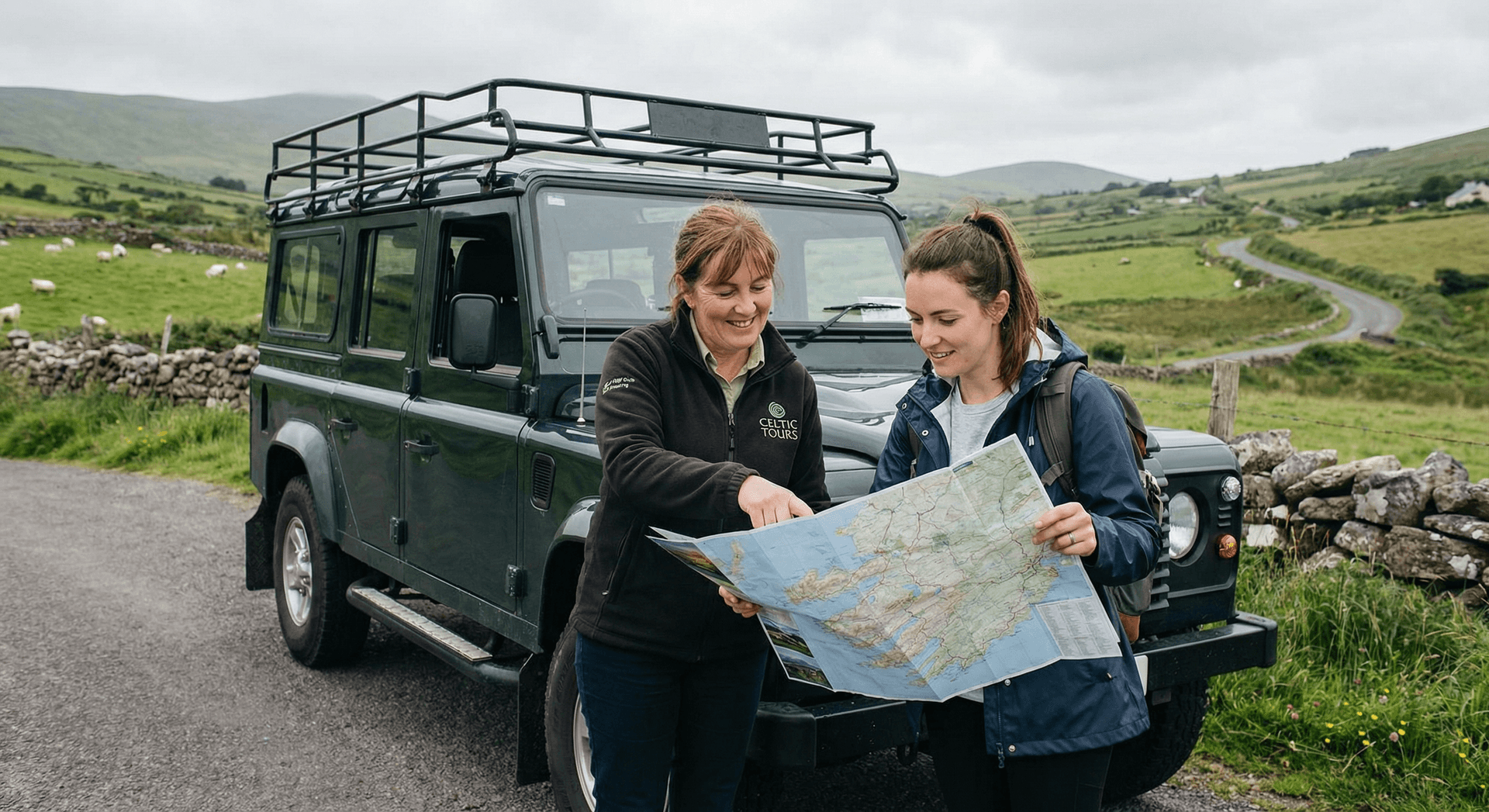
Hiring a private driver or joining a small-group guided tour is increasingly popular among solo female travelers—and for good reason.
Why Consider a Private Driver:
- Ultimate safety — door-to-door service with a local professional
- Local knowledge — drivers know the best photo stops, hidden beaches, and authentic pubs
- No navigation stress — focus on the scenery, not the road
- Flexibility — customize your itinerary without the constraints of group tours
- Companionship — solo travel can get lonely; a driver provides friendly conversation
Cost vs. Value:
Private drivers typically cost €300-500 per day, which seems expensive until you factor in:
- No rental car costs or fuel
- No parking fees (which can be €20-30/day in cities)
- No stress about driving on the left
- Access to areas you'd never find on your own
- Safety and peace of mind
Finding Reputable Services:
- Ask your accommodation for recommendations—they often have relationships with trusted drivers
- Look for drivers registered with the National Transport Authority
- Check reviews on TripAdvisor and Google
- Confirm they have proper insurance and licenses
- Female drivers are available through some services if you prefer
This option is particularly valuable for exploring County Kerry's Ring of Kerry, the Dingle Peninsula, or remote areas of County Donegal where public transport is virtually non-existent.
Taxis and Ride-Sharing
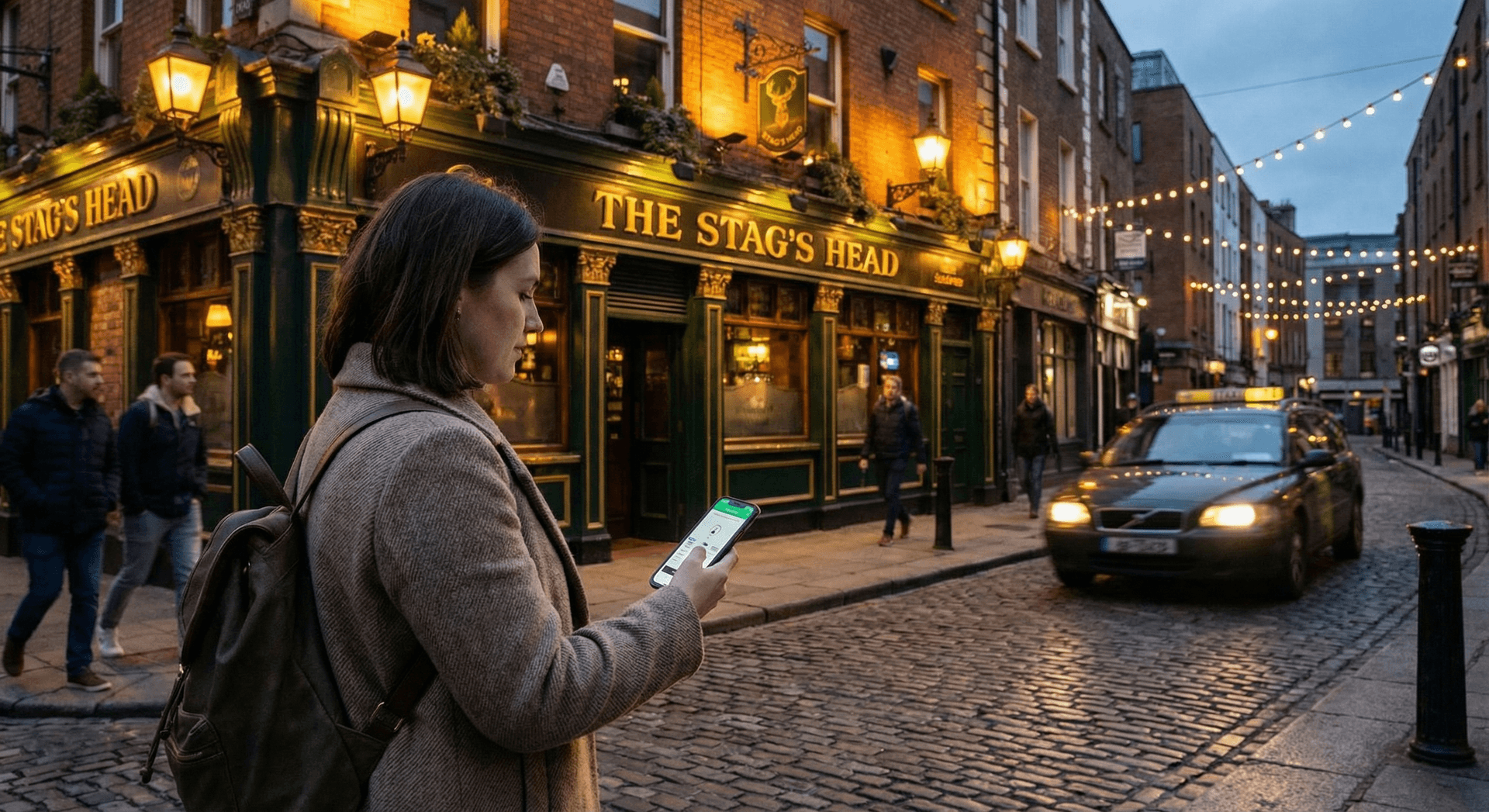
Taxis are plentiful in Irish cities and towns, providing a safe option for solo female travelers—especially after dark.
Key Services:
- Free Now — The most popular app in Ireland (formerly MyTaxi), works like Uber
- Uber — Available but limited, mostly in Dublin
- Local taxi ranks — Found at train stations, airports, and town centers
- NRC Taxis and Dublin Taxi — Other reliable apps for Dublin area
Safety Tips for Solo Women:
- Always check the license plate matches your app before getting in
- Share your trip status through the app with a friend
- Sit in the back seat unless the taxi is a minivan where front is standard
- Trust your instincts—if something feels off, don't get in
- Ask for an estimate before starting the journey in non-metered rural taxis
- Keep the taxi number or driver's card for return journeys from remote locations
When to Use Taxis:
- Late night transport after pubs close (typically 11:30 PM – 1:00 AM)
- Airport transfers, especially for early morning flights
- Reaching accommodations in rural areas without public transport
- Day trips from your base when you don't want to drive
- When weather makes walking or cycling unpleasant (which happens frequently!)
Typical Costs:
- Dublin city center: €10-20 per journey
- Airport to city center: €25-35
- Rural journeys: Often fixed rates, agree beforehand
Cycling and Active Transport
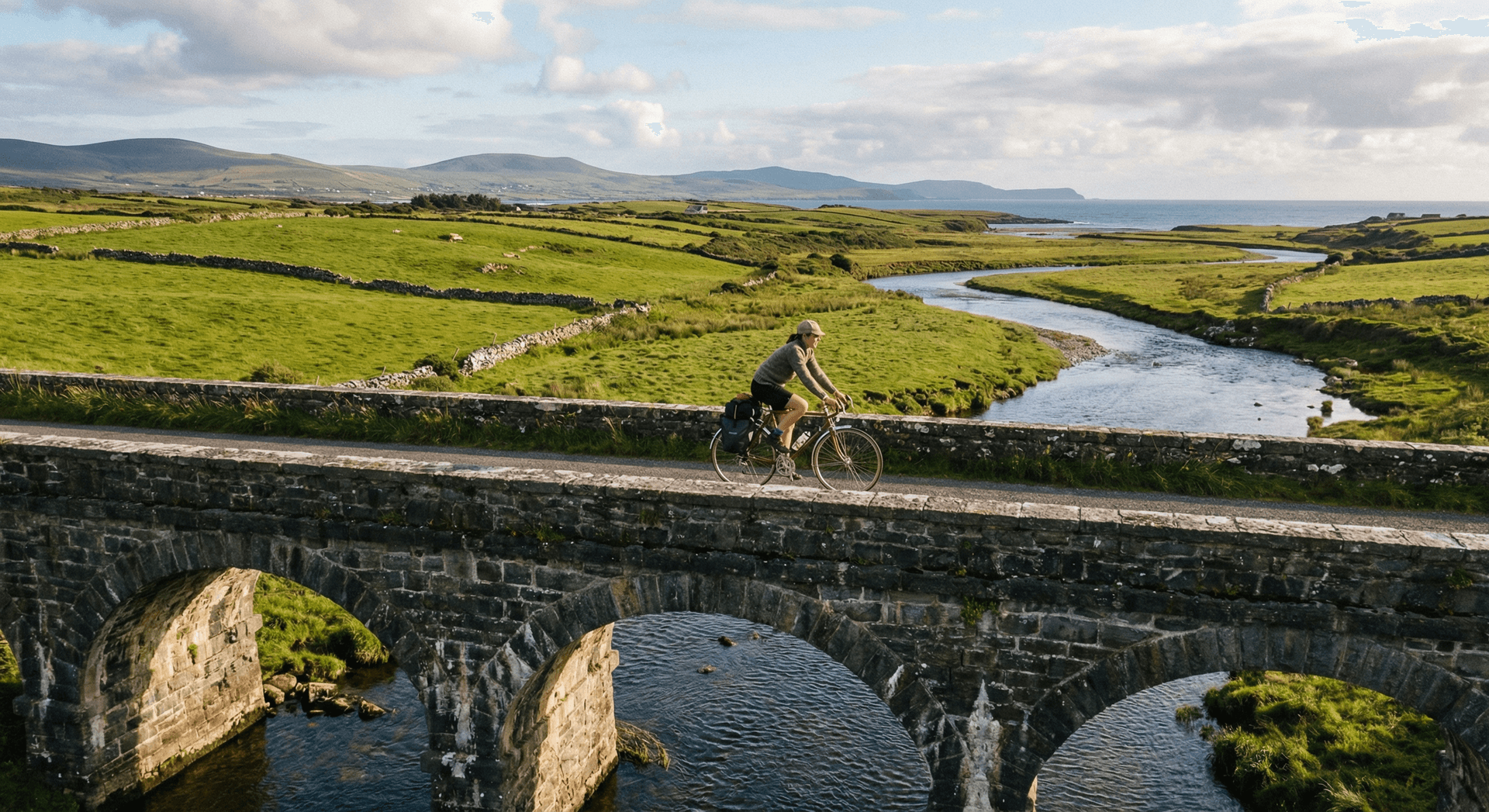
Ireland has invested heavily in greenway development, making cycling an increasingly attractive option for solo female travelers who enjoy active exploration.
Top Cycling Routes:
- Great Western Greenway (County Mayo) — 49km of traffic-free trail from Westport to Achill Island
- Waterford Greenway — 46km through stunning landscapes from Waterford to Dungarvan
- Kingfisher Trail (County Cavan/Fermanagh) — 230km loop around lakes and waterways
- Royal Canal Greenway — Dublin to Longford, 144km of towpath cycling
Bike Rental Practicalities:
- Most greenways have rental shops at key points
- E-bikes (electric assist) are widely available and recommended for Ireland's hills
- Expect to pay €20-35/day for standard bikes, €35-50 for e-bikes
- Helmets are usually included but not legally required for adults
- Many shops offer luggage transfer services if you're cycling point-to-point
Safety Considerations:
- Irish weather is unpredictable—pack waterproofs regardless of the forecast
- Greenways are generally very safe for solo women—well-maintained and populated
- Road cycling requires more caution—Irish drivers can be impatient on narrow roads
- Always let someone know your route and expected return time
- Bring a portable phone charger—GPS and camera use drains batteries quickly
Cycling is a fantastic way to see County Mayo and County Waterford at a slower pace, with plenty of opportunities to stop at pubs and cafes along the way.
Walking in Irish Cities and Towns
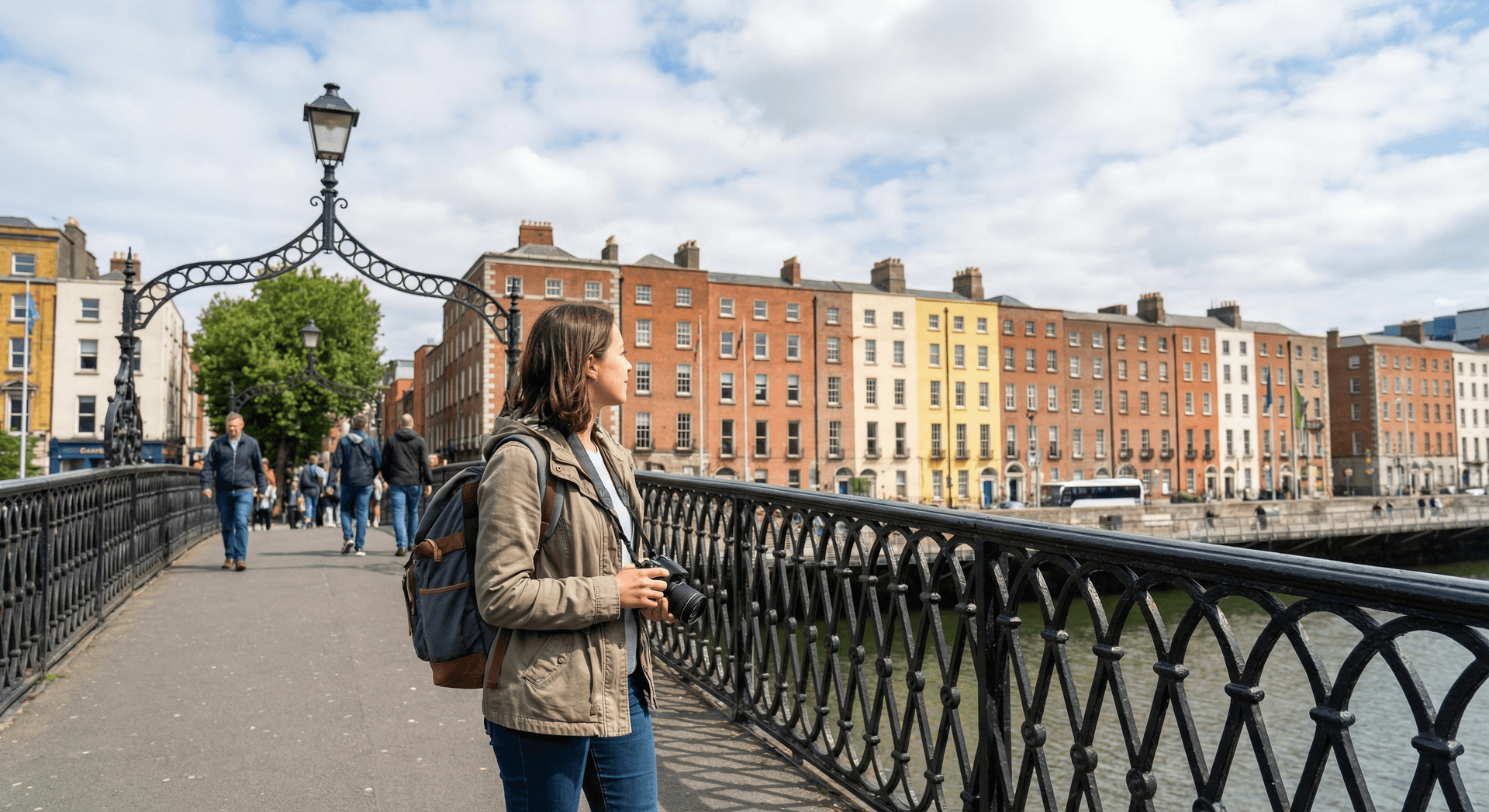
Walking is not only the most economical way to explore Ireland—it's often the most rewarding, especially in compact city centers and charming small towns.
Most Walkable Destinations:
- Dublin — The city center is compact; most major sights are within a 30-minute walk
- Galway — Small, pedestrian-friendly, perfect for wandering
- Kilkenny — Medieval streets made for strolling
- Kinsale (County Cork) — Colorful harbor town, best explored on foot
- Dingle (County Kerry) — Small town with everything within walking distance
Walking Safety Tips:
- Irish cities are generally very safe, but use the same precautions you would anywhere
- Stick to well-lit streets at night
- The Temple Bar area in Dublin can get rowdy late at night—consider a taxi back to your accommodation
- Wear comfortable, waterproof shoes—cobblestones are charming but tough on feet
- Be prepared for rain—pack a compact umbrella or rain jacket
- Jaywalking is technically illegal (though rarely enforced)—use designated crossings
Guided Walking Tours:
Free walking tours operate in most major cities and are excellent for:
- Getting oriented on your first day
- Meeting other travelers
- Learning history and local stories you'd miss on your own
- Tips on safe areas and places to avoid
Popular options include Sandeman's New Dublin Tours and Galway City Walking Tours. Remember to tip your guide—€10-15 is standard.
Safety Considerations for Each Transport Mode
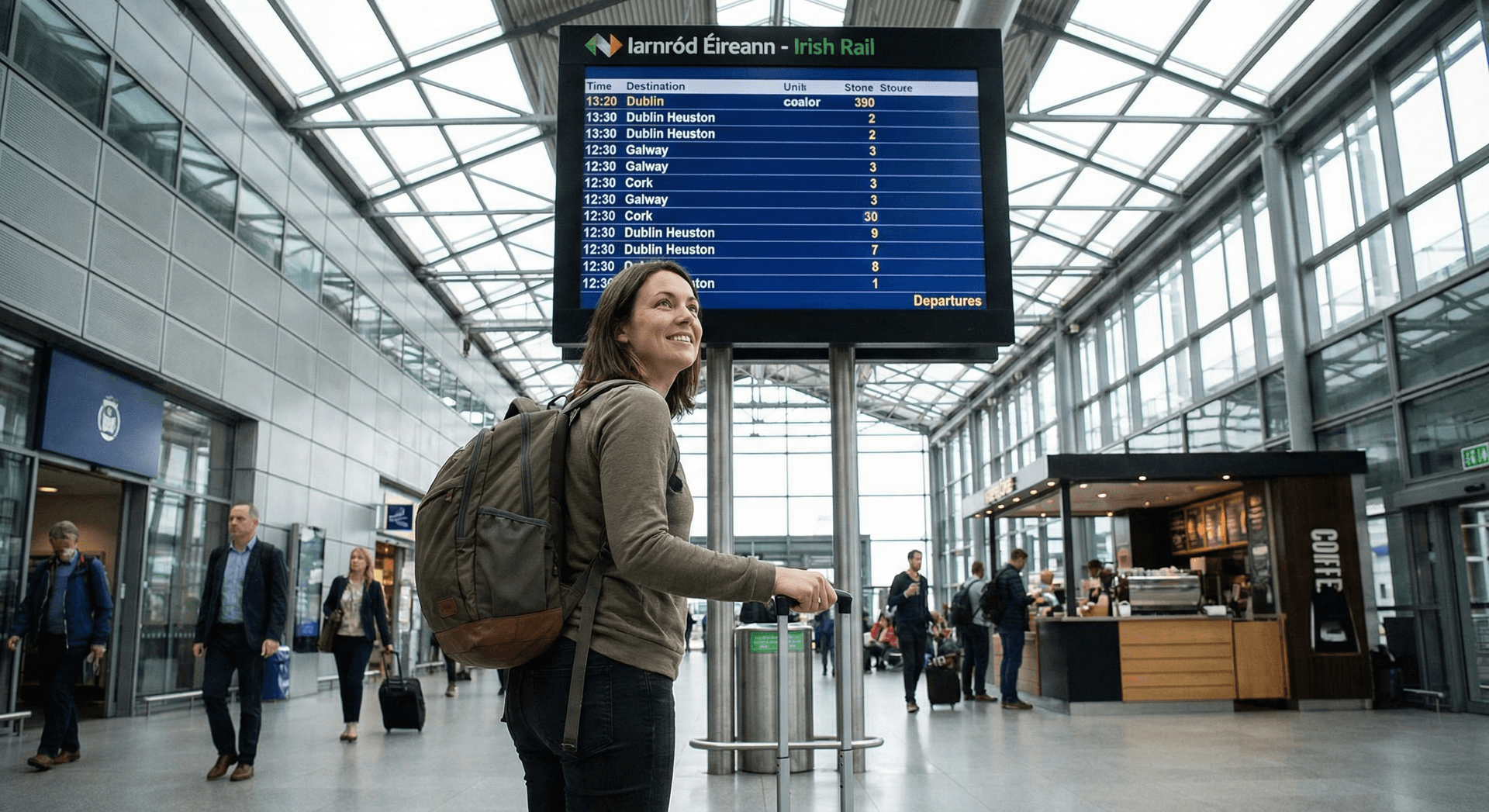
While Ireland is generally very safe for solo female travelers, different transport modes come with different considerations.
General Safety Principles:
- Trust your instincts — if a situation feels uncomfortable, remove yourself from it
- Share your itinerary — let someone know your plans, especially for remote areas
- Keep valuables secure — pickpocketing is rare but can happen in tourist areas
- Have emergency numbers — 999/112 for emergencies, 1800 666 111 for Garda (police) non-emergency
- Stay connected — get an Irish SIM card or ensure your plan includes Ireland
Mode-Specific Safety:
Transport Safety Level Key Tips Trains Very High Well-lit, staffed stations; stay in main carriages Buses High Sit near the driver at night; know your stop Taxis High Use apps or reputable companies; check plates Rental Car Medium-High Avoid night driving; park securely; stay on main roads Cycling Medium Wear hi-vis; use lights; stick to greenways Walking High Stay aware; avoid isolated areas at night
Emergency Preparedness:
- Download the What3Words app—Irish emergency services use it to locate callers
- Know your accommodation's full address and phone number
- Keep a backup power bank for your phone
- Consider travel insurance that covers medical evacuation from remote areas
For comprehensive safety guidance, don't miss Is Ireland Safe for Solo Female Travelers?.
Practical Tips for Booking and Navigating
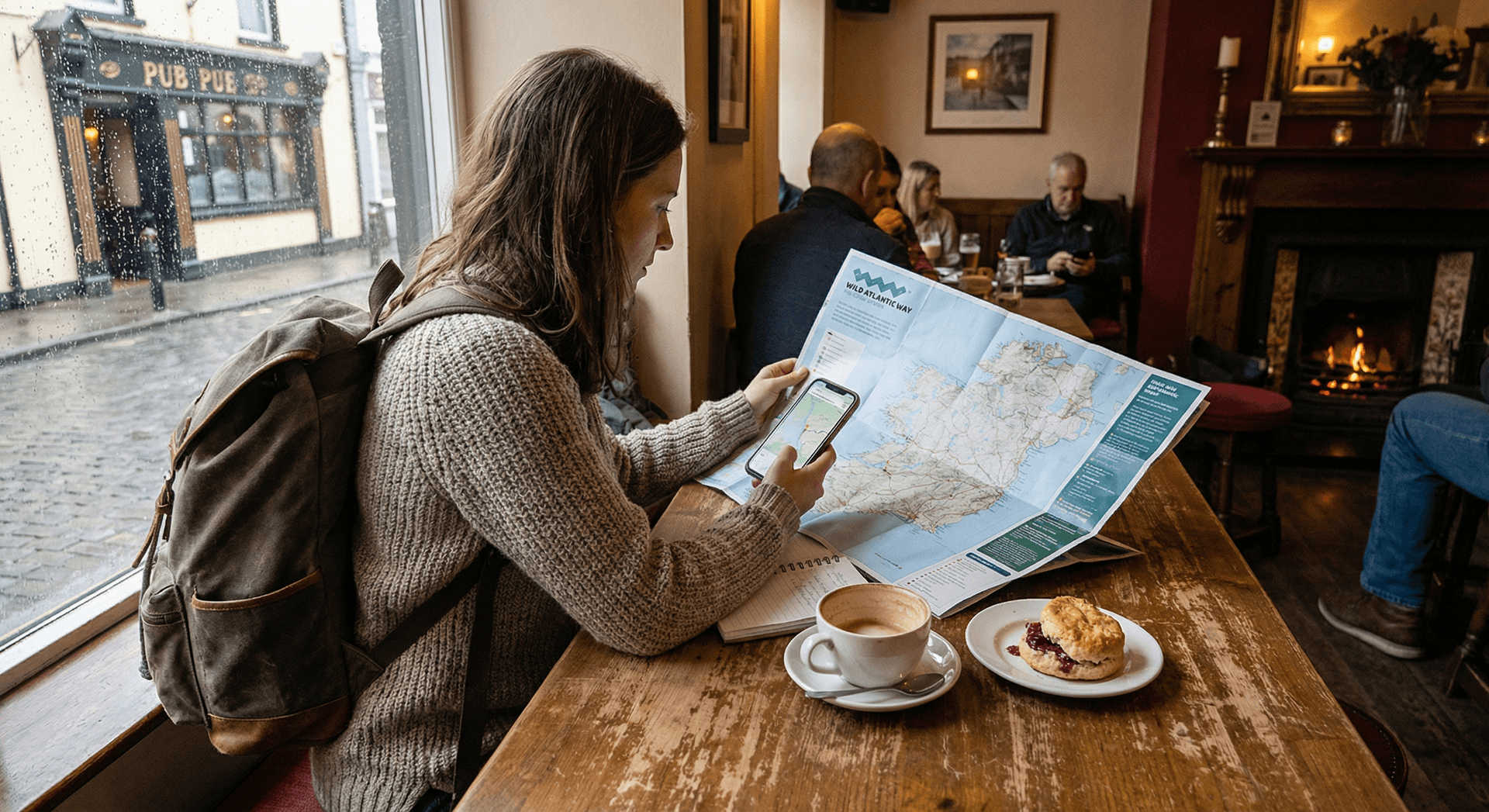
Smart planning makes navigating Ireland as a solo female traveler much smoother. Here are practical tips to streamline your journey.
Essential Apps to Download:
- Transport for Ireland (TFI) — Journey planner for all public transport
- Free Now — Taxi and ride-sharing
- Google Maps — Download offline maps for your route
- What3Words — Emergency location sharing
- Irish Rail — Train timetables and mobile tickets
- Bus Éireann — Intercity bus information
Booking Strategies:
- Trains: Book 3-7 days ahead for best prices; last-minute tickets are expensive
- Buses: Often cheaper than trains; private operators frequently undercut Bus Éireann
- Car Rental: Book 2-3 months ahead for automatics; 1 month for manuals
- Accommodation: Book transport-first accommodations near stations if relying on public transport—see Where to Stay: Solo Female Traveler Accommodation Guide
Money-Saving Tips:
- Get a Leap Visitor Card for Dublin (€8-40 depending on duration)
- Book train tickets online rather than at the station for discounts
- Consider a Heritage Card (€40) for free entry to OPW sites—makes backroads driving more valuable
- Group day trips from Dublin to Galway, Belfast, or Cork can be cheaper than independent transport
Final Thoughts:
Ireland's transport system, combined with its compact size and welcoming culture, makes it an ideal destination for solo female travelers. Whether you're navigating Dublin's DART train system, cycling the greenways of Mayo, or driving the winding roads of Kerry, you'll find a transport mode that suits your comfort level and adventure spirit.
The key is matching your transport choice to your destination—public transport for cities, a car or driver for the Wild Atlantic Way, and your own two feet for exploring charming town centers. With a bit of planning and the safety tips outlined above, getting around Ireland as a solo female traveler is not just manageable—it's part of the adventure.
Ready to plan your route? Start with Solo Female Travel Ireland: The Ultimate Guide for comprehensive trip planning, or explore Best Places for Solo Female Travelers in Ireland to choose your destinations.
Table of Contents
Share this post
More from the Blog

Cork to Blarney Castle Day Trip: The Stone, the Gardens and What Else to See
Plan a Cork to Blarney Castle day trip. Kiss the stone, explore the Poison Garden, and add Cork city, Fota or Kinsale for a full day out.

Cork to Cobh Day Trip: Titanic, Colourful Houses and Harbour History
Plan a Cork to Cobh day trip by train, car or private driver. Explore Titanic history, St Colman's Cathedral, Spike Island and the best harbour views.

Cork to Killarney Day Trip: Lakes, Mountains and Muckross in One Day
A Cork to Killarney day trip is a longer escape into Kerry. Here's how to plan the drive, what to see in Killarney National Park, and why a private driver helps.