
Hiking the Wild Atlantic Way Solo: Why You Need a Guide for Remote Trails
There's a certain magic to standing at the edge of the world, the Atlantic wind tangling your hair as waves crash against cliffs that have stood for millennia. For solo female travelers, the Wild Atlantic Way represents one of Ireland's most spectacular adventures—a 2,500-kilometer coastal route through nine counties offering some of Europe's most dramatic hiking terrain.
This guide, part of our broader Solo Female Travel Ireland: The Ultimate Guide — the master hub, covers everything you need to know about hiking this iconic route as a solo woman, with special attention to trails where expert guidance isn't just helpful—it's essential.
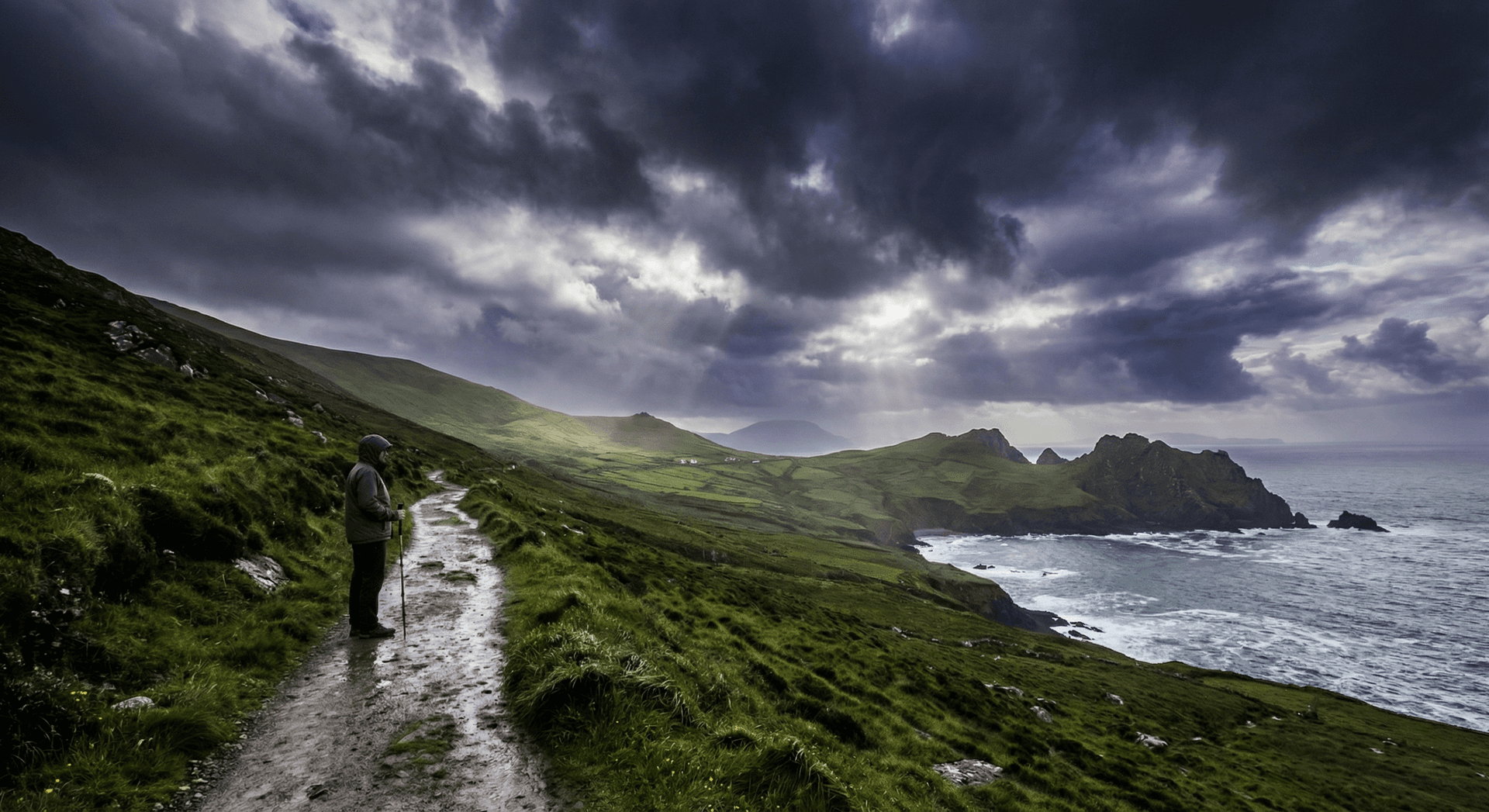
The Reality of Solo Hiking on the Wild Atlantic Way
The Wild Atlantic Way has captured the imagination of adventurers worldwide. From the towering Cliffs of Moher in County Clare to the remote wilderness of County Donegal's Slieve League cliffs, this route offers hiking experiences that rival anything in Norway or New Zealand.
For solo female travelers, the appeal is multifaceted—the freedom to set your own pace, the meditative quality of walking alone, and the profound sense of accomplishment. However, the reality differs from well-marked trails in populated areas.
The route encompasses everything from gentle coastal boardwalks to rugged mountain treks where weather changes in minutes. Fog can roll in suddenly, obscuring visibility. Mobile coverage is patchy, and some trailheads are miles from the nearest village. These factors don't mean solo women should avoid hiking here—but they do necessitate careful planning and, in many cases, a knowledgeable guide.
Before diving deeper, review our safety overview in Is Ireland Safe for Solo Female Travelers? to understand the broader context of solo travel in Ireland.
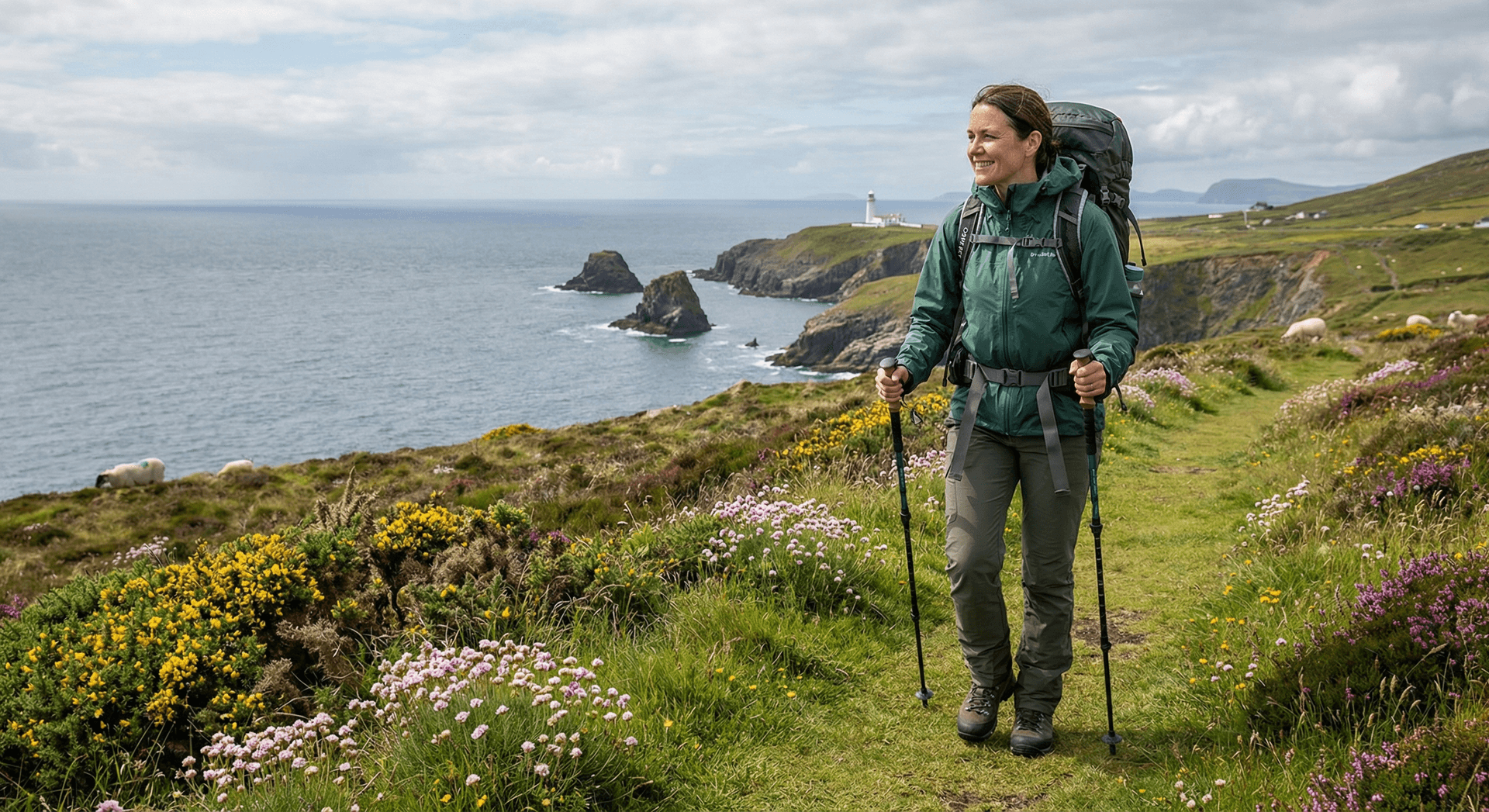
Safety Considerations for Solo Female Hikers
Ireland consistently ranks among the safest countries for solo female travelers, and Wild Atlantic Way communities are particularly welcoming. However, the safety concerns on remote trails differ from urban environments.
The primary risks aren't related to personal security, but rather environmental challenges: rapidly changing weather, difficult terrain that can cause injuries, limited emergency access, and the reality that if something goes wrong, you may be far from help with no mobile signal.
For solo women, there's also personal comfort to consider. While Ireland is generally safe, hiking alone in isolated areas can feel vulnerable. A guide provides not just practical expertise but peace of mind—someone who knows the terrain, weather patterns, and emergency procedures.
When you're not constantly assessing risks or worrying about navigation, you can fully immerse yourself in the experience. A good guide enhances rather than diminishes your connection to the landscape.

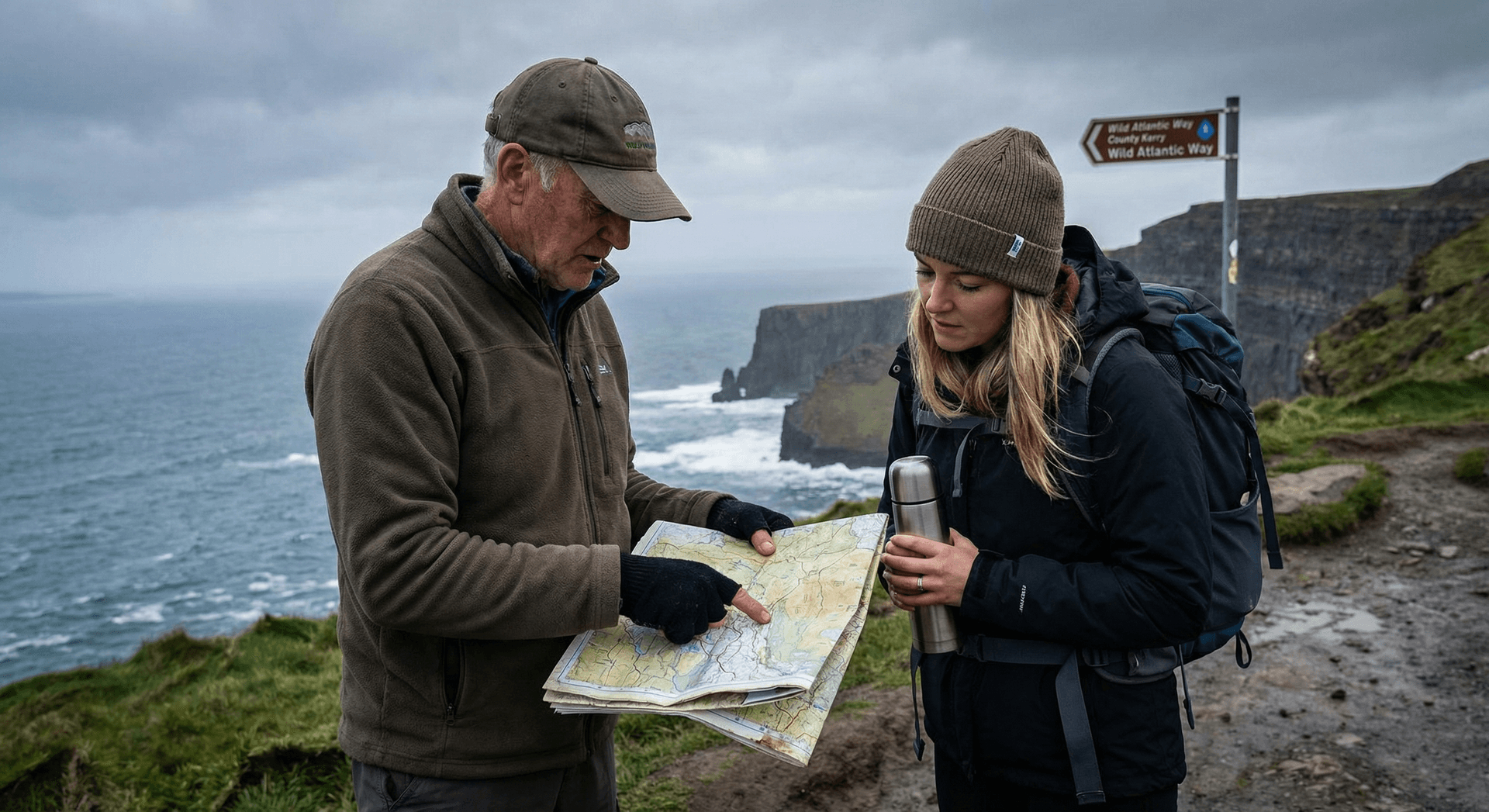
Why a Guide Matters: Navigation, Weather, and Emergency Support
The Wild Atlantic Way isn't a single defined trail but a collection of interconnected routes ranging from official waymarked paths to informal coastal tracks. While sections like County Clare's Cliffs of Moher are well-developed, others traverse boggy terrain or follow ancient paths nearly impossible to find without local knowledge.
Professional guides possess intimate familiarity with these trails. They know which paths become impassable after rain, where the best viewpoints hide, and how to navigate complex walking networks. This expertise is particularly valuable in County Kerry, where trails weave through mountain passes and exposed coastal headlands.
Weather expertise is equally crucial. The Atlantic creates conditions that challenge even experienced hikers—rain is frequent, wind can knock you off balance, and visibility can drop to near-zero when sea fog rolls in. Guides monitor patterns constantly and understand how local topography affects conditions. They know when to turn back, when to seek shelter, and how to prevent hypothermia, a real risk even in summer.
Emergency preparedness completes the picture. Professional guides are trained in wilderness first aid and carry comprehensive medical kits. They have established protocols for emergencies, including direct contacts with mountain rescue and knowledge of fastest extraction routes. Many carry satellite communicators for areas without cellular coverage.
For solo female travelers, this support offers peace of mind that transforms anxiety into confidence, enabling you to tackle more challenging and rewarding routes.
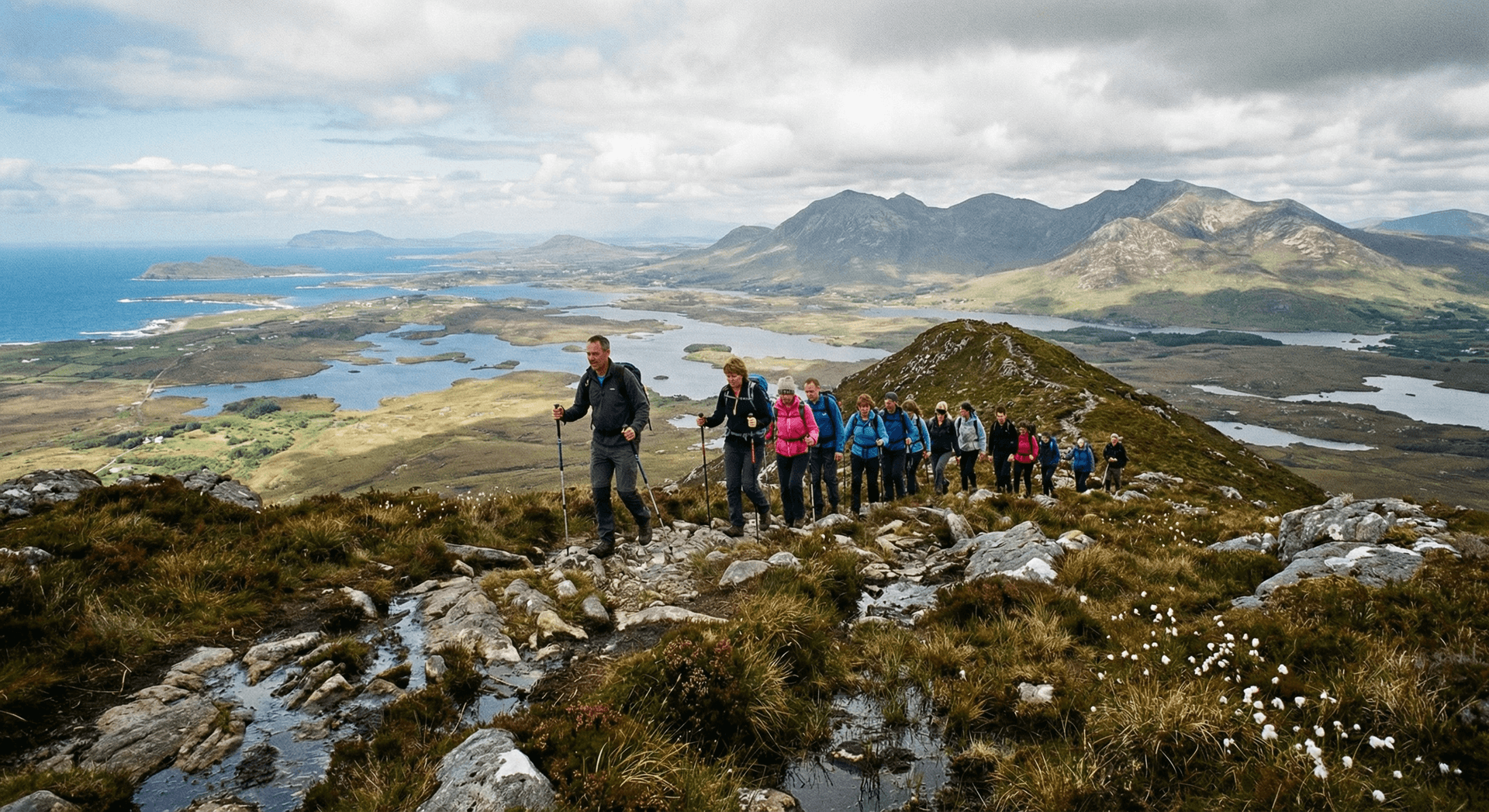
Best Guided Hiking Sections of the Wild Atlantic Way
While the entire route offers spectacular hiking, certain sections particularly reward professional guidance:
The Slieve League Cliffs, County Donegal
Among Europe's highest sea cliffs, Slieve League rises nearly 600 meters above the Atlantic in County Donegal. While the main viewing platform is accessible independently, the full cliff path traverses exposed sections where a guide's expertise is invaluable.
The Dingle Way Segments, County Kerry
Sections like Mount Brandon crossing and the Slea Head cliff paths benefit enormously from guided expertise. County Kerry's changeable weather and the mountain's notorious cloud cover make local knowledge essential.
The Twelve Bens and Maumturk Mountains, County Galway

Connemara's mountain ranges offer spectacular ridge walking, but terrain is rugged and paths often indistinct. Guided hikes in County Galway's mountains open routes dangerous for inexperienced solo hikers.
The Cliffs of Moher Coastal Walk, County Clare
The full coastal walk from Doolin to Hags Head traverses sections with informal paths and significant exposure. County Clare's guides offer experiences beyond tourist viewpoints while ensuring safe navigation.
What to Expect on a Guided Hike
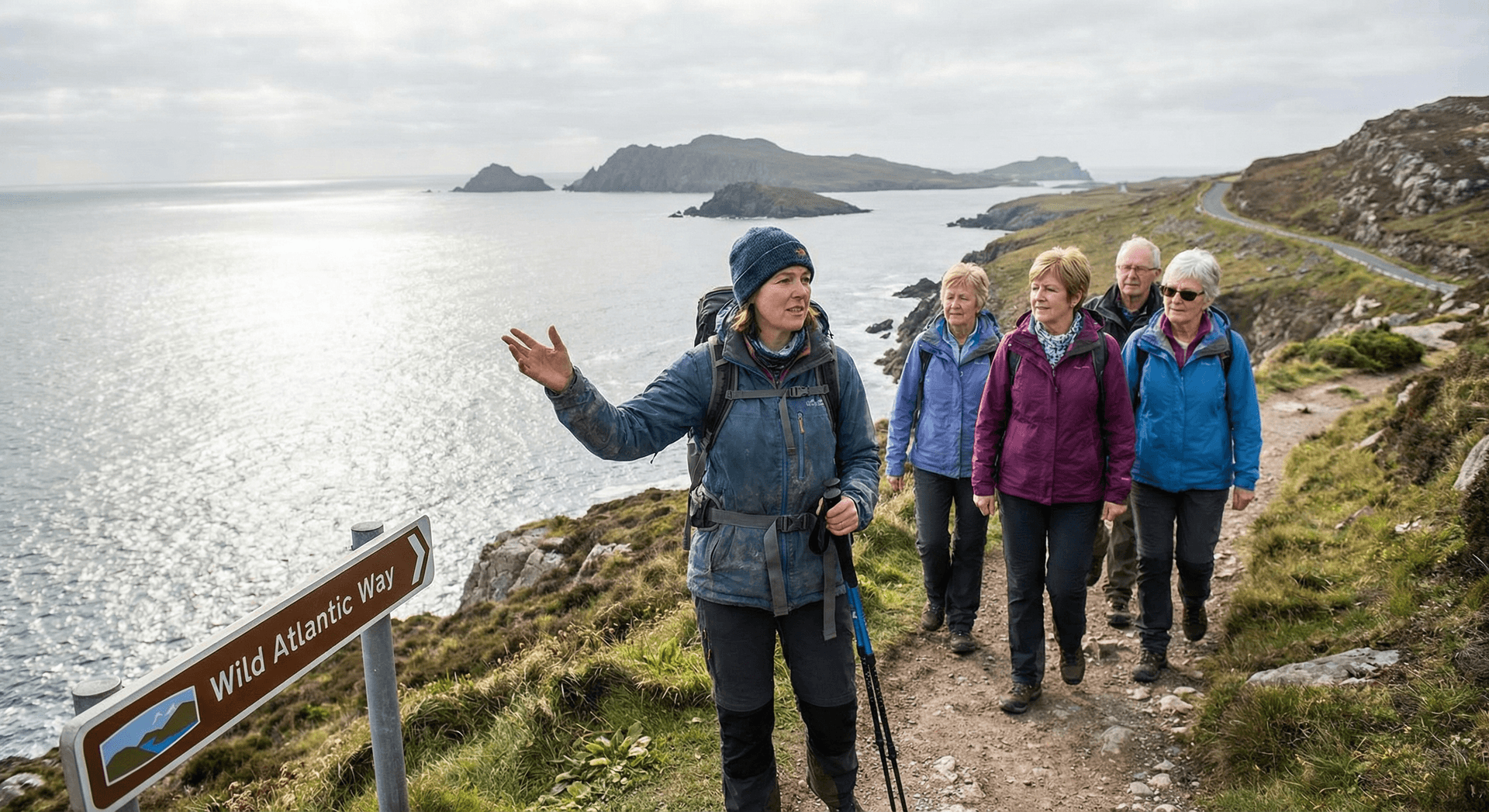
Most guided day hikes begin with a morning meeting at a trailhead or nearby village. Your guide briefs you on the route, conditions, and safety procedures, checking your gear to ensure proper equipment—good waterproofs and sturdy boots are non-negotiable on the Wild Atlantic Way.
The hiking pace is moderate, accommodating reasonable fitness levels while allowing time for photography and stories. Groups are typically small, often six or fewer, ensuring personal attention. Some guides offer private tours for solo travelers preferring one-on-one experiences.
Lunch is usually packed, eaten in scenic spots—sheltered coves, mountain summits, or beside streams. Your guide knows perfect places to pause, often with wind shelter. Throughout the day, they share knowledge of natural and cultural history, pointing out features you might otherwise miss.
Multi-day guided experiences add accommodation and logistics—arranging stays in local guesthouses or B&Bs, transporting luggage, and often organizing evening meals showcasing local cuisine. These packages remove all logistical stress.
For solo female travelers, guided hikes provide valuable social connection. Sharing spectacular moments with fellow hikers and a knowledgeable guide adds rich dimension to the experience. Many women form genuine friendships on these adventures.
How to Choose a Reputable Guide
Selecting the right guide is crucial. Verify qualifications—professional mountain guides should hold certifications like the Mountain Leader Award (ML) or Mountaineering and Climbing Instructor (MCI) for technical terrain.
Check reviews, particularly from solo female travelers. Look for comments about safety consciousness, knowledge, and communication style. Personal recommendations from travel communities are invaluable.
Consider specialization and style. Some focus on physical challenge, others on natural history or cultural interpretation. Choose someone whose approach aligns with your interests. For solo women, you might specifically seek female guides or companies with strong reputations for welcoming solo travelers.
Ask detailed questions before booking: What's the maximum group size? What's the cancellation policy? What equipment is provided? How do they handle emergencies? A reputable guide welcomes these questions.

Look for operators who are members of professional associations like Mountaineering Ireland. For connections to qualified guides, our Main Guides Page offers resources throughout Ireland.
Practical Tips for Solo Female Hikers
Whether you choose guided hikes or mix guided and independent walking, these tips help ensure a safe, enjoyable experience:
Gear Up Properly: Irish weather demands respect. Essential kit includes waterproof jacket and trousers, layered clothing, sturdy waterproof hiking boots, warm hat and gloves (even in summer), and a daypack for spare layers, food, and water. Don't forget sun protection—there's little shade on coastal paths.
Share Your Plans: Always inform someone of your intended route and expected return, even on guided hikes. Many accommodation providers along the Wild Atlantic Way support hikers and check on safe returns.
Carry Emergency Cash: In remote areas, card payments aren't always possible. Keep cash for unexpected needs—a taxi back during a downpour or an impulse stop at a remote pub.
Trust Your Instincts: If something feels uncomfortable—weather deteriorating, terrain too challenging, or a social interaction that doesn't feel right—don't hesitate to change plans. A good guide supports these decisions.
Build in Rest Days: Schedule rest days to recover, explore villages, and enjoy cultural experiences. These breaks are perfect for solo dining—see our guide to Dining Alone in Ireland for tips on enjoying the food scene confidently.
Consider the Season: April through October offers the most reliable conditions. Summer brings longer days but more crowds. Spring and autumn have fewer visitors but more unpredictable weather. Winter hiking is possible but best undertaken with expert guidance.
Connect with Local Culture: The Wild Atlantic Way isn't just scenery—it's communities, music, and traditions. Take time to experience local pubs (our Dublin Nightlife for Solo Women guide offers insights applicable throughout Ireland), listen to traditional music, and chat with locals.
Conclusion: Embracing the Wild Atlantic Way with Confidence
The Wild Atlantic Way offers solo female travelers one of Europe's most spectacular hiking experiences. While challenges of remote terrain and unpredictable weather are real, they needn't be barriers to adventure. By enlisting qualified guides for demanding sections, you gain not just safety and navigation support but a deeper connection to this extraordinary coastline.
A guide transforms the Wild Atlantic Way from a route on a map into a living experience full of stories, hidden places, and authentic encounters. For solo women, this offers the perfect balance—maintaining independence while accessing expertise that enhances safety and enjoyment.
As you plan your adventure, remember this guide is part of our comprehensive Solo Female Travel Ireland: The Ultimate Guide — the master hub. Whether hiking the peaks of County Donegal, wandering County Clare's boreens, or exploring mountains in County Kerry and County Galway, Ireland welcomes solo female travelers with open arms. Walk safely, walk wisely, and let the wild Atlantic work its timeless magic.
After exploring the Wild Atlantic Way, consider booking one of our Solo Female-Friendly Tours in Ireland for more guided adventures across the country.
Table of Contents
Share this post
More from the Blog

Cork to Blarney Castle Day Trip: The Stone, the Gardens and What Else to See
Plan a Cork to Blarney Castle day trip. Kiss the stone, explore the Poison Garden, and add Cork city, Fota or Kinsale for a full day out.

Cork to Cobh Day Trip: Titanic, Colourful Houses and Harbour History
Plan a Cork to Cobh day trip by train, car or private driver. Explore Titanic history, St Colman's Cathedral, Spike Island and the best harbour views.

Cork to Killarney Day Trip: Lakes, Mountains and Muckross in One Day
A Cork to Killarney day trip is a longer escape into Kerry. Here's how to plan the drive, what to see in Killarney National Park, and why a private driver helps.