
Dining Alone in Ireland: A Solo Traveler's Guide to Pubs, Counters & Etiquette
Walking into an Irish pub alone triggers a specific anxiety. Not the "will I be safe" worry—that's covered in the safety guide. This is the "will I look pathetic eating by myself" fear. The fear that everyone will notice you're alone, that you'll be the sad person at the corner table with only your phone for company.
Here's the truth nobody tells you: dining alone in Ireland is completely normal, and the pub culture here actually makes it easier than in many countries. The key is understanding how Irish pubs work, where to sit, how to order, and the subtle etiquette that separates solo travelers who blend in from those who broadcast their discomfort.
This guide covers everything from grabbing a quick lunch at a pub counter to lingering over dinner without feeling awkward. By the end, you'll walk into any Irish pub with the confidence of someone who knows exactly what they're doing—even if the only Irish word you know is "sláinte."
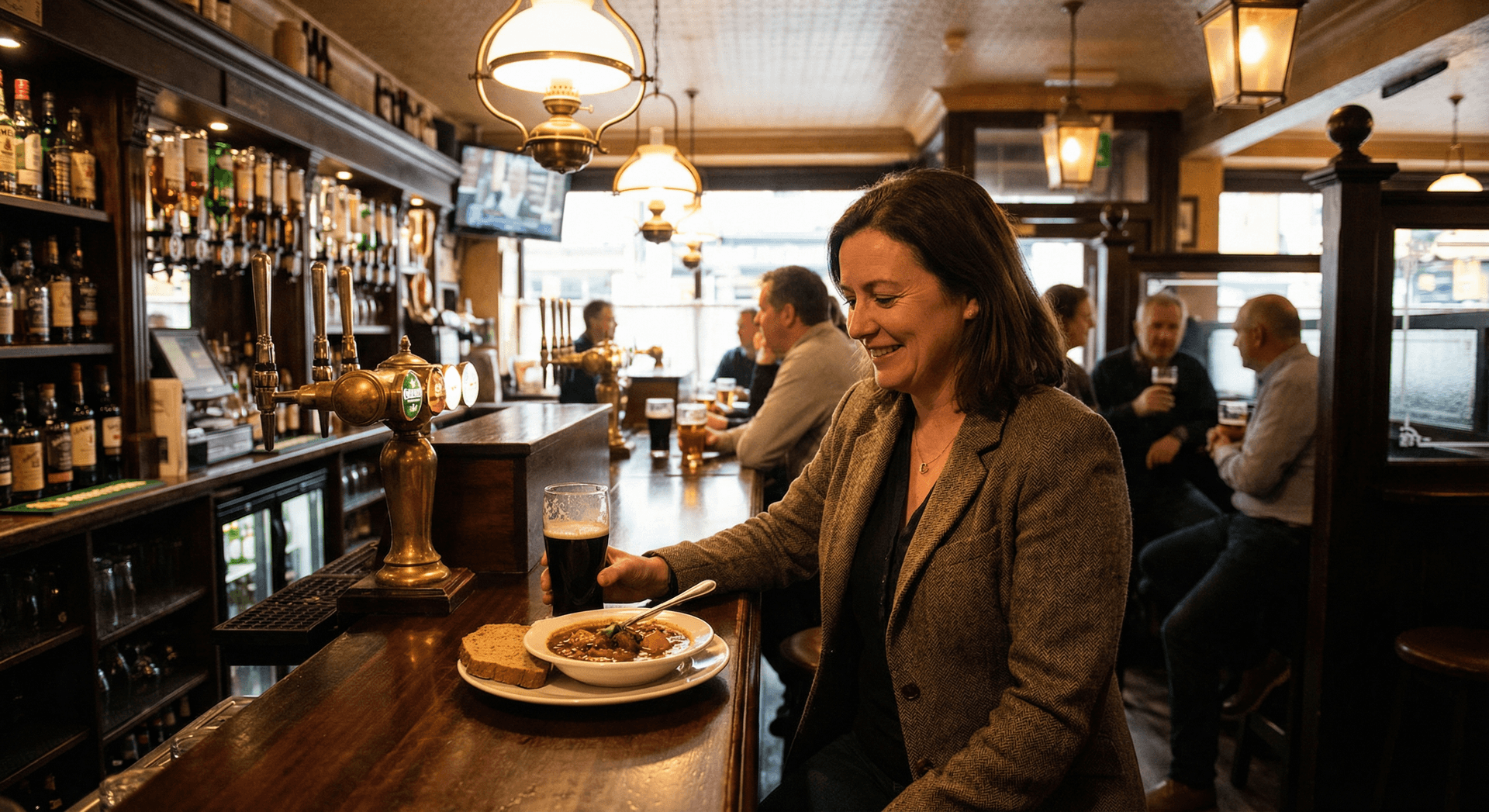
Why Irish Pubs Work for Solo Diners
Irish pubs aren't just drinking establishments—they're community living rooms where people eat, socialize, read newspapers, and yes, dine alone without anyone batting an eye. This culture developed because Irish homes were traditionally small, and the pub became the extension of the living space.
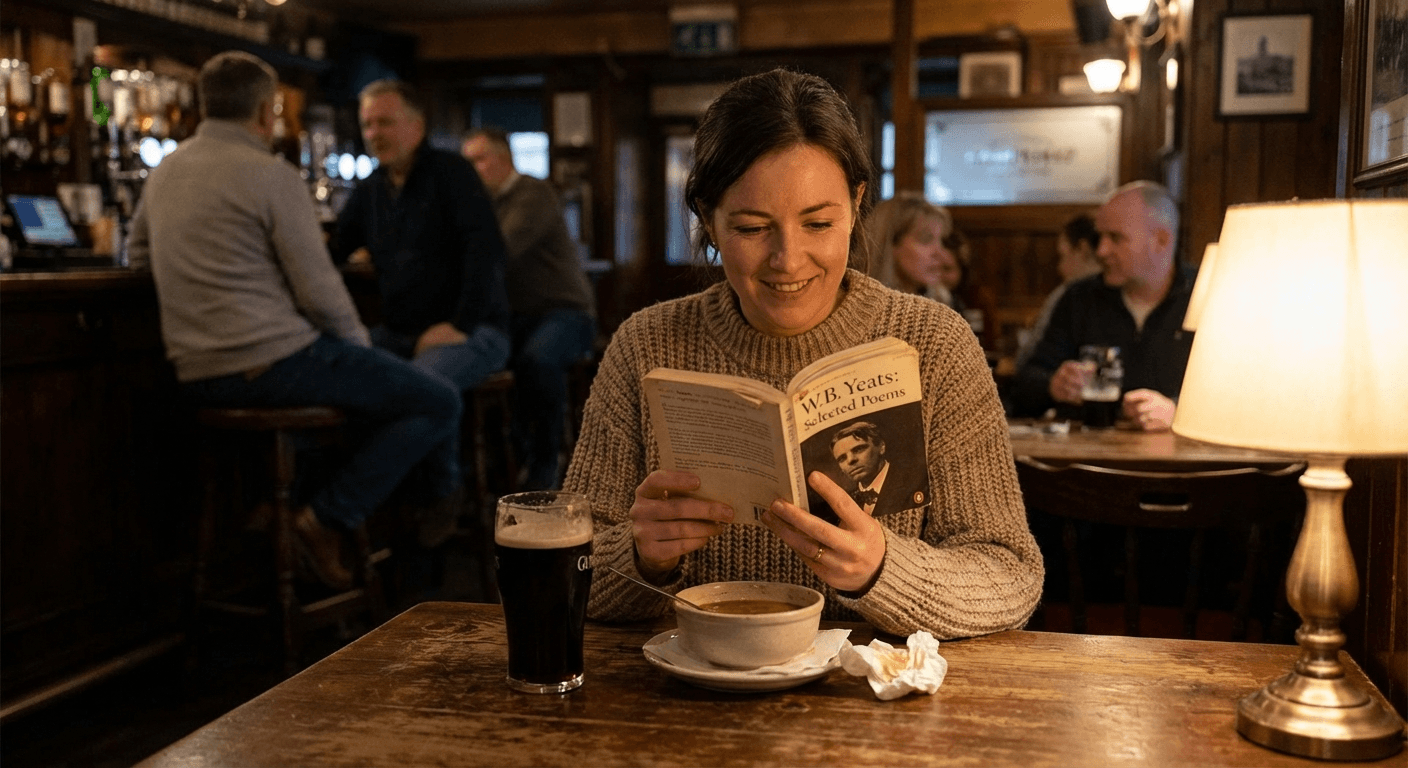
Unlike American bars that focus on drinking and nightlife, Irish pubs serve food throughout the day. You'll see businessmen having lunch, retirees reading the paper over soup, and travelers like yourself refueling between destinations. The diversity of patrons means solo diners don't stand out.
The layout helps too. Most Irish pubs have multiple zones: the bar counter for casual dining, snug areas (small private rooms) for groups, and lounge areas with tables. As a solo diner, you have options that range from sociable to private depending on your mood.
This pub culture extends beyond Dublin into every village and town. Whether you're in a bustling city establishment or a quiet rural pub with three locals and a dog, the expectation that people eat alone is universal across Ireland.
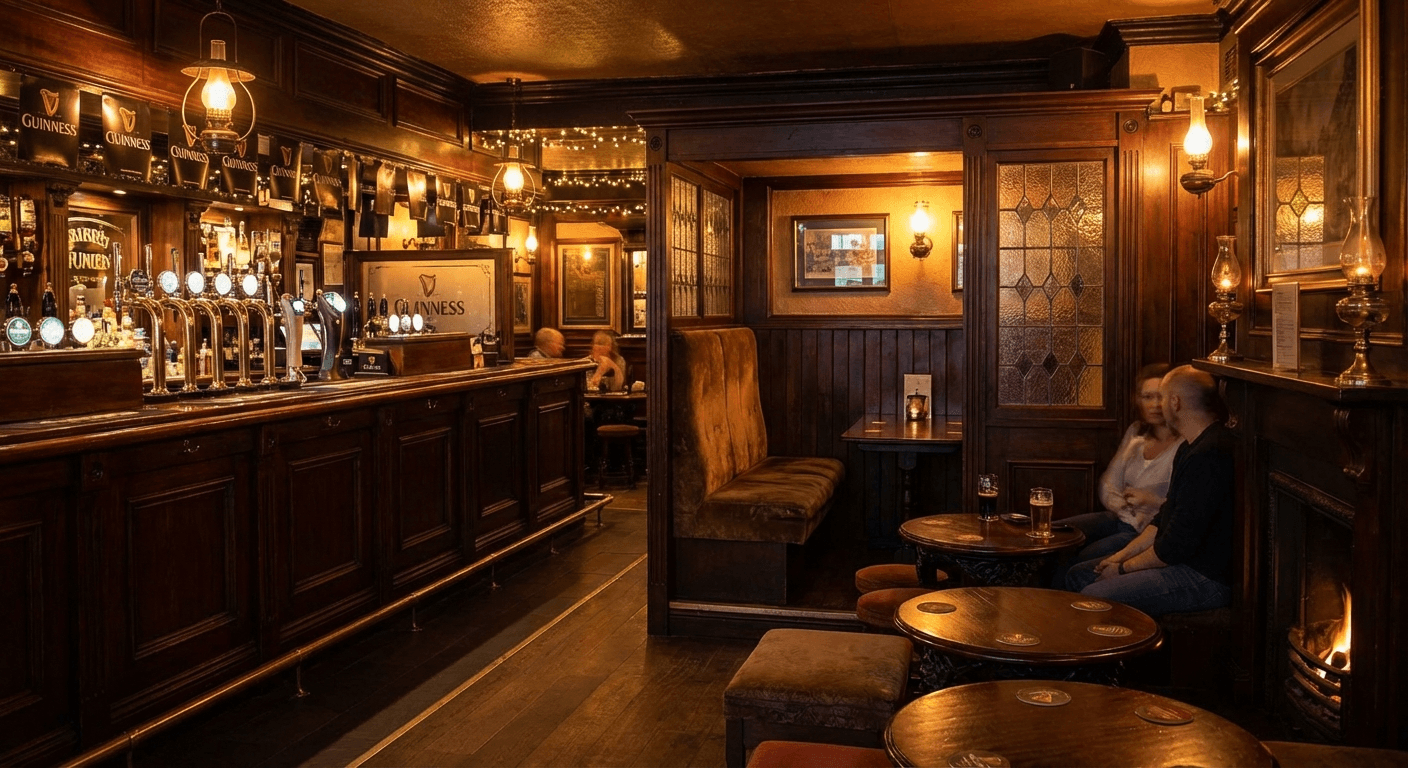
Counter vs. Table: Where to Sit and Why It Matters
Your seating choice signals your intentions, and Irish pub staff read these signals instantly. Understanding the difference prevents awkward situations and ensures you get the experience you want.
The Bar Counter: Sitting at the bar means you're open to conversation. The bartender will chat with you. Regulars might strike up a discussion about the weather, the match, or where you're from. Order at the bar, pay as you go, and expect a more casual experience. This is ideal if you're feeling sociable or want insider tips about the area.
A Table: Taking a table signals you want a proper meal and possibly solitude. You'll get table service. Staff will check on you but won't linger for conversation unless you initiate it. This works better if you're tired, want to read, or need to plan your next day.
The Snug: If a pub has a snug (a small enclosed booth traditionally for women and priests), it's perfect for solo diners who want privacy without isolation. You'll overhear conversations but won't be expected to participate.
Don't hesitate to ask the staff if you're unsure. A simple "Is it okay to eat at the bar?" gets you the local custom for that specific establishment. Most Irish bartenders appreciate the question and will guide you appropriately.
Reading the Room: Which Pubs Welcome Solo Diners
Not all pubs are created equal for solo dining. Tourist-heavy spots in Temple Bar cater to visitors and won't blink at a table for one. Neighborhood pubs might require more confidence but offer better food and conversation. Rural pubs vary wildly—some are deeply local, others welcome anyone with a story.
Signs a pub welcomes solo diners:
- Food menu displayed outside
- People eating at the bar
- Mix of ages and group sizes
- Staff who make eye contact and smile
- "Bar food served all day" signage
Signs you might want to try elsewhere:
- Groups only, no individuals visible
- Staff seem harried or unwelcoming
- Menu focused entirely on drinks
- Loud music that prevents conversation
- Tables reserved for large parties
Trust your instincts. If you walk in and the energy feels off, there's always another pub nearby. Ireland has approximately 7,000 of them—you don't need to force yourself into one that doesn't feel right.
For the Dublin Nightlife for Solo Women: Safety, Best Pubs & Getting Home recommendations, the same principles apply during evening hours, though the atmosphere shifts toward drinking rather than dining.
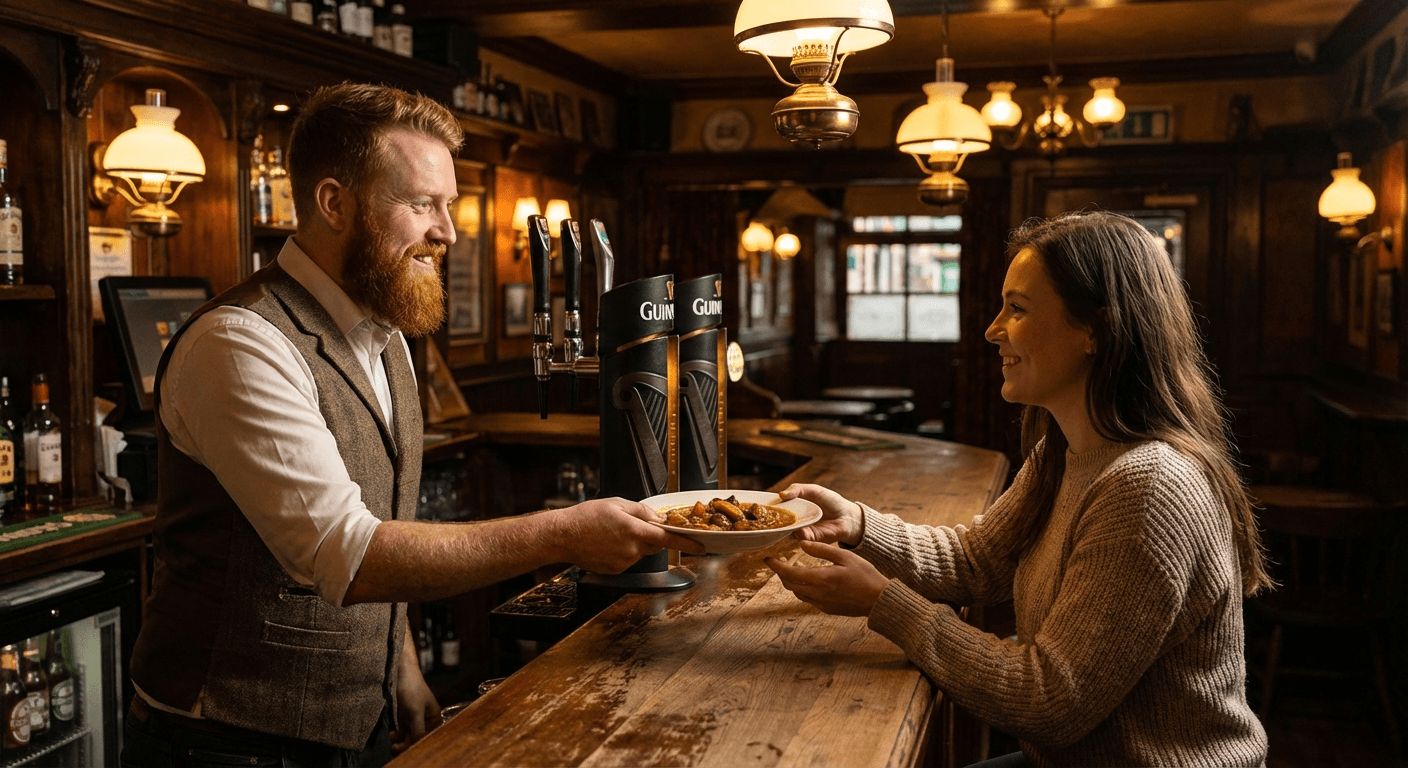
What to Order: Food That Works for One

Irish pub food evolved for solo diners. Portions are generous but manageable. The classics travel well from kitchen to counter without getting cold or soggy.
Best solo dining options:
Soup and bread — Nearly every pub offers homemade soup. It's affordable, warming, and easy to eat while reading or people-watching. Brown soda bread comes standard.
Irish stew — A bowl of lamb or beef stew with potatoes is substantial without being overwhelming. It arrives hot and stays warm, so you can eat at your own pace.
Fish and chips — The quintessential pub meal. Crispy, satisfying, and culturally appropriate everywhere. Tartar sauce and mushy peas complete the experience.
The toastie — A grilled sandwich, often ham and cheese or chicken. Simple, comforting, and exactly what you need after a morning of hiking or driving.
Full Irish breakfast — Available all day in many pubs. Eggs, rashers, sausage, black and white pudding, beans, toast. It'll fuel you for hours and costs less than you'd expect.
Avoid overly complicated dishes that require precise timing or elaborate presentation. You're in a pub, not a fine dining restaurant. The best meals here are the simple, hearty ones that have sustained Irish people for generations.
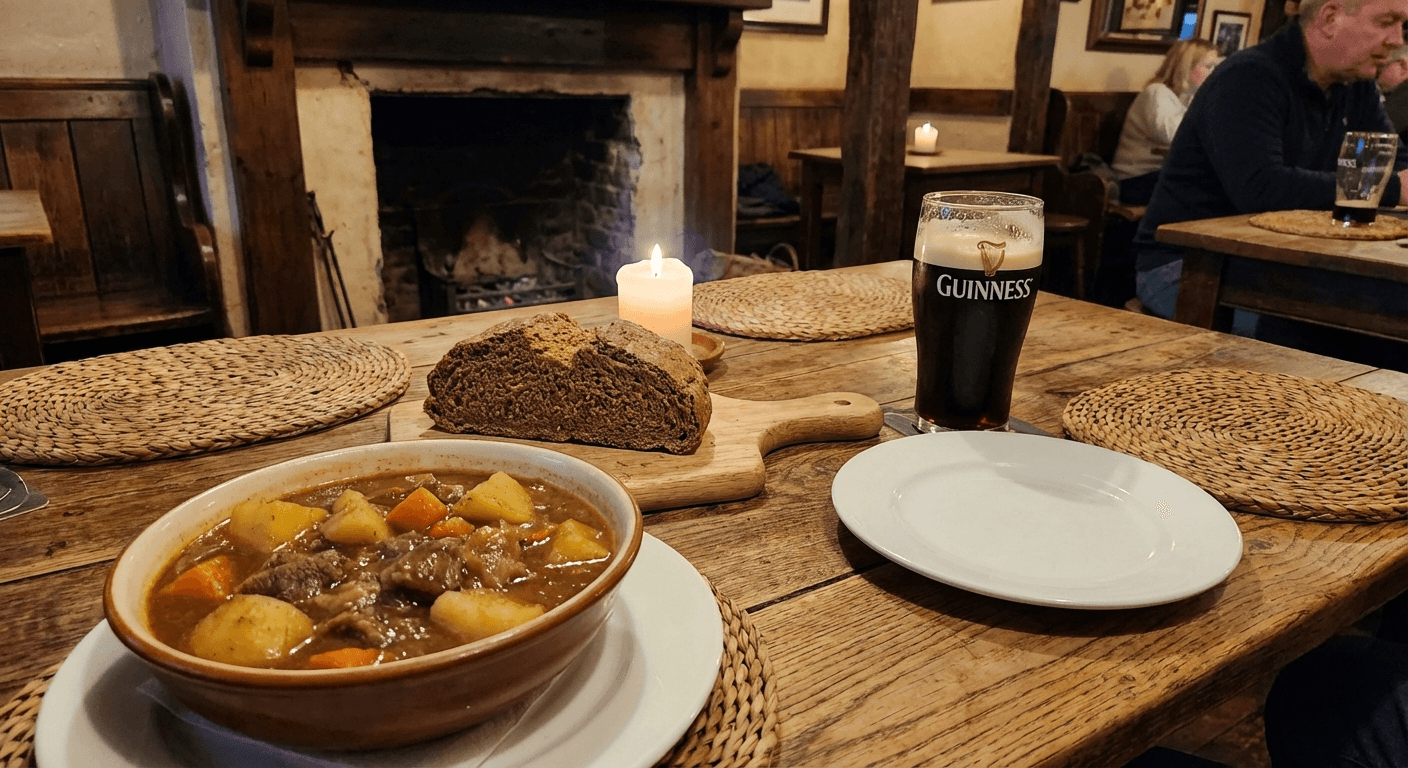
The Ordering Process: Bar Service vs. Table Service
Knowing when to order at the bar versus waiting for table service prevents that awkward standing-around moment. Here's how to tell:
Order at the bar when:
- You're sitting at the bar counter
- There's a "order at bar" sign
- Tables have numbers but no staff has approached you
- The pub is busy and you want to speed things up
Wait for table service when:
- You're seated at a table
- Staff greeted you and gave menus
- It's clearly a restaurant-style establishment
- The place emphasizes sit-down dining
At the bar: Catch the bartender's eye, order your food and drink together. They'll often ask "eating in?" to confirm you're staying. Pay when you order or run a tab if they know you'll have multiple rounds.
At a table: Staff will take your order, bring the food, and handle payment at the end. Standard restaurant protocol applies.
If unsure, watch what others do for thirty seconds. Irish pub culture is consistent enough that you'll spot the pattern immediately. When in absolute doubt, default to the bar—it's always acceptable to order there, whereas flagging down table service in a bar-order pub marks you as uncertain.
Conversation Etiquette: When to Chat and When to Be Left Alone
Irish people talk to strangers. It's not flirting or harassment—it's cultural. The barman asks where you're from. The old lad at the counter comments on the weather. Someone offers an opinion on the soup. This is normal and expected.
How to handle it:
If you want to chat: Engage. Ask about the area, the food, the local team. Irish people love explaining their country to interested visitors. You'll leave with recommendations no guidebook contains.
If you don't want to chat: Bring a book, newspaper, or phone. Place it prominently on the counter. Make eye contact, smile politely, then return to your reading. This signals "friendly but occupied" without rudeness.
The escape phrases:
- "I'm just catching up on some reading" (with a smile)
- "Long day of driving—my brain's fried" (sympathetic chuckle, end of conversation)
- "Meeting someone soon, actually" (true or not, it works)
Most importantly, never feel obligated to continue a conversation that makes you uncomfortable. The 21 Essential Solo Female Travel Tips for Ireland: The "Unspoken" Rules guide covers broader safety, but the basic principle applies: your comfort matters more than politeness.
Timing Your Visit: Lunch vs. Dinner vs. Off-Hours
When you eat matters almost as much as where. Irish pubs follow predictable patterns, and timing your visit right improves the experience significantly.
Lunch (12:00–14:30): Ideal for solo diners. Pubs are busy but not crowded. The lunch crowd is mixed—workers, locals, tourists. Food is fresh, service is prompt. This is when you're least likely to stand out as dining alone.
Early dinner (17:00–19:00): A transition period. Some pubs switch from bar food to dinner service. Staff might be setting up tables. It's a good time for a casual meal, but check if the kitchen is fully operational.
Dinner (19:00–21:30): Busier, more couples and groups. Solo dining is still fine, but you might wait longer for a seat at popular spots. Reservations help at restaurant-style pubs.
Late night (after 22:00): Focus shifts to drinking. Food service winds down. Some pubs stop serving entirely. If you're hungry late, check closing times and last kitchen orders.
Sunday lunch: Many Irish families eat Sunday dinner at pubs. This tradition means busy establishments, but also warm atmospheres and excellent roast meals. Worth experiencing at least once.
Handling the Awkward Moments
Even with perfect preparation, awkward moments happen. Your phone dies mid-meal. The only seat is next to someone who won't stop talking. You knock over your water. Here's how Irish pub culture handles these situations.
You're the only solo diner: Look around more carefully. There's almost always someone else alone—the businessman on his laptop, the pensioner with the paper, the student with textbooks. You're not actually alone in being alone.
The conversation won't end: Stand up. "Right, better get moving—lovely chatting with you." Irish people understand that travelers have schedules. No one is offended by a polite exit.
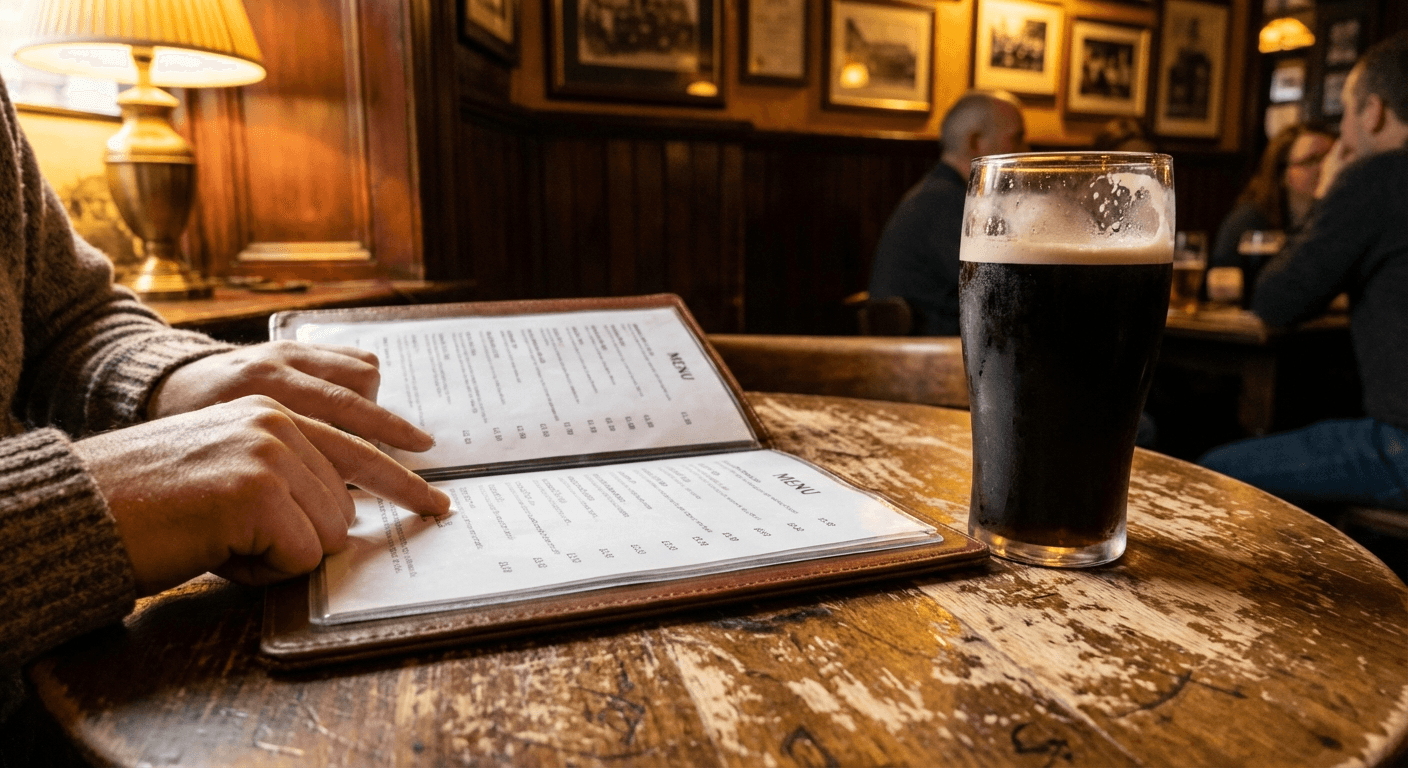
You don't understand the menu: Ask. "What's the difference between the lamb stew and the shepherd's pie?" Bartenders explain this ten times daily. It's literally their job.
You feel stared at: You're probably not being stared at. Irish pubs are social spaces where people look around. That "stare" is often just someone thinking about their own pint, not judging your solo status.
The food arrives and you realize it's enormous: This is standard. Irish portions are generous. Eat what you want, leave what you can't finish. Staff won't comment. Taking leftovers to go is less common than in America but not unheard of—just ask.
Practical Tips for Confident Solo Dining
These small details make the difference between an anxious meal and an enjoyable one.
Before you arrive:
- Check Google Maps for photos of the interior
- Read recent reviews mentioning food quality
- Note opening hours—Irish pubs keep irregular schedules
- Bring cash—some rural pubs don't take cards
Upon arrival:
- Take off your coat and bag—settling in signals confidence
- Ask for a menu even if you see one on the counter
- Order a drink while deciding on food—gives you purpose
During your meal:
- Put your phone away unless you're using it as a "do not disturb" signal
- Eat at a normal pace—rushing signals discomfort
- Make brief eye contact and smile at staff when they pass
When leaving:
- Thank the staff specifically: "Thanks, lovely soup"
- Leave a tip if you had table service (10% is standard)
- Exit with the same confidence you entered with
The Solo Female Travel Ireland: The Ultimate Guide to Safety, Fun & Friendship covers broader strategies, but these dining-specific tips address the social anxiety that trips up many solo travelers.
Building Confidence Through Practice
Your first solo pub meal might feel strange. Your fifth will feel routine. By your tenth, you won't even think about it anymore. Confidence comes from repetition, not preparation.
Start with easier situations: lunch at a busy city pub where solo diners are common. Work up to dinner at neighborhood establishments. Eventually, you'll handle rural pubs full of locals with the same ease.
Remember that nobody cares about your solo status as much as you do. The other patrons are focused on their own meals, conversations, and lives. Your presence as a solo diner doesn't register as noteworthy in Irish pub culture—it's simply normal.
The skills you develop dining alone in Ireland transfer everywhere. After navigating Irish pubs, restaurants in Paris, Tokyo, or Buenos Aires feel manageable. You've proven to yourself that you can walk into any establishment, order confidently, and enjoy your own company.
That's the real souvenir from solo travel—not the photos, but the knowledge that you're capable and comfortable in your own independence.
Quick Reference: Solo Dining Checklist
Before Entering:
- Check opening hours online
- Verify they serve food (not just drinks)
- Have cash backup
- Mentally prepare to enjoy your own company
Seating Strategy:
- Bar counter = open to conversation
- Table = prefer privacy
- Snug = best of both worlds
Ordering Basics:
- At bar: order and pay together
- At table: wait for service
- Ask what's fresh or recommended
Conversation Management:
- Open body language = chat welcome
- Book/phone visible = prefer solitude
- Polite but firm = conversation ends
Meal Ideas:
- Soup and bread (light, affordable)
- Irish stew (hearty, classic)
- Fish and chips (filling, ubiquitous)
- Full Irish (breakfast for dinner)
For more on solo travel in Ireland, see:
- Is Ireland Safe for Solo Female Travelers? The Honest Truth & Safety Guide — safety fundamentals
- How to Meet People in Ireland: A Solo Female Guide to Socializing Safely — making connections
- Dublin Nightlife for Solo Women: Safety, Best Pubs & Getting Home — evening outings
The Irish pub awaits. Walk in like you belong there—because you do.
Once you're comfortable dining solo, explore Best Places for Solo Female Travelers in Ireland to discover the most welcoming destinations for solo adventurers.
Table of Contents
Share this post
More from the Blog

Cork to Blarney Castle Day Trip: The Stone, the Gardens and What Else to See
Plan a Cork to Blarney Castle day trip. Kiss the stone, explore the Poison Garden, and add Cork city, Fota or Kinsale for a full day out.

Cork to Cobh Day Trip: Titanic, Colourful Houses and Harbour History
Plan a Cork to Cobh day trip by train, car or private driver. Explore Titanic history, St Colman's Cathedral, Spike Island and the best harbour views.

Cork to Killarney Day Trip: Lakes, Mountains and Muckross in One Day
A Cork to Killarney day trip is a longer escape into Kerry. Here's how to plan the drive, what to see in Killarney National Park, and why a private driver helps.