
DNA Testing for Irish Roots: Ancestry vs. 23andMe vs. MyHeritage
You spit in a tube. You waited six weeks. And then you got the email: "You are 92% Irish."
It is a thrilling moment. But for many, it is followed by confusion.
- "Okay... but where in Ireland?"
- "Why does it say I'm also 5% Scottish?"
- "Can I use this to get a passport?"
DNA testing has revolutionized genealogy, but it is often misunderstood. It is not a magic wand that tells you your great-grandfather's name. It is a tool that, when combined with traditional paper research, can break through brick walls.
This guide compares the "Big Three" testing companies specifically for Irish Research, explains how to use your results to find living cousins, and clears up the myths about DNA and citizenship.
(This tech guide is part of our master Returning Home: The Ultimate Guide to Tracing Your Irish Roots. If you want to find the paper records to match your DNA, read our Guide to Irish Archives).
The Big Three: Which One Should You Buy?
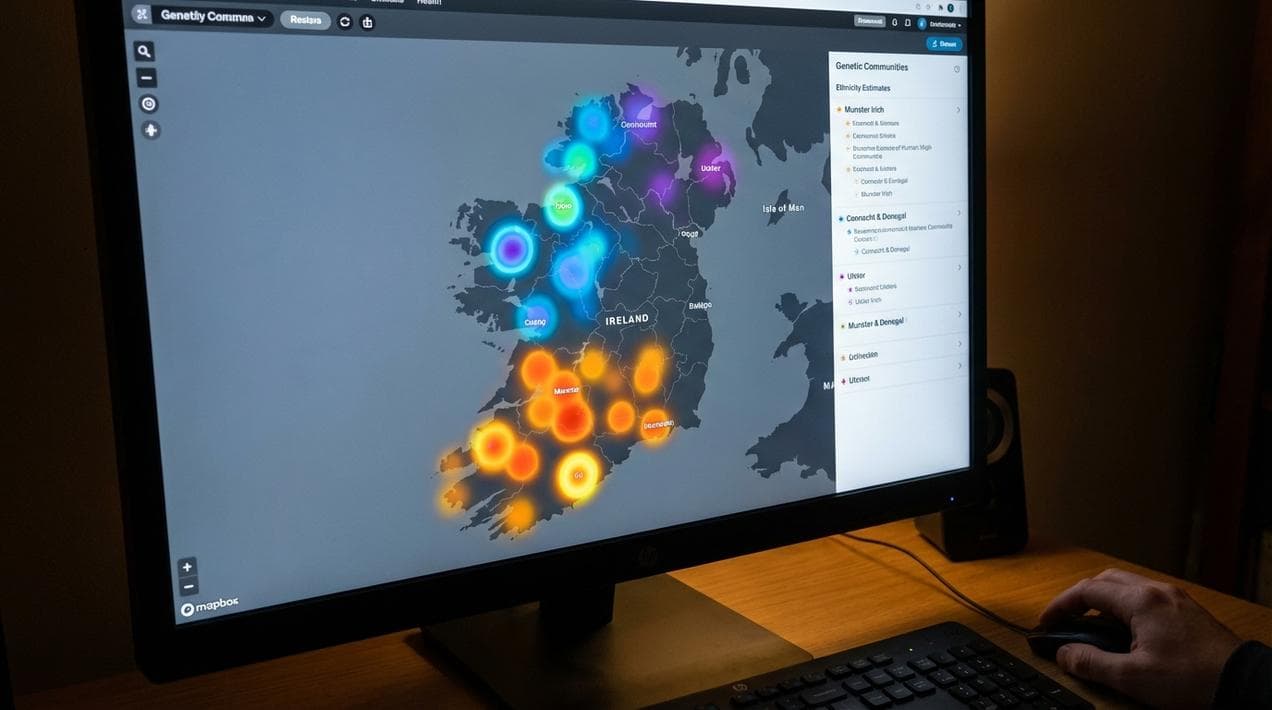
Not all databases are created equal. The "Best" test depends entirely on your goal.
1. AncestryDNA (The Gold Standard)
- Best For: Finding Cousins and building a tree.
- Why: It has the largest database in the world (over 25 million people).
- The Irish Angle: Because so many Irish-Americans use Ancestry, your chances of finding a 2nd or 3rd cousin in the US who already has a family tree are highest here.
- The Feature: Their "Genetic Communities" are incredibly specific. Instead of just "Ireland," it might pinpoint "Munster" or even "West Cork."
2. MyHeritage (The European Choice)
- Best For: Finding relatives still living in Ireland.
Meet a Local Guide

Hi, I'm Eóghan (pronounced Owen)
- Why: AncestryDNA is huge in the USA, but MyHeritage marketed aggressively in Europe.
- The Strategy: If you want to find a cousin who actually lives in Dublin or Galway today, they are more likely to be on MyHeritage.
- Pro Tip: You can usually upload your AncestryDNA raw data to MyHeritage for a small fee, saving you the cost of a second test.
3. 23andMe (The Health Angle)
- Best For: Health reports and "Ethnicity Estimates."
- Why: It has excellent science, but it is less focused on family trees. It is great for telling you that you are Irish, but less helpful for telling you who your Irish ancestors were.
- Verdict: Fun for the pie chart, less useful for the researcher.
Understanding Your "Ethnicity Estimate"
You might be shocked to see "Scottish" or "Viking" in your Irish results.
The "Celtic" Blur
Genetically, the Irish and Scots are extremely similar.
- The Dal Riata: In the 5th century, an Irish tribe (the Scotti) invaded Scotland.
- The Plantation: In the 17th century, thousands of Scots settled in Northern Ireland (Ulster).
- The Result: If you have roots in Ulster (Northern Ireland), expect to see a mix of Irish and Scottish DNA. It doesn't mean the test is wrong; it means history is messy.
The "Viking" Marker
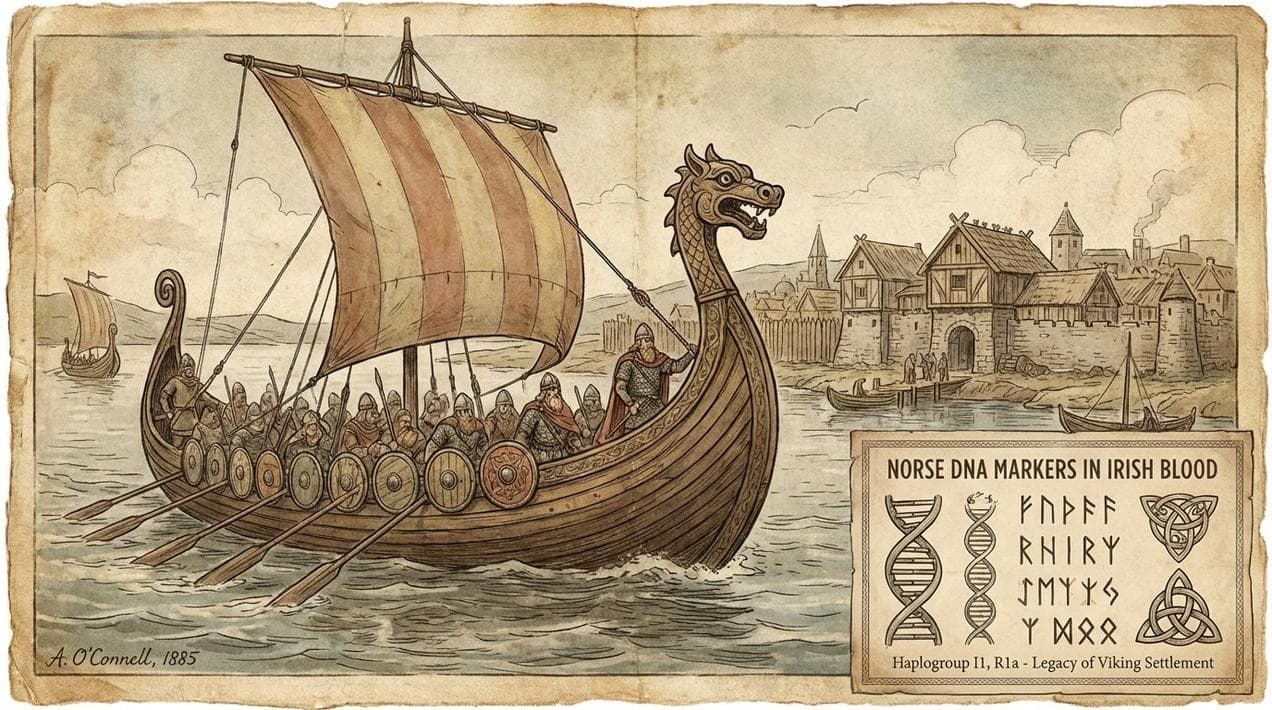
Do you have 2% Norwegian?
- History: The Vikings founded Dublin, Waterford, and Limerick in the 9th century. They intermarried with the locals. That 2% is a legitimate echo of a Viking ancestor from 1,000 years ago.
How to Use DNA to Break "Brick Walls"
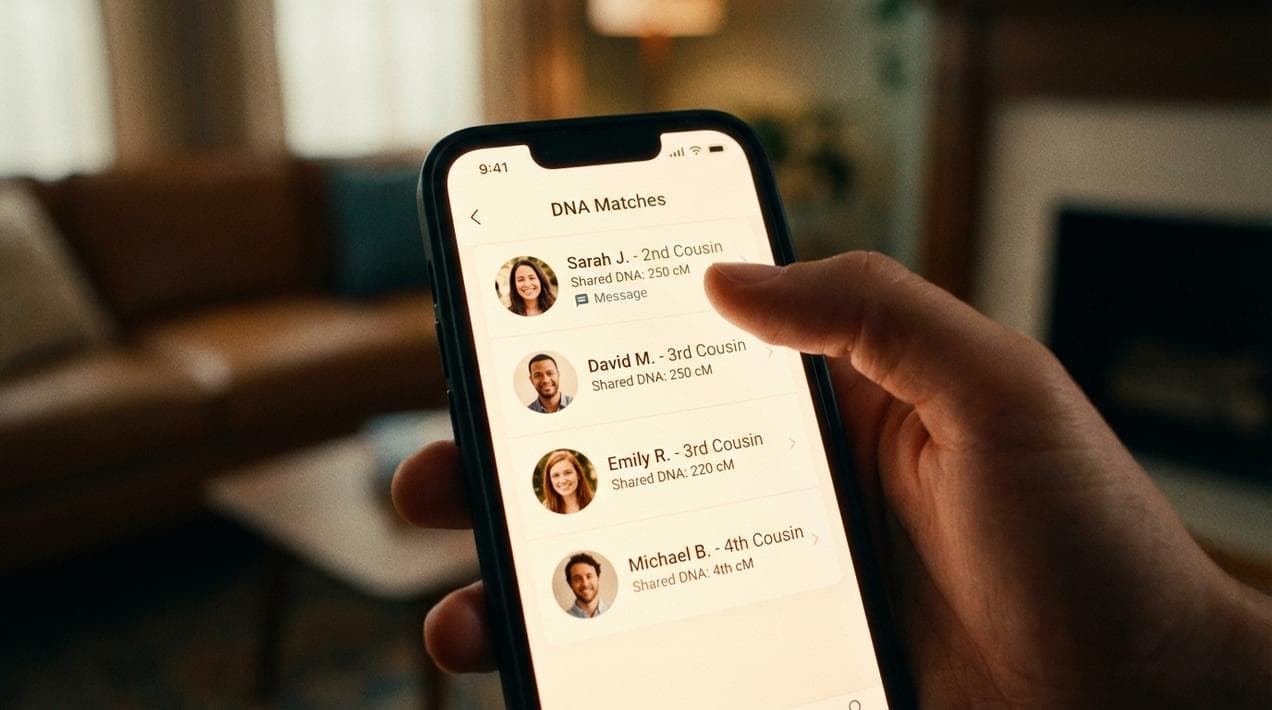
This is where the real power lies. Let's say you have a Great-Grandfather named "Patrick Murphy" (a very common name) and you don't know where he came from.
The "Cousin Match" Method
- Sort by Cousins: Look at your 2nd and 3rd Cousin matches.
- Look at THEIR Trees: Find a cousin who does have a tree.
- Find the Common Ancestor: If three of your DNA matches all descend from a "Mary O'Shea from Kilkenny," and you also descend from her brother, you have just found your location: Kilkenny.
- Confirm with Paper: Now you go to the Parish Records for Kilkenny and look for your Patrick Murphy.
The "Adoption" Search
For adoptees or those with "Non-Paternity Events" (where the father is not who you thought), DNA is the only way to find the truth.
- Warning: This can reveal secrets. Be prepared emotionally before you test.
Can DNA Get Me an Irish Passport?
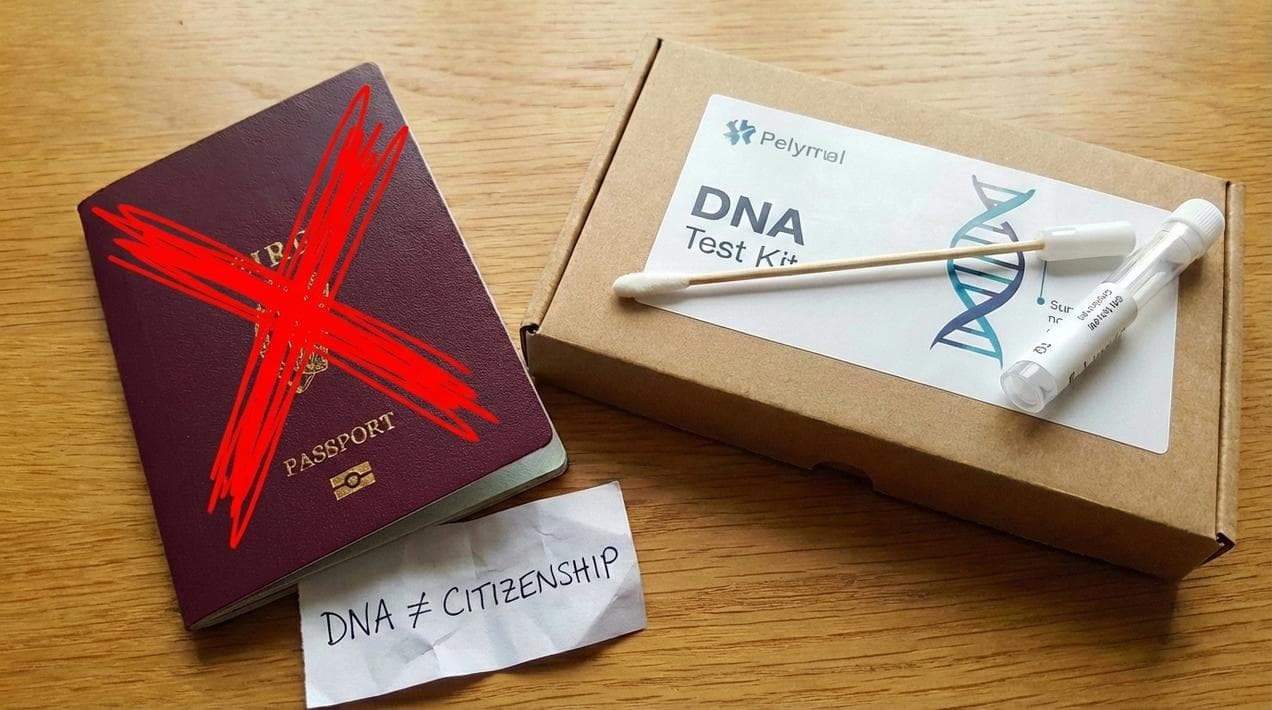
No. This is the most common question we get.
- The Rule: The Irish Government (Department of Foreign Affairs) does not accept commercial DNA tests as proof of citizenship.
- The Requirement: You must have a Paper Trail of civil birth, marriage, and death certificates linking you to your grandparent.
- The Nuance: DNA can help you find the family so you know where to look for the papers, but the DNA result itself is legally useless for citizenship applications. (See our full guide on Irish Citizenship by Descent).
GEDmatch: The "Pro" Tool
Once you have tested, you can download your "Raw Data" file (a massive text file of numbers) and upload it to GEDmatch.com.
- What it is: A free, open-source database where people from Ancestry, 23andMe, and MyHeritage all upload their data.
- Why use it: It allows you to cross-reference databases.
- The Tools: It has advanced tools like "One-to-Many" comparison and ancient DNA calculators (comparing you to Neolithic skeletons found in Irish bog bodies).
When to Hire a Genetic Genealogist
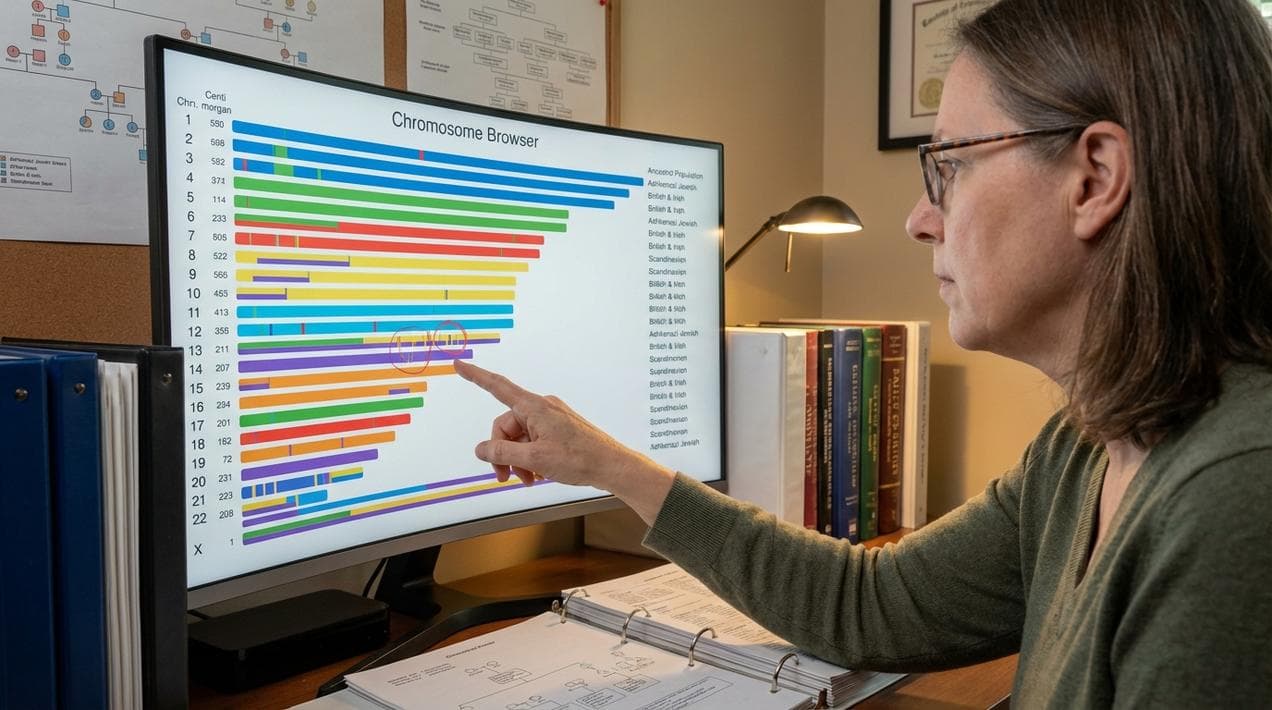
Standard genealogists work with paper. Genetic Genealogists work with DNA segments.
Hire one if:
- You are an Adoptee: Searching for birth parents in Ireland requires analyzing "Centimorgans" (cM) to predict relationships accurately.
- You have a Brick Wall: If the paper trail has gone cold (e.g., a foundling ancestor), a DNA expert can map your "clusters" of cousins to identify a biological family group.
Summary: The DNA Strategy
- Test with AncestryDNA first (biggest database).
- Upload your data to MyHeritage (to find Irish locals) and GEDmatch (for tools).
- Ignore the "Ethnicity Estimate" (it's just fun/entertainment).
- Focus on the "Matches": Contact cousins who have trees.
- Hire a Pro if you need help interpreting the centimorgans.
Need Help Interpreting Your Results?
If you are staring at a list of 10,000 cousins and don't know where to start, professional help is available.
Table of Contents
Share this post
More from the Blog

Cork to Blarney Castle Day Trip: The Stone, the Gardens and What Else to See
Plan a Cork to Blarney Castle day trip. Kiss the stone, explore the Poison Garden, and add Cork city, Fota or Kinsale for a full day out.

Cork to Cobh Day Trip: Titanic, Colourful Houses and Harbour History
Plan a Cork to Cobh day trip by train, car or private driver. Explore Titanic history, St Colman's Cathedral, Spike Island and the best harbour views.

Cork to Killarney Day Trip: Lakes, Mountains and Muckross in One Day
A Cork to Killarney day trip is a longer escape into Kerry. Here's how to plan the drive, what to see in Killarney National Park, and why a private driver helps.