
Multi-Day Sea Kayaking in Ireland: How to Plan a Paddle Camping Trip on the West Coast
Multi-Day Sea Kayaking in Ireland: How to Plan a Paddle Camping Trip on the West Coast
The alarm doesn't go off because you didn't set one. You wake up because the light changes. It comes in low and amber across the water, hitting the hull of your kayak where you pulled it above the tide line last night, and for a moment you have no idea which island you're on. You're somewhere in Connemara. The mainland is visible but far. Your tent is the only structure. The sea is flat in the way it only is in the first hour of the morning. You should be making coffee.
This is what multi-day sea kayaking in Ireland actually looks like — not the brochure version, but the real one, where the planning took months, the first crossing felt too far until it didn't, and the best part of the trip was a morning you spent doing almost nothing on a beach no one else will find. Sea Kayaking in Ireland: A Complete Guide covers the full scope of what paddling here involves. This article is for people who have already decided they want more than a day session — who want to cover real distance, sleep on the water, and experience the coastline in a way that has no equivalent.
What Makes a Multi-Day Kayak Trip Different from a Day Paddle
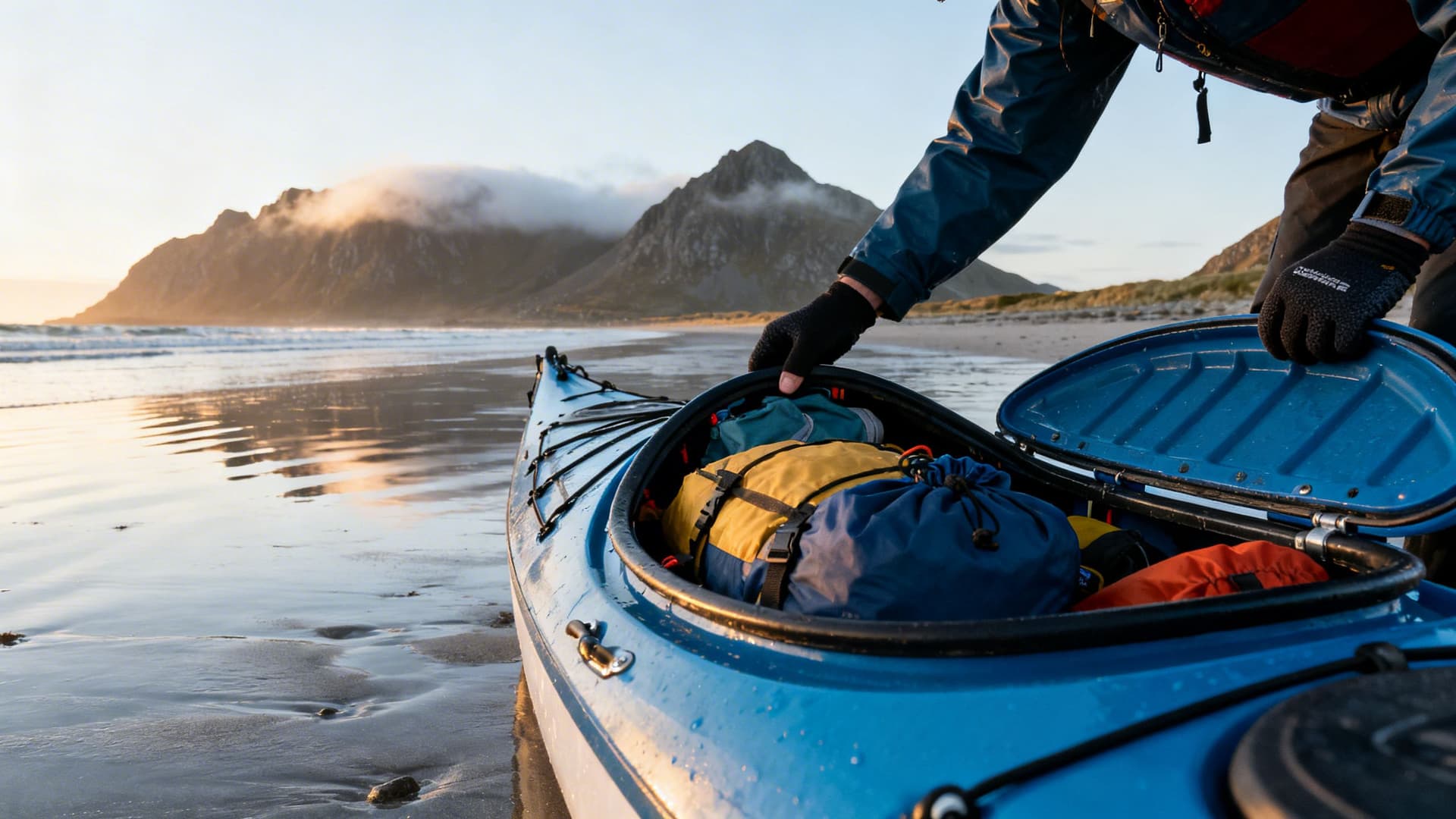
Everything is different, starting with how you think about weather.
On a day trip, a bad forecast means you reschedule. On a multi-day trip, a bad forecast means you're pinned to a beach with two days of food, reading the horizon for signs that tomorrow might move. That shift in your relationship with the weather is not a problem — it's the point. But it requires a different kind of preparation.
Physically, the demands are less about any single crossing and more about cumulative effort. Twenty kilometres over six hours on the water is manageable on day one. On day three, with wet gear, disrupted sleep, and paddling muscles already worked, the same distance reads differently. Building a sensible daily distance target — typically fifteen to twenty kilometres — matters more than fitness alone.
The kit is different too. You're packing everything into sealed hatches: tent, sleeping bag, food, water, dry clothes, medical kit. Day hatches can carry four days of provisions if you pack efficiently. What you learn quickly is that weight affects handling, and handling affects safety on an exposed coastline. This is why the first multi-day trip most paddlers do is shorter than they'd planned.
The Best Circuits on Ireland's West Coast
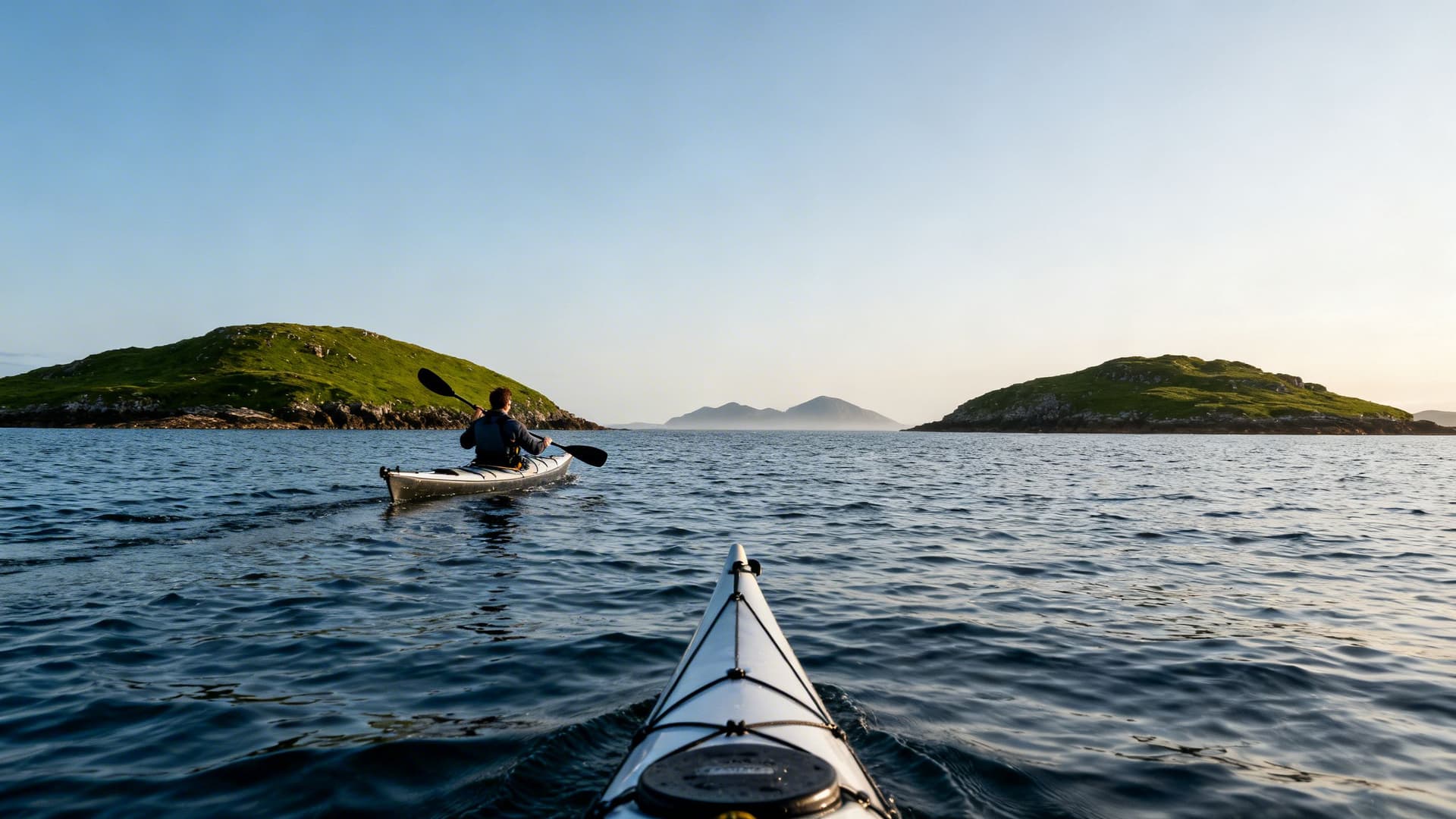

Ireland has three west coast circuits that experienced guides regularly run, each with a different character and an honest assessment of what they require.
Connemara island-hopping is the most accessible multi-day circuit. The Twelve Bens provide a backdrop on every crossing, and the islands — Mweenish, Golam, Lettermore, the Aran fringe — are reachable without long open-water crossings. A four-day circuit is achievable for paddlers with some previous sea kayaking experience. The biggest variable is the tidal race at the southern end of several passages; it's manageable with a guide who knows the timing windows from seasons on the same water.
The Inishowen coastal route in Donegal is a different proposition. Malin Head marks the northernmost point of the Irish mainland, and paddling sections of the Inishowen Peninsula puts you on water that faces Scotland and feels it. Sea caves, seal colonies, and cliffs with no road access above them. Recommended for paddlers with multi-day experience already behind them; the swell exposure on the north Donegal coast is not consistent, and the good days are extraordinary in a way that is difficult to describe without sounding like exactly the kind of language we try to avoid.
The Beara Peninsula in Cork-Kerry offers a more sheltered circuit by Irish standards — the peninsula creates a natural buffer from the full Atlantic swell for sections of the route. Bear Island, the Kenmare River estuary, and the approach to Dursey Sound are all within reach on a well-planned five-day trip. Dursey Sound itself — the stretch of tidal water between the peninsula's tip and Dursey Island — has a reputation among sea kayakers that is entirely earned.
Camping from a Kayak: Finding Beaches, Water, and Permission
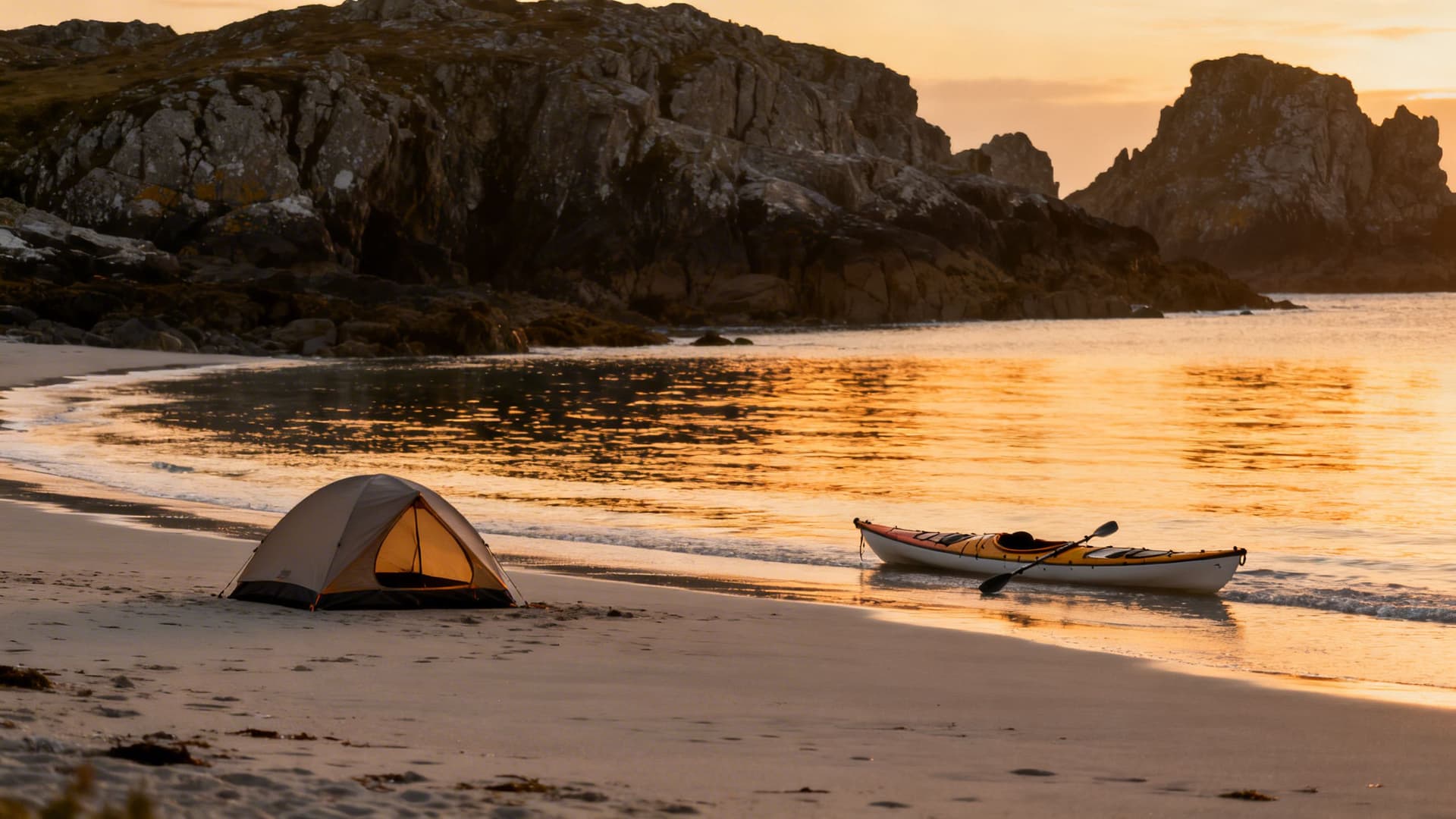
Wild camping in Ireland exists in a legal grey area. There is no general right to roam or camp equivalent to Scotland's Land Reform Act. In practice, camping on beaches and islands that are not actively farmed is rarely challenged, particularly in remote areas of Connemara and north Donegal. But "rarely challenged" is not the same as unambiguous permission.
The practical reality is this: the best camping beaches on multi-day circuits are known locally. A guide who has paddled these routes for years knows which stretches of coast are genuinely unoccupied, which landowners are accustomed to kayakers landing at dusk, and where a polite conversation the night before prevents any problem in the morning. On the Connemara circuit especially, the island landholdings are complex and the history of land and community is living rather than historical. Local knowledge is not an optional extra here — it changes the character of the trip.
Fresh water is the other planning variable. On some circuits, islands and headlands have streams you can rely on. On others, you carry what you need for the crossing. A guide who runs the same route annually knows which sources have been reliable in dry summers and which have failed. That kind of cumulative, seasonal knowledge doesn't exist in a guidebook.
Reading a Five-Day Atlantic Forecast for a Specific Stretch of Coast
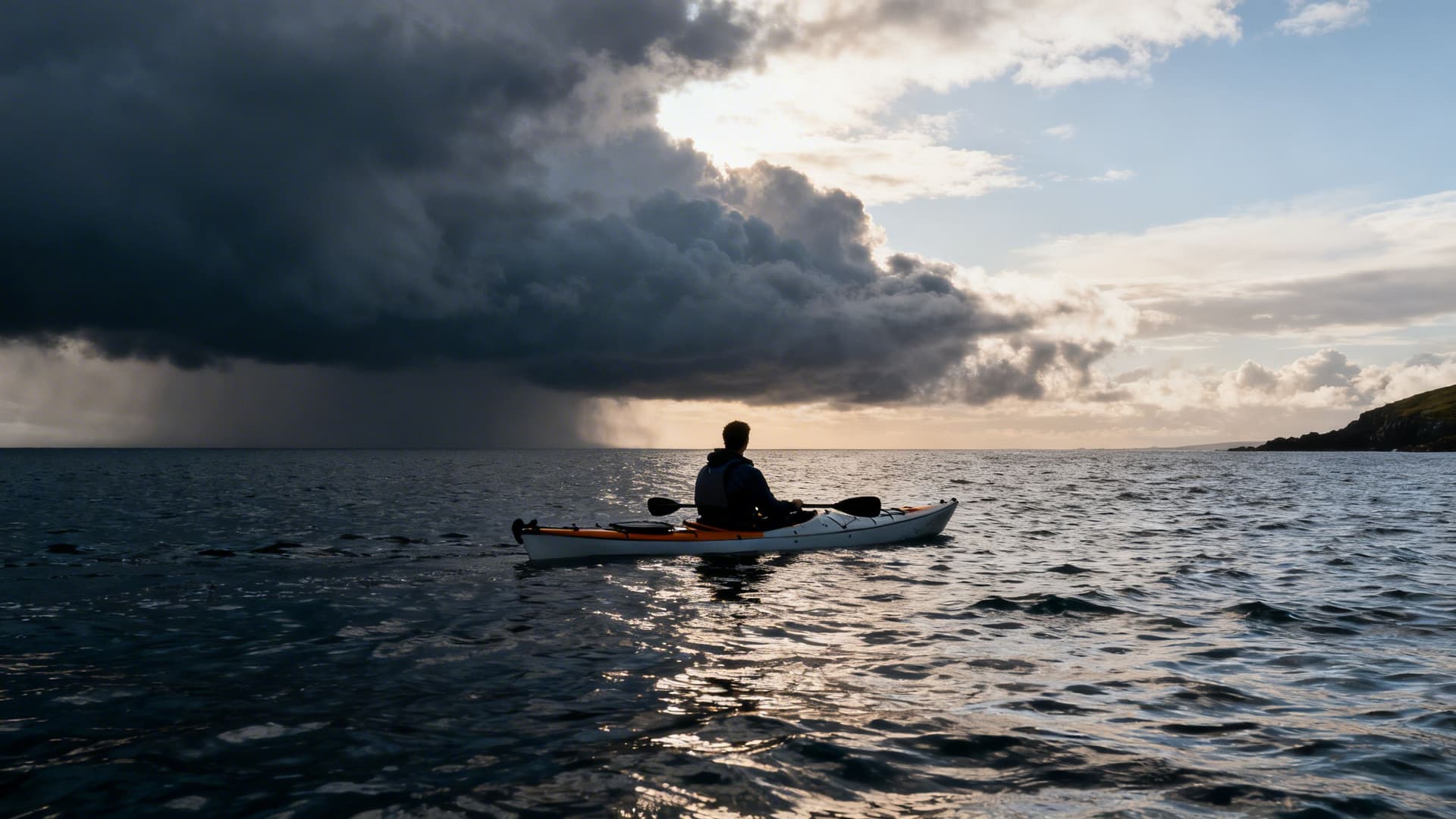

The forecast on your phone gives you wind speed and direction at the national scale. What it doesn't give you is what that forecast means for the tidal race off Mweenish Island on Tuesday afternoon, or whether the northwesterly that looks marginal on the national app will be unworkable at Malin Head by midday.
Atlantic weather moves faster than forecasts model, and it moves differently over specific headlands and bays than regional averages suggest. The Aran Islands sit in a micro-weather corridor where conditions can run an hour ahead of the mainland forecast. North Donegal headlands create acceleration zones in westerly winds that aren't visible in the data. These are things that get learned over seasons of paddling the same water — not things that can be researched the week before a trip.
The paddlers who understand this are the ones who have spent multiple seasons in the same place. They've learned which cloud formations over the Twelve Bens mean a window is closing, and which ones mean you have six hours of good paddling before anything changes. A five-day forecast is a starting point. The local read of the horizon is the actual decision.
For When to Sea Kayak in Ireland: A Month-by-Month Guide to Conditions, Light, and the Atlantic Swell, the seasonal dimension matters — but on a multi-day trip, the week-by-week and day-by-day reading of conditions is what separates a successful circuit from one that ends a day early in a harbour, waiting for weather to break.
What a Guide Changes on a Multi-Day Trip
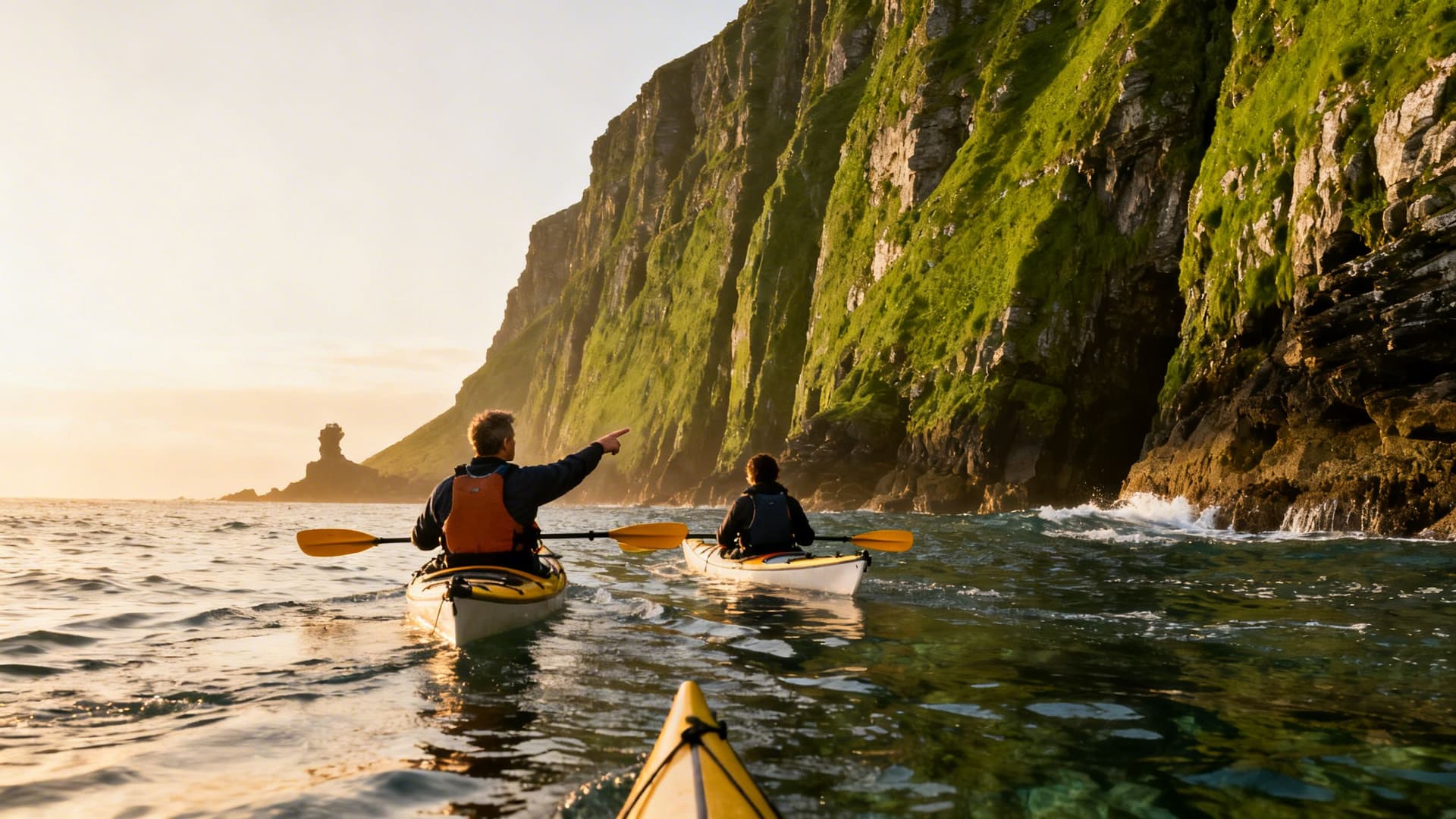
On a day trip, a guide provides safety, instruction, and local knowledge. On a multi-day trip, the role expands into something more like expedition logistics.
A guide who runs the Connemara circuit regularly knows the legal camping beaches, the landowners along the route, the freshwater sources that are reliable in drought years, and the alternative landing beaches when primary options are wind-blocked. They carry the weather knowledge that makes the difference between a pinned day and a productive one. They know the fishing boats that can help if a kayak is damaged offshore, and they know how to shorten or extend a circuit mid-trip when conditions change in a direction the forecast didn't predict.
Multi-day kayaking on an exposed Atlantic coast without that institutional knowledge is not impossible — but it demands expedition-level planning and local research that most paddlers don't have the years on this specific water to have built. Multi-day sea kayaking guides in Ireland operate this differently from a standard activity booking. These are itinerary partnerships. The planning conversation starts weeks before you arrive, covering circuit options, your experience level, weather contingency, and what you want the trip to actually be.
Frequently Asked Questions
What level of experience do you need for a multi-day kayak trip in Ireland?

Minimum: comfortable sea kayaking in moderate conditions (Beaufort 3–4), confident with wet exits and self-rescue, some experience with tidal water. The Connemara circuit is the most appropriate first multi-day trip for paddlers moving up from day sessions. The Inishowen and Beara routes are better suited to paddlers with at least one previous overnight trip behind them. A reputable guide will assess your skill level during the planning conversation and adjust the circuit accordingly — the assessment is part of what makes the booking reliable.
What do you carry in the kayak for a multi-day trip?
Both main hatches and the day hatch are used. Rear hatch: tent, sleeping bag, dry bag with clothing. Front hatch: food, fuel stove, cooking kit. Day hatch: items you'll access on the water — water bottle, snacks, waterproof jacket, VHF radio, chart. Total carried weight on a four-day trip is typically 18–25kg depending on water supply. Weight balance matters: an unbalanced kayak handles poorly in crosswinds, and on an exposed coast that has consequences.
What is the best time of year for multi-day kayak trips in Ireland?
May, June, and September offer the best balance of daylight, stable weather windows, and manageable Atlantic swell. July and August are more settled in terms of weather but busier on the more popular circuits, and the midday light lacks the quality of late spring and early autumn. April is possible in a good year and has a quality of light on the Connemara water that paddlers who've been there in that month remember for a long time.
What happens if bad weather pins you down mid-circuit?
You wait. Building a contingency day into every multi-day itinerary is standard practice. On a five-day trip, plan for the possibility of one pinned day — a day you spend on a beach, sheltered, watching the horizon, eating too much, and reading the sky for the signs that tomorrow will move. The guides who run these circuits carry sufficient food and emergency supplies for an extended unplanned stay. Being pinned is not a failure. It is the nature of the Atlantic, and it is part of why these trips feel different from anything you can do on a lake or a managed stretch of inland water.
What Comes After the First Multi-Day Trip
For most paddlers, the first circuit ends with a list of routes they want to do next. The Connemara circuit opens the question of the full Aran crossing. Beara opens the broader Cork-Kerry coast in both directions. Inishowen opens the north Donegal sea stacks, which are a separate category of paddling experience entirely.
Sea Kayaking in Ireland: A Complete Guide maps the full landscape — day trips, destination routes, equipment decisions, and how to choose a guide who matches where you are in your paddling life. If you are earlier in that journey, Sea Kayaking for Beginners in Ireland: What Your First Session Will Actually Feel Like covers the first session in detail, from the slip to the water to what it feels like an hour in when you've stopped thinking about the paddle and started thinking about where you're going.
The west coast from a kayak is one of the few remaining ways to be genuinely remote and genuinely somewhere. The logistics are real. The planning matters. The rewards are proportionate to both.
Table of Contents
Share this post
More from the Blog

Cork to Blarney Castle Day Trip: The Stone, the Gardens and What Else to See
Plan a Cork to Blarney Castle day trip. Kiss the stone, explore the Poison Garden, and add Cork city, Fota or Kinsale for a full day out.

Cork to Cobh Day Trip: Titanic, Colourful Houses and Harbour History
Plan a Cork to Cobh day trip by train, car or private driver. Explore Titanic history, St Colman's Cathedral, Spike Island and the best harbour views.

Cork to Killarney Day Trip: Lakes, Mountains and Muckross in One Day
A Cork to Killarney day trip is a longer escape into Kerry. Here's how to plan the drive, what to see in Killarney National Park, and why a private driver helps.