
When to Sea Kayak in Ireland: A Month-by-Month Guide to Conditions, Light, and the Atlantic Swell
When to Sea Kayak in Ireland: A Month-by-Month Guide to Conditions, Light, and the Atlantic Swell
It is the second week of May. The sun rises at five forty and at that hour the water on the Connemara coast is a colour that doesn't photograph correctly — dark green in the shade, lit silver where the early light catches it flat. There are no other boats. The tourist coaches haven't started yet. The slipway car park is empty except for yours and the guide's van. The Atlantic has been pushing three-metre groundswell for a week and this morning it has flattened, as it does after sustained periods of that rhythm, into something close to glass. This is the morning every experienced paddler on the west coast knows to be out for. Most visitors haven't arrived yet to know it exists.
Timing matters in sea kayaking the way it matters in almost no other outdoor activity in Ireland. The difference between a week in June and the same route in July is the difference between a sheltered bay and a bay with a ferry wake and two kayak schools launching simultaneously. The difference between August and September is sometimes the difference between two-metre swell and a flat crossing. Sea Kayaking in Ireland: A Complete Guide covers the full picture of what paddling here involves. This article covers the one question most people ask before they book: when.
The Seasonal Logic of the Atlantic
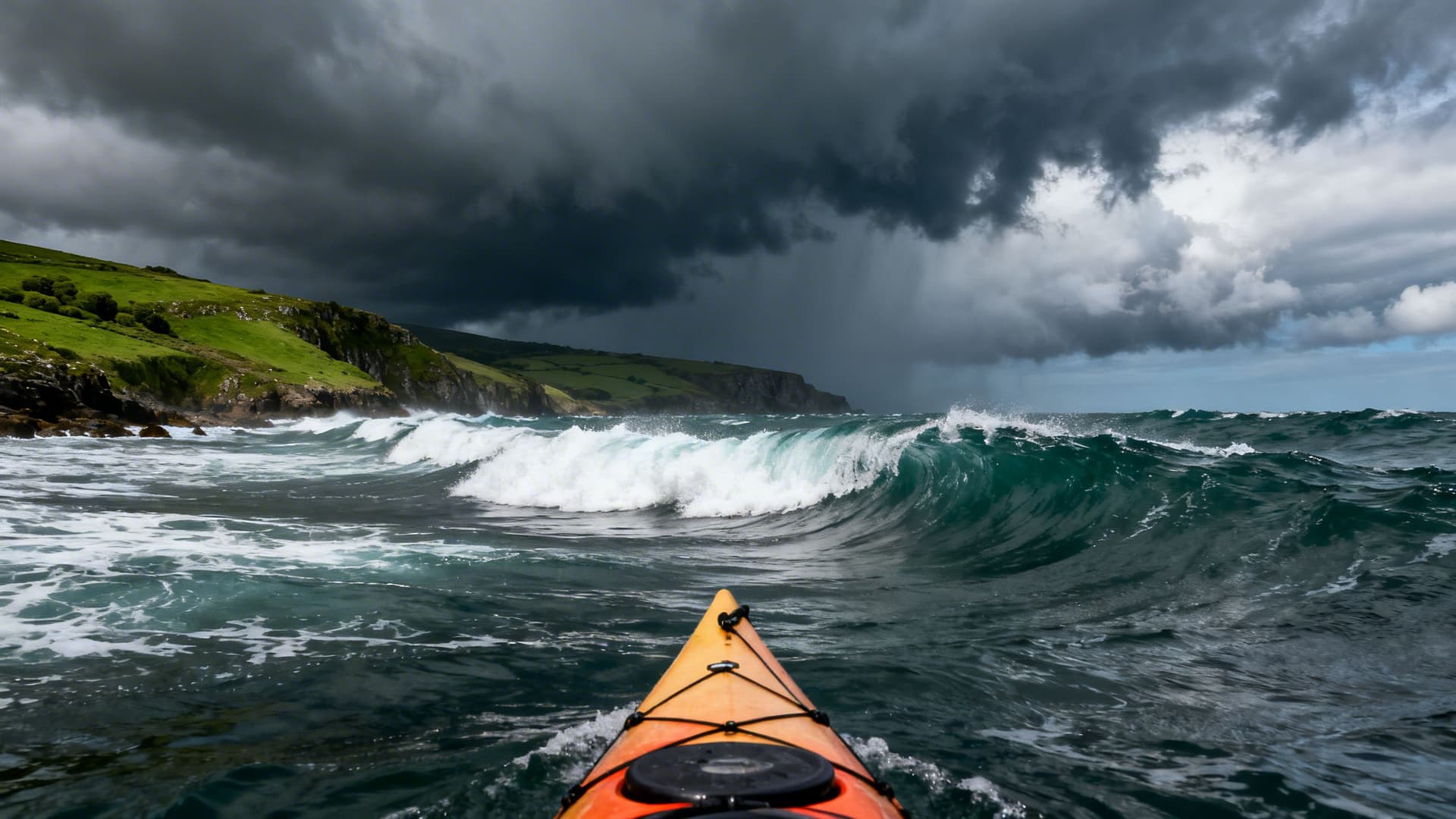
The Irish Atlantic coast operates on a climate that has no simple "good season" or "bad season" in the way you might find in a Mediterranean destination. What it has is a pattern — one that, once you understand it, tells you not just when to come but how to think about specific routes and ambitions.
Atlantic swell is generated by low-pressure systems tracking east across the North Atlantic from North America. These systems are most frequent and most powerful between October and March, which makes winter paddling a specialist's activity — possible on the right days, extraordinary on those days, genuinely demanding when the system arrives. Summer — June through August — sees smaller average swell, more settled weather patterns, and longer daylight. But "average" is the word that matters. A front can push significant swell into Clare or Donegal in any month, and summer forecasts can overstate stability on an Atlantic coast.
The practical seasonal picture is roughly this: April and October are shoulder months — lower visitor pressure, variable conditions, some excellent windows. May and September are what experienced paddlers consider the genuinely optimal time on the west coast — light extended, swell systems typically less powerful than winter, traffic minimal. June, July, and August are the reliable window, with the important qualification that reliability on the Atlantic means manageable, not predictable. Winter — November through March — is reserved for paddlers who know what they are doing on exposed water in cold conditions, and for those who do, it offers the coast in a state that almost no one sees.
May and September: The Insiders' Months
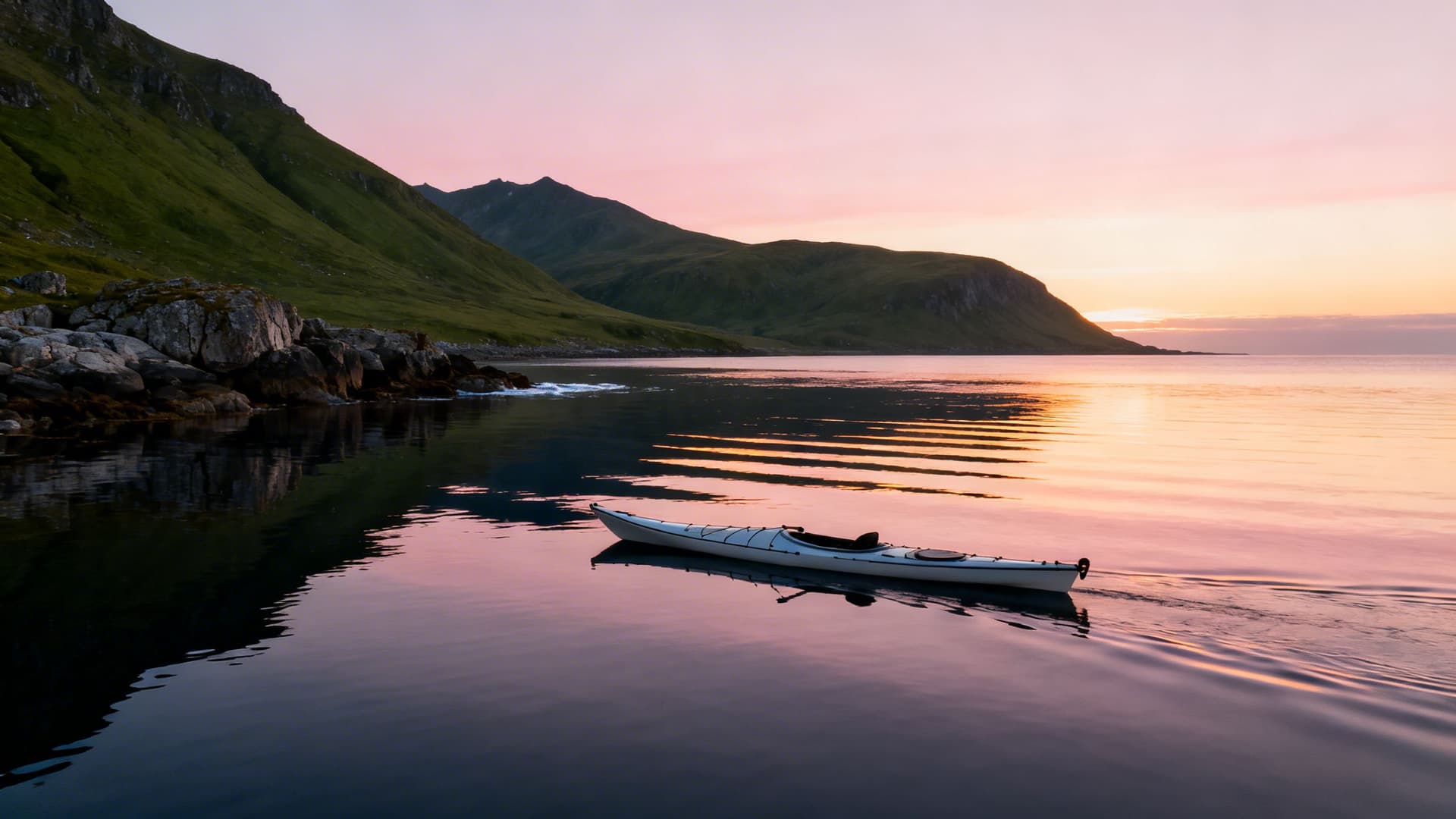
Ask any guide who has been paddling the Irish coast for a decade which months they prefer. The answer is nearly always May or September.
In May, the days extend quickly — by the third week you have seventeen hours of light, which on a west coast that faces the setting sun means evenings that last past ten. The Atlantic swell patterns from winter are loosening their grip but have not yet given way to the compact summer wind-swell. The sea temperature is still cold — wetsuits essential, drysuits if you're doing serious mileage — but conditions windows are longer and more readable than in the months before. The Connemara coast in May has a quality of colour, green against dark water under a sky that hasn't yet gone pale with summer haze, that paddlers who've been there then describe in terms usually reserved for specific paintings.

September holds similar advantages from the other direction. The summer ferry traffic to the Skelligs has ended. The campsites on Inis Bofin are empty. The Atlantic begins building toward its autumn rhythm but the swell systems are rarely as sustained or as large as they will be in November. The light in late September on the Kerry coast, on the Clare coast, on the Donegal headlands, has a quality that's different from summer — lower angle, longer shadows, a warmth of tone rather than intensity. Paddlers who come in September return. Most of them stop bothering to explain why to people who haven't been.
June, July, and August: The Window Everyone Uses
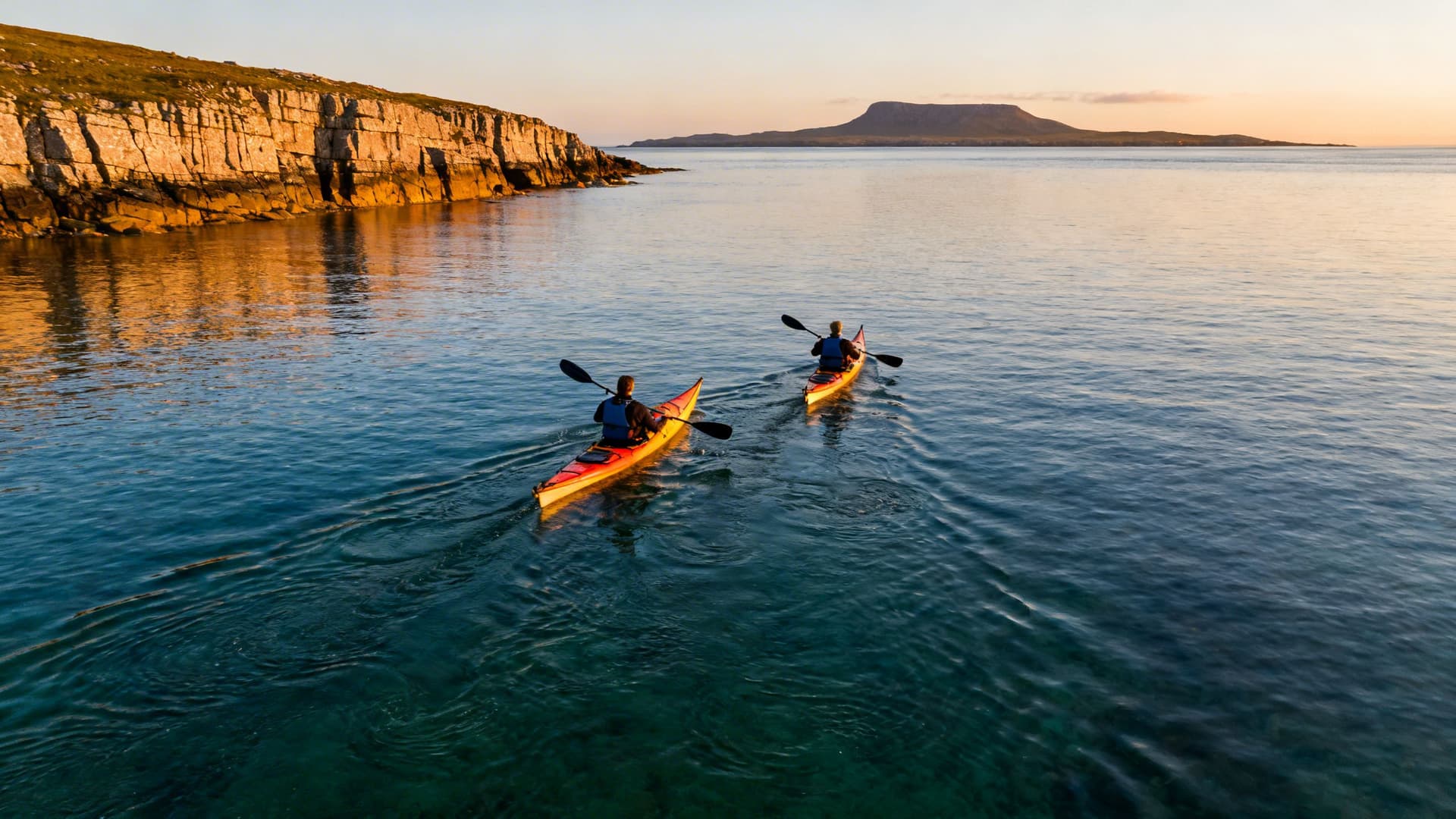
The summer months are the reliable window — which is why they are also the busiest window, and why the word "reliable" requires some qualification.
June and early July offer the best combination within the summer season: settled weather statistics are at their peak, the swell is typically at its summer minimum, and the daylight at midsummer on the Irish west coast extends to nearly ten-thirty in the evening. For island crossings — the Aran approach from Connemara, the run to Inishmurray off Sligo, the Inis Bofin crossing — June offers the narrowest average swell combined with maximum visibility and light. Sea Kayaking to Ireland's Islands: Inishmurray, the Arans, Inis Bofin, and the Crossings in Between covers the specific seasonal windows for each crossing in detail.
July and August are peak season in every sense. The swell windows are comparable to June but the coast is at its busiest — ferry routes to the islands running daily, kayak schools operating from every accessible slipway, the headlands and bays of the Wild Atlantic Way at capacity. For paddlers who want the experience without the company, there are still quiet corners: the inaccessible stretches of the south Iveragh Peninsula, the uninhabited islands off Donegal, the sea caves on the north Dingle coast. But you will be sharing the most accessible water with everyone else who discovered it.
Spring and Early Autumn: April and October
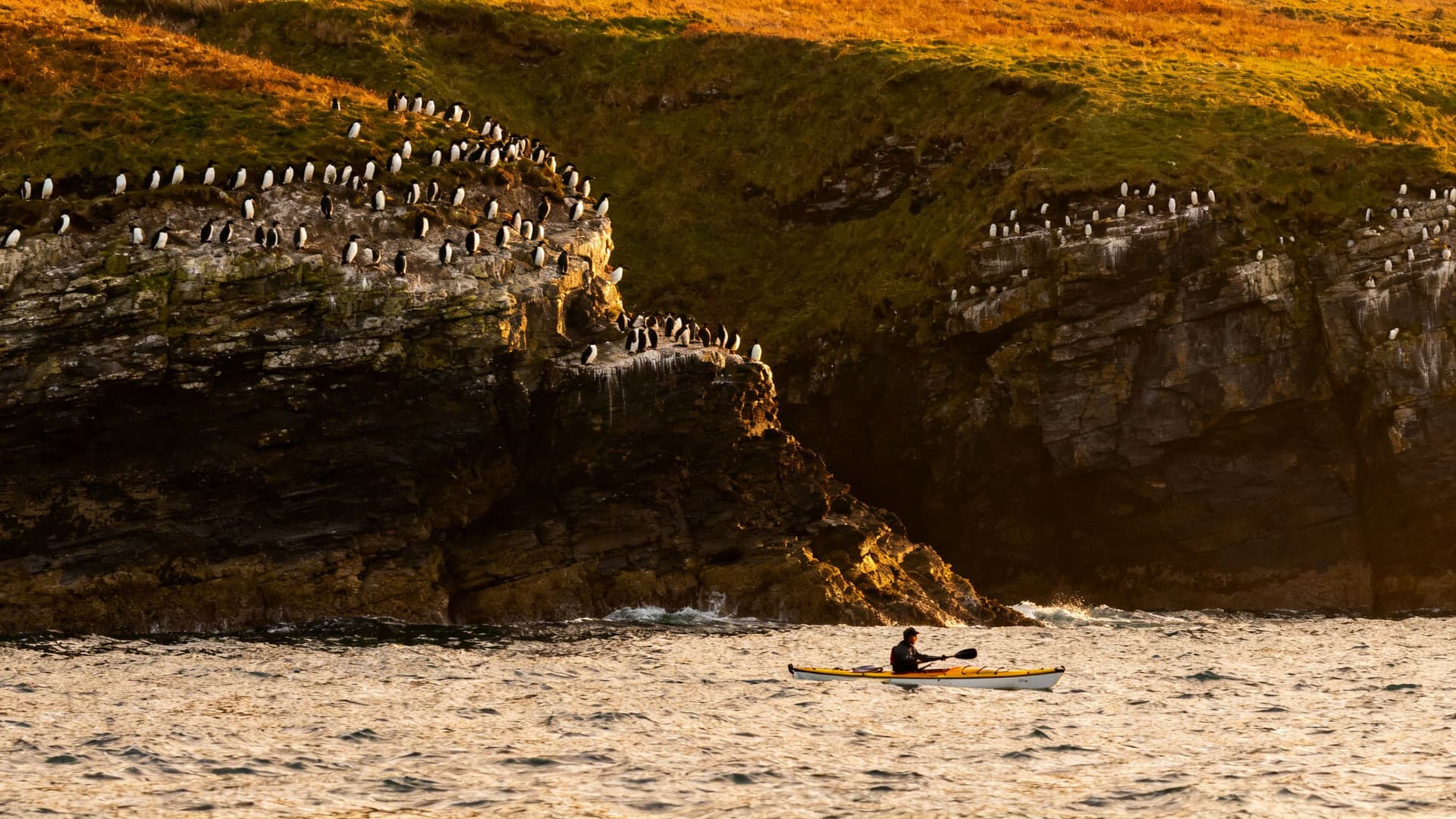
April and October are the months that reward flexibility.
April on the west coast can produce three days in a week that feel like June, followed by two days of Atlantic weather that remind you which ocean you are on. The swell can still run large after a winter of accumulated Atlantic storms, but the gaps between systems are extending. For paddlers whose schedules allow them to wait for a window rather than booking a single date, April delivers the coast in remarkable condition — fully green from recent rain, almost entirely free of tourist traffic, the guillemots and razorbills beginning to gather on the cliff faces above the kayak routes.
October holds a similar character from the other end of the season. The light is changing — golden in the morning, amber in the afternoons, shorter evenings — and the coast is emptying. The swell is building toward its winter pattern, but October storms, in a typical year, are not yet the sustained systems of November and January. The Connemara coast in October has a colour that some paddlers describe as the most remarkable they have encountered: the summer's green darkening toward winter, the sky often clear and cold above water the colour of pewter.
Both months require more flexibility in planning than June or September. A five-day trip in April or October is typically planned with one or two contingency days built in as standard — days when the Atlantic is doing what it wants to do and you wait on the shore and watch it.
Winter Paddling: What January Is
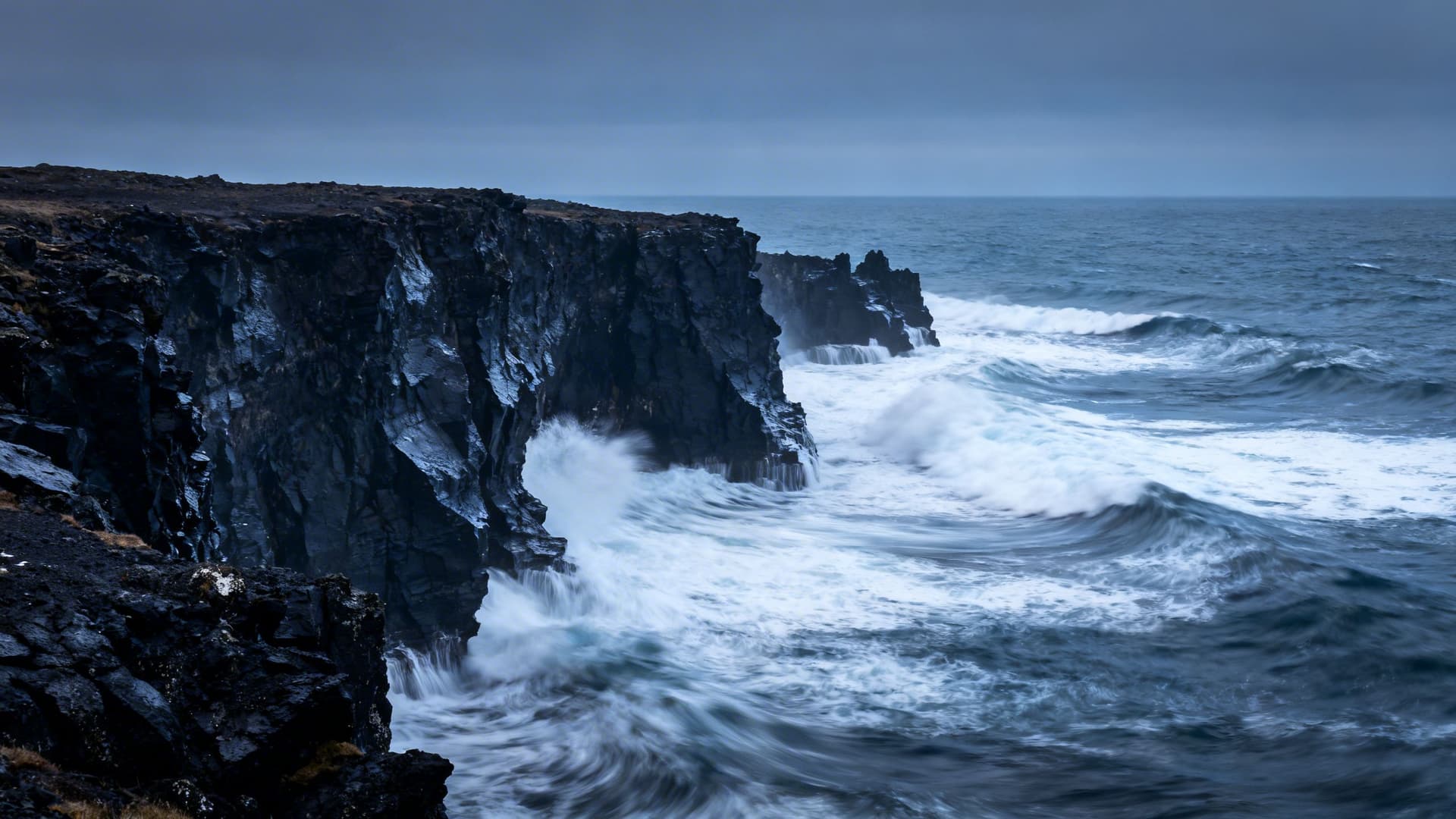
January paddling in Ireland is not tourism. It is a specific relationship with the coast in its winter state, and a small number of paddlers seek it out deliberately and return for it.
The Atlantic in January is moving. Groundswell systems running at three to four metres are not uncommon, and they generate a water state at the cliff bases and on exposed headlands that is visually extraordinary — white water against dark rock, the scale of the ocean made fully apparent by what it is doing to the shore. The light in January on the Irish coast is low-angled and clear in a way that has no equivalent in summer. Late afternoon light in Kerry or on the Donegal sea stacks in winter is the light landscape photographers spend careers trying to capture. Paddlers who know what they are doing on winter Atlantic water see it from inside the photograph.
This is not an invitation for the inexperienced. Winter sea kayaking on the Irish Atlantic coast requires cold-water drysuits, significant offshore experience, and a guide who has been reading these specific waters in winter for years. For multi-day sea kayaking in any season, winter adds cold-water management, shorter daylight planning, and a more aggressive contingency calculation. But for the right paddler, with the right guide, on the right January morning when the swell has briefly laid down between systems, the coast is something that summer paddlers with their crowded slipways will never see.
Why You Need a Local Guide to Read the Conditions
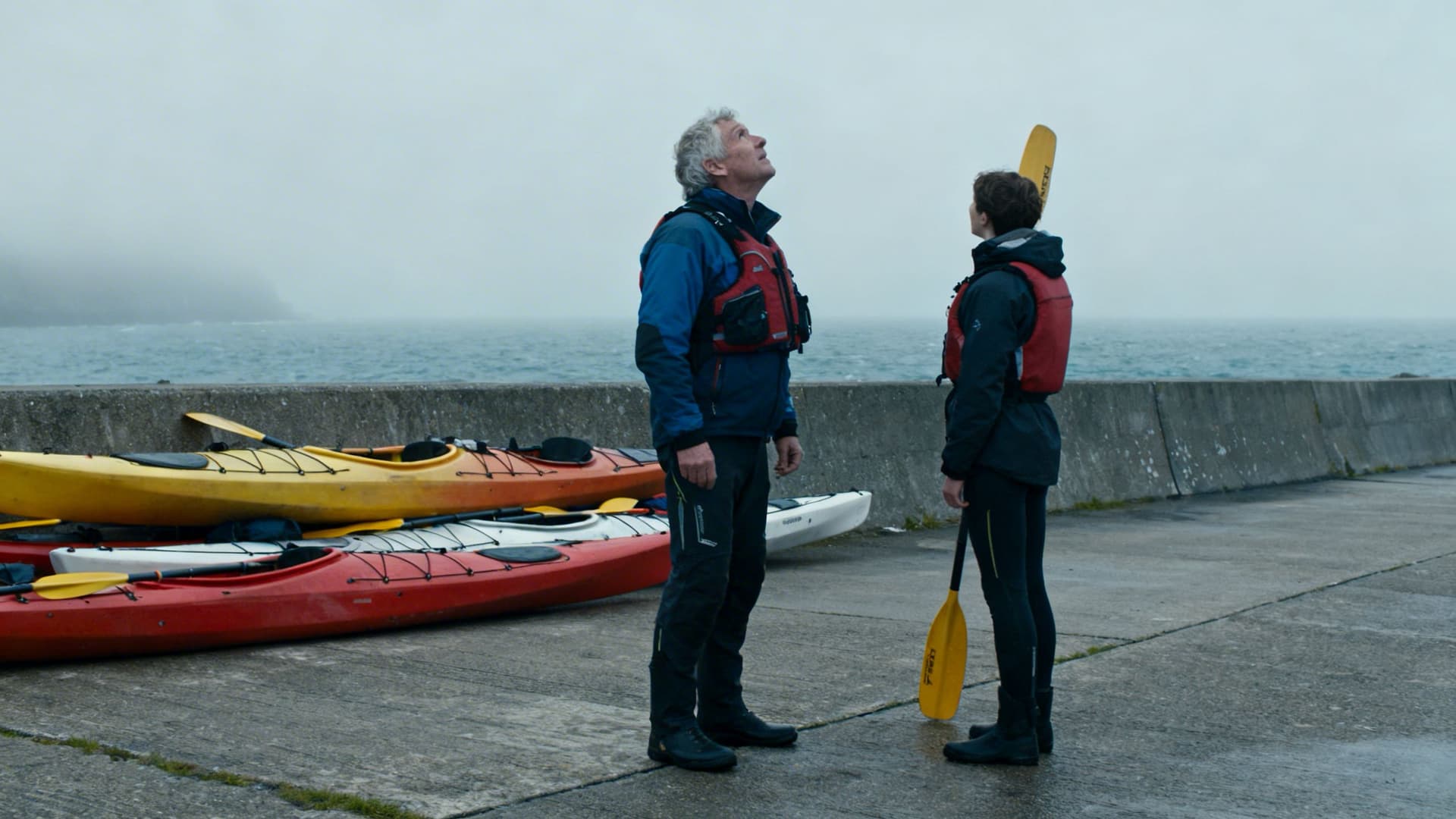
The seasonal patterns described above are true at the scale of Ireland as a whole. They are not, in any meaningful sense, a forecast.
A national weather service gives you wind speed and direction averaged over a large area. What it cannot tell you is what Tuesday afternoon's northwesterly will do when it accelerates around Malin Head, or whether the swell that looks marginal on a national app will be unworkable at the launch point on the north Clare coast by midday. These are not things you can research the week before a trip. They are things that get learned over seasons on the same water.
The guides who paddle the Irish coast regularly — the ones who run the same Connemara circuits in May and September, year after year — carry a read of those specific stretches that no forecast service replicates. They know which cloud formation over the Twelve Bens means the window is closing. They know that the swell at the Cliffs of Moher typically runs an hour ahead of the national model. They know which mornings in November are calmer than the forecast suggested and which July days are worse. Sea kayaking guides in Ireland plan trips against this accumulated, seasonal, local read of the water — and the planning conversation they have with you in the weeks before you arrive is part of what you are booking.
Deciding when to come is the first step. Knowing what to do with the conditions when you get there is the second.
Frequently Asked Questions
What is the best month to sea kayak in Ireland?
May and September offer the best overall combination: manageable Atlantic swell, minimal tourist traffic, extended daylight, and the quality of light on the Irish coast that paddlers who have been there in those months consistently return for. June is the peak of summer reliability and the best month for island crossings specifically. August is the warmest water temperature — sea temperatures peak in August at around 14–16°C on the west coast — but the busiest conditions in popular areas.
Is sea kayaking in Ireland safe in winter?
Winter paddling is genuinely possible and, in terms of conditions and light, sometimes extraordinary — but it is not suitable for recreational or beginner paddlers. Cold water, sustained Atlantic swell, and shorter daylight windows make winter a season for experienced paddlers with appropriate cold-water equipment and a guide with specific winter experience on the relevant stretch of coast. For those paddlers, it is one of the most remarkable ways to experience the Irish Atlantic.
How many good paddling days are there in a typical Irish summer week?
In June or July, a typical west coast week offers four to five viable paddling days, with one or two days when conditions are marginal or unsuitable. This varies significantly by location — sheltered bays offer more days than exposed open crossings. In May and September, expect a similar pattern. This is why guided trips are planned with contingency days built in; the Atlantic does not guarantee conditions on any specific date.
Does the water temperature matter for sea kayaking?
Yes — it governs what you wear, which governs how long you can safely be in the water if you end up in it. Irish Atlantic water temperatures range from approximately 8°C in February to 16°C in August. A wetsuit is appropriate from May through September for day sessions; a drysuit is standard for everything else and recommended year-round for multi-day trips. Any guide operating on the Irish coast will specify appropriate thermal protection for the season.
When You Come Is What You See
The Atlantic is there in every month. What changes is its character, and the character of the coast around it — the light, the swell state, the presence or absence of every other boat on the water. May and September offer the coast as it actually is, in something close to its own time, before or after the coaches and the ferry queues.
Sea Kayaking in Ireland: A Complete Guide maps the full range of what is paddleable on the Irish coast and how to match a route to your experience level and available time. For those who want to extend beyond a day session, Multi-Day Sea Kayaking in Ireland: How to Plan a Paddle Camping Trip on the West Coast covers the seasonal planning involved in a multi-day Atlantic circuit, including what to build in when the weather has different ideas.
The best week to sea kayak in Ireland is the week when you can wait one morning for the conditions to be right, and then go.
Table of Contents
Share this post
More from the Blog

Cork to Blarney Castle Day Trip: The Stone, the Gardens and What Else to See
Plan a Cork to Blarney Castle day trip. Kiss the stone, explore the Poison Garden, and add Cork city, Fota or Kinsale for a full day out.

Cork to Cobh Day Trip: Titanic, Colourful Houses and Harbour History
Plan a Cork to Cobh day trip by train, car or private driver. Explore Titanic history, St Colman's Cathedral, Spike Island and the best harbour views.

Cork to Killarney Day Trip: Lakes, Mountains and Muckross in One Day
A Cork to Killarney day trip is a longer escape into Kerry. Here's how to plan the drive, what to see in Killarney National Park, and why a private driver helps.