
How to Start Your Irish Family Tree: A Step-by-Step Guide for Beginners
For 70 million people around the world, "Ireland" isn't just a vacation destination. It’s home.
Whether your ancestors left during the Great Famine of the 1840s or the economic slump of the 1950s, the pull to find out who they were and where they came from is powerful. You want to know if you are from the rocky coast of Donegal or the green fields of Tipperary. You want to know why they left.
But starting an Irish family tree can be intimidating.
You may have heard horror stories about the "1922 Fire" that destroyed countless records. You might be staring at a document that just says "Born: Ireland" and wondering how to narrow that down to a specific county, let alone a specific house.
The good news? It is possible. More records are being digitized every day.
This guide will walk you through the first critical steps of tracing your Irish roots. It requires patience, detective work, and a bit of luck.
(This beginner’s guide is the first step in our master Returning Home: The Ultimate Guide to Tracing Your Irish Roots. If you get stuck, you can jump to our guide on Hiring a Genealogist vs. DIY).
Step 1: The Golden Rule (Start at Home)
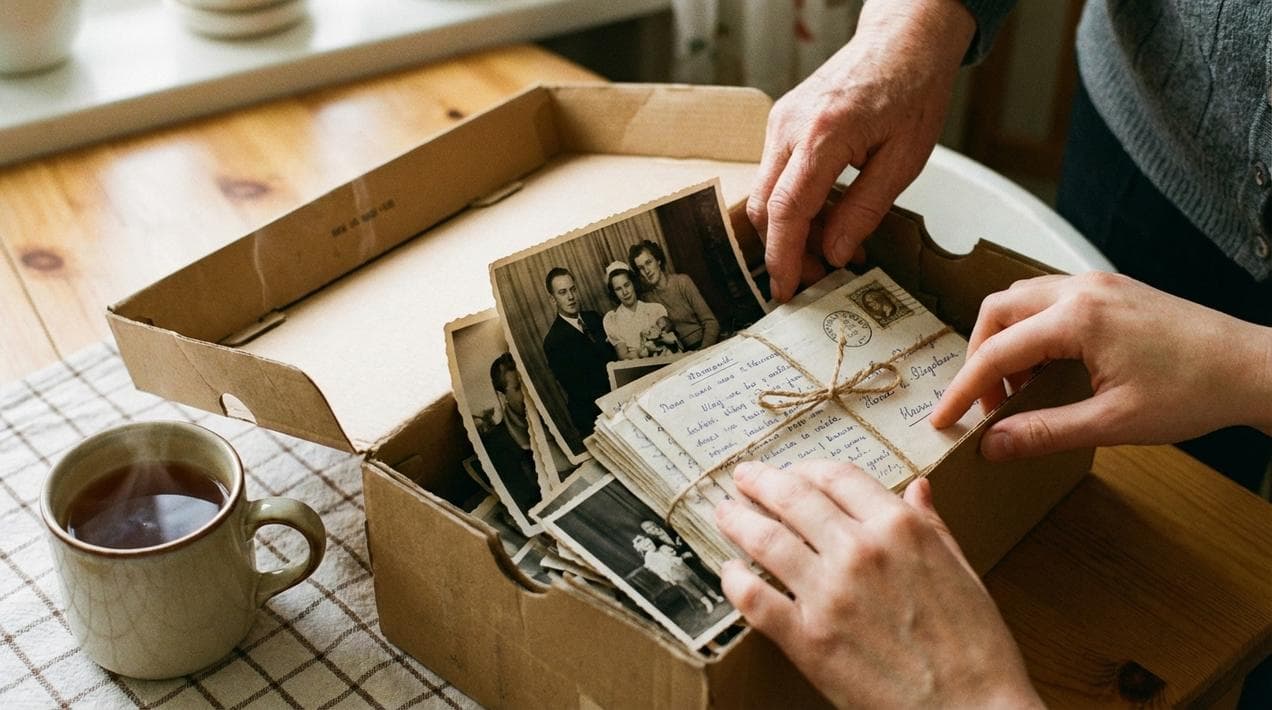
The biggest mistake beginners make is jumping straight onto an Irish genealogy website. Do not do this.
If you search for "Patrick Murphy born in Ireland in 1860," you will get 10,000 results. You won't know which one is yours. To find them in Ireland, you first need to find them in your home country (USA, Canada, Australia, UK).
Interview Your Living Relatives
Go to the oldest person in your family. Ask them specific questions.
- Don't ask: "Where are we from?" (They will just say "Cork" or "Ireland").
- Do ask: "Did Aunt Mary ever mention a parish?" "Do we have any old prayer cards or letters?" "Who was the oldest cousin?"
The "Shoebox" Search
Look for the "Holy Grail" documents in your attic:
- Naturalization Papers: These often list the specific town of birth, not just the country.
- Military Pension Records: If your ancestor fought in the US Civil War or WWI, their enlistment papers are goldmines.
- Family Bibles: In the 19th century, births and deaths were often recorded inside the front cover of the family bible.
Step 2: Narrowing Down the Location

This is the most important concept in Irish Genealogy. "Ireland" is not an address. To find any record in Ireland prior to 1900, you need to know the County (e.g., Kerry) and ideally the Parish or Townland.
What is a Townland?
The Townland is the smallest administrative division in Ireland. It might be just a few fields and three houses.
- Example: Your ancestor wasn't just from "Galway." They were from the townland of Gortymadden, in the parish of Abbey, in the county of Galway.
If you can find the Townland name on a ship manifest or a US death certificate, you have cracked the case. (See our guide on Visiting Your Ancestral Townland for a full explanation of how these land divisions work).
Step 3: The "Big Two" Free Resources
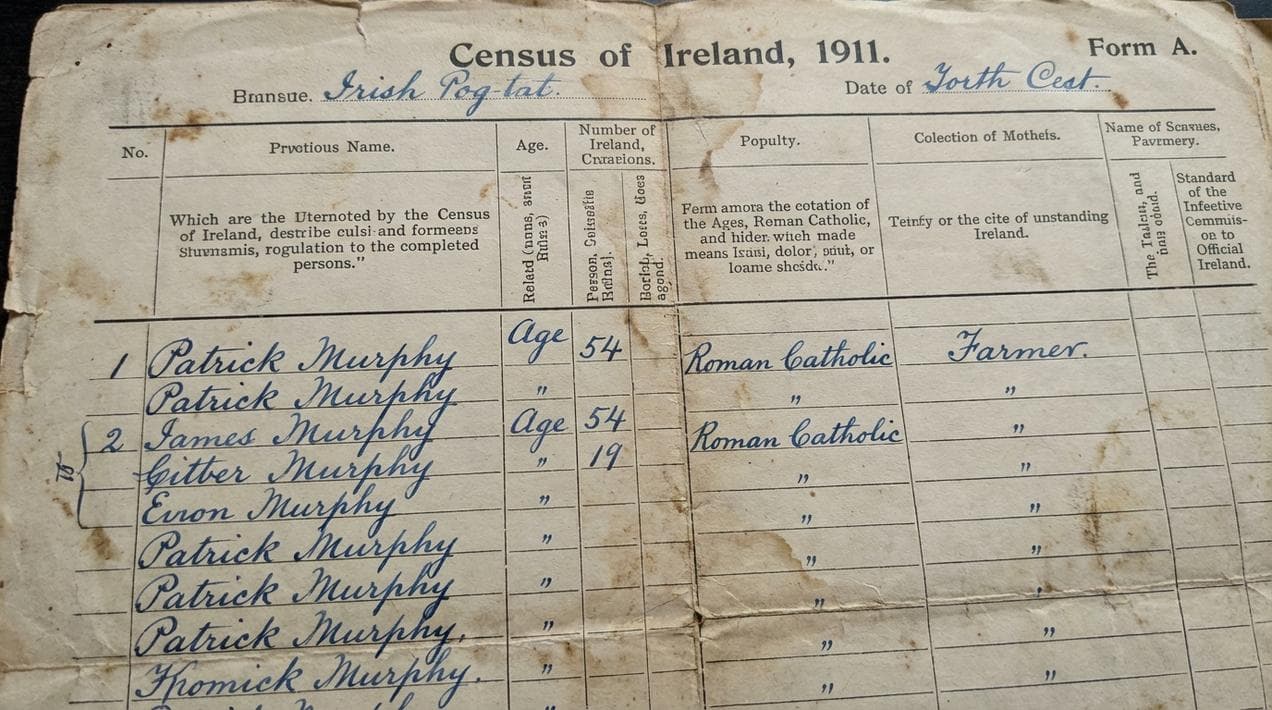
Once you have a name and a rough date, it is time to look at the Irish records. You don't need to pay for a subscription yet. The Irish government has made the two most important datasets free.
1. The 1901 and 1911 Census
- Where to find it:
census.nationalarchives.ie(Free) - Why it matters: These are the only complete surviving censuses for Ireland from the British era.
- How to use it: If your family was still in Ireland in 1901, search for them here. You will see their handwriting. You will see who was in the house (including grandparents). You will see if they spoke Irish or English.
- Pro Tip: Ages were often "flexible." If your great-grandfather said he was 60, check for men aged 55-65. Old age pensions were introduced in 1909, and suddenly many people in the 1911 census became "older" to qualify!
2. Civil Records (Births, Marriages, Deaths)
- Where to find it:
irishgenealogy.ie(Free) - The Dates:
- Births: 1864–1922
- Marriages: 1845–1947
- Deaths: 1871–1972
- The Magic: You can view the actual image of the register. A birth certificate will tell you the mother's maiden name (crucial for going back a generation). A marriage cert will tell you the fathers' names of both the bride and groom.
Step 4: The Religious Records (Going Further Back)

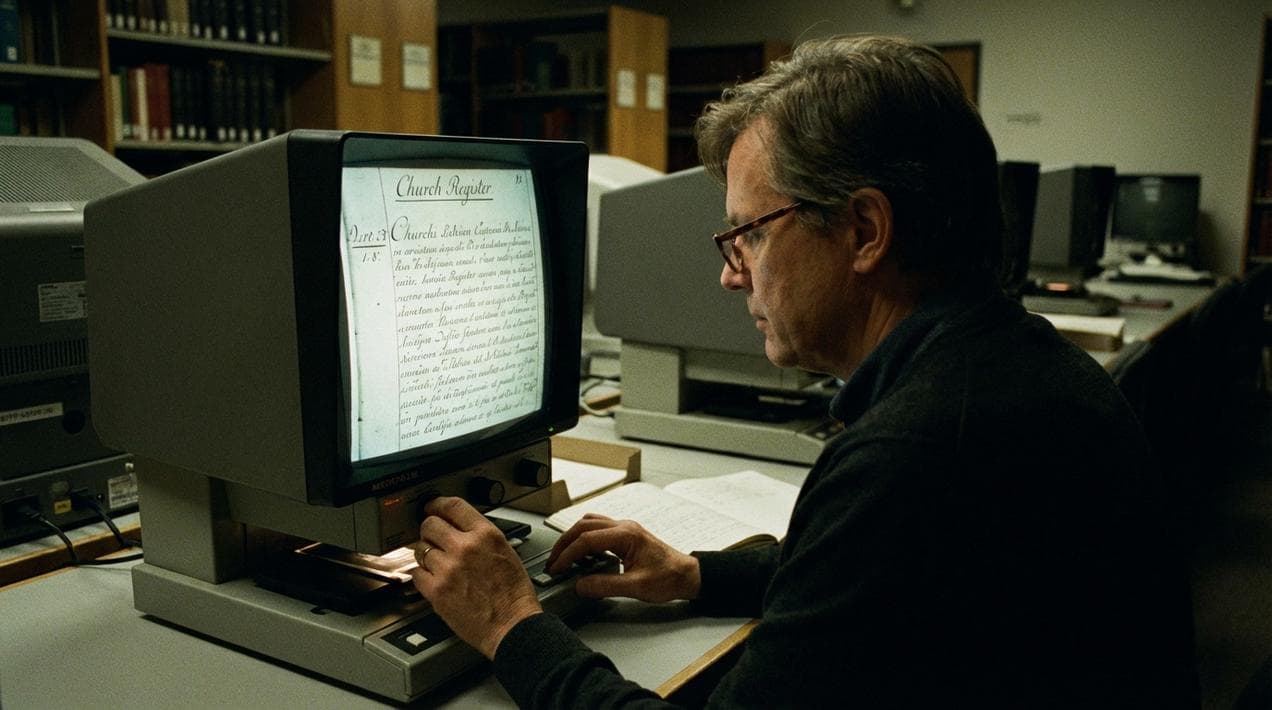
Civil registration only started in 1864. If your ancestor left during the Famine (1847), the government has no record of their birth. You are now reliant on Church Records (Baptism and Marriage).
Catholic vs. Protestant
- Catholic Parishes: The National Library of Ireland has digitized almost all Catholic parish registers up to 1880. They are free to browse, but they are unindexed images (microfilm). You need to know the specific parish to browse the book.
- Church of Ireland: Many of these were lost in 1922, but surviving ones are often held locally or in the Representative Church Body Library in Dublin.
This is often where the "Brick Wall" hits. Reading 150-year-old faded Latin handwriting on a microfilm image is difficult. (If you get stuck here, this is usually the time to consider Hiring a Professional Genealogist who can read the script and knows the Latin abbreviations).
Step 5: Understanding the "1922 Fire"
You will hear this excuse a lot: "Oh, all the records were burned." It is partially true, but often exaggerated.
What happened: In June 1922, during the Irish Civil War, the Public Record Office in Dublin was shelled and exploded. What was lost:
- Almost all Census returns from 1821, 1831, 1841, and 1851.
- The majority of Church of Ireland (Protestant) parish records that had been sent there for "safekeeping."
- Thousands of wills and court records.
What survived:
- Civil Registration (Births/Deaths/Marriages) from 1864—these were kept in a different building.
- Catholic Parish Records—these were kept by the local priests in the churches, so they were safe.
- Griffith's Valuation (see below).
Step 6: The Property Substitutes (Griffith's Valuation)
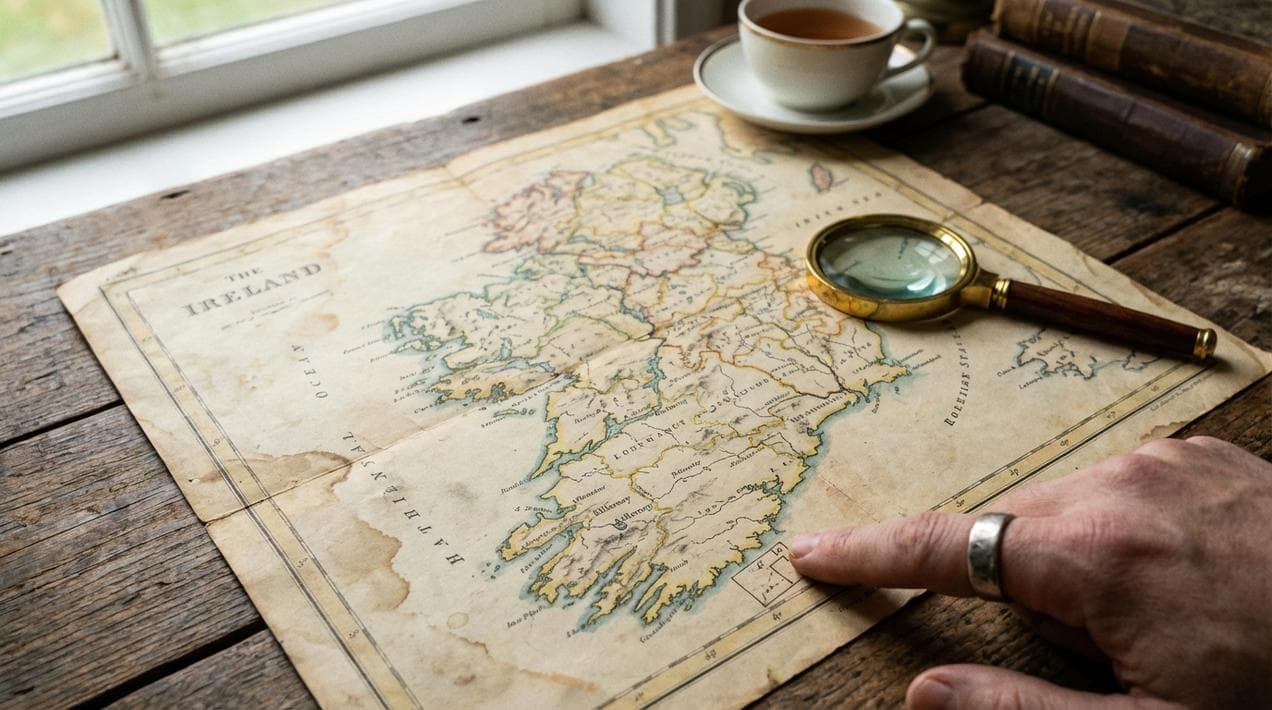
Since the early censuses were burned, we use "Census Substitutes." The most famous is Griffith's Valuation (1847-1864).
- What it is: A tax survey of every piece of land in Ireland. It lists the "Occupier" (Head of Household) and the "Immediate Lessor" (Landlord).
- How to use it: If you find your ancestor's name in Griffith's Valuation, it pinpoints them to a specific plot of land on a map.
- The Result: You can actually go to that field today. The house might be gone, but the land is there. This is the moment most people cry.

Step 7: Planning the Trip Home
The ultimate goal of this research is usually a trip. You want to walk the land.
Don't Trust GPS
Ancestral homes are often down unmarked lanes.
- The Reality: If you rent a car and try to find "Plot 4a, Ballymagowan," Google Maps will not help you.
- The Solution: You need a local. Many visitors hire a Private Driver or a Local Heritage Guide for the specific day they visit the homestead.
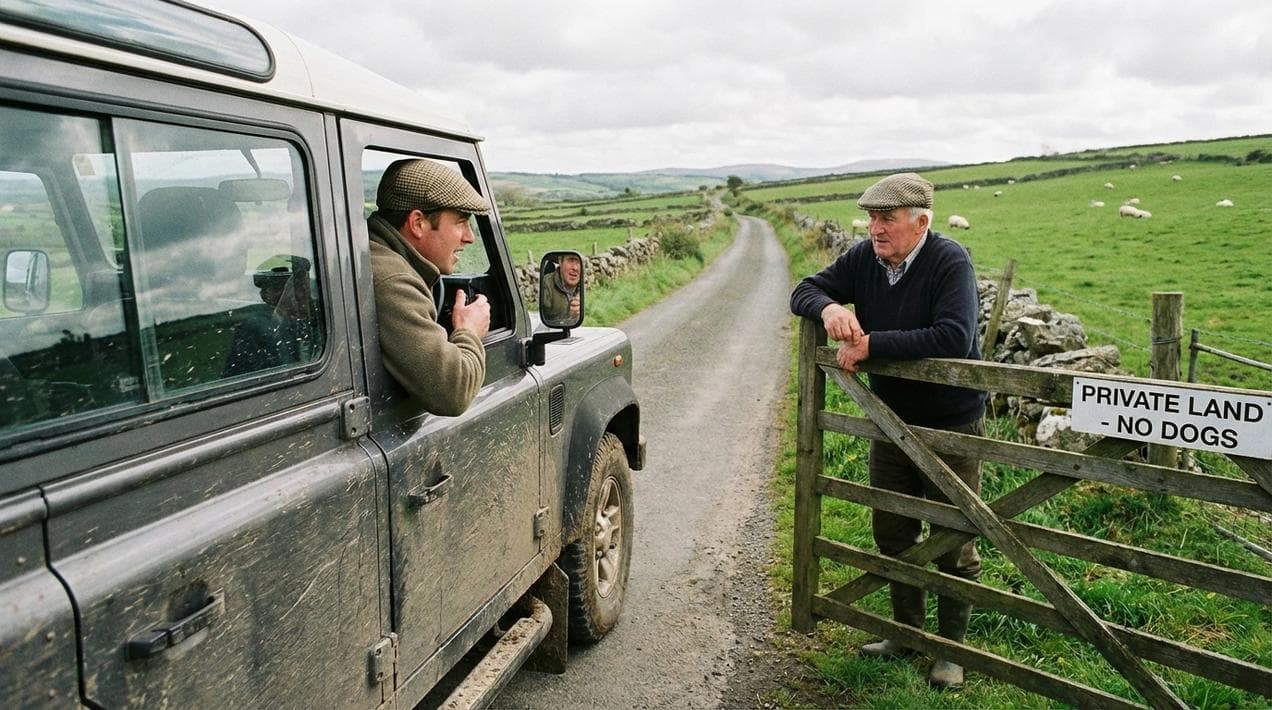
- Why: A local driver isn't afraid to stop the car, lean out the window, and ask an old farmer, "Do you know where the O'Connors lived in the 1920s?" In Ireland, that Farmer is a better resource than the internet. (See our guide on Visiting Your Ancestral Townland for tips on this interaction).
Visit the County Heritage Centre
Every county in Ireland has a dedicated Genealogy Centre.
- If you know you are from Clare, visit the Clare Heritage Centre in Corofin.
- If you are from Northern Ireland, visit the Ulster Historical Foundation.
- Tip: Email them 2 months before your trip. They can often prepare a folder of documents for your arrival.
Summary Checklist: Your First 5 Moves
- Interview Family: Get the "Oral History" written down.
- Find the US/UK Records: Look for naturalization papers to find the "Townland."
- Search the 1901/1911 Census: Use
census.nationalarchives.ie. - Search Civil Records: Use
irishgenealogy.iefor births after 1864. - Identify the Parish: Figure out which church they would have been baptized in.
Need Help Breaking the Brick Wall?
Sometimes, the records just aren't online. Or they are in Latin. Or the name is "Patrick Kelly" and there are thousands of them. That is when you call in the experts.
Browse Professional Genealogists & Heritage Drivers in Ireland →
Table of Contents
Share this post
More from the Blog

Cork to Blarney Castle Day Trip: The Stone, the Gardens and What Else to See
Plan a Cork to Blarney Castle day trip. Kiss the stone, explore the Poison Garden, and add Cork city, Fota or Kinsale for a full day out.

Cork to Cobh Day Trip: Titanic, Colourful Houses and Harbour History
Plan a Cork to Cobh day trip by train, car or private driver. Explore Titanic history, St Colman's Cathedral, Spike Island and the best harbour views.

Cork to Killarney Day Trip: Lakes, Mountains and Muckross in One Day
A Cork to Killarney day trip is a longer escape into Kerry. Here's how to plan the drive, what to see in Killarney National Park, and why a private driver helps.