
Visiting Your Ancestral Townland: How to Plan the Ultimate Trip Home
This is it. The trip of a lifetime.
You have spent months (or years) on Ancestry.com. You have squinted at the 1901 Census. You have found the birth certificate that says your great-grandfather was born in a place called "Ballinastoe" in County Kerry.
Now, you are flying 3,000 miles to stand on that patch of earth.
But here is the reality check: Ireland is not a theme park. It is a farm.
Your ancestral home is likely not a museum with a sign out front. It is probably a pile of stones in the middle of a muddy field, or worse, it’s now a modern bungalow owned by someone completely unrelated to you. And "Ballinastoe"? It doesn't appear on your rental car's GPS.
Visiting your ancestral townland is the most emotional part of any trip to Ireland, but it is also the most logistically difficult. If you get it right, it is magic. If you get it wrong, you spend 4 hours driving in circles arguing with your spouse.
This guide will show you how to close the circle.
(This logistics guide is part of our master Returning Home: The Ultimate Guide to Tracing Your Irish Roots. If you haven't found your townland name yet, start with our Beginner’s Guide to Starting Your Tree).
Step 1: The "Townland" Problem (Why GPS Fails)
To find your home, you must understand the Irish address system. In the US or UK, an address is 123 Main Street. In rural Ireland, an address is often just The O'Brien House, Ballinastoe.
What is a Townland?
A townland is an ancient Gaelic land division. It can be as small as 5 acres or as large as 500. There are 64,000 of them in Ireland.
- The Catch: There are no street signs for townlands. Google Maps often doesn't list them. If you type "Ballinastoe" into a GPS, it might take you to the center of a postcode area 10 miles away.
The Solution: Historical Maps
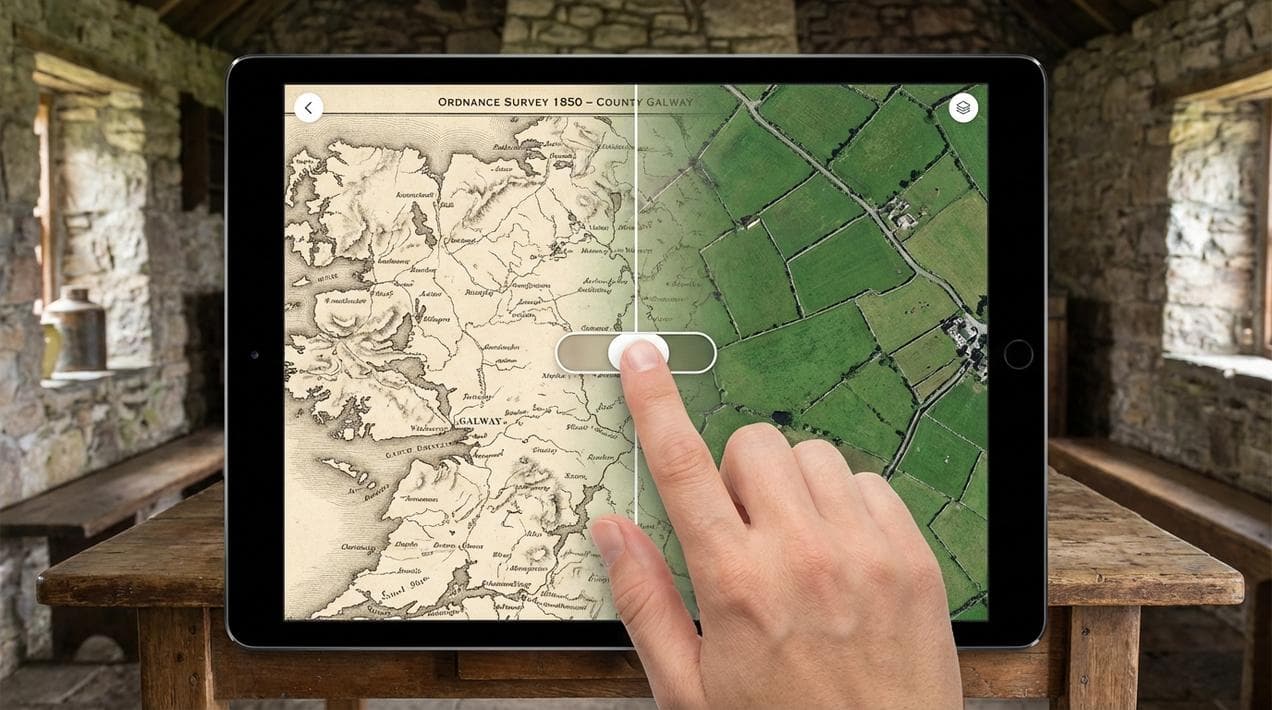
You need to overlay the old map onto the new map.
- Griffith's Valuation (1850s): This map shows exactly where "Plot 4a" (your ancestor's house) was.
- GeoHive.ie: This is the Irish state map viewer. It allows you to use a "slider" to fade between the 1840 map and modern satellite imagery.
- Tip: Do this before you leave home. Print the satellite view. Mark the specific clump of trees or ruins.
Step 2: The Transport Reality (Don't Rent a Car)

We say this with love: Do not try to do this in a rental car.
The Terrain
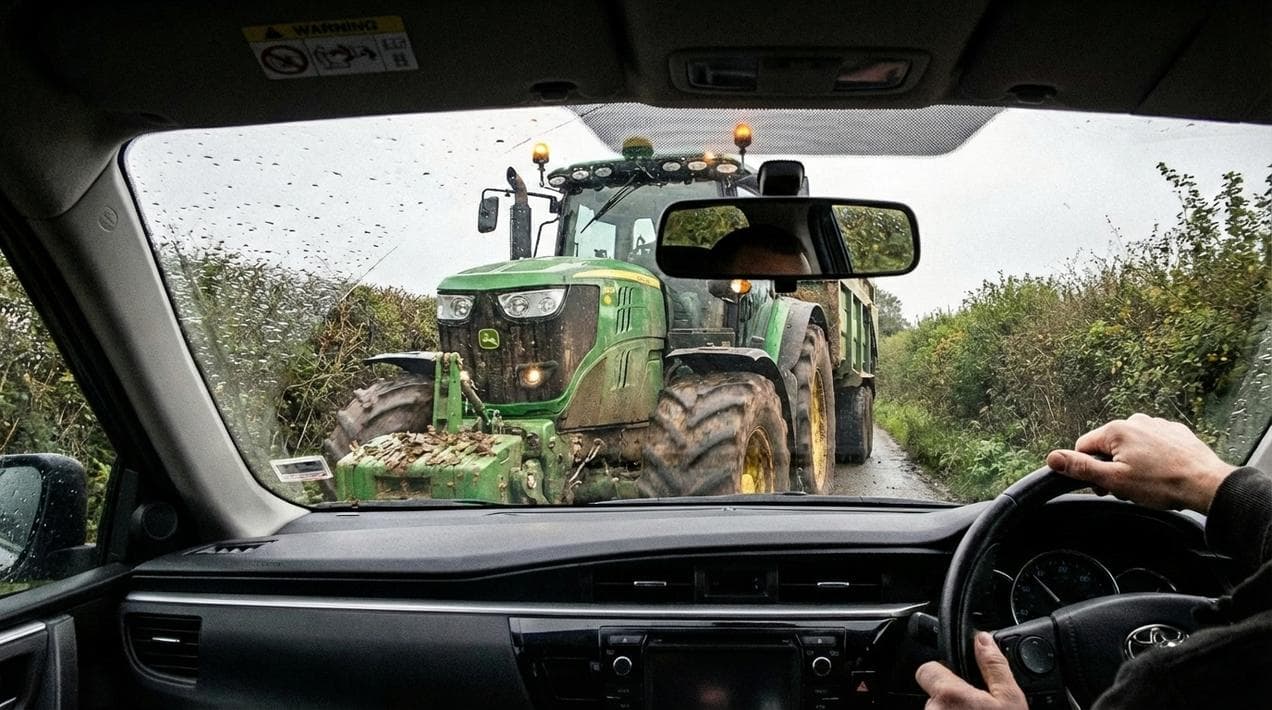
Ancestral homes are rarely on the main road (N-Roads). They are down "Boreens" (cow lanes).
- These lanes are one car wide.
- They have grass growing in the middle.
- You will likely meet a tractor coming the other way and have to reverse 500 yards into a ditch.
The Navigation
You cannot drive and navigate a 19th-century map at the same time.
- If you are the driver, you are 100% focused on not scratching the rental car on the brambles. You aren't looking at the view, and you certainly aren't "feeling the connection."
The Upgrade: The Heritage Driver
This is the single best investment for a genealogy trip.
- What they do: You hire a Private Driver for the specific day you plan to visit the homestead.
- The "Local" Factor: A driver from the county knows the roads. But more importantly, they speak the "language" of the locals. They know how to pull over, wind down the window, and ask an old man walking his dog: "We're looking for the old Murphy place, do you know which field it was?"
- The Result: We have seen drivers turn a "lost" trip into a reunion by finding the right local historian.
Step 3: The "Knock on the Door" Protocol
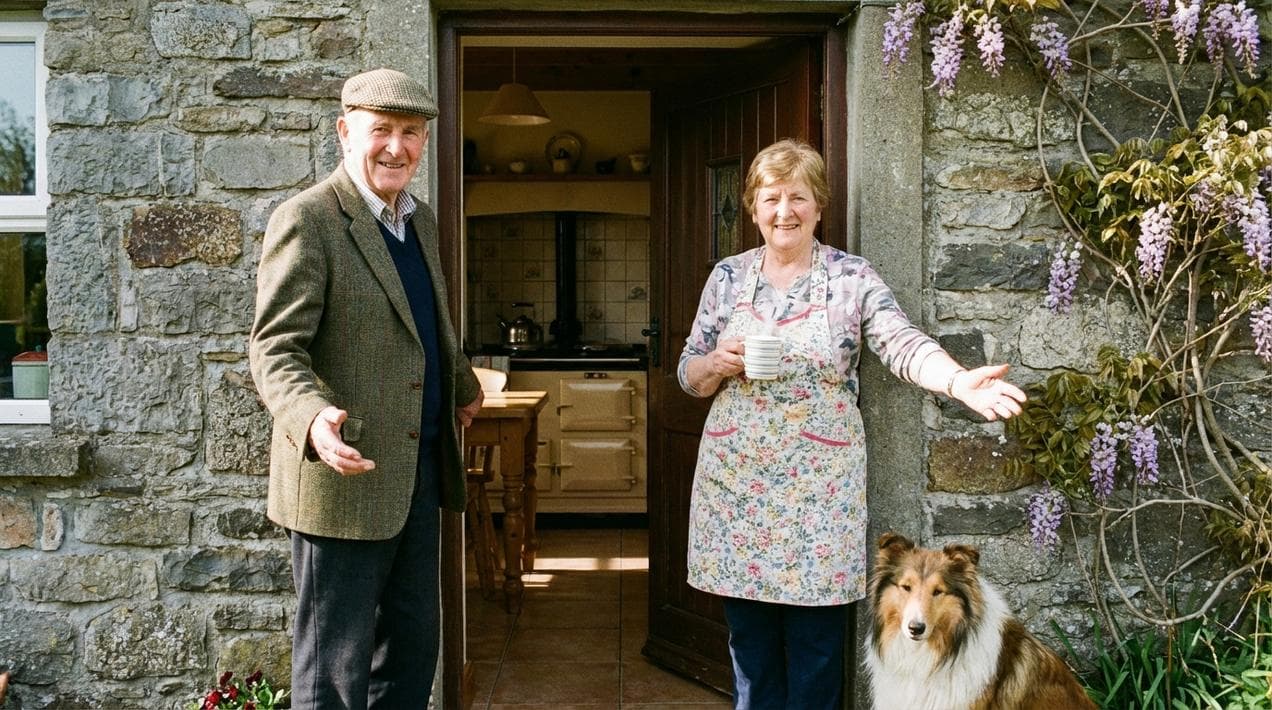
You have found the spot. There is a house there. It might be the original cottage (renovated) or a new house built on the site. Someone lives there.
Do you knock?
Yes. But there is an etiquette. Irish people are incredibly welcoming, but you are still a stranger appearing in their driveway.
The Rules of Engagement:
- Don't Barge In: Do not walk around the back of the house or peek in windows. Stay at the gate or front door.
- The "Connection" Opening: When they open the door, don't say "This is my house." Say: "I'm sorry to disturb you. My great-grandfather lived here in 1900, and I’ve traveled from America just to see the view he saw. Would you mind if I took a photo of the old wall?"
- The "Tea" Scenarios:
- Scenario A: They are busy. They say "Work away" and close the door. Take your photo and leave.
- Scenario B (Most Likely): They see you are genuine. They invite you in for tea.
- Warning: If you are invited in for tea, you must accept. It is rude to refuse. Prepare to stay for 45 minutes and answer questions about Donald Trump or the price of houses in Boston.
Step 4: Managing Your Expectations
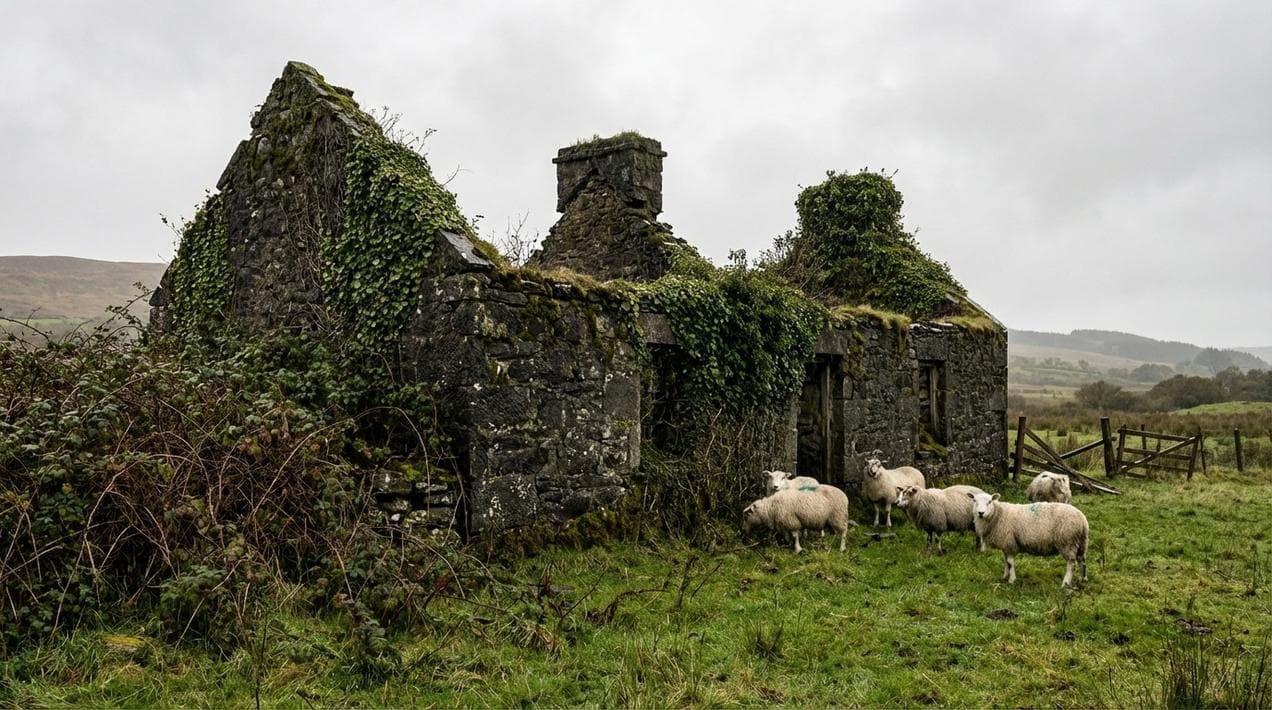
This is the hard part. You have a picture in your head of a cute thatched cottage with smoke rising from the chimney.
The Reality Might Be:
- A Pile of Stones: Many Famine-era cottages were abandoned and dissolved back into the earth. You might just find a corner of a wall covered in ivy.
- A Cowshed: Farmers often turned old cottages into barns for livestock. Your ancestral "home" might currently be housing three Charolais heifers.
- Nothing: The land might have been cleared entirely.
The Mindset: It doesn't matter if the house is gone. The Land is the same. The mountain in the distance is the same one your great-grandmother looked at when she said goodbye. That is the connection.
Step 5: What to Bring (The Toolkit)
Don't show up empty-handed.
- Boots (Wellies): You will be walking in fields. They will be wet. Do not wear white sneakers.
- Printed Family Tree: If you meet a local or a distant cousin, showing them a printed tree helps them figure out the connection. "Oh, you're descended from the 'Red' Murphys, not the 'Black' Murphys."
- A Gift: If you are visiting living cousins, bring a small gift from your home state (local honey, chocolate, etc.). Do not bring money.
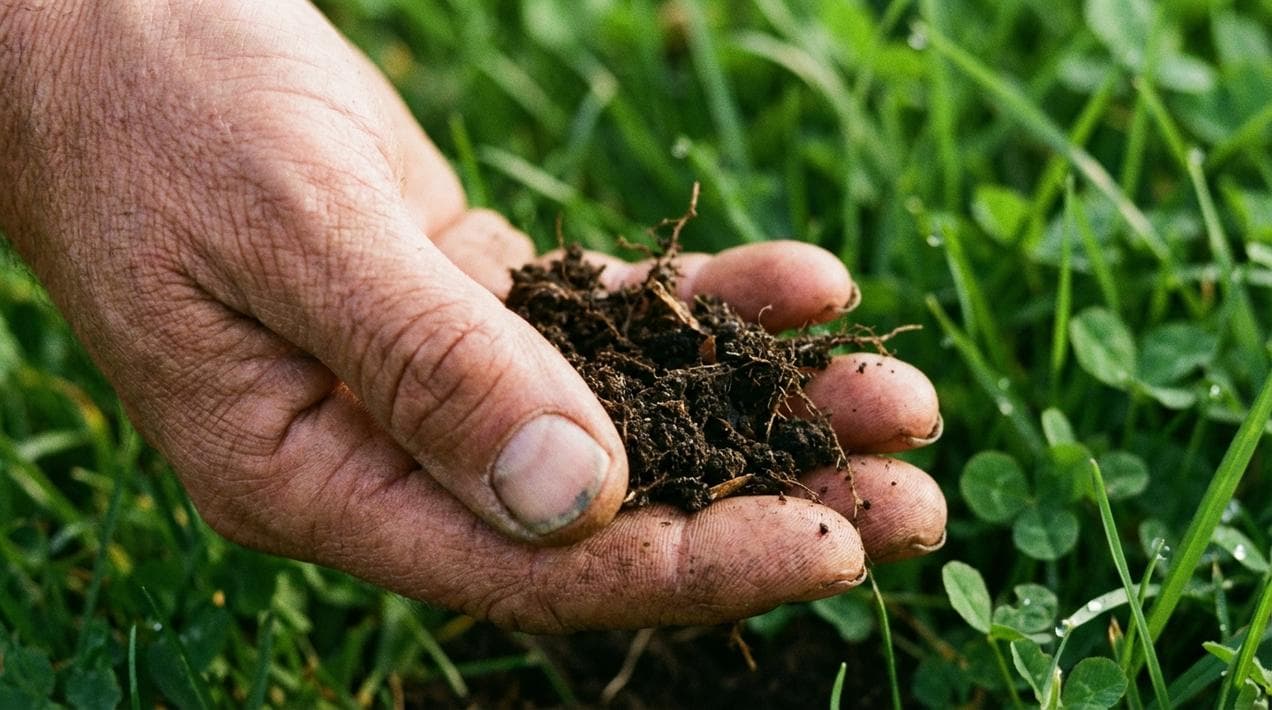
- A Zip-Lock Bag: Why? To take a small scoop of soil. (Check your country's customs regulations first, but many diaspora take a pinch of "Irish Earth" home to be buried with).
Step 6: Visiting the Graveyard
If the house is gone, the graveyard is your backup. (See our specific guide on How to Find and Visit Ancestral Graves for the deep dive).
- The Condition: Old Irish graveyards are often overgrown. Headstones are covered in moss.
- The Tip: Bring a bottle of water and a soft brush (not wire) to wet the stone. It makes the inscription readable for a photo without damaging the stone. Never use shaving cream or flour—it damages the lichen.
Step 7: The Emotional Aftermath
Don't underestimate this day. We see it all the time. Strong men break down in tears standing in a muddy field in Mayo.
- Advice: Do not plan a heavy itinerary for the evening of your "Homecoming Day."
- The Plan: Go back to your hotel. Have a quiet dinner. Write in your journal. Decompress. You have just closed a circle that has been open for 100 years.
Summary: The Perfect "Homecoming" Day
- 09:00: Your Private Driver collects you from your hotel. You show them the old maps.
- 10:30: You arrive at the local village. You visit the church where they were baptized.
- 12:00: You navigate the boreens to the Townland. You identify the land.
- 12:30: You knock on the door (or hop the gate if it's ruins). You take the photos.
- 13:30: Lunch in the local pub. Your driver asks the barman if there are any [Your Surname]s still left in the parish.
- 15:00: Visit the graveyard to pay respects.
- 17:00: Return to hotel.
Don't Get Lost on the Boreens
This is too important a day to spend it stressed behind the wheel of a rental car. Hire a driver who knows the land and the locals.
Table of Contents
Share this post
More from the Blog

Cork to Blarney Castle Day Trip: The Stone, the Gardens and What Else to See
Plan a Cork to Blarney Castle day trip. Kiss the stone, explore the Poison Garden, and add Cork city, Fota or Kinsale for a full day out.

Cork to Cobh Day Trip: Titanic, Colourful Houses and Harbour History
Plan a Cork to Cobh day trip by train, car or private driver. Explore Titanic history, St Colman's Cathedral, Spike Island and the best harbour views.

Cork to Killarney Day Trip: Lakes, Mountains and Muckross in One Day
A Cork to Killarney day trip is a longer escape into Kerry. Here's how to plan the drive, what to see in Killarney National Park, and why a private driver helps.