
Irish Citizenship by Descent: Do You Qualify? (2026 Rules)
The Irish Passport is one of the most powerful documents in the world.
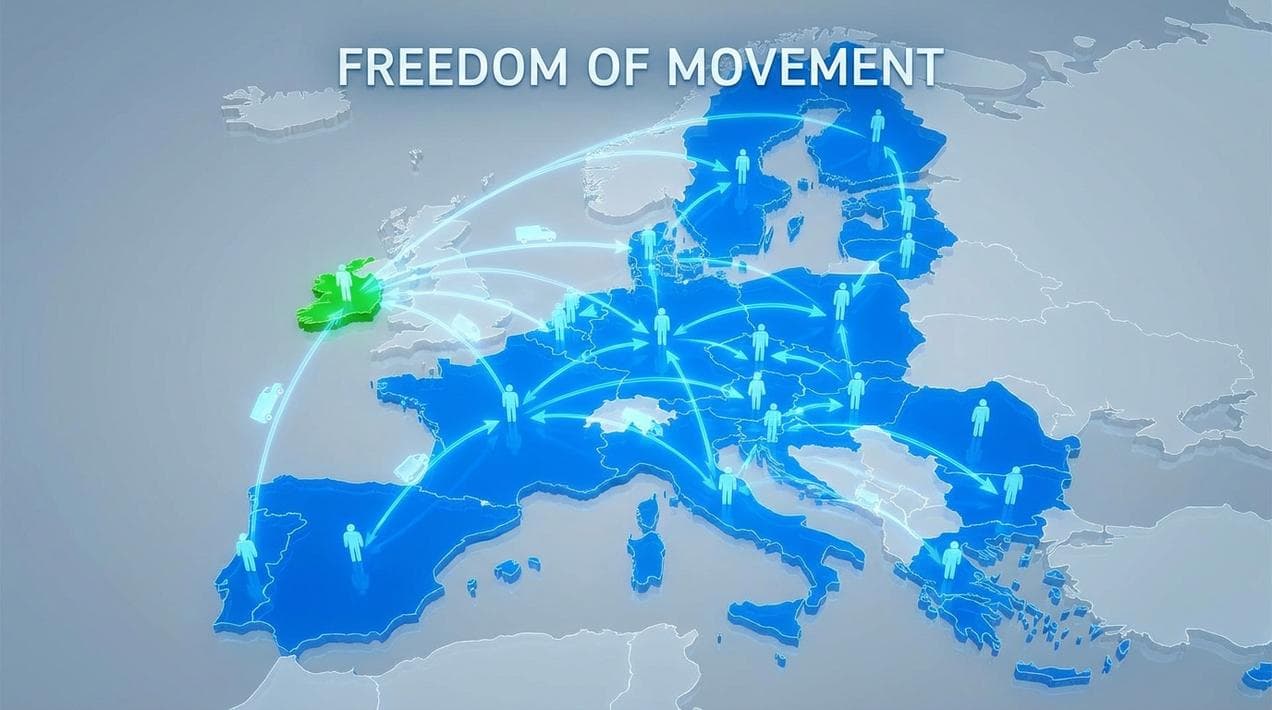
It grants you not just the right to live in Ireland, but the right to live, work, and study anywhere in the European Union (France, Italy, Spain, etc.) without a visa. It also allows you to live in the UK (under the Common Travel Area agreement).
For this reason, millions of people worldwide are asking the same question: "My grandmother was from Cork... can I get a passport?"
The answer is: It depends.
Irish Citizenship laws are generous, but they are strict. There is a hard "cut-off" point that breaks many hearts. There is also a mountain of paperwork required to prove your lineage.
This guide clarifies exactly who qualifies, how to apply to the Foreign Births Register (FBR), and how to gather the difficult documents you need.
(This legal guide is part of our master Returning Home: The Ultimate Guide to Tracing Your Irish Roots. If you are missing birth certificates for your application, check our guide on Hiring a Genealogist to help find them).
The Three Categories: Do You Fit?
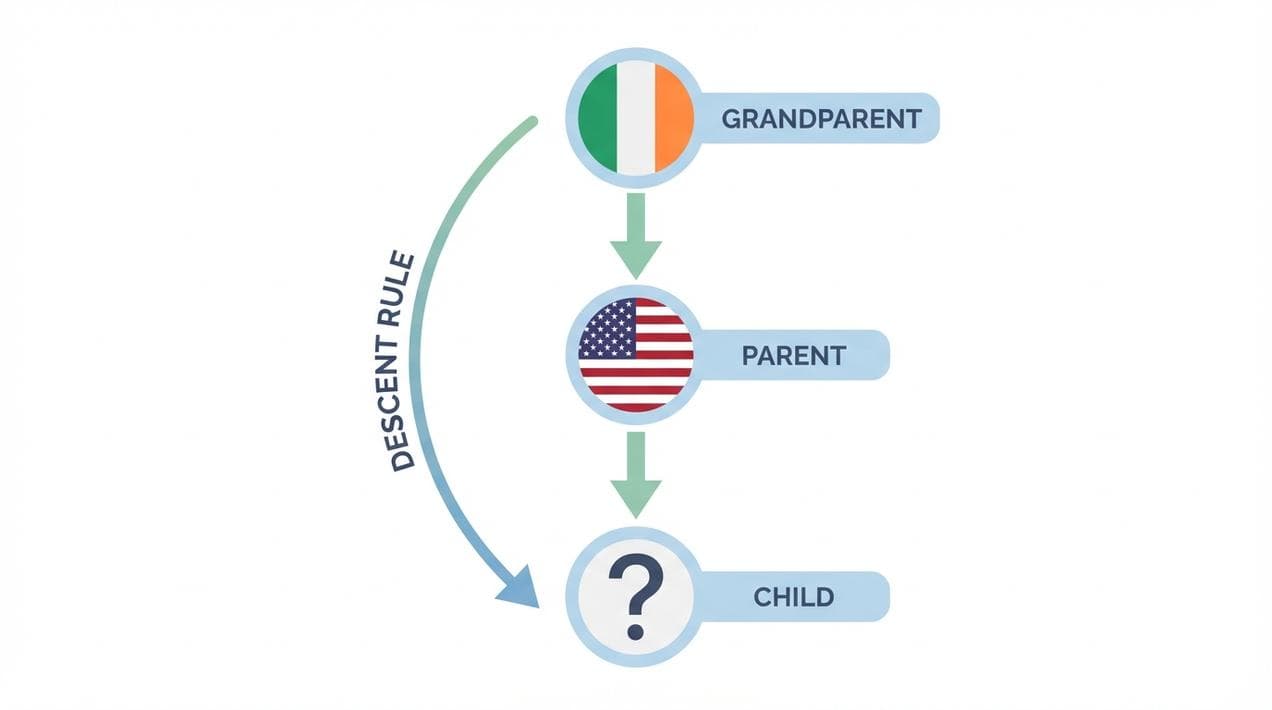
Citizenship by descent generally stops at the Grandchild level. Here are the three tiers.
Tier 1: Born to an Irish Parent (Automatic)
- The Rule: If one of your parents was born on the island of Ireland (before you were born), you are automatically an Irish citizen.
- The Action: You do not need to apply for citizenship. You simply apply for a passport.
- The Catch: You need your parent’s "Long Form" Irish birth certificate to prove it.
Tier 2: Born to an Irish Grandparent (The FBR Route)
- The Rule: If one of your grandparents was born in Ireland, but your parent was born outside Ireland (e.g., in the US or UK), you are eligible.
- The Action: You are NOT automatically a citizen. You must apply to be entered onto the Foreign Births Register (FBR).
- Important: You cannot get a passport until you have your FBR Certificate. This process can take 9–12 months.
Tier 3: Great-Grandparents (The Heartbreaker)
- The Rule: Generally, NO. You cannot claim citizenship based only on a great-grandparent.
- The Exception: You can only claim if your parent had registered on the Foreign Births Register before you were born.
- Scenario: Your Great-Grandfather was Irish. Your Mother (his granddaughter) claimed her citizenship in 1985. You were born in 1990. YES, you qualify.
- Scenario: Your Mother claims her citizenship today (2026). You are already born. NO, you do not qualify. Citizenship is not retroactive.

The Foreign Births Register (FBR): How It Works
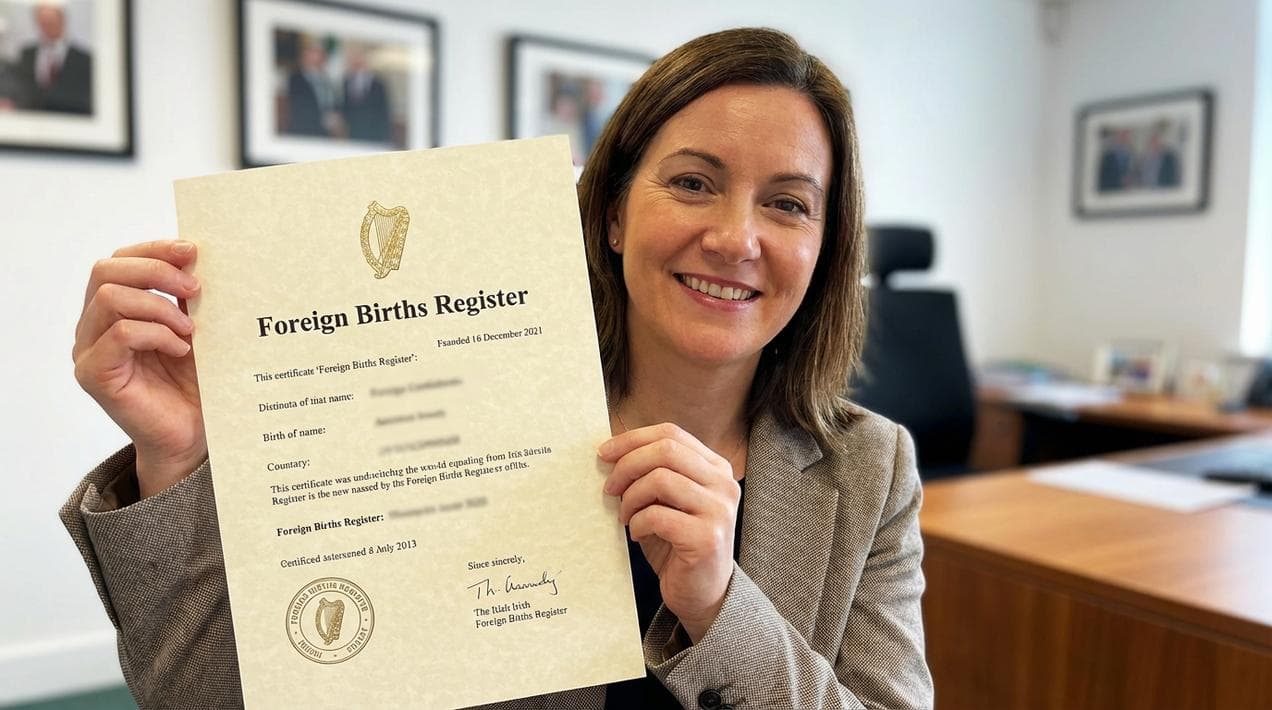
If you fall into Tier 2 (The Grandparent Rule), this is your battleground.
The Foreign Births Register is the official log of people born abroad who have claimed Irish citizenship. It is managed by the Department of Foreign Affairs (DFA).
The Process
- Apply Online: Fill out the application on the DFA website.
- Pay the Fee: Roughly €278 (Adults) or €158 (Minors).
- Send the Documents: You must mail original physical documents to Dublin.
- The Wait: As of 2026, the processing time is approximately 9 months.
- The Result: You receive a large, formal certificate in the mail. Now you can apply for a passport.
The "Paperwork Nightmare": Documents You Need
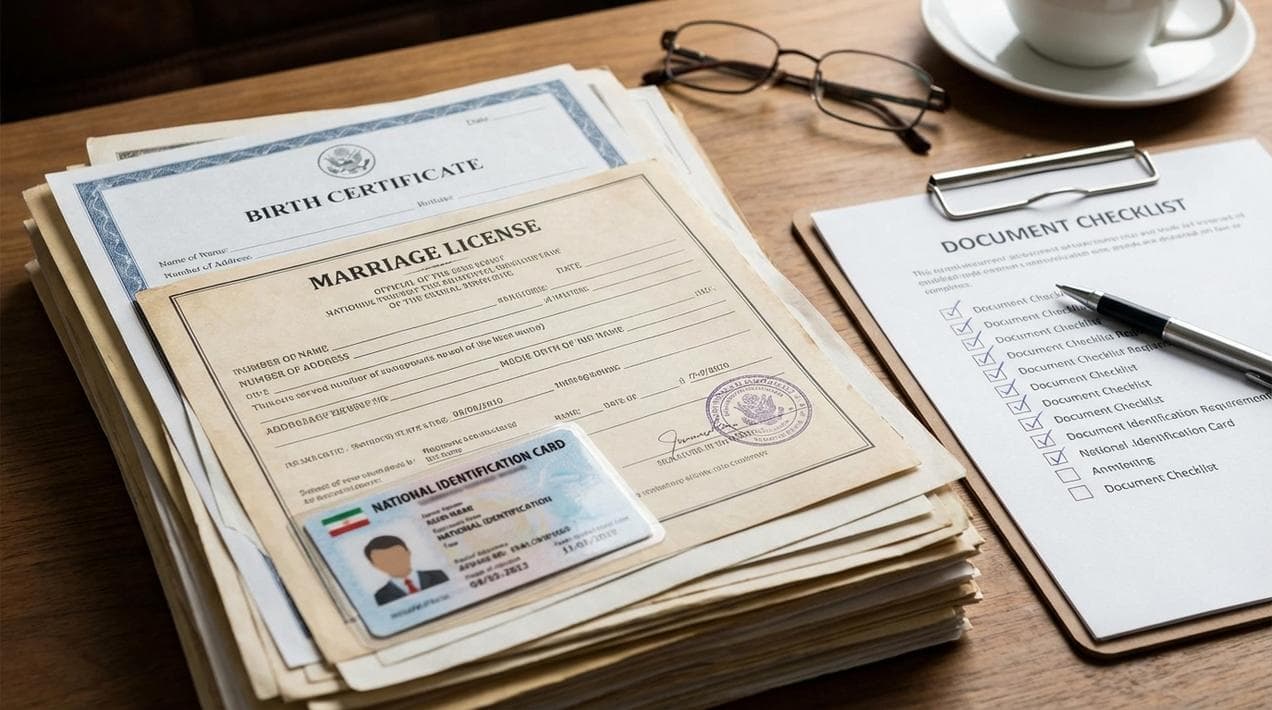
This is where 50% of applications fail. You cannot send photocopies. You cannot send "commemorative" certificates. You must send Original, Long-Form State Certificates.
To claim via a Grandparent, you need a complete paper chain linking you to them. That means documents for You, your Parent, and your Grandparent.
1. Documents for YOU (The Applicant)
- Original Civil Birth Certificate (showing parents' names).
- Original Marriage Certificate (if you changed your name).
- Notarized copy of your current Passport/ID.
- 2 Proofs of Address (Utility bills).
- 4 Passport Photographs (Witnessed/Signed).
2. Documents for your PARENT (The Link)
- Original Civil Birth Certificate.
- Original Marriage Certificate.

- Copy of current ID (or Death Certificate if deceased).
3. Documents for your GRANDPARENT (The Irish Ancestor)
- Original Irish Civil Birth Certificate.
- Original Civil Marriage Certificate (even if married in the US).
- Original Death Certificate (if deceased).
The Obstacles: Finding the Documents
Gathering your own documents is easy. Gathering documents for a grandparent who died in 1950 is hard.
Problem A: "My Grandparent was born before 1864"
Civil registration in Ireland only started in 1864.
- The Fix: If they were born before 1864, you need a Baptismal Certificate from the church, and likely a letter stating that civil records do not exist for that year.
Problem B: "The Dates Don't Match"
Often, an Irish emigrant changed their birth date when they arrived in the US (to seem younger for work, or older for a pension).
- The Fix: If the US Death Cert says born "1905" but the Irish Birth Cert says "1901," the Passport Office may reject it. You may need a Genealogist to find census records proving they are the same person.
Problem C: "I don't know where they were born"
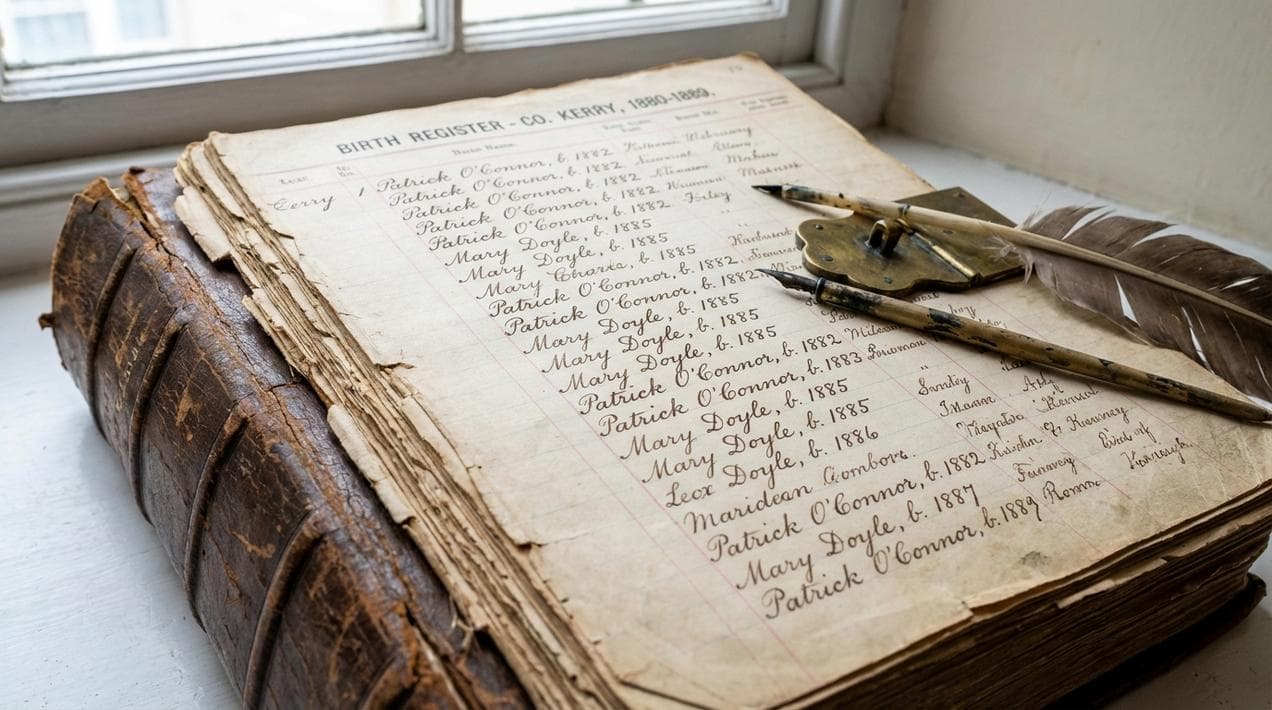
You cannot order an Irish Birth Certificate if you don't know the location (Parish/Townland). The General Register Office (GRO) in Ireland is not a research agency; they are a retrieval agency. You need to give them the details.
- The Solution: This is the #1 reason to Hire a Professional Genealogist. They can perform the detective work to locate the specific entry in the Irish ledgers so you can order the correct certificate. (See our guide on Hiring a Genealogist vs. DIY).
How to Order Irish Certificates
Once you know the details (Name, Year, County), you can order the official certificates needed for the FBR.
- Website:
HSE.ie(Health Service Executive) orGeneral Register Office. - Cost: €20 per full certificate.
- Format: Ensure you select "Full Certificate" (Long Form), not an uncertified copy.
- Shipping: They ship worldwide.

FAQ: Common Stumbling Blocks
"Can I use a DNA test to prove citizenship?"
No. The Irish government does not accept DNA results (from AncestryDNA, 23andMe, etc.) as proof of lineage. You must have the paper trail of civil documents.
"What if my parent never claimed citizenship?"
It doesn't matter (usually). If you are claiming via a Grandparent, your parent does not need to have an Irish passport. You can "skip" a generation in terms of holding the passport, as long as the bloodline is proven.
"Does Ireland allow Dual Citizenship?"
Yes. You do not need to renounce your US, UK, or Canadian citizenship. You can hold two passports.
Is It Worth It? (The Benefits)
The process is slow, expensive (roughly €300 + document costs), and frustrating. Why do people do it?
- EU Rights: You can retire to Italy, work in France, or study in Germany with no visa hurdles.
- UK Rights: Irish citizens have a unique status in the UK that other EU citizens lost after Brexit. You can live/work in London freely.
- University Fees: In some cases, holding an EU passport can unlock lower "EU Fees" for universities (though residency rules often apply).
- Heritage: For many, it is simply the emotional weight of "officially" belonging to the country their ancestors left.
Summary Checklist: How to Apply
- Confirm Eligibility: Are you Tier 1 (Parent) or Tier 2 (Grandparent)?
- Locate the Ancestor: Find exactly where and when your grandparent was born. (Use our Beginner's Guide if you are stuck).
- Order Certificates: Order "Long Form" certs for all three generations.
- Apply Online: Submit the FBR application on the DFA website.
- Mail Documents: Send the original bundle via registered mail.
- Wait: Expect a 9–12 month processing time.
Missing a Vital Document?
If you cannot find your grandparent's Irish birth record, you cannot apply. Don't let the trail go cold. Professional researchers can locate records that are misindexed or offline.
Table of Contents
Share this post
More from the Blog

Cork to Blarney Castle Day Trip: The Stone, the Gardens and What Else to See
Plan a Cork to Blarney Castle day trip. Kiss the stone, explore the Poison Garden, and add Cork city, Fota or Kinsale for a full day out.

Cork to Cobh Day Trip: Titanic, Colourful Houses and Harbour History
Plan a Cork to Cobh day trip by train, car or private driver. Explore Titanic history, St Colman's Cathedral, Spike Island and the best harbour views.

Cork to Killarney Day Trip: Lakes, Mountains and Muckross in One Day
A Cork to Killarney day trip is a longer escape into Kerry. Here's how to plan the drive, what to see in Killarney National Park, and why a private driver helps.