
Irish Surnames Explained: Maps, Clans & The "O" and "Mac"
"My name is Murphy. That means I'm from Cork, right?"
Well, probably. But maybe not.
Irish surnames are the oldest in Europe. We were using hereditary surnames in the 10th century, long before the English or French. But over 1,000 years, names have been Anglicized, dropped, changed, and moved. "O'Murchadh" became Murphy. "Mac Gabhann" became Smith.
Understanding your name is the first key to unlocking your family history. It can tell you not just who your ancestors were (a warrior? a priest? a smith?), but where they likely came from.
This guide breaks down the "O" and the "Mac," maps the major clans, and busts the biggest myth in Irish genealogy: the "Family Tartan."
(This heritage guide is part of our master Returning Home: The Ultimate Guide to Tracing Your Irish Roots. Once you know your clan's home county, check our guide on Visiting Your Ancestral Townland).
The Basics: "O" vs. "Mac"
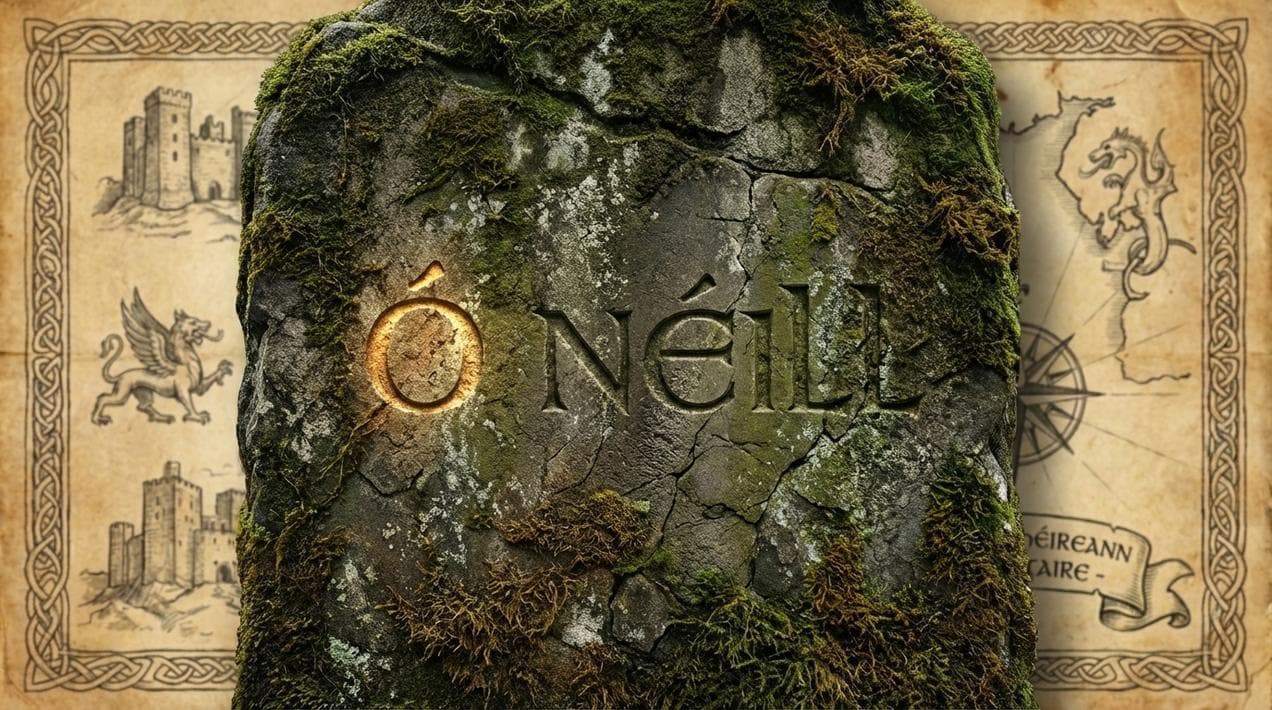
The most famous feature of Irish names is the prefix. But what do they actually mean?
O' (or Ó)
- Meaning: "Grandson of" or "Descendant of."
- Example: O'Brien (Ó Briain) means "Descendant of Brian" (specifically Brian Boru, the High King).
- Myth Buster: The "O" does not mean "Of." It is strictly genealogical.
Mac (or Mc)
- Meaning: "Son of."
- Example: MacCarthy (Mac Cárthaigh) means "Son of Cárthach."
- Myth Buster: There is no difference between "Mac" and "Mc." "Mc" is just an abbreviation written by lazy clerks. It does not mean one is Irish and one is Scottish. Both are used in both countries.
Fitz
- Meaning: "Son of" (from the French Fils).
Meet a Local Guide
Hi Folks,
- Origin: These are Norman names, brought to Ireland after the invasion of 1169.
- Example: Fitzgerald (Son of Gerald), Fitzpatrick (a rare Normanization of the Gaelic Mac Giolla Phádraig).
The Map: Where Does Your Name Come From?
In the old Gaelic order, families were deeply tied to specific territories. While people move today, finding the "Core" of a surname is a huge clue for your research.
The "Big Five"
- Murphy (Ó Murchadh)
- Meaning: "Sea Warrior."
- Location: Everywhere, but historically focused in Cork and Wexford.
- The Clue: If you are a Murphy, you likely have coastal roots.
- Kelly (Ó Ceallaigh)
- Meaning: "Bright-headed" or "Troublesome."
- Location: Galway and Roscommon (O'Kelly's Country).
- The Clue: There are distinct septs. A Galway Kelly is likely unrelated to a Dublin Kelly.
- Sullivan (Ó Súilleabháin)
- Meaning: "Dark Eye" or "One-Eyed."
- Location: Heavily concentrated in Cork and Kerry.
- The Clue: It is almost exclusively a Munster name.
- Walsh (Breathnach)
- Meaning: "The Welshman."
Meet a Local Guide
Greetings!
- Location: Kilkenny and Mayo.
- The Clue: This is a Norman name describing the soldiers who came from Wales in 1169.
- O'Neill (Ó Néill)
- Meaning: "Descendant of Niall" (Niall of the Nine Hostages).
- Location: Ulster (Tyrone/Antrim).
- The Clue: One of the most powerful royal families in Irish history.
The "Translation" Trap
When the British administration Anglicized Irish names in the 17th-19th centuries, they often made mistakes or "translated" them poorly. This can hide your roots.
- Smith: Often a translation of Mac Gabhann (Son of the Blacksmith). So an Irish Smith is usually a McGowan in disguise.
- Fox: A translation of Mac an tSionnaigh (Son of the Fox).
- Rabbitte: A mistranslation! The Irish name Ó Coinín sounds like "Coínín" (Rabbit), so they became Rabbittes. But the name actually meant "Descendant of Coinneach."
Why this matters: If you can't find "Rabbitte" in the 1600s records, look for "Cunneen" or "O'Coneen." A Professional Genealogist is expert at spotting these linguistic shifts.
The Great Tartan Myth
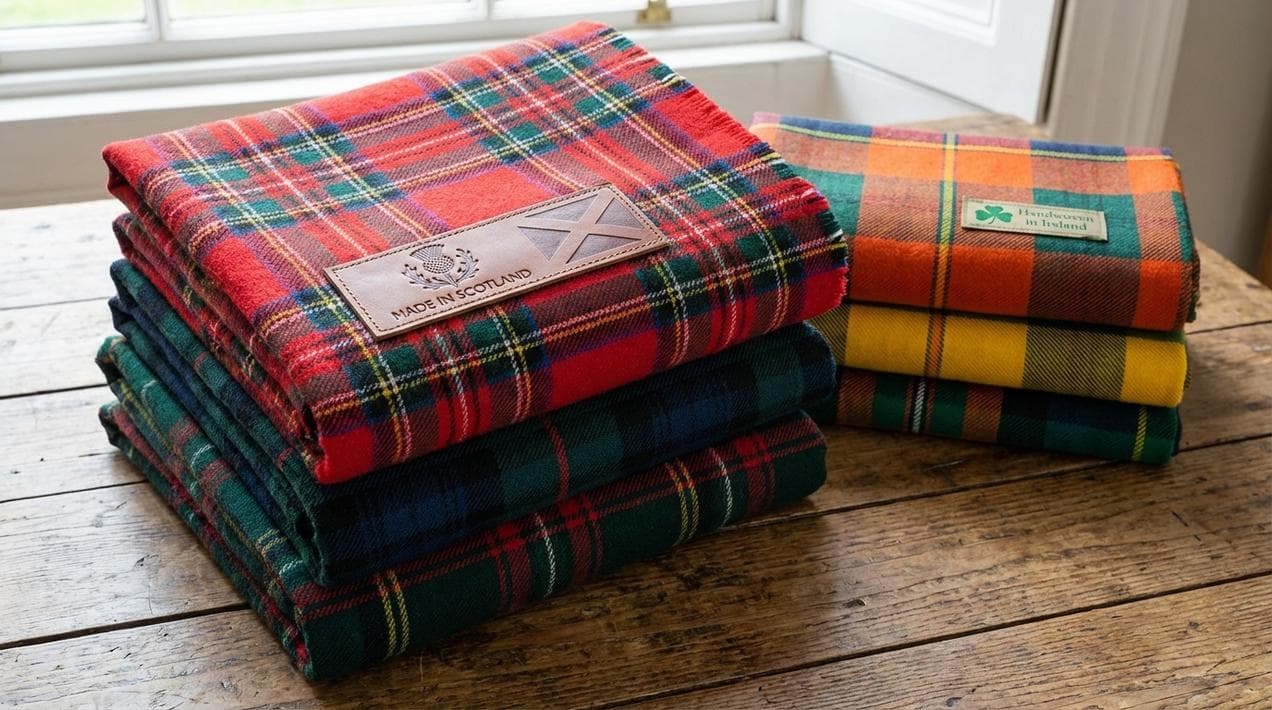
This is the most common souvenir sold to tourists, but we need to be honest.
Irish families generally did not have Tartans.
- The Truth: Tartans (plaid patterns) are a Scottish Highland tradition.
- The Irish Version: In ancient Ireland, status was shown by the number of colors you wore, not the pattern.
- The "Irish Tartans" you see today: These were mostly invented in the 20th century for the commercial market. The "Murphy Tartan" you buy in a gift shop was likely designed in a factory in the 1980s.
- Exception: Some Irish counties have adopted official tartans recently, but they are modern creations.

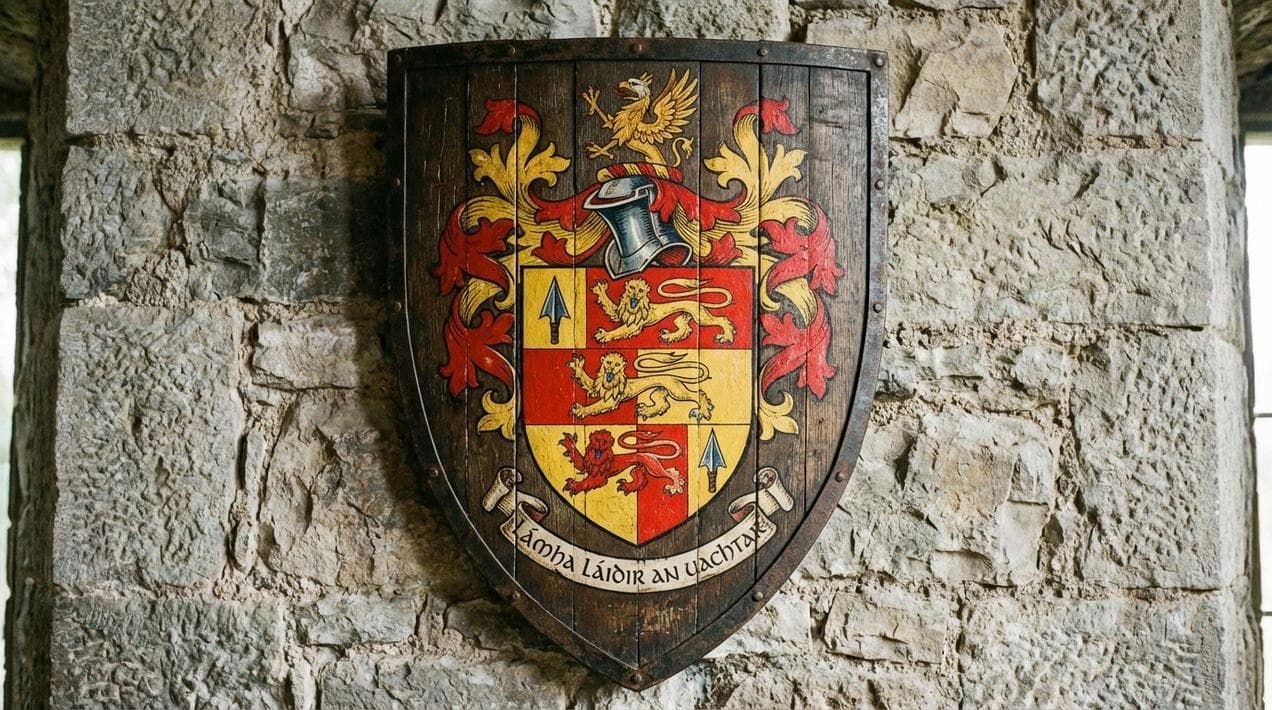
- Crests: Coats of Arms did exist, but they belonged to the Chief of the clan, not the whole family. However, displaying your "Family Crest" is a widely accepted and harmless tradition today.
How to "Join" Your Clan Today
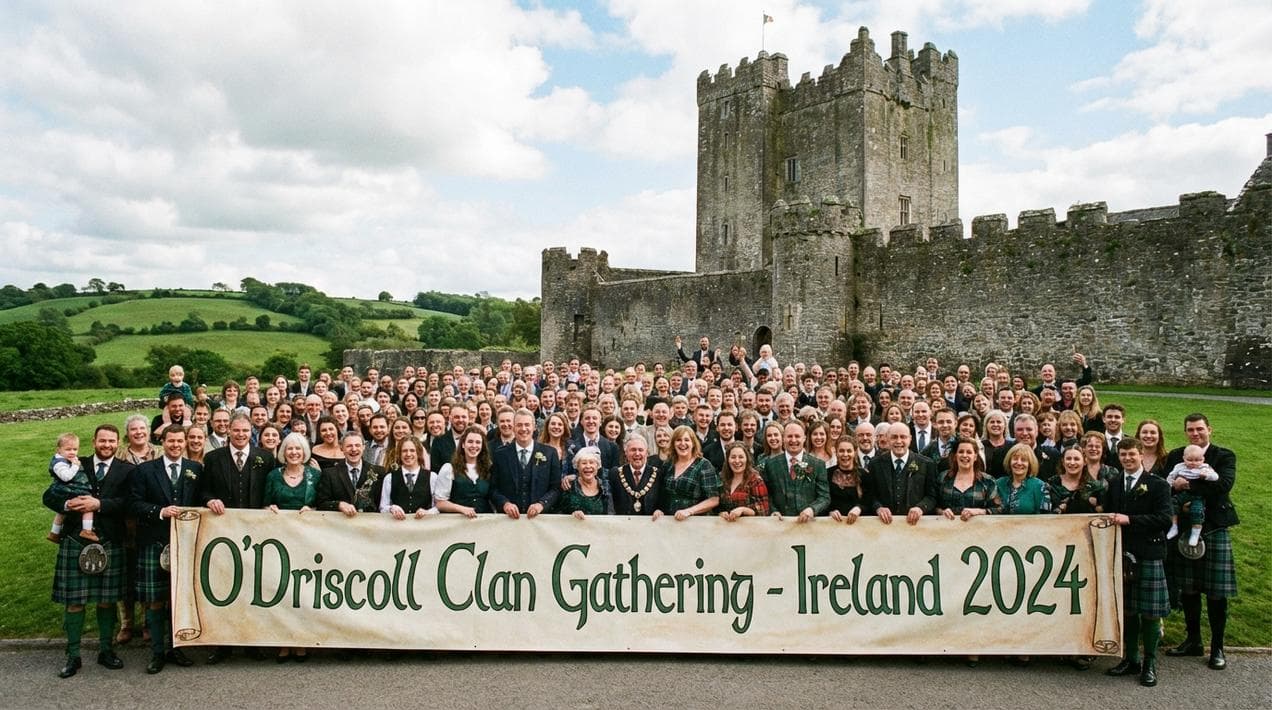
The Clans didn't disappear. They just evolved. Today, "Clans of Ireland" (Finte na hÉireann) is an organization that registers authentic Irish clans.
Clan Gatherings
Many families hold massive reunions called "Clan Gatherings" in their ancestral counties.
- The O'Malley Rally: Held in Mayo (home of the Pirate Queen Gráinne Mhaol).
- The O'Driscoll Gathering: Held in Baltimore, West Cork (their ancestral castle).
- What happens: You meet hundreds of distant cousins, visit the family castle, and usually have a few pints.
- Action: Check our guide on How to Organize a Clan Gathering to see if one exists for your name.
Summary: What Your Name Tells You
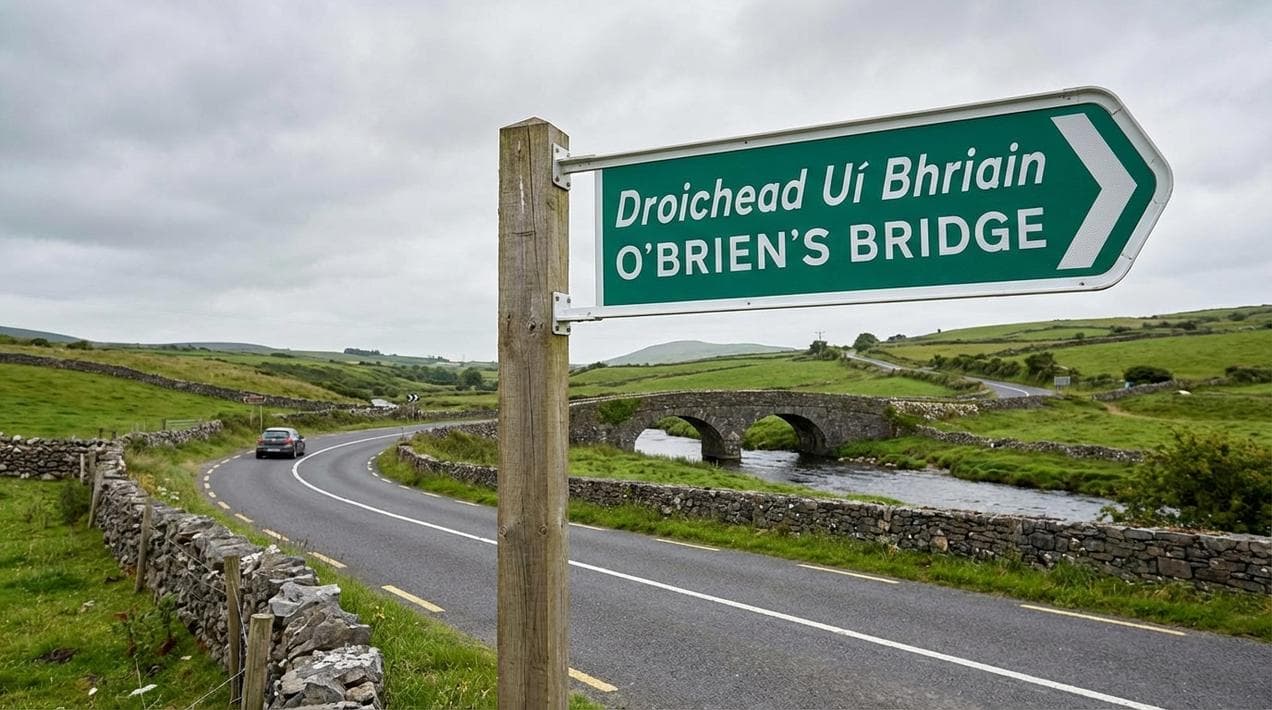
Your surname is a GPS coordinate.
- If you are a Ryan, start looking in Tipperary.
- If you are a Doherty, start in Donegal.
- If you are a Byrne, start in Wicklow.
Don't ignore the "O" or the "Mac." It is the fingerprint of your history.
Want to Visit Your Clan's Home County?
If you know you are an O'Shea from Kerry, why not hire a driver who knows the O'Shea lands?
Table of Contents
Share this post
More from the Blog

Cork to Blarney Castle Day Trip: The Stone, the Gardens and What Else to See
Plan a Cork to Blarney Castle day trip. Kiss the stone, explore the Poison Garden, and add Cork city, Fota or Kinsale for a full day out.

Cork to Cobh Day Trip: Titanic, Colourful Houses and Harbour History
Plan a Cork to Cobh day trip by train, car or private driver. Explore Titanic history, St Colman's Cathedral, Spike Island and the best harbour views.

Cork to Killarney Day Trip: Lakes, Mountains and Muckross in One Day
A Cork to Killarney day trip is a longer escape into Kerry. Here's how to plan the drive, what to see in Killarney National Park, and why a private driver helps.