
Ireland Without Barriers: The Ultimate Guide to Accessible & Senior Travel
For many travelers, Ireland is a dream that has been deferred for decades. It is the "Someday Trip"—the one you save for retirement, for the golden anniversary, or for that moment when you finally have the time to trace your roots back to a tiny village in Cork or Mayo.
But for the senior traveler, or the visitor with limited mobility, that dream often comes with a shadow of anxiety. You look at the photos of crumbling medieval castles and see only steep spiral staircases. You look at the narrow, winding roads and wonder if you can handle the driving. You read about the cobblestones of Temple Bar and worry that your knees—or your wheelchair—won't be up to the challenge.
There is a pervasive myth that the "Real Ireland"—the wild, rugged, romantic Ireland—is reserved only for the fit and the agile. The industry tells you that if you can't hike the mountain, you have to settle for seeing it through the window of a tour bus, separated from the experience by a pane of glass and a rigid schedule.
We are here to tell you that this is completely false.
Ireland is, in fact, one of the most rewarding destinations in the world for the "Slow Traveler." It is a country that rewards patience over pace. The hospitality is legendary, the infrastructure has vastly improved, and there are "Back Doors" to almost every major site that allow you to bypass the steps and the crowds.
"I almost cancelled our trip because I was afraid I'd hold everyone back. Instead, we found a way to see everything—the cliffs, the castles, the pubs—without me ever having to climb a single hill. It was the best trip of my life." — Margaret, 74, Ohio
This guide is your roadmap to Ireland Without Barriers. We have broken down every logistical hurdle—from finding a hotel with a genuine roll-in shower to navigating the Cliffs of Moher without the climb—and provided the solutions. We will show you how to trade the stress of a "Blitz Tour" for the luxury of a private driver, and how to turn your mobility needs from a limitation into a reason to travel in style.
Part 1: The Logistics of Moving (How to Get Around)
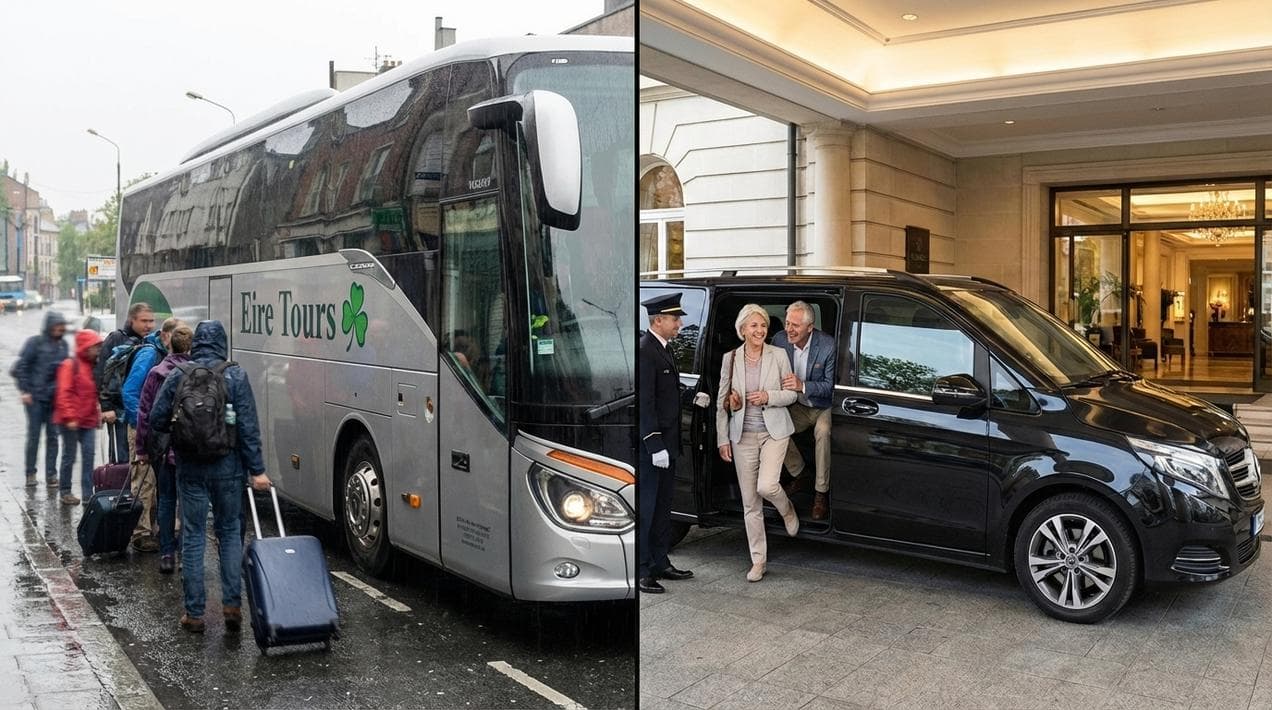
The first and most critical decision you will make is how to move. Ireland is a rural country. The public transport network is decent between cities, but it effectively vanishes once you try to reach the coastal villages, the hidden valleys, and the ancient ruins that you actually came to see.
For the accessible traveler, you have three main options, and they are not created equal.
1. The "Big Bus" Tour: Why You Should Avoid It
The default choice for many seniors is the large 50-seater coach tour. It promises convenience, but for anyone with mobility issues, it often delivers exhaustion. The bus runs on a military schedule. If the itinerary says "15 minutes for the bathroom," you have 15 minutes. The bus cannot park near the entrance of many hotels, forcing you to walk hundreds of yards with your luggage. And crucially, if you are having a "bad knee day" and need to rest, the bus leaves without you.
We have written a detailed breakdown of the pros and cons in our dedicated guide:
2. Self-Drive: The Myth of Independence
The second option is to rent a car. If you use a wheelchair, you might consider renting a WAV (Wheelchair Accessible Vehicle). While this sounds like freedom, the reality of Irish roads can turn it into a nightmare. Our roads are incredibly narrow. A specialized accessible van is wide and low to the ground. Navigating a "Boreen" (grass-centered lane) in a wide van, while driving on the left, is high-stress work. Furthermore, the physical labor of deploying manual ramps and securing tie-downs 10 times a day often leaves the driver/carer too exhausted to enjoy the trip.

3. The Private Driver: The Ultimate Access Hack
This is the "Secret Weapon" of accessible travel. Hiring a Private Driver Guide solves the infrastructure problem.
- Door-to-Door: A private Mercedes V-Class drops you right at the entrance mat of the hotel. No walking from the car park.
- The "Drop-Off" Privilege: At sites like the Cliffs of Moher, drivers have access to restricted zones that rental cars cannot use, cutting out the hills entirely.
- The Pace: You are the clock. If you want to stop for a coffee, you stop. If you want to sleep in, you sleep in.
Part 2: Planning Your Route (The "Slow Travel" Philosophy)
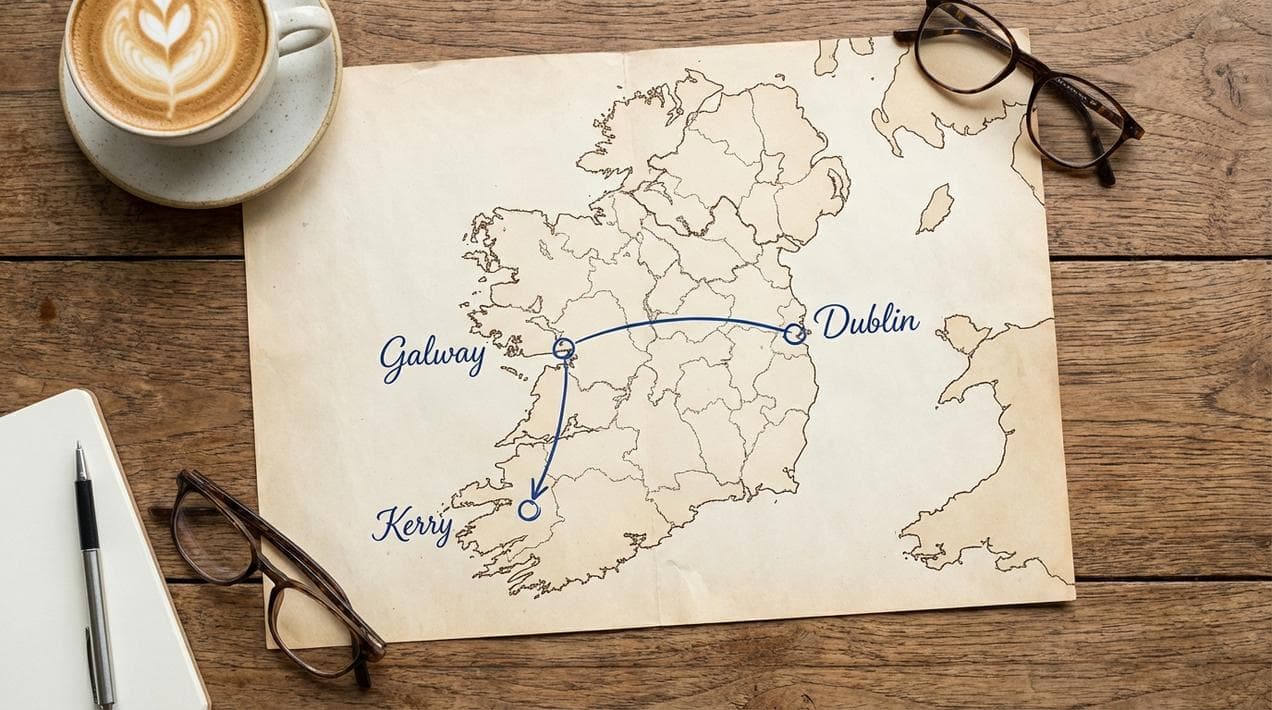
Do not try to see the whole island in 7 days. That is a recipe for fatigue. The key to a successful accessible trip is "Slow Travel." This means staying two or three nights in each location ("Hubs") and doing day trips from there. This minimizes the "Pack/Unpack" cycle, which is physically draining.
We have designed a specific 10-day route that covers Dublin, the West Coast, and the South West, but does so at a human pace. It prioritizes flat walking routes, accessible hotels, and scenic drives where the view comes to you.
- Read the Full Plan: The "Slow Travel" Itinerary: 10 Days in Ireland Without the Rush
This itinerary is built around "Quality over Quantity." It skips the sites that require hiking (like the Blarney Stone kiss) and replaces them with equally spectacular, but accessible, alternatives (like the accessible gardens of Blarney).
Part 3: Accessing the Icons (The Big Sights)
You didn't come all this way to miss the Cliffs of Moher or the Ring of Kerry. The good news is that these world-famous sites are far more accessible than the guidebooks suggest—if you know the logistical tricks.
The Cliffs of Moher
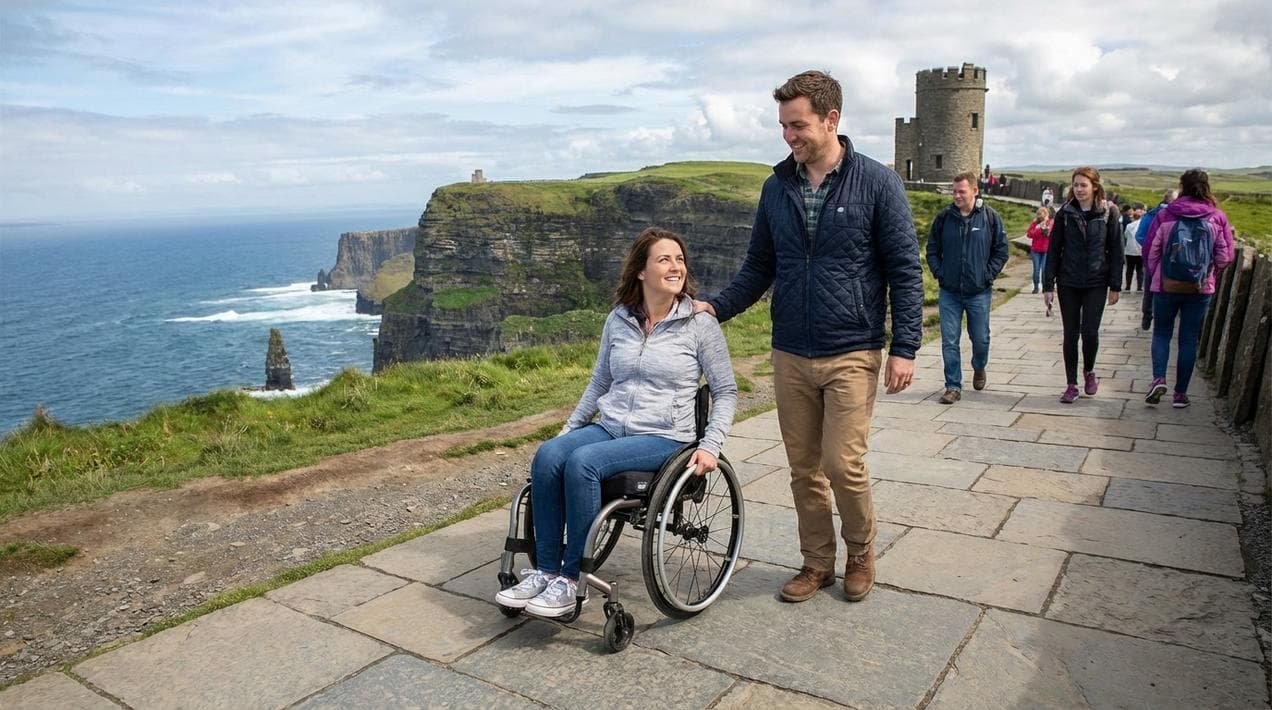
The main car park at the Cliffs is a trap. It is located at the bottom of a long, steep hill. Many seniors arrive there, look at the climb, and decide to stay on the bus. However, there is a "Drop-Off Zone" located right next to the Visitor Center entrance. It is restricted to taxis and private drivers. If you use this, the Cliffs are almost entirely flat. We explain exactly how to access this zone and which viewing platform is safe for wheelchairs in our guide.
The Ring of Kerry
The Ring is famous for two things: beauty and traffic jams. During the summer, hundreds of tour buses drive the loop in a Counter-Clockwise direction. If you are stuck in this convoy, your day is ruined. The solution? Go Clockwise. Or better yet, go to the Skellig Ring—a hidden coastal drive where the buses are physically banned due to the narrow roads. This is where the real magic is, and it is accessible only by car or private driver.
Scenic Drives (Nature Without Hiking)
Ireland's weather is unpredictable. Sometimes, the most accessible place to be is inside a warm car. We have curated a list of the top Scenic Drives—like the Sky Road in Clifden or the Copper Coast in Waterford—where you can see 90% of the beauty through the windshield. These routes have frequent, flat pull-ins where you can open a flask of tea and watch the Atlantic Ocean without needing to navigate a hiking trail.
Part 4: The Cities (Dublin Without the Struggle)
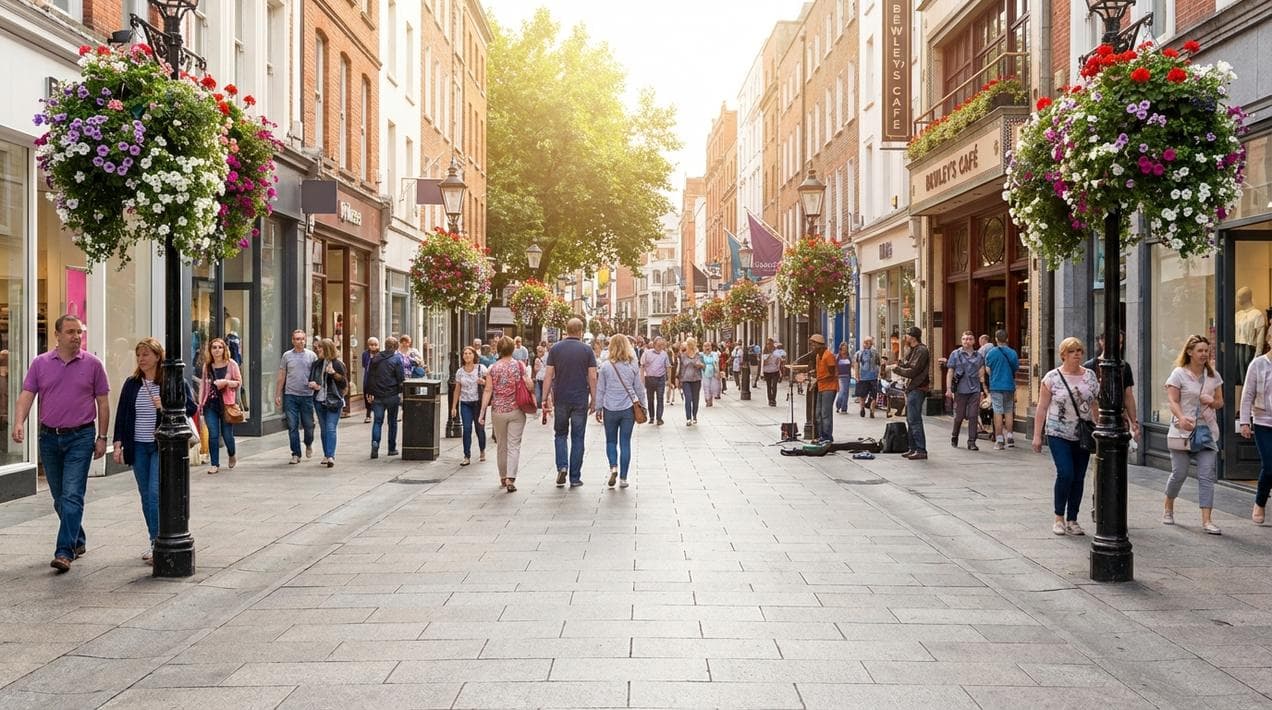
Dublin is a city of charm, character, and... cobblestones. For a wheelchair user, the cobbled streets of Temple Bar are a "Red Zone"—vibrating, uneven, and slippery. But just two streets away, you will find the "Green Zone" of Grafton Street and St. Stephen's Green, which are paved with smooth flagstones and are fully flat.
Knowing where to roll is half the battle. We have mapped out the capital to show you which museums have lifts (EPIC Museum, National Gallery), which pubs have accessible toilets on the ground floor, and how to use the Luas Tram system, which offers gap-free boarding for wheelchairs.
Part 5: Accommodation (Finding the Truth)
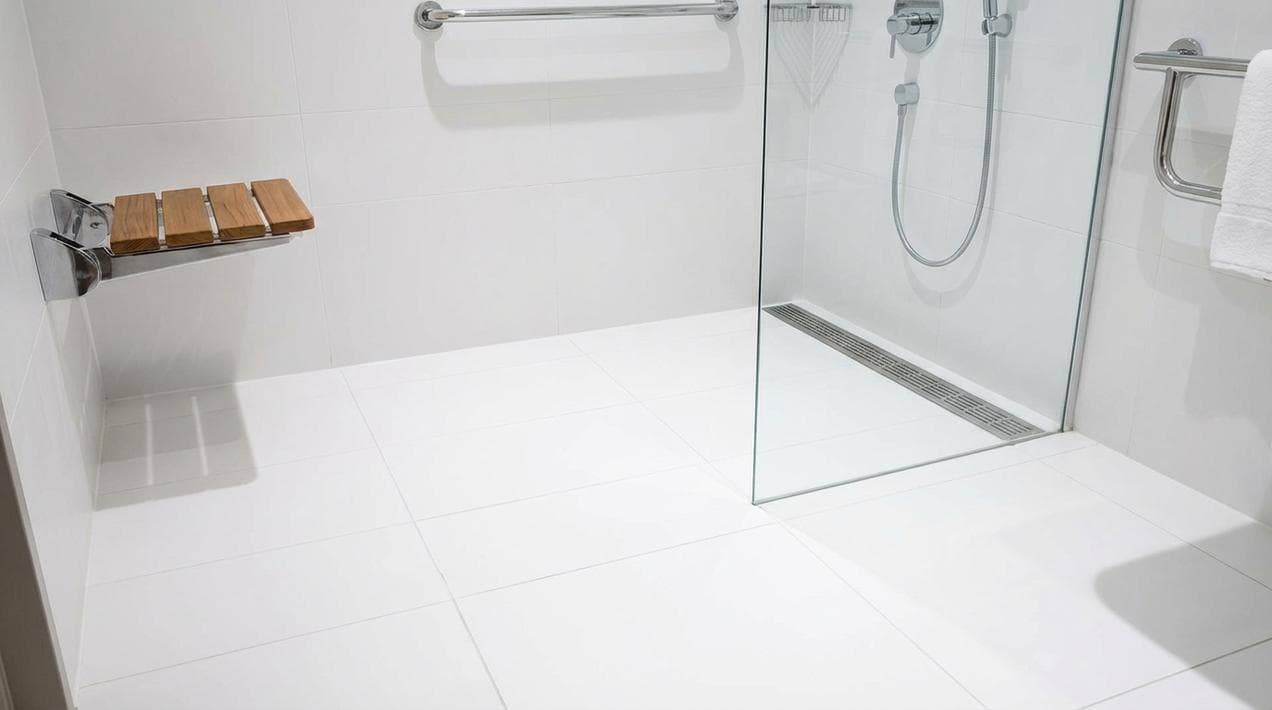
"Accessible" is the most misused word in the hotel industry. To a hotelier, "Accessible" might mean "There is an elevator." To you, "Accessible" means "Can I actually fit my wheelchair through the bathroom door, and is there a Roll-in Shower?"
We have audited the top hotels across Ireland—from Dublin to Killarney—to find the ones that offer genuine accessibility. We look for:
- Roll-in Showers: No lips, no trays. Completely flat wet rooms.
- Bed Height: Adjustable or lowered beds for easy transfers.
- Emergency Cords: Located within reach of the floor.
We also provide a list of the "5 Questions You MUST Ask" before you book, so you never arrive to find a bathtub you can't use.
Can I Stay in a Castle?
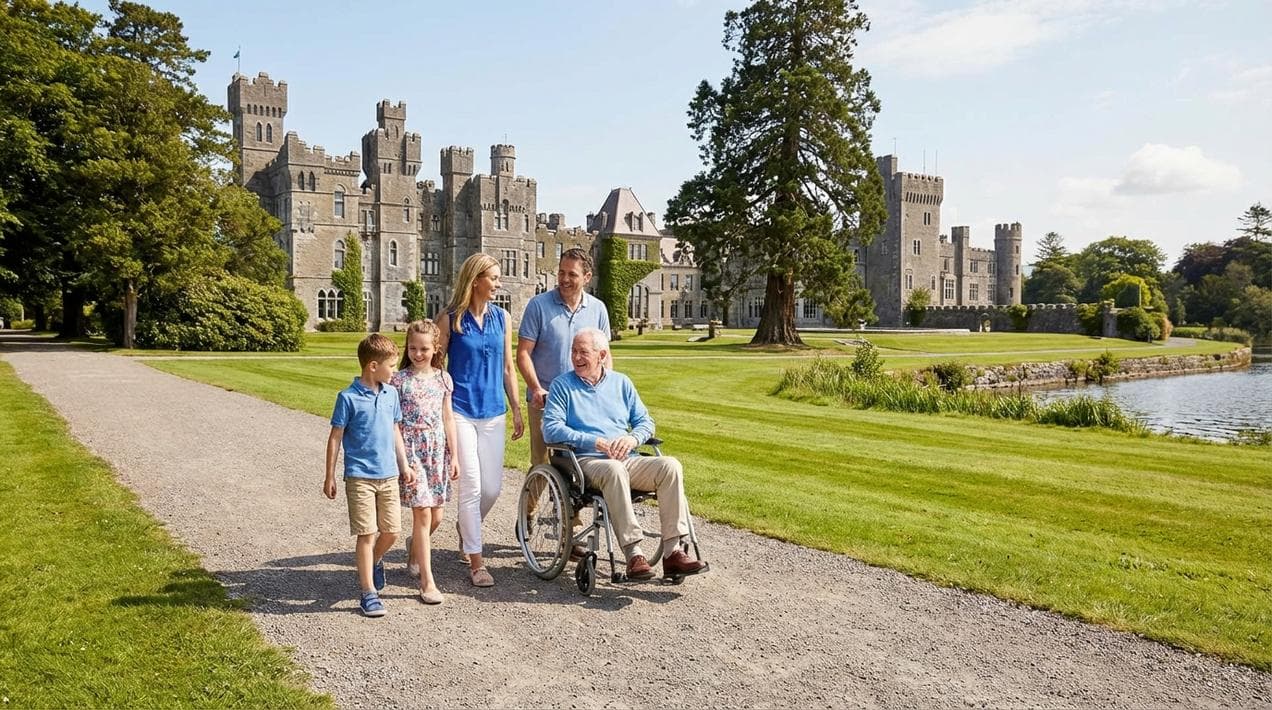
Yes, but be careful. Many castles are vertical towers filled with spiral stairs. However, places like Ashford Castle and Castle Leslie have done incredible work retrofitting elevators and creating ground-floor "Lodge" rooms that offer the full 5-star historic experience without the stairs.
Part 6: The Nitty Gritty (Blue Badges & Radar Keys)
Finally, we address the small logistical details that keep caregivers awake at night.
- Parking: Does your US Handicap Placard work in Ireland? (Yes, usually, but there are rules).
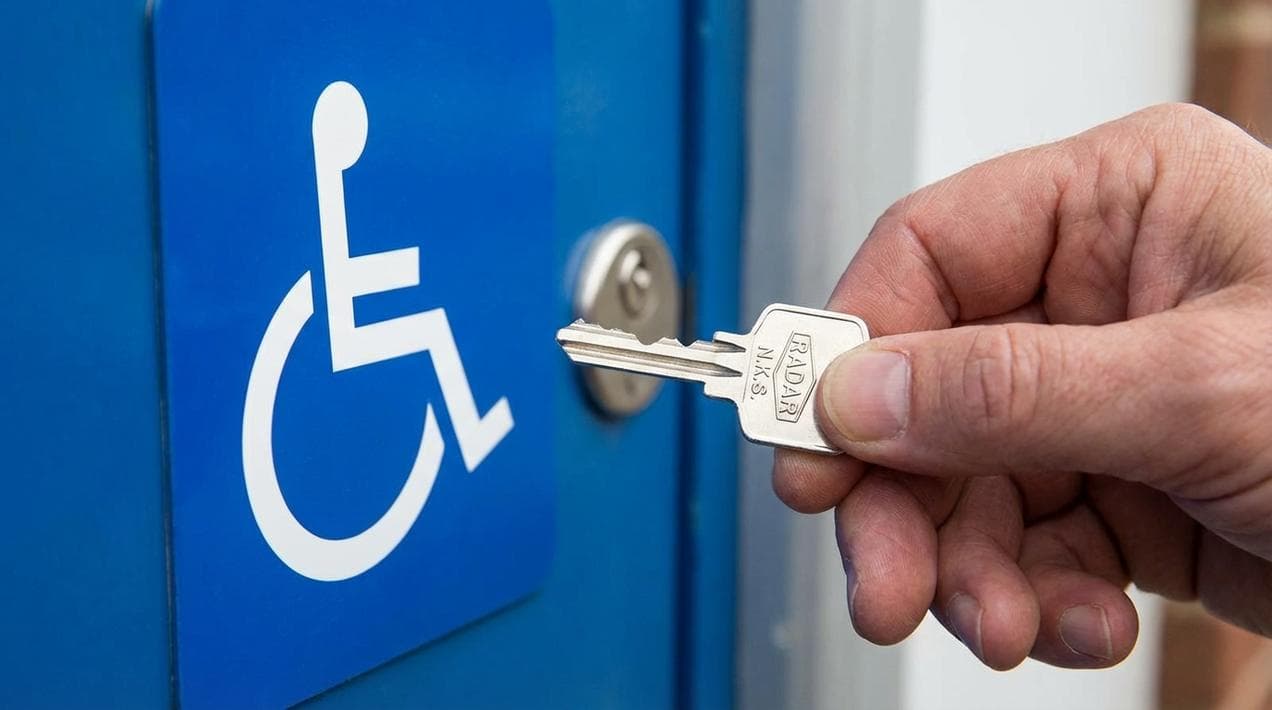
- Toilets: Why are public accessible toilets locked? You need a Radar Key—a universal silver key that opens locked restrooms across Ireland and the UK. We tell you where to buy one before you fly.
- Rentals: Where can you rent a mobility scooter that fits in a car boot?
This "Utility Guide" is essential reading for the independent traveler.
Conclusion: Your Adventure Awaits
If there is one message we want you to take from this guide, it is this: Do not let your mobility define your journey.
Ireland is ready for you. The ramps are there, the elevators are working, and the people are waiting to welcome you. The barriers that seem so high from a distance—the hills, the steps, the roads—shrink away when you have the right knowledge and the right support.
Whether you choose to rent a car or hire a private driver, the "Emerald Isle" is accessible. You just need to take it slow.
Start Your Journey Here
You have the information. Now you need the team. Our directory features verified Private Driver Guides who specialize in accessible and senior travel. These are the experts who know which curb cuts are smooth, which bathrooms are open, and how to get you to the edge of the world in comfort.
Table of Contents
Share this post
More from the Blog

Cork to Blarney Castle Day Trip: The Stone, the Gardens and What Else to See
Plan a Cork to Blarney Castle day trip. Kiss the stone, explore the Poison Garden, and add Cork city, Fota or Kinsale for a full day out.

Cork to Cobh Day Trip: Titanic, Colourful Houses and Harbour History
Plan a Cork to Cobh day trip by train, car or private driver. Explore Titanic history, St Colman's Cathedral, Spike Island and the best harbour views.

Cork to Killarney Day Trip: Lakes, Mountains and Muckross in One Day
A Cork to Killarney day trip is a longer escape into Kerry. Here's how to plan the drive, what to see in Killarney National Park, and why a private driver helps.