
Renting a WAV (Wheelchair Car) vs. Hiring a Driver in Ireland
For travelers with reduced mobility, the "Road Trip" is often the dream. The idea of loading the wheelchair into the back of a van and setting off along the Wild Atlantic Way offers a sense of total independence. In the United States or the UK, renting a Wheelchair Accessible Vehicle (WAV) is a standard, straightforward process.
However, Ireland is a unique driving environment. When you combine the scarcity of specialized rental vehicles with the reality of our infrastructure—narrow, winding roads, driving on the left, and hedgerows that scrape the wing mirrors—the dream of a relaxing self-drive vacation can quickly turn into a stressful logistical nightmare.
The question you face is this: Do you rent a specialized van and drive yourself, or do you hire a professional driver with their own accessible vehicle?
"I thought renting a van would give us freedom. Instead, I spent the entire week terrified I was going to scratch the rental on the stone walls. I was too stressed to look at the scenery." — Mark, 58, New York
In this guide, we will break down the pros and cons of both options. We will look at the hidden costs of WAV rentals, the physical reality of managing ramps and tie-downs, and why hiring a Private Driver might actually be the cheaper (and certainly the safer) option.
(This comparison is part of our master Ireland Without Barriers: The Ultimate Guide to Accessible & Senior Travel. If you are unsure about where to go, check our Slow Travel Itinerary).
1. The "Scarcity" Issue: Finding a WAV
The first hurdle is simply finding the vehicle. Unlike standard Hertz or Avis fleets, accessible vehicles are niche in Ireland.
The Rental Reality: There are very few companies in Ireland that offer self-drive WAVs for tourists. The fleet is tiny.
- Availability: You often need to book 6–9 months in advance. If you are planning a summer trip in the spring, you may already be too late.
- Pickup Locations: Most WAV rental depots are located in Dublin. If you plan to fly into Shannon (West Coast), you might face a massive delivery fee or a complex logistical puzzle to get the van.
- The Model: You rarely get a choice. You will likely be given a modified Renault Kangoo or a Citroën Berlingo. These are functional, but they are often basic "utility" conversions, not luxury cruisers.
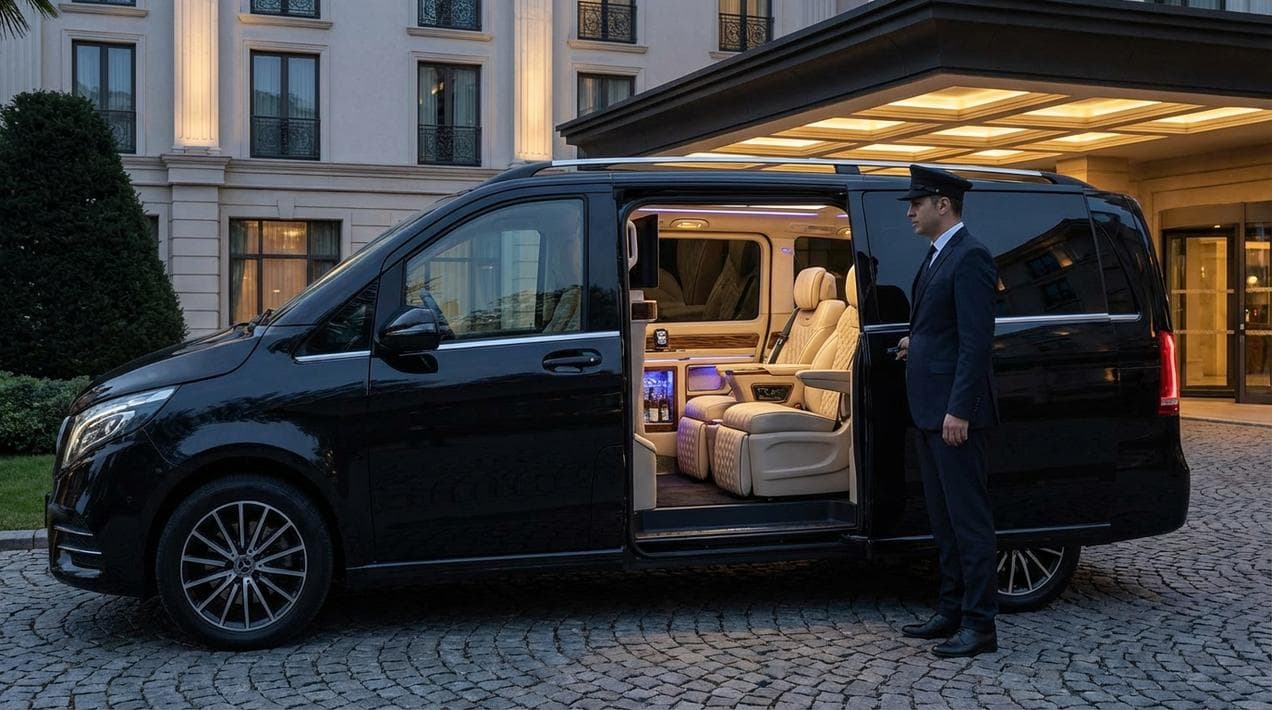
The Driver Solution: Professional drivers bring their own vehicles.
- The Fleet: Many professional guides drive high-spec Mercedes V-Class vans. These are luxury vehicles often fitted with high-end lifts or ramps.
- Availability: Because you are hiring the person, not just the car, you have access to a wider network of drivers across the country, from Cork to Donegal.
2. The "Narrow Road" Factor: Driving a Box on a Boreen
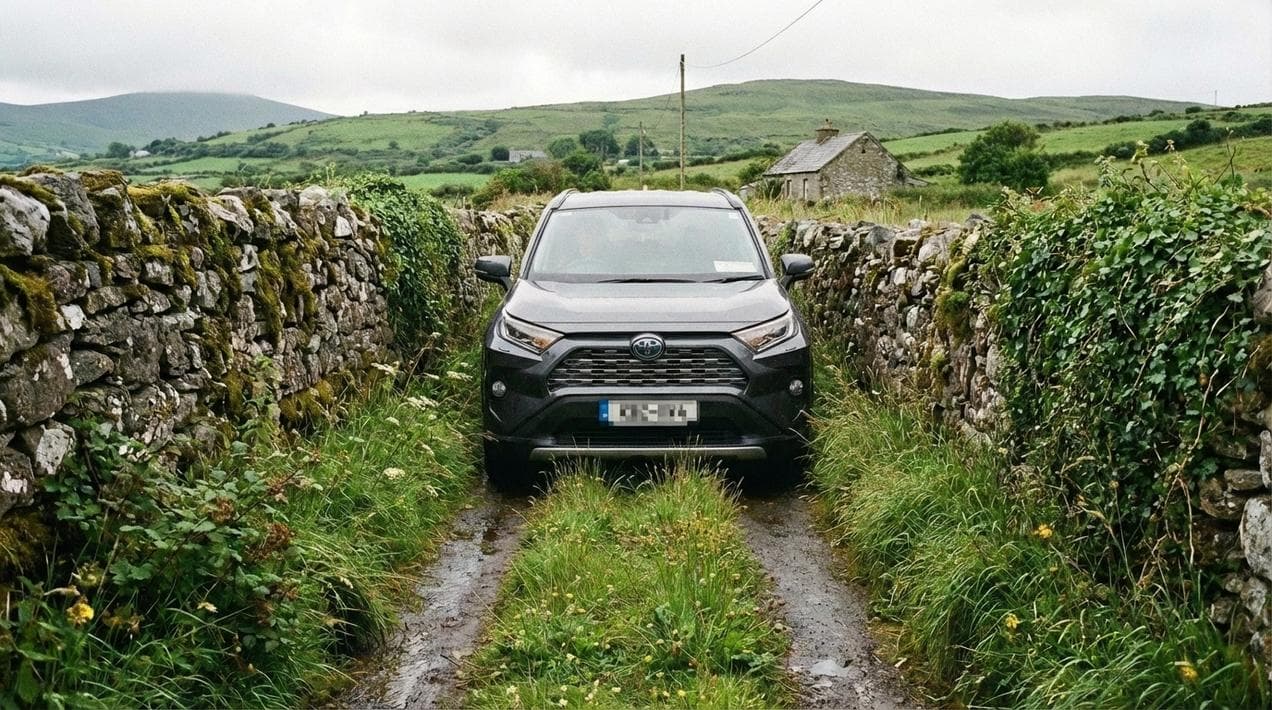

This is the most significant factor that North American visitors underestimate. Irish roads are narrow.
A Wheelchair Accessible Vehicle is, by definition, a modified van. It has a lowered floor (for headroom) and a ramp mechanism. This makes it heavier, lower to the ground, and often wider than a standard compact car.
The Self-Drive Stress:
- The Clearance: On a "Boreen" (rural lane), the grass grows down the middle of the road. A WAV with a lowered floor has very little ground clearance. Driving over a pothole or a grass hump can damage the expensive undercarriage modification.
- The Width: You will encounter roads where two cars simply cannot pass. You will have to reverse a large, unfamiliar van into a farmer's gate to let a tractor past. Doing this while sitting on the "wrong" side of the car, looking in the "wrong" mirror, is high-stress maneuvering.
The Driver Solution: Your private driver drives these roads every day.
- They know exactly how wide their vehicle is.
- They know how to reverse safely into a tight spot.
- Crucially, you are sitting in the back or the passenger seat, enjoying the view of the sheep, rather than clutching the steering wheel with white knuckles.
3. The Physical Toll: Ramps and Tie-Downs
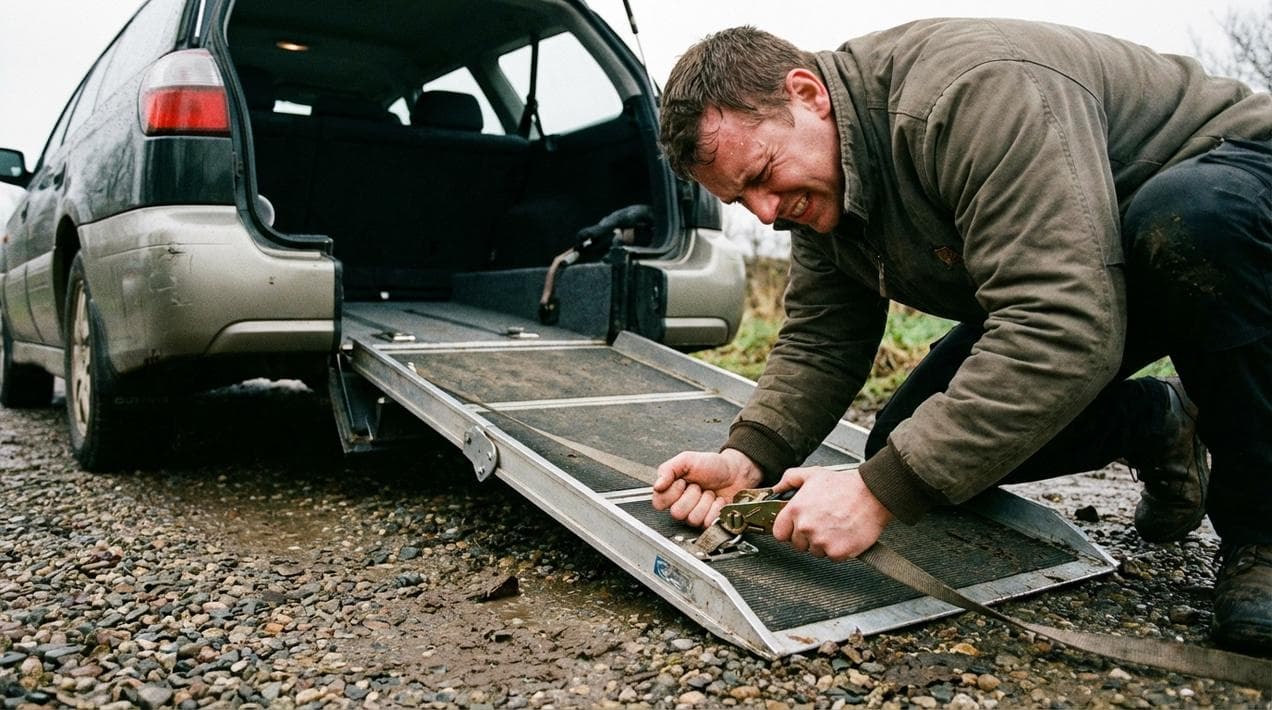
There is a physical labor component to using a WAV that often falls on the partner or carer.
The Self-Drive Reality: Every time you stop—for a photo, a coffee, a bathroom break, or a castle visit—you have to perform "The Ritual."
- Park safely on flat ground (hard to find on hills).
- Open the heavy tailgate.
- Deploy the manual ramp.
- Physically push the wheelchair user up the ramp (unless you have a winch).
- Get on your hands and knees to secure the four-point "tie-down" safety straps to the wheelchair floor.
- Secure the seatbelt.
Doing this 10 times a day is physically exhausting. By 4:00 PM, the "carer" is tired and sweaty.
The Driver Solution: You don't lift a finger.
- Your driver handles the ramp deployment every single time.
- They are experts at securing the clamps quickly and safely.
- They ensure the vehicle is parked at the perfect angle to make loading easy.
- The Benefit: The partner/carer gets to be a vacationer too, not just a logistics manager.
4. The Cost Equation: The "Hidden" Math
On paper, hiring a driver looks expensive. But let's look at the full cost of self-drive.
Self-Drive WAV Costs:
- Rental Rate: Specialized WAVs command a premium price (often €150–€200+ per day in summer).
- Insurance: Because it is a modified vehicle, the insurance excess (deductible) is often massive. "CDW" (Collision Damage Waiver) adds another €30/day.
- Fuel: These vans are heavy and less aerodynamic. They burn diesel quickly.
- Damage Risk: If you scratch the van on a stone wall (very common), you could lose your €2,000 deposit.
Private Driver Costs:
- Rate: Approx €600–€800 per day (Total).
- Includes: The vehicle, the fuel, the tolls, the parking, the insurance, and the guide.
- No Liability: If the driver scratches the van, it is their problem, not yours.
The Verdict: When you add the fuel, insurance, and stress reduction, the price gap narrows significantly. For a group of 3-4 people, the driver often becomes the better value proposition.
5. The "Blue Badge" Parking Privilege
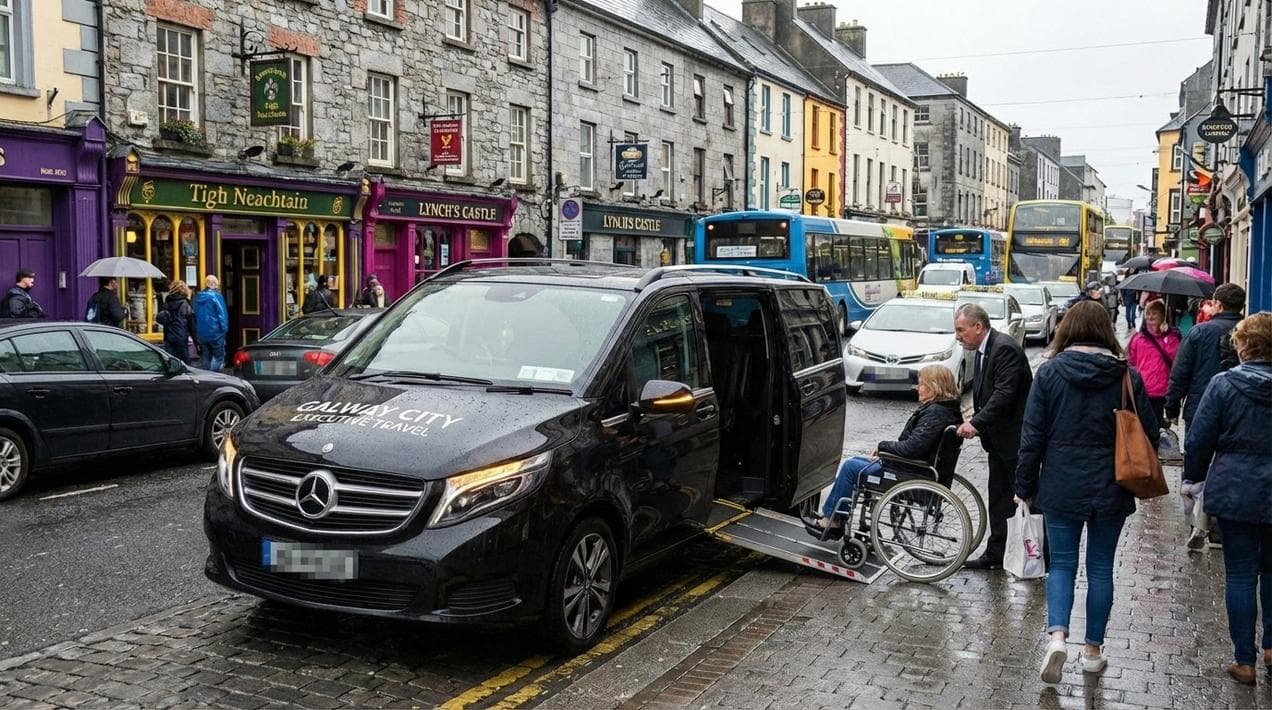
Parking in Irish tourist towns (like Killarney or Galway) is a nightmare.
The Self-Drive Reality: You have a US or UK "Blue Badge" (Disabled Parking Permit). It is recognized in Ireland, but you still have to find a space.
- You often end up circling the block looking for a marked bay that is wide enough to deploy your ramp. Standard bays are often too narrow for rear or side loading.
The Driver Solution: Your driver utilizes "Drop-and-Go."
- They pull up legally on a double yellow line (allowed for loading/unloading) right in front of the restaurant or castle.
- They deploy the ramp, you roll out, and you head inside.
- The driver then takes the car away to find parking 500 meters away. When you are done, you text them, and they pick you up at the door.
- The Value: This saves you miles of "wheeling" from distant car parks. (See our guide on Dublin on Wheels for more on city access).
Conclusion: Choose the Holiday, Not the Hassle
There is a romantic notion that driving yourself equals "freedom." But in a country with infrastructure like Ireland, driving a large, specialized vehicle often equals "responsibility."
For the senior traveler or the wheelchair user, true freedom is sitting in a comfortable seat, looking out the window at the Atlantic Ocean, and knowing that someone else is worrying about the ramp, the parking, and the oncoming tractor.
If you want to experience Ireland rather than manage it, the choice is clear.
Find Your Accessible Transport
Table of Contents
Share this post
More from the Blog

Cork to Blarney Castle Day Trip: The Stone, the Gardens and What Else to See
Plan a Cork to Blarney Castle day trip. Kiss the stone, explore the Poison Garden, and add Cork city, Fota or Kinsale for a full day out.

Cork to Cobh Day Trip: Titanic, Colourful Houses and Harbour History
Plan a Cork to Cobh day trip by train, car or private driver. Explore Titanic history, St Colman's Cathedral, Spike Island and the best harbour views.

Cork to Killarney Day Trip: Lakes, Mountains and Muckross in One Day
A Cork to Killarney day trip is a longer escape into Kerry. Here's how to plan the drive, what to see in Killarney National Park, and why a private driver helps.