
Things to Do in Leitrim: Ireland's Least Populated County Is Its Best-Kept Secret
Things to Do in Leitrim: Ireland's Least Populated County Is Its Best-Kept Secret
Leitrim has fewer people per square kilometre than almost anywhere in Western Europe. That is not a problem. That is the point. This is a county where a waterfall that inspired W.B. Yeats still falls into a pool with no one watching, where a Franciscan abbey stands open in a field with its cloister arches intact and its visitor count in single figures, and where the Shannon and the Erne are connected by a canal so quiet that the loudest sound on a Tuesday morning is the heron leaving the water. Leitrim is the county Ireland forgot to commercialise — and for the traveller willing to follow a river instead of a tour bus, it is one of the most rewarding places on the island.
If you are exploring this part of the country for the first time, Ireland's Hidden Heartlands: The Insider Guide to Ireland's Quietest Region connects Leitrim to its neighbouring counties and explains why these overlooked midland landscapes deserve more than a drive-through.
Glencar Waterfall: The Cascade That Moved a Poet
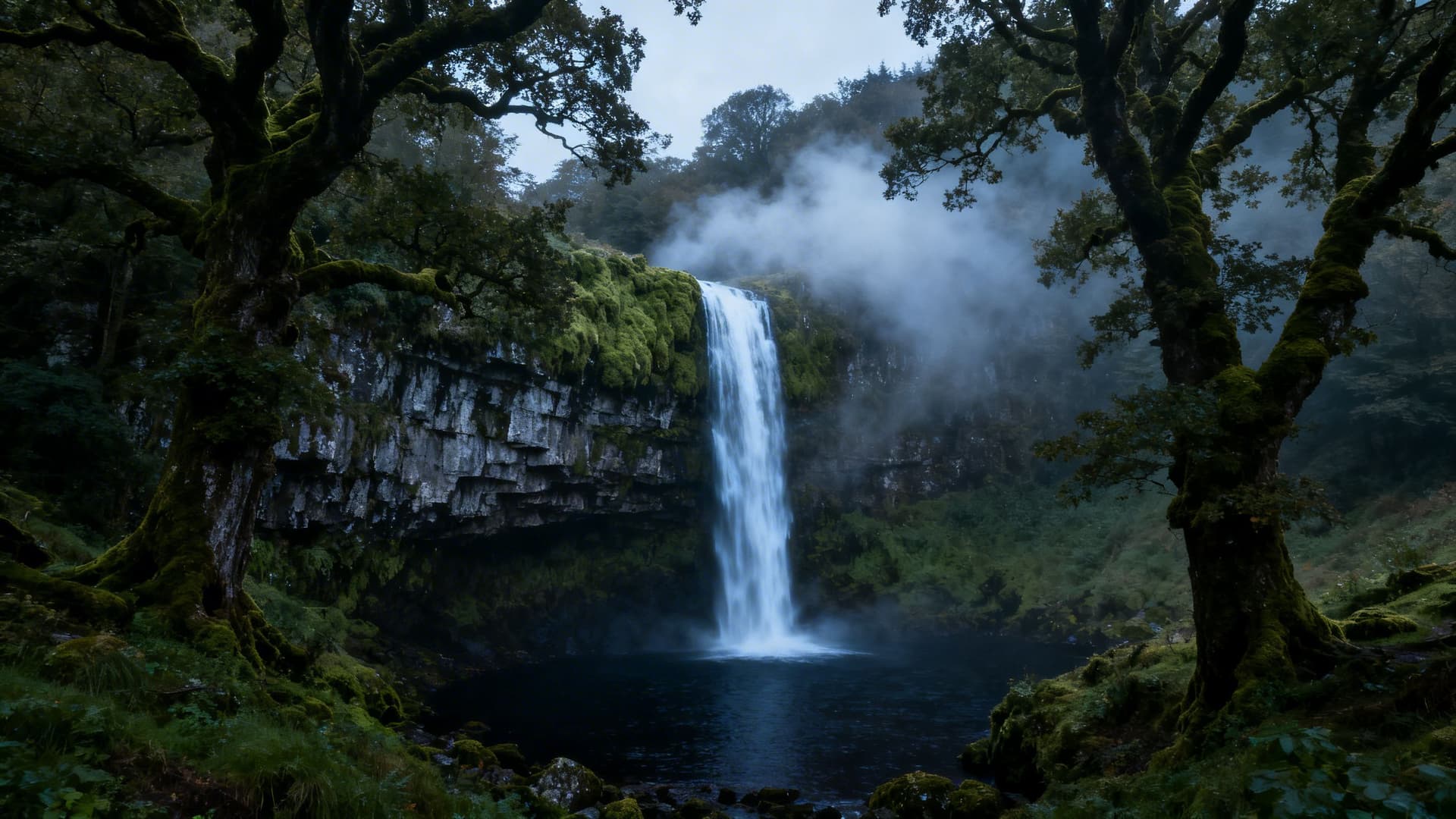
W.B. Yeats did not exaggerate often, but when he wrote of a waterfall that "smokes upon the mountain side" he was describing Glencar exactly. The waterfall drops fifteen metres over a limestone ledge into a dark plunge pool, and after rain — which is most days in north Leitrim — the volume of water turns the cascade into something that genuinely smokes, the spray lifting off the rock face and drifting across the valley like low cloud.
The walk from the car park takes less than five minutes, which means you have no excuse not to visit. A viewing platform sits at the base of the falls, but the better position is slightly off-trail to the left, where the mossy rocks and overhanging branches frame the water in a way that looks like it was composed by someone who understood landscape painting. The valley around Glencar Lake is glacial, steep-sided, and green to the point of absurdity. On an overcast morning, with the cloud sitting low on the ridgeline, it is among the most atmospheric short walks in Ireland.
Parke's Castle: The Plantation Fortress on Lough Gill
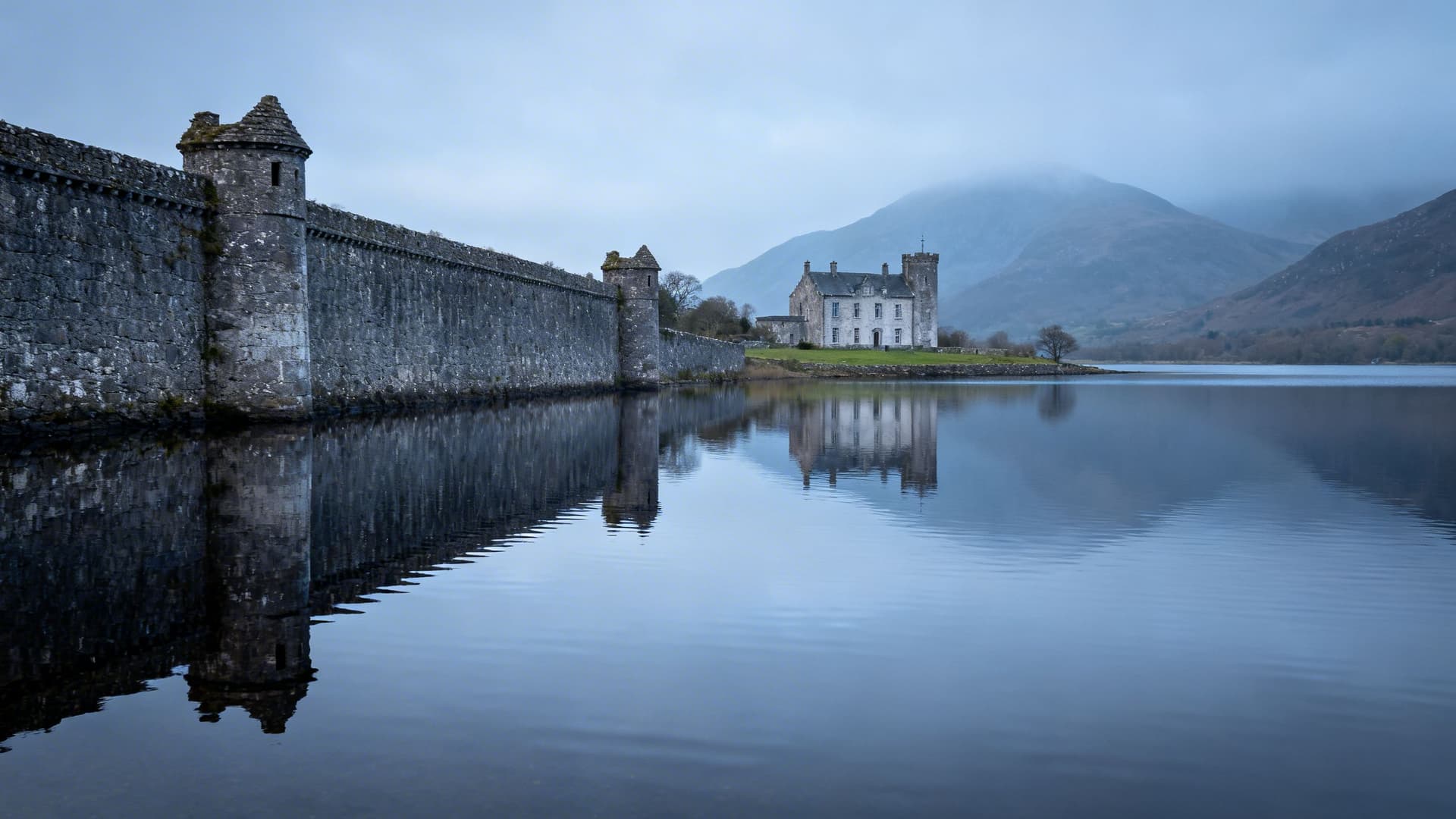
Parke's Castle sits directly on the shore of Lough Gill — the lake Yeats made famous by writing about its island, Innisfree. The castle itself is a fortified manor house built in the 1620s by Captain Robert Parke, who — in a detail that tells you everything about the Plantation era — constructed it from the stones of an earlier O'Rourke tower house that he demolished for the purpose. The foundations of the O'Rourke structure are still visible in the courtyard.
The OPW restored the castle in the 1980s using traditional methods, and the result is one of the most complete examples of a Plantation-era house in Ireland. The bawn wall, the corner towers, the gatehouse — all intact, all facing the lake. Inside, the exhibition covers both the castle's construction and the broader history of the O'Rourke lordship of Breifne, which controlled this territory for centuries before the English arrived. A boat service runs from the castle jetty to Innisfree Island in summer, completing the Yeats connection for anyone who needs it completed.

Creevelea Abbey: The Last Franciscan Friary
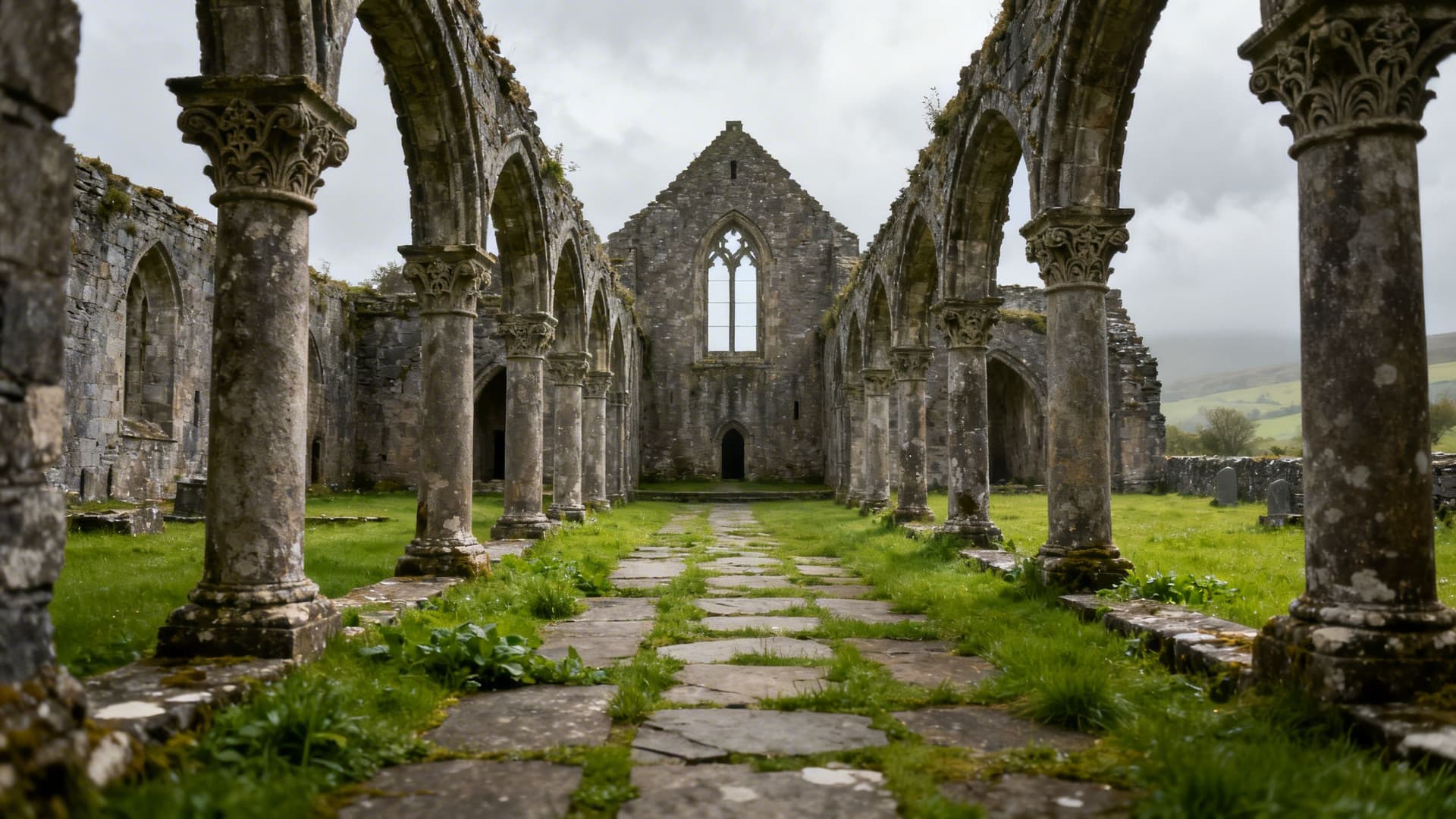
Creevelea Abbey, just outside Dromahair, was the last Franciscan friary founded in Ireland before Henry VIII dissolved the monasteries. It was established in 1508, which gives it barely thirty years of monastic life before the suppression — a fact that makes its survival all the more remarkable. The friars stayed on in secret for decades after the dissolution, and the building was still in occasional use as late as the eighteenth century.
What remains is substantial. The nave, the chancel, the cloister arcade with its carved pillars — including one depicting Saint Francis preaching to the birds that ranks among the finest late-medieval carvings in the country. The east window is intact. The atmosphere is of a building that was abandoned gradually rather than destroyed, which gives it a different quality from the ruined abbeys that were burned or shelled. You visit alone. Dromahair is a quiet village, and Creevelea sits in a field at its edge with a stile and a short walk. There is no admission charge, no guide, and — on most days — no other visitors.
The Shannon-Erne Blueway: Paddling Through the Middle of Nowhere
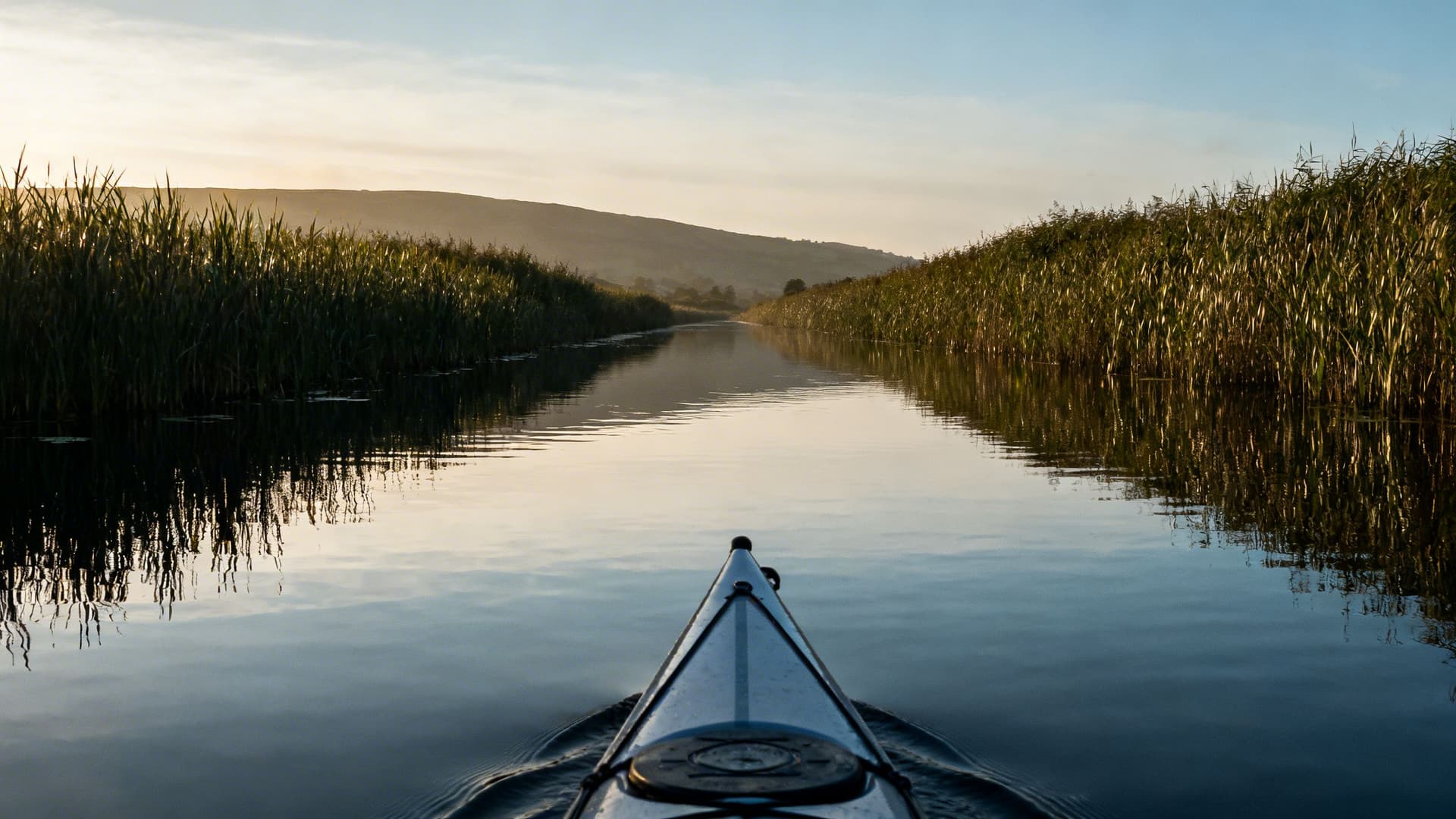
The Blueway follows the Shannon-Erne Waterway — a canal connecting the Shannon navigation at Leitrim village to the Erne system at Belturbet in things to do in Cavan — and it has been developed for kayaking, canoeing, and stand-up paddleboarding along a series of marked water trails. The route passes through some of the emptiest landscape in Ireland: flooded drumlin country where the water reflects nothing but sky and reed bed.
The section between Leitrim village and Keshcarrigan is the most popular — a manageable half-day paddle through calm canal water with locks you can portage around. For longer trips, the full route stretches over 60 kilometres and takes in Lough Scur, Lough Marrave, and the Woodford River. Rental equipment is available at several access points, and the Blueway markers make navigation straightforward even for beginners.
This is not white-water adventure. This is the opposite — the kind of paddling where you stop in the middle of a lake because a kingfisher has landed on the bow of your kayak, and you realise you have not seen another person in two hours. For anyone who has paddled the crowded waterways of Killarney or the Lee, the contrast is revelatory.
Eagle's Rock: The Hidden Mountain Face
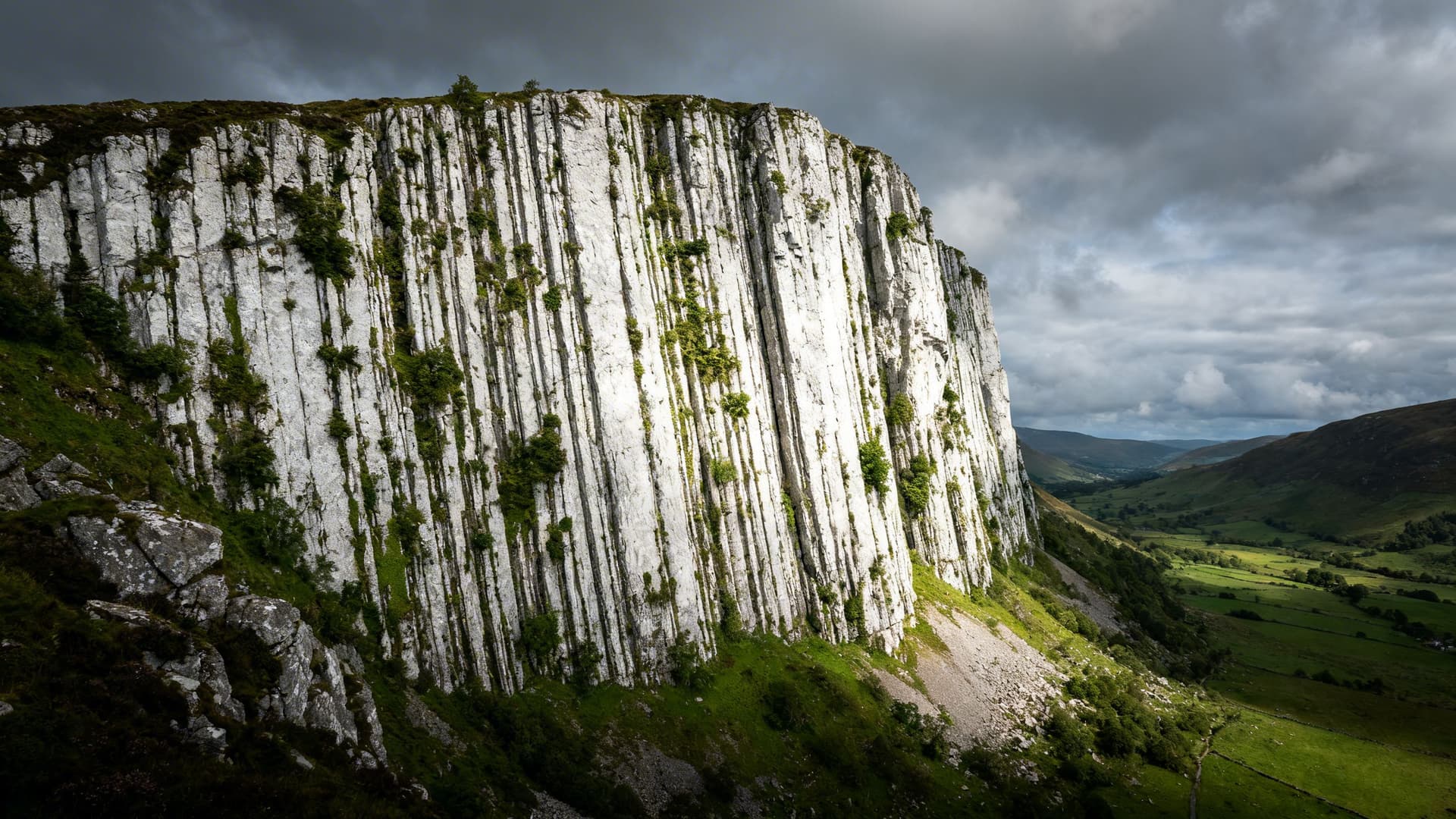
Eagle's Rock is a 330-metre limestone cliff face in the Dartry Mountains that looks like it belongs in the Dolomites rather than in a county most Irish people could not place on a map. The cliff rises sheer from the valley floor near Glenade, its white rock face striped with vegetation and visible from kilometres away on a clear day. Golden eagles nested here until the nineteenth century — hence the name — and the peregrine falcons that have replaced them are still regularly spotted on the thermals above the rock face.

There is no formal trail to the base, but a farm track from the Glenade road brings you close enough to appreciate the scale. The cliff is part of a wider geological landscape that includes the Dartry limestone formation — the same rock that creates the karst terrain in things to do in Cavan at the Cavan Burren Park. For hillwalkers, the plateau above Eagle's Rock offers wide views across Lough Melvin and into Donegal, though the ascent is steep and unmarked and should not be attempted in poor visibility.
Carrick-on-Shannon: The County Town on the Water
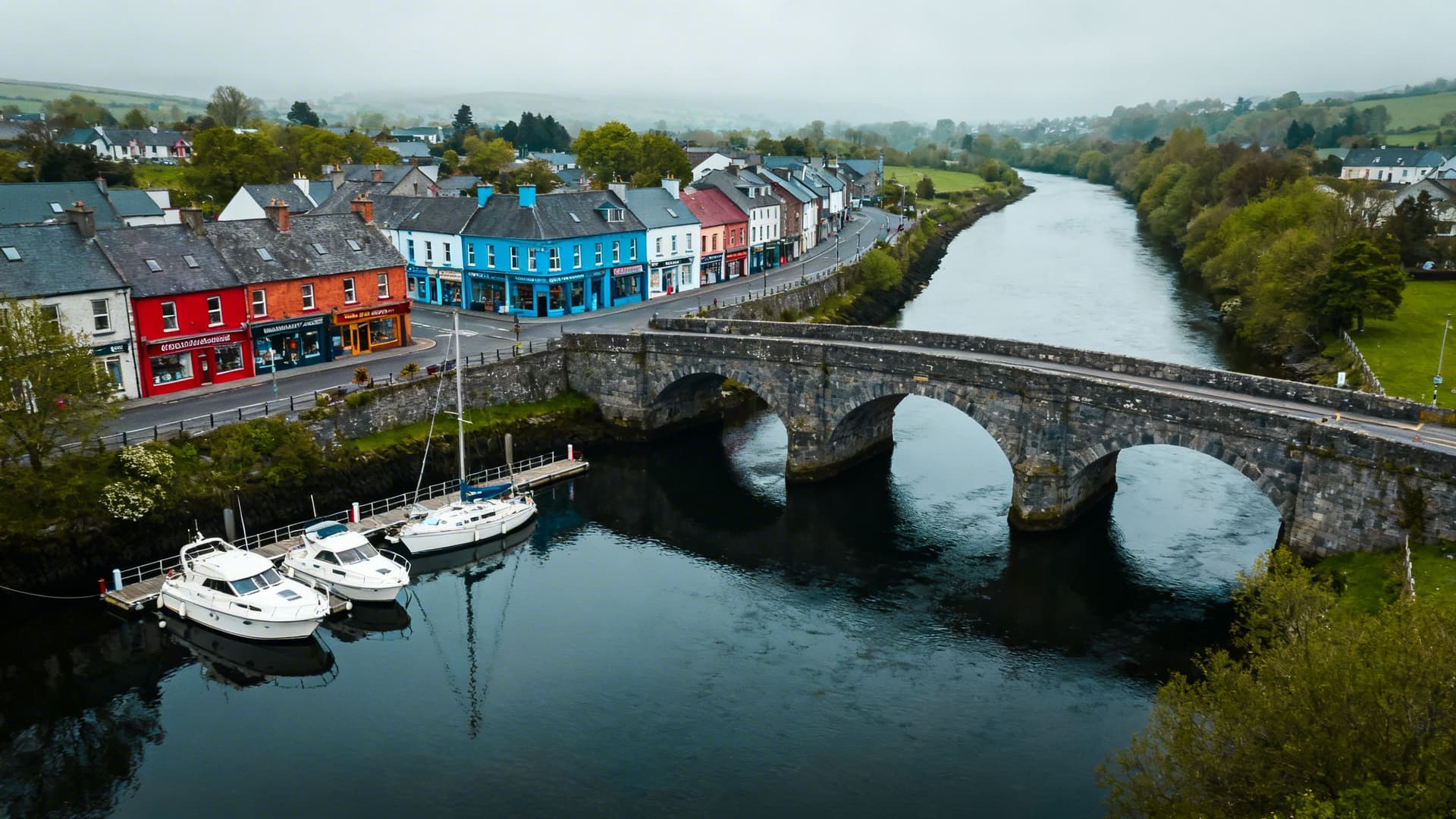
Carrick-on-Shannon is the smallest county town in Ireland, and it earns that distinction honestly — the centre is barely three streets wide, compact enough to walk end to end in ten minutes. But its position on the Shannon, at the point where the river narrows enough to bridge, has made it a natural crossing point for centuries and a centre for river tourism today.
The town is the main base for Shannon cruiser hire, and in summer the small marina fills with boats heading north to the Erne or south to Lough Ree. On land, the Costello Chapel — one of the smallest chapels in Europe, built in 1877 by a man mourning his wife — sits on the main street and can be seen through its glass door in under a minute. The farmers' market on Thursday mornings is one of the better ones in the northwest, heavy on local cheeses, organic vegetables, and baked goods from producers who actually live within the county boundary.
For anyone arriving in Leitrim without a plan, Carrick is the starting point. It has the accommodation, the restaurants, and the river access that the rest of the county — deliberately and happily — lacks.
Why You Need a Local Guide in Leitrim
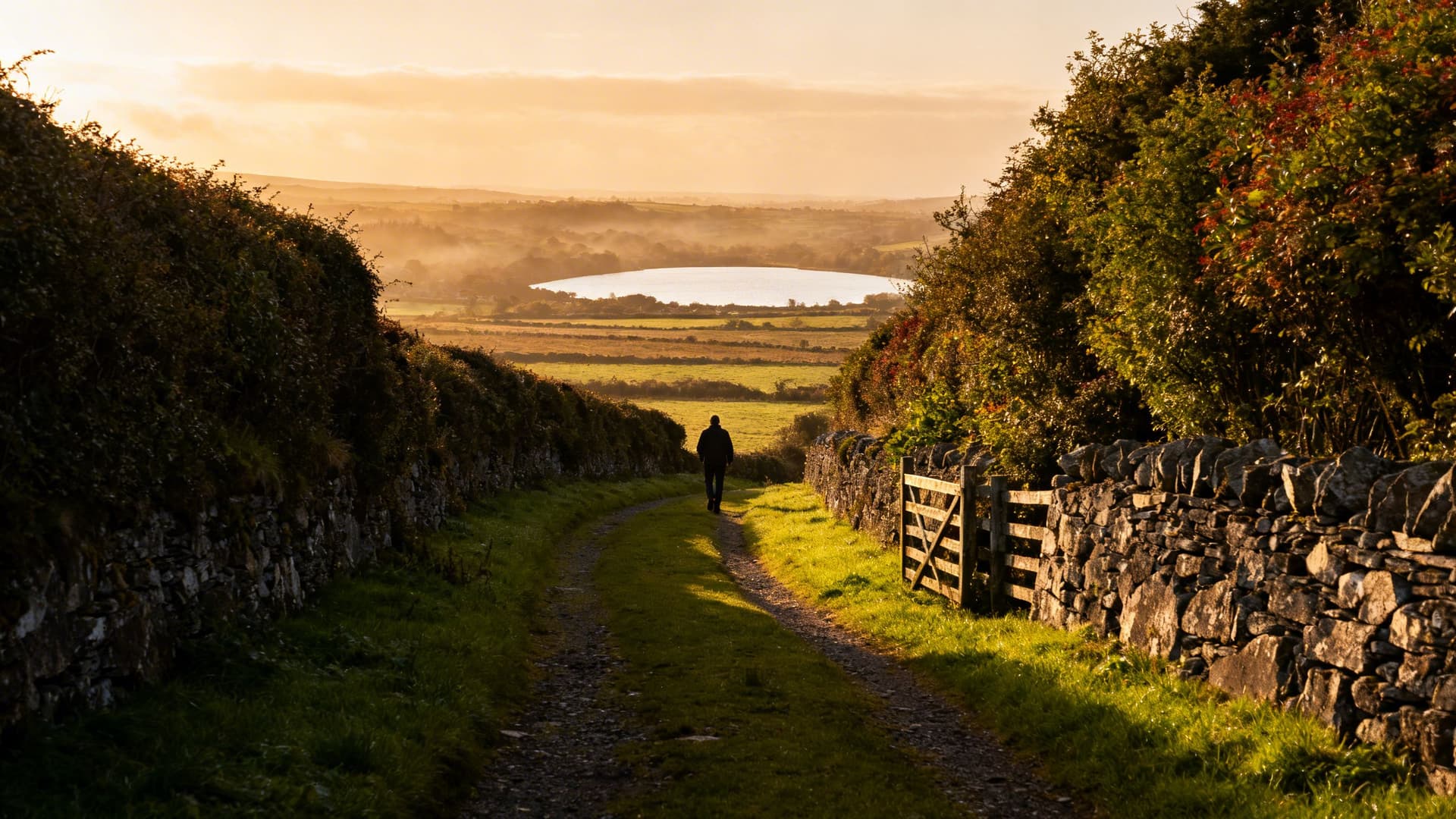
Leitrim is not a county that organises itself for visitors. The best swimming spots on Lough Allen are unmarked. The back road from Manorhamilton to Glencar that avoids the main route entirely is not on any map. The farmer near Dromahair who will let you walk through his fields to reach a megalithic tomb that predates Newgrange does not advertise. This is a landscape that functions on local knowledge, and without it, you will drive past the best things in the county without knowing they were there.
A local guide for Ireland's Hidden Heartlands is the difference between seeing Leitrim from the main roads and seeing it from the boreens — the narrow lanes between hedgerows where the county reveals its real character. The guides know which sections of the Blueway are best on a given day, which pubs in Manorhamilton have traditional music on which nights, and which of Leitrim's many lakes are swimmable, accessible, and empty enough to feel like they belong to you alone.
Frequently Asked Questions

What is Leitrim best known for?
Leitrim is known for its lakes, rivers, and waterways — particularly the Shannon-Erne Blueway — and for being Ireland's least populated county. It is also home to Glencar Waterfall (featured in the poetry of W.B. Yeats), Parke's Castle on the shores of Lough Gill, and some of the most unspoiled landscapes in the country. The county has a growing reputation for organic food production and artisan craft.
Is Leitrim worth visiting?
Yes, especially if you value quiet, uncrowded landscapes and waterway-based activities. Leitrim is ideal for kayaking, canoeing, walking, and slow travel. Its heritage sites — Creevelea Abbey, Parke's Castle, the megalithic tombs — are genuinely uncrowded, and the county's position between the Shannon and the Erne gives it a watery, atmospheric character unlike anywhere else in Ireland.
How many days do you need in Leitrim?
Two days covers the highlights comfortably. One day for the north — Glencar Waterfall, Parke's Castle, Creevelea Abbey, and the Dartry Mountains — and one day for the south, including Carrick-on-Shannon and the Shannon-Erne Blueway. A third day is worthwhile if you want to paddle a longer section of the Blueway or explore the quieter lakes around Lough Allen.
Can you swim in Leitrim's lakes?
Yes. Leitrim has numerous lakes suitable for swimming, though few have formal facilities. Lough Allen, Lough Gill, and several smaller lakes offer clean, accessible swimming spots. Local knowledge is essential — some lake shores are boggy or privately owned. A local guide can point you to the best access points and the quietest spots.
A County Defined by Water
Leitrim is shaped by water the way other counties are shaped by mountains or coastline. The Shannon to the south, the Erne to the north, Lough Allen in the centre, Lough Gill to the northwest — and between them, a network of rivers, canals, and small lakes that gives the landscape a quality of constant reflection. It is a county where the horizon is always interrupted by water, and where the light changes every hour because the sky has twice the surface to bounce off.
For a wider view of this part of Ireland, Ireland's Hidden Heartlands: The Insider Guide to Ireland's Quietest Region maps the connections between Leitrim and its equally overlooked neighbours. If the waterways have drawn you in, things to do in Roscommon continues south into a landscape shaped by royal history and bogland, while things to do in Longford follows the Shannon into the literary heartland of the midlands.
Start with a local guide for Ireland's Hidden Heartlands who knows where the water is clearest. In Leitrim, it is never far.
Table of Contents
Share this post
More from the Blog

Cork to Blarney Castle Day Trip: The Stone, the Gardens and What Else to See
Plan a Cork to Blarney Castle day trip. Kiss the stone, explore the Poison Garden, and add Cork city, Fota or Kinsale for a full day out.

Cork to Cobh Day Trip: Titanic, Colourful Houses and Harbour History
Plan a Cork to Cobh day trip by train, car or private driver. Explore Titanic history, St Colman's Cathedral, Spike Island and the best harbour views.

Cork to Killarney Day Trip: Lakes, Mountains and Muckross in One Day
A Cork to Killarney day trip is a longer escape into Kerry. Here's how to plan the drive, what to see in Killarney National Park, and why a private driver helps.