
Things to Do in Cavan: 9 Experiences You Won't Find in Any Guidebook
Things to Do in Cavan: 9 Experiences You Won't Find in Any Guidebook
The first thing you notice about Cavan is the silence. Not the absence of sound — the lakes have their own language, a constant low conversation of wind through reeds and water moving against stone. It is the silence of a county that never learned to shout about itself.
Cavan sits in Ireland's midsection, a tangle of 365 lakes and drumlins that most tourists drive through on the way to somewhere else. Their loss. Because what waits here — island castles accessible only by kayak, Bronze Age circles hidden in mountain bog, the actual source of the River Shannon bubbling up from underground — is the kind of Ireland that rewards those who slow down enough to find it.
If you are tracing family roots through the northern midlands or simply want to experience Ireland's Hidden Heartlands: The Insider Guide to Ireland's Quietest Region, Cavan is where the real discovery begins.
1. Clough Oughter Castle: The Island Fortress on Lough Oughter
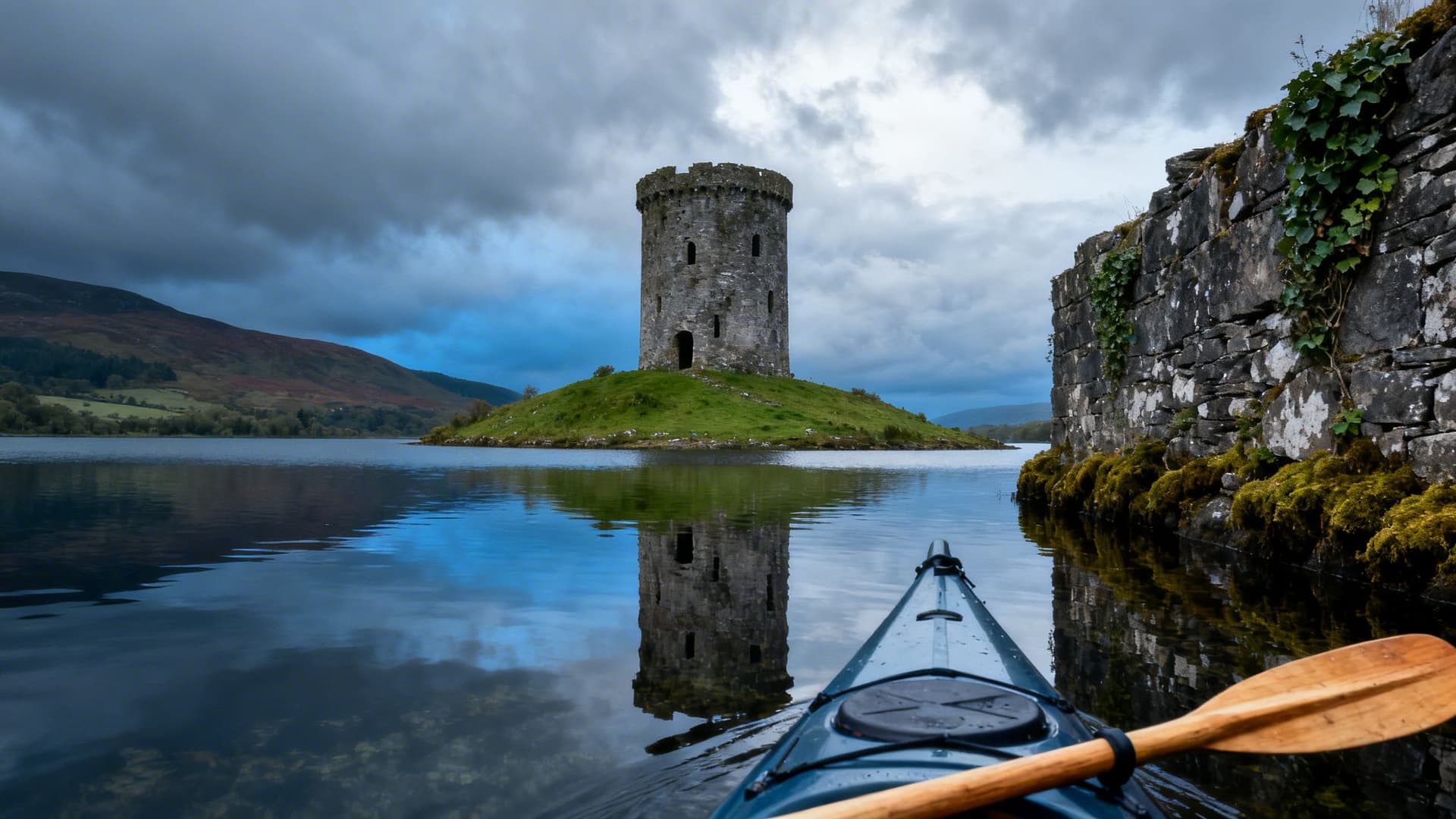
There is no bridge, no jetty, no visitor centre. Clough Oughter Castle sits on a small island in the middle of Lough Oughter, and the only way to reach it is by water. That alone makes it one of the most atmospheric heritage sites in Ireland.
The circular tower dates to the 13th century, built by the O'Reilly clan as both a stronghold and a prison. It survived sieges during the Cromwellian wars and held out longer than almost any other Irish fortification in the 1650s. What remains — the curved walls rising from the waterline, framed by nothing but lake and sky — has the quality of something half-remembered from a dream.
You can kayak out from Killykeen Forest Park, which sits on the lakeshore barely two kilometres away. The approach by water is part of the experience. As the castle grows from a smudge on the horizon to a solid presence in front of your bow, you start to understand why the O'Reillys chose this spot. It is defensible not because of walls, but because of water.
2. Cavan Burren Park and the UNESCO Global Geopark
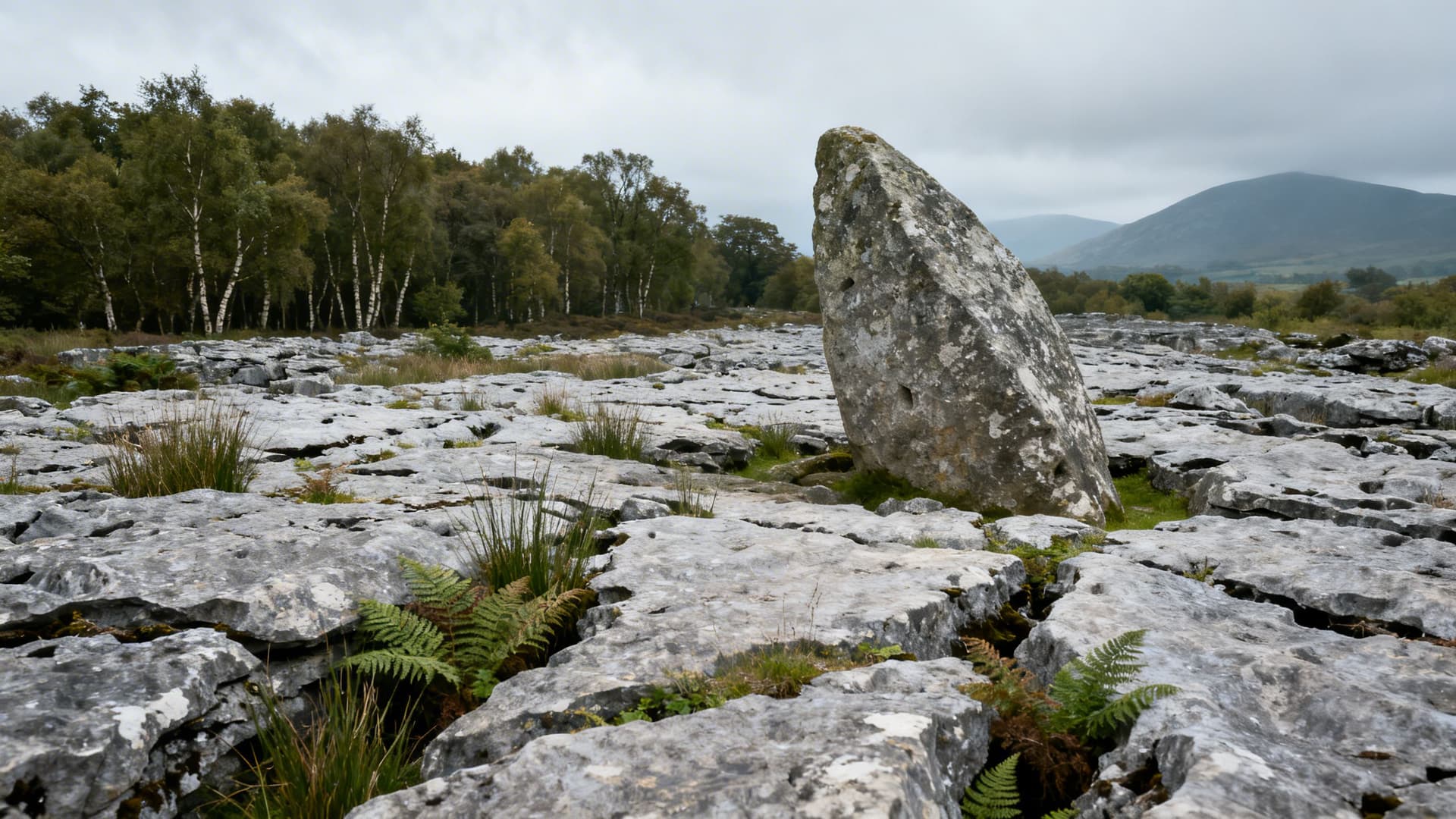
Do not confuse this with the Burren in Clare. Cavan's Burren Park is a separate geological landscape entirely, tucked into the western edge of the county near Blacklion. It forms part of the Marble Arch Caves UNESCO Global Geopark — a designation shared with neighbouring Fermanagh — and it is spectacularly undervisited.
The park covers a karst limestone pavement scattered with megalithic tombs dating back over 4,000 years. The wedge tombs here sit in open grassland with views across the Cuilcagh Mountains, undisturbed by crowds or interpretive panels. You walk among them on trails that wind through hazel woodland and across exposed rock, with the sense that you are the first person to visit this week. You might be.

The geological story is written in the rock itself — fossils from a tropical sea that covered this land 330 million years ago, now exposed at the surface. If the Marble Arch Caves draw you underground into that same geological narrative, the Burren Park gives you the surface chapter.
3. The Cuilcagh Boardwalk: Walking to the Edge of the Sky
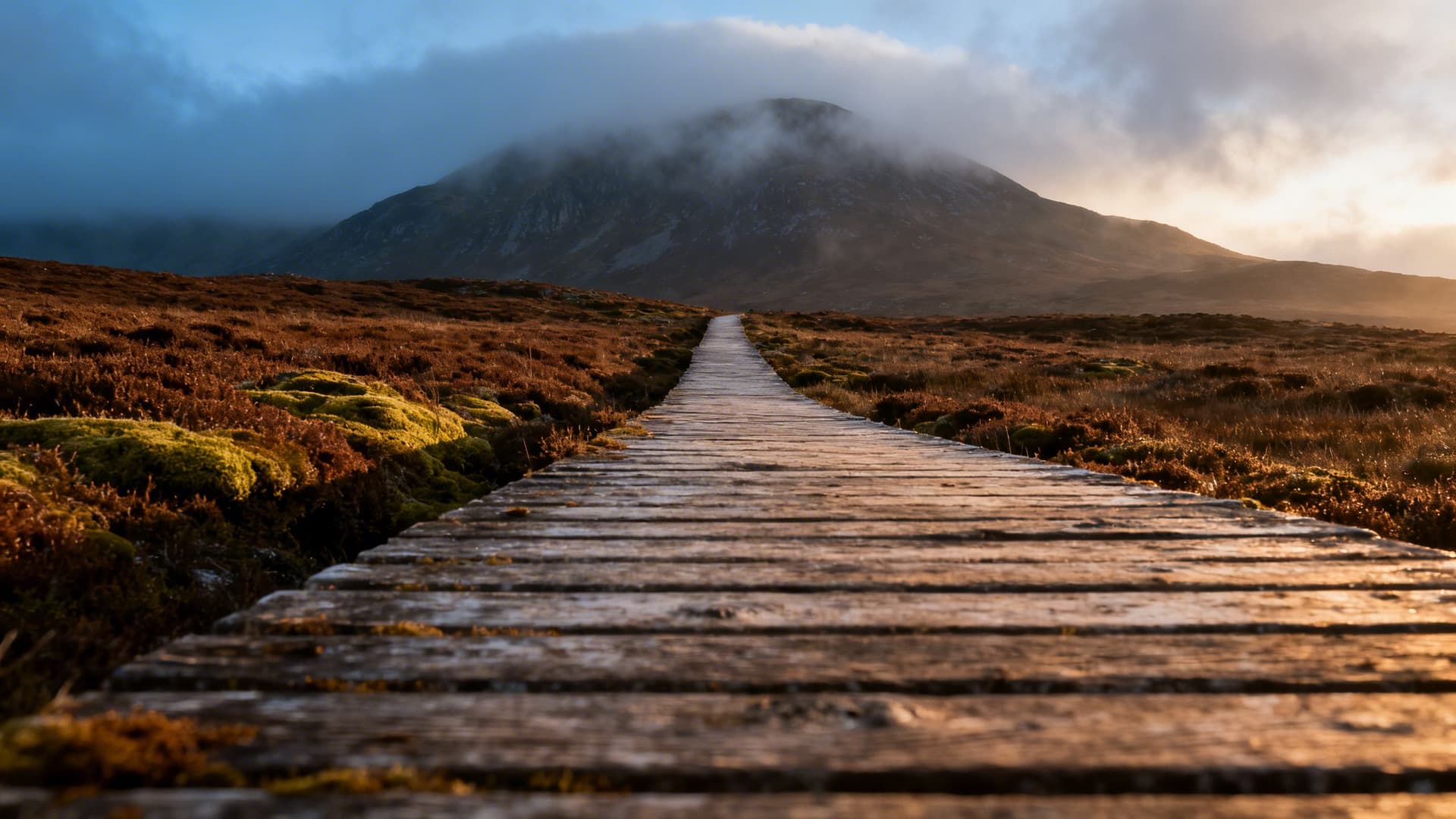
The Cuilcagh Boardwalk — sometimes called the Stairway to Heaven, though locals wince at the name — is a 7.5-kilometre return trail that crosses open blanket bog before climbing wooden steps to the summit of Cuilcagh Mountain at 665 metres. The boardwalk section protects the fragile peatland underfoot while giving you a path across terrain that would otherwise swallow your boots.
On a clear day, the views from the top reach across Lough Allen, over the drumlins of Leitrim, and into Fermanagh. On a cloudy day — which is most days — you walk into white nothing, the boardwalk disappearing ahead of you into mist, and the experience becomes something closer to meditation than hiking.
The trailhead is at Cuilcagh Mountain Park near Florencecourt. Arrive early. The car park fills by mid-morning in summer, and the trail is one-way-in, one-way-out, so timing matters. Bring layers. The temperature drops sharply above the boardwalk section, and wind at the summit can turn a warm July morning into something that feels like November.
4. Shannon Pot: Where Ireland's Longest River Begins
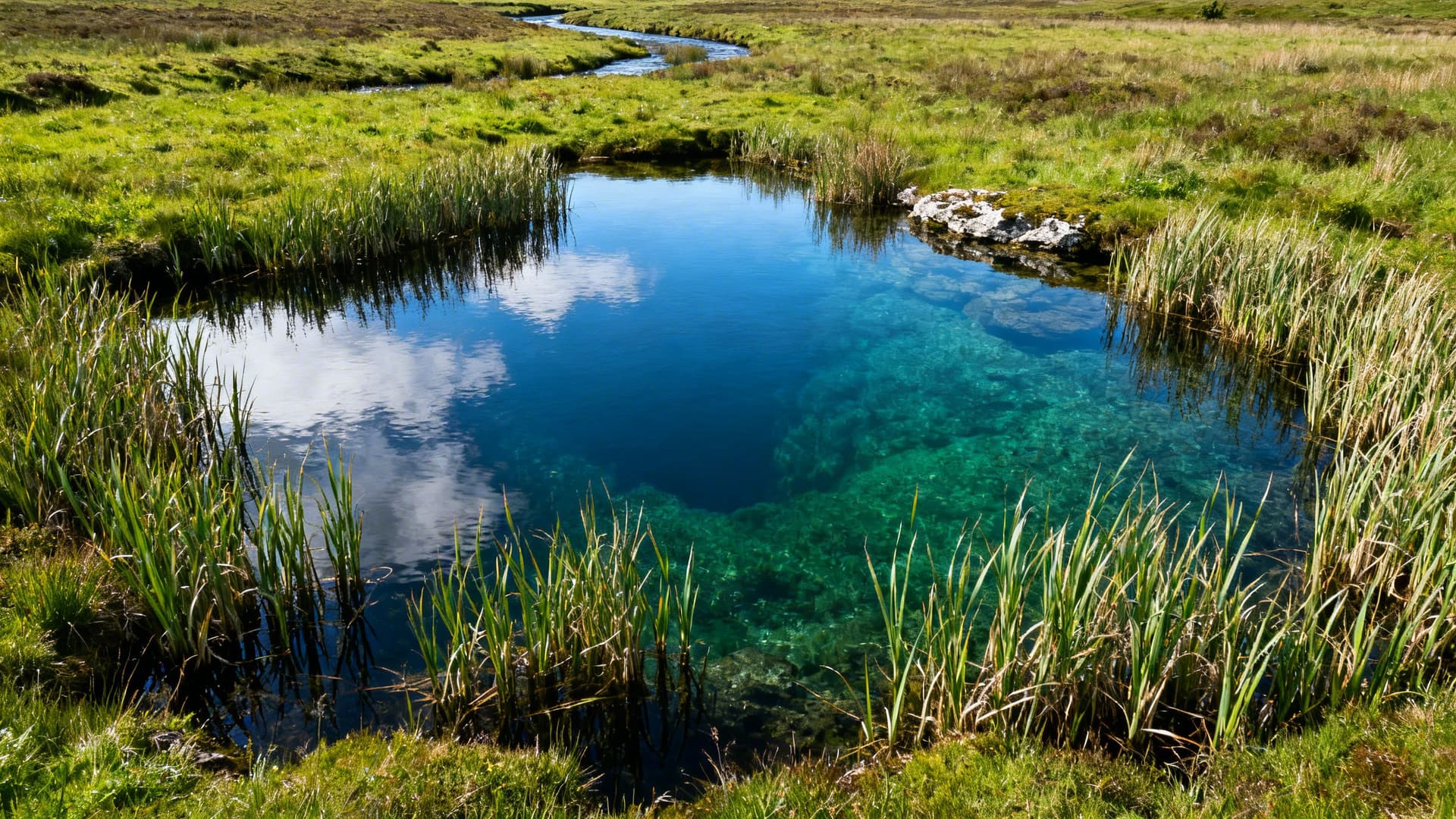
The source of the River Shannon is not a dramatic waterfall or a mountain spring. It is a deep, still pool in a boggy field near Dowra, fed by underground streams that surface here after filtering through limestone for kilometres. The water is impossibly clear — a blue-green that looks artificial but is simply the colour of water that has been cleaned by rock.
Shannon Pot is connected to one of Ireland's oldest legends. The story says that Sionnan, a woman seeking the salmon of knowledge, came to a forbidden well. The well rose up and drowned her, becoming the River Shannon. Standing at the edge of the pool, watching water appear from nowhere, the myth does not feel entirely implausible.
The walk in is short — barely ten minutes from the road — but the setting is remote enough that you are likely to have it to yourself. For anyone exploring things to do in Leitrim across the border, Shannon Pot sits right on the county line and pairs naturally with a day in that neighbouring landscape.
5. Moneygashel Cashel and the Bronze Age Stone Circles
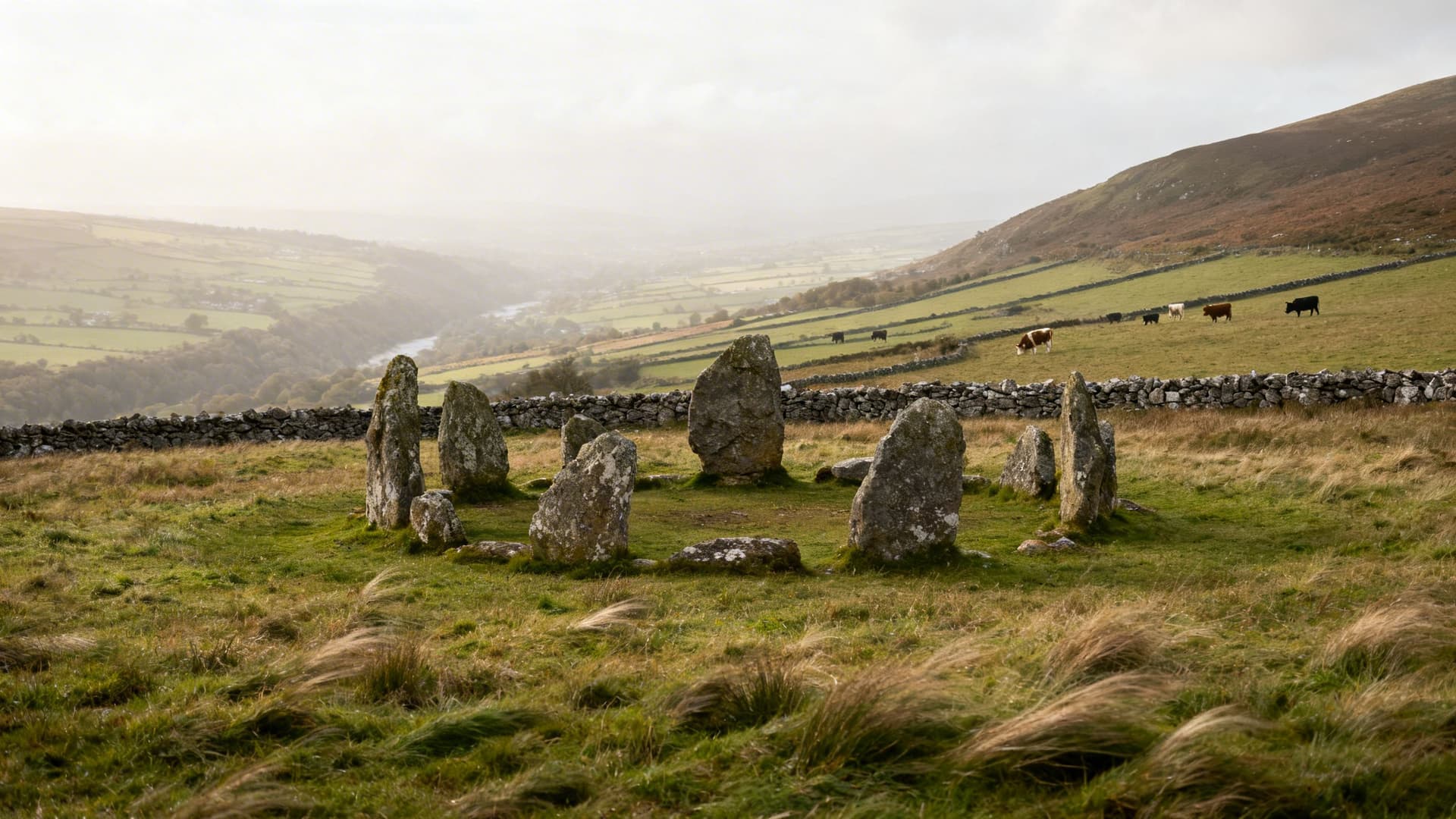
Follow a farm track above Swanlinbar and you reach Moneygashel — a collection of three cashels (stone forts) and a stone circle dating to the Bronze Age. There are no signs on the main road. No brown tourist markers. You find it because someone tells you about it, or because you have a guide who knows.
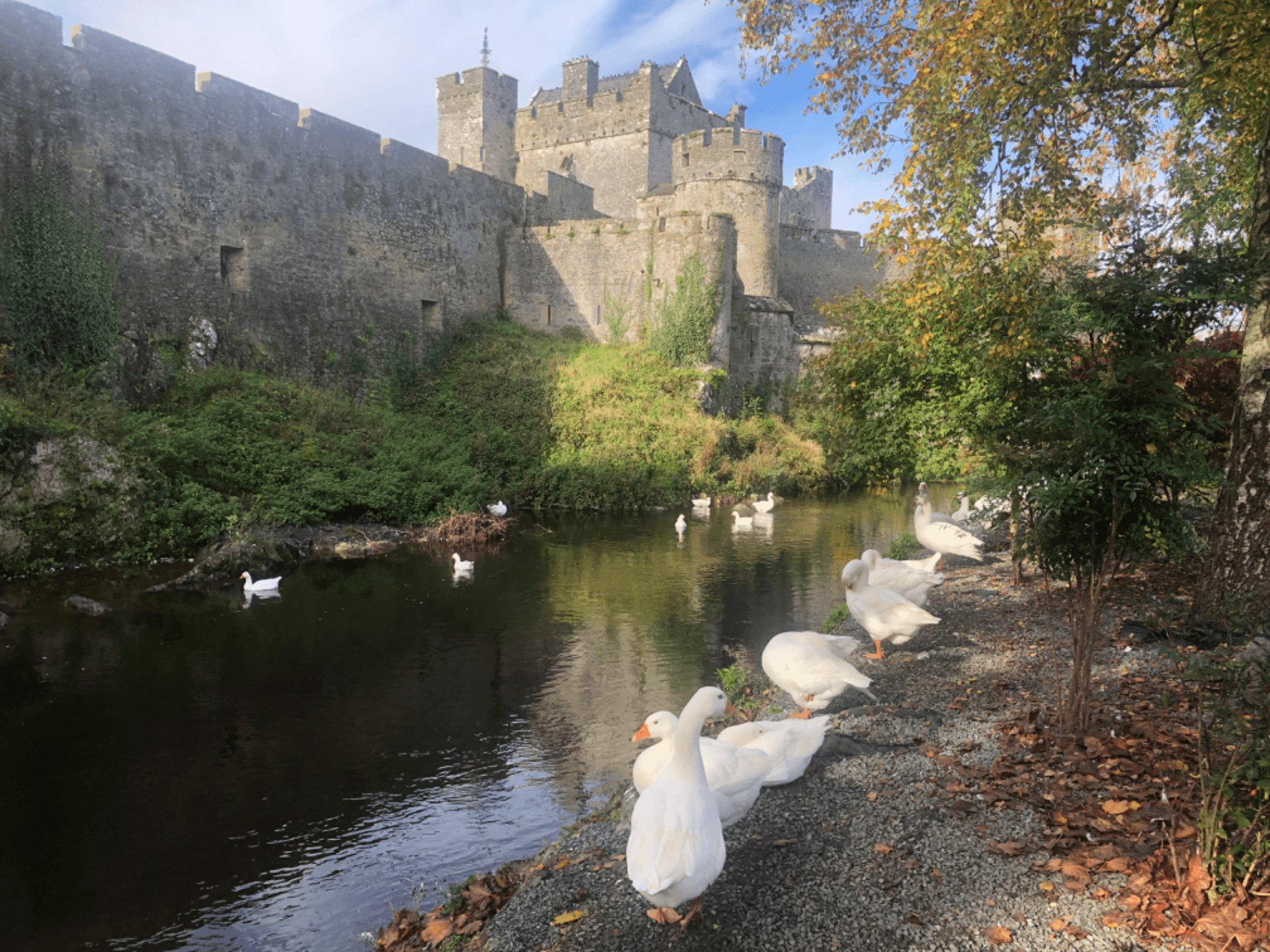
The site sits on elevated ground with views down across the valley, exactly where a community 3,000 years ago would have wanted to be — high enough to see who was coming, sheltered enough to survive the winter. The stone circle is small but intact, and the cashel walls still stand to waist height. Cattle graze in the surrounding fields. The only sound is wind.
This is the kind of place that makes Cavan worth the detour. Not because it is famous, but because it is not. Because standing inside a Bronze Age enclosure with no one else present and no admission fee and no audio guide is an experience that connects you to something older than tourism.
6. Cavan County Museum and the WWI Trench Experience
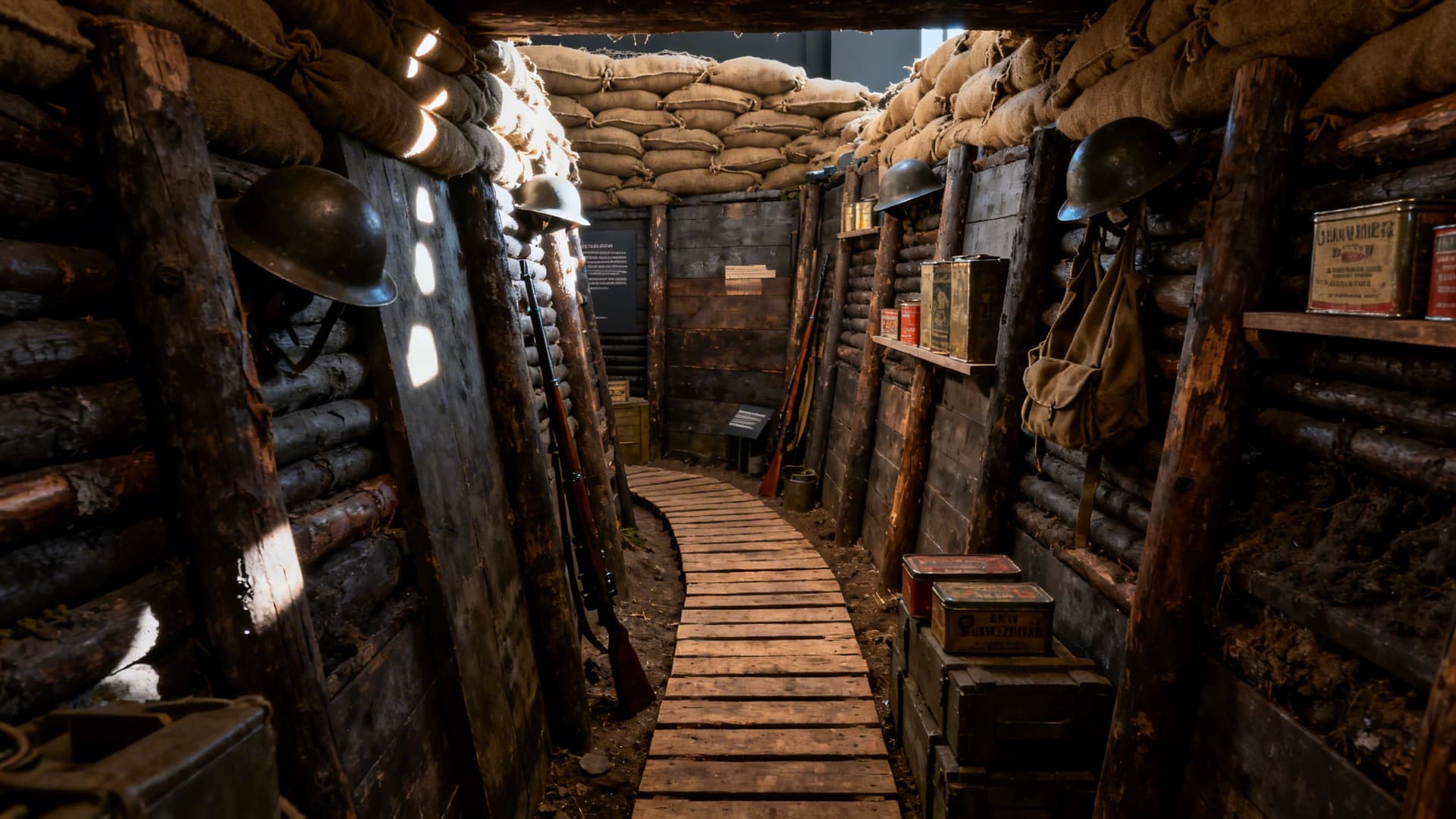
The museum in Ballyjamesduff is far better than a county museum has any right to be. The centrepiece is a full-scale replica of a World War I trench — built using archaeological evidence and oral histories from the men of the Royal Irish Fusiliers who served in France and Gallipoli. You walk through it. The sandbags, the duckboards, the confined sightlines. It is not comfortable, and it is not supposed to be.
Beyond the trench, the museum holds the Killycluggin Stone — a decorated Iron Age cult stone found in fragments near Ballyconnell and painstakingly reassembled. There are medieval carved crosses, a collection of GAA memorabilia that spans a century, and a genuine sample of 3,000-year-old bog butter recovered from a Cavan bog. The range is absurd in the best way. You come for one thing and stay for three hours.
7. Killykeen Forest Park and the Cavan Lakelands
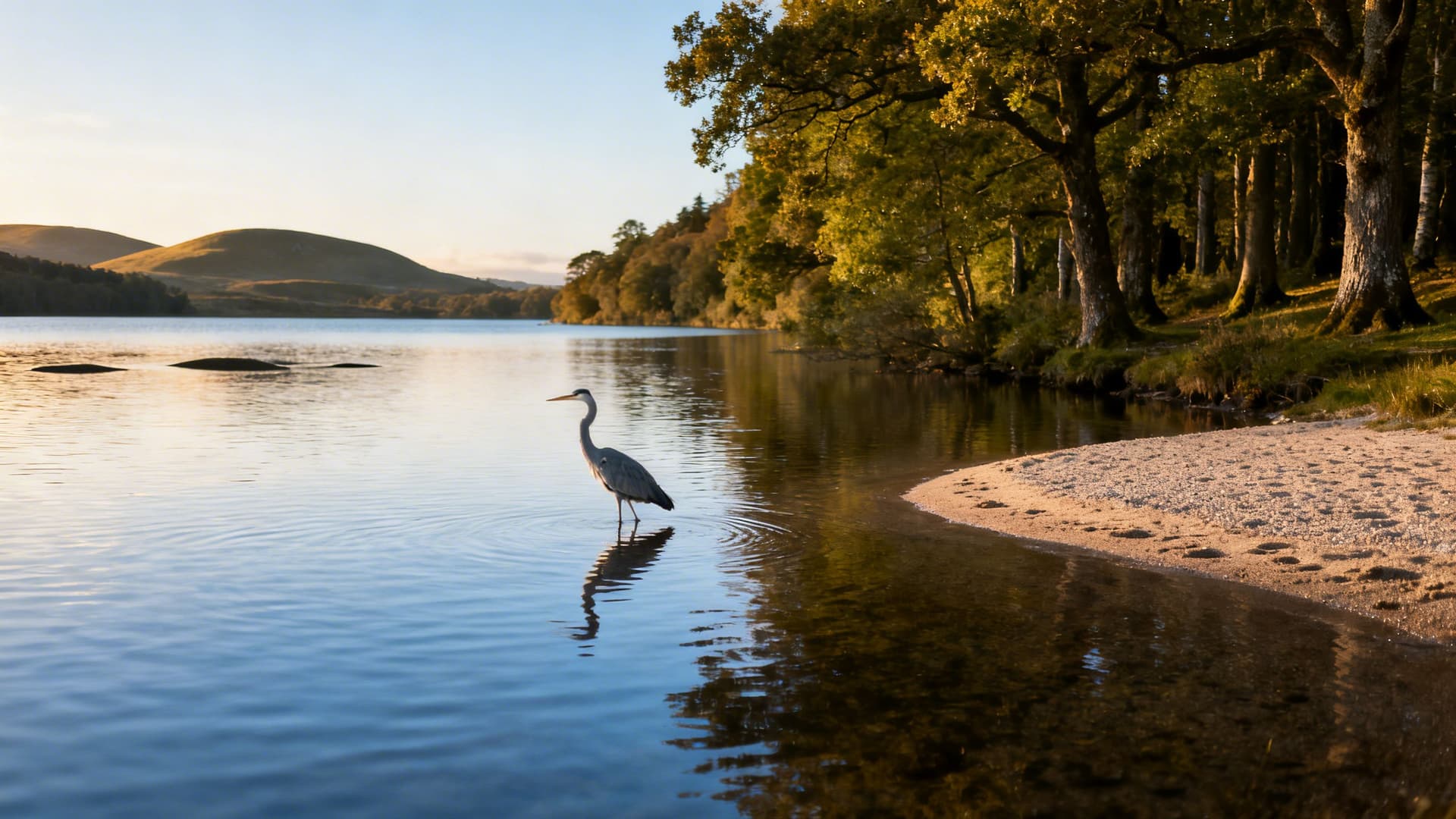
Killykeen is the access point for Lough Oughter — the lake system that defines central Cavan. The forest park wraps around a peninsula that pushes out into the water, connected to the mainland by narrow necks of land. Walking here, you are never more than a few minutes from a lakeshore view.
The trails range from short loops through oak and beech woodland to longer routes that take you along the water's edge, past small beaches and quiet inlets where herons stand motionless in the shallows. Kayaking and canoeing are available through the Cavan Adventure Centre nearby, and Lough Oughter is ideal for it — sheltered, island-dotted, and calm enough for beginners.
If you have come to Cavan for the lakes, start here. The forest park gives you the landscape in concentrated form — the drumlins, the water, the woodland, the birds — before you head out to explore the wilder stretches of the county.
8. Why You Need a Local Guide in Cavan
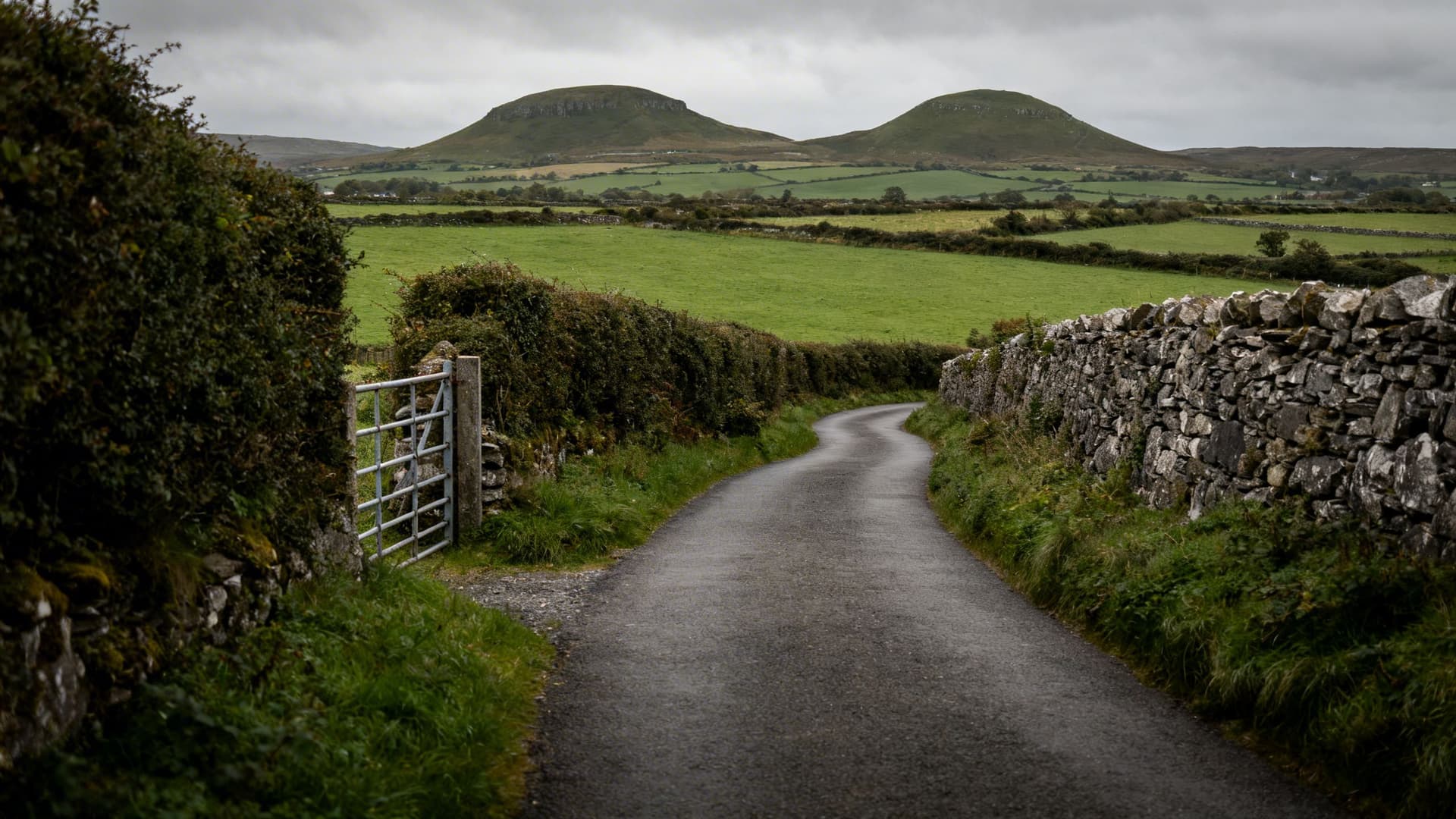
Cavan is not a county that reveals itself to satnav navigation. The best sites — Moneygashel, the lesser-known wedge tombs near Blacklion, the back routes around Lough Oughter — are not well signposted and do not appear on Google Maps in any useful way. A local guide for Ireland's Hidden Heartlands is not a luxury in this landscape. It is the difference between finding the Bronze Age stone circle on the hilltop and driving past the unmarked farm gate that leads to it.
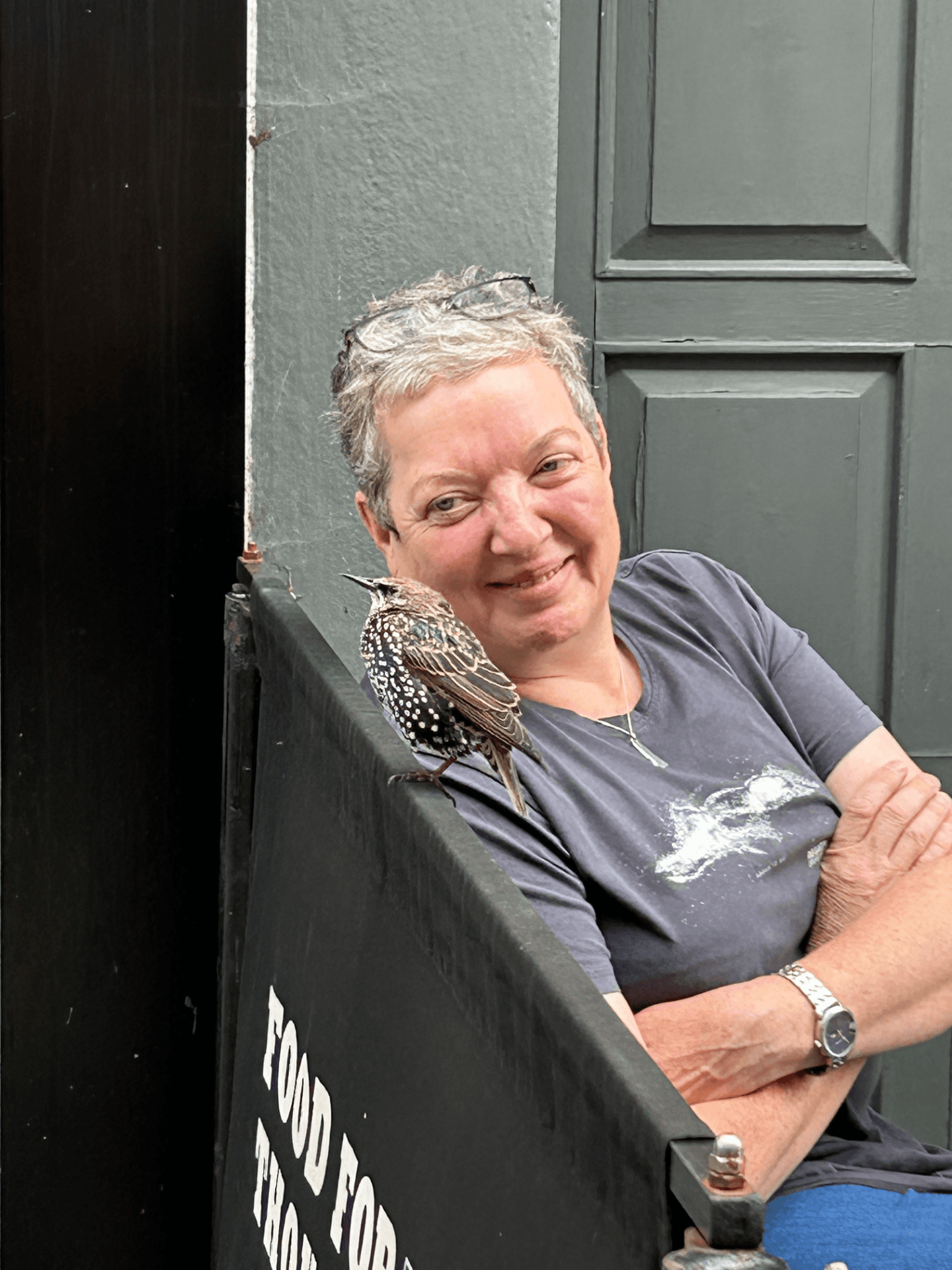
The guides who work in Cavan know which landowners are happy for you to cross their fields, which lake shores are accessible without trespassing, and which roads turn into bogs after rain. They carry the kind of knowledge that no travel app has indexed — the stories attached to specific fields, the family who has farmed beside the cashel for eight generations, the pub in Ballyconnell where the traditional music session happens on Thursdays and nowhere else.
9. Frequently Asked Questions About Visiting Cavan
What is Cavan best known for?
Cavan is known for its extraordinary lake district — 365 lakes scattered across a drumlin landscape in Ireland's northern midlands. The county is also home to the Shannon Pot (source of Ireland's longest river), the Cavan Burren Park (part of a UNESCO Global Geopark), and the atmospheric ruins of Clough Oughter Castle on its island in Lough Oughter.
Is Cavan worth visiting?
Absolutely, particularly if you want to experience Ireland away from the tourist trail. Cavan offers genuinely uncrowded heritage sites, exceptional lake kayaking, Bronze Age stone circles you can visit alone, and a landscape that most visitors to Ireland never see. It rewards slow travel and curiosity over ticking off famous landmarks.
How many days do you need in Cavan?
Two to three days gives you enough time to explore the key sites without rushing. One day for the Cuilcagh Boardwalk and Cavan Burren Park in the west, one day for Lough Oughter and Clough Oughter Castle in the centre, and an optional third day for the museum in Ballyjamesduff and the quieter eastern lakelands.
Can you kayak to Clough Oughter Castle?
Yes. Clough Oughter Castle sits on an island in Lough Oughter and is only accessible by water. You can rent kayaks or canoes at the Cavan Adventure Centre near Killykeen Forest Park and paddle out to the castle. The journey takes roughly 20 to 30 minutes depending on conditions, and the approach by water is genuinely memorable.
Your Starting Point for the Forgotten Counties
Cavan is the kind of county that stays with you not because of any single spectacle, but because of the cumulative effect of quiet places encountered without crowds. The island castle at dawn. The Bronze Age circle with no one else there. The still blue pool where Ireland's longest river begins.
For a wider view of this part of Ireland, Ireland's Hidden Heartlands: The Insider Guide to Ireland's Quietest Region connects Cavan to its neighbouring counties — each one equally overlooked, equally worth your time. And if Cavan's lakelands have you curious about what lies to the west, things to do in Roscommon and things to do in Leitrim continue the thread into landscapes that are wilder, emptier, and just as rewarding.
Start with a local guide for Ireland's Hidden Heartlands who knows the back roads. You will see a version of Ireland that most visitors do not know exists.
Table of Contents
Share this post
More from the Blog

Cork to Blarney Castle Day Trip: The Stone, the Gardens and What Else to See
Plan a Cork to Blarney Castle day trip. Kiss the stone, explore the Poison Garden, and add Cork city, Fota or Kinsale for a full day out.

Cork to Cobh Day Trip: Titanic, Colourful Houses and Harbour History
Plan a Cork to Cobh day trip by train, car or private driver. Explore Titanic history, St Colman's Cathedral, Spike Island and the best harbour views.

Cork to Killarney Day Trip: Lakes, Mountains and Muckross in One Day
A Cork to Killarney day trip is a longer escape into Kerry. Here's how to plan the drive, what to see in Killarney National Park, and why a private driver helps.