
Marble Arch Caves: Ireland's Most Spectacular Underground World
Marble Arch Caves: Ireland's Most Spectacular Underground World
The guide cuts the lights partway through every tour, and every time it works. What you experience in that moment is not darkness as you know it — not a dim room or a clouded night sky. This is the absolute absence of light in a place the sun has never reached, in chambers where the air is 10°C year-round and calcite curtains have been forming, one millimetre a century, for 340 million years. Then the lights come back on and the stalactites are still there, unbothered by you and your camera, doing what they have always done.
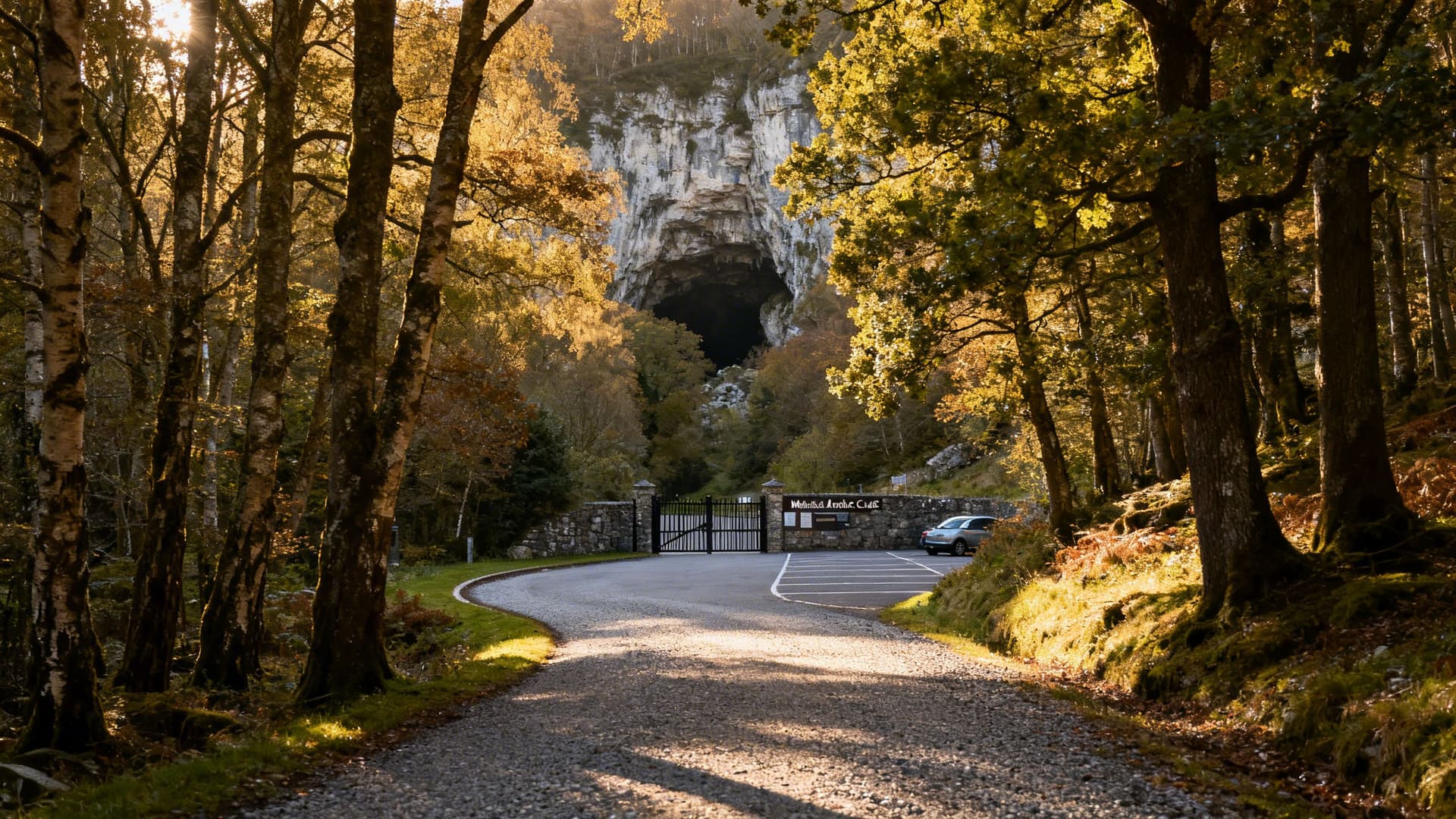
Marble Arch Caves, straddling the border between County Fermanagh and County Cavan, is one of the finest cave systems in Europe — and one of the least-visited great natural attractions in Ireland. Part of the reason is the remoteness. You cross from the Republic into Northern Ireland, down single-track roads through Fermanagh drumlin country, and the caves appear in a limestone gorge as if placed there as a reward for the journey.
Ireland's Hidden Heartlands: The Insider Guide to Ireland's Quietest Region covers the full region — this article goes deep into what makes Marble Arch Caves worth crossing a border for.
Inside the Caves: What the Tour Actually Looks Like
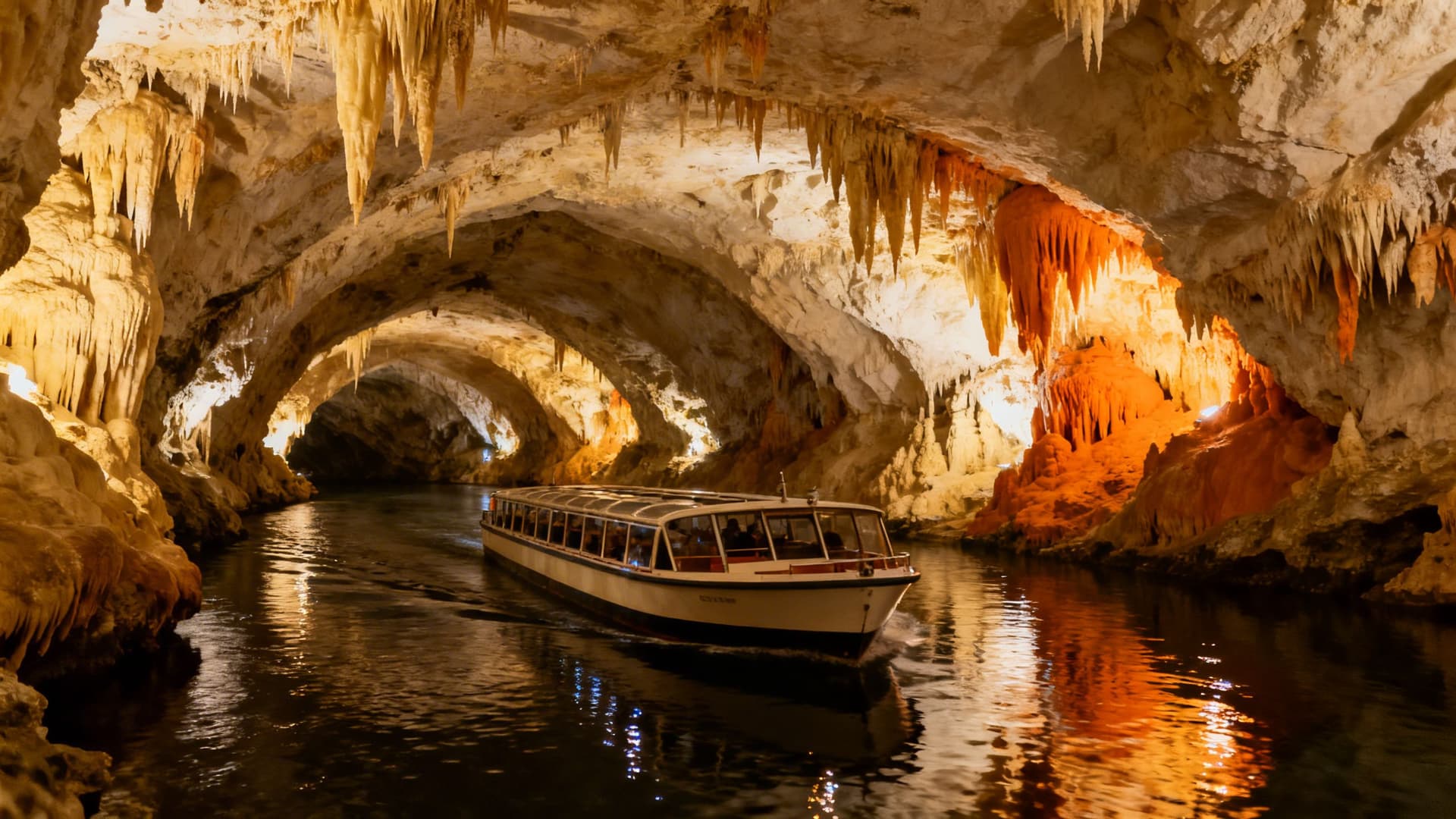
The tour begins above ground in a steep-sided gorge where three streams — the Sruh Croppa, the Aghinrawn, and the Cladagh — converge and disappear underground. You board a flat-bottomed boat, the ceiling drops to within inches of your head in places, and you glide into the mountain.
The boat section is the most dramatic. You pass through a sequence of chambers lit just enough to show the scale of what's above you — vaulted ceilings, columns formed over millennia where stalactites and stalagmites have met, curtains of calcite that catch the light and glow amber. The geology is spectacular: coral fossils embedded in the limestone walls, formed when this part of Ireland lay beneath a tropical sea 340 million years ago.
After the boat, you walk. The path winds through the Marble Arch itself — the natural limestone arch that gives the caves their name — before emerging back into daylight. The full tour takes around 75 minutes. Guides are informative without overdoing it; they have a habit of letting the silence and the darkness speak before they do.
Practical tip: the caves are cold — around 11°C underground, regardless of what the weather is doing outside. Dress in layers, and book ahead — tours sell out, especially in summer.
Marble Arch Caves Global Geopark
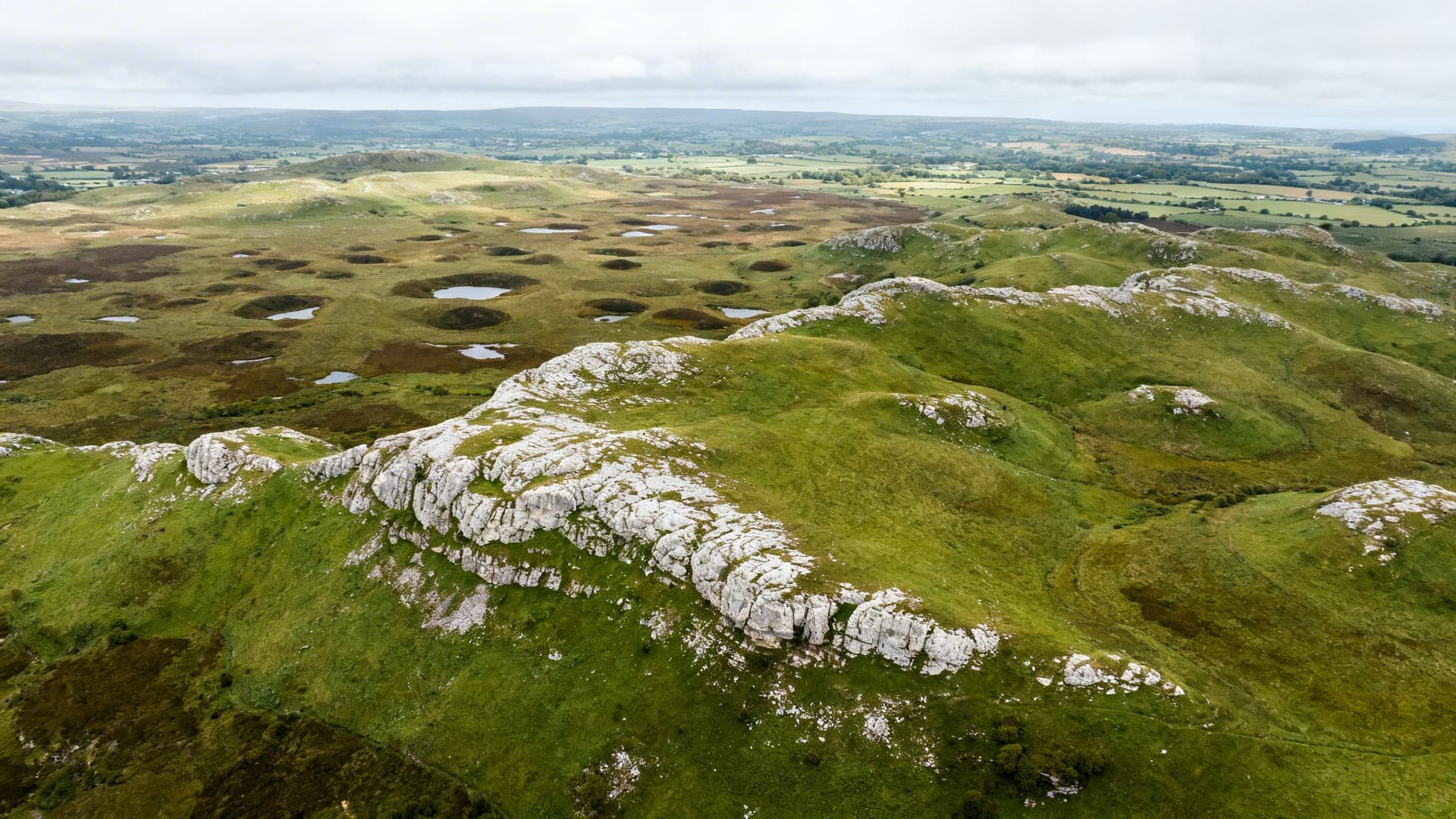
The caves are the centrepiece of a UNESCO Global Geopark that spans both sides of the border, covering roughly 1,500 square kilometres across County Fermanagh and County Cavan. It is one of the first cross-border UNESCO Geoparks in the world, a collaboration that has outlasted every political fluctuation around the border since its designation in 2001.
In practice, the Geopark designation means the landscape is recognised as being of international geological significance — the limestone karst plateau, the cave systems beneath it, the drumlins left by retreating glaciers, and the upland blanket bog on Cuilcagh Mountain.
On the Cavan side, the Geopark takes in the Cuilcagh Mountain plateau and the headwaters of the River Shannon at the Shannon Pot — covered in full in our guide to things to do in Cavan.
For visitors, the Geopark means access to a network of trails, geological sites, and interpretation points across both counties. The visitor centre at the caves is the natural starting point.
Cuilcagh Mountain and the Legnabrocky Trail
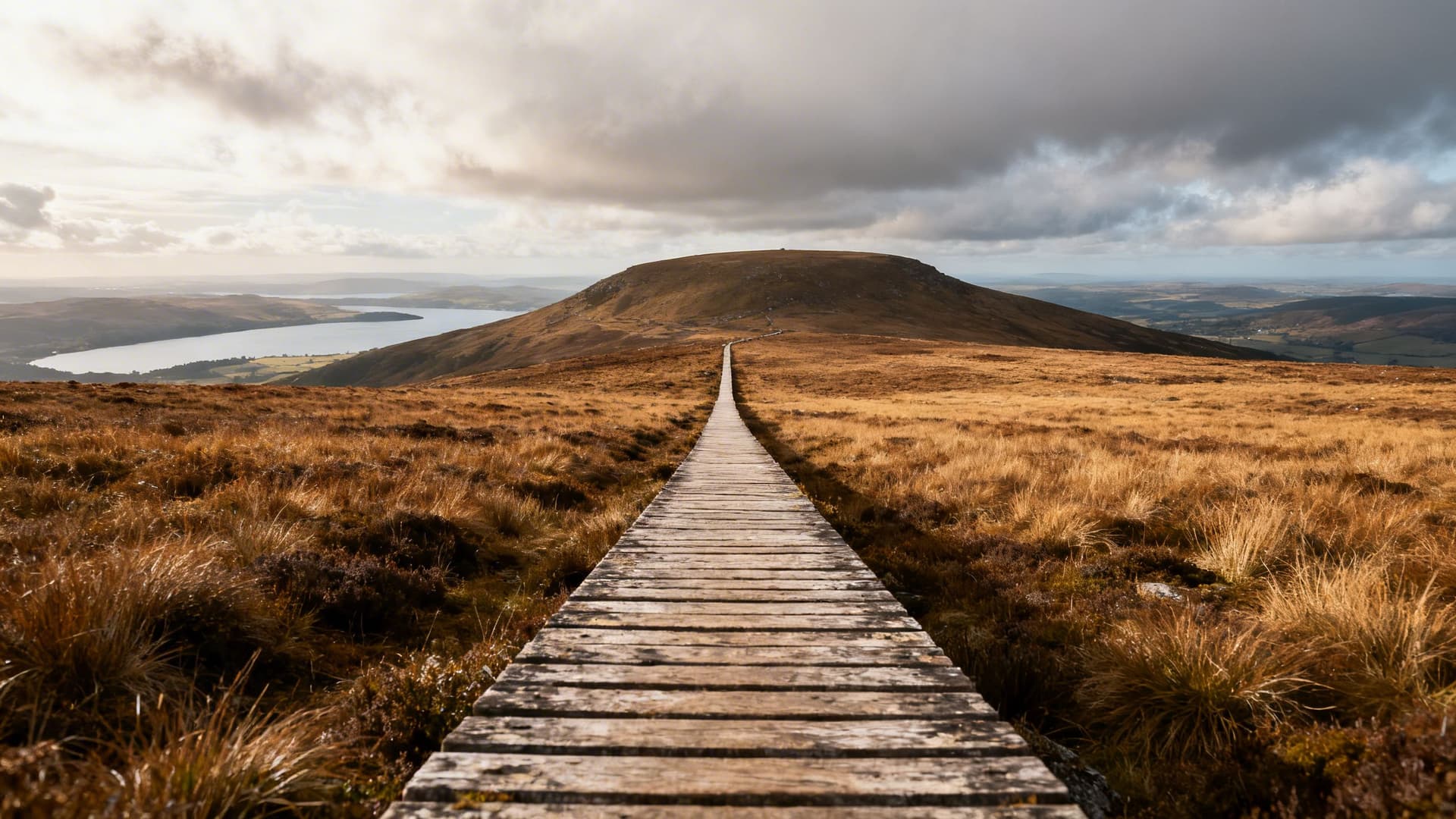
If descending into the earth is one half of Marble Arch Caves, ascending Cuilcagh Mountain is the other. The Legnabrocky Trail — known in recent years as the Stairway to Heaven walk, thanks to a long boardwalk section over blanket bog — climbs from the Geopark to the summit plateau at 665 metres, with views reaching over three counties on a clear day.
Distance: 7.5 km round trip

Time: 3–4 hours at a comfortable pace
Terrain: gravel track, then a kilometre of elevated wooden boardwalk and steps
The boardwalk section is unusual: a long, raised wooden walkway over open bog, the Fermanagh lakelands spreading out behind you and the plateau ahead. At the summit, the landscape turns austere — exposed rock, wind-scoured grass, silence. On clear days, Lough Erne below catches the light.
The trail shares its start point with the Cavan-side approach to Cuilcagh, making this one of the few walks in Ireland where you can genuinely cross a border on foot in open countryside.
Perfect pairing: the cave visit and the mountain walk work well as a full-day combination — underground in the morning, above the cloudline in the afternoon.
Florence Court and the Fermanagh Lakelands
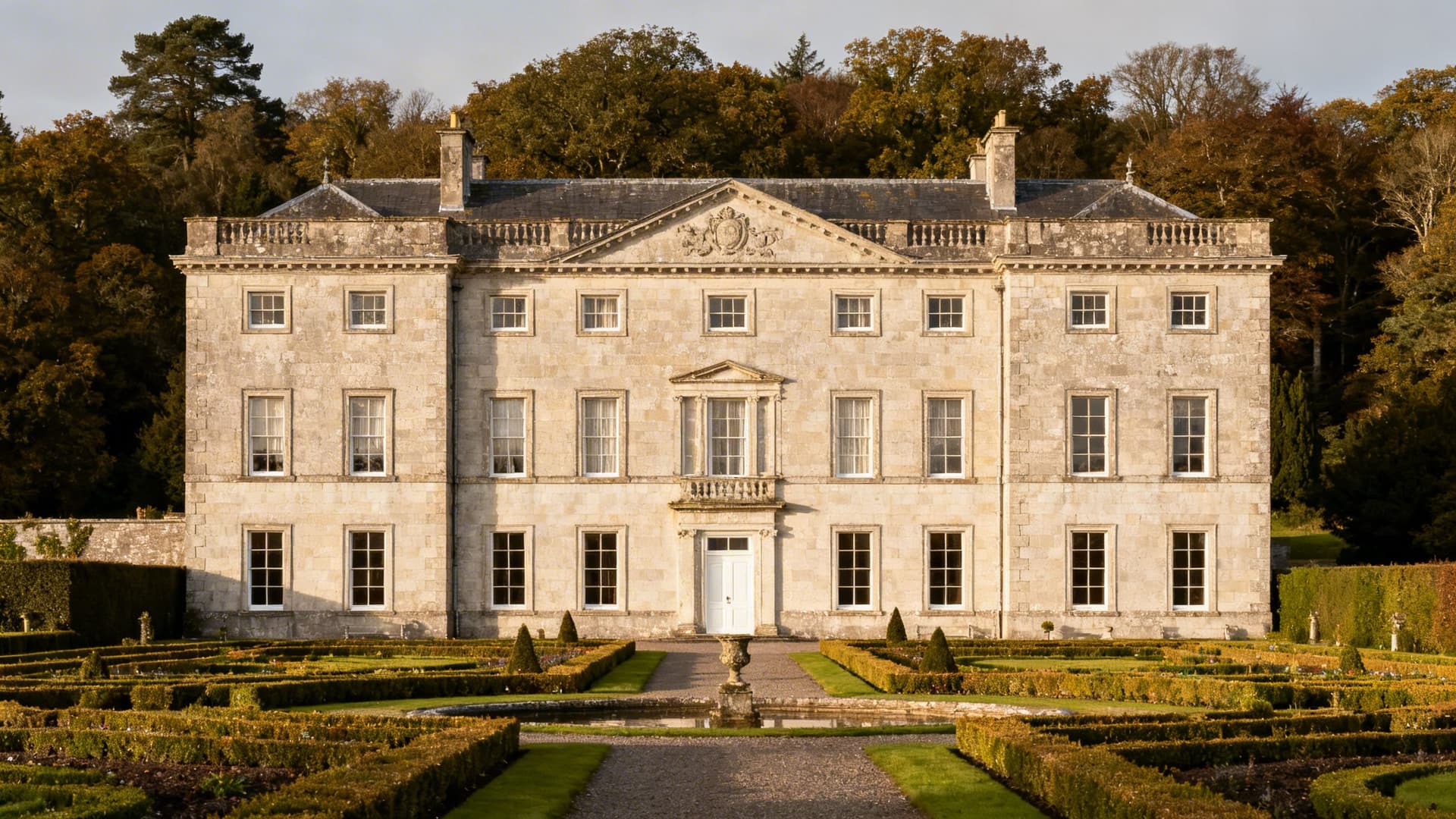
Three kilometres from the cave entrance, Florence Court is one of the great Georgian houses of Ulster — a National Trust property that sees a fraction of the visitors that Castlecoole, its more famous Enniskillen neighbour, attracts. Built in the mid-18th century for the Cole family, later Earls of Enniskillen, its interiors are among the most intact of their period in Ireland.
The grounds include:
A restored walled garden
Forest walking trails
A famous yew tree widely claimed to be the mother tree of all Florence Court yews — a cultivar propagated across Ireland and Britain for three centuries
Whether or not the botanical claim holds up to scrutiny, the tree itself is extraordinary: ancient, gnarled, and indifferent to the debate.
The broader Fermanagh lakeland country around the caves — Lough MacNean, the Upper and Lower Loughs — is quiet enough in shoulder season that you can drive through it without meeting another tourist for stretches of an hour. The villages between the lakes are small and mostly unchanged.
In Blacklion, just over the border in Cavan, you'll find Neven Maguire's MacNean House restaurant — one of the longest-running Michelin-starred tables in Ireland, incongruous and excellent in equal measure.
Practical Information: When to Go, Tickets, Getting There
Season & Opening
Seasonal opening: typically April to October or early November
Winter closure: the cave system often floods in winter; tours are suspended for safety
No self-guided access: visiting without an official tour is not permitted

Check dates: see the official site (marble-arch-caves.com) before you travel
Tickets & Tours
Tour duration: around 75 minutes underground
Total visit time: allow 2–2.5 hours including the visitor centre and gorge trail
Frequency: tours usually run hourly in season
Booking: strongly advised, especially June–August when tours often sell out
Getting There
From Enniskillen: approx. 19 km (about 25–30 minutes by car)
From Sligo: approx. 65 km to the south
From Cavan town: around 70 km
Roads from all directions are secondary and single-track in places. A sat-nav with recent maps is useful.
Currency note: Northern Ireland uses sterling, not euro. Parking charges and cave entry fees are in sterling, though contactless cards are widely accepted.
What to Wear & Accessibility
Temperature underground: around 10–11°C year-round
Clothing: layers, a light waterproof, and comfortable walking shoes with good grip
Accessibility: the caves are not fully wheelchair accessible; the visitor centre can advise on accessible viewing points within the gorge and limited sections of the route
Why You Need a Local Guide for Marble Arch Caves
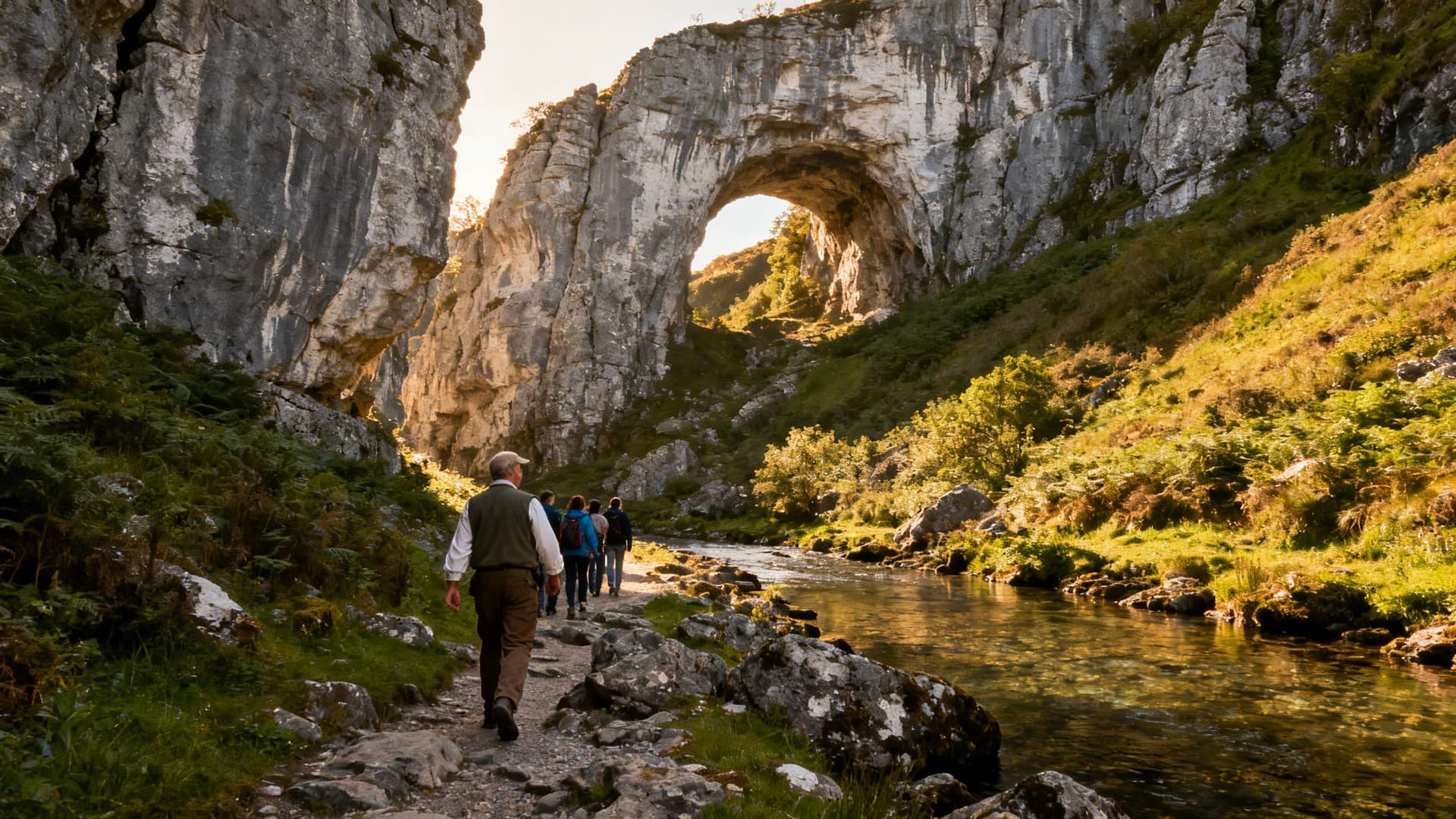
The cave tour itself comes with official guides — that part is handled. What a local guide adds is everything outside the entrance.
The Geopark trails are poorly marked in places. The Cuilcagh summit route is straightforward, but the network of lower trails through the gorge and across the Fermanagh drumlin country is not. A guide who knows this landscape can:
Lead you to the Aghinrawn River source — a spring emerging from limestone at the base of the plateau

Show you the limestone pavement sections above the cave entrance
Link viewpoints, trails, and minor roads into a coherent day out
The cross-border element matters too. A guide based in the borderlands understands the rhythm of this area in a way no map conveys:
Which days and times the caves are quiet
Where to eat well without driving to Enniskillen
How to combine the caves with Cavan-side Geopark sites without doubling back
The region rewards the visitor who has someone to translate it.
Find a local guide for Ireland's Hidden Heartlands through Irish Getaways to plan a day — or two — that does the Geopark justice.
Frequently Asked Questions
Are Marble Arch Caves suitable for children?
Yes, in most cases. The official tour is appropriate for children aged four and over who are comfortable in confined, dark spaces. The boat section involves ducking low at certain points. The cave is cold — dress children in layers. The visitor centre and gorge are accessible to all ages.
How long is the Marble Arch Caves tour?
The guided underground tour takes approximately 75 minutes. Allow two to two-and-a-half hours for the full visit including the visitor centre and the gorge walking trail above ground. If you're combining with Cuilcagh Mountain, plan for a full day.
Do I need to book Marble Arch Caves in advance?
Yes. Particularly from June through August, tours sell out. Book online at marble-arch-caves.com before your travel date. Walk-in spaces are available at quieter times in April, May, and September, but cannot be relied upon.
Is Marble Arch Caves in Northern Ireland or the Republic of Ireland?
The caves themselves are in County Fermanagh, Northern Ireland. The Marble Arch Caves Global Geopark extends across the border into County Cavan in the Republic. You cross from the Republic into Northern Ireland to reach the cave entrance — there is no checkpoint or visible border crossing on the road, but you are in Northern Ireland, and sterling applies.
The Quiet Heart of Ireland's Borderlands
Underground or on the summit plateau above it, the area around Marble Arch Caves is one of the most distinctive landscapes in Ireland — strange, quiet, and worked by geological forces that predate every human thing by an embarrassing margin.
Ireland's Hidden Heartlands: The Insider Guide to Ireland's Quietest Region maps the broader region. For the lakes and waterways to the south, the guide to things to do in Westmeath covers the inland lakelands that share this county's water-defined character.
The caves are open for a reason. Fewer people find them than should.
Table of Contents
Share this post
More from the Blog

Cork to Blarney Castle Day Trip: The Stone, the Gardens and What Else to See
Plan a Cork to Blarney Castle day trip. Kiss the stone, explore the Poison Garden, and add Cork city, Fota or Kinsale for a full day out.

Cork to Cobh Day Trip: Titanic, Colourful Houses and Harbour History
Plan a Cork to Cobh day trip by train, car or private driver. Explore Titanic history, St Colman's Cathedral, Spike Island and the best harbour views.

Cork to Killarney Day Trip: Lakes, Mountains and Muckross in One Day
A Cork to Killarney day trip is a longer escape into Kerry. Here's how to plan the drive, what to see in Killarney National Park, and why a private driver helps.