
Things to Do in Westmeath: Ireland's Lakeland County
Things to Do in Westmeath: Ireland's Lakeland County
On the first of May, every year, a fire is lit on the Hill of Uisneach in the middle of County Westmeath. It was lit there for the first time somewhere around four thousand years ago, when the ancient Irish considered this hill to be the exact centre of the island — the point where all five provinces met, the navel of a sacred geography that stretched from sea to sea. The Bealtaine fire announced summer. Kings gathered. The land was blessed. Then the centuries turned, the custom faded, and Uisneach became a hill that most people drive past without knowing what it is. Now the fire is lit again each spring, and the people who climb up for it stand on ground that has been gathering the Irish together longer than almost anywhere else on earth.
That is Westmeath in miniature. This is a county inside Ireland's Hidden Heartlands: The Insider Guide to Ireland's Quietest Region where the most significant things are also the least advertised — a mythological mountain in open farmland, a medieval village with seven documented wonders, a castle town on the Shannon that Vikings settled before the Normans arrived. If you've already explored things to do in Longford and found the Iron Age road in the bog, Westmeath takes that same midland depth and adds water: lakes, rivers, and the slow Shannon threading through it all.
The Hill of Uisneach: The Mythological Centre of Ireland
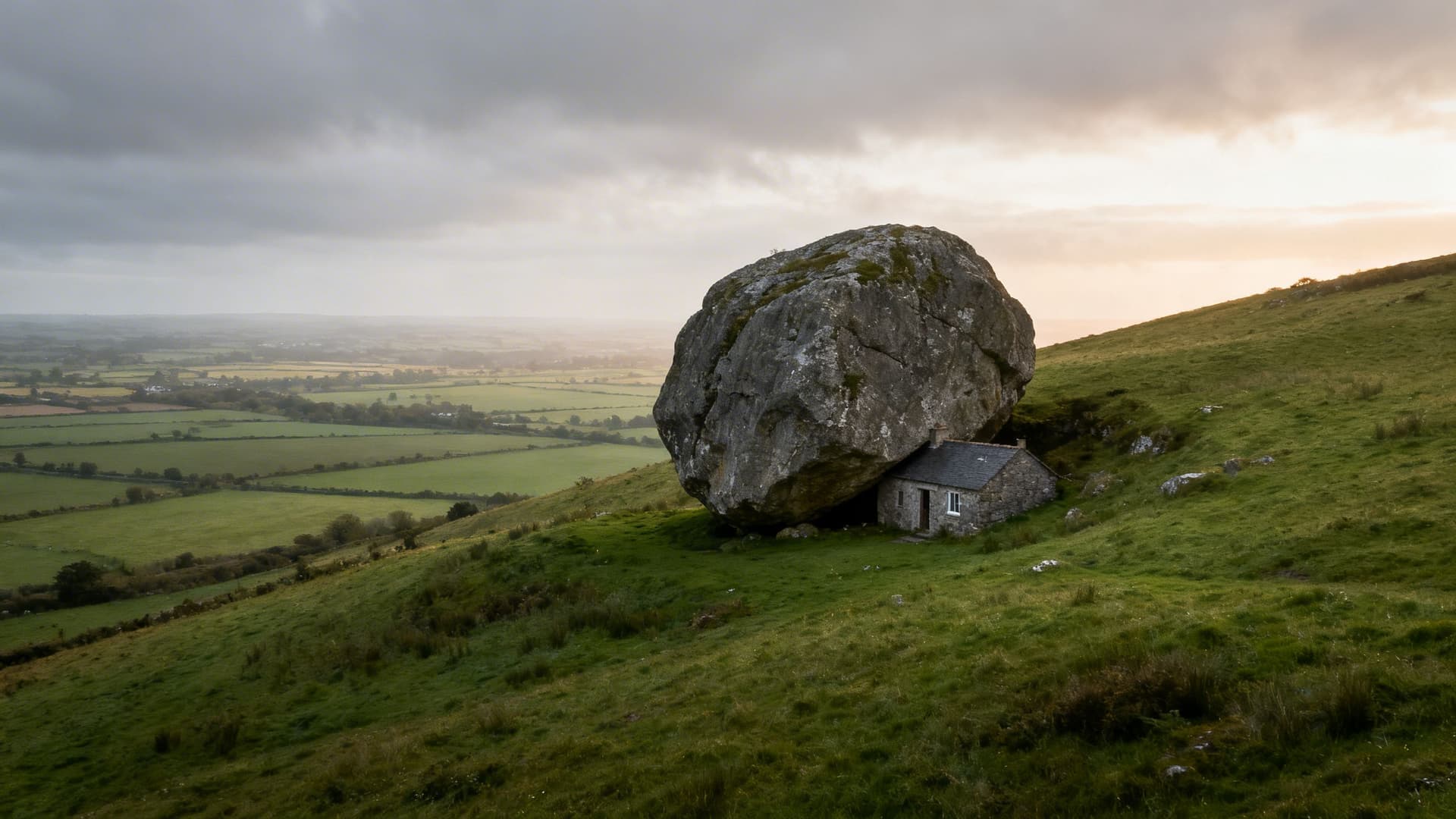
The Hill of Uisneach rises gently out of the Westmeath farmland near the village of Ballymore, and from a distance it looks like a hundred other midland hills — green, rounded, unremarkable. At the summit, the Catstone changes that impression immediately. It is a glacial erratic the size of a small cottage, embedded in the hillside and named for a cat that, in one version of the myth, was buried beneath it. The stone is old in a way that stone in Ireland tends not to feel; it sits in the landscape like something placed deliberately, even though no human hand put it there.
Uisneach was the sacred site of Lugh, the sun god, and the place where Bealtaine — the festival marking the start of summer — was observed across Ireland. From the summit on a clear day, it is said you can see twenty counties. Whether or not that's strictly true, what you see is the entire midland plain — an uninterrupted view of the island's interior that makes the choice of this site as the symbolic centre feel less like mythology and more like geography.
Access to the hill is through guided tours only, which run from May to September. The tours last around ninety minutes and are run by people who know the archaeology and the mythology with equal fluency. The hill itself is not managed, signposted, or sanitised — which is entirely the point. Bring good boots and check the tour schedule before you go.
Athlone Castle and the Viking Town on the Shannon
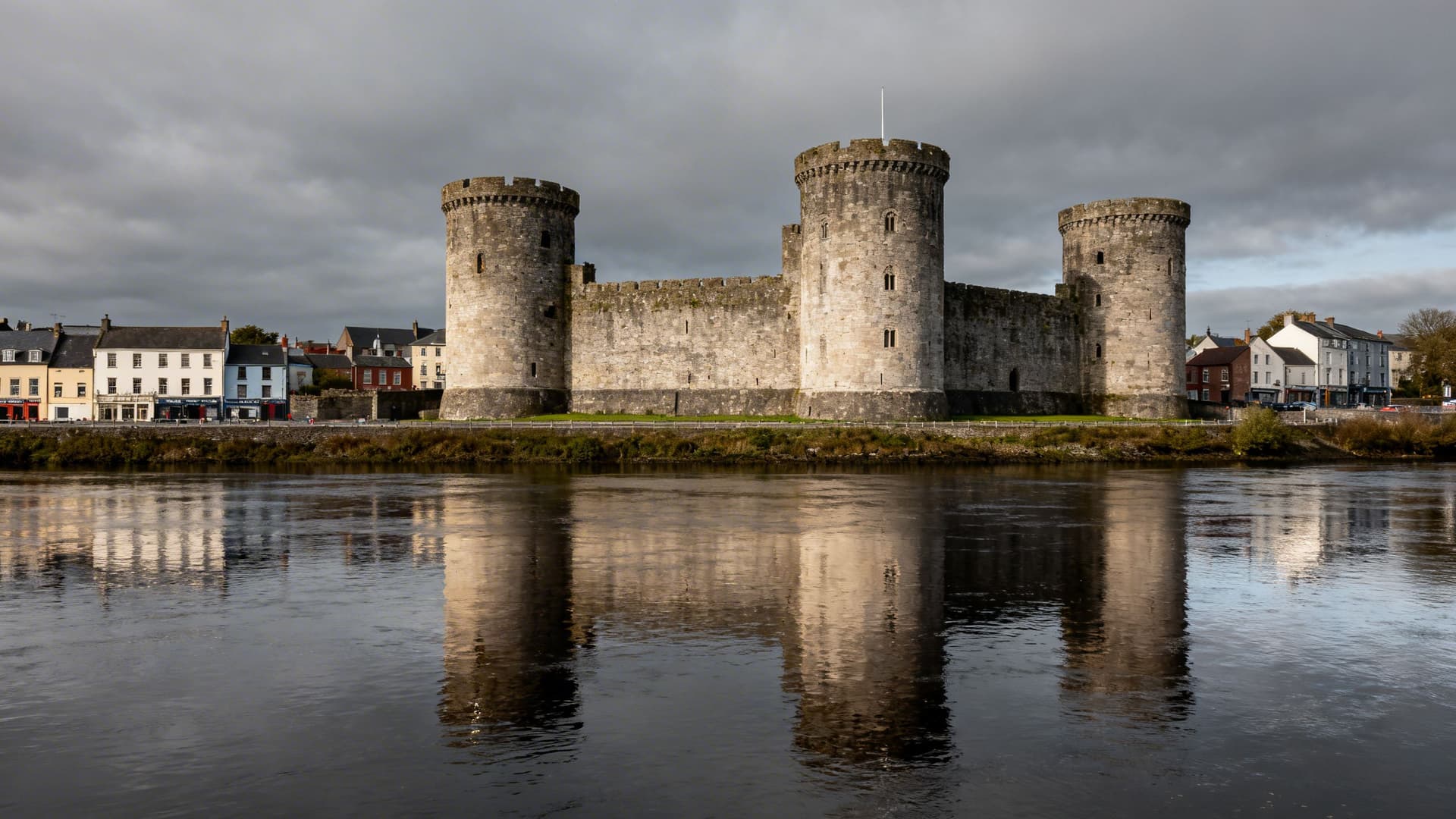
Athlone sits at the point where Lough Ree narrows into the River Shannon, and it has been fought over for as long as people have needed to cross between the west of Ireland and the east. The Vikings recognised the site in the ninth century. The Normans built a castle on the west bank in 1210. During the Williamite War in 1691, Athlone was the site of one of the most dramatic river crossings in Irish military history — Jacobite defenders on the castle side, Williamite forces attempting to ford the Shannon while under fire, the bridge destroyed, and a group of soldiers crossing on the debris.
The castle has been meticulously restored and now houses one of the best visitor experiences in the midlands. The interactive exhibitions cover the full span of Athlone's history from the Viking settlement through to the twentieth century, with particular depth on the 1691 siege. The castle's round towers look directly across the Shannon, and the view from the ramparts — over the river, the old town, and Lough Ree beyond — is one of those moments where the geography of Ireland's history suddenly becomes legible.
Meet a Local Guide

Hi, I'm Eóghan (pronounced Owen)
The town itself rewards walking. The left bank of the Shannon — the older, castle side — is dense with independent restaurants, craft shops, and traditional pubs. Sean's Bar, on the riverbank, claims to be the oldest pub in Ireland, with archaeological evidence of continuous use from the tenth century. The claim is disputed, as such claims always are. The pint is not.
Belvedere House and the Jealous Wall
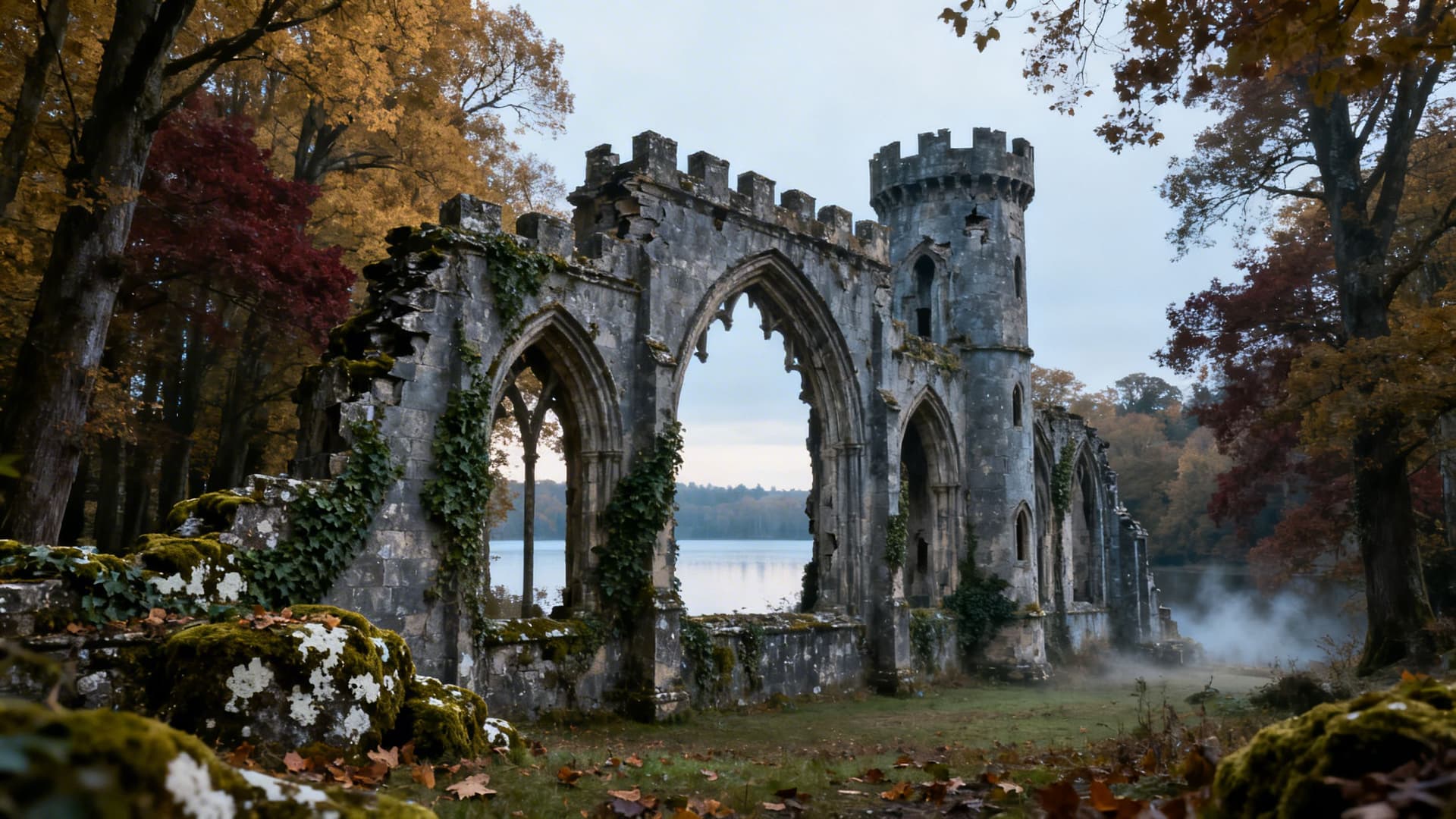
Belvedere House sits on the shore of Lough Ennell, seven kilometres south of Mullingar, and its setting is almost unfairly beautiful — a Georgian villa in terraced gardens sloping down to one of Westmeath's largest lakes. The house was built in 1740 for Robert Rochfort, the first Earl of Belvedere, who was a man of considerable wealth and remarkable cruelty. He imprisoned his wife for thirty-one years on suspicion of adultery, and built a large Gothic folly on the northern boundary of his estate specifically to block the view of his brother's house next door.
The folly is called the Jealous Wall. It is the largest artificial ruin in Ireland — a deliberately constructed fake ruin, designed to look as though it was already ancient when it was built. Standing in front of it, with the lake behind you and the Georgian house to one side, it is genuinely difficult to process: a wealthy man, in the age of the Enlightenment, building a monument to his own hatred of his brother. The garden has absorbed the wall into itself now, and it stands among the woodland as something closer to art than grudge.
The grounds cover 160 acres and include walled gardens, woodland trails, and a children's playground. The walled garden alone is worth the visit — productive, formal, and beautifully maintained in a way that speaks to the quality of the people who look after it. Entry to the house and gardens is ticketed; arrive early in summer.
Fore Abbey and the Seven Wonders of a Medieval Village
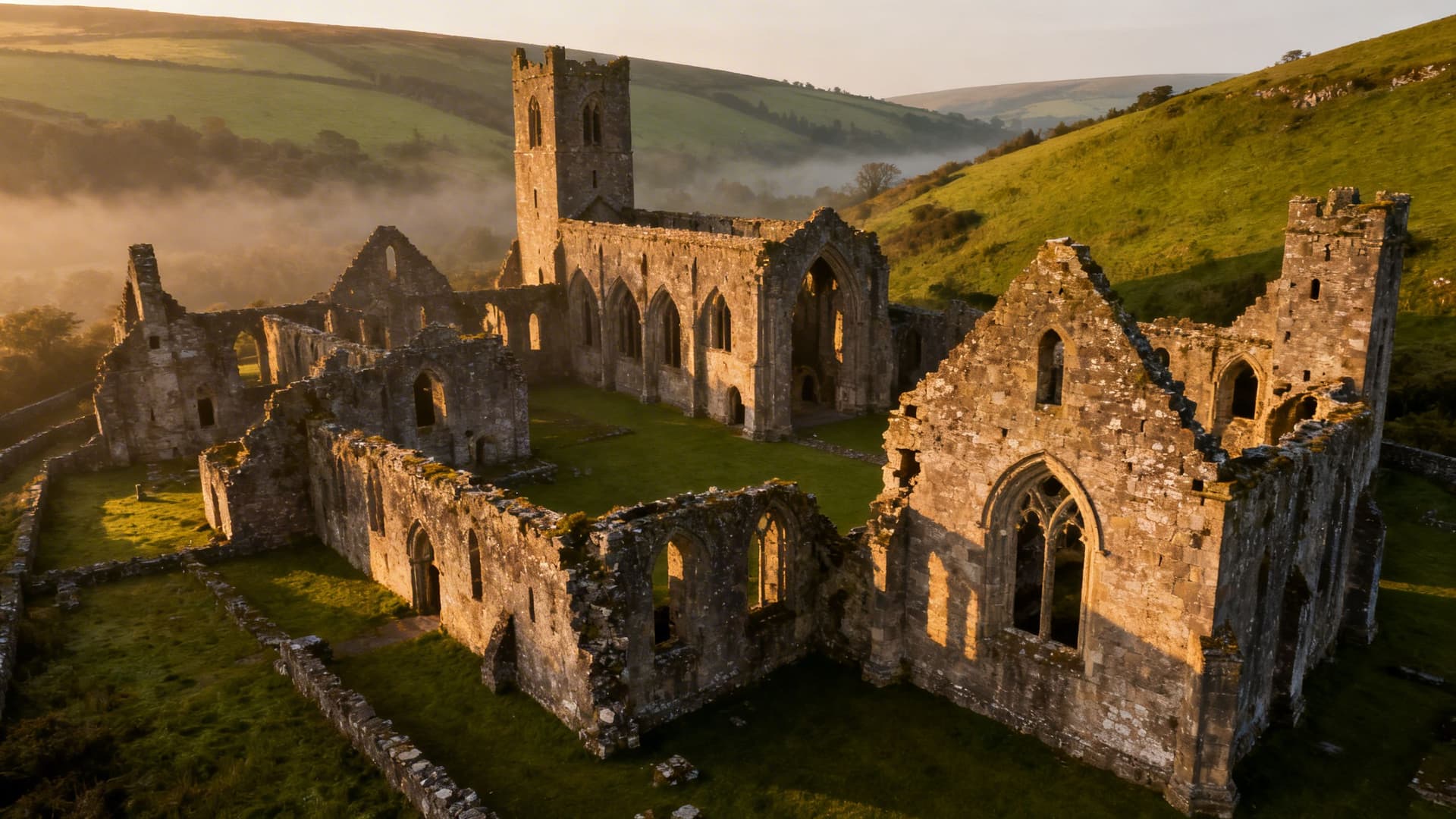
The village of Fore in the north of Westmeath sits in a hollow in the hills, and around it, documented over several centuries, are the Seven Wonders of Fore. They are not wonders in the modern, overused sense — they are a set of specific local phenomena, some geological, some historical, some simply old, that were categorised by medieval monks as evidence of miraculous occurrence. A mill without a race. Water that flows uphill. A monastery built on a quaking bog. Wood that will not burn.
The Benedictine abbey at the centre of the village was founded in the seventh century by St Fechín. What stands today is mostly thirteenth-century — a cluster of roofless stone buildings in remarkably complete condition, surrounded by a walled enclosure in a landscape that has been relatively unchanged for centuries. The key feature is the early church: a small, dark, low-ceilinged building with a massive flat lintel over the doorway, carved with a Greek cross, that has been there for over a thousand years.
Fore is not a major tourist site. There is a car park, a small café, and a few information boards. The abbey is open and accessible at all times. What it lacks in infrastructure it more than compensates for in atmosphere — particularly early morning or late afternoon, when the light comes low across the hills and the stone takes on colours that a photograph can't hold.
Locke's Distillery, Kilbeggan: The Oldest in the World

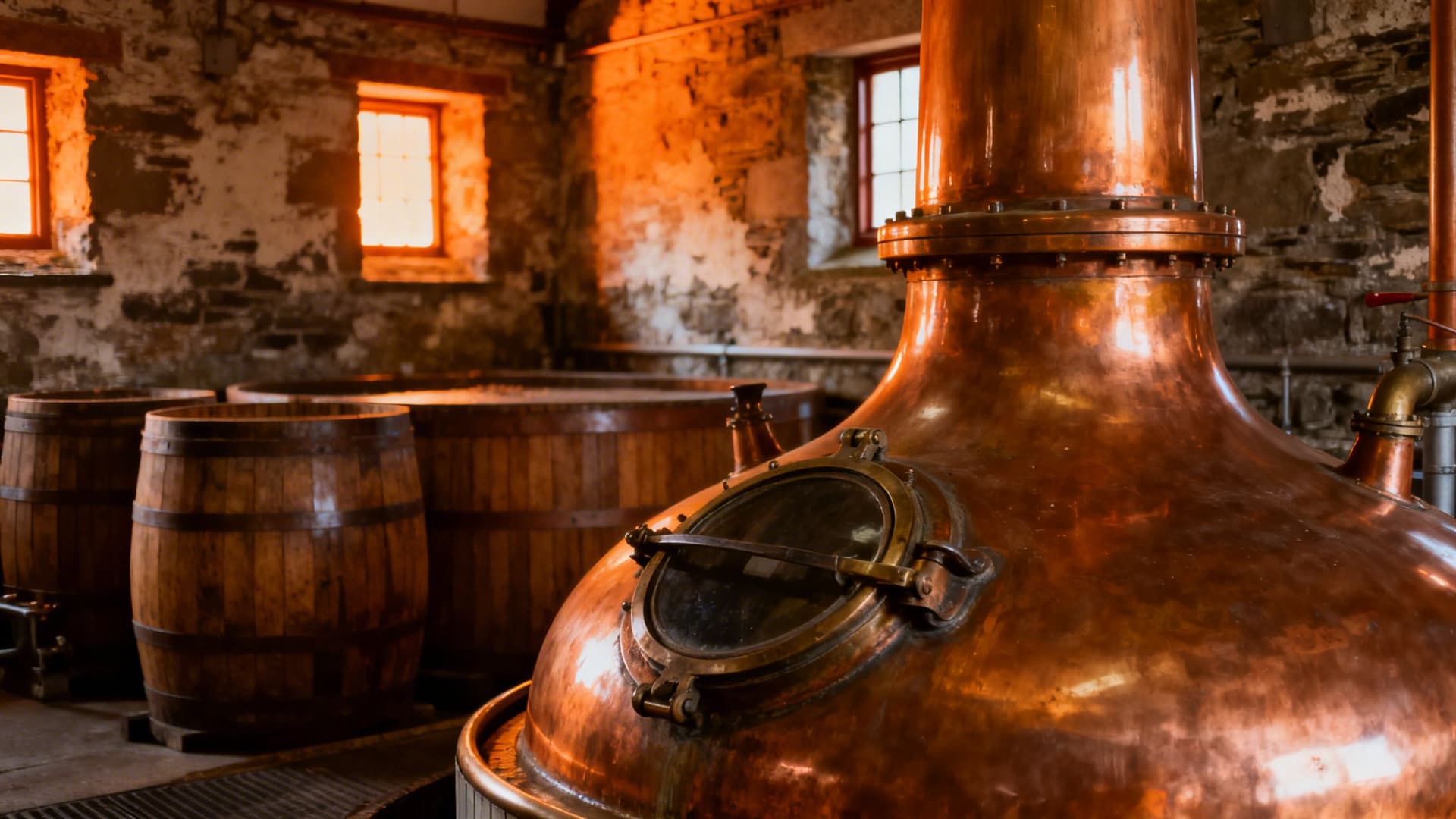
In 1757, a licence was granted for a distillery in the town of Kilbeggan, on the banks of the Brosna River. The licence is the oldest of its kind in the world for a pot still distillery. The building is still standing. The waterwheel that powered the original machinery still turns. On certain days, the pot still at the centre of the distillery is still operational.
Locke's is now both a working distillery and a museum, which is a combination that takes some getting right — most distilleries tip too far towards one or the other. Kilbeggan gets the balance. The tour takes you through the full history of the distillery, including the decades it lay idle through the twentieth century, its revival in 1987, and its current operation under the Cooley Distillery group. The original equipment — the pot still, the wooden fermentation vessels, the bonded warehouses — is presented in context rather than as exhibition pieces. This is a distillery that has been making whiskey longer than the United States has existed as a country, and the tour communicates that without making it feel like a history lecture.
The tasting at the end focuses on the Kilbeggan single malt, which is produced in small batches from the working pot still on site. It is worth taking the time to ask the staff which expression is currently available — the range changes and the best options are not always on the standard tasting menu.
The Lakelands: Lough Ennell, Lough Derravaragh, and the Shannon
Westmeath has more lakes per square kilometre than any other county in Ireland. They sit in the drumlin landscape like scattered mirrors — Lough Ennell, Lough Derravaragh, Lough Owel, Lough Lene — each with its own character, its own fishing reputation, its own myth. Lough Derravaragh, north of Mullingar, is where the Children of Lir are said to have spent three hundred years of their nine-hundred-year swan enchantment. The water there is cold and dark and the shoreline is wild in a way that makes the myth feel less like folklore and more like memory.
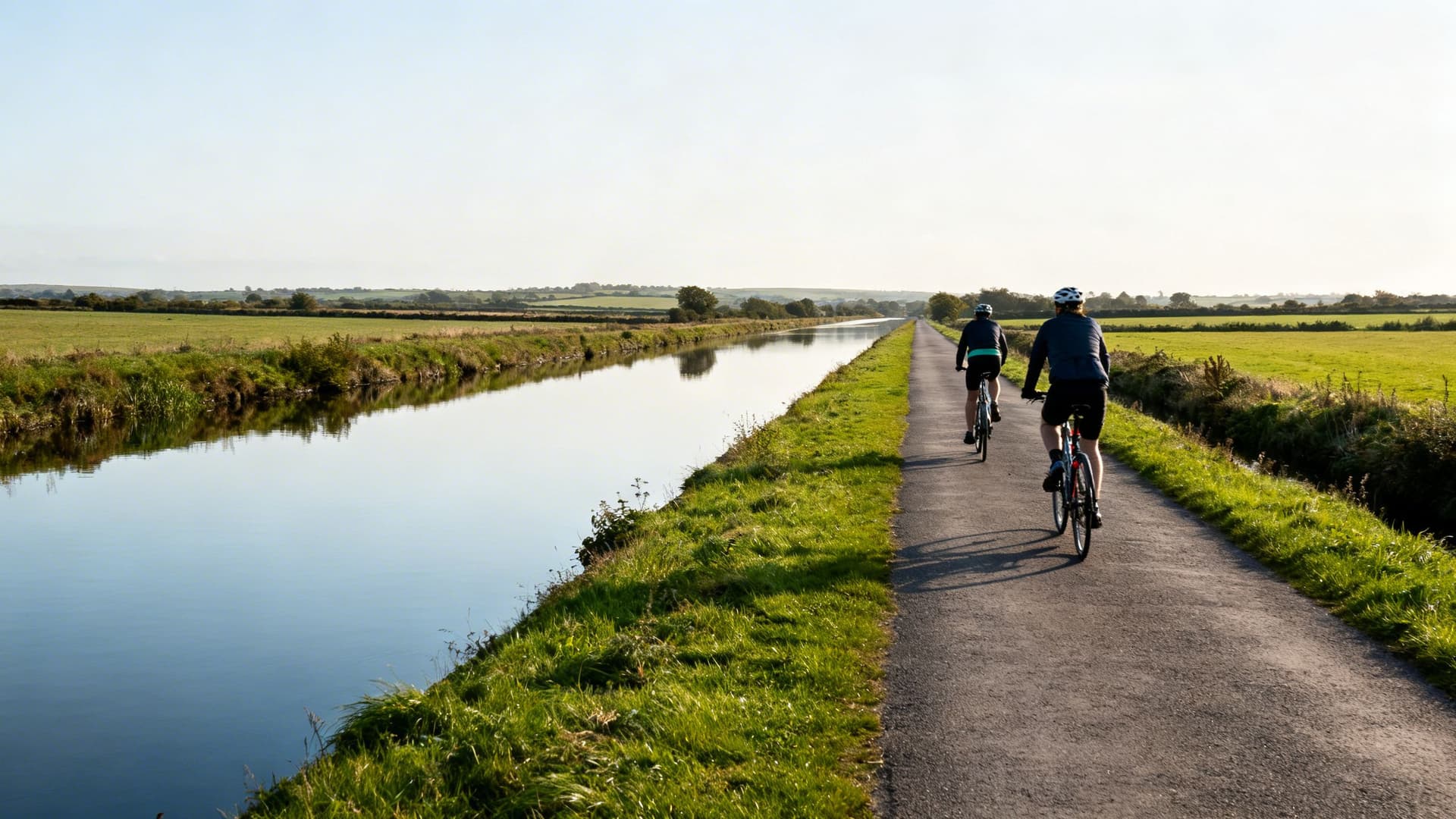
The Royal Canal Greenway enters Westmeath from Longford and runs through the county on a flat, well-surfaced towpath that follows the water for miles without distraction. The cycling here is quiet and flat, with the canal on one side and Westmeath farmland on the other, and the occasional village to stop in for food or a pint. The lakelands around Mullingar support significant populations of whooper swans in winter — the same birds that pass through the Shannon Callows in Longford continue north through Westmeath on their migration routes. In summer, the waters hold brown trout and pike, and the fly fishing on Lough Ennell in particular has a long and serious reputation.
Why You Need a Local Guide in Westmeath
The Hill of Uisneach runs guided tours in season, which is the only way to access it. But there is a version of Westmeath beyond the ticketed sites that a local guide makes legible in a way no itinerary can. They know which shore of Lough Derravaragh gives you the view of the hill where the swans gathered in the myth. They know the boreen behind Fore that leads to a second, smaller monastic site that most visitors never find. They know the publican at the oldest pub on the Shannon and the story behind it — not the version on the information board, but the longer, stranger, more accurate one.
A local guide for Ireland's Hidden Heartlands turns Westmeath from a list of stops into a county you actually understand — its lakes and its myths, its silence and its history, its habit of hiding the most extraordinary things in plain sight.

Frequently Asked Questions
Is Westmeath worth visiting?
Westmeath is one of the most underrated counties in Ireland. It holds the mythological centre of the island at Uisneach, the world's oldest licensed pot still distillery in Kilbeggan, a medieval village with seven documented wonders at Fore, and a Norman castle in a Viking town at Athlone. It lacks the dramatic coastal scenery of the west but compensates with depth — historical, geological, and mythological — that few Irish counties can match.
What is the Hill of Uisneach?
The Hill of Uisneach is an archaeological and mythological site in central County Westmeath, considered the symbolic centre of Ireland in ancient Irish cosmology. It is associated with the god Lugh and the Bealtaine fire festival. The site contains the Catstone, a large glacial erratic, as well as extensive archaeological remains. Access is by guided tour only, running from May to September.
How do I get to Westmeath?
Westmeath is approximately 90 kilometres west of Dublin via the M6 motorway, making it around an hour's drive. Athlone, the county's main town, has a rail connection from Dublin Heuston, with the journey taking approximately 75 minutes. Mullingar is also served by rail from Dublin Connolly. The Royal Canal Greenway provides a cycling route from Dublin for those making a multi-day trip of it.
What is Locke's Distillery?
Locke's Distillery in Kilbeggan, County Westmeath, holds the world's oldest licence for a pot still distillery, granted in 1757. The site operates as both a working distillery and a museum, with original equipment — including a functioning pot still and waterwheel — preserved and in use. Tours run daily and include a tasting of Kilbeggan single malt produced on site.
The County That Hides Its Best Things
Westmeath does not advertise itself. Its greatest sites sit in farmland without signs, its mythology is older than its recorded history, and its towns reward the kind of visitor who walks rather than drives. Start at Uisneach when the Bealtaine fire is lit, or in the quiet weeks before it when the hill is entirely yours. End at Athlone as the Shannon catches the last light. Let the county between explain itself.
For more of the midlands, explore the full Ireland's Hidden Heartlands: The Insider Guide to Ireland's Quietest Region, or cross the border north to things to do in Cavan — where the drumlins begin and the lakes multiply again. And when you're ready to go deeper into the landscape than any map will take you, find your local guide for Ireland's Hidden Heartlands — the person who knows what the county is keeping to itself.
Table of Contents
Share this post
More from the Blog

Cork to Blarney Castle Day Trip: The Stone, the Gardens and What Else to See
Plan a Cork to Blarney Castle day trip. Kiss the stone, explore the Poison Garden, and add Cork city, Fota or Kinsale for a full day out.

Cork to Cobh Day Trip: Titanic, Colourful Houses and Harbour History
Plan a Cork to Cobh day trip by train, car or private driver. Explore Titanic history, St Colman's Cathedral, Spike Island and the best harbour views.

Cork to Killarney Day Trip: Lakes, Mountains and Muckross in One Day
A Cork to Killarney day trip is a longer escape into Kerry. Here's how to plan the drive, what to see in Killarney National Park, and why a private driver helps.