
Fanad Head Lighthouse: The Most Photographed Light in Ireland
The telegram arrived at Fanad Post Office on a wet Tuesday in March 1909. Twelve words: "The Laurentia is ashore on the rocks. No survivors expected."
The SS Laurentia, a 3,000-ton steamer carrying coal from Glasgow to Limerick, had misjudged the entrance to Lough Swilly in heavy fog. She struck the rocks at Leenan Strand at 2:15 AM. By dawn, the wreck was a twisted silhouette in the grey light. Donegal had waited too long for a lighthouse at this point.
That wreck changed everything. Within a year, Irish Lights approved construction of Fanad Head Lighthouse. The tower went operational in 1917 — eight years after the Laurentia went down, but still in time to save the ships that came after.
This article is part of our complete guide to the lighthouses of Ireland — covering every major tower you can visit, from Hook Head to Mine Head and everything in between.

The Story Behind Fanad Head: A Shipwreck That Built a Light
For decades before the Laurentia disaster, locals had petitioned for a lighthouse at Fanad Head. The mouth of Lough Swilly was a notorious hazard — a narrow channel with hidden rocks and sudden fog banks that could drop visibility to zero in minutes. Ships coming from Scotland and the Clyde had to navigate this corridor blind.
The Laurentia was not the first ship lost here. She was just the one that finally made the authorities listen.
Construction began in 1914, delayed by the outbreak of World War I. The tower was built from local stone, quarried from the nearby cliffs. The keepers who first lit the lamp in 1917 were local men who knew the coast intimately — fishermen who had watched the Laurentia break apart from their own shore.

The Keepers of Fanad Head: Life at the Edge of Donegal

The keepers at Fanad Head lived a life of regulated isolation. Shifts ran four weeks on, two weeks off. During those four weeks, the keeper and his assistant were responsible for everything: the light, the machinery, the fog signal, the paperwork, the cleaning, the cooking.
The keeper's cottage at Fanad Head is one of the best-preserved in Ireland. Visitors can walk through the rooms exactly as they were left — the kitchen range, the brass fittings, the logbooks on the desk. One entry from January 1947 reads: "Wind force 11. Sea breaking over the wall. Unable to stand on the gallery. Light extinguished for 47 minutes — relit when the worst passed."
That logbook entry tells you more about Fanad Head than any photograph ever could.

What Makes Fanad Head Different from Other Irish Lighthouses
Fanad Head sits at the mouth of Lough Swilly, one of three sea loughs that cut deep into the north Donegal coast. The position is what makes the photograph work: the tower stands on a rocky headland with nothing but open Atlantic behind it, framed by the rugged coastline on either side.
The iconic shot: The most famous photograph of Fanad Head is taken from the beach at the base of the headland, looking up at the tower with the sea beyond. The golden hour — sunrise or an hour before sunset — turns the white tower warm against the blue water. On a clear day, you can see the outline of Inishowen Peninsula across the lough.
Architecture: Unlike Hook Head's medieval block, Fanad Head is a slender Victorian tower, painted white with a red lantern room. The light itself flashes white every 5 seconds, visible for 23 nautical miles. The tower is 22 metres tall with 94 steps to the lantern.
Rating: Fanad Head is consistently rated one of the most beautiful lighthouses in the world. It won the Irish Lighthouses competition in 2019 and regularly appears on global "most scenic lighthouse" lists. But it earns that reputation honestly — the setting is genuinely spectacular.

Visiting Fanad Head Lighthouse: What You Need to Know
Fanad Head Lighthouse is located on the Fanad Peninsula in north County Donegal, roughly 25 kilometres north-west of Letterkenny and about an hour from Derry.

Getting there: The drive from Letterkenny takes about 40 minutes via the R246. The road hugs the coastline for the final stretch — narrow in places but well-maintained. The lighthouse has dedicated parking. Do not attempt to park on the roadside; the road is single lane in sections and local farmers need access.
Visitor information: The lighthouse is open to the public from mid-March through October. Guided tours include access to the tower interior, keeper's quarters, engine room, and lantern room. Adults €7, children €4, family tickets available. The on-site café serves excellent seafood chowder and homemade bread.
What to see: The tour covers the full keeper experience. The keeper's cottage has been restored to its 1950s appearance — period furniture, kitchen range, and the original logbooks. The engine room shows the evolution from oil to electric. The lantern room gives you the same 360-degree view the keepers had.
When to visit: June through August offers the longest days and the best chance of clear conditions for photographs. But autumn has a different appeal — the heather on the peninsula turns purple, and the low light makes the tower glow.
Photo tip: The iconic shot is from the beach below the lighthouse, accessible by a short path from the car park. Arrive an hour before sunset for the best light. A polarising filter helps cut the glare off the white tower.

Highlights of the Fanad Peninsula
The Fanad Peninsula is one of Donegal's most underrated corners. Most tourists drive straight past to Malin Head. They should not.
Ballymastocker Beach: One of the most beautiful beaches in Ireland, consistently ranked among the world's best. Two kilometres of white sand facing Lough Swilly. The view from the beach back toward Fanad Head Lighthouse is worth the detour alone.
Portsalon: A charming village on the shores of Lough Swilly with a Blue Flag beach, a handful of pubs, and a golf course that hugs the coastline. The Pier Bar does excellent pub food and has a fire going in the colder months.
Glenveagh National Park: A 40-minute drive from Fanad Head, Glenveagh is a 16,000-hectare wilderness with a Victorian castle, formal gardens, and walking trails through the Derryveagh Mountains. The castle tour covers the story of John George Adair, who built the estate and evicted 244 tenants to do it.
The Atlantic Drive: A 14-kilometre scenic loop that starts and ends at the village of Kerrykeel. The road hugs the coastline with views across Mulroy Bay. Pull in at the viewpoints — the islands scattered across the bay are some of the most photographed in Donegal.

Why You Need a Local Guide for Donegal's Coast
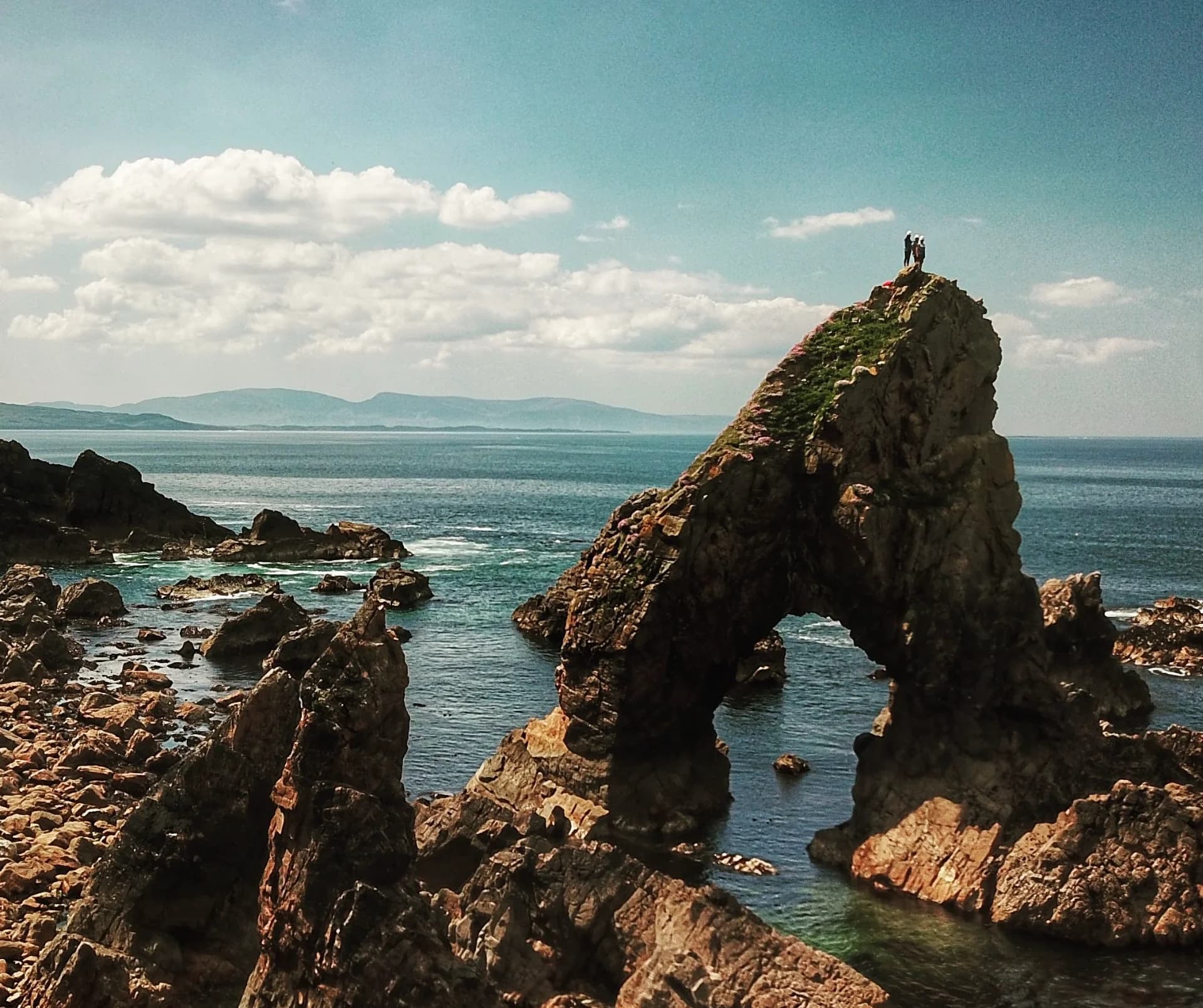
The north Donegal coast is beautiful and unforgiving. The roads are narrow, the weather changes in minutes, and the most spectacular viewpoints are unmarked.
A private driver-guide with Donegal experience knows which roads are passable after rain, which viewpoints are worth the stop and which are tourist traps, and where to find the letterbox drop-off that gives you a short walk to a hidden cove most visitors never see.
For the lighthouse itinerary specifically, a local guide gets you to Fanad Head, Malin Head, and the Inishowen Peninsula in a single well-planned day — with timing that puts you at each spot for the best light. You focus on the views. They focus on the roads.
Quick Reference: Fanad Head at a Glance
| Feature | Details |
|---|---|
| Built | 1914–1917 (operational May 1917) |
| Height | 22 metres (94 steps to lantern) |
| Location | Fanad Peninsula, County Donegal |
| Status | Operational (automated 1983) |
| Light range | 23 nautical miles, flash every 5 seconds |
| Visitor access | Mid-March to October, guided tours, café |
| Accommodation | Self-catering keeper's cottage available |
| Best time to visit | May–September; golden hour for the iconic photo |
Final Verdict: Is Fanad Head Worth the Trip?
Fanad Head is worth the drive. It is worth the ferry to Donegal. It is worth the winding roads and the sudden rain showers and the single-lane bridges.
The postcard photograph does not lie — this is one of the most beautiful lighthouse settings in the world. But what the photographs cannot show you is what makes Fanad Head real: a tower built from a tragedy, manned by men who lived through Atlantic storms, and still standing watch over a coast that has not forgiven the ships it has taken.
Hook Head Lighthouse has the history. Fanad Head has the view. See both if you can — they are different sides of the same Irish tradition.
Loop Head on the Clare coast and Valentia Island Lighthouse in Kerry are also worth a place on any lighthouse itinerary — more on those in separate guides.
Table of Contents
Share this post
More from the Blog

Cork to Blarney Castle Day Trip: The Stone, the Gardens and What Else to See
Plan a Cork to Blarney Castle day trip. Kiss the stone, explore the Poison Garden, and add Cork city, Fota or Kinsale for a full day out.

Cork to Cobh Day Trip: Titanic, Colourful Houses and Harbour History
Plan a Cork to Cobh day trip by train, car or private driver. Explore Titanic history, St Colman's Cathedral, Spike Island and the best harbour views.

Cork to Killarney Day Trip: Lakes, Mountains and Muckross in One Day
A Cork to Killarney day trip is a longer escape into Kerry. Here's how to plan the drive, what to see in Killarney National Park, and why a private driver helps.