
Spike Island vs Wicklow Gaol: Which Prison Tour Is Better for Your Ireland Trip?
Two of Ireland’s most memorable “dark history” experiences are not castles—they’re prisons. Spike Island (in Cork Harbour) and Wicklow Gaol (in Wicklow Town) both deliver that heavy, claustrophobic atmosphere people associate with haunted Ireland, but they do it in completely different ways.
If you’re visiting from the US, the real question isn’t just “which one is scarier?” It’s: which one fits your route, your energy level, and your tolerance for logistics?
This guide compares Spike Island vs Wicklow Gaol in plain English: what the tour feels like, how hard each is to reach, who each is best for, and how to plan the day so it doesn’t become a stressful sprint.
(This guide is part of our master hub Haunted Places in Ireland: The Ultimate Guide to Ghost Tours & Castles.)
(Read More: Night Tours in Ireland: Safety, Logistics & Why You Might Need a Driver)
1) Spike Island vs Wicklow Gaol (Quick Decision Guide)
If you only want the short answer, use this decision framework. It’s designed for real itineraries, not “which is cooler” debates.
- Pick Spike Island if you want the most cinematic prison experience (harbour crossing + fortress scale) and you’re already routing through Cork.
- Pick Wicklow Gaol if you want a high-impact prison tour close to Dublin that fits neatly into a Wicklow day trip.
- If you’re tight on time, Wicklow is easier. If you want the “wow” factor, Spike usually wins.
- If weather is rough, Wicklow is the safer bet because it’s less dependent on boat crossings and harbour conditions.
If you’re doing a 7–10 day Ireland trip, you don’t need both prisons. One is usually enough to scratch the “dark history” itch. The smarter move is to pick the one that fits your route and then use your saved time for a castle, a coastal drive, or a pub night in a genuinely atmospheric town.
2) What the Experience Feels Like (Island Fortress vs Town Gaol)
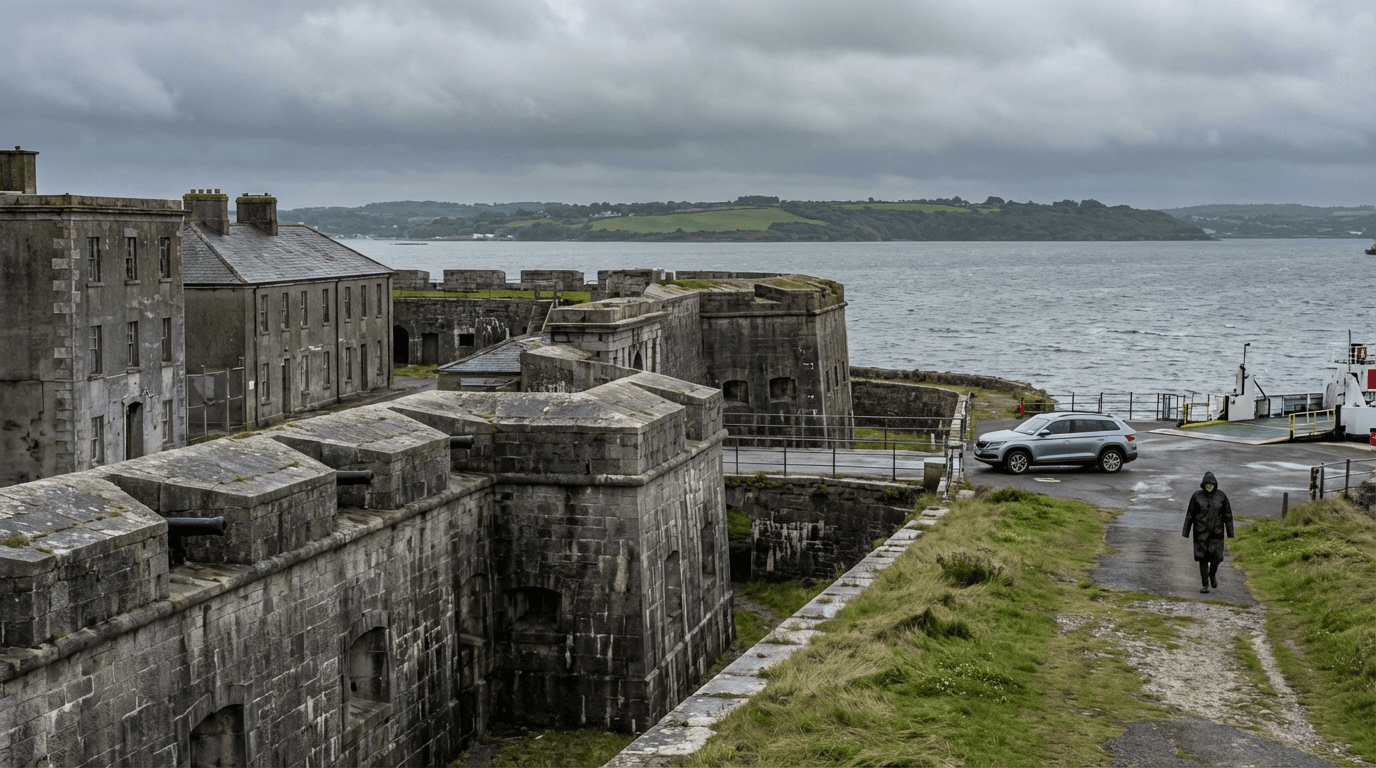
Spike Island feels like a story you enter. The crossing sets the tone: water, wind, and the sense that you are being taken somewhere you can’t easily leave. The scale is the headline—thick walls, big yards, huge angles. Even in daylight it can feel severe.
A big part of Spike’s atmosphere is that it’s “out there.” You’re surrounded by water and sky. If the weather turns (and in Ireland, it often does), the whole thing becomes more cinematic. That’s a positive when you’re prepared—and a negative if you’re trying to squeeze it into a tight day.
Wicklow Gaol is the opposite kind of intensity: small, immediate, and personal. You walk in from a normal street and suddenly you’re inside narrow corridors and cramped cells. That abrupt contrast is what makes Wicklow hit hard.
Wicklow’s strength is focus. You don’t need a crossing, a long approach, or a big travel day. You can walk in, get the full “prison mood,” and then move on to something lighter—like a scenic Wicklow viewpoint or an early dinner back toward Dublin.
In terms of “haunted” feeling, both deliver mood even if you’re not a paranormal person. The atmosphere comes from architecture: cold stone, echoing steps, low light, and stories that are hard to shake once you’ve heard them.
3) Logistics: How Hard Is Each One to Visit?
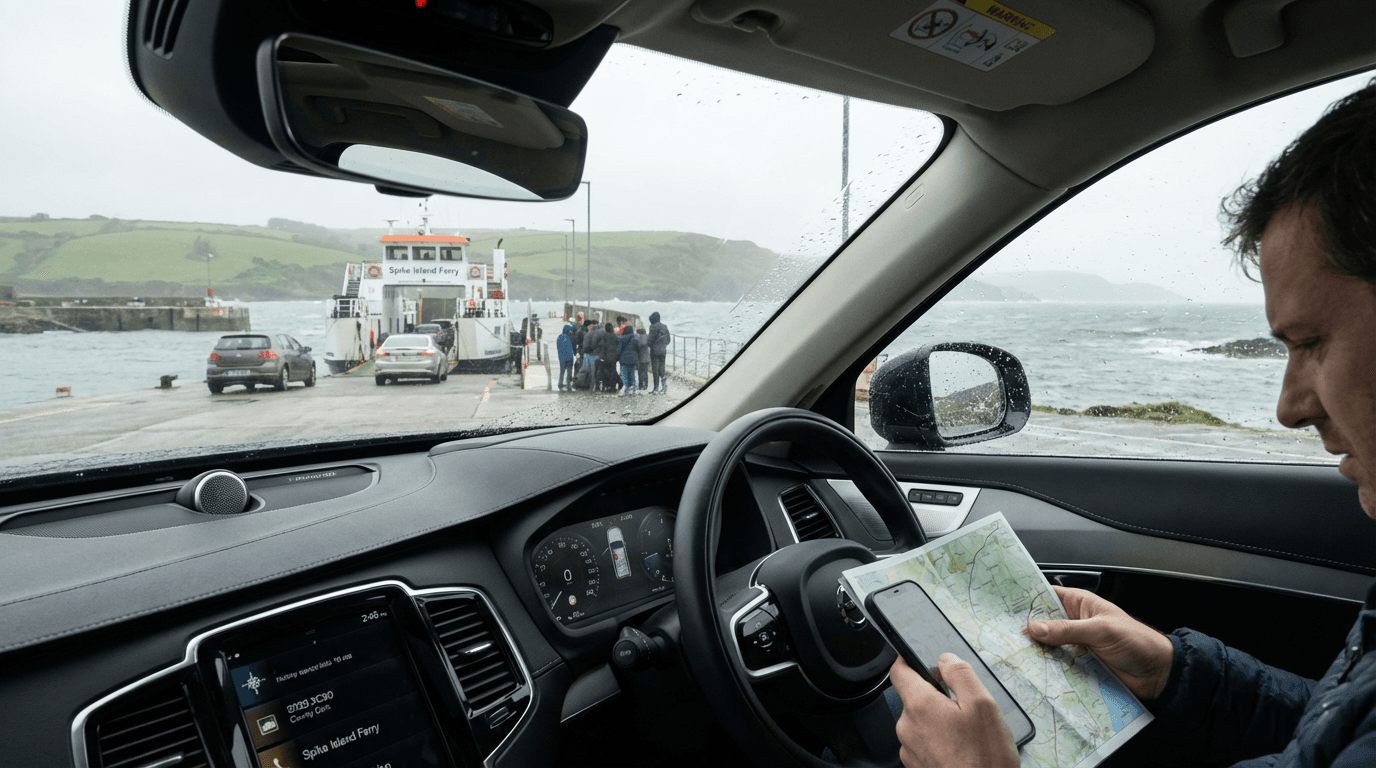
For US visitors, logistics often decides the winner—because a great experience can be ruined by a rushed schedule or a miserable drive.
Spike Island is a bigger commitment. You need to get to Cork Harbour, align your day with a scheduled crossing, and build buffer time in case the weather shifts. If your day is already packed, Spike can feel like it takes over your itinerary.
Spike also has an “all-in” feeling: once you commit to the crossing, you’re committing to the experience. That’s perfect when you want a deep dive. It’s not perfect when you’re trying to do it between two other stops.
Wicklow Gaol is more “drop-in friendly.” It sits neatly on popular Dublin routes and pairs well with Wicklow scenery. It’s easier to do in a half-day, which matters if you’re trying to keep your Ireland trip relaxed rather than optimized to death.
The practical rule: decide your transport first. If you’re self-driving, assume slower rural roads than Google Maps suggests. If you’re hiring a private driver, you can treat timing as flexible and keep your day in “vacation mode.”
A simple planning template (works for both)
- Decide your “anchor” first (Spike *or* Wicklow).
- Add only one other major stop that day (not three).
- Build 60–90 minutes of buffer time around the experience.
- If you’ll finish late, plan the return drive before the tour starts (or hire a driver).
4) Who Each One Is Best For (Families, History Buffs, Paranormal Fans)
People want different things from haunted Ireland. Some want folklore. Some want history. Some want atmosphere. Here’s the clean breakdown:
- Families / mixed-age groups: Wicklow is often easier and less tiring (especially if you’re also doing Glendalough or a Wicklow drive).
- History buffs: Spike tends to win on scale and setting; it feels like a “big chapter” in the story of Irish incarceration.
- Paranormal fans: both can feel eerie. Choose based on route and timing, not a promise of ghosts.
If your itinerary already includes multiple castles and ruins, a prison tour is a great change of texture. It deepens the haunted theme without feeling like you’re repeating the same type of location.
Best fit by itinerary style
If you’re staying in Dublin and doing day trips: Wicklow Gaol is the easy win. If you’re doing a south/west loop (Cork, Kerry, Galway): Spike Island can become one of the most memorable “non-castle” days of the trip.
5) The Smart Itinerary Pairings (So the Day Feels Easy)
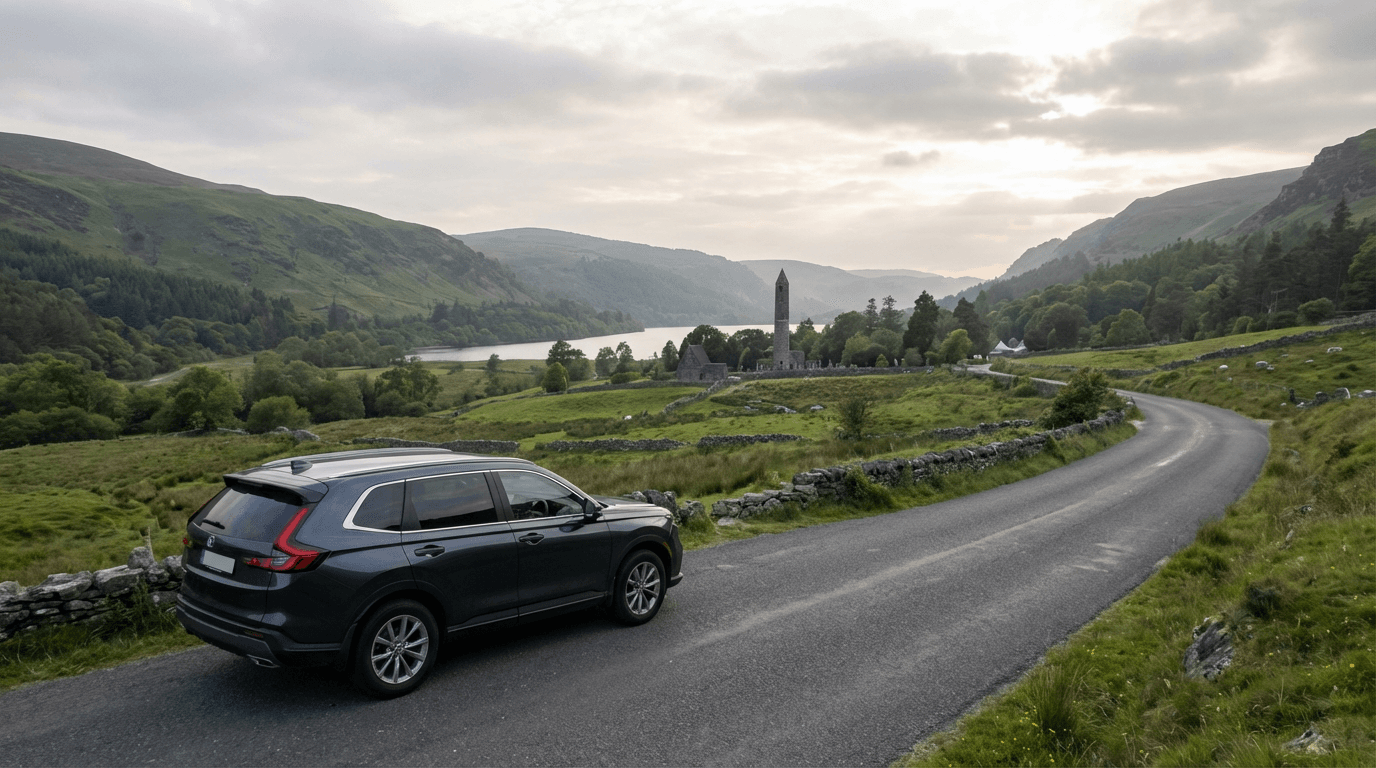
The biggest mistake is treating these as throwaway add-ons after a long drive. They work best when the day has breathing room.
If you choose Wicklow Gaol, build a Wicklow day that has one “anchor” and one scenic stop. That might mean a simple loop: gaol + Glendalough + a relaxed drive back toward Dublin with an early dinner.
If you choose Spike Island, keep the rest of the day light. The crossing and the fortress experience are the main event; avoid stacking a long evening drive after it unless you already have a plan.
A good rule for haunted travel: balance heavy and light. Do your prison/castle in the first half of the day, then shift into something comforting—food, a pub, a coastal walk—so the trip feels varied and human.
If you’re building a haunted week, combine one prison tour with one castle stop like Charleville Castle (Offaly) — a rural gothic haunted stop. Then balance it with an overnight in one of our Haunted Castle Hotels — avoid late-night driving entirely. And if you want the easiest haunted night, keep it in the city with Dublin haunted tours.
6) Driving vs Driver: Where People Get Stressed (And How to Avoid It)
This is where US visitors get caught: the day looks simple on a map, but the driving experience is different than home. Roads can be narrower, signage can be subtle, and weather can reduce visibility fast. Add jet lag and a packed itinerary, and you have the ingredients for a stressful day.

Wicklow is easier because you’re closer to Dublin routes and the day can stay compact. Spike can feel harder because it often lives inside a longer driving day in the south, plus the time pressure of a scheduled crossing.
If you want your haunted Ireland trip to feel premium rather than effortful, a private driver guide is the cleanest upgrade. They handle timing, parking, and the “last mile” decisions that drain energy—and your group gets to stay present in the experience.
7) The “Good Day” Playbook (So It Doesn’t Feel Rushed)
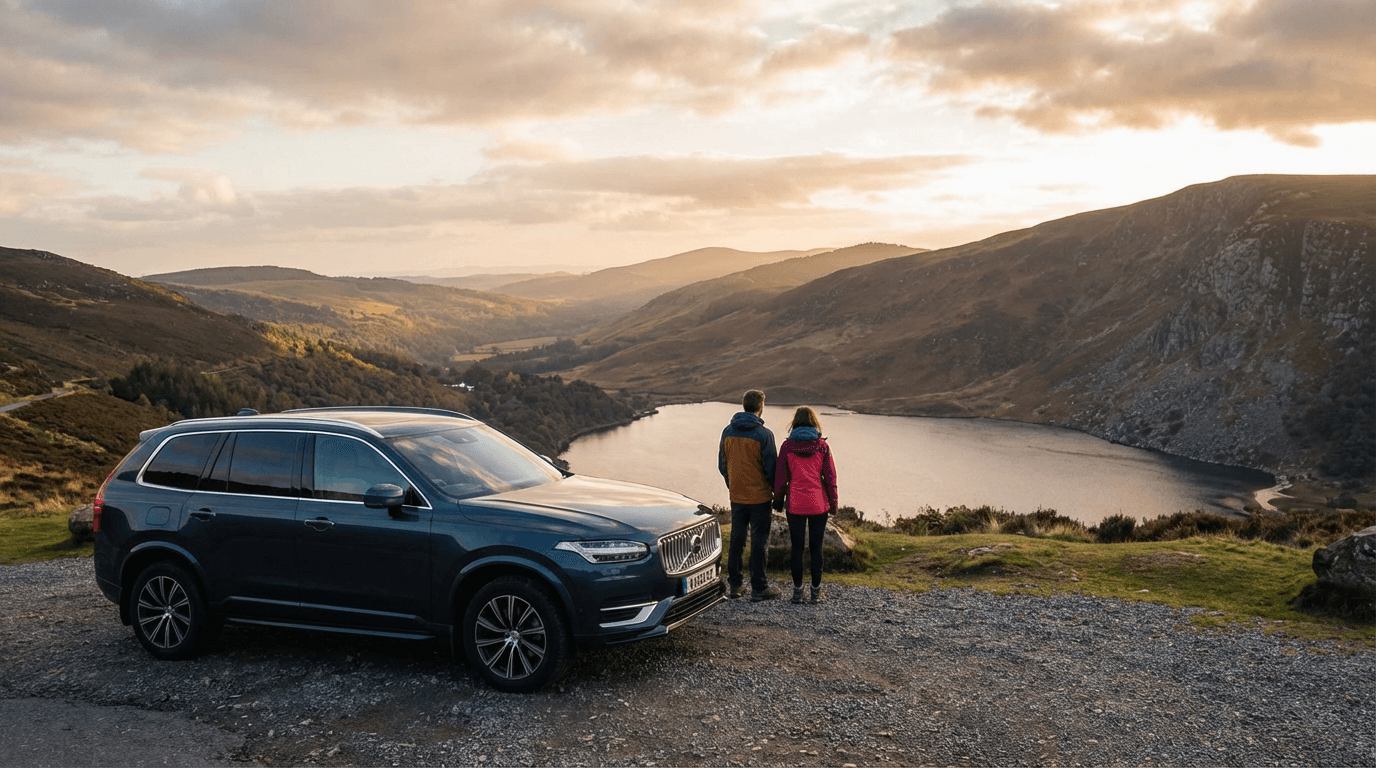
If you want this to feel like a premium day (and not a checklist), build the experience around one emotional high point. With prisons, that high point is the guided tour itself—when the story and the architecture lock together. Everything else should support that moment, not compete with it.
For Wicklow Gaol, the best day is compact: a relaxed breakfast in Dublin, a calm drive into Wicklow, the tour, then one scenic stop (Glendalough or a viewpoint) and back before you’re exhausted. The day should end with dinner, not a long stressful drive in fading light.
For Spike Island, the best day respects the crossing schedule. Arrive early, keep the morning light, and treat the island as the main event. If you’re trying to squeeze in “one more thing” after, it usually backfires—especially if weather changes.
If you are self-driving, don’t underestimate how much faster fatigue builds on Irish roads. If you’re using a driver, you can keep the day flexible and spontaneous—which is how Ireland is meant to feel.
- Do: plan one anchor + one light extra. Don’t: stack three major stops.
- Do: build buffer time. Don’t: aim for “minute-perfect” timing.
- Do: choose your return plan before the tour. Don’t: decide when you’re tired and hungry.
8) Quick FAQ (Common Questions from US Travelers)
Do you need to book in advance? If you’re traveling in peak season, yes—especially if you’re building a day around a specific time window.
Is it appropriate for kids? Many families do prison tours successfully, but it depends on your kids and how they handle dark themes. Wicklow is often easier as a first prison experience because it’s shorter and simpler logistically.
Which one is “scarier”? Atmosphere is personal. Spike feels dramatic and isolated; Wicklow feels tight and immediate. Choose based on your route and the kind of mood you want.
If you want the folklore side of haunted Ireland (not just history), also read: Oweynagat Cave (Ireland’s “Gate to Hell”).
Table of Contents
Share this post
More from the Blog

Cork to Blarney Castle Day Trip: The Stone, the Gardens and What Else to See
Plan a Cork to Blarney Castle day trip. Kiss the stone, explore the Poison Garden, and add Cork city, Fota or Kinsale for a full day out.

Cork to Cobh Day Trip: Titanic, Colourful Houses and Harbour History
Plan a Cork to Cobh day trip by train, car or private driver. Explore Titanic history, St Colman's Cathedral, Spike Island and the best harbour views.

Cork to Killarney Day Trip: Lakes, Mountains and Muckross in One Day
A Cork to Killarney day trip is a longer escape into Kerry. Here's how to plan the drive, what to see in Killarney National Park, and why a private driver helps.