
Ghost Tours in Ireland at Night: Safety, Logistics & Why You Need a Driver
For many visitors, the “real” haunted Ireland doesn’t begin in a museum gift shop. It begins at night—when the coach buses are gone, the rain turns the road black, and you step out of a castle courtyard into silence.
That is the moment most people don’t plan for.
They spend weeks researching the scary part—Leap Castle, the Hellfire Club, the ghost bus tours in Dublin. But they leave the unglamorous part to chance: how do we get back safely when the tour ends at 10:30 PM and we’re an hour from the hotel on roads we’ve never driven before?
There is a romantic myth that Ireland is a gentle place to drive at night. The reality is simpler: rural Ireland has very few streetlights—and the most haunted places in the country are not in the city center.
This guide is the logistics blueprint—how to do night tours properly, what traps catch first-time visitors, and why hiring a professional driver isn’t a luxury add-on, but often the difference between a brilliant evening and a stressful one.
(This guide is part of our master hub Haunted Places in Ireland: The Ultimate Guide to Ghost Tours & Castles.)
(Read More: The 5 Best Haunted Tours in Dublin: A Local’s Guide to the Macabre)
1) The “No Streetlights” Problem (What Visitors Don’t Expect)
On a map, Ireland looks small. In daylight, it feels manageable. At night, the country changes. The roads that felt charming at 2:00 PM can feel unforgiving at 11:00 PM—especially after a tour when you’re tired, wired, and trying to get everyone back to the hotel.
Many rural routes have long stretches with minimal lighting. Add rain on the windscreen, glare from oncoming headlights, and a narrow lane edged by hedgerows or stone walls, and the stress level spikes. It’s not “dangerous” in a dramatic sense—it’s dangerous in the boring, realistic way: fatigue, hesitation, wrong turns, and poor visibility.
If you’re visiting from the US, there’s another layer: driving on the left. Most people can manage it in daylight. At night—on unfamiliar roads, with tired passengers and poor visibility—it becomes harder to stay relaxed.
The point is simple: a haunted tour is supposed to raise your heart rate for the story, not for the drive home.
"We loved the tour, but the drive back was the worst part of the whole night. The roads were pitch-black and we were exhausted. Next time, we’d absolutely book a driver." — Michelle, 52 (Chicago)

2) The “Designated Driver” Trap (It Breaks the Mood)
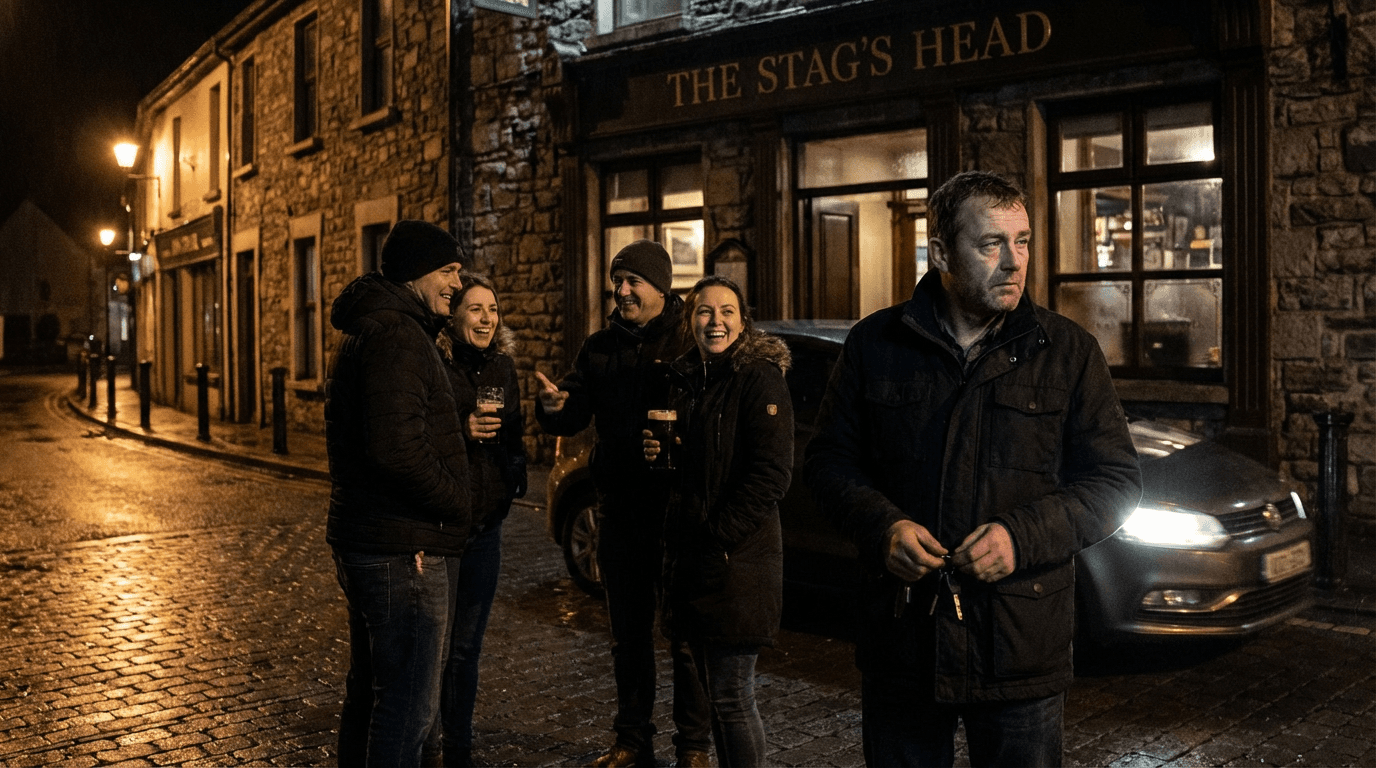
A haunted tour works because you let yourself sink into the atmosphere. You stop analysing every detail and you let the story do its job. But when one person in the group is quietly thinking, “I can’t drink,” “I need to be sharp,” “I have to drive back,” the spell breaks.
In Ireland, many of the best haunted experiences pair naturally with a pub stop, a late dinner, or a castle bar. A designated driver doesn’t just miss a drink—they miss the feeling that the night is unfolding naturally.
It also changes the group dynamic. The driver becomes the timekeeper: “We should go.” “We can’t stay.” “We have a long drive.” That pressure is the opposite of what you want on a night tour.
3) Night Tour Logistics by Scenario (What Changes, and What Doesn’t)
If you remember one planning principle, remember this: the scarier the location, the more ordinary your logistics need to be. Haunted Ireland is most enjoyable when you remove friction.
Scenario A: Dublin night tours (easy mode)
In Dublin, you have options: walk back, grab a taxi, or simply choose a hotel within a short radius of your tour’s meeting point. The stakes are low because you’re never far from light, people, and backup plans.
The main risk here is not safety—it’s pacing. Don’t cram two tours into one night. One excellent tour plus a relaxed pint afterwards will feel far more “Irish” than a frantic schedule.
Scenario B: Rural castles and ruins (where the risk actually is)
Outside the city, the challenge is rarely the attraction itself. It’s the in-between: narrow boreens, limited lighting, confusing turn-offs, and the reality that you may be driving back tired, in rain, after a long day.
This is the classic Leap Castle situation: the story is incredible, the setting is rural, and the experience is better when nobody in your group is mentally “on duty” calculating the return drive.
Read More: Visiting Leap Castle: The Most Haunted Castle in Ireland
Scenario C: The west coast at night (beautiful, but unforgiving)
The west is dramatic and atmospheric, but it is not a place to “wing it” after dark. Weather shifts quickly. Roads can be narrow. And distances that feel short on a map can feel long when you’re unfamiliar and visibility is poor.
If your plan includes a late finish on the west coast, build your night around a single, nearby destination rather than trying to “squeeze in one more stop.”
4) The Parking Problem (Drop-and-Go Changes Everything)
In daylight, parking is an annoyance. At night, it becomes a stress multiplier—poor lighting, unclear entrances, wet ground, long walks back to the car. Some locations have tiny car parks that fill quickly; others have awkward access that isn’t obvious to visitors.
A private driver guide flips the experience. They drop you at the entrance, confirm the meeting point, and handle the car. When you come out, you step into a warm vehicle and the night continues smoothly.
This matters in Dublin. It matters ten times more outside Dublin—where “just park nearby” can turn into a cold, confusing search down an unlit lane.
5) The Weather + Fatigue Combo (The Real Risk Factor)
Ireland’s weather is part of the charm—until you’re tired, it’s raining sideways, and you’re trying to follow a sat-nav down a lane that feels one car-width wide. The most common “bad outcomes” aren’t dramatic accidents; they’re small, miserable things: wrong turns, arguments, motion-sick passengers, scratched rentals, and a stressed driver who can’t enjoy the trip.
A haunted night also comes with a natural adrenaline spike. People talk more, laugh more, jump more. That’s fun—but it’s not the best state to be in when you need to concentrate on unfamiliar roads.
If you’d rather avoid late-night driving entirely, one of the smartest strategies is to stay somewhere atmospheric near your experience. Read More: Sleep with a Ghost: Top 7 Haunted Castle Hotels in Ireland.
6) What a Private Driver Actually Solves (Beyond “Just Driving”)
On paper, the value of a driver looks like transportation. In practice, it’s decision-fatigue removal. On a haunted night, the last thing you want is to manage a chain of small decisions: where to park, where to turn, where to meet, how to get back, what to do if the tour runs late.
A good driver guide handles the invisible parts: they know which roads feel tight in the dark, where the safe drop-off points are, and how to keep your evening smooth. And when your group’s energy shifts—someone is tired, someone is hungry, someone is cold—they can adapt without the night feeling “derailed.”
Most importantly: your group stays in the experience. Nobody is scanning the clock. Nobody is silently stressed. Everyone gets to be a traveler.
7) Best Practice Plan (Do This, Not That)
If you want haunted Ireland to be memorable for the right reasons, here is the simple playbook:
- Plan your return first (who is driving, how far, and in what conditions).
- Keep the day realistic—don’t stack a long drive + a late tour + an early start.
- Assume weather will change and build in buffer time.
- If the tour ends late, have transport arranged rather than hoping a taxi appears.
- Choose a clear pickup point before you go inside (so nobody is wandering around afterwards looking for the car).
- If you’re visiting from the US and not used to left-side driving, be honest about your comfort level at night.
The Ultimate Shortcut: Hire a Private Driver Guide
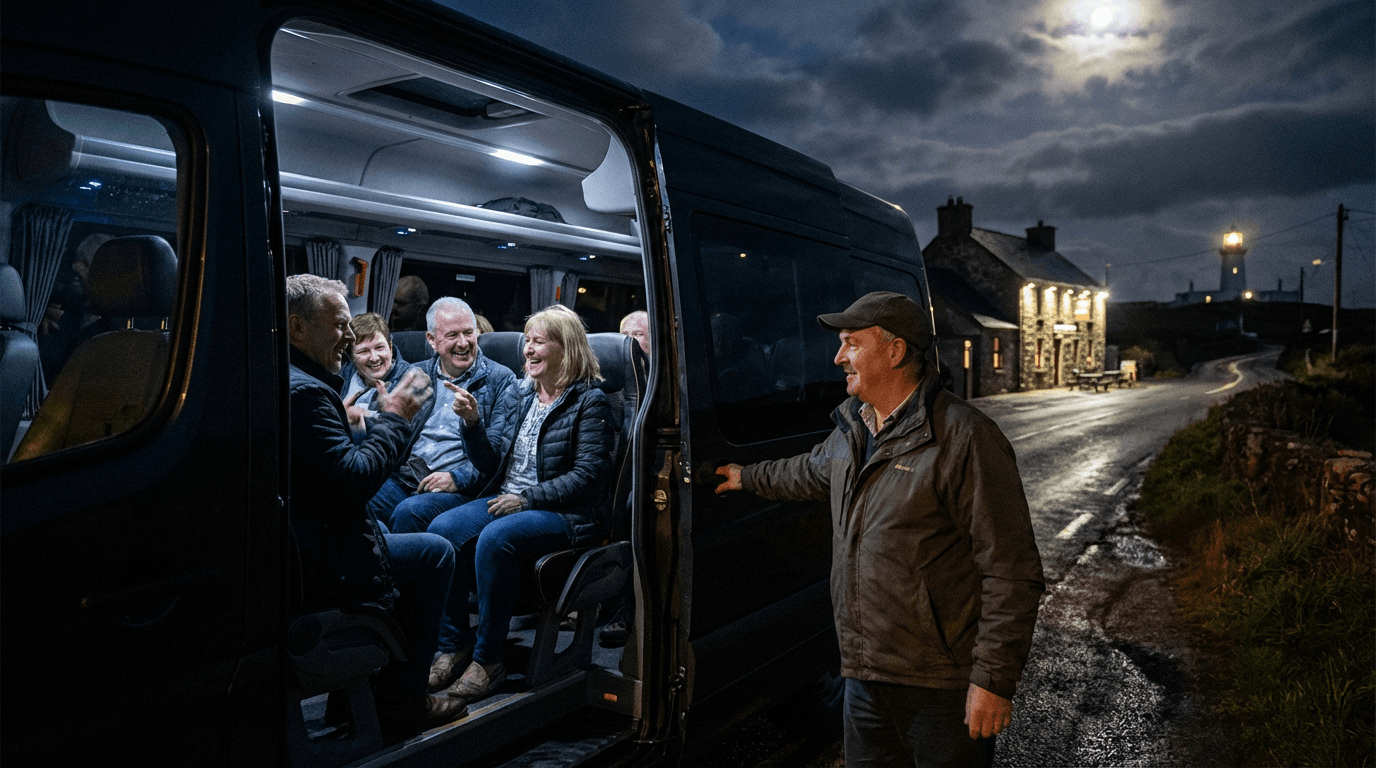
Hiring a private driver for night tours isn’t about luxury. It’s about removing the single biggest friction point from the whole experience: getting there and getting back safely, calmly, and on your own schedule.
It also turns the night into what it should be: nobody is “on duty,” nobody is counting minutes, and the story gets to linger instead of being replaced by stress.
Table of Contents
Share this post
More from the Blog

Cork to Blarney Castle Day Trip: The Stone, the Gardens and What Else to See
Plan a Cork to Blarney Castle day trip. Kiss the stone, explore the Poison Garden, and add Cork city, Fota or Kinsale for a full day out.

Cork to Cobh Day Trip: Titanic, Colourful Houses and Harbour History
Plan a Cork to Cobh day trip by train, car or private driver. Explore Titanic history, St Colman's Cathedral, Spike Island and the best harbour views.

Cork to Killarney Day Trip: Lakes, Mountains and Muckross in One Day
A Cork to Killarney day trip is a longer escape into Kerry. Here's how to plan the drive, what to see in Killarney National Park, and why a private driver helps.