
Wild Camping in Ireland: Best Locations, Laws & Essential Tips
There's something primal about pitching your tent beneath a star-studded Irish sky, the only sounds being the wind whispering through heather and the distant crash of Atlantic waves. Wild camping in Ireland offers an intimacy with the landscape that no hotel or B&B can match—waking to misty mountain sunrises, falling asleep to the call of curlews, and experiencing the raw, untamed beauty of the Emerald Isle on your own terms.
But wild camping in Ireland comes with responsibilities. The laws are nuanced, the landscapes fragile, and the weather unpredictable. This comprehensive guide will show you where to camp, how to do it legally and responsibly, what gear you need, and how to leave no trace while creating memories that will last a lifetime.
(This guide is part of our master hub: Unleash Your Wild Side: The Complete Guide to Adventure & Outdoor Activities in Ireland. For other outdoor adventures, check out our guides to surfing in Ireland, sea kayaking in Ireland, or explore our guide to hiking the Wicklow Way.)
Understanding Wild Camping Laws in Ireland
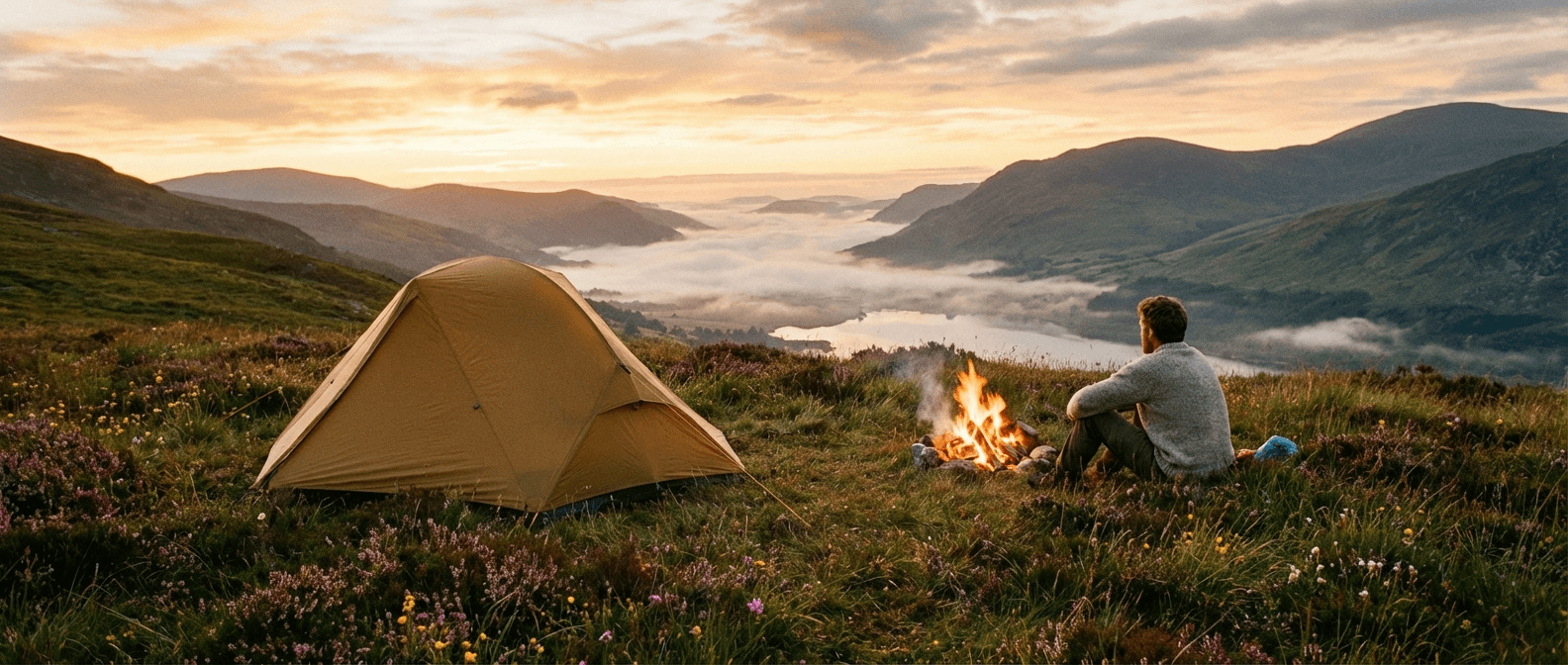
Before you unroll your sleeping bag, it's essential to understand the legal landscape. Unlike Scotland, where wild camping is generally permitted under the Land Reform Act, Ireland's laws are more complex and vary depending on who owns the land.
The Legal Framework
Public Land: Camping on public land, such as national parks and nature reserves, is generally prohibited without explicit permission. The Office of Public Works (OPW) manages most state-owned lands, and camping is only allowed in designated campsites within these areas.
Private Land: Technically, wild camping on private land without the landowner's permission constitutes trespass. However, in practice, if you camp discreetly, leave no trace, and move on early, most landowners will turn a blind eye—especially in remote mountain areas.
The Unwritten Code: The Irish wild camping community operates on a principle of respect and discretion. Camp high, camp hidden, and leave early. If you're not seen and leave no evidence you were there, you're unlikely to encounter problems.
Where You CAN Camp
- Remote mountain areas: The higher reaches of the Wicklow Mountains, MacGillycuddy's Reeks, and the Donegal Highlands
- Coastal areas below the high-water mark: The foreshore is generally public land, though be aware of tides and nesting birds
- Designated wild camping spots: An increasing number of areas now permit wild camping with certain conditions
Where You CANNOT Camp
- National Parks: Officially prohibited except in designated campsites
- Nature Reserves: Protected areas with strict access rules
- Private farmland: Always seek permission from the landowner
- Archaeological sites: Protecting Ireland's heritage is paramount
Important: The Leave No Trace principles apply everywhere. Even where wild camping is tolerated, poor behavior by a few can lead to access being restricted for everyone.
Best Wild Camping Locations in Ireland
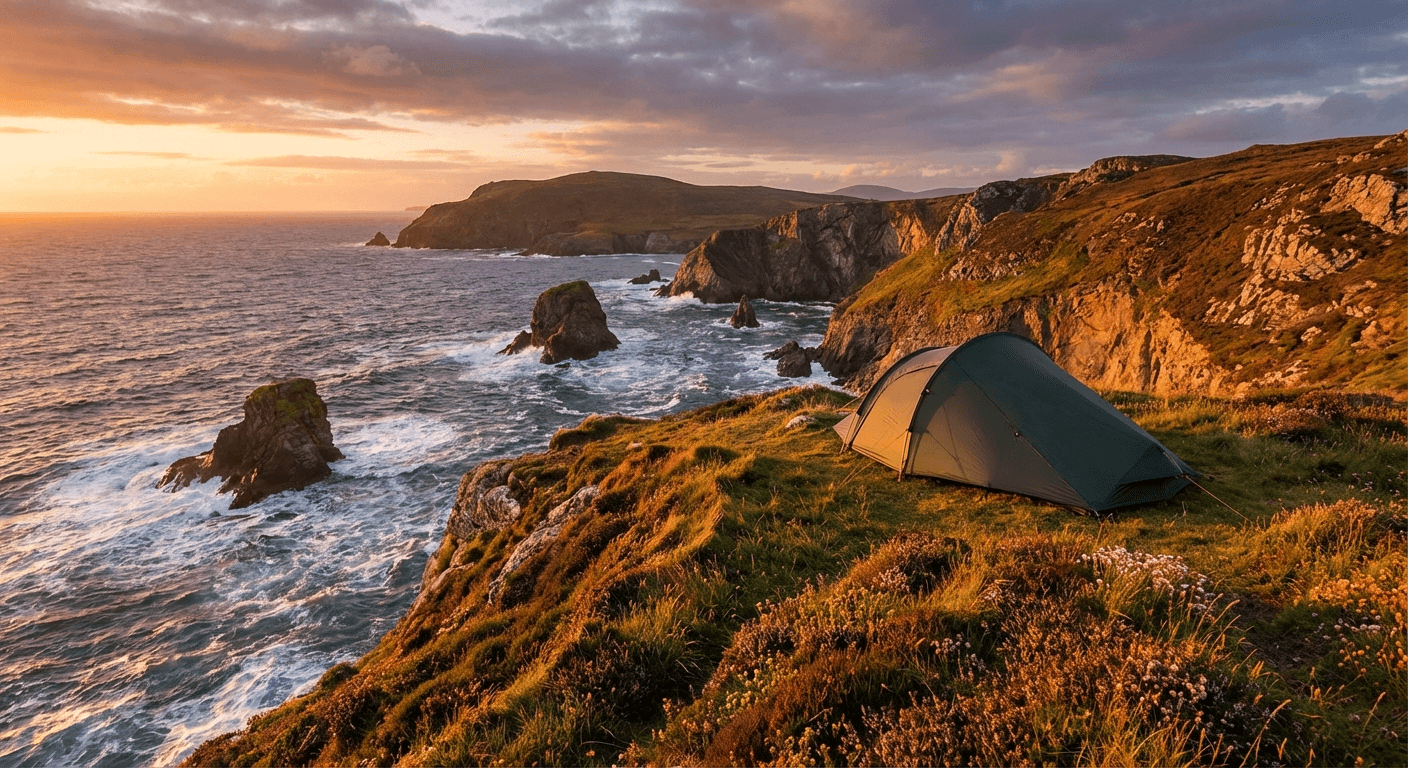
Ireland offers countless wild camping opportunities, from dramatic coastal cliffs to serene mountain lakes. Here are five of the best locations, each offering something unique for different experience levels.
1. The Donegal Highlands
Why Donegal?
County Donegal is Ireland's wild camping capital. With vast areas of uninhabited bog and mountain, dramatic coastline, and some of the darkest skies in Europe, it's a camper's paradise. The further north and west you go, the more remote and spectacular it becomes.
Top Spots:
- The Poisoned Glen: A dramatic valley beneath Mount Errigal with flat camping spots beside an ancient church ruin
- The Rosses: A maze of lakes and islands perfect for kayak camping
- Horn Head: Spectacular clifftop camping with panoramic Atlantic views
- Slieve League: Europe's highest sea cliffs offer breathtaking camping opportunities
What Makes It Special:
Donegal's Gaeltacht areas preserve traditional Irish culture, and you might hear locals speaking Irish in the pubs and shops. The hiking is superb, the stargazing exceptional, and the sense of wilderness profound.
Looking for local expertise? Browse tour guides in Donegal who can show you hidden spots and share local knowledge.
2. The Wicklow Mountains
Why Wicklow?
Just an hour from Dublin, the Wicklow Mountains offer surprisingly wild camping in a compact area. The terrain varies from gentle woodland to rugged peaks, and the network of trails means you can combine hiking with camping for multi-day adventures.
Top Spots:
- Lough Ouler (The Heart-Shaped Lake): A stunning corrie lake beneath Tonelagee mountain
- Glenmacnass Valley: Flat ground beside the rushing river, surrounded by peaks
- Lough Dan: A pristine lake with camping spots along its eastern shore
- The Wicklow Way: Ireland's oldest waymarked trail has numerous wild camping opportunities along its 130km route
What Makes It Special:
Wicklow's proximity to Dublin makes it perfect for weekend escapes, but head into the interior and you'll find genuine wilderness. The area is crisscrossed with ancient tracks and dotted with monastic ruins.
Plan your adventure with a tour guide in Wicklow to discover the best routes and camping spots.
3. The Kerry Mountains
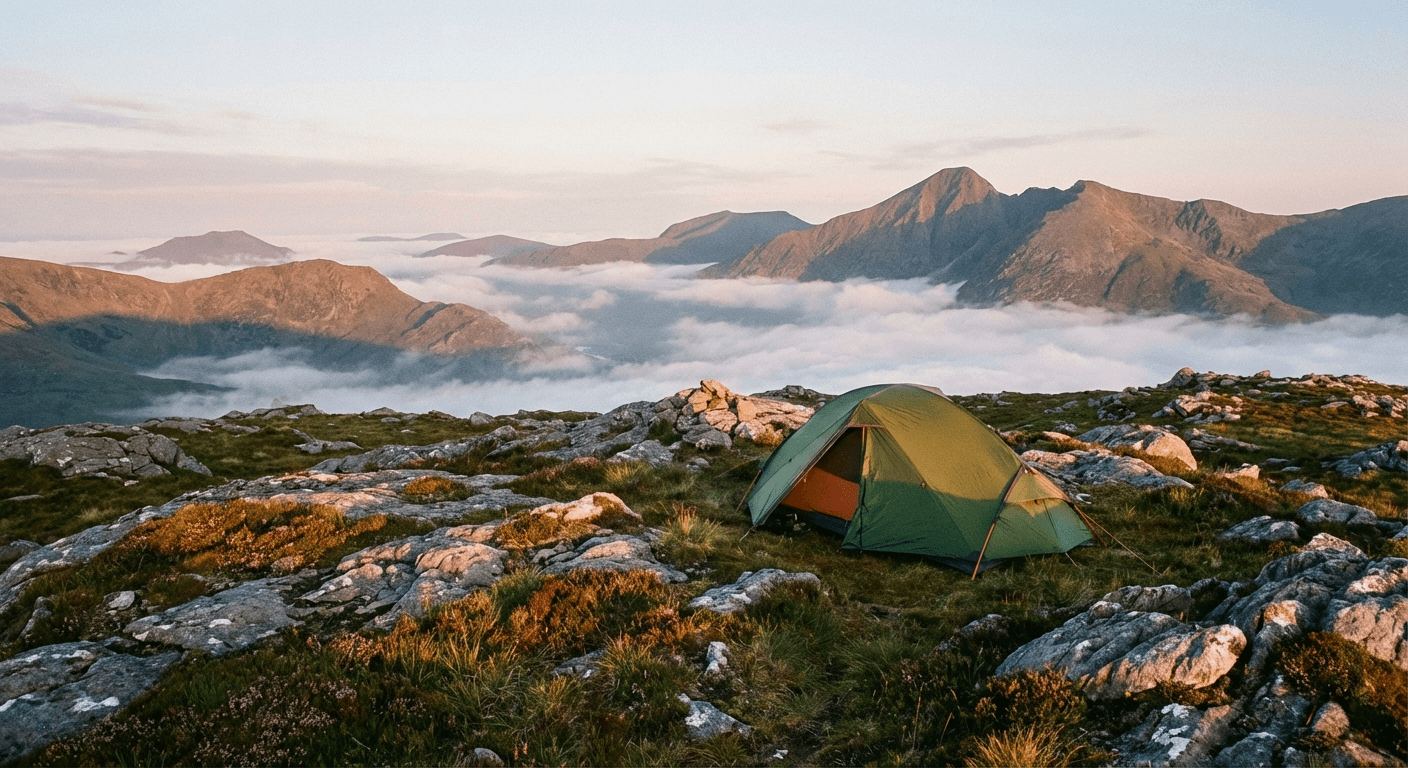
Why Kerry?
County Kerry combines Ireland's highest peaks with stunning coastal scenery. The MacGillycuddy's Reeks offer challenging mountain camping, while the Iveragh Peninsula provides coastal opportunities with views of Skellig Michael.
Top Spots:
- Hag's Glen: The gateway to Carrauntoohil, Ireland's highest mountain, with flat camping beside the river
- Lough Cummeenapeasta: A remote mountain lake beneath the Eastern Reeks
- The Black Valley: So named because it was the last place in Ireland to get electricity, this valley offers traditional camping with modern wildness
- Ballaghbeama Gap: High mountain pass with spectacular views and numerous flat spots
What Makes It Special:
Kerry's mountains are serious terrain—steep, rocky, and exposed. The rewards match the challenge, with views that stretch from the Atlantic to the interior. The area is rich in folklore, with stories of ancient battles and fairy forts.
Explore Kerry with a local tour guide in Kerry for an unforgettable mountain experience.
4. Connemara, County Galway
Why Connemara?
Connemara is Ireland's wild west—a landscape of bog, rock, and water that feels genuinely untamed. The Twelve Bens mountain range offers superb mountain camping, while the coastline provides dramatic clifftop opportunities.
Top Spots:
- Lough Inagh: A long, narrow lake surrounded by the Twelve Bens, with flat camping on its shores
- Maumturk Mountains: Quieter than the Bens, with equally stunning views
- Renvyle Peninsula: Spectacular coastal camping with views of the Atlantic and Inishbofin island
- Roundstone Bog: Flat camping with 360-degree views of mountains and sea
What Makes It Special:
Connemara's Gaeltacht culture is vibrant and welcoming. The landscape feels ancient and unchanged—this is the Ireland of myth and legend, where every hill has a story.
Discover Connemara with a tour guide in Galway.
5. Mayo's Wild Coast
Why Mayo?
County Mayo offers some of Ireland's most remote and dramatic camping. From the pilgrim mountain of Croagh Patrick to the wild beauty of Achill Island, Mayo delivers wild camping experiences that rival anything in Europe.
Top Spots:
- Achill Island: Multiple wild camping opportunities, from clifftops to beachside spots
- Ballycroy National Park: The Nephin Beg Mountains offer remote mountain camping
- Doo Lough Valley: A hauntingly beautiful valley with a tragic history and superb camping
- Minaun Heights: High clifftop camping with panoramic views of the Atlantic and the Curlew Mountains
What Makes It Special:
Mayo feels like the edge of the world. The landscape is raw and weathered, shaped by millennia of Atlantic storms. The Mayo Dark Sky Park offers some of the best stargazing in Europe.
Find experienced tour guides in Mayo to explore this wild landscape.
Essential Gear for Wild Camping in Ireland
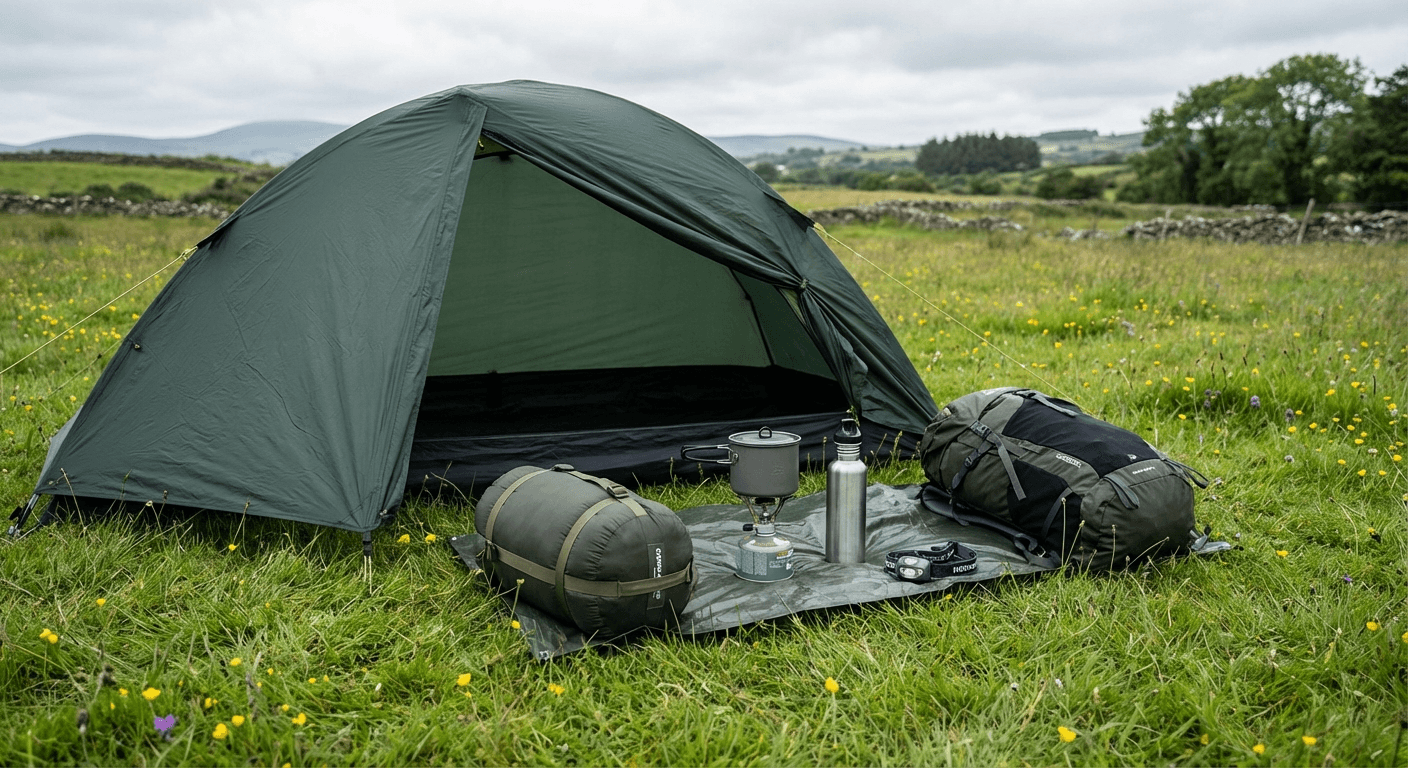
Irish weather is notoriously unpredictable. You might experience four seasons in a single day, and conditions can change rapidly in the mountains. Having the right gear isn't just about comfort—it's about safety.
Shelter: Your Tent
What You Need:
A tent designed for three-season use with a hydrostatic head rating of at least 3000mm. Irish rain can be horizontal and persistent, so your tent needs to withstand serious weather.
Key Features:
- Freestanding design: Allows pitching on rocky or boggy ground
- Strong poles: Aluminum poles handle wind better than fiberglass
- Good ventilation: Condensation is a constant battle in Irish humidity
- Compact pack size: You'll be carrying it up mountains
Recommended Options:
- Budget: Vango Banshee 200 or Coleman Cortes 2
- Mid-range: MSR Hubba NX or Big Agnes Copper Spur
- Premium: Hilleberg Nallo or Terra Nova Laser
Sleep System
Sleeping Bag:
Choose a bag rated to at least 0°C comfort temperature. Irish nights can be cold even in summer, especially at altitude. Down bags offer the best warmth-to-weight ratio, but synthetic performs better if it gets damp.
Sleeping Mat:
An insulated mat is essential—the ground in Ireland is cold and damp. Look for an R-value of at least 3.0. Inflatable mats like the Therm-a-Rest NeoAir or Exped SynMat offer the best comfort and insulation.
Clothing System
The Layering Principle:
- Base layer: Merino wool or synthetic (never cotton)
- Mid layer: Fleece or lightweight synthetic insulation
- Outer layer: Waterproof jacket and trousers (essential!)
- Insulation: Packable down or synthetic jacket for camp
Footwear:
Sturdy hiking boots with ankle support for rough terrain. Bring camp shoes (lightweight sandals or trail runners) to give your feet a break.
Extras:
- Warm hat and sun hat
- Waterproof gloves and liner gloves
- Buff or neck gaiter
- Multiple pairs of hiking socks (merino wool)
Cooking and Hydration
Stove:

A gas canister stove is convenient but can struggle in cold temperatures. Liquid fuel stoves work better in winter but are heavier. The MSR PocketRocket or Jetboil Flash are popular choices.
Water:
Ireland has abundant water sources, but always purify before drinking. Options include:
- Water purification tablets
- Filter (Sawyer Squeeze or Katadyn BeFree)
- UV purifier (SteriPen)
- Boiling (always safe but fuel-intensive)
Cooking Kit:
- Lightweight pot (750ml-1L)
- Spork or spork-knife combo
- Lighter and waterproof matches
- Scrubbing pad and biodegradable soap
Navigation and Safety
Navigation:
- Map and compass (and the skills to use them)
- GPS device or smartphone with offline maps (ViewRanger, OS Maps)
- Whistle for emergencies
Safety Essentials:
- First aid kit tailored to your group and trip
- Head torch with spare batteries
- Emergency shelter (bothy bag or survival blanket)
- Sun protection (sunscreen, sunglasses—yes, even in Ireland!)
- Insect repellent (midges can be vicious in summer)
The Luxury Items
If you have space and don't mind the weight:
- Lightweight camp chair or sit mat
- Kindle or book for rainy evenings
- Camera and tripod for those Irish sunsets
- Flask of whiskey (purely for medicinal purposes, of course)
Leave No Trace: The Ethics of Wild Camping
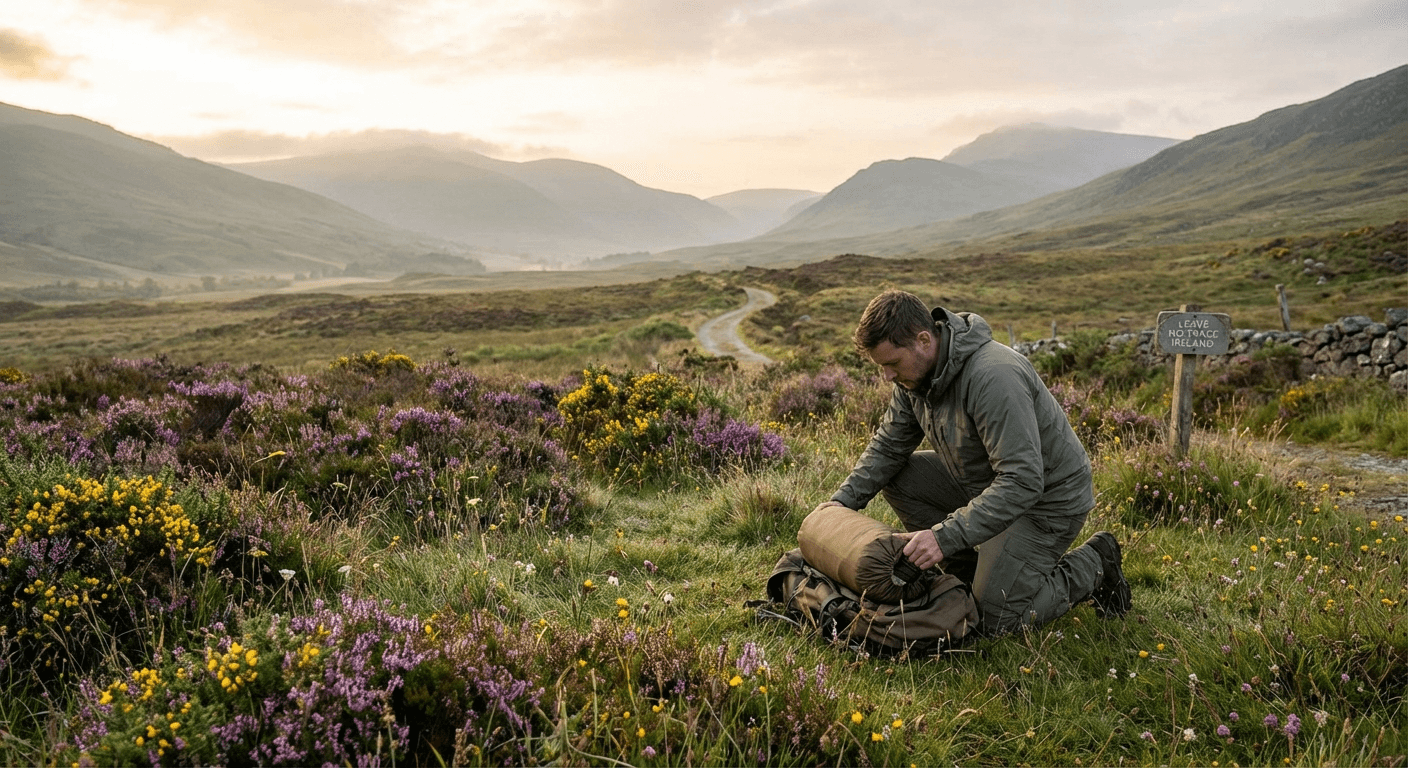
Wild camping is a privilege, not a right. In Ireland, where access laws are restrictive, responsible behavior is essential to maintain what limited access we have. The Leave No Trace principles provide a framework for minimizing your impact.
The Seven Principles
1. Plan Ahead and Prepare
- Know the regulations and restrictions for the area you're visiting
- Check the weather forecast and be prepared for changes
- Plan your route to avoid sensitive areas
- Repackage food to minimize waste
2. Travel and Camp on Durable Surfaces
- Camp on rock, gravel, dry grass, or bare soil—not on vegetation
- In popular areas, camp at existing sites to concentrate impact
- In pristine areas, spread out and move camp each night
- Keep camps small and discreet
3. Dispose of Waste Properly
- Pack it in, pack it out: Everything you bring must leave with you
- Use a trowel to bury human waste 15-20cm deep, at least 60m from water
- Pack out toilet paper and hygiene products
- Carry a ziplock bag for rubbish and pack it out
4. Leave What You Find
- Don't pick wildflowers or remove rocks and fossils
- Leave archaeological sites undisturbed
- Don't build structures or dig trenches
- Let others experience the wild as you found it
5. Minimize Campfire Impact
- Use a stove for cooking—campfires cause lasting damage
- If you must have a fire, use established fire rings or fire pans
- Burn only small sticks found on the ground

- Ensure fires are completely extinguished and cold to the touch
6. Respect Wildlife
- Observe from a distance—never feed or approach animals
- Store food securely to prevent wildlife from accessing it
- Control pets (or leave them at home)
- Avoid wildlife during sensitive times (mating, nesting, raising young)
7. Be Considerate of Other Visitors
- Camp out of sight and sound of other visitors
- Yield to other users on trails
- Keep noise levels down, especially at night
- Respect the wild experience others are seeking
The Irish Context
In Ireland, Leave No Trace has an additional dimension: respect for private property and local communities. Many of the best wild camping areas are on private land where camping is tolerated but not officially permitted.
Additional Guidelines:
- Arrive late, leave early: Minimize the chance of encountering landowners
- Keep groups small: Large groups are more conspicuous and more impactful
- Support local businesses: Buy supplies in local shops, have a pint in the village pub
- Be friendly: If approached by a landowner, be polite and respectful
- Move on if asked: Never argue if asked to leave—it's their land
Planning Your Wild Camping Trip
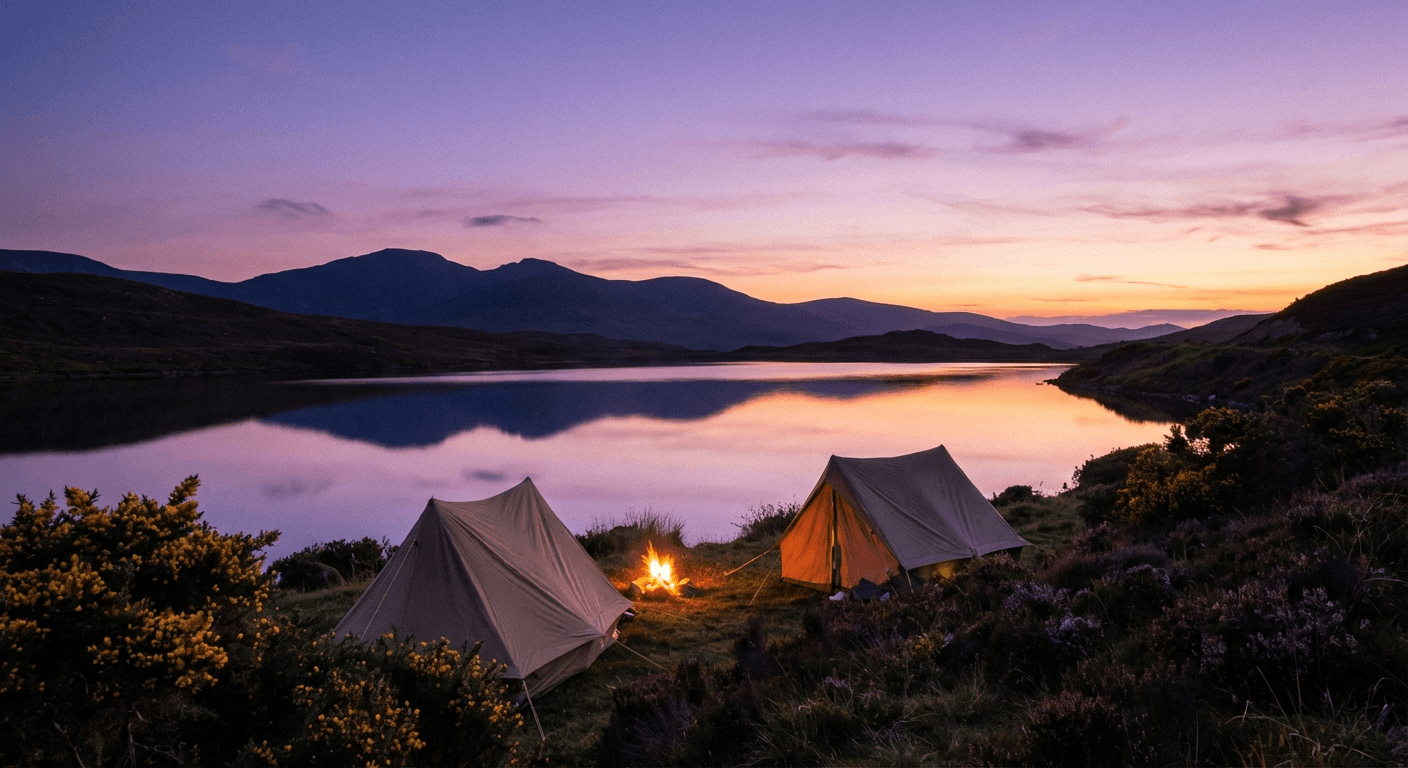
Successful wild camping requires planning. From checking the weather to planning your route, preparation is key to a safe and enjoyable experience.
Before You Go
Check the Weather:
Irish weather is changeable, and mountain weather can be dangerous. Check forecasts from multiple sources (Met Éireann, Mountain Forecast, Windy) and be prepared to change plans if conditions deteriorate.
Tell Someone Your Plans:
Leave a detailed route plan with a friend or family member, including:
- Your intended camping location
- Expected return time
- Emergency contact numbers
Check Equipment:
- Test your tent before you go—make sure you know how to pitch it
- Check your stove works and you have enough fuel
- Ensure your sleeping bag is warm enough for expected temperatures
- Pack spare batteries for your head torch
Safety Considerations
Hypothermia:
The combination of cold, wet, and wind makes hypothermia a real risk in Ireland. Know the signs (shivering, confusion, drowsiness) and how to treat it (shelter, warmth, warm drinks). Prevention is better than cure—stay dry and don't push on if you're struggling.
River Crossings:
Irish rivers can rise rapidly after rain. Never cross if the water is flowing quickly or above knee height. If in doubt, find an alternative route or retreat.
Navigation:
Irish mountains are often featureless in poor visibility. Cloud can roll in quickly, reducing visibility to a few meters. Always carry a map and compass and know how to use them. Don't rely solely on GPS.
Ticks and Lyme Disease:
Ticks are present in many areas of Ireland, particularly where there are sheep and deer. Check yourself daily, especially after walking through long grass or bracken. Remove ticks promptly with a tick remover.
When to Go
Spring (March-May):
Longer days and improving weather, but still unpredictable. Midges not yet a problem. Good for lower-level camping.
Summer (June-August):
Best weather (relatively speaking), longest days, warmest temperatures. However, this is peak midge season, and popular areas can be busy.
Autumn (September-November):
Often the best season for wild camping—stable weather, fewer midges, beautiful colors. Days are shortening, so plan accordingly.
Winter (December-February):
Only for experienced campers with appropriate gear. Short days, cold temperatures, and severe weather make this challenging. But the solitude and raw beauty are unmatched.
Ready to Sleep Under the Stars?
Wild camping in Ireland offers something increasingly rare in our connected world: genuine solitude, raw nature, and the chance to disconnect from the noise of modern life. Whether you're watching the sunrise over the Wicklow Mountains, falling asleep to the sound of Atlantic waves in Donegal, or sharing a mountain summit with only the wind for company, the experience stays with you long after you've packed away your tent.
The key is respect—respect for the land, respect for the law, and respect for the communities that make their homes in these wild places. Camp quietly, leave no trace, and carry out everything you carry in. Do this, and the wild places of Ireland will welcome you back time and time again.
The mountains are calling. The wild Atlantic is waiting. The stars are brighter than you remember. Pack your tent, embrace the adventure, and discover why wild camping in Ireland captures the hearts of all who experience it.
Table of Contents
Share this post
More from the Blog

Cork to Blarney Castle Day Trip: The Stone, the Gardens and What Else to See
Plan a Cork to Blarney Castle day trip. Kiss the stone, explore the Poison Garden, and add Cork city, Fota or Kinsale for a full day out.

Cork to Cobh Day Trip: Titanic, Colourful Houses and Harbour History
Plan a Cork to Cobh day trip by train, car or private driver. Explore Titanic history, St Colman's Cathedral, Spike Island and the best harbour views.

Cork to Killarney Day Trip: Lakes, Mountains and Muckross in One Day
A Cork to Killarney day trip is a longer escape into Kerry. Here's how to plan the drive, what to see in Killarney National Park, and why a private driver helps.