
Surfing in Ireland: Best Waves, Schools & Surf Spots for All Levels
There's a moment every surfer lives for—the one where you're paddling out past the break, the Atlantic swell rising beneath you, and suddenly you're dropping into a glassy, emerald-green barrel with nothing but ocean ahead. That moment happens more often than you'd expect along Ireland's Wild Atlantic Way, where world-class waves meet dramatic coastal scenery and a surf culture as warm as the pint you'll enjoy afterward.
Ireland might not be the first place that comes to mind when you think of surfing, but it should be. With over 3,000 kilometres of coastline pounded by consistent Atlantic swells, the Emerald Isle delivers some of Europe's most reliable and powerful surf. From the reef breaks of County Clare to the beach breaks of Donegal, from beginner-friendly whitewater to expert-only slabs, Ireland offers waves for every skill level—and experiences you'll never forget.
Whether you're a complete beginner looking to catch your first wave, an intermediate surfer ready to tackle bigger breaks, or an experienced charger seeking empty lineups and cold-water barrels, this guide will show you where to go, when to visit, and how to make the most of your Irish surfing adventure.
(This guide is part of our master hub: Unleash Your Wild Side: The Complete Guide to Adventure & Outdoor Activities in Ireland. For other water adventures, check out our guide to sea kayaking in Ireland, or if you prefer land-based adventures, explore our hiking the Wicklow Way guide.)
Why Ireland is a Surfer's Paradise
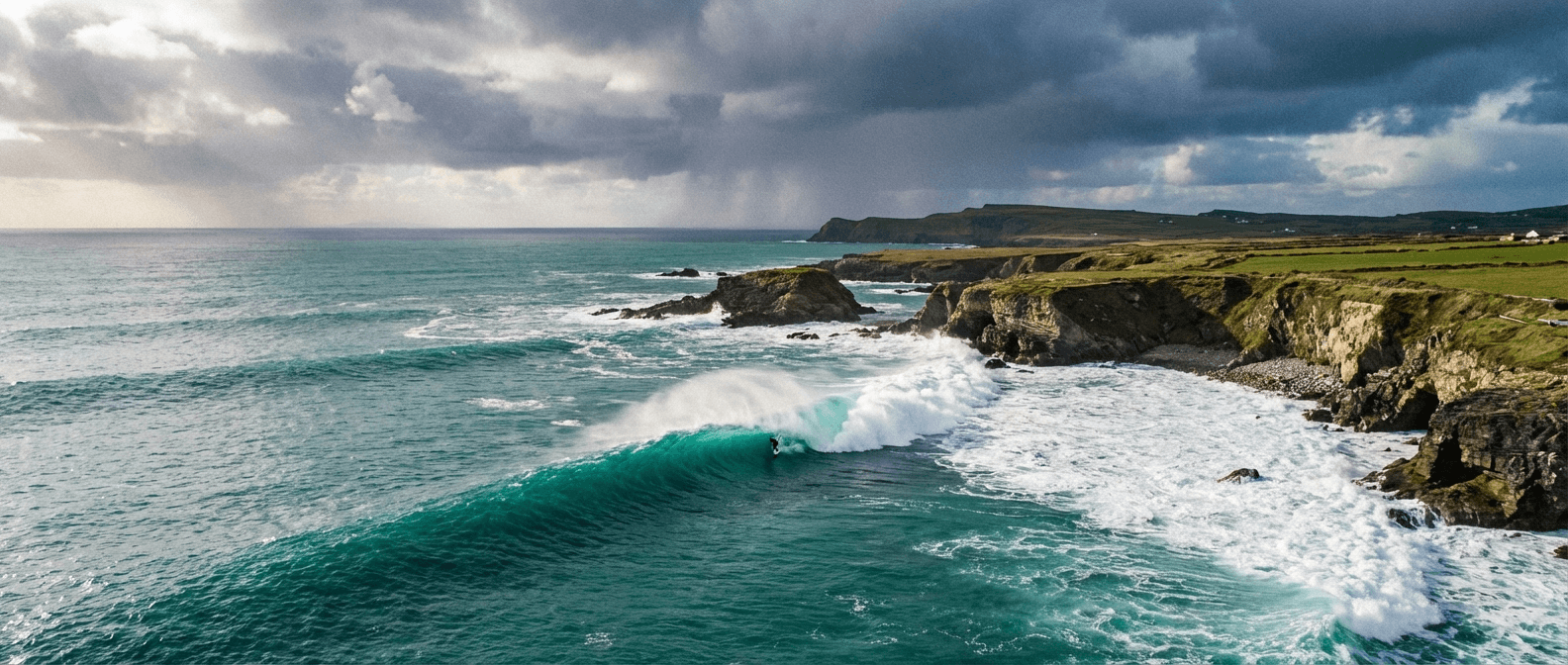
Ireland's surfing credentials might surprise you, but the numbers don't lie. The island sits directly in the path of the North Atlantic storm track, meaning consistent swells year-round and waves that rival anything in Europe.
Consistent Atlantic Swells
Unlike Mediterranean destinations that rely on local wind swells, Ireland benefits from powerful groundswells generated by North Atlantic storms. These long-period waves travel thousands of kilometres, organizing themselves into clean, predictable lines that wrap around headlands and peel along reefs. The result? Surfable waves on almost any day of the year.
Uncrowded Lineups
While spots like Bundoran and Lahinch can get busy on perfect days, Ireland's vast coastline means there are always empty waves to be found. Drive ten minutes from any popular break and you'll likely have the lineup to yourself. For surfers used to fighting for waves in crowded European or American lineups, this alone is worth the trip.
Diverse Wave Types
Ireland offers every type of wave imaginable: hollow reef breaks, gentle beach breaks for beginners, long point breaks, heavy slabs for experts, and everything in between. Whether you ride a longboard, shortboard, or foamie, you'll find your perfect wave here.
Surf Culture & Community
Irish surf culture is welcoming, unpretentious, and deeply connected to the landscape. Locals are generally friendly to visitors, and the post-surf tradition of gathering in a cozy pub to warm up and share stories is as much a part of the experience as the waves themselves.
Top 5 Surf Spots in Ireland
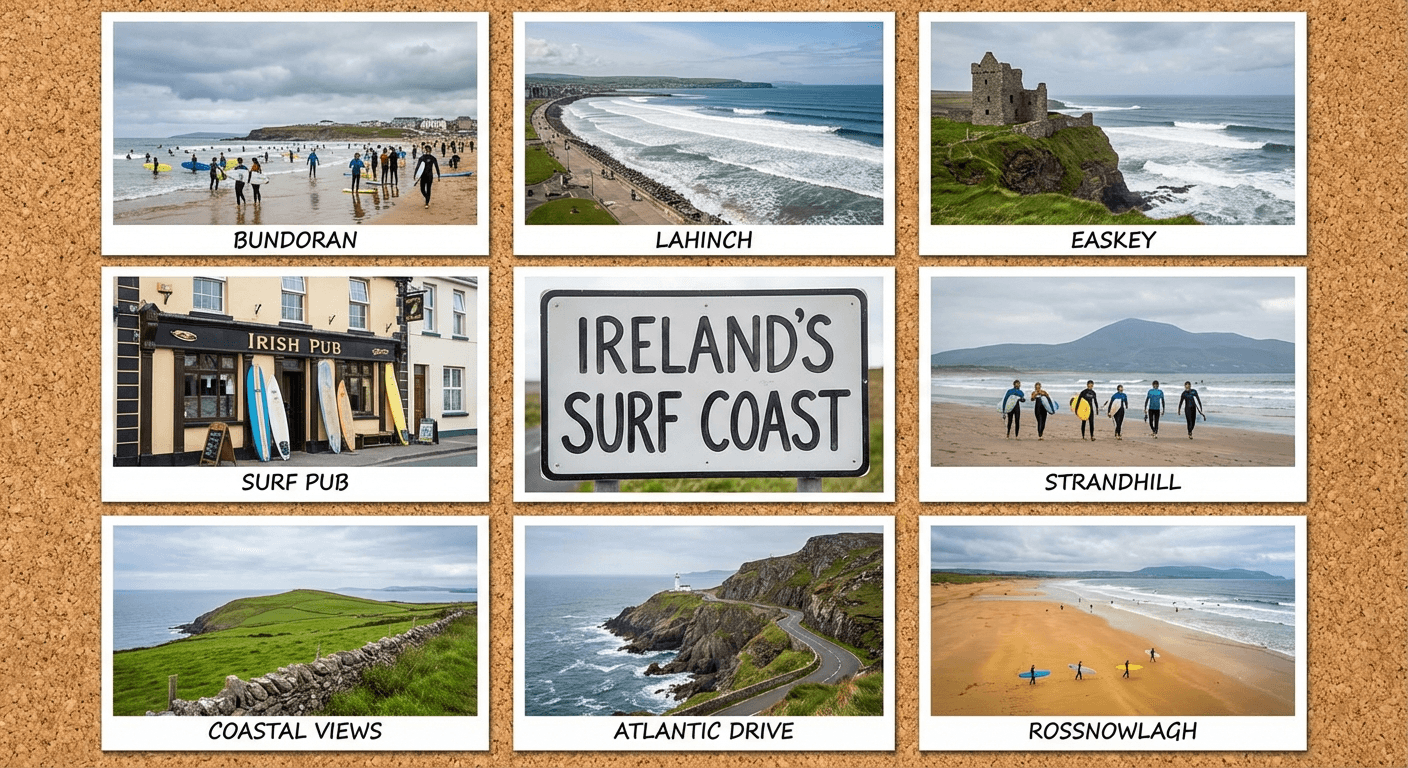
With so much coastline, choosing where to surf can be overwhelming. Here are five of the absolute best surf spots in Ireland, each offering something unique for different skill levels.
1. Bundoran, County Donegal
Bundoran is Ireland's surf capital and home to the country's most famous wave—The Peak. This powerful reef break produces hollow left-hand barrels that have attracted international surf competitions and professional surfers from around the world.
Why Bundoran?
- The Peak: World-class reef break for experienced surfers
- Tullan Strand: Beginner-friendly beach break with surf schools
- Rossnowlagh: Long sandy beach perfect for longboarding and beginners
- Consistent waves: Works on most swell directions and tide stages
The town itself is vibrant and surf-focused, with surf shops, schools, cafes, and a lively après-surf scene. Accommodation ranges from surf hostels to hotels, making it easy to base yourself here for a surf trip.
Looking for a local guide in the Bundoran area? Browse tour guides in Donegal.
2. Lahinch, County Clare
Lahinch is often called the "St. Andrews of Surfing"—a reference to the famous Scottish golf course, but equally applicable here. This charming seaside town offers excellent waves, a stunning setting beneath the Cliffs of Moher, and a surf culture that dates back decades.
Why Lahinch?
- Beach break perfection: Consistent sand-bottom waves suitable for all levels
- Left and right peaks: Multiple peaks spread along the beach
- Surf schools: Excellent instruction for beginners
- Scenery: Dramatic backdrop of the Cliffs of Moher
Lahinch works best on a west or northwest swell and can handle various tide stages. The town is lively year-round, with surf shops, traditional pubs, and a welcoming atmosphere that makes it perfect for surf trips.
Find experienced tour guides in Clare to explore the coastal wonders.
3. Easkey, County Sligo
Easkey is a hidden gem that serious surfers keep in their back pocket. This small village on Sligo's wild coast offers two world-class reef breaks—Easkey Left and Easkey Right—that produce hollow, powerful waves for experienced surfers.
Why Easkey?
- Easkey Left: One of Ireland's best left-hand reef breaks
- Easkey Right: Hollow right-hander for experienced surfers
- Uncrowded: Much quieter than Bundoran or Lahinch

- Authentic: Real Irish village with zero surf tourism hype
Easkey requires commitment—the water is cold, the waves are heavy, and the village has limited amenities. But for experienced surfers seeking quality waves without crowds, it's hard to beat. The nearby beaches also offer mellower options when the reefs are too big.
Discover tour guides in Sligo.
4. Strandhill, County Sligo
Strandhill is a beautiful beach break set against the dramatic backdrop of Knocknarea Mountain and the vast Atlantic. The waves here are consistent and user-friendly, making it perfect for intermediates and longboarders.
Why Strandhill?
- Consistent beach break: Works on various tides and swells
- Longboarding heaven: Perfect peelers on the right day
- Surf culture: Cool cafes, surf shops, and hot seaweed baths
- Family-friendly: Mellow waves suitable for learners
Strandhill is also famous for its Voya Seaweed Baths—the perfect post-surf recovery. The village has a laid-back, artistic vibe with excellent food options and stunning coastal walks.
5. Connemara, County Galway
For surfers willing to venture off the beaten path, Connemara offers empty waves and wild, untouched landscapes. The surf here is less consistent than the famous spots, but when it's on, you'll have pristine breaks all to yourself.
Why Connemara?
- Empty lineups: Surf alone in stunning surroundings
- Adventure: Part of the experience is finding the waves
- Dramatic scenery: Mountains, bogs, and rugged coastline
- Authentic Ireland: Experience the real Gaeltacht culture
Connemara is best for experienced surfers who know how to read conditions and don't mind hiking to remote beaches. The rewards—solitude, natural beauty, and the thrill of discovery—are worth the effort.
Find tour guides in Galway to help navigate Connemara's wild coast.
Best Time to Surf in Ireland
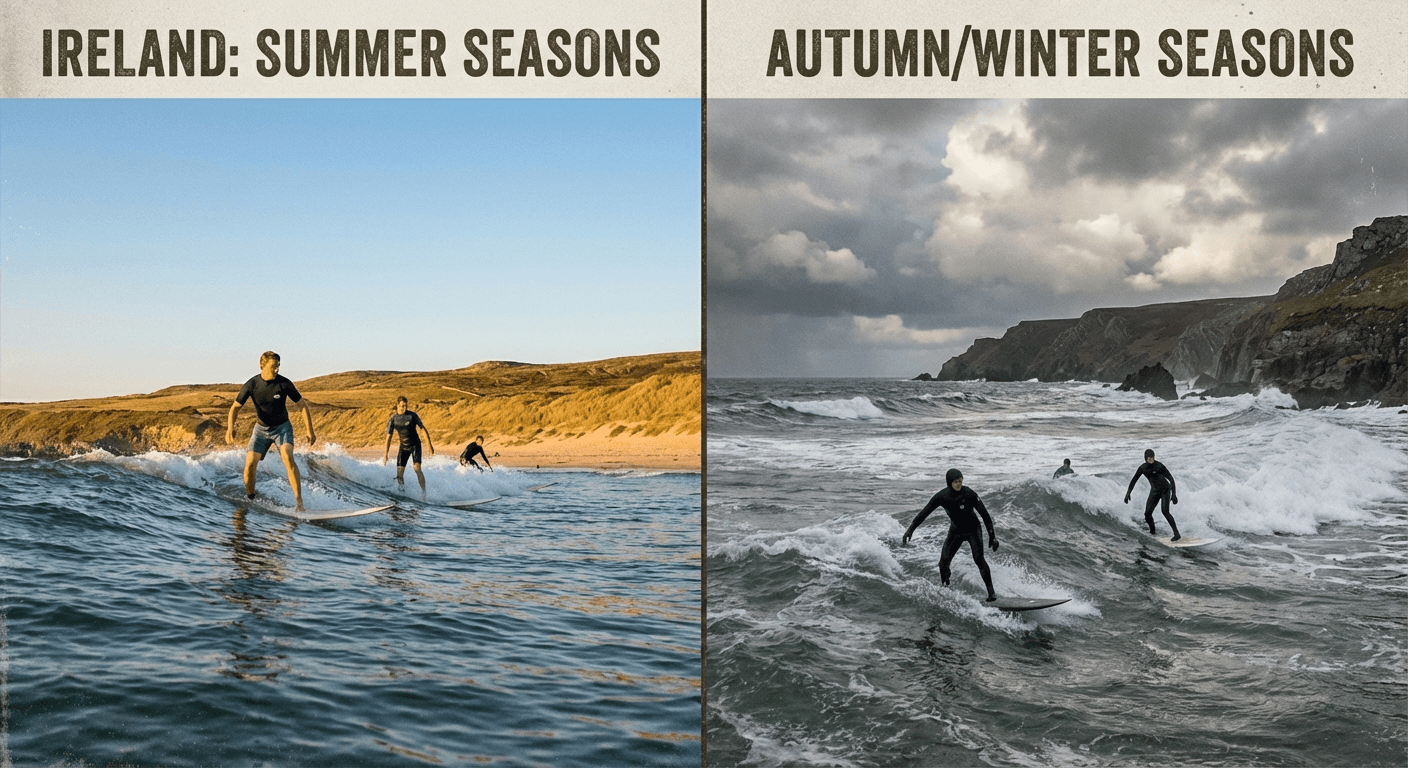
Ireland's surf season runs year-round, but each season offers different conditions, temperatures, and experiences. Understanding the seasonal patterns will help you plan the perfect surf trip.
Autumn (September - November)
Best for: Experienced surfers seeking big waves
Autumn is considered the prime surf season in Ireland. The water is still relatively warm (by Irish standards), the summer crowds have gone, and the Atlantic storm season kicks into gear, producing powerful, consistent swells.
Pros:
- Consistent, powerful swells
- Warmest water temperatures of the year (14-16°C)
- Fewer crowds than summer
- Beautiful autumn light for photography
Cons:
- Shorter days
- Increasing storm frequency
- Cooler air temperatures
Winter (December - February)
Best for: Expert surfers, storm chasers
Winter delivers Ireland's biggest and most powerful waves. Storms generate massive swells that light up reefs and points rarely surfed the rest of the year. This is not for beginners—conditions can be dangerous and should only be tackled by experienced surfers with proper equipment.
Pros:
- Biggest waves of the year
- Empty lineups
- Epic conditions for experienced surfers
- Unique cold-water surf experience
Cons:
- Very cold water (9-10°C)
- Short daylight hours
- Frequent storms and onshore winds
- Limited facilities in some areas
Spring (March - May)
Best for: All skill levels, especially beginners
Spring offers a good balance of decent swells and improving weather. The water is still cold, but daylight hours are extending, and the first hints of summer start to appear. This is a great time to learn, as waves are generally more manageable than winter.
Pros:
- Decent swells
- Increasing daylight
- Quieter than summer
- Milder weather arriving
Cons:
- Still cold water (10-12°C)
- Unpredictable weather
- Some surf schools not yet open
Summer (June - August)
Best for: Beginners, families, longboarders
Summer brings smaller, gentler waves—perfect for learning to surf. The water is at its warmest (relatively speaking), daylight extends past 10 PM, and the atmosphere is festive. While serious surfers might find the waves lacking, beginners and longboarders will have a blast.
Pros:
- Warmest water (14-16°C)
- Longest days
- All surf schools operating
- Great for beginners
- Lively beach atmosphere
Cons:
- Smaller, less consistent swells
- Busier beaches
- Higher accommodation costs
Pro tip: The best time to visit depends entirely on your skill level and what you want from the experience. Beginners should aim for summer; experienced surfers will find autumn and winter deliver the goods.
Surf Schools and Lessons
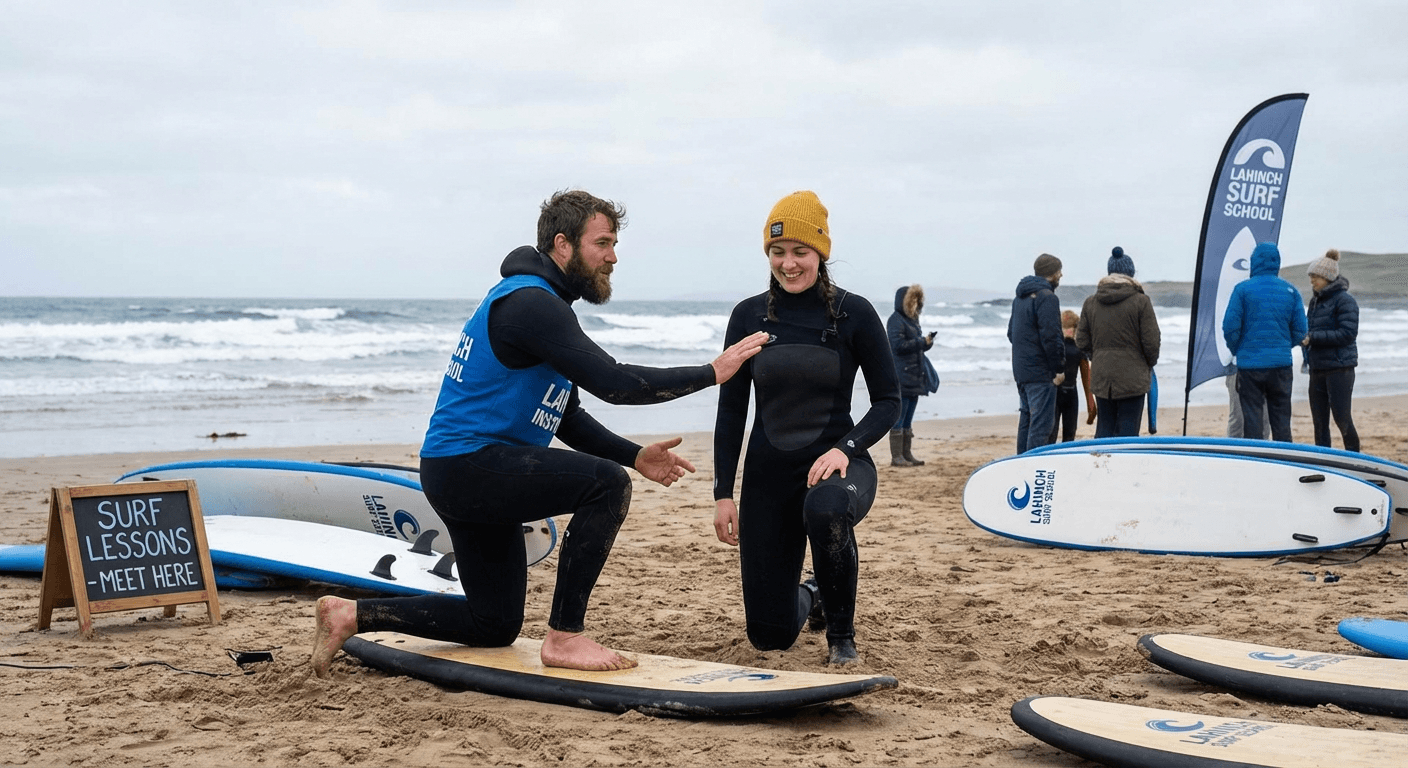
If you're new to surfing, taking lessons is the best way to get started. Ireland has excellent surf schools with professional instructors who can teach you proper technique, ocean safety, and surf etiquette.
What to Expect
Most surf schools offer:
- Beginner lessons: 2-hour sessions covering basics
- Progression courses: Multi-day packages for improving skills
- Private lessons: One-on-one instruction
- Equipment rental: Wetsuits and boards included
- Beach theory: Ocean safety, wave reading, and etiquette
Top Surf Schools
Bundoran Surf Co. (Donegal) One of Ireland's oldest and most respected surf schools, offering lessons for all levels and excellent equipment.
Lahinch Surf School (Clare) Located on the beach with experienced instructors who know the local waves intimately.
Strandhill Surf School (Sligo) Friendly, professional instruction in one of Ireland's most beautiful beach settings.
Do You Need Experience?
Absolutely not! Most surf schools specialize in teaching complete beginners. If you can swim and are reasonably fit, you can learn to surf. Instructors are skilled at making everyone feel comfortable and safe in the water.
Cost
- Group lessons: €35-50 per person (2 hours)
- Private lessons: €80-120 per person
- Multi-day courses: €150-300 depending on duration
- Equipment rental only: €20-30 per day
Many schools offer family discounts and packages that include multiple lessons.
Essential Surf Gear for Ireland
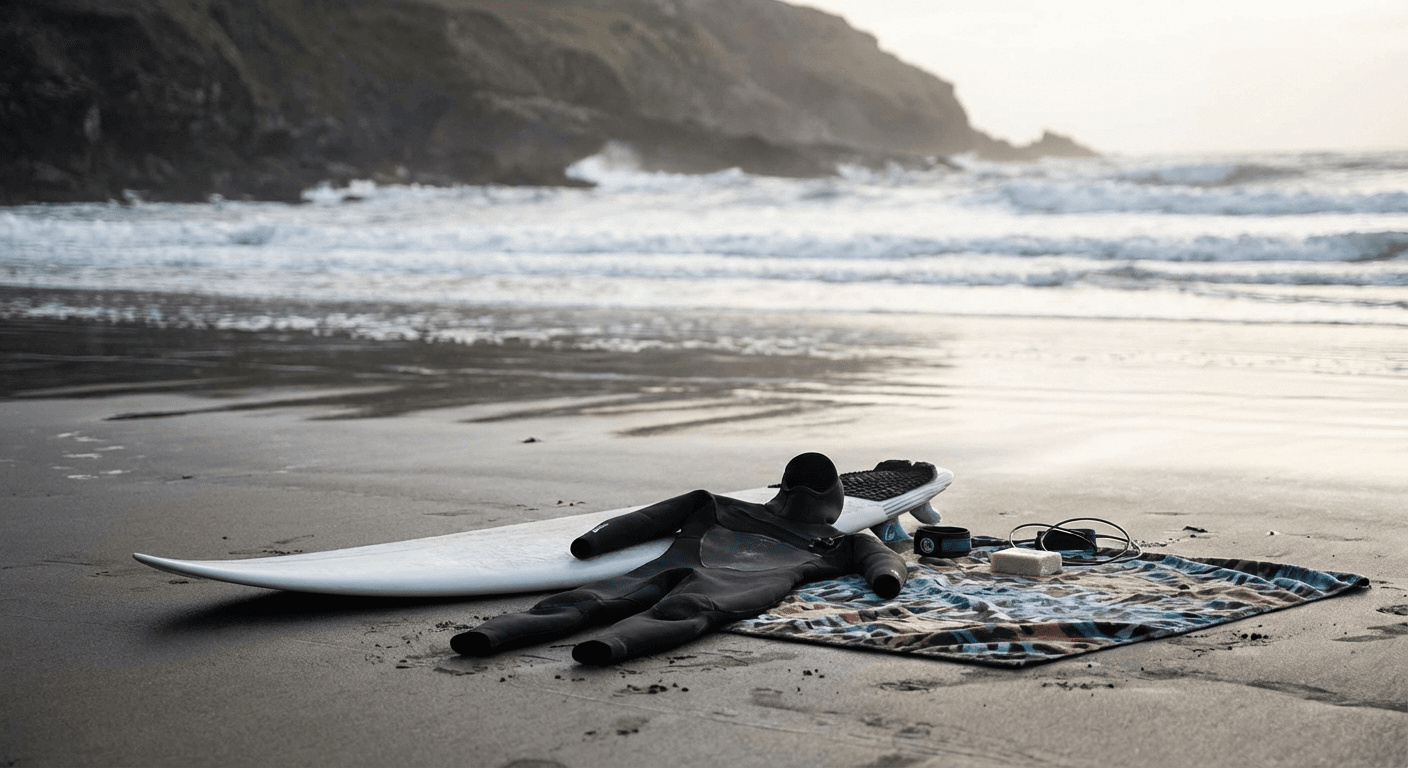
Surfing in Ireland requires proper equipment—the cold water and powerful waves demand respect and preparation.
Wetsuits
Essential: A quality 5/4mm or 6/5mm wetsuit is mandatory for Irish waters. Add boots (5mm), gloves (3-5mm), and a hood for winter surfing.
Recommended brands: O'Neill, Patagonia, Xcel, Rip Curl
Surfboards
Beginners: Start with a foam board (soft-top) or longboard (8-9 feet). These are stable, buoyant, and forgiving.
Intermediate/Advanced: Standard shortboards (6-7 feet) work well for most Irish waves. Consider a step-up board for bigger winter swells.
Accessories
- Leash: Essential for safety—always use one appropriate for your board length
- Wax: Cold-water surf wax for Irish conditions
- Board bag: Protects your board during travel
- Changing robe: Makes getting in and out of wetsuits much more comfortable
- Dry bag: For keys, phone, and valuables
Where to Rent or Buy
All major surf towns (Bundoran, Lahinch, Strandhill) have surf shops with rental gear and knowledgeable staff who can advise on conditions.
Planning Your Irish Surf Trip
Getting There
By air: Fly into Dublin (closest to east coast spots), Shannon (perfect for Clare), or Knock (ideal for Sligo and Mayo).
By car: Renting a car gives you the freedom to chase waves and explore the coast. Most surf spots are accessible by regular vehicles, though some remote breaks require 4WD.
Accommodation
Surf towns offer everything from backpacker hostels to boutique hotels. Book early for summer months and consider surf camps that combine accommodation with lessons.
Safety Considerations
- Never surf alone—especially in remote areas
- Check local conditions—Irish waves can be powerful and dangerous
- Respect locals—follow surf etiquette and be friendly in the lineup
- Know your limits—don't tackle waves beyond your ability
- Wear appropriate wetsuits—hypothermia is a real risk
Ready to Surf?
Ireland's waves are waiting. Whether you're dropping into your first whitewater or hunting for empty barrels along a remote headland, the Irish surf experience is unlike anywhere else in the world. The combination of quality waves, stunning scenery, welcoming culture, and that uniquely Irish sense of adventure creates memories that will last a lifetime.
The Atlantic is calling. Wax up your board, pull on your wetsuit, and discover why Ireland is Europe's best-kept surf secret.
Table of Contents
Share this post
More from the Blog

Cork to Blarney Castle Day Trip: The Stone, the Gardens and What Else to See
Plan a Cork to Blarney Castle day trip. Kiss the stone, explore the Poison Garden, and add Cork city, Fota or Kinsale for a full day out.

Cork to Cobh Day Trip: Titanic, Colourful Houses and Harbour History
Plan a Cork to Cobh day trip by train, car or private driver. Explore Titanic history, St Colman's Cathedral, Spike Island and the best harbour views.

Cork to Killarney Day Trip: Lakes, Mountains and Muckross in One Day
A Cork to Killarney day trip is a longer escape into Kerry. Here's how to plan the drive, what to see in Killarney National Park, and why a private driver helps.