
Rock Climbing in Ireland: Best Crags, Sea Stacks & Indoor Gyms
There's a moment in rock climbing when everything else fades away. Your focus narrows to the next hold, the texture of the rock against your fingertips, the controlled rhythm of your breath. Below you, the Atlantic crashes against cliffs that have stood for millennia. Above, the Irish sky stretches wide and wild. This is rock climbing in Ireland—where vertical adventure meets some of Europe's most dramatic coastal and mountain scenery.
Ireland might not be the first destination that comes to mind for rock climbing, but that's part of its charm. While crowds flock to Fontainebleau or the Dolomites, Ireland's crags remain refreshingly uncrowded. The climbing here ranges from friendly single-pitch routes perfect for beginners to committing multi-pitch sea stack ascents that test even experienced climbers.
What makes Irish climbing special is the setting. You're not just climbing rock—you're climbing into history. The same granite that anchors your ropes has witnessed Viking raids, smugglers' runs, and generations of fishermen hauling their catch. The limestone crags of the Burren formed millions of years ago when Ireland sat near the equator. And those sea stacks rising from the Atlantic? They're among the most spectacular climbing objectives in the British Isles.
This guide will take you from your first tentative moves at an indoor climbing wall to the summit of Ireland's legendary sea stacks. Whether you're a complete beginner wondering where to start, or an experienced climber seeking new challenges, Ireland has vertical adventures waiting.
(This guide is part of our master hub: Unleash Your Wild Side: The Complete Guide to Adventure & Outdoor Activities in Ireland. For other vertical and coastal adventures, explore our guides to coasteering in Ireland or sea kayaking in Ireland.)
Getting Started: Indoor Climbing in Ireland
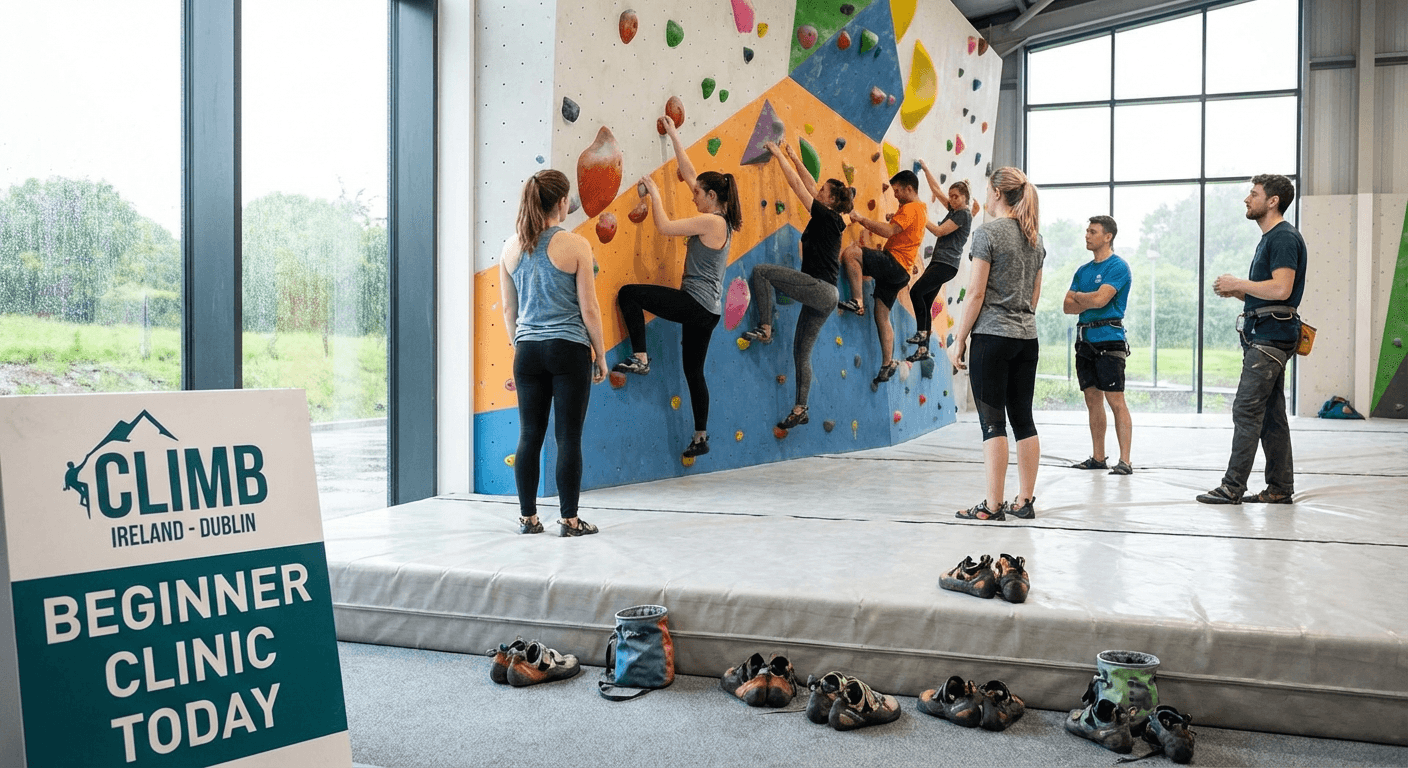
If you've never tied into a rope or chalked your hands, indoor climbing is where your Irish climbing journey begins. Ireland's climbing gyms have exploded in popularity over the past decade, offering world-class facilities that rival anything in continental Europe.
Why Start Indoors?
Indoor climbing eliminates the variables that make outdoor climbing intimidating for beginners. The holds are clearly marked, the landings are padded, and experienced instructors can teach proper technique in a controlled environment. You can focus on movement, body position, and reading sequences without worrying about weather, loose rock, or complicated rope systems.
Most importantly, indoor climbing builds the foundational strength and technique that translate directly to outdoor climbing. The pull muscles, core stability, and footwork precision you develop on plastic holds will serve you well when you finally touch real rock.
Top Indoor Climbing Gyms in Ireland
The Wall (Dublin): Dublin's premier climbing facility features extensive bouldering areas, roped climbing walls up to 15 meters, and comprehensive instruction programs. Their beginner courses systematically progress from basic movement to lead climbing.
Awesome Walls (Multiple Locations): With facilities in Dublin, Cork, and Limerick, Awesome Walls offers consistent quality across Ireland. Their Dublin location includes a dedicated beginners' area and auto-belay systems for solo climbers.
Gravity Climbing Centre (Dublin): Known for its steep, powerful bouldering and comprehensive training facilities. Gravity caters to serious climbers but maintains excellent beginner programming.
The Mountain Club (Belfast): Northern Ireland's premier climbing wall offers both roped climbing and extensive bouldering, plus regular outdoor trips to local crags.
What to Expect from Your First Visit
Most gyms offer introductory sessions that include equipment rental, basic instruction, and supervised climbing time. Expect to learn:
- Basic safety: How to use harnesses, tie knots, and communicate with your belay partner
- Movement fundamentals: Foot placement, body positioning, and efficient climbing technique
- Gym etiquette: Taking turns, not walking under climbers, and respecting the space
A typical first session lasts 1-2 hours and leaves you with forearms pumped and a newfound appreciation for how climbing demands both physical strength and problem-solving ability.
Cost
- Day pass: €15-20
- Introduction session: €30-40 (includes equipment)
- Monthly membership: €60-80
Best Outdoor Rock Climbing Locations in Ireland
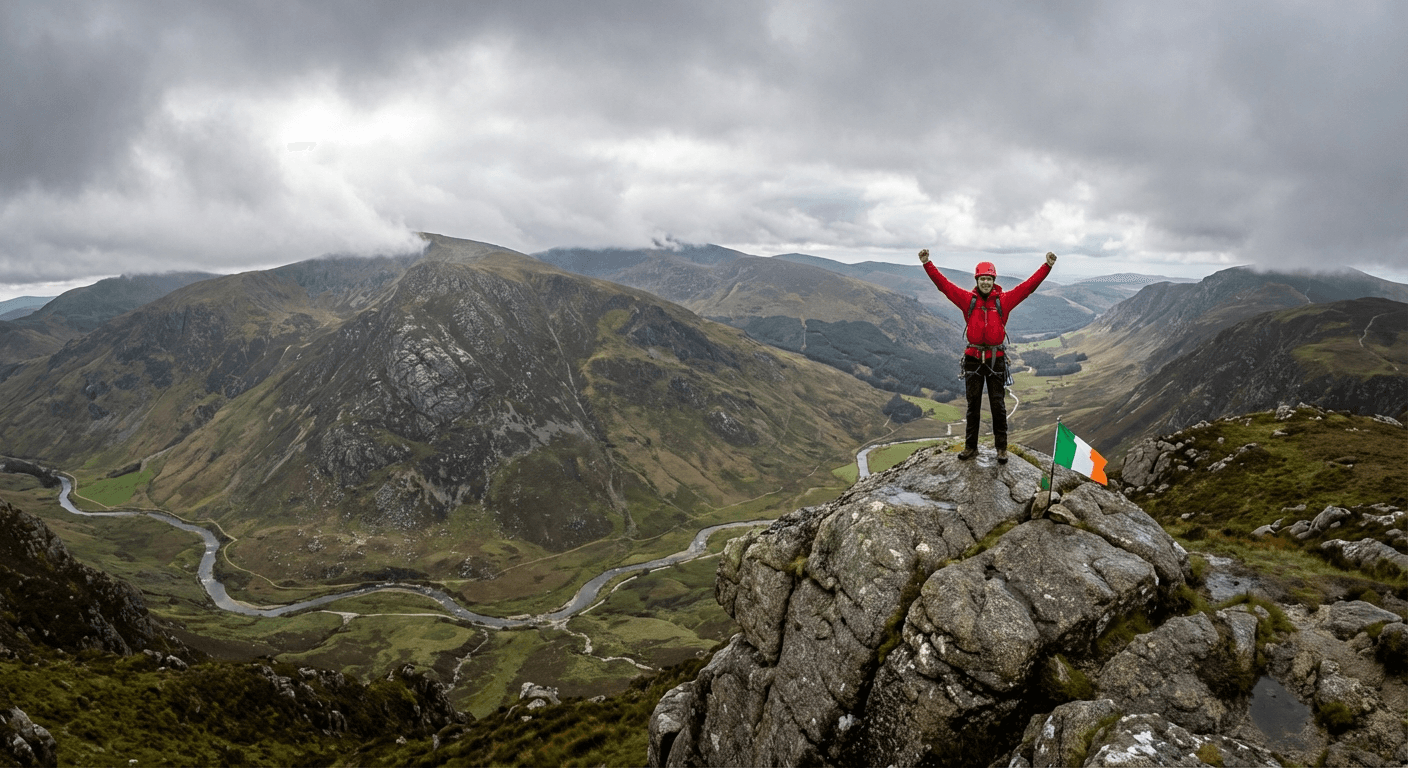
Once you've mastered the basics indoors, Ireland's outdoor crags beckon. The country's diverse geology creates distinct climbing experiences across different regions.
1. County Wicklow: The Garden of Ireland's Granite Playground
Wicklow's granite domes and outcrops offer Ireland's most accessible outdoor climbing, just an hour from Dublin. The mountain scenery is spectacular, with routes overlooking glacial lakes and heather-covered hills.
Glendalough: The historic valley offers multiple crags within walking distance of the monastic settlement. The Upper Lake crags provide single-pitch routes from Diff to E2, with the stunning lake as your backdrop.
Luggala: This private estate contains some of Ireland's finest granite climbing. Access requires permission, but the extensive bouldering and trad routes reward the effort. The friction-dependent granite here is excellent for developing footwork.
Glendasan Valley: Multiple crags offering everything from beginner-friendly slabs to steep overhangs. The roadside access makes it popular for after-work sessions.
Best for: Beginners transitioning outdoors, and Dublin-based climbers wanting quick access
Looking for a local climbing guide in Wicklow? Browse tour guides in Wicklow.
2. The Burren, County Clare: Limestone Perfection
The Burren's karst landscape might look barren from a distance, but climbers know it hides some of Ireland's finest sport climbing. The grey limestone offers varied texture—from slick, technical slabs to tufa-draped overhangs.
Ailladie (The Flaggy Shore): Ireland's premier sport climbing venue features over 200 routes on pristine limestone. The seaside location adds drama, with waves crashing below the cliff base. Grades range from F4 to F8c, with particular strengths in the F6a-F7a range.
** Ballyryan:** A compact but excellent crag with grades from F4 to F7b+. The south-facing aspect makes it a year-round venue, though summer sun can make it too hot.
Moy Rock: Traditional climbing on variable limestone. The multi-pitch routes here provide adventurous outings with serious mountaineering feel.
Best for: Sport climbers seeking high-quality limestone, those wanting coastal climbing
3. County Donegal: Sea Stacks and Granite Wildness
Donegal delivers Ireland's most dramatic climbing. The rugged northwest coastline rises from the Atlantic in a chaos of granite cliffs, sea stacks, and hidden zawns.
Poisoned Glen: Not actually poisoned—just stunning. This hanging valley beneath Errigal mountain contains Donegal's most accessible crag. The granite here is rough and featured, offering excellent friction for beginners.
Cruit Island: One of Ireland's best-kept climbing secrets. The island's granite outcrops offer single and multi-pitch routes with spectacular Atlantic views. The peaceful setting belies the quality of the climbing.
The Sea Stacks: Donegal's legendary sea stacks represent committing, adventurous climbing. Cnoc na Mara, An Bhuideal, and The Sturrall are serious objectives requiring boat access, tidal knowledge, and solid climbing ability. These are not for beginners—but they're among the most spectacular climbs in the British Isles.
Best for: Adventurous climbers seeking wild settings, experienced parties ready for sea stack challenges
Find experienced tour guides in Donegal for your climbing adventure.
4. County Kerry: Sandstone and Scenery
Kerry combines quality climbing with Ireland's most iconic landscapes. The sandstone here offers different texture from granite or limestone, with unique movement and protection challenges.
The Longstone: A prominent sea stack near Dingle accessible at low tide. The climbing is moderate but the setting is spectacular.
Kerry Mountain Crags: Various venues offering everything from roadside bouldering to adventurous mountain routes. The rock quality varies, so local knowledge helps.
Best for: Climbers wanting to combine climbing with Kerry's other attractions
Find experienced tour guides in Kerry for your adventure.
Essential Rock Climbing Gear for Ireland
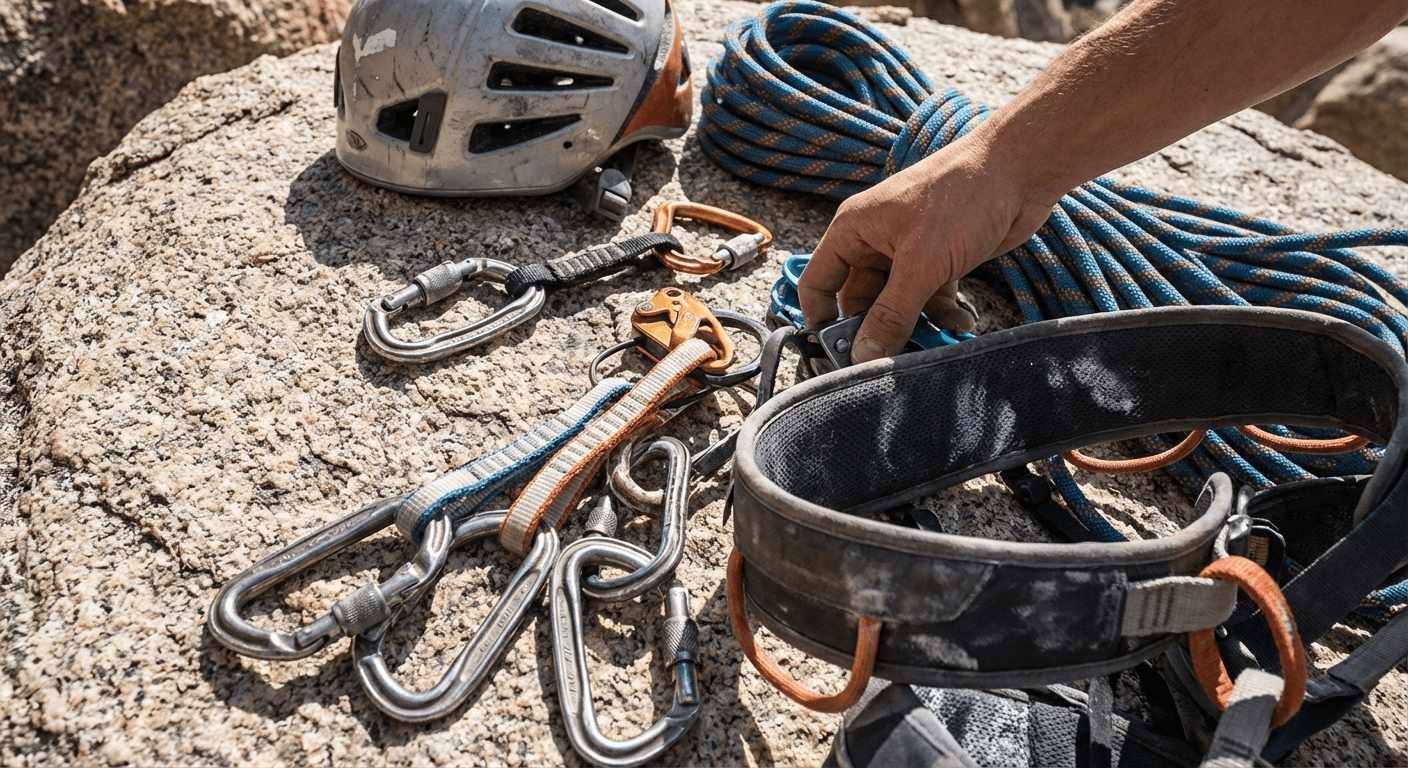
Irish climbing demands reliable gear. The weather can change rapidly, and the rock—whether granite, limestone, or sandstone—can be abrasive. Here's what you need.
The Essentials
Climbing Shoes: Fit is everything. Shoes should be snug but not painfully tight. For beginners, neutral-shaped shoes with moderate stiffness provide comfort while learning. Expect to pay €100-150 for quality entry-level shoes.
Harness: A comfortable, well-fitting harness is essential. Beginners should choose padded models with adjustable leg loops. Check that gear loops are easily accessible. Budget €60-100.
Helmet: Non-negotiable for outdoor climbing. Falling rock, swinging gear, and unexpected falls all make helmets essential. Modern climbing helmets are lightweight and well-ventilated. €50-100.
Chalk and Chalk Bag: Chalk keeps your hands dry, improving friction on holds. A chalk bag attaches to your harness for easy access during climbs. €20-30 total.
Belay Device and Locking Carabiner: These allow you to safely manage the rope for your climbing partner. The ATC-style devices are most common for beginners. €40-60 for the pair.
For Outdoor Climbing
Rope: A 60-meter dynamic rope suffices for most Irish crags. Dry-treated ropes resist water absorption, important for Ireland's damp climate. €150-250.
Quickdraws: These connect your rope to bolted anchors. A set of 12-16 quickdraws covers most sport climbing routes. €150-200 for a full set.
Trad Rack (for traditional climbing): If you plan to climb routes without fixed bolts, you'll need nuts, hexes, cams, and slings. Building a full trad rack is expensive (€500+), so consider hiring guides or partnering with experienced climbers initially.

Clothing
Irish weather is changeable. Pack:
- Synthetic or wool base layers (avoid cotton)
- Windproof outer layer
- Warm layer for belaying
- Sun protection (yes, really—the Irish sun can be fierce when it appears)
The Legendary Irish Sea Stacks
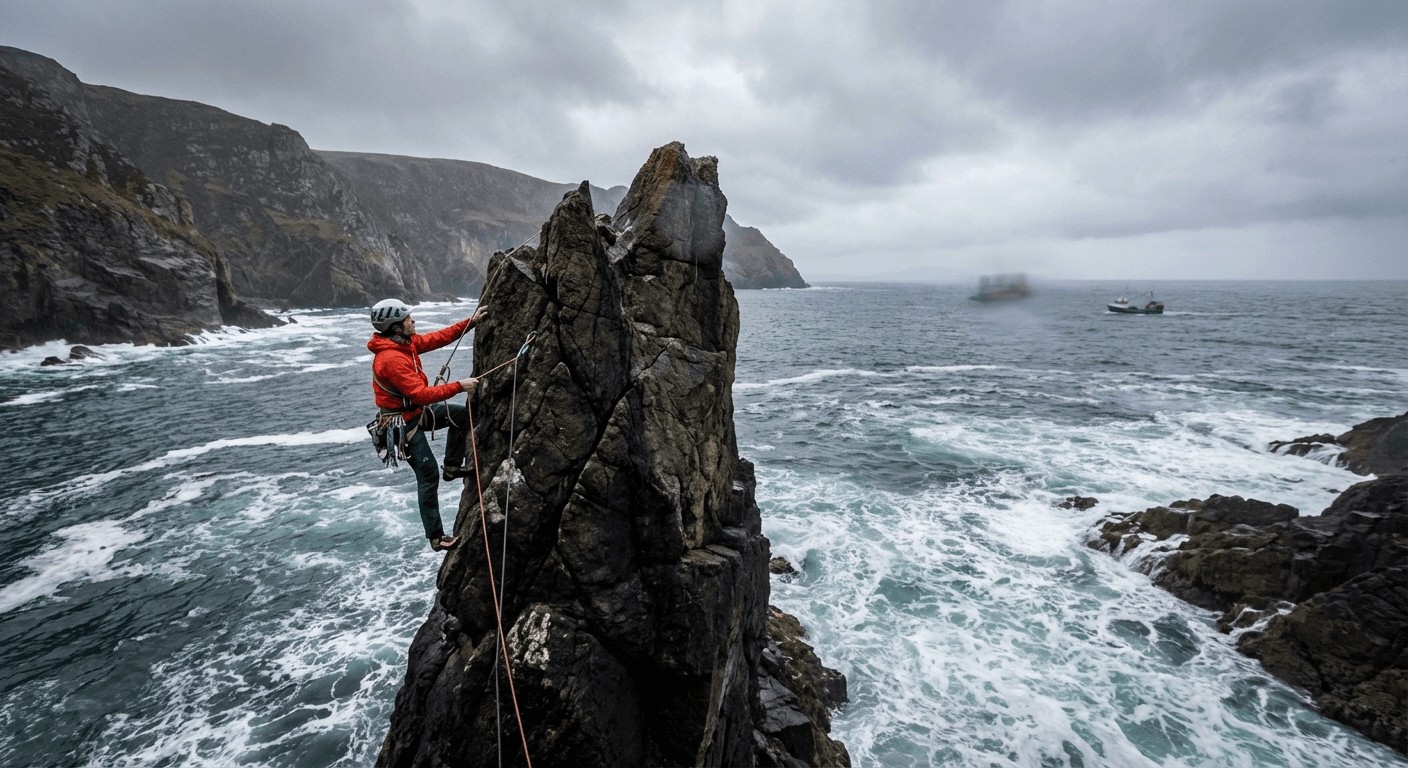
No article on Irish climbing is complete without mentioning the sea stacks. These vertical rock islands rise from the Atlantic, accessible only by boat or treacherous coastal approaches. Climbing them is committing, adventurous, and utterly unforgettable.
What Makes Sea Stacks Special
Sea stacks represent adventure climbing in its purest form. You must time tides, read sea conditions, and often commit to routes with no possibility of retreat once started. The exposure is total—you're climbing above crashing waves, with seabirds as your only witnesses.
The climbing itself is often moderate (VS to E1 in traditional grades), but the commitment level is serious. This isn't gym climbing with padded floors and quick rescues. Mistakes have consequences.
Notable Sea Stacks
Cnoc na Mara (County Donegal): Perhaps Ireland's most beautiful sea stack. The approach involves a 100-meter abseil to the ocean, then a boat transfer or tidal rock hop to the stack base. The classic route follows a natural line of weakness up the landward face.
An Bhuideal (County Donegal): "The Bottle" rises like a ship's prow from the Atlantic. The climbing is steep and intimidating, with the sea surging below. First ascents here made international climbing news.
The Sturrall (County Donegal): A massive sea arch rather than a stack, but equally impressive. The route through the arch provides unique climbing unlike anything else in Ireland.
Accessing Sea Stacks
These are not beginner objectives. Sea stack climbing requires:
- Solid traditional climbing ability (minimum VS leader)
- Tidal knowledge and timing
- Boat access or confident sea swimming
- Experience with committing, serious climbing
- Partners you trust with your life
Most climbers access sea stacks through guided services or by partnering with experienced locals. Guidebooks and online resources provide beta, but local knowledge is irreplaceable.
Rock Climbing for Families
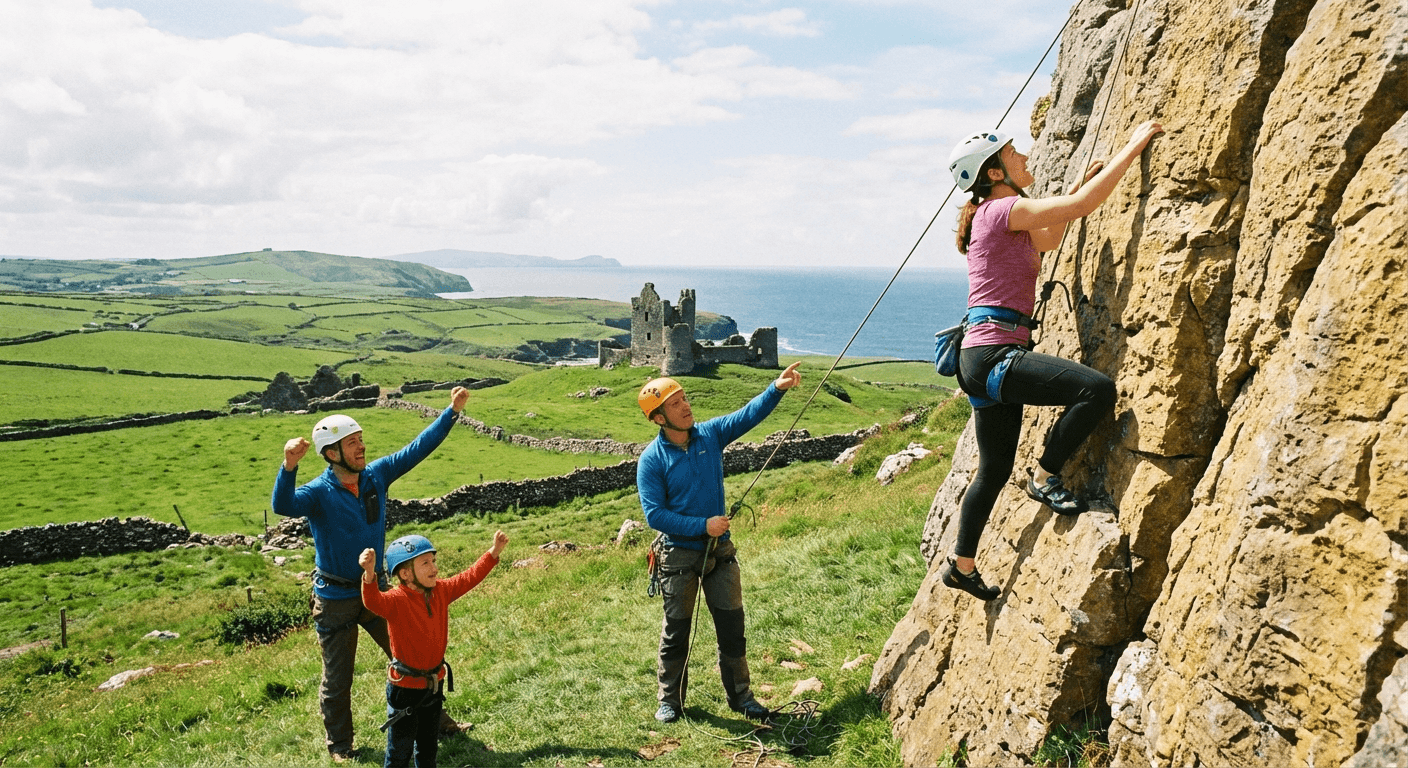
Rock climbing is surprisingly family-friendly. Children naturally take to the vertical world, and the sport builds confidence, problem-solving skills, and physical fitness.
Getting Kids Started
Most indoor gyms offer youth programs starting from age 5-6. These focus on:
- Basic movement and coordination
- Safety awareness
- Building comfort with heights
- Fun and games that develop climbing skills
Kids often progress quickly, their light bodies and natural flexibility giving them advantages over adult beginners.

Family-Friendly Outdoor Venues
Wicklow: The accessible crags near Glendalough offer easy routes suitable for children. The surrounding area provides non-climbing activities for rest days.
The Burren: While many Burren routes are serious, the area around Ailladie has some easier options, plus fascinating geology and wildlife to engage younger family members.
Indoor Gyms: All major Irish climbing gyms cater to families, offering birthday parties, youth clubs, and family sessions.
Safety Considerations for Kids
- Ensure proper harness fitting—children's proportions differ from adults
- Supervision is constant and focused
- Match routes to ability levels
- Keep sessions short—attention spans and finger strength are limited
- Make it fun, not a test
Planning Your Irish Rock Climbing Trip
When to Go
Spring (April-May): Excellent friction on cool rock, longer days, and fewer midges. Often the best climbing conditions.
Summer (June-August): Most reliable weather, but midges can be ferocious in western areas. Early morning and late evening sessions avoid the worst heat and bugs.
Autumn (September-October): Cooler temperatures return, bringing prime friction. Midges die off. October can deliver perfect climbing weather.
Winter: Possible in sheltered, south-facing crags, but short days and damp conditions make it challenging. Indoor climbing dominates.
Guided Climbing in Ireland
For visitors wanting to maximize their Irish climbing experience, guided services offer:
- Local knowledge of conditions and route quality
- Equipment provision
- Instruction tailored to your ability
- Access to restricted or sensitive areas
- Safety management on more serious routes
Many Irish climbing guides are internationally certified (IFMGA) and passionate about sharing their local crags.
Guidebooks and Resources
"Climbs in Ireland" (Mountaineering Ireland) covers the major venues.
"The Climbers' Guide to the Burren" provides comprehensive coverage of Clare's limestone.
Online: The Irish Climbing Wiki and UKC Logbook offer up-to-date route information and conditions reports.
From First Holds to Sea Stack Summits
Rock climbing in Ireland offers a lifetime of progression. You might start nervously pulling on plastic holds in a Dublin gym, progress to leading your first outdoor routes in Wicklow, clip bolts on pristine Burren limestone, and eventually—if the climbing gods smile—stand atop a Donegal sea stack with the Atlantic roaring below and Ireland stretching away to the horizon.
The journey is physical, mental, and deeply rewarding. Each grade you climb, each new crag you visit, each climbing partnership you form adds layers to your experience.
Irish climbing isn't about numbers or bragging rights. It's about wild places, good rock, and the timeless challenge of moving upward. The crags are waiting. The rock is sharp. And somewhere out there—maybe on a hidden Donegal headland or a sun-warmed Wicklow dome—is your next perfect climb.
Grab your shoes. It's time to climb.
Table of Contents
Share this post
More from the Blog

Cork to Blarney Castle Day Trip: The Stone, the Gardens and What Else to See
Plan a Cork to Blarney Castle day trip. Kiss the stone, explore the Poison Garden, and add Cork city, Fota or Kinsale for a full day out.

Cork to Cobh Day Trip: Titanic, Colourful Houses and Harbour History
Plan a Cork to Cobh day trip by train, car or private driver. Explore Titanic history, St Colman's Cathedral, Spike Island and the best harbour views.

Cork to Killarney Day Trip: Lakes, Mountains and Muckross in One Day
A Cork to Killarney day trip is a longer escape into Kerry. Here's how to plan the drive, what to see in Killarney National Park, and why a private driver helps.