
Coasteering in Ireland: Best Locations, What to Expect & Safety Tips
Imagine standing on the edge of a rugged Irish cliff, the Atlantic crashing against rocks far below, your heart pounding with a mix of fear and exhilaration. You take a deep breath, feel the salty spray on your face, and leap—plunging into crystal-clear turquoise water, surfacing with a laugh to the cheers of your companions. This is coasteering in Ireland, where adventure meets the raw beauty of the Wild Atlantic Way.
Coasteering is the ultimate coastal adventure—a thrilling blend of rock climbing, cliff jumping, swimming, and cave exploration that takes you where boats can't reach and walking won't suffice. Born in Wales in the 1980s, this adrenaline-fueled activity has found its perfect home along Ireland's dramatic coastline, where ancient cliffs, sea caves, and Atlantic swells create natural adventure playgrounds.
Unlike passive sightseeing, coasteering demands full engagement. You'll scramble across barnacle-covered rocks, time your movements with the swell, swim through narrow sea caves, and—if your courage holds—launch yourself from cliffs into the churning waters below. It's physical, primal, and utterly unforgettable.
This guide will show you where to go coasteering in Ireland, what to expect from your first adventure, how to stay safe, and why this might just become the highlight of your Irish holiday.
(This guide is part of our master hub: Unleash Your Wild Side: The Complete Guide to Adventure & Outdoor Activities in Ireland. For other coastal adventures, explore our guides to surfing in Ireland or sea kayaking in Ireland.)
What is Coasteering?
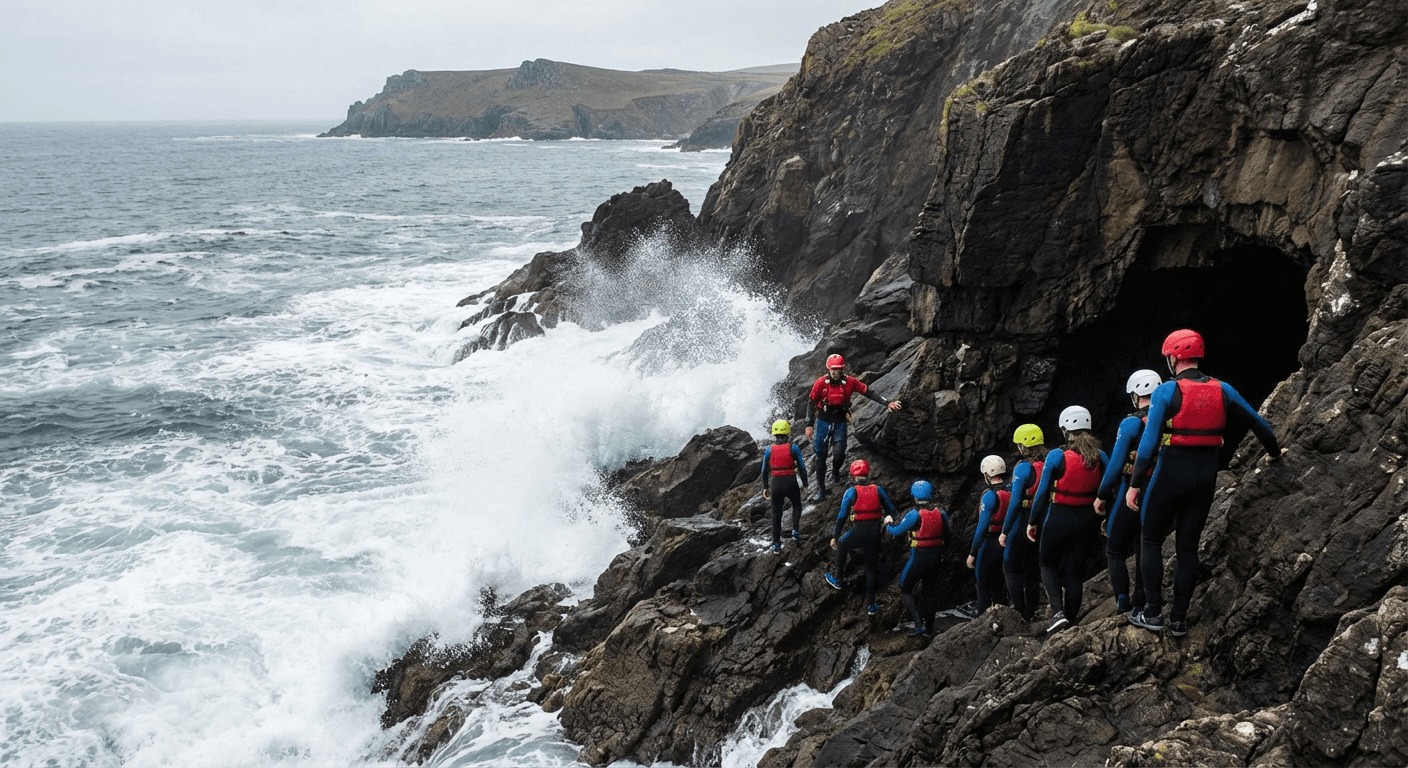
Coasteering is best described as adventure swimming with a vertical element. Participants wear wetsuits, helmets, and buoyancy aids, then traverse sections of coastline that are otherwise inaccessible—climbing over rocks, swimming through gullies, exploring caves, and jumping from cliffs into the sea.
The Essential Elements
Scrambling: Moving across rocks at the water's edge, using hands and feet to navigate barnacle-covered surfaces. It's like bouldering, but with the added challenge of waves and slippery seaweed.
Swimming: Covering distances between rock outcrops, often through choppy water or narrow channels. Strong swimming skills help, but buoyancy aids provide support for less confident swimmers.
Cliff Jumping: The adrenaline highlight—launching from heights ranging from 2 meters (beginner-friendly) to 10+ meters (for the brave). Guides know the safe landing zones and appropriate heights for conditions.
Cave Exploration: Swimming into sea caves, experiencing total darkness, and emerging through blowholes or hidden exits. Some caves contain ancient geological formations or evidence of past human habitation.
Who Can Go Coasteering?
Coasteering suits a wide range of ages and fitness levels, though basic swimming ability is essential. Most operators accept participants from age 8 upwards, with family-friendly sessions focusing on lower jumps and gentler terrain. Advanced sessions exist for fit adults seeking bigger challenges.
The activity is particularly popular with:
- Adventure-seeking families
- Stag and hen parties
- Corporate team-building groups
- Solo travelers wanting guided experiences
- Outdoor enthusiasts seeking unique thrills
Best Coasteering Locations in Ireland
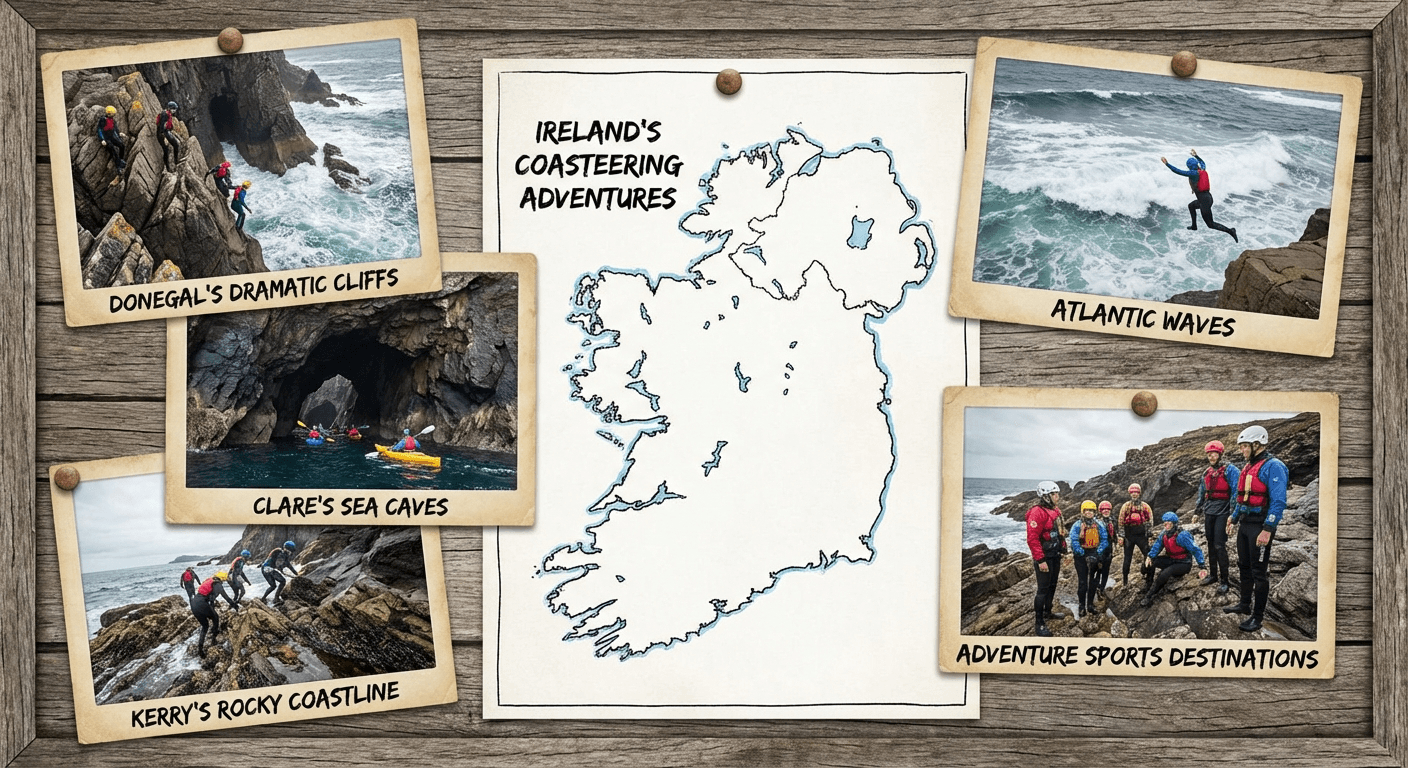
Ireland's 3,000-kilometer coastline offers endless coasteering possibilities, but some locations stand out for their combination of dramatic scenery, suitable terrain, and qualified operators.
1. County Clare: The Burren Coast
The limestone coastline of the Burren provides a spectacular coasteering playground. The karst landscape creates natural platforms, caves, and channels that are perfect for exploration.
Highlights:
- Poulnabrone Portal Tomb area: Cliffs with reliable jump spots
- Sea caves: Natural tunnels formed by wave action over millennia
- Marine life: The clear Atlantic water offers excellent visibility for spotting seals, dolphins, and myriad fish species
Best for: All skill levels, with routes ranging from family-friendly to adrenaline-pumping
Looking for a local adventure guide in Clare? Browse tour guides in Clare.
2. County Donegal: The Wild Atlantic Coast
Donegal's rugged northwest coast delivers some of Ireland's most dramatic coasteering. The sheer cliffs, remote beaches, and powerful Atlantic swells create genuine wilderness experiences.
Highlights:
- Slieve League area: Europe's highest sea cliffs provide serious adrenaline
- Hidden caves: Smugglers' caves and natural blowholes
- Crystal waters: Atlantic clarity rivals tropical destinations
Best for: Confident swimmers and adventure seekers wanting wild conditions
Find experienced tour guides in Donegal for your coastal adventure.
3. County Kerry: Dingle Peninsula

The Dingle Peninsula combines dramatic scenery with relatively sheltered conditions, making it ideal for first-time coasteerers.
Highlights:
- Brandon Creek: Reliable conditions with multiple jump heights
- Dolphin encounters: Fungie the dolphin's territory
- Ancient sites: Coasteering past beehive huts and early Christian remains
Best for: Families and beginners seeking beautiful scenery with moderate challenge
4. County Cork: Baltimore & West Cork
West Cork's indented coastline provides countless coasteering venues, with Baltimore being the established hub.
Highlights:
- Sherkin Island circumnavigation: A full-day adventure around the island
- Fastnet Rock views: Coasteering with Ireland's southernmost point visible
- Calm conditions: Sheltered from Atlantic swell
Best for: Groups wanting varied terrain and reliable conditions
5. County Galway: Connemara Coast
Connemara's wild beauty translates to spectacular coasteering, with granite cliffs and crystal-clear waters.
Highlights:
- Mweenish Island: Remote adventure requiring boat access
- Coral beaches: Unique limestone formations
- Traditional culture: Gaeltacht (Irish-speaking) area
Best for: Experienced coasteerers seeking remote, challenging terrain
What to Expect on a Coasteering Session
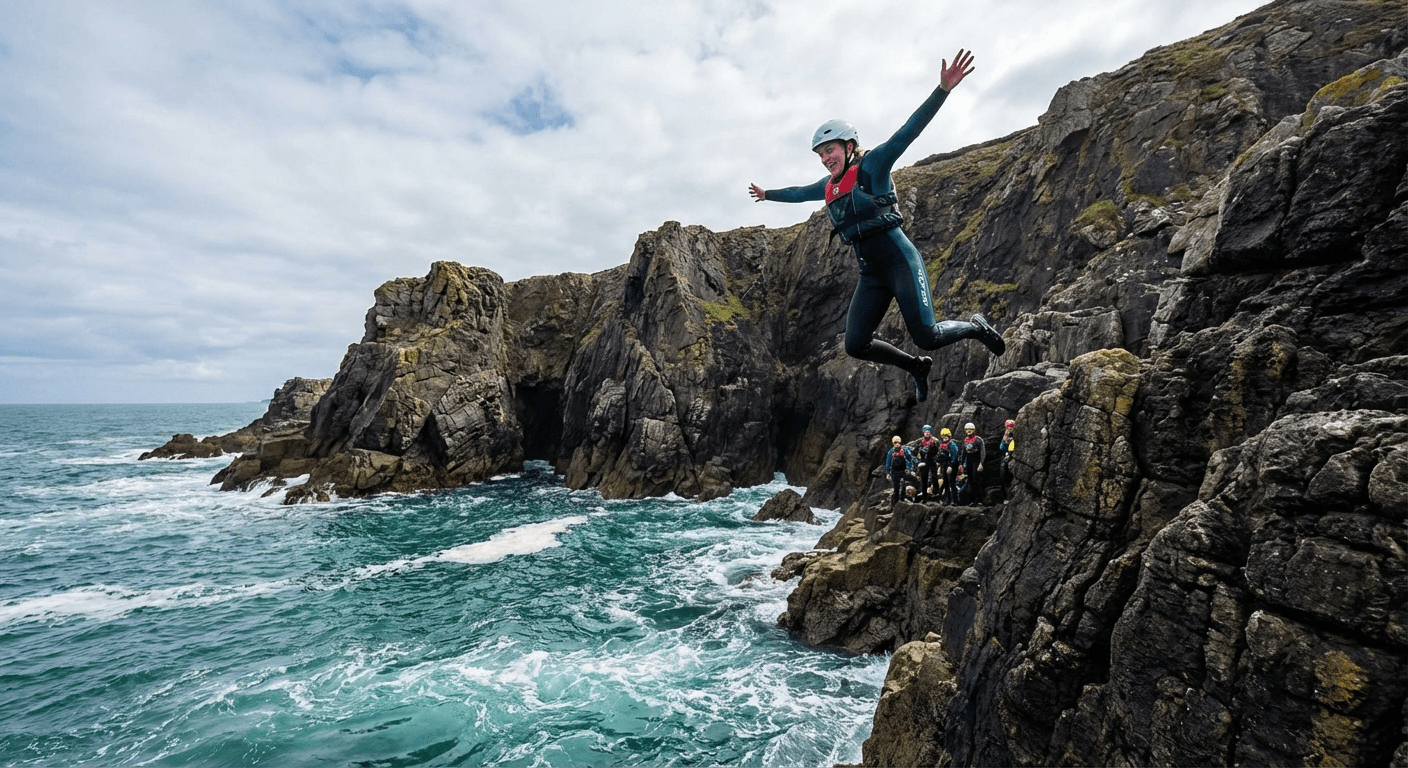
Understanding the typical coasteering experience helps you prepare mentally and physically for your adventure.
Before You Start
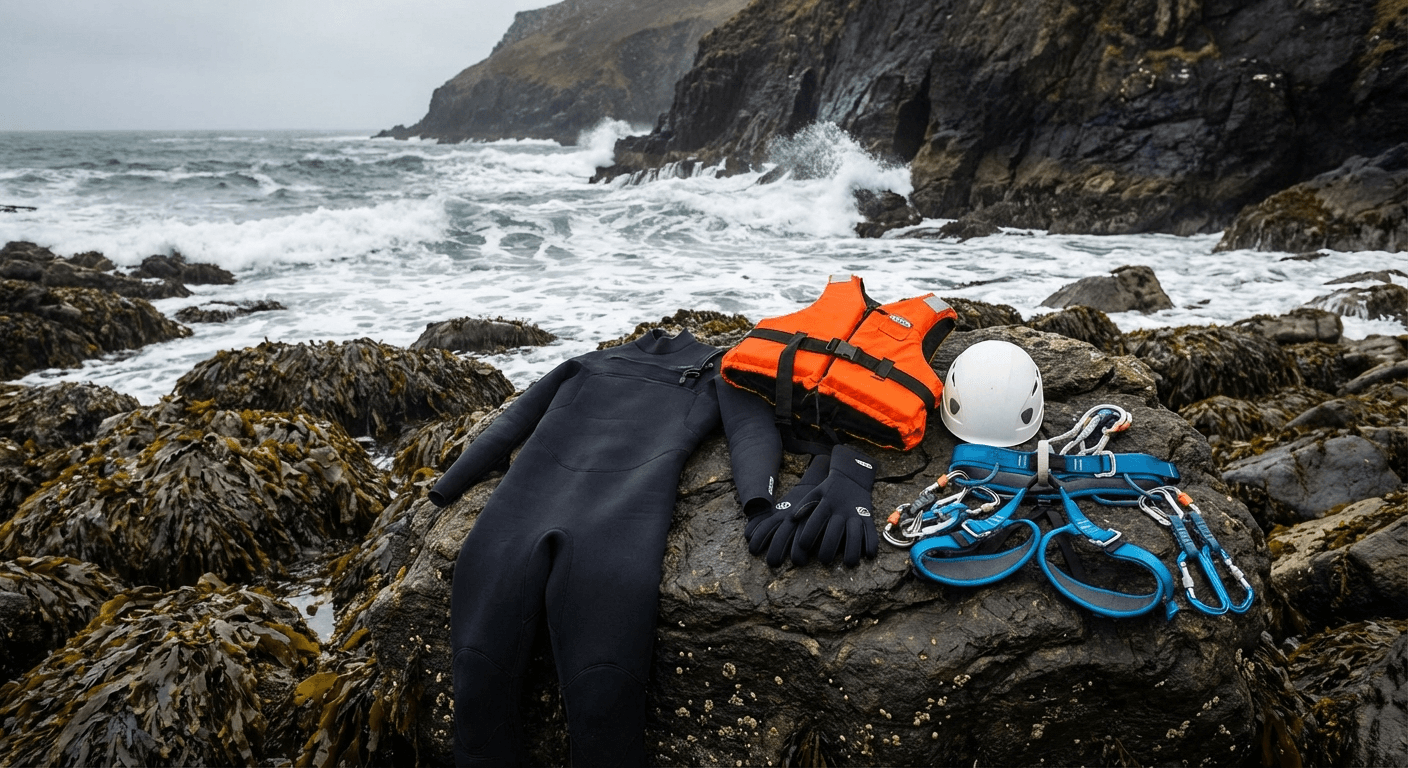
Your session begins with kitting out. Operators provide:
- Thick wetsuit (5mm+): Essential for Irish water temperatures (10-14°C)
- Buoyancy aid: Helps with swimming and provides impact protection
- Helmet: Protects against rock impacts
- Neoprene gloves and socks: Protect extremities from barnacles and cold
Guides deliver comprehensive safety briefings covering:
- Hand signals for communication
- Safe jumping techniques (straight body, arms across chest)
- How to approach and scramble on rocks
- Swimming techniques while wearing bulky gear
- Emergency procedures
The Adventure
A typical session lasts 2-4 hours and covers 1-3 kilometers of coastline. Guides lead you through progressively challenging features:
Warm-up: Easy scrambling and low jumps to build confidence
Building challenge: Higher jumps, longer swims, and more technical rock sections
Highlights: The "big jumps"—typically 5-8 meters for standard sessions, higher for advanced groups
Exploration: Sea caves, blowholes, and wildlife spotting
Throughout, guides read the conditions, adjusting routes based on swell, tide, and group capability. They'll encourage you to push your limits, but never pressure you beyond your comfort zone.
Physical Demands
Coasteering is moderately physically demanding. Expect to:
- Swim distances of 50-200 meters between features
- Climb over rocks using upper body strength
- Hike to/from the entry/exit points (sometimes 20+ minutes)
- Handle cold water immersion (wetsuits help enormously)
Good general fitness helps, but you don't need to be an athlete. Guides accommodate different fitness levels by adjusting the pace and features attempted.
Essential Safety Information
Coasteering involves inherent risks, but professional operators manage these through training, equipment, and protocols.
Choosing a Safe Operator
Essential qualifications:
- Licensed by relevant Irish authorities
- Certified coasteering guides with first aid training
- Comprehensive insurance
- Safety equipment in good condition
- Established emergency procedures
Red flags:
- No visible certification or insurance
- Poorly maintained equipment
- Inadequate safety briefings
- Pressure to attempt jumps you're uncomfortable with
- Operating in dangerous conditions
Understanding the Risks
Objective hazards:
- Sea conditions: Swell, tide, and wind affect safety
- Hypothermia: Irish waters are cold; proper wetsuits are essential
- Rock injuries: Barnacles cut; impacts bruise
- Entrapment: Getting stuck in caves or gullies
Risk mitigation: Professional guides constantly assess conditions, choosing appropriate routes and features. They carry rescue equipment and communication devices. Group sizes are limited (typically 6-12) to maintain control.
Personal Preparation
Before booking:
- Honestly assess your swimming ability
- Disclose medical conditions (asthma, heart issues, epilepsy)
- Check minimum age requirements for your group
On the day:
- Eat a light meal 2-3 hours before
- Avoid alcohol
- Bring any personal medications
- Inform guides of concerns or limitations
Coasteering for Families
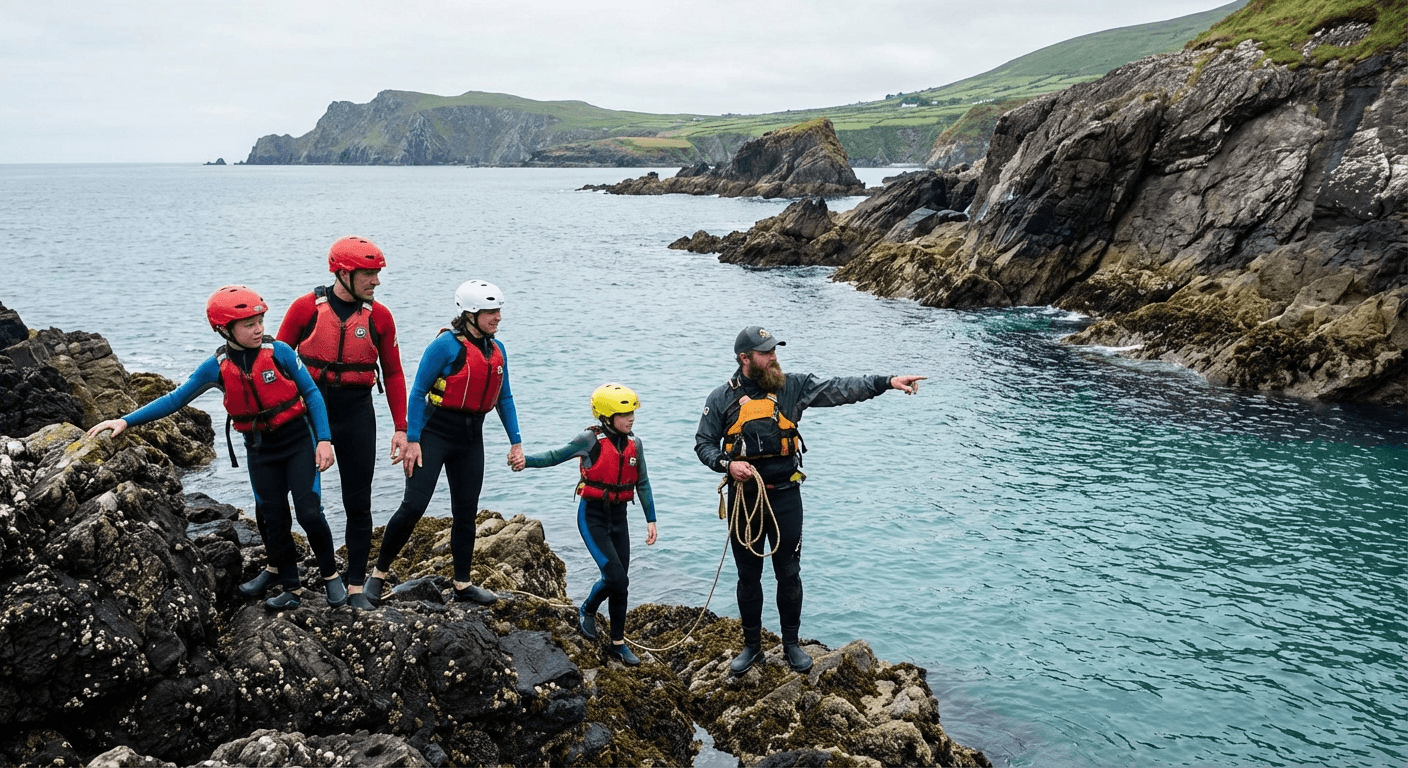
Coasteering isn't just for adrenaline junkies—many operators specialize in family-friendly sessions that children love.
Family-Friendly Features
- Lower jumps: Typically 1-3 meters, age-appropriate
- Cave exploration: The "secret tunnel" aspect appeals to kids
- Wildlife spotting: Seals, sea birds, and marine creatures
- Games and challenges: Guides structure activities to engage younger participants
- Safety focus: Extra attention on younger adventurers
Age Guidelines
Most operators accept children from age 8, though this varies by operator and location. Teenagers typically thrive, embracing the challenge and adventure. Parents should be prepared to participate—family sessions work best when adults model enthusiasm.
Best Family Locations
- Dingle, Kerry: Reliable conditions, moderate challenge
- Burren, Clare: Varied terrain with easy escape routes
- West Cork: Sheltered waters, professional operators
Planning Your Coasteering Adventure
When to Go
Peak season (June-August): Best weather and sea conditions, warmest water (relatively—still cold!), longest days. Book well in advance.
Shoulder season (April-May, September-October): Fewer crowds, lower prices, still decent conditions. Water is colder but manageable with proper wetsuits.
Winter: Limited operators run winter sessions for hardy enthusiasts. Serious cold but empty coastlines.
What to Bring
Essential:
- Swimwear (worn under wetsuit)
- Towel
- Change of clothes
- Water bottle
- Sunscreen (yes, even in Ireland!)
Optional:
- Waterproof camera (operators often take photos)
- Snacks for afterward
- Earplugs if sensitive to cold water
Cost
- Half-day session: €50-80 per person
- Full-day adventure: €100-150
- Private groups: €400-600+ depending on size
- Family discounts: Often available
Ready to Take the Plunge?
Coasteering in Ireland offers something rare—a genuine adventure that pushes your boundaries while immersing you in some of Europe's most dramatic coastal scenery. Whether you're launching from a 10-meter cliff or simply scrambling over rocks at water level, you'll experience the Irish coast in a way few visitors ever do.
The combination of physical challenge, natural beauty, and the raw power of the Atlantic creates memories that last long after your wetsuit has dried. It's not just an activity; it's a story you'll tell for years.
The cliff is waiting. Are you ready to jump?
Table of Contents
Share this post
More from the Blog

Cork to Blarney Castle Day Trip: The Stone, the Gardens and What Else to See
Plan a Cork to Blarney Castle day trip. Kiss the stone, explore the Poison Garden, and add Cork city, Fota or Kinsale for a full day out.

Cork to Cobh Day Trip: Titanic, Colourful Houses and Harbour History
Plan a Cork to Cobh day trip by train, car or private driver. Explore Titanic history, St Colman's Cathedral, Spike Island and the best harbour views.

Cork to Killarney Day Trip: Lakes, Mountains and Muckross in One Day
A Cork to Killarney day trip is a longer escape into Kerry. Here's how to plan the drive, what to see in Killarney National Park, and why a private driver helps.