
Climbing the Round Tower: The Best View in the Southeast
In most medieval cities, the castle is the highest point. In Kilkenny, the castle is impressive, but it is the Church that touches the clouds.
Standing at 100 feet tall, the Round Tower at St. Canice’s Cathedral is the oldest standing structure in Kilkenny City. Built in the 9th century, it has survived Viking raids, Norman invasions, and civil wars. Today, it offers visitors a unique challenge: it is one of only two round towers in all of Ireland that you can legally climb.
For the active American traveler, this is not just a sightseeing stop; it is a physical adventure that rewards you with the most spectacular 360-degree view in the Southeast.
The Climb: 121 Steps to Glory
Let’s be clear: this is not a modern tourist elevator experience. This is a medieval ladder climb.
The tower was originally built as a refuge and a lookout. The door is placed high above the ground (originally reachable only by a retractable rope ladder) to keep attackers out. Today, a modern staircase gets you to the door, but once inside, the real work begins.
You will ascend 121 steps through a series of seven internal wooden platforms and ladders.
- The Atmosphere: The interior is tight, dimly lit, and smells of ancient stone and dust. It feels like stepping inside a history book.
- The Difficulty: It is steep. You need both hands free to grip the rails. It is not recommended for those with claustrophobia or a severe fear of heights, but for anyone with average mobility, it is an exhilarating scramble.
- The Summit: As you emerge onto the top platform, the wind hits you, and the view opens up. Unlike other towers that have a conical roof, St. Canice’s lost its roof centuries ago (likely in a storm), meaning you have an unobstructed, open-air view of the entire county.

The View: Understanding the "Two Towns"
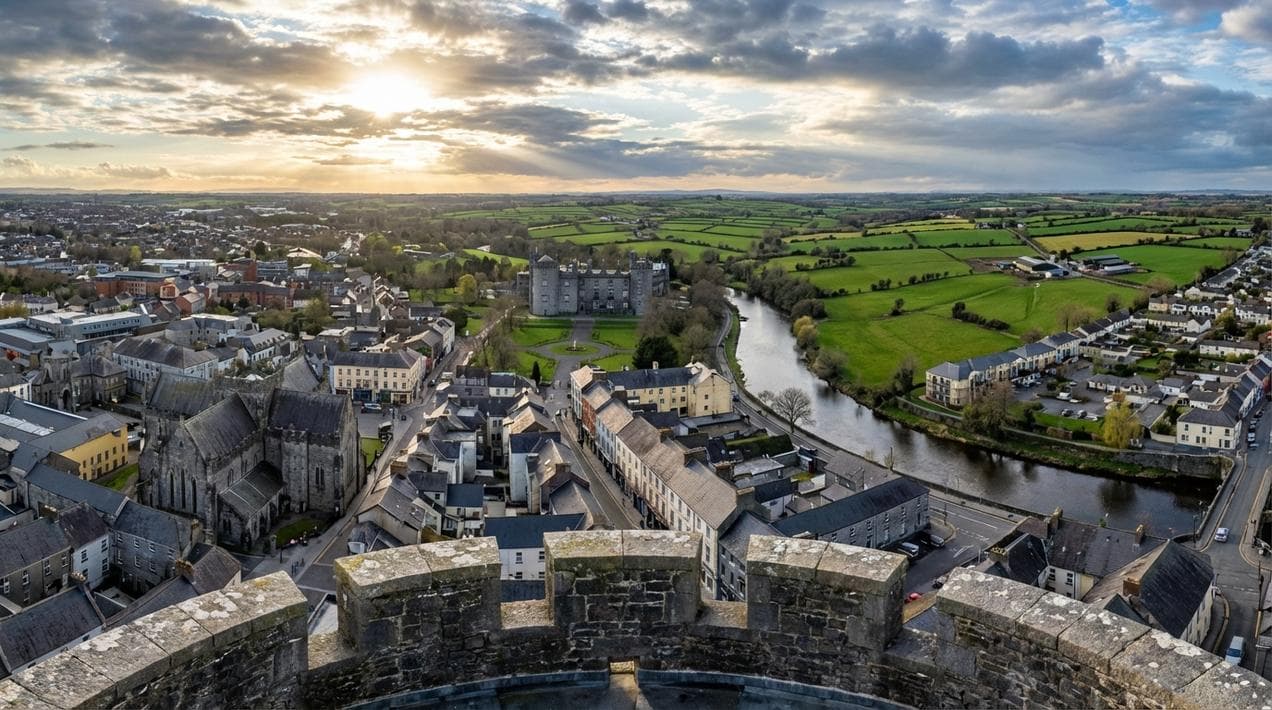
From the top, you don't just see pretty fields; you see the political history of Kilkenny laid out like a map.
To the south, you see the massive stone bulk of Kilkenny Castle. To the north, you are standing in the heart of the ecclesiastical center. For centuries, Kilkenny was actually two separate towns:
- Irishtown: The area around the Cathedral, where the native Irish lived.
- High Town: The walled area around the Castle, where the Anglo-Norman conquerors lived.
From your vantage point 100 feet up, you can trace the invisible line of the old city walls and the Medieval Mile that connects these two rival power centers. It is a geography lesson you cannot get from the ground.
The Cathedral Below: Cromwell’s Stables
Once you have descended (carefully!) back to solid ground, you must explore the Cathedral itself. It is a masterpiece of Early Gothic architecture, but it bears the scars of Ireland’s most hated villain: Oliver Cromwell.
In 1650, Cromwell’s army captured Kilkenny. They had zero respect for Catholic or Anglican churches.
- The Desecration: Cromwell used this magnificent cathedral as a stable for his cavalry horses. They smashed the stained glass windows and desecrated the tombs.
- The Restoration: The cathedral remained roofless and abandoned for 12 years until the Restoration of the monarchy. When you walk through the nave today, look at the floors and the walls—you are looking at a building that was brought back from the dead.

The Tombs of the Knights
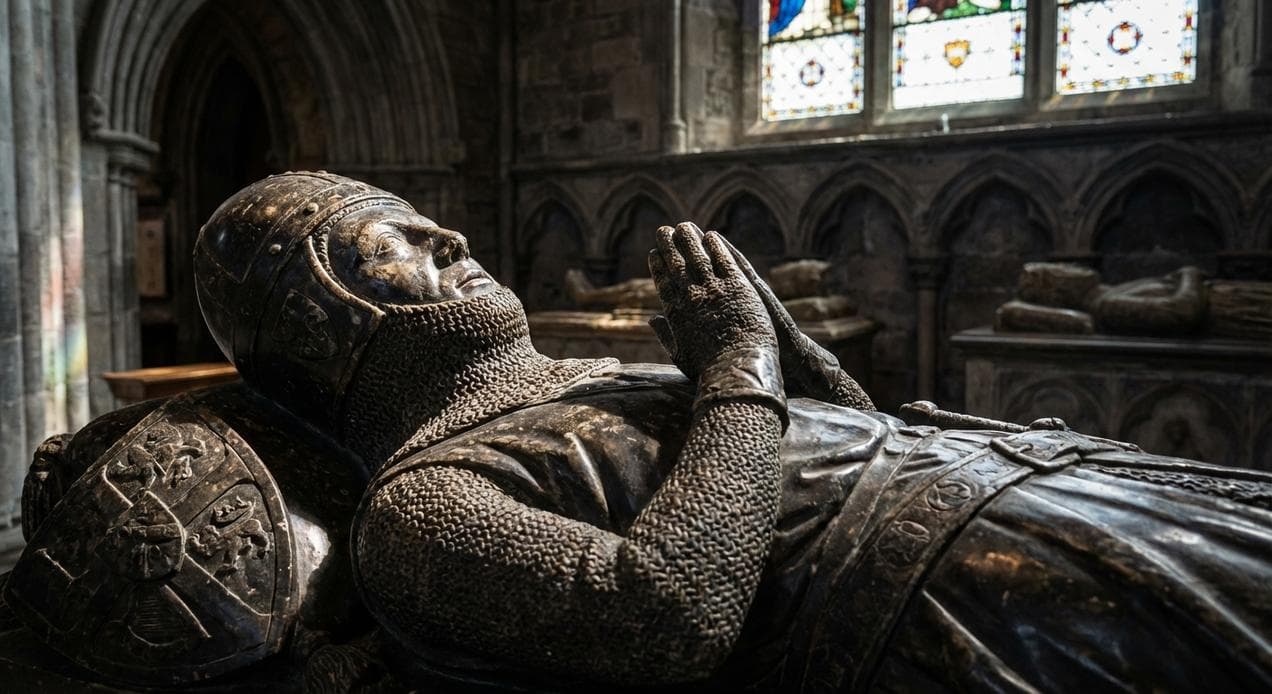
St. Canice’s is famous for having one of the finest collections of medieval effigy tombs in Ireland. These are life-sized stone carvings of knights and ladies lying on top of their graves.
Because the local stone (Kilkenny Marble) is so hard and durable, the details are incredibly preserved. You can still see the chainmail on the knights' armor and the folds in the ladies' dresses.
- The Butler Connection: Many of the Butlers of Ormonde are buried here.
- The Kyteler Slab: Look closely for the grave slab of Jose de Kyteler. Does the name sound familiar? It should. It is connected to the family of Alice Kyteler, the witch of Kilkenny. (Read her terrifying story here: The First Witch Trial of Alice Kyteler).
Why a Local Guide Transforms the Visit
You can climb the tower alone, but the Cathedral floor is where a guide becomes essential. The history here is dense, and without an expert, you are just looking at "old stone men."
A local guide unlocks the secrets:
- The Hidden Details: They will point out the tiny "masons' marks" on the pillars—signatures left by the stone carvers 800 years ago.
- The Cromwell Stories: A guide can show you exactly which statues were defaced by Cromwell’s soldiers and explain the miraculous survival of the ancient Chair of St. Kieran (which dates back to the 5th century!).

- The Logistics: The tower has capacity limits. A guide knows the best time of day to visit to avoid the queues, ensuring you get your climb without the wait.
Practical Tips for the Climb
- Footwear: Do not attempt this in flip-flops or high heels. You need sturdy sneakers or boots.
- Bags: Leave your backpack at the bottom. The ladders are narrow, and a bulky bag is a safety hazard.
- Children: There are strict height restrictions for safety. Children typically need to be at least 4ft 5in tall to climb.
- Weather: The tower climb closes during high winds or rain for safety. Check the forecast before you walk up Irishtown.
See the Real Kilkenny with a Local Expert
Kilkenny is famous for its "Medieval Mile," but the best stories aren’t written on the plaques. Don’t just look at the old stones—let a local guide bring them to life.
Whether you want to find the best pint of Smithwick’s, hear the true ghost stories of the slips, or just need someone to navigate the winding streets, we have the right person for you.
Table of Contents
Share this post
More from the Blog

Cork to Blarney Castle Day Trip: The Stone, the Gardens and What Else to See
Plan a Cork to Blarney Castle day trip. Kiss the stone, explore the Poison Garden, and add Cork city, Fota or Kinsale for a full day out.

Cork to Cobh Day Trip: Titanic, Colourful Houses and Harbour History
Plan a Cork to Cobh day trip by train, car or private driver. Explore Titanic history, St Colman's Cathedral, Spike Island and the best harbour views.

Cork to Killarney Day Trip: Lakes, Mountains and Muckross in One Day
A Cork to Killarney day trip is a longer escape into Kerry. Here's how to plan the drive, what to see in Killarney National Park, and why a private driver helps.