
Smithwick’s and Kilkenny's Pub Culture: A Guide to the Perfect Pint and Pub Etiquette
To truly experience Kilkenny, you must step inside its pubs. The pub (short for 'public house') is far more than a place to drink; it is the center of social, political, and cultural life. It serves as a community living room, a place of historical discussion, and, often, the stage for spontaneous traditional music.
While Dublin may be the home of Guinness, Kilkenny is the undisputed home of Smithwick’s Red Ale. This local hero epitomizes the city's warmth and history, and understanding its legacy is essential to enjoying the pub culture on your visit to Ireland's Medieval Capital.
The Legacy of Smithwick’s: Ireland's Oldest Ale
The history of Smithwick's is intrinsically tied to Kilkenny Castle and the city's monastic past. Brewing has occurred on the site of the former St. Francis Abbey since the 13th century.
In 1710, John Smithwick established the official brewery adjacent to the abbey ruins. Smithwick's survived centuries of turbulence, becoming the oldest operating brewery in Ireland. Today, while the large-scale production has moved, the historic location houses the Smithwick's Experience Kilkenny. This highly engaging, interactive tour is a must-do for visitors, guiding you through the brand's history, the brewing process, and, of course, culminating in a well-earned pint of their famous ale.
The Local Drink: Why Not Guinness?
While you can, and should, enjoy Guinness anywhere in Ireland, Kilkenny locals often favor Smithwick's, or the local stout known as Kilkenny Irish Cream Ale (similar to Smithwick’s but with a creamier head). Choosing a red ale or stout over a more ubiquitous lager shows respect for the local tradition and history, instantly opening you up to friendlier conversation.
The Pub as a Community Living Room
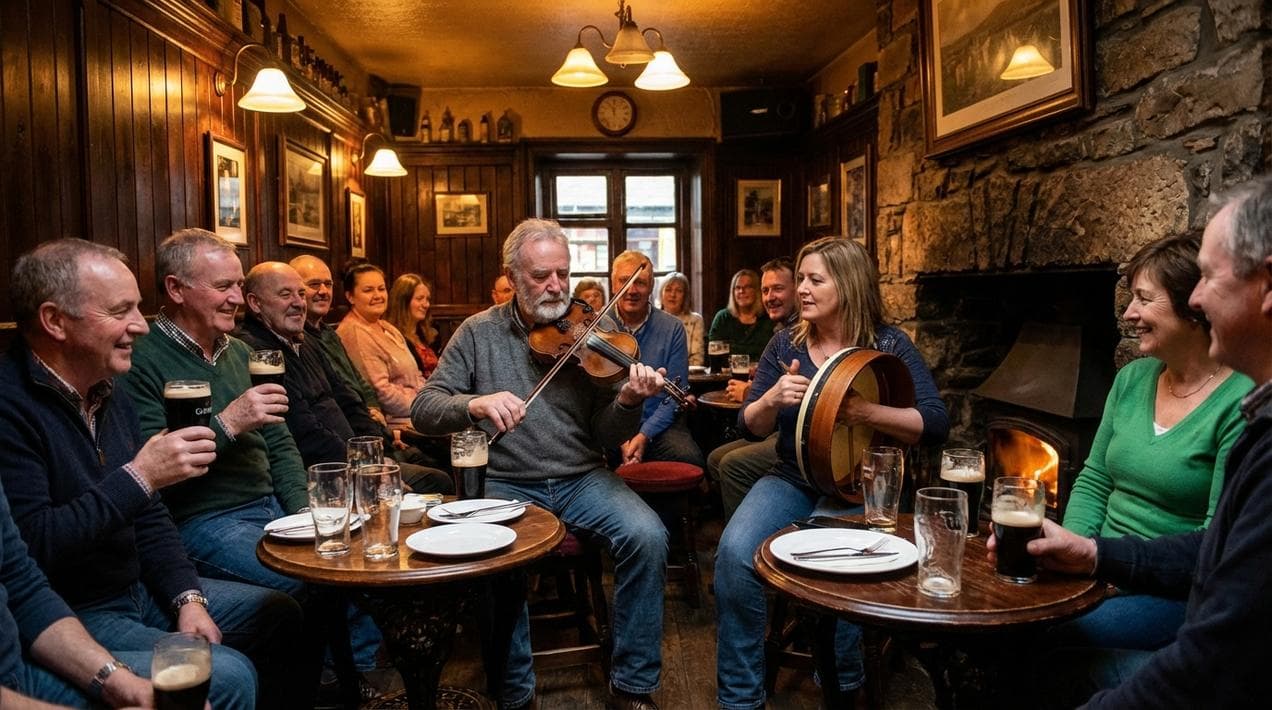
The best pubs in Kilkenny are historical, often containing nooks, low ceilings, and roaring turf or log fires. This architecture reflects their function: a place for intimate conversation and community warmth.
The Snug and The Session
- The Snug: Look for the snug. This is a small, semi-private room tucked beside the bar, historically reserved for women, priests, or police officers who wanted discretion. Today, it’s simply the most coveted seat in the house.
- The Session: The best pubs are known for their traditional music sessions. Unlike a staged concert, a "session" (or ceili) is usually an informal gathering where local musicians sit together and play traditional tunes (jigs and reels). The atmosphere is cooperative, not performative, and it is a truly authentic cultural experience. Finding the best one requires local knowledge—a skill your private guide excels at.
Pub Etiquette for American Travelers
Pub culture has unwritten rules that, when followed, lead to instant respect and better interactions with locals.

Ordering and Tipping
- Go to the Bar: In all but the busiest pubs, waitresses are rare. Walk up to the bar to place your order. Don't sit at a table and wait.
- The Pint Time: Ordering a Guinness or Smithwick's takes time—allow 2-3 minutes for the perfect two-part pour. Patience is a virtue.
- Buying a Round: If you are with two or more friends, the custom is to buy a 'round'. This means one person pays for everyone’s drink, and the duty rotates among the group. Do not offer to buy a round unless you are willing to accept one in return. If you are solo, buying a drink for the person next to you is a kind gesture, but not expected.
- Tipping: Tipping at the bar is not required. If you buy several drinks and receive excellent service, you can tell the bartender to "Take one for yourself," which is interpreted as a modest tip (€5 or so) from your change. If you have a sit-down meal, standard restaurant tipping (10-15%) applies.
The Pub as a Match Day Venue
For pure excitement, nothing beats watching a Hurling match in a Kilkenny pub. The atmosphere is intense, passionate, and loud—a completely different experience than the quiet, contemplative pubs. (For the full cultural context, see: Hurling Guide: Kilkenny, Ireland )

Why a Local Guide is Your Cultural Keymaster
Finding the "perfect" pub is difficult. Every guide book lists Kyteler's Inn (which is essential for history, see: The First Witch Trial of Alice Kyteler -, but those places are often crowded with tourists.
A local guide is the only way to genuinely unlock the authentic pub scene:
- The Insider List: They know the difference between a high-volume tourist pub and a tiny, 300-year-old local haunt where the best music session is happening that night.
- Networking: A guide can introduce you to locals, translating slang and bridging cultural gaps, turning a quiet drink into a memorable conversation.
- The Right Session: Traditional music sessions move. A guide knows the weekly schedule and can steer you toward the spontaneous, high-quality music gatherings that make Irish pub culture legendary.
See the Real Kilkenny with a Local Expert
Kilkenny is famous for its "Medieval Mile," but the best stories aren’t written on the plaques. Don’t just look at the old stones—let a local guide bring them to life.
Whether you want to find the best pint of Smithwick’s, hear the true ghost stories of the slips, or just need someone to navigate the winding streets, we have the right person for you.
Table of Contents
Share this post
More from the Blog

Cork to Blarney Castle Day Trip: The Stone, the Gardens and What Else to See
Plan a Cork to Blarney Castle day trip. Kiss the stone, explore the Poison Garden, and add Cork city, Fota or Kinsale for a full day out.

Cork to Cobh Day Trip: Titanic, Colourful Houses and Harbour History
Plan a Cork to Cobh day trip by train, car or private driver. Explore Titanic history, St Colman's Cathedral, Spike Island and the best harbour views.

Cork to Killarney Day Trip: Lakes, Mountains and Muckross in One Day
A Cork to Killarney day trip is a longer escape into Kerry. Here's how to plan the drive, what to see in Killarney National Park, and why a private driver helps.