
Sea Kayaking in Connemara: Ireland's Wild Atlantic Coast from the Water
Sea Kayaking in Connemara: Ireland's Wild Atlantic Coast from the Water
The first thing you notice is the silence. Not quiet — silence. Out on Bertraghboy Bay on a flat morning, the only sound is the draw of your paddle through water so clear you can see the sand four metres below. The Twelve Bens sit behind you, still holding a smear of cloud from the night before. Ahead, a grey seal surfaces, considers you, and dives. This is sea kayaking in Connemara, and no photograph has ever done it justice.
Connemara's coastline is one of the least explored stretches of wild water in Europe. Not because it lacks quality — it has more than most — but because its weather keeps the casual visitor away. For those who come prepared, it offers a kind of access that walking or driving simply cannot. The Sea Kayaking in Ireland: A Complete Guide covers the full picture of what this country offers on the water; this article is for those who want to understand why Connemara sits at the top of that list.
What Makes Connemara Different for Sea Kayaking
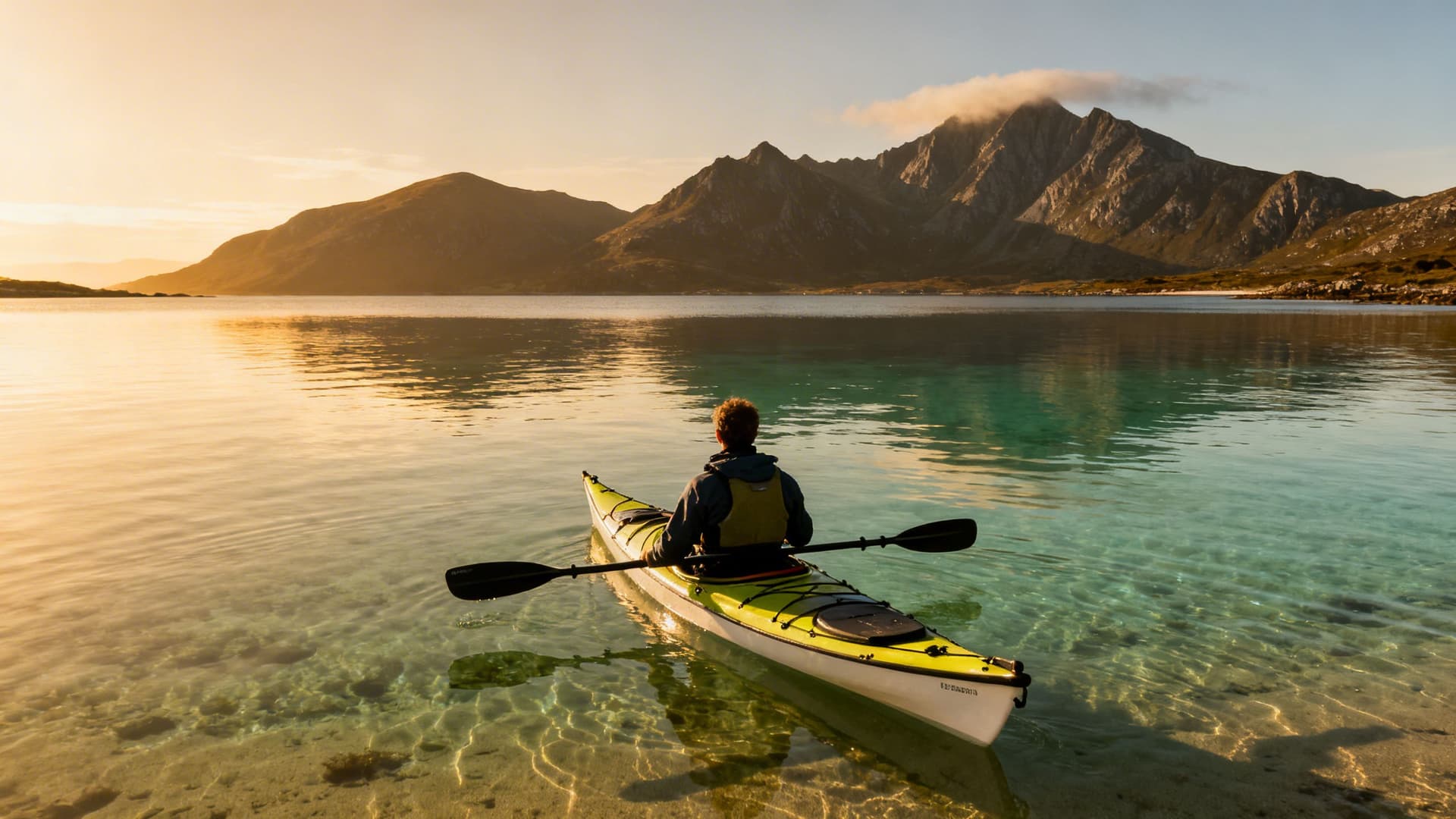
Most Atlantic coastlines give you two things: open water and the shore. Connemara gives you a third dimension. The geography here is what geographers call a drowned landscape — ancient river valleys flooded by rising sea levels, leaving a mosaic of inlets, islands, tidal channels, and sheltered bays that runs for over 200 kilometres if you straighten it out.
What that means practically is that you can paddle for a week without repeating a stretch of water. Roundstone Bog meets the sea just south of the village. Kilkieran Bay opens into a network of channels between the Lettermore and Lettermullan islands that could occupy a serious paddler for days. The Renvyle Peninsula reaches into the Atlantic with enough exposure to give you challenge if you want it, and enough shelter inshore to retreat when the weather shifts.
The colour of the water is the other thing. Connemara's rivers run through blanket bog, staining the freshwater a deep amber before it mixes with the Atlantic. Where the two meet — in estuaries, in shallows at low tide — the water turns a shade between olive and turquoise that has no name in English. You notice it most when you stop paddling and just look.
The Best Routes and Launching Points
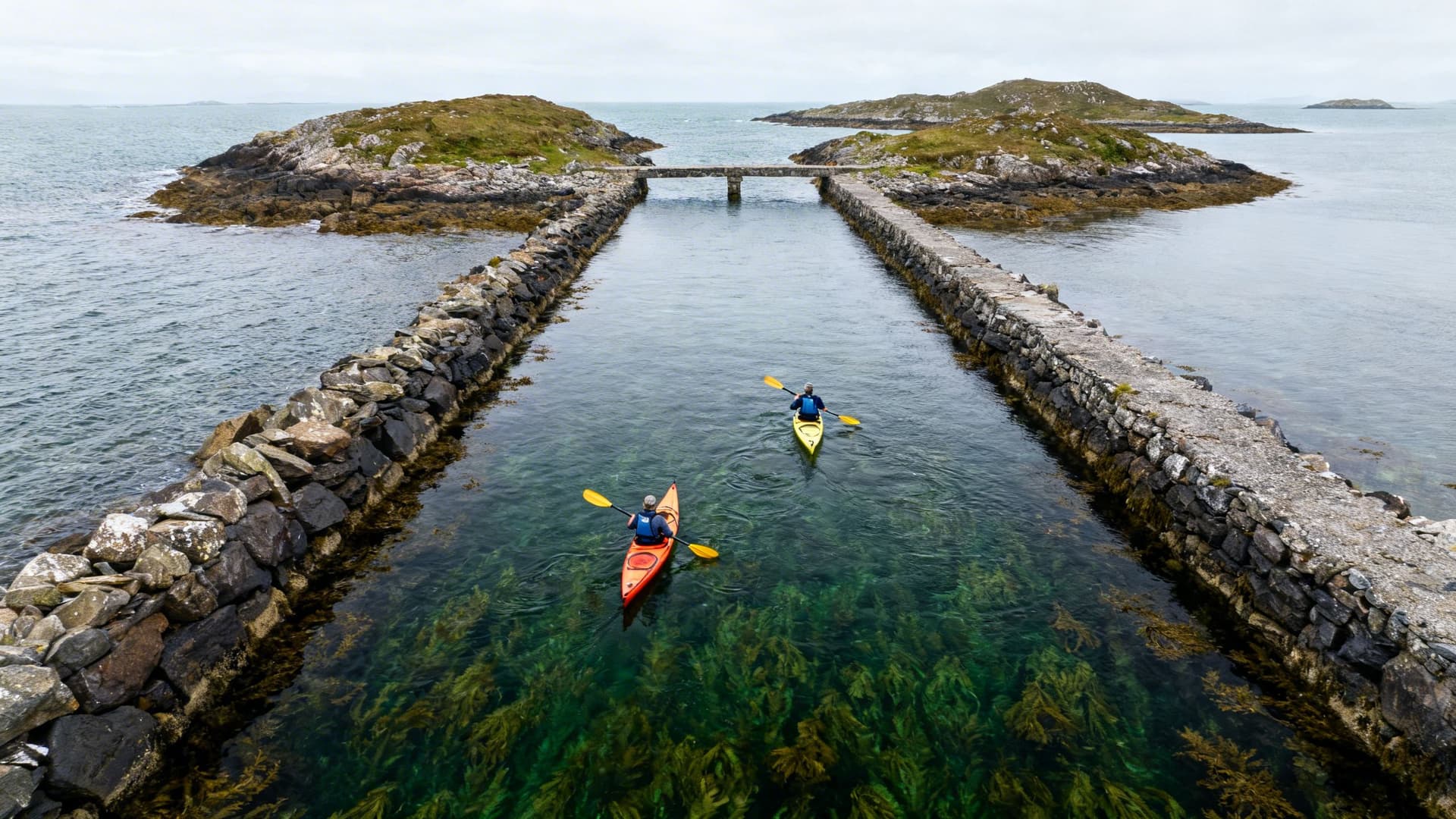

The choice of launch point shapes the entire experience. Roundstone is the natural start for those coming from Galway — a small harbour with easy access, a pub when you return, and immediate entry into the islands and skerries south of the village. Inis Ní, visible from the harbour wall, is a two-kilometre crossing that experienced paddlers treat as a warm-up.
Clifden Bay offers something different. The town sits at the head of a large, sheltered bay that is forgiving of beginner paddlers and offers enough room to build confidence before venturing out into the exposed water beyond the bay mouth. The ruins of Clifden Castle stand on the southern shore — one of several points in Connemara where you feel history pressing through the landscape.
For those who want the islands, Lettermore is the departure point for the Lettermullan island chain — a group of low, inhabited islands connected by causeways, with enough tidal channels and kelp forest between them to fill a full day. Current runs hard through some of the passages on a spring tide. Know what you're dealing with before you go.
The sea caves south of Slyne Head — the most westerly point in Connemara — are accessible only by water, and only in certain sea conditions. They are also extraordinary. The kind of place that makes people stop talking.
Tides, Conditions, and Weather Windows
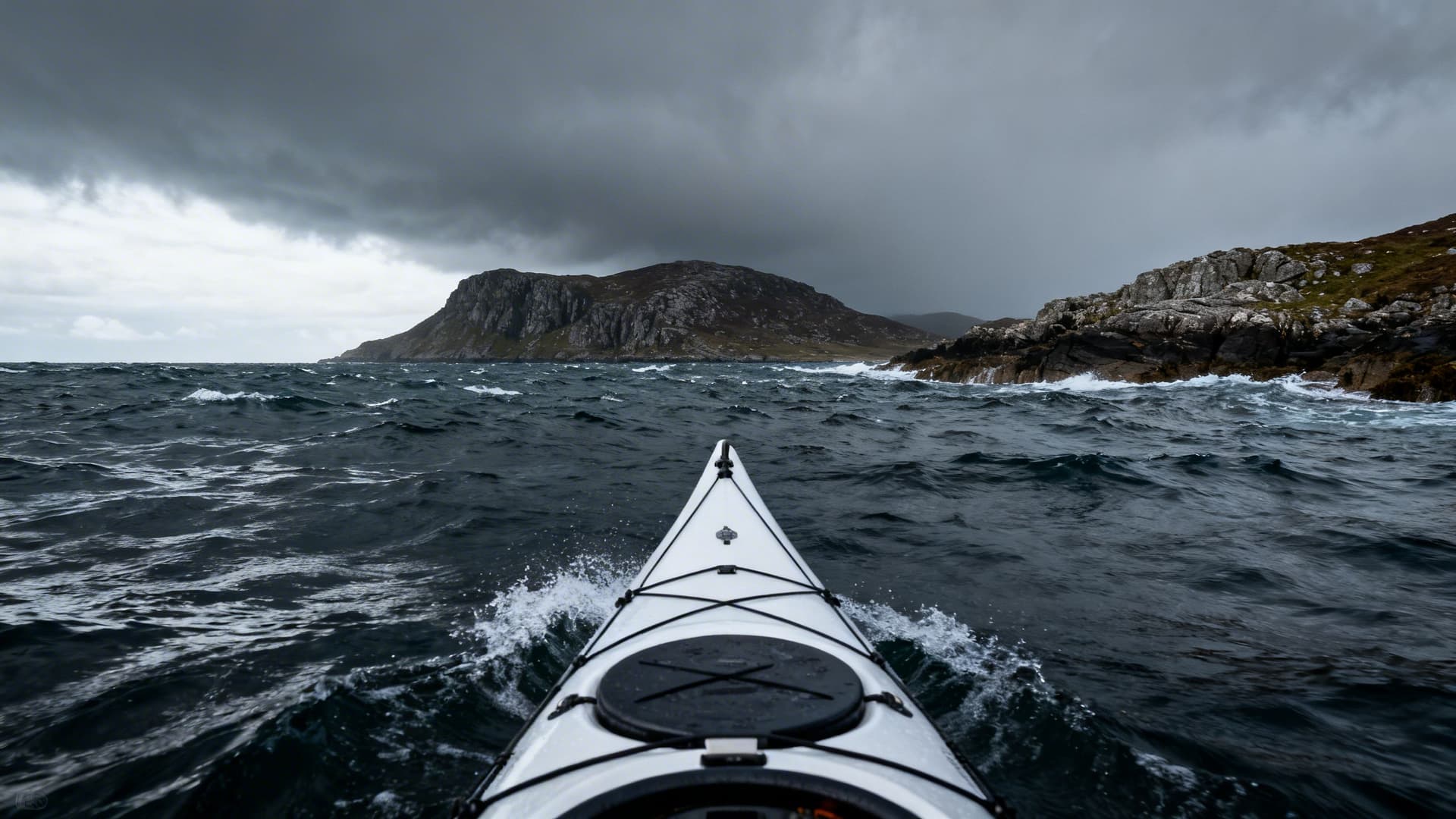
Connemara's weather operates on its own terms. The Atlantic delivers fronts with very little notice, and the local geography — exposed peninsulas, funnelling channels — means conditions can shift faster than any forecast suggests. This is not a warning against coming. It is a reason to come prepared and to build flexibility into any kayaking plan.
The best paddling windows are typically May to September, with June and early September often offering the most consistent conditions. July and August bring more stable weather but also more people — the holiday season fills Clifden and Roundstone, and the water is warmer but less empty. May and early October are when the serious paddlers come. Cold water, clear air, fewer boats.
Tidal planning is not optional here. Connemara's tidal range is significant — up to 4.5 metres on spring tides — and many of the best channels and cave entrances are accessible only at specific points in the tidal cycle. Arrive at the wrong state of tide and a cave entrance that should be three metres high is flooded, or the channel you planned to paddle is a kilometre of exposed mud flat. Plan around the tides, not against them.
Wind direction matters as much as wind strength. A south-westerly at force 4 that would ruin an exposed crossing becomes a welcome tailwind in the right channel. The people who know which conditions open which routes are the ones who have paddled here in all seasons — which brings us to the question of going with someone local.
Wildlife You'll Share the Water With
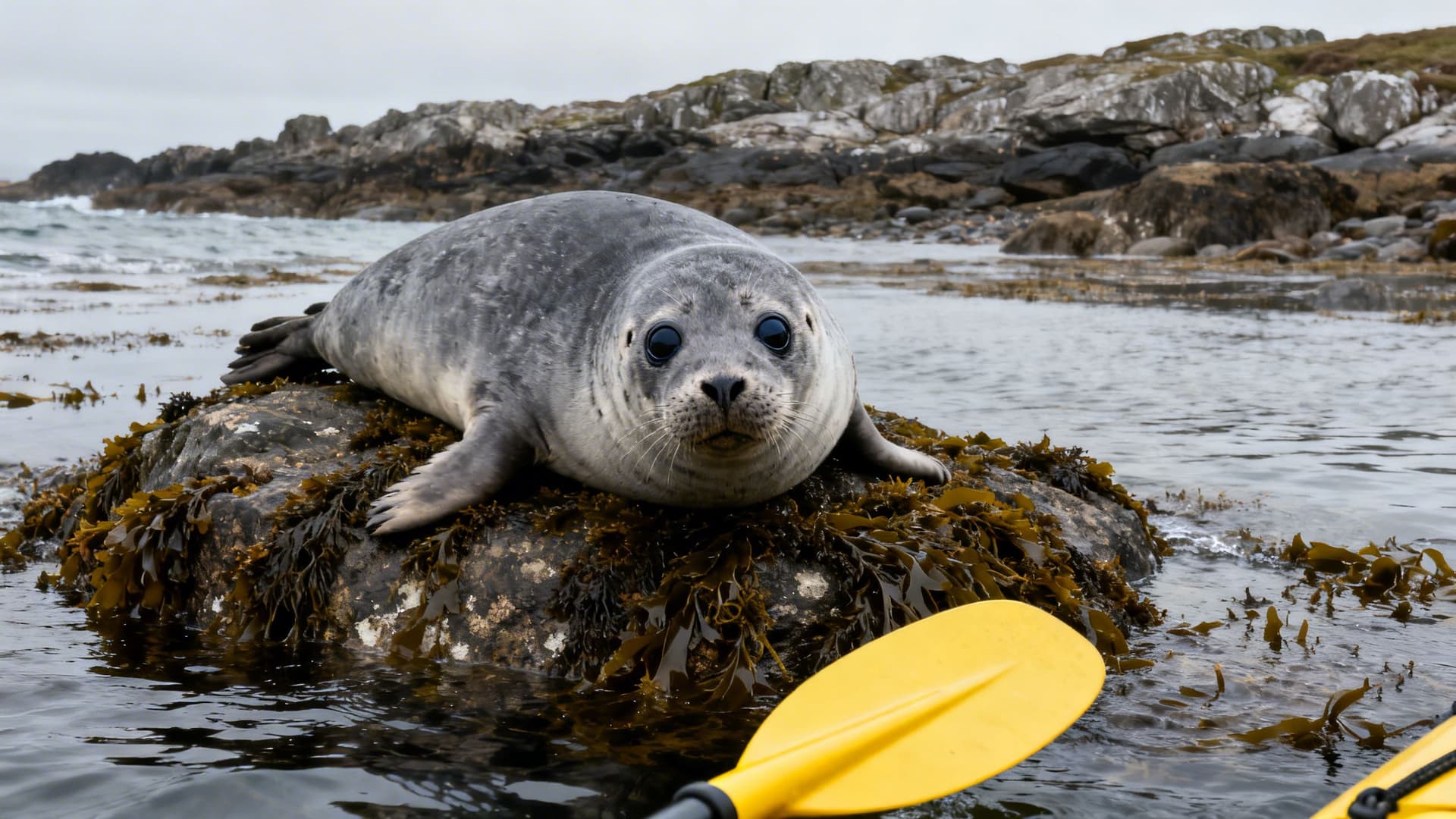
Connemara's coastal waters are among the most biodiverse in Ireland. Grey seals are the most visible residents — the colony at Golam Head numbers in the dozens, and individuals are present throughout the coastline year-round. They are curious animals. Approach slowly, let them come to you, and they will. They tend to surface within a metre or two, have a careful look, and decide whether you are interesting enough to follow.
Common dolphins pass through in summer, often in groups of ten to thirty animals. If you hear them before you see them — a series of short exhalations across the water — stop paddling and wait. They investigate kayakers regularly, sometimes surfing alongside for several minutes.
Birdlife is dense. Razorbills and guillemots nest on the offshore skerries through spring and early summer. Gannets feed offshore — the plunge-dive of a gannet from thirty metres is one of the genuinely spectacular moments available in Irish waters. Choughs, which have declined significantly across Europe, are still common on Connemara's sea cliffs.
Basking sharks appear in July and August, following plankton blooms along the coast. They are enormous — the second-largest fish in the world — and entirely harmless. A fin breaking the surface ten metres from your kayak is a different kind of encounter to anything you get on land.
Why You Need a Local Guide for Sea Kayaking in Connemara
Connemara's coastline rewards local knowledge disproportionately. The best routes, the accessible sea caves, the island landings, the weather windows that a national forecast misses because they depend on the shape of a headland two kilometres away — none of this is on any map.
The Connemara sea kayaking guides we work with have paddled these waters through every season. They know which caves are accessible on a two-metre tide and which require neap conditions. They know the farmer on Inis Ní who lets kayakers land on the southern shore when the main beach is exposed. They know when the dolphins are likely to be feeding in Kilkieran Bay and which passage takes you into the middle of it.
More practically, they carry emergency equipment, know how to read local weather patterns that confuse incoming low-pressure systems, and can make a call about conditions that protects you from the kind of commitment that becomes a rescue call. The Atlantic is not dangerous if you understand it. It becomes dangerous quickly when you don't.
For those new to sea kayaking, guided day sessions operate from Roundstone and Clifden throughout the season. If you're an experienced paddler looking for multi-day expeditions to the outer islands, arrangements can be made — but that conversation starts with a guide who knows what's out there. Also worth reading before you go: What to Pack for Sea Kayaking in Ireland: A Practical Kit List covers the gear decisions that matter most in Atlantic conditions.
Frequently Asked Questions
Do I need kayaking experience to paddle in Connemara?
For sheltered bay and inlet paddling with a guide, no prior experience is required. Guided beginner sessions are available from Roundstone and Clifden, covering basic paddle technique and water safety before any open water. For independent paddling in exposed areas, or multi-day expeditions, a minimum of coastal kayaking experience is required. Conditions in Connemara are not forgiving of improvisation.
What time of year is best for sea kayaking in Connemara?
June and early September offer the most consistent weather with good visibility and manageable sea conditions. July and August are warmer but busier. May and October attract experienced paddlers looking for emptier water and wilder conditions. Winter paddling exists but requires a higher skill level and cold-water immersion training.
How cold is the water?
Sea surface temperatures range from around 8°C in February to 16°C in August. Dry suits are standard equipment year-round for immersion protection. Most guided operations provide suits; check when booking. Water temperature is less of a concern when properly equipped — the Atlantic is cold, but it is also predictable once you understand it.
Are the sea caves safe to enter?
With a local guide who knows the conditions, yes. Independently, that depends entirely on your experience, the state of the swell, and the tidal stage. Some cave systems in Connemara are accessible in calm conditions at low water; others require very specific sea states. This is the single best argument for going with someone who knows the coast.
Conclusion
Connemara from a kayak is not the same place as Connemara from a road. The coastline changes character completely when you are in it rather than looking at it from above. The caves exist that no tourist sees. The seal colonies rest on rocks that no path reaches. The channels between the islands run fast and quiet and completely empty.
If this is your first time considering the west of Ireland, Sea Kayaking in Ireland: A Complete Guide gives you the broader context for planning a water-based trip. If Connemara is already on your itinerary, start by deciding how much time you have on the water — and then double it.
Table of Contents
Share this post
More from the Blog

Cork to Blarney Castle Day Trip: The Stone, the Gardens and What Else to See
Plan a Cork to Blarney Castle day trip. Kiss the stone, explore the Poison Garden, and add Cork city, Fota or Kinsale for a full day out.

Cork to Cobh Day Trip: Titanic, Colourful Houses and Harbour History
Plan a Cork to Cobh day trip by train, car or private driver. Explore Titanic history, St Colman's Cathedral, Spike Island and the best harbour views.

Cork to Killarney Day Trip: Lakes, Mountains and Muckross in One Day
A Cork to Killarney day trip is a longer escape into Kerry. Here's how to plan the drive, what to see in Killarney National Park, and why a private driver helps.