
Samhain: Visiting the Hill of Ward (The Birthplace of Halloween)
Every October 31st, millions of children across the world dress up in costumes and go door-to-door asking for candy. Most people assume this is an American invention.
They are wrong.
Halloween is, in fact, an ancient Irish festival called Samhain (pronounced Sow-in). And it didn't start in a suburb in New Jersey; it started on a windy hilltop in County Meath, Ireland, over 2,000 years ago.
That hilltop is the Hill of Ward (historically known as Tlachtga).
While the Hill of Tara was the seat of the High Kings, Tlachtga was the seat of the High Druids. It was the spiritual center of the Celtic world, the place where the Great Fire was lit to signal the beginning of winter and the New Year.
"Standing on Tlachtga at dusk, you can see the fires of the modern Púca Festival lighting up the valley. It’s a powerful feeling—realizing you are standing in the exact spot where a tradition that conquered the world began." — Dr. S. Raftery, Historian
In this guide, we will take you back to the roots of the spooky season. We will explain why this nondescript field is one of the most important sites in human history, and why you absolutely need a Historical Guide to see what lies beneath the grass.
(This guide is part of our master hub Haunted Places in Ireland: The Ultimate Guide to Ghost Tours & Castles. If you are visiting Meath, check out our guide to Haunted Castle Hotels nearby).
1. The Legend of Tlachtga
The hill is named after Tlachtga, a powerful druidess in Irish mythology. She was the daughter of the arch-druid Mug Ruith. Legend says she traveled the world learning magical secrets but died giving birth to triplets on this hill.
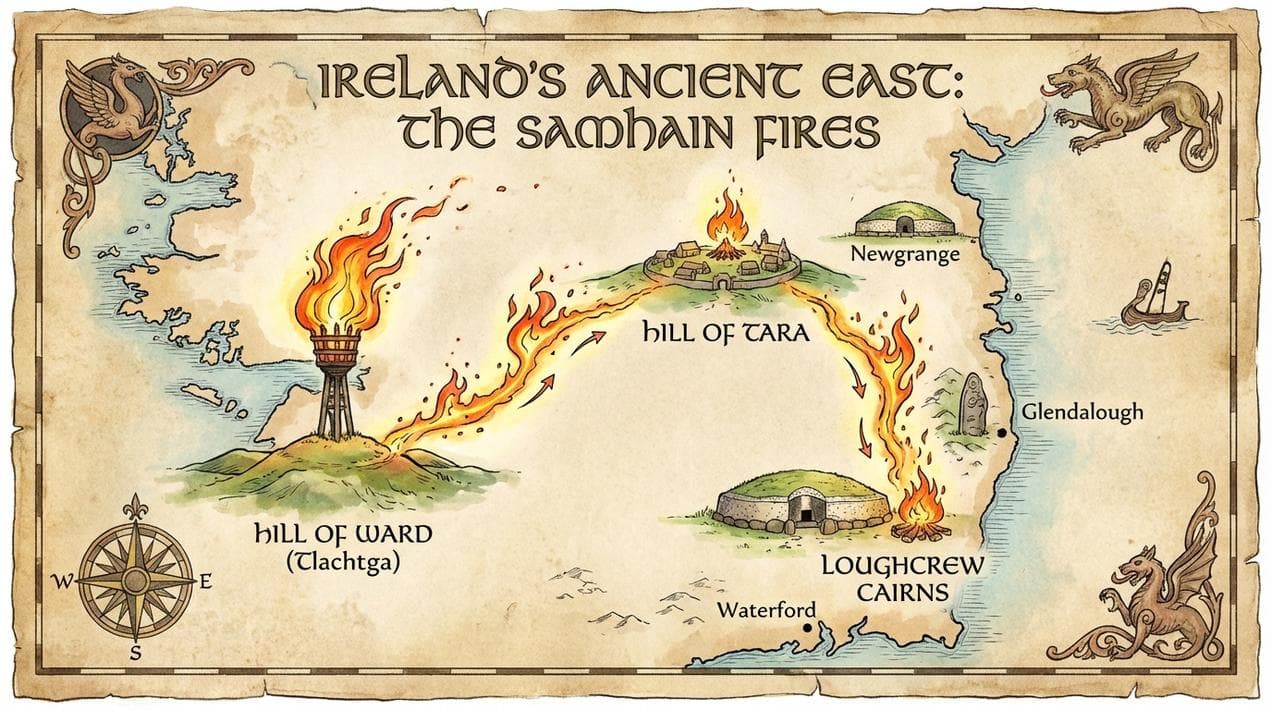
The First Samhain: The Celts believed that on the night of October 31st, the veil between the living and the dead was at its thinnest. Spirits could cross over. To protect the people, the druids gathered on Tlachtga to light a massive bonfire.
- The Ritual: All other fires in Ireland were extinguished.
- The Flame: The druids lit the New Year fire on Tlachtga. Torches were lit from this central flame and carried to seven other hills (including Tara and Loughcrew), and eventually to every hearth in the kingdom.
When you visit today, you are standing in the epicenter of this ancient spiritual network.
2. What You Will Actually See (Expectation vs. Reality)
This is the most important part of the guide. If you drive to the Hill of Ward expecting a castle, a museum, or a gift shop, you will be disappointed.
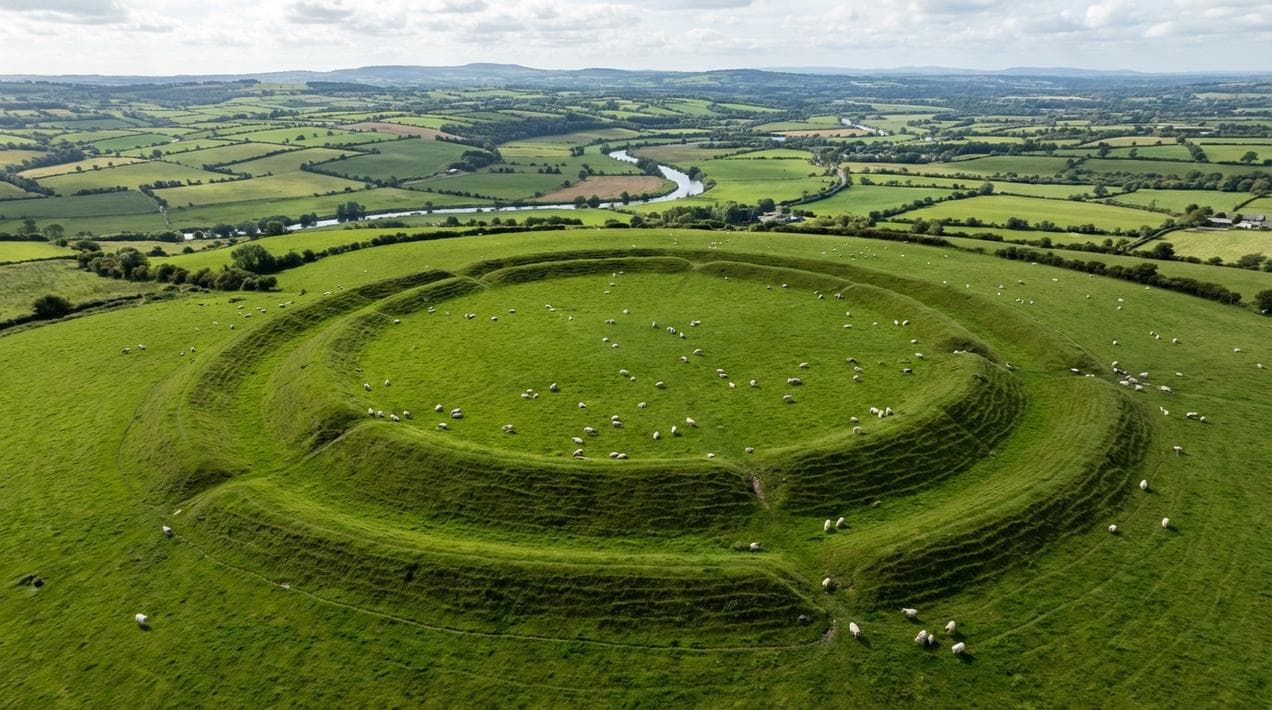
It is a field. Specifically, it is a large, grassy earthwork on private farmland.
- The Banks: You can clearly see the concentric rings of earth (banks and ditches) that mark the ceremonial enclosure.
- The View: From the top, you can see for miles across the Boyne Valley. It is atmospheric, quiet, and windy.
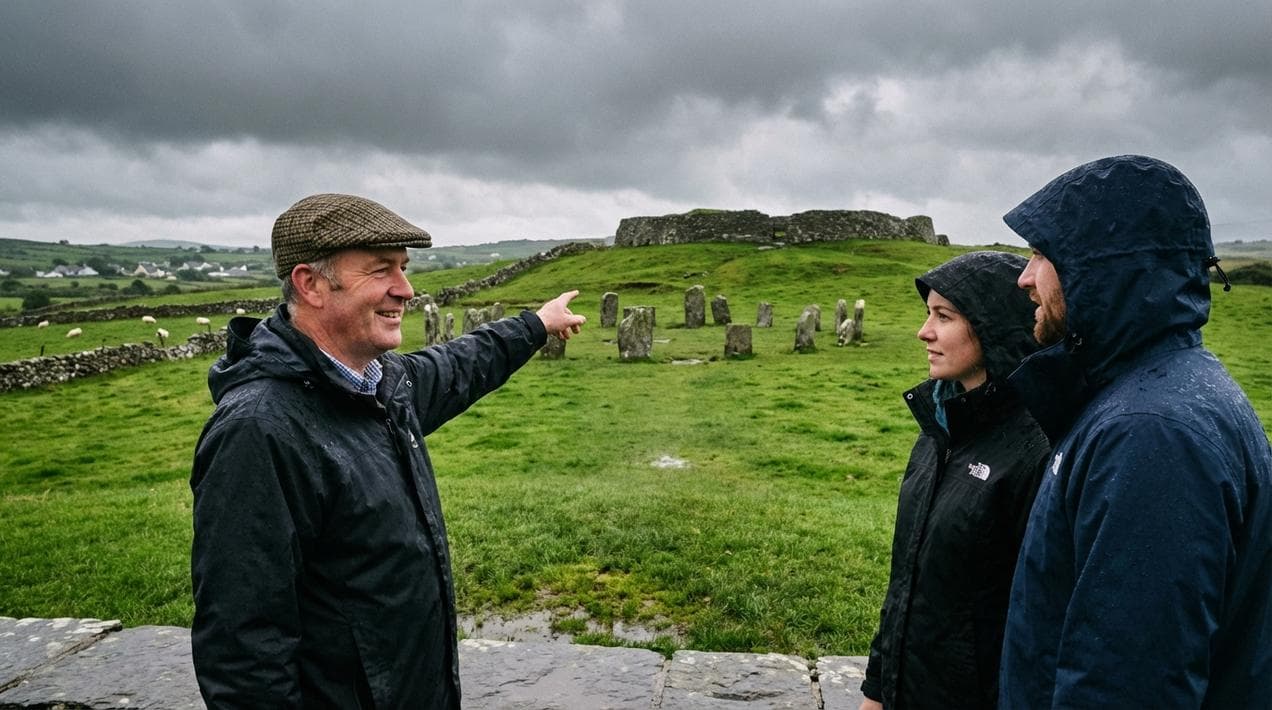
Why You Need a Guide: Because there are no signs and no structures, the site is "mute" to the untrained eye. A Historical Walking Guide or a Private Driver Guide with local knowledge transforms the experience. They can point out:
- The faint outline of the "Banquet Hall."
Meet a Local Guide
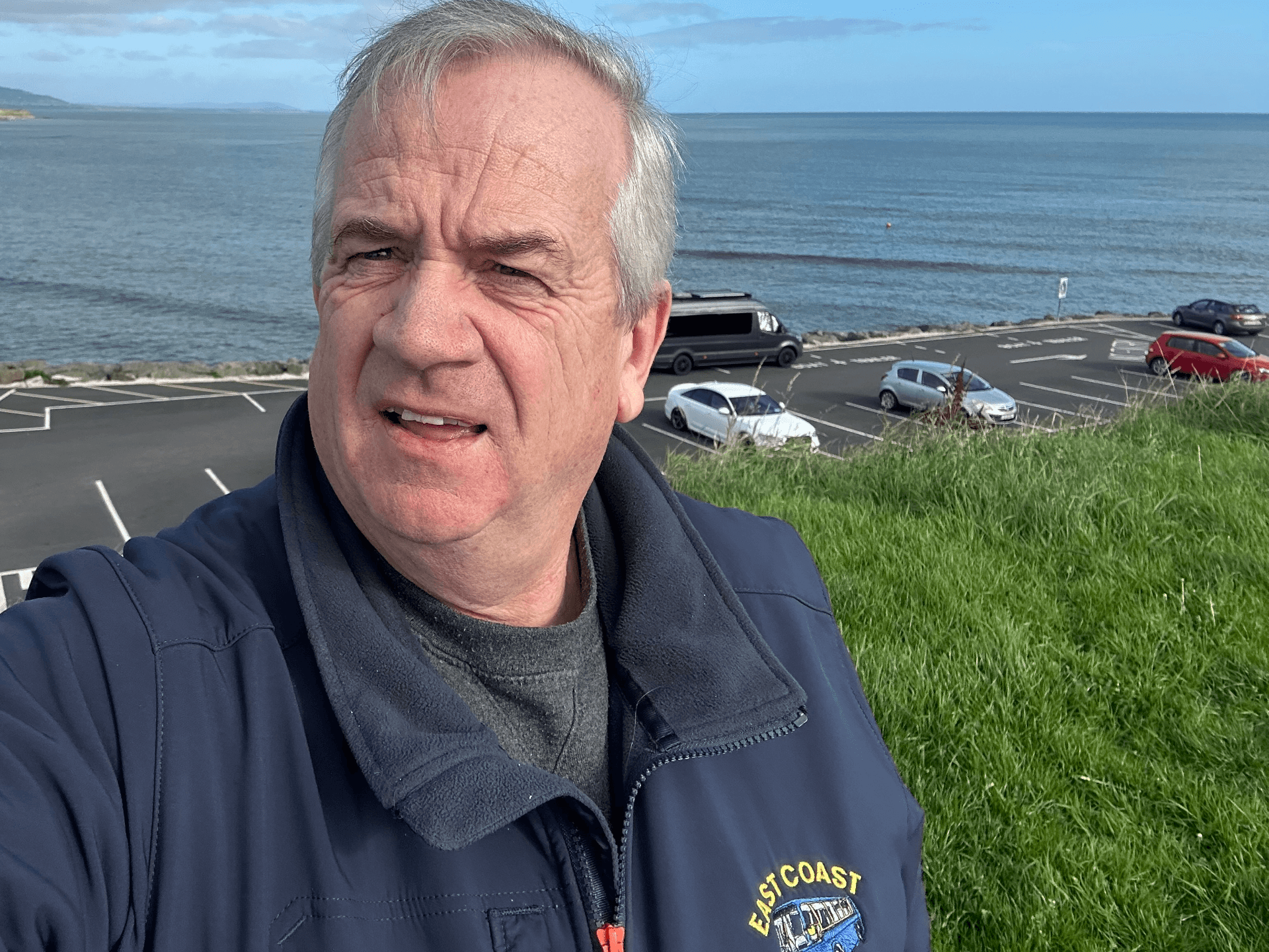
Hi Folks,
- The alignment with the Hill of Tara.
- The geological evidence of the massive fires that burned here 2,000 years ago. Without a guide, you are just looking at grass. With a guide, you are looking at the birthplace of civilization.
3. The Púca Festival (The Modern Revival)
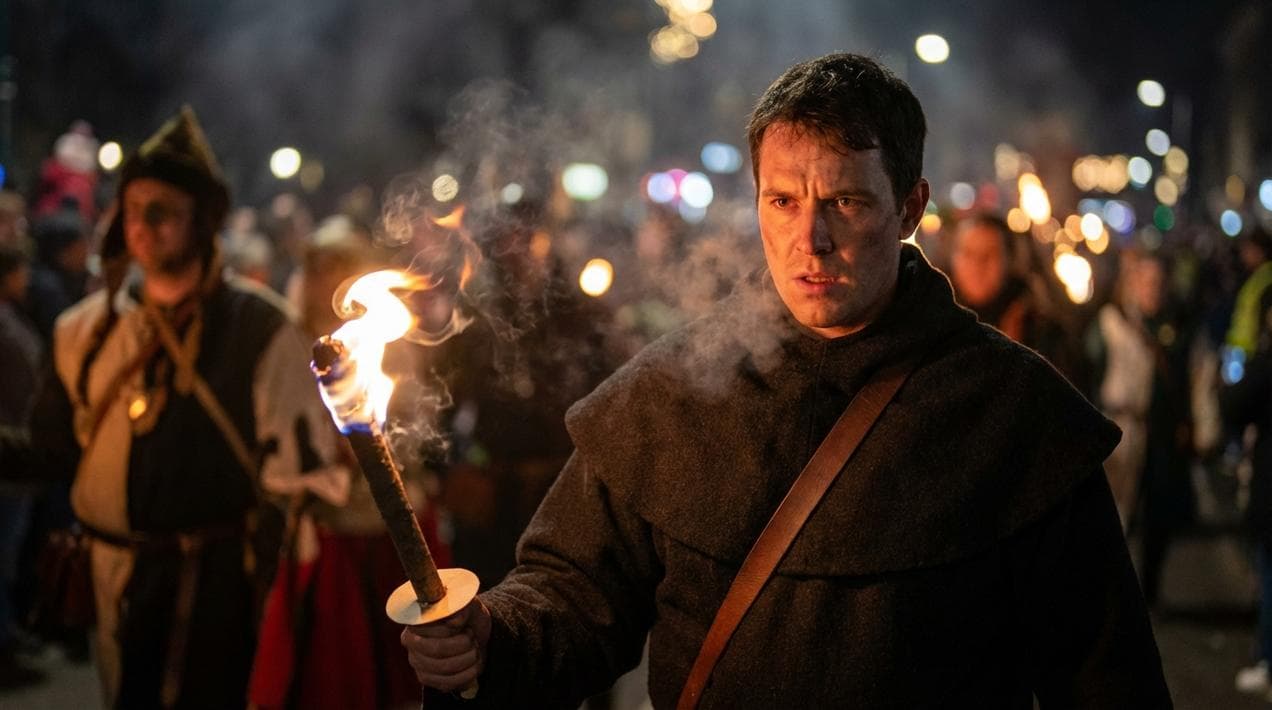
In recent years, Ireland has reclaimed Halloween with the Púca Festival. Taking place every Halloween (late October), this festival centers around the Boyne Valley (Trim and Athboy).
- The Procession: On Halloween night, a dramatic torchlit procession walks from the town of Athboy up to the Hill of Ward.
- The Re-enactment: Actors and modern-day druids recreate the lighting of the Samhain fire. It is spectacular, respectful, and deeply moving.
Visitor Tip: The Púca Festival draws thousands of visitors. Accommodation in Trim and Meath sells out months in advance. If you plan to attend, book your Private Driver early, as taxis are non-existent after the procession ends.
4. Logistics: How to Get There
The Hill of Ward is located near the town of Athboy, about an hour northwest of Dublin.
- Access: The site is on private land, but there is a permissive path for visitors. Please respect the "Code of the Countryside"—close all gates behind you and do not disturb livestock.
- Parking: There is very limited parking at the base of the hill (essentially a lay-by).

The Driving Challenge: The roads around Athboy are classic Irish "boreens"—narrow, twisting, and often muddy. Navigating them in a rental car while trying to find a landmark that isn't on Google Maps can be stressful.
- The Solution: Hire a driver for the day. They can drop you right at the trailhead and wait while you explore.
5. Nearby: The "Spooky" Boyne Valley
The Hill of Ward does not stand alone. It is part of a landscape rich in mythology. A driver can easily combine it with:
- The Hill of Tara: The political counterpart to Ward's spiritual power.
- Loughcrew Cairns: Ancient passage tombs that are older than the Pyramids (and rumored to be haunted by a hag/witch).
- Trim Castle: The largest Norman castle in Ireland (and a filming location for Braveheart), which has its own ghost stories.
Conclusion: A Pilgrimage to the Past
Visiting the Hill of Ward is not about being scared; it is about connection. It is about standing on the same soil where your ancestors stood, huddled against the cold, waiting for the fire that signaled the return of light.
It is the authentic, raw, and uncommercialized heart of Halloween. And it is waiting for you in County Meath.
Unlock the Landscape
Don't just stare at a field. Hire a historian or a local guide to bring the legends of Tlachtga to life.
Table of Contents
Share this post
More from the Blog

Cork to Blarney Castle Day Trip: The Stone, the Gardens and What Else to See
Plan a Cork to Blarney Castle day trip. Kiss the stone, explore the Poison Garden, and add Cork city, Fota or Kinsale for a full day out.

Cork to Cobh Day Trip: Titanic, Colourful Houses and Harbour History
Plan a Cork to Cobh day trip by train, car or private driver. Explore Titanic history, St Colman's Cathedral, Spike Island and the best harbour views.

Cork to Killarney Day Trip: Lakes, Mountains and Muckross in One Day
A Cork to Killarney day trip is a longer escape into Kerry. Here's how to plan the drive, what to see in Killarney National Park, and why a private driver helps.