
Horse Riding in Ireland: Best Equestrian Experiences, Treks & Trails
There's a unique rhythm to horse riding in Ireland—a steady, calming beat that syncs with the landscape itself. The gentle thud of hooves on soft ground, the sway of your mount beneath you, the wind carrying salt from the Atlantic as you crest a dune and see golden beach stretching for miles ahead. This is equestrian Ireland, where centuries of horsemanship tradition meet some of the world's most spectacular riding terrain.
Ireland has always been a nation of horse people. From the great stallions of Irish mythology to the world-famous Irish Draught and Connemara Pony breeds, horses are woven into the cultural fabric. Ancient kings rode to battle on Irish steeds. Farmers still use horses to work boglands where tractors can't reach. And in every corner of the country, you'll find riding schools, trekking centers, and passionate equestrians ready to share their love of horses with visitors.
What makes Irish horse riding special is the diversity of experiences available. In a single trip, you can canter along deserted Atlantic beaches, ride through ancient woodland trails, traverse mountain passes where wild ponies still roam, and trot along country lanes lined with flowering hedgerows. The terrain varies from soft sand to firm grassland, from gentle slopes to challenging hills, accommodating every skill level from nervous beginners to experienced riders seeking exhilarating gallops.
This guide will help you discover Ireland's best horse riding experiences—from your first nervous moments in the saddle to multi-day treks that let you truly disconnect and immerse yourself in the landscape. Whether you dream of beach riding at sunset, exploring castle estates on horseback, or experiencing traditional Irish equestrian culture, Ireland has the perfect ride waiting for you.
(This guide is part of our master hub: Unleash Your Wild Side: The Complete Guide to Adventure & Outdoor Activities in Ireland. For other land-based adventures, explore our guides to hiking the Wicklow Way or cycling in Ireland.)
Getting Started: Horse Riding Basics in Ireland
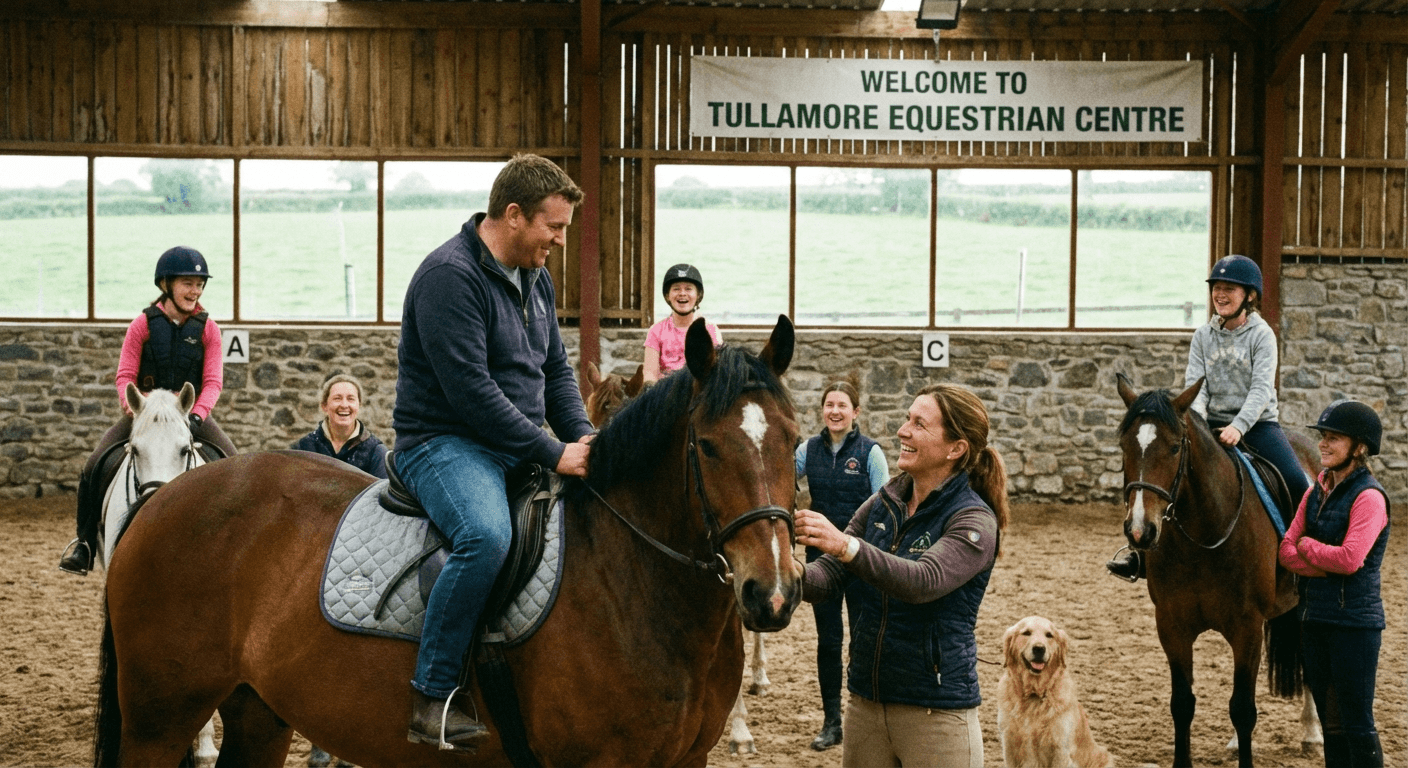
Never ridden before? Ireland is an excellent place to start. Irish riding schools are renowned for their patient instruction, well-trained horses, and beautiful settings that make learning a pleasure rather than a chore.
Why Learn in Ireland?
Irish riding instructors have a reputation for being particularly skilled with nervous beginners. Perhaps it's the cultural connection to horses, or simply years of experience welcoming tourists, but you'll find instructors who can put even the most anxious first-timer at ease. Many visitors who arrived terrified have left Ireland as confident, enthusiastic riders.
The horses themselves contribute to this welcoming environment. Irish Draughts and Connemara Ponies—the breeds you'll most commonly encounter—are known for their calm temperaments, intelligence, and willingness to please. These aren't flighty, high-strung animals but steady partners who seem to understand their job is to take care of their riders.
What to Expect from Your First Ride
Most beginners start with a one-hour "assessment" or "introductory" lesson. This isn't a test—it's a chance for the instructor to evaluate your comfort level, balance, and natural ability, then match you with an appropriate horse.
Your first session typically covers:
- Mounting and dismounting: Learning to get on and off safely
- Basic position: How to sit correctly and maintain balance
- Rein handling: Holding the reins properly without pulling
- Walk and halt: Starting, stopping, and steering at a gentle walk
- Safety procedures: What to do if something goes wrong
Don't expect to gallop on your first ride. Most beginners spend their first few sessions mastering the walk and perhaps progressing to a gentle trot. Speed comes later, once you've developed the security and balance to handle it.
Types of Riding Lessons
Private lessons: One-on-one instruction, ideal for nervous beginners or those wanting intensive improvement. More expensive but offers faster progress.
Group lessons: Small groups (typically 4-6 riders) of similar ability. More social and affordable, with the added benefit of learning from watching others.
Trekking/Trail riding: Guided rides along scenic routes, suitable for riders who can walk and trot comfortably. The focus is on enjoyment rather than instruction.
Cost
- Beginner lesson (1 hour): €40-60
- Private lesson: €60-90
- Group trek (2-3 hours): €70-120
- Full-day ride: €150-250
Best Horse Riding Locations in Ireland
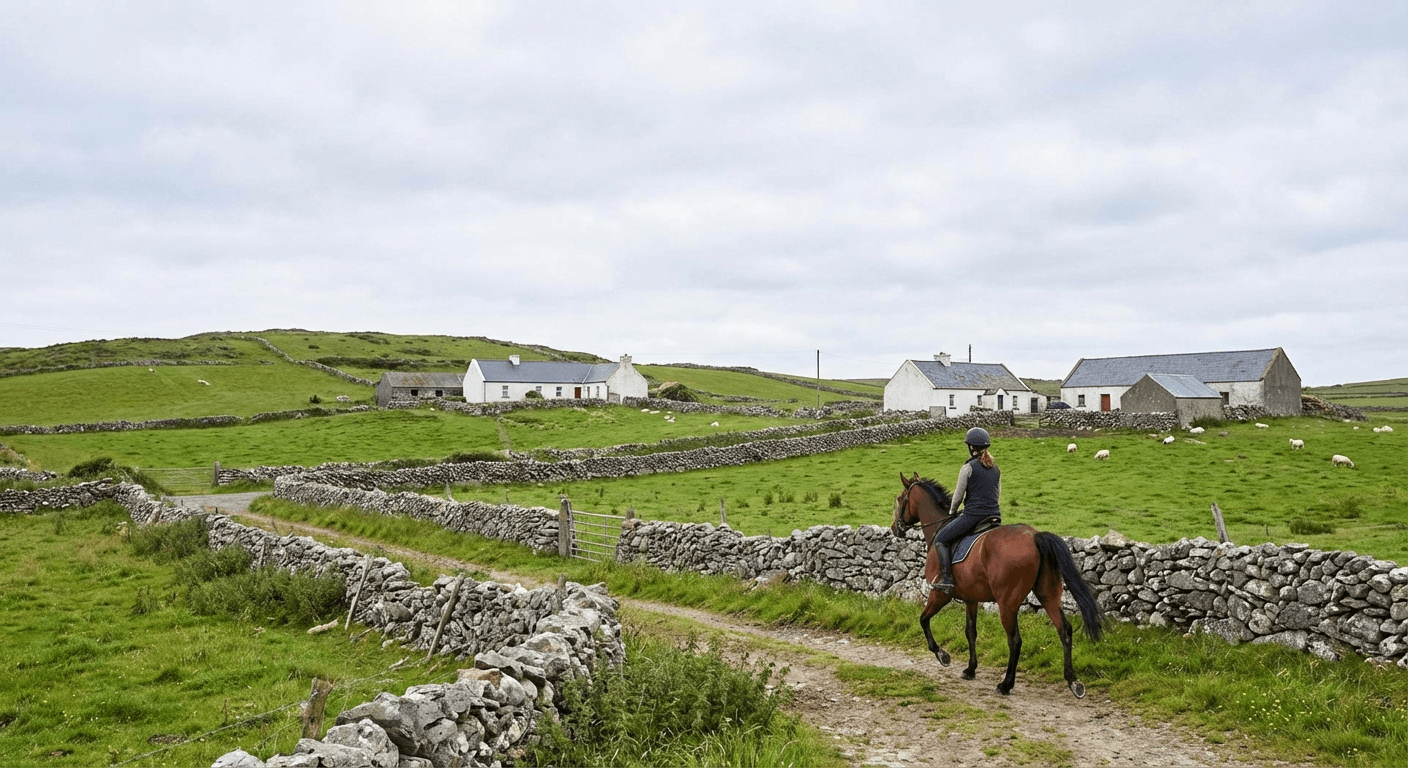
Ireland offers exceptional riding across multiple counties, each with distinct landscapes and riding experiences.
1. County Kerry: Beach Riding Paradise
Kerry delivers Ireland's most spectacular beach riding. The combination of wide sandy beaches, dramatic coastal scenery, and reliable riding centers makes it the premier destination for equestrian adventures.
Rossbeigh Beach: Seven kilometers of golden sand backed by dunes and mountains. Ride here at low tide for exhilarating gallops along the water's edge, the Atlantic spray cooling you as your horse's hooves kick up sand.
Inch Beach: Another spectacular beach venue, stretching into Dingle Bay with views of the Iveragh Peninsula. The firm, flat sand is perfect for beginners while still offering excitement for experienced riders.
Dingle Peninsula: Beyond the beaches, Dingle offers mountain trails with panoramic ocean views, ancient trackways between fields, and the chance to spot Fungie the dolphin from horseback.

Killarney National Park: Ride through Ireland's oldest national park, past lakes, woodland, and mountain scenery. Some treks include swimming with horses in the lakes—a unique Irish tradition.
Best for: Beach riding enthusiasts, all skill levels, families
Find experienced tour guides in Kerry for your equestrian adventure.
2. County Galway: Connemara Pony Country
Galway, particularly Connemara, is the spiritual home of Irish horse riding. The native Connemara Pony developed in this harsh, beautiful landscape, and the region remains dedicated to equestrian pursuits.
Connemara National Park: Ride through the Twelve Bens mountain range, across boglands where wild Connemara Ponies still roam freely, and along the famous Wild Atlantic Way. The scenery is raw, dramatic, and unforgettable.
Cleggan Beach: Another spectacular beach riding venue on Galway's west coast. The combination of mountain backdrop and Atlantic waves creates cinematic riding conditions.
Aughnanure Castle: Some centers offer riding around this historic 16th-century tower house, combining equestrian activity with cultural exploration.
Best for: Connemara Pony enthusiasts, experienced riders seeking challenging terrain, landscape photographers
Find experienced tour guides in Galway for your riding holiday.
3. County Cork: Variety and Quality
Cork's diverse geography—mountains, beaches, woodlands, and rolling farmland—provides exceptional variety for riders.
West Cork Coast: Ride along the rugged coastline between Baltimore and Bantry, with opportunities for beach gallops at Long Strand and other hidden coves.
Innishannon and Bandon: The rolling countryside around these towns offers gentle hacking through farmland and woodland, perfect for relaxed riding holidays.
Farran Forest Park: Guided treks through mature woodland on the edge of Cork's Lee Valley, suitable for families and less experienced riders.
Best for: Riders wanting variety, food enthusiasts (Cork is Ireland's gourmet capital), families
Find experienced tour guides in Cork for your adventure.
4. County Wicklow: The Garden of Ireland
Wicklow's reputation as the "Garden of Ireland" extends to its riding. The combination of mountain scenery, forest trails, and accessibility from Dublin makes it popular for day trips and short breaks.
Glendalough: Ride through the valley of the two lakes, past the ancient monastic settlement, and up into the surrounding hills for spectacular views.
Powerscourt Estate: Some centers offer riding around this magnificent estate, with views of the famous waterfall and Sugarloaf Mountain.
Wicklow Mountains: More challenging mountain riding for experienced equestrians, with the chance to spot wild deer and other wildlife.
Best for: Dublin-based riders, those wanting mountain scenery, day-trippers
Find experienced tour guides in Wicklow for your riding experience.
Essential Horse Riding Gear for Ireland
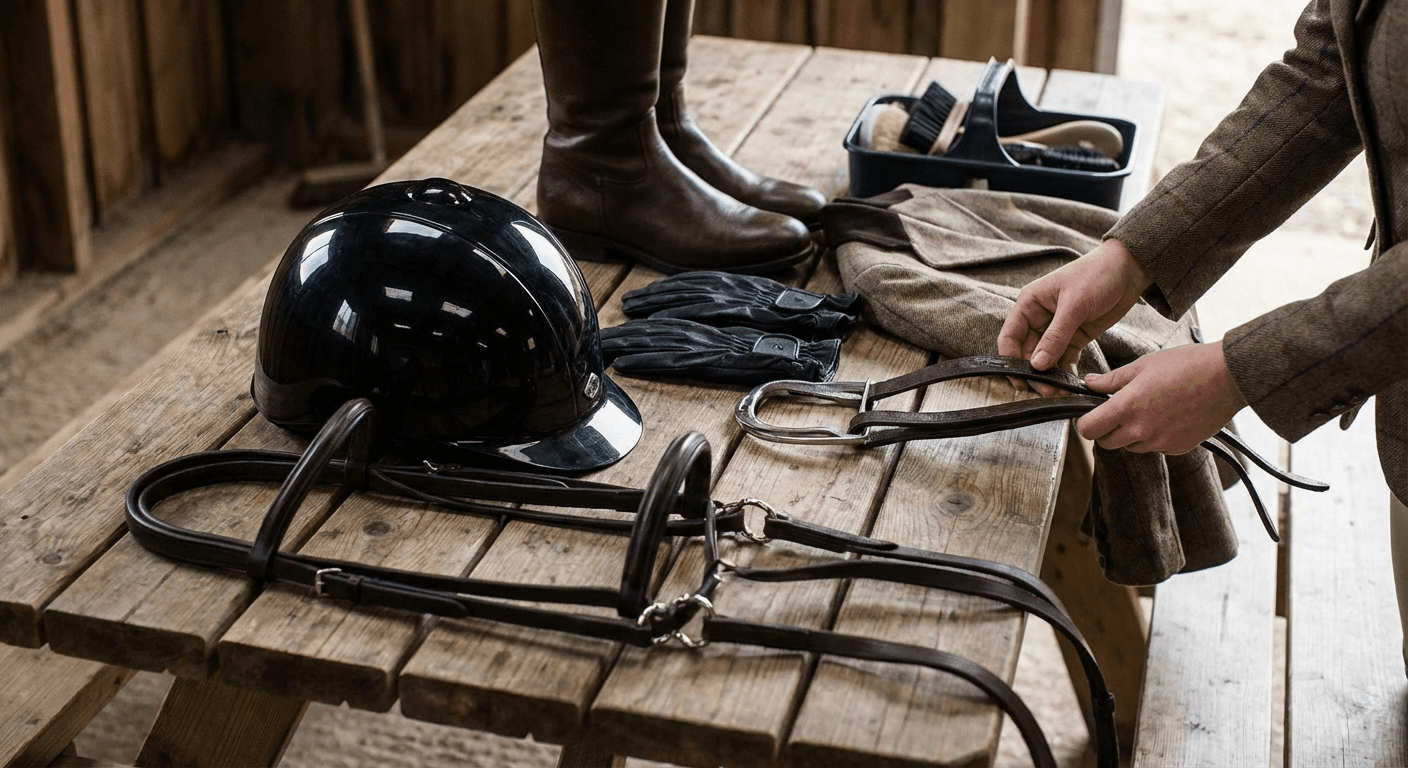
One advantage of Irish riding is that you don't need to invest in expensive equipment to participate. Most riding centers provide the essential safety gear.
What Centers Provide
Helmet: Non-negotiable and always provided. Modern riding helmets are lightweight, well-ventilated, and adjustable. Never ride without one.
Horse and tack: The horse, saddle, bridle, and all related equipment are included in your lesson or trek price. Irish centers take pride in well-maintained tack and well-schooled horses.
Basic instruction: Your guide or instructor is included, ensuring safety and helping you get the most from your experience.
What to Wear
Footwear: Boots with a small heel (to prevent your foot slipping through the stirrup) are essential. If you don't have riding boots, sturdy ankle boots or hiking boots with a defined heel work. Avoid trainers, sandals, or flat-soled shoes.
Trousers: Comfortable pants that allow movement without being too loose. Leggings, jodhpurs, or fitted jeans are ideal. Avoid baggy trousers that could bunch up or get caught.
Layers: Irish weather changes quickly. Wear layers you can add or remove—a base layer, mid-layer, and waterproof outer layer lets you adapt to conditions.
Gloves: Not essential but recommended, especially for longer rides. They prevent blisters and improve grip on the reins. Bring your own or check if the center provides them.
What to Bring

- Waterproof jacket: Irish weather is unpredictable; rain can arrive suddenly
- Sun protection: When the sun does appear, it can be strong—bring sunscreen and sunglasses
- Insect repellent: Essential in summer months, particularly for woodland rides
- Water bottle: Riding is physical work; stay hydrated
- Small backpack: For longer treks, to carry your essentials
Horse Riding for Families
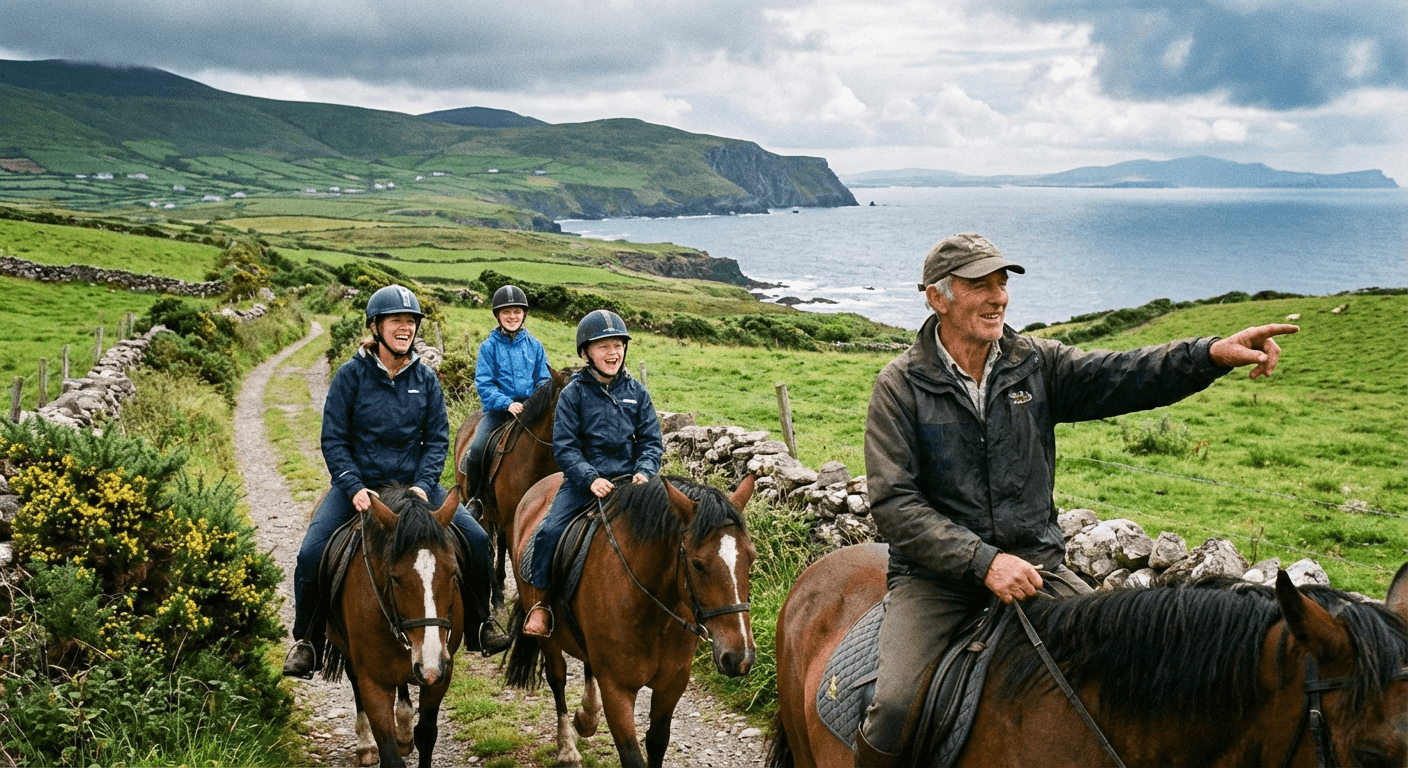
Horse riding is a fantastic family activity, creating shared memories and introducing children to animals and outdoor adventure. Irish riding centers are particularly family-friendly, with extensive experience welcoming young riders.
Age Guidelines
Most centers accept children from age 4-6, though this varies by operator. Very young children (4-6) typically start with short "pony rides" or "lead rein" lessons where an instructor controls the pony with a rope while the child sits on board.
From age 7-8, children can usually participate in proper lessons, learning to control the pony themselves. By age 10-12, many children are confident enough for longer treks and even beach rides.
Teenagers often progress rapidly, their light weight and natural confidence allowing them to advance quickly. Many centers offer dedicated teenage groups or advanced sessions for competent young riders.
Family-Friendly Riding Centers
The best family centers offer:
- Pony clubs: Regular sessions where children learn stable management alongside riding
- Tiny tot programs: Specialized sessions for very young riders
- Family treks: Routes suitable for mixed abilities where the whole family can ride together
- Non-riding activities: Options for family members who don't want to ride
- All-weather facilities: Indoor arenas allowing lessons regardless of weather
Safety for Children
- Helmets are mandatory and properly fitted
- Supervision is constant, especially for younger children
- Horses are carefully selected for their quiet temperaments
- Sessions are appropriately short for attention spans and physical capacity
- Progression is gradual, building confidence step by step
Best Family Locations
Kerry: The beach riding is magical for children, and many centers specialize in family holidays.
Cork: The variety of terrain and the county's family-friendly culture make it ideal.
Galway: Connemara Ponies are the perfect size for children, and the landscape captivates all ages.
Advanced Riding: Beach Gallops and Multi-Day Treks
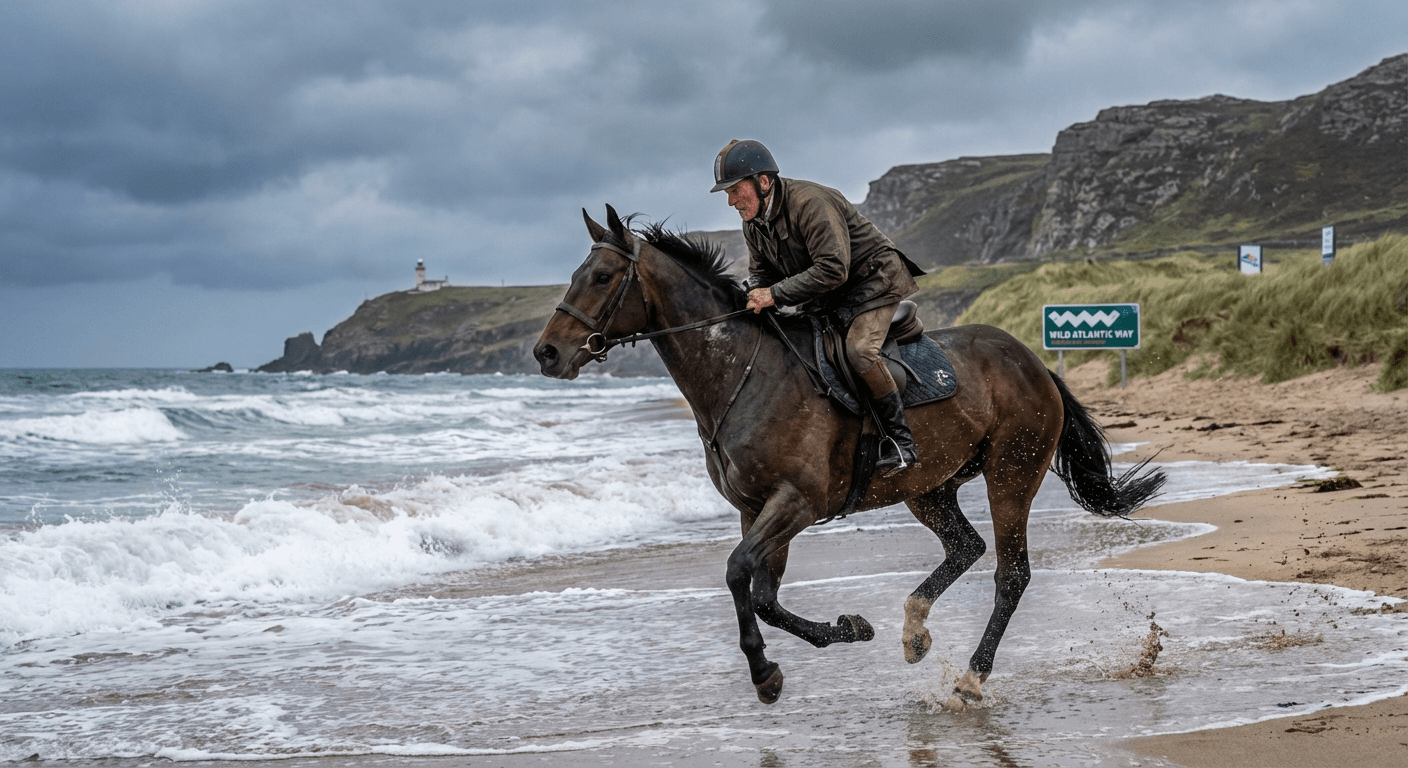
For experienced riders, Ireland offers exhilarating experiences that push your skills and provide unforgettable thrills.
Beach Gallops
There's nothing quite like galloping along a deserted Irish beach, the wind in your face, your horse's hooves thundering on firm sand, the Atlantic stretching to the horizon. This is advanced riding at its most cinematic.
Where to experience it:
- Kerry: Rossbeigh, Inch, and Derrynane beaches
- Galway: Cleggan, Omey Strand, and Dog's Bay
Meet a Local Guide

Hi ,
- Donegal: The wild beaches of the Rosses
Requirements: Most centers require demonstrated competence at walk, trot, and canter before allowing beach gallops. Some ask for a "test ride" to assess your ability.
Multi-Day Riding Holidays
For the ultimate Irish equestrian experience, consider a multi-day trek. These range from weekend breaks to week-long adventures that cover significant distances, staying in different accommodations each night.
Connemara Trail: A classic multi-day route through Galway's wild landscape, staying in guesthouses and riding 20-30 kilometers daily.
Kerry Riding Holiday: Combine beach riding, mountain trails, and countryside hacking across multiple days, with accommodation in cozy B&Bs.
Coastal Trekking: Some operators offer progressive rides along sections of the Wild Atlantic Way, experiencing the coast's changing character.
What's included:
- Well-schooled horses matched to your ability
- Experienced guide leading the trek
- Accommodation (B&Bs, guesthouses, or hotels)
- Meals (varies by package)
- Luggage transport between overnight stops
- Support vehicle for emergencies
Physical demands: Multi-day treks require reasonable fitness. You'll spend 4-6 hours daily in the saddle. Pre-trip riding fitness is essential if you're not a regular rider.
Planning Your Irish Horse Riding Trip
When to Go
Spring (April-May): Longer days, spring flowers, and horses fresh from winter rest. Can be wet but the countryside is lush and green.
Summer (June-August): Peak season with the best weather (relatively), longest days, and warmest conditions. Book well in advance as popular centers fill up.
Autumn (September-October): Many riders' favorite season—stable weather, beautiful autumn colors, fewer crowds, and horses well-settled into their work.
Winter: Limited availability as daylight hours are short and weather unpredictable, but some centers offer winter programs for dedicated equestrians.
Choosing a Riding Center
Check credentials: Look for centers accredited by the Association of Irish Riding Establishments (AIRE) or similar bodies.
Read reviews: Check recent reviews focusing on safety, horse welfare, and instructor quality.
Match to your goals: Different centers specialize in different experiences—some focus on instruction, others on trekking, some on specific activities like beach riding.
Ask about horses: Reputable centers will tell you about their horses and match you appropriately.
Accommodation
Many riding centers offer packages combining riding with accommodation, either on-site or in nearby B&Bs. Options range from:
- Working farm stays: Experience authentic Irish rural life
- Equestrian B&Bs: Guesthouses catering specifically to riders
- Luxury hotels: For those wanting comfort alongside their riding
- Self-catering cottages: Independence with riding nearby
From First Steps to Galloping on the Beach
Horse riding in Ireland offers something rare—a chance to connect with an ancient partnership between human and horse while exploring some of Europe's most beautiful landscapes. You might arrive nervous, never having sat on a horse, and leave cantering along a sunset beach with a newfound confidence and passion.
The Irish equestrian tradition welcomes everyone. Whether you're a complete beginner seeking gentle introduction, a family wanting shared adventure, or an experienced rider chasing the thrill of a beach gallop, Ireland has the perfect horse and the perfect trail waiting.
The Connemara Ponies and Irish Draughts are ready. The beaches are calling. And somewhere in Ireland—perhaps on a windswept Kerry strand or a mountain trail in Galway—your perfect ride is waiting.
Mount up. Ireland looks even better from horseback.
Table of Contents
Share this post
More from the Blog

Cork to Blarney Castle Day Trip: The Stone, the Gardens and What Else to See
Plan a Cork to Blarney Castle day trip. Kiss the stone, explore the Poison Garden, and add Cork city, Fota or Kinsale for a full day out.

Cork to Cobh Day Trip: Titanic, Colourful Houses and Harbour History
Plan a Cork to Cobh day trip by train, car or private driver. Explore Titanic history, St Colman's Cathedral, Spike Island and the best harbour views.

Cork to Killarney Day Trip: Lakes, Mountains and Muckross in One Day
A Cork to Killarney day trip is a longer escape into Kerry. Here's how to plan the drive, what to see in Killarney National Park, and why a private driver helps.