
The Dingle Peninsula: A Complete Visitor's Guide
There is a moment on the Conor Pass road when the tarmac drops away beneath you and the whole of Dingle Bay opens up in a single sweep. To the left, the Brandon Range holds the clouds. To the right, the Blasket Islands sit on the horizon like a row of grey teeth. You are still on the main road, but something has shifted. You have crossed from the Ireland of coach tours into a place where the Irish language is spoken in petrol stations and the pub music starts without a microphone.
The Dingle Peninsula is the westernmost finger of County Kerry, a Gaeltacht region where Irish remains the first language of daily life for many. It draws visitors for Slea Head Drive, for Fungie the dolphin, for the film sets and the festivals. But the real experience of Dingle is not in ticking off viewpoints. It is in understanding that this is a living community on a narrow strip of land between mountain and Atlantic, and that a visitor who treats it with respect will find more than a scenic drive. For anyone planning a broader journey through the county, Things to Do in Kerry: The Complete Guide to Ireland's Most Famous County covers every corner of Kerry from the Ring to the Reeks.
Slea Head Drive: The Route Everyone Takes (and How to Do It Better)

Slea Head Drive is the obvious starting point, and for good reason. The loop from Dingle town to Ventry, around Slea Head, and back via Dunquin and Ballyferriter covers roughly 50 kilometres of some of the most dramatic coastal scenery in Ireland. The road clings to cliff edges, drops into hidden coves, and passes beehive huts, famine cottages, and the stone remains of early Christian settlements.
The standard advice is to drive clockwise, starting early to beat the tour buses. That advice is correct, but incomplete. The real value of Slea Head Drive lies not in the designated viewpoints but in the stops that have no sign. The beach at Coumeenoole, where Ryan's Daughter was filmed, is worth the steep descent. The Blasket Islands Centre at Dunquin explains the extraordinary literary tradition of the islanders who lived on the Great Blasket until 1953. And the small pottery studios and Irish-language cafes in Ballyferriter reward a slower pace than the average coach tour allows.
A county guide who knows the Dingle Peninsula will tell you which morning the light hits Coumeenoole at the right angle, which of the beehive hut reconstructions are worth stopping for, and where to get a lunch that does not come from a laminated menu.
Dingle Town: Pubs, Food, and the Harbour

Dingle town is small enough to walk across in ten minutes but dense enough to occupy a full day. The harbour is the working centre, where fishing boats unload crab and lobster from October to May, and where boat tours depart for the Blasket Islands and for dolphin watching. The waterfront buildings are painted in the bright colours that have made the town famous on Instagram, but the real character is in the backstreets.
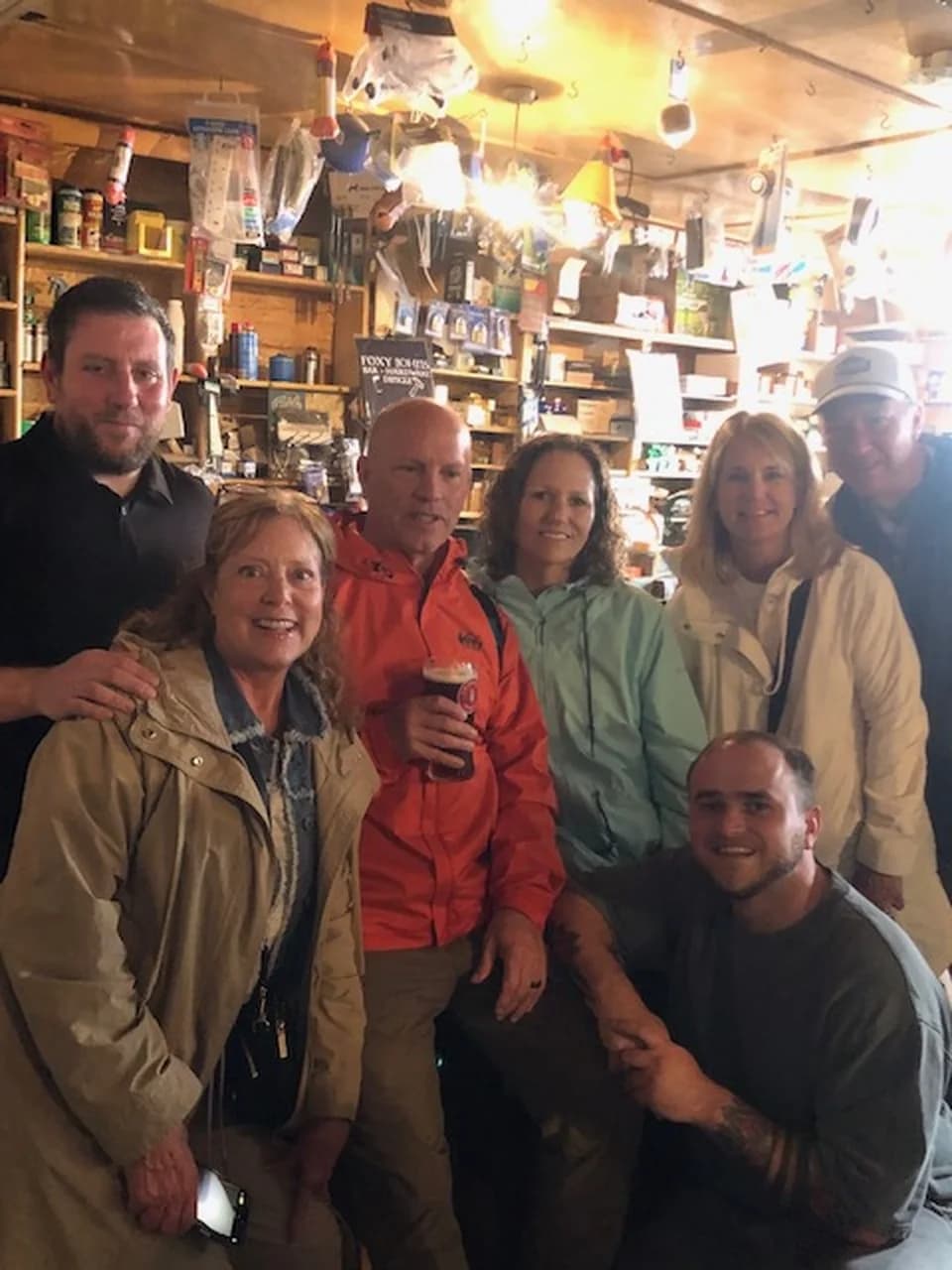
Dick Mack's pub on Green Street is half pub, half leather shop, with the original workshop still operating behind the bar. Foxy John's on Main Street is a hardware store that also serves pints. These are not themed experiences. They are businesses that have served the local community for generations and happen to welcome visitors. The food in Dingle has moved well beyond standard Irish pub fare. Outlets like the Chart House and Doyle's Seafood Restaurant use local langoustines, mussels, and beef from the peninsula's small farms. The farmers' market on Friday mornings in the parish carpark is where locals buy vegetables, cheeses, and smoked fish.

If you are travelling with children, the town's compact size and the harbour's constant activity make it one of the easier bases in Kerry. Our guide to Things to Do in Kerry with Kids covers the family-specific logistics of the peninsula, from the aquarium to the pony treks.
The Dingle Oceanworld Aquarium

The Dingle Oceanworld Aquarium sits on the waterfront near the harbour and is one of the most visited attractions in Kerry. It is not a large facility, but it is well designed and houses a collection that includes sand tiger sharks, gentoo penguins, and a touch pool for rays and starfish. The shark tank walkthrough tunnel is the highlight for most visitors.
For families, the aquarium provides a useful indoor option on the rainy days that are common on the Atlantic coast. The penguin feeding and shark talks run at scheduled times throughout the day. The facility also runs a rehabilitation programme for rescued sea turtles, and the staff are knowledgeable about local marine life. It is worth checking the feeding schedule in advance and arriving early in the morning to avoid the peak crowds.
The Dingle Distillery

The Dingle Distillery opened in 2012 on the outskirts of Dingle town and was one of the first of the new wave of Irish craft distilleries. They produce whiskey, vodka, and gin using traditional pot stills in a small warehouse that was built without the industrial scale of the major distilleries in Midleton or Bushmills. The gin, in particular, has gained a strong reputation and uses local botanicals including rowan berry, bog myrtle, and heather.
Tours run throughout the day and include a walk through the production floor, an explanation of the distilling process, and a tasting. The tour groups are small, which allows for questions. The whiskey is still relatively young, as the distillery has only been operating since 2012, but the cask-strength releases have been well reviewed. The on-site shop stocks bottles that are not always available outside Kerry.
The Irish Language in Dingle

The Dingle Peninsula is part of the Kerry Gaeltacht, one of the few remaining areas in Ireland where Irish is spoken as a community language. In Dingle town itself, English dominates in shops and restaurants. But a few kilometres west in Ballyferriter, Dunquin, and the townlands beyond, Irish is the language of the home, the school, and the post office.
For a visitor, this is not a tourist attraction to be photographed. It is a living culture that deserves respect. The place names you see on road signs are not translations. The Irish name, An Daingean, was the official name of the town until 2005, when a local referendum restored the bilingual "Dingle / Daingean Uí Chúis" sign. The Blasket Islands produced some of the most important Irish-language literature of the twentieth century, including Tomas O Criomhthain's The Islandman and Peig Sayers' autobiography.
You do not need to speak Irish to visit Dingle. But understanding that the language is not a historical relic, and that the locals are not performing it for visitors, will change how you interact with the place. For a deeper exploration of the language and culture, our article on The Kerry Gaeltacht: Irish Language and Culture in West Kerry covers the history, the literature, and what it means to visit respectfully.
Beaches and Coastal Walks on the Peninsula

Dingle's beaches are Atlantic beaches, which means cold water, strong currents, and sudden changes in weather. Ventry Beach, on the south side of the peninsula, is a long sandy stretch that is safe for swimming when the lifeguards are on duty in summer. The beach at Coumeenoole, beneath Slea Head, is dramatic but has strong rip currents and is not recommended for swimming.
For walkers, the Dingle Way long-distance trail passes through the peninsula, entering from the east at Camp and exiting at Dunquin or Ballyferriter depending on the route variant. The section from Dingle town to Slea Head and on to Dunquin covers some of the finest coastal walking in Ireland. The path is well marked but exposed, and mist can roll in quickly from the Atlantic. Proper boots, waterproofs, and a map are essential.
Inch Beach, on the eastern side of the peninsula near the junction with the main Killarney road, is technically part of the Dingle Peninsula but is covered in detail in our guide to Inch Beach and the Best Beaches in Kerry. It remains one of the best surf beaches in the county.
Why You Need a Local Guide for the Dingle Peninsula

The Dingle Peninsula suffers from the same problem that affects many famous Irish destinations: the obvious route is not the best one, and the best experiences require knowledge that does not appear in guidebooks or on Google Maps. Slea Head Drive can be done in two hours or two days, depending on whether you know which of the lay-bys lead to worthwhile walks and which are simply coach parking. The Irish-speaking areas are not marked with borders, and a visitor who does not understand the local etiquette can cause unintended offence.

A county guide from the Dingle Peninsula brings more than navigation. They know which pubs have music on which nights, which restaurants source from local fishermen, and how to read the weather patterns that determine whether a boat trip to the Blasket Islands is safe or miserable. They can explain the Irish place names, the history of the Blasket writers, and the agricultural calendar that still governs life here. For the diaspora visitor in particular, a guide who understands the local culture can bridge the gap between being a tourist and being a guest.
Frequently Asked Questions
How long does it take to drive Slea Head Drive?
The full loop from Dingle town and back takes approximately three hours without stops. With stops at Coumeenoole, Dunquin, and Ballyferriter, plan for a full morning or afternoon. In summer, add extra time for traffic and parking delays.
Is Fungie the dolphin still in Dingle?
Fungie, the bottlenose dolphin who lived in Dingle Harbour for over thirty years, disappeared in October 2020 and has not been seen since. Boat tours still operate from the harbour for dolphin watching and Blasket Islands trips, but Fungie's presence is no longer guaranteed.
Do I need to speak Irish to visit the Dingle Gaeltacht?
No. English is widely spoken throughout the peninsula. In the Gaeltacht areas west of Dingle town, Irish is the community language, but locals are accustomed to visitors. The key is to respect the fact that Irish is not a tourist attraction but a living language.
Can you swim at the beaches on the Dingle Peninsula?
Yes, at designated beaches with lifeguards during the summer season. Ventry Beach is the safest option. Coumeenoole and other western beaches have strong currents and are not recommended for swimming.
Conclusion
The Dingle Peninsula rewards visitors who slow down. The drive is spectacular, but the real substance is in the language, the literature, the working harbour, and the small details of a community that has lived on this Atlantic edge for thousands of years. For those planning a broader Kerry trip, Things to Do in Killarney: A Local's Guide to the Town and National Park and Valentia Island: Kerry's Best-Kept Secret offer complementary angles on the county. And for the complete picture, Things to Do in Kerry: The Complete Guide to Ireland's Most Famous County ties every region together into one practical itinerary. A county guide who knows Dingle will make sure you leave with more than photographs.
Table of Contents
Share this post
More from the Blog

Cork to Blarney Castle Day Trip: The Stone, the Gardens and What Else to See
Plan a Cork to Blarney Castle day trip. Kiss the stone, explore the Poison Garden, and add Cork city, Fota or Kinsale for a full day out.

Cork to Cobh Day Trip: Titanic, Colourful Houses and Harbour History
Plan a Cork to Cobh day trip by train, car or private driver. Explore Titanic history, St Colman's Cathedral, Spike Island and the best harbour views.

Cork to Killarney Day Trip: Lakes, Mountains and Muckross in One Day
A Cork to Killarney day trip is a longer escape into Kerry. Here's how to plan the drive, what to see in Killarney National Park, and why a private driver helps.