
Hiking in Ireland: The Complete Guide to Trails, Walks & Long-Distance Treks
There is a particular quality to Irish walking that is difficult to explain to someone who has not experienced it. It is not merely the landscape, though that is extraordinary enough. It is the combination of terrain, weather, history, and scale that produces something closer to immersion than exercise. You do not hike in Ireland so much as move through it, slowly enough that the place begins to work on you. The stone walls change meaning. The rain stops being an inconvenience and becomes part of the texture of the experience. After three or four days of steady walking, you stop noticing the miles and start noticing the light on the water, the angle of a ruined cottage, the particular silence of a bog at dusk.
Ireland's walking infrastructure is extensive and well-developed. The country has over forty waymarked long-distance trails, ranging from gentle coastal paths to serious mountain traverses, plus an almost infinite number of shorter day walks through national parks, along cliffs, and across open moorland. For the diaspora walker — the Irish-American, the Irish-Canadian, the second-generation emigrant returning to trace roots — these trails offer something beyond scenery. They offer a way of understanding the terrain that shaped the lives of the people you are descended from. This guide covers the full spectrum of walking in Ireland, from the best long-distance trails to the finest single-day routes, with practical advice on planning, weather, gear, and why a local guide is worth considering.
Whether you are planning a two-week walking holiday or looking for a single memorable day on the trail, the articles in this series cover every major walking destination in Ireland in detail. For the complete picture, read on. For specific trails, follow the links to our dedicated guides.
Best Hikes in Ireland at a Glance
A quick-reference comparison of Ireland's most rewarding hikes and walking trails, sorted by the kind of experience each offers.
| Hike / trail | Best for | Difficulty | Time needed |
|---|---|---|---|
| Howth Cliff Walk | Easy coastal walk near Dublin | Easy | 2–3 hours |
| Wicklow Way | Long-distance mountain walking | Moderate | 5–7 days |
| Croagh Patrick | Pilgrimage mountain hike | Moderate–hard | 3–5 hours |
| Carrauntoohil | Ireland's highest mountain | Hard | 5–7 hours |
| Connemara National Park | Scenic national park hikes | Easy–moderate | 1–4 hours |
| Kerry Way | Multi-day southwest walking | Moderate–hard | 9–11 days |
| Dingle Way | Coastal and cultural walking | Moderate | 7–9 days |
Why Ireland Is a Walker's Country

Ireland is small enough to be comprehensible and varied enough to never become repetitive. In a single day's drive you can move from limestone karst to Atlantic cliff, from oak woodland to peat bog, from Georgian streetscape to medieval abbey ruin. The walking reflects this variety. There is no single Irish landscape to walk through; there are dozens, each with its own character, history, and underfoot conditions.
The country's trail network is unusually dense for its size. Over 4,000 kilometres of waymarked long-distance trails crisscross the island, supplemented by countless local walks, forest trails, and coastal paths maintained by county councils and volunteer groups. Waymarking standards are generally high, particularly on the National Waymarked Ways, and the network is supported by an accommodation infrastructure that understands walkers' needs. You can walk for two weeks in Ireland and sleep in a different village every night, eating well, drying your boots by a pub fire, and waking to a cooked breakfast that will carry you through to mid-afternoon.
What distinguishes Irish walking from trail networks in Scotland, Wales, or the Alps is the density of human history embedded in the landscape. Every field has a name. Every ruin has a story. The walls you walk beside were built by hand two hundred years ago. The paths often follow routes that predate the roads by centuries. Walking in Ireland is not an escape from human presence; it is an encounter with the accumulated presence of generations.
The Best Long-Distance Trails

Ireland's long-distance trails are the most complete immersion available. These are not wilderness treks in the North American sense; you are rarely more than a few hours from a road or a village. But the cumulative effect of walking day after day through the same landscape, sleeping in different villages, carrying everything you need on your back, produces a depth of understanding that no single day walk can match.
Meet a Local Guide
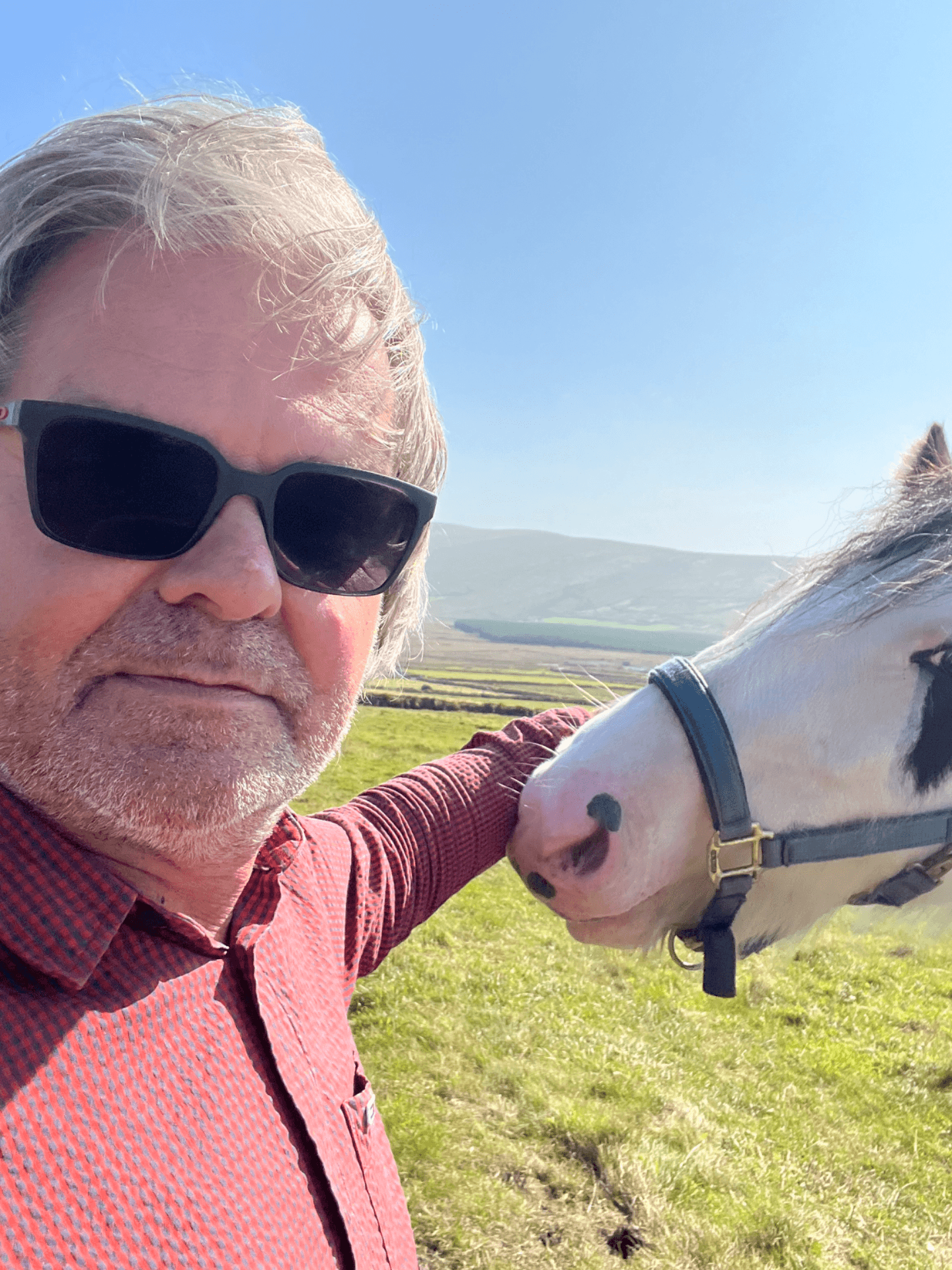
Hello.
The Kerry Way is Ireland's longest signposted walking trail, a 214-kilometre loop through the Iveragh Peninsula that traces the coastline of the Ring of Kerry on foot. It takes most walkers between nine and eleven days and passes through some of the finest coastal and mountain scenery in the country. For those with Irish roots in Cork or Kerry, it offers a sustained encounter with the landscape your ancestors walked. Equally compelling is the Dingle Way, a 179-kilometre circuit of the Dingle Peninsula that combines Atlantic cliff walking with mountain passes, ancient archaeological sites, and the strongest Gaeltacht culture remaining in Ireland.
For walkers who prefer quieter trails, the Western Way runs 127 kilometres from Oughterard in County Galway to Westport in County Mayo, passing through Connemara's empty boglands and the remote Nephin Beg Range. It is arguably the most isolated long-distance trail in Ireland, and the sense of space and silence is profound. On the east coast, the Wicklow Way offers 127 kilometres of mountain and valley walking through the Wicklow Mountains, beginning in Dublin's suburbs and climbing into genuine wilderness within a day's walk of the capital.
Other notable long-distance options include the Beara Way, a 206-kilometre loop of the Beara Peninsula that is consistently cited by experienced walkers as the most beautiful and least crowded coastal trail in Ireland. The peninsula's remoteness keeps visitor numbers low, and the walking delivers raw Atlantic scenery without the coach-tour infrastructure of Kerry or Clare.
Coastal Walking: Cliffs, Bays and the Atlantic Edge

Ireland's coastline is approximately 6,600 kilometres long, and a significant proportion of it is walkable. The character of coastal walking changes dramatically from region to region. The southwest-facing cliffs of Kerry and Clare bear the full force of the Atlantic and offer the most dramatic scenery. The gentler east coast, from Dublin to Wexford, provides more sheltered walking with easier logistics. The northwest, particularly Donegal, combines scale with isolation in a way that feels genuinely wild.
The Howth Cliff Walk is the finest short coastal route near Dublin, offering eight kilometres of cliff-top walking with views across Dublin Bay to the Wicklow Mountains. It is accessible by DART train from the city centre and can be completed in half a day, making it ideal for visitors with limited time. For something on a completely different scale, Slieve League in County Donegal features sea cliffs nearly 600 metres high — nearly three times the height of the Cliffs of Moher — with a fraction of the visitors. The walk to the Bunglas viewpoint is relatively short, but the exposure and the scale of the landscape are unforgettable.
The southwest coast, particularly the peninsulas of Kerry, Cork, and Clare, offers the most sustained coastal walking in Ireland. The Kerry Way and Dingle Way both include significant coastal sections, and the Beara Way is almost entirely coastal. The terrain is rougher than the east coast, the weather more demanding, and the rewards correspondingly greater. For walkers who want to experience the Atlantic at its most elemental, this is the place.
Mountain Hiking and Summit Routes

Ireland is not a mountainous country by Alpine or Himalayan standards, but it contains some genuinely challenging hiking. The highest peak, Carrauntoohil in County Kerry, rises to 1,039 metres and requires a full day of strenuous walking to summit and return. The standard route via the Devil's Ladder is not technically difficult but involves steep scrambling on loose rock and should not be underestimated. In poor visibility, navigation is serious, and the mountain has claimed lives.
For those seeking a mountain experience with cultural weight, Croagh Patrick in County Mayo is Ireland's holy mountain. Pilgrims have climbed it for over fifteen hundred years, and the tradition continues on Reek Sunday, the last Sunday in July, when thousands make the ascent barefoot or in prayer. The climb from Murrisk takes most walkers between three and five hours, with the upper section involving steep scree that demands concentration and reasonable fitness. The view from the summit across Clew Bay, with its hundreds of islands, is one of the finest in Ireland.
Beyond the headline peaks, Ireland's mountain ranges offer extensive walking. The Twelve Bens in Connemara provide rough, boggy, spectacularly beautiful hiking across quartzite ridges with views to the Atlantic on one side and the Maumturk Mountains on the other. Connemara National Park manages several waymarked routes in the lower Bens, including the popular Diamond Hill walk, which delivers exceptional views for a relatively modest effort. For experienced hillwalkers, the full Bens traverse is a serious undertaking that requires navigation skills and a full day.
What to Expect from Irish Weather and Terrain

The most important thing to understand about walking in Ireland is that the weather is not an obstacle to be overcome; it is a condition to be accepted. Rain is possible in any season, and the southwest and west coasts receive significantly more precipitation than the east. Waterproof boots, gaiters, and a reliable jacket are not optional extras; they are standard equipment. The Irish have a saying that if you do not like the weather, you should wait five minutes. This is not a joke. Conditions can shift from sunshine to horizontal rain within an hour, particularly on exposed coastal and mountain terrain.

The terrain underfoot is mixed and demands adaptable footwear. Long-distance trails use gravel forest tracks, grassy hillside paths, narrow boreens with uneven stone surfaces, and occasional stretches of road walking where no alternative exists. Mountain routes involve peat haggs, loose scree, wet grass, and quartzite slabs that are slippery when damp. Boots with ankle support and a decent sole are essential. Trail runners may be acceptable on dry days on the easier long-distance trails, but they offer insufficient protection on mountain terrain and in wet conditions.
Navigation requires attention. Waymarking on the National Waymarked Ways is generally good, but fog on higher sections can reduce visibility to a few metres. A map and compass, or a reliable GPS app with offline maps, remain essential for any mountain walking. The Irish mountains are not high, but they are complex, and the combination of peat, mist, and featureless plateau can be disorienting even for experienced walkers.
When to Walk: A Season-by-Season Guide

The optimal walking season runs from late April through September, with May and June offering the best balance of daylight, vegetation, and mid-season tranquillity. July and August are perfectly walkable but busier on the more accessible trails, particularly in Kerry, Wicklow, and Connemara. September often delivers the most stable weather of the year, with warm seas, clear air, and reduced visitor numbers after the schools return.
Spring walking, from March through May, has distinct advantages. The daylight is lengthening, the vegetation is fresh and green, and the wildflowers are at their best. The midges have not yet emerged in force, and accommodation is easier to book. The downside is that mountain conditions can still be wintry, with snow possible on the higher peaks into April, and some accommodation providers in remote areas do not open until Easter.
Autumn, from September through October, is the favourite season of many experienced Irish walkers. The light is softer, the bracken has turned gold, and the hedgerows are heavy with berries. The weather is generally stable, though Atlantic storms can arrive with little warning. By November, daylight is limited to roughly eight hours, many accommodation providers have closed, and mountain conditions become genuinely hazardous. Winter walking is possible for experienced hikers with proper equipment, but it requires serious preparation and should not be attempted on unfamiliar terrain.
How to Plan Your Walking Holiday

Planning a walking holiday in Ireland is straightforward, but a few practical considerations will make the experience smoother. Transport is the first concern. Dublin Airport has the best international connections, and from there you can reach most trailheads by train, bus, or car within a few hours. Kerry Airport serves the southwest, and Ireland West Airport Knock serves the northwest. Hiring a car gives the most flexibility, particularly if you want to combine several trails or explore areas not served by public transport.
Accommodation along the major trails is generally good, ranging from hostels and guesthouses to small hotels and rural B&Bs. The long-distance trails pass through towns and villages at regular intervals, making it possible to walk with a light day pack while your luggage is transferred between stops. Booking ahead is strongly advised in summer, particularly in smaller villages where options may be limited to two or three properties. Many accommodation providers offer packed lunches and will arrange early breakfasts for walkers with long days ahead.
For walkers planning a single base and day trips, Ireland offers excellent options. Dublin provides access to the Howth Cliff Walk and the start of the Wicklow Way. Killarney is the gateway to the Kerry Way, the Dingle Way, and Carrauntoohil. Westport serves the Western Way and Croagh Patrick. Galway is the access point for Connemara National Park and the Twelve Bens. Each of these towns has a well-developed infrastructure of gear shops, guide services, and transport connections.
Why a Local Guide Transforms the Experience

Every trail mentioned in this guide can be walked independently. The waymarking is good, the maps are reliable, and the terrain does not require technical climbing skills. But there are compelling reasons to consider walking with a local guide, particularly for visitors from overseas who may not have experience with Irish mountain weather or the specific challenges of the terrain.
A guide who knows a trail intimately can adjust the daily stages to match your fitness and the conditions, often using alternative routes that avoid the road sections and deliver better walking than the official trail. They know which accommodation providers offer the early breakfasts that long days require, which pubs serve food late enough to accommodate slow arrivals, and how to read the local weather patterns that determine whether a high pass is safe or not.
More importantly, a guide transforms the walk from a physical challenge into a cultural immersion. The walls you pass, the ruins you notice, the place names you struggle to pronounce all carry stories that require local knowledge to unlock. A guide does not simply lead you from point to point; they provide the interpretive layer that makes the landscape legible. For those seeking this level of engagement, a private driver guide for Ireland can be arranged to walk sections with you, handle luggage transfers, and provide the historical and cultural context that independent walkers often miss.
To arrange a guided walking experience on any of the trails covered in this guide, explore our full range of hiking tours in Ireland, with local experts available across every region.
Frequently Asked Questions
How many long-distance trails are there in Ireland?
Ireland has over forty waymarked long-distance trails, ranging from short regional routes of 25 to 50 kilometres to major National Waymarked Ways of 200+ kilometres. The total network exceeds 4,000 kilometres.
What is the best trail for beginners?
The Howth Cliff Walk near Dublin is ideal for beginners, offering dramatic coastal scenery in a compact 8-kilometre loop with excellent transport links. For a longer but still manageable introduction, the lower sections of the Wicklow Way provide gentle mountain walking within easy reach of Dublin.
Do I need a guide to walk in Ireland?
No. The major trails are well waymarked and thoroughly documented. An experienced walker with good navigation skills can complete them independently. However, a local guide adds significant value in terms of safety, route knowledge, and cultural interpretation, particularly for overseas visitors.
What is the most challenging walk in Ireland?
The full traverse of the Twelve Bens in Connemara is arguably the most demanding day walk, requiring navigation across rough bog and quartzite ridges with limited waymarking. For a multi-day challenge, the Kerry Way or Western Way test endurance over sustained distances with significant elevation gain.
Can I walk in Ireland in winter?
Winter walking is possible for experienced hikers with proper equipment, but it requires serious preparation. Daylight is limited to roughly eight hours, many accommodation providers are closed, and mountain conditions can be dangerous in snow and ice. The lower coastal trails remain walkable year-round in reasonable weather.
Walking in Ireland is not about conquering peaks or ticking off trails. It is about moving through a landscape that has been shaped by centuries of human habitation, at a pace slow enough to notice the details that speed obscures. The stone walls, the ruined cottages, the patterns of settlement, the names of fields and townlands — these are the things that reveal themselves only to the walker.
For those with Irish roots, the experience carries an additional dimension. The distances your ancestors covered on foot, the terrain they worked and farmed, the relationship between the people and the land that defined their lives — all of this becomes comprehensible only when you walk it yourself. Whether you spend a single day on the Howth Cliff Walk or two weeks on the Kerry Way, the landscape will work on you in ways that a coach tour or a car journey simply cannot replicate.
A private driver guide for Ireland can support your walking holiday with local knowledge, logistical support, and the kind of interpretive depth that turns a long walk into a genuine homecoming. For specific trails, explore our dedicated guides below.
Table of Contents
Share this post
More from the Blog

Altamont Gardens: Ireland's Most Romantic Garden
A complete guide to Altamont Gardens in County Carlow. Explore Ireland's most romantic garden, its rare plants, riverside walks, and how to visit with a local guide.

Birr Castle: Science, History and 120 Acres of Gardens
Birr Castle in County Offaly combines a 19th-century astronomical breakthrough with 120 acres of rare trees, riverside walks and formal gardens. Here's what to see.

Garden Tours in Ireland: How to Visit with a Local Guide
Plan the perfect Irish garden tour with a local guide. Discover the best gardens, what to expect, seasonal tips, and how to arrange a private or group visit.